
The ultimate guide to navigating sand, surf, and sun with the right mobility equipment. Reclaim your coastline adventures.
The 30-Second Summary
Standard wheelchairs sink in sand. To get on the beach, you need wide balloon tires or roll-out access mats (Mobi-Mats). You can rent manual or electric beach wheelchairs locally, borrow them from lifeguard stations, or invest in your own all-terrain equipment like the ARY Beach Wheelchair Model 2. For water entry, look for amphibious/floating models. Check tides, use accessible boardwalks, and bring a buddy for safety.
Let’s face it: traditional mobility aids and sand are mortal enemies. Those narrow casters act like anchors, turning a relaxing day by the ocean into a grueling workout in futility. But don’t pack up the sunscreen just yet.
True littoral liberation is easier to achieve than you think. Whether you are looking for a temporary rental to watch the sunset or a permanent investment in an all-terrain beast to chase the surf, the technology exists to get you there. From electric beach wheelchairs that offer total autonomy to simple beach access matting solutions, getting a wheelchair on the beach is no longer a logistical nightmare—it’s a gateway to freedom.
The Science of Sinking: Why You Need Specialized Gear
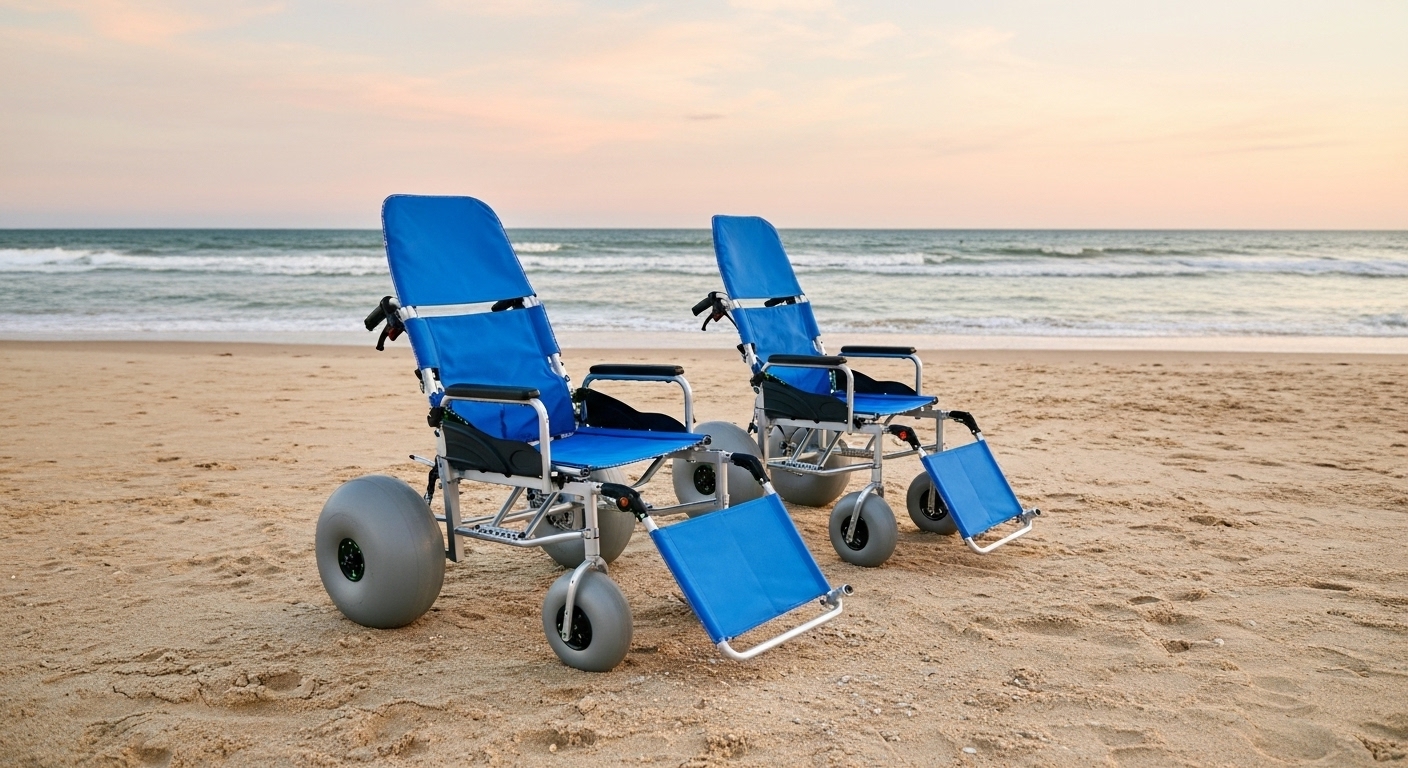
Understanding the mechanics of sand is the first step to conquering it. Standard wheelchair tires are high-pressure and narrow, designed to minimize friction on hard surfaces like pavement. On soft terrain, however, this design focuses weight onto a small surface area, causing the wheels to knife through the sand until the frame bottoms out.
The solution lies in physics: displacement. Specialized sand-friendly wheelchairs utilize massive, low-pressure balloon tires (often polyurethane). These flatten out under weight, distributing the user’s mass over a much wider area—similar to how a snowshoe works on powder. This prevents the chair from digging in and allows it to “float” on top of the granules. If you are serious about how to get a wheelchair on sand, abandoning standard tires is non-negotiable.
Meet Your New Best Friends: Types of Beach Wheelchairs
Not all sand chariots are created equal. Depending on your upper body strength, budget, and desire to get wet, there is a specific rig for you.
The Classic Push: Manual Beach Wheelchairs
These are the most common rental beach wheelchairs you’ll find at lifeguard towers. They are typically constructed from PVC or stainless steel to resist salt corrosion. While affordable and lightweight, they usually require a companion to push. The large balloon wheels make pushing significantly easier than a standard chair, but don’t underestimate the effort required on soft, deep sand.
Power Up: Electric Beach Wheelchairs
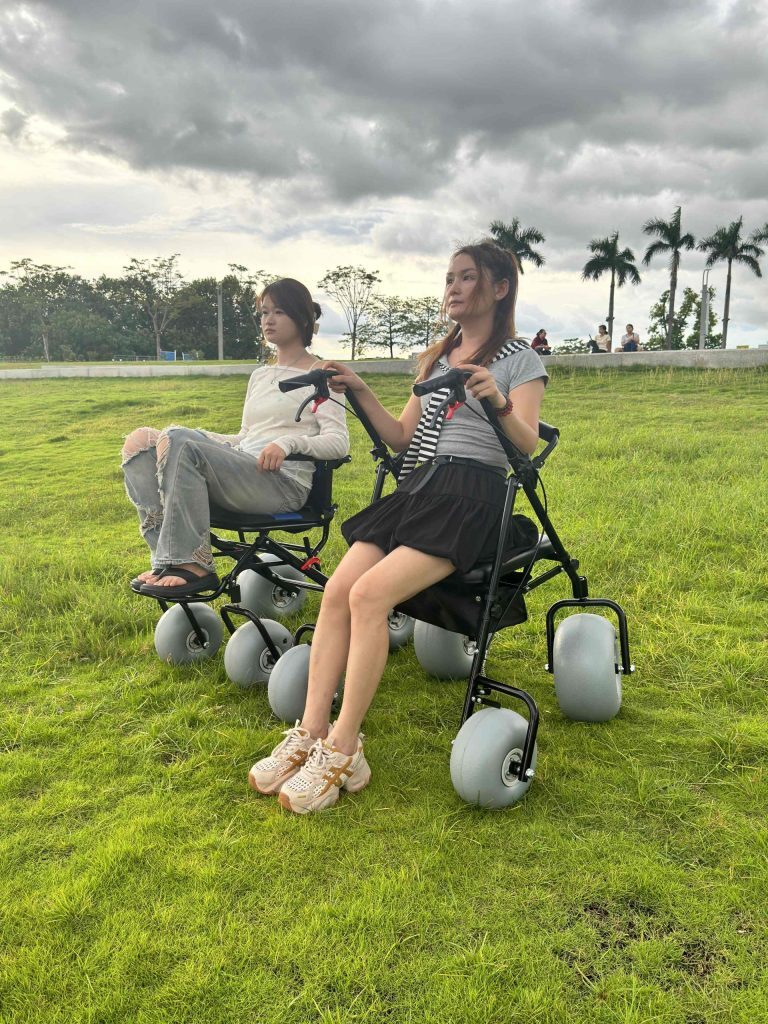
For those who crave independence, electric beach wheelchairs are a game-changer. Powered by robust batteries and high-torque motors, these machines can chew through dunes without breaking a sweat. Models like the ARY Beach Wheelchair Model 2 utilize joystick controls and tank-like treads or massive knobby tires to provide autonomy. No need to wait for a push—you decide where the adventure goes.
From Sand to Surf: Amphibious and Floating Wheelchairs
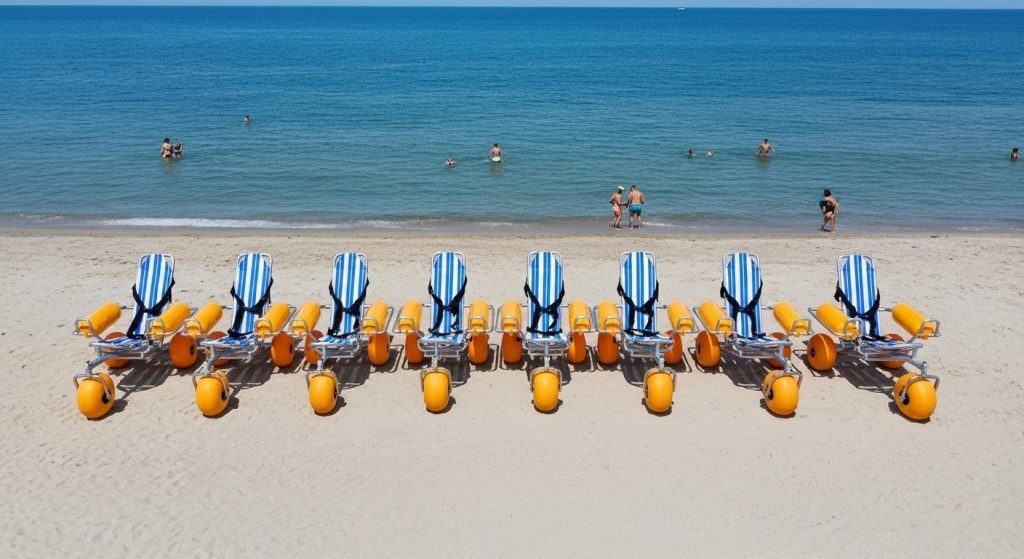
Why stop at the water’s edge? Floating beach wheelchairs are designed to transition seamlessly from land to sea. Using buoyant armrests and wheels, these chairs allow users to roll directly into the surf and float comfortably.
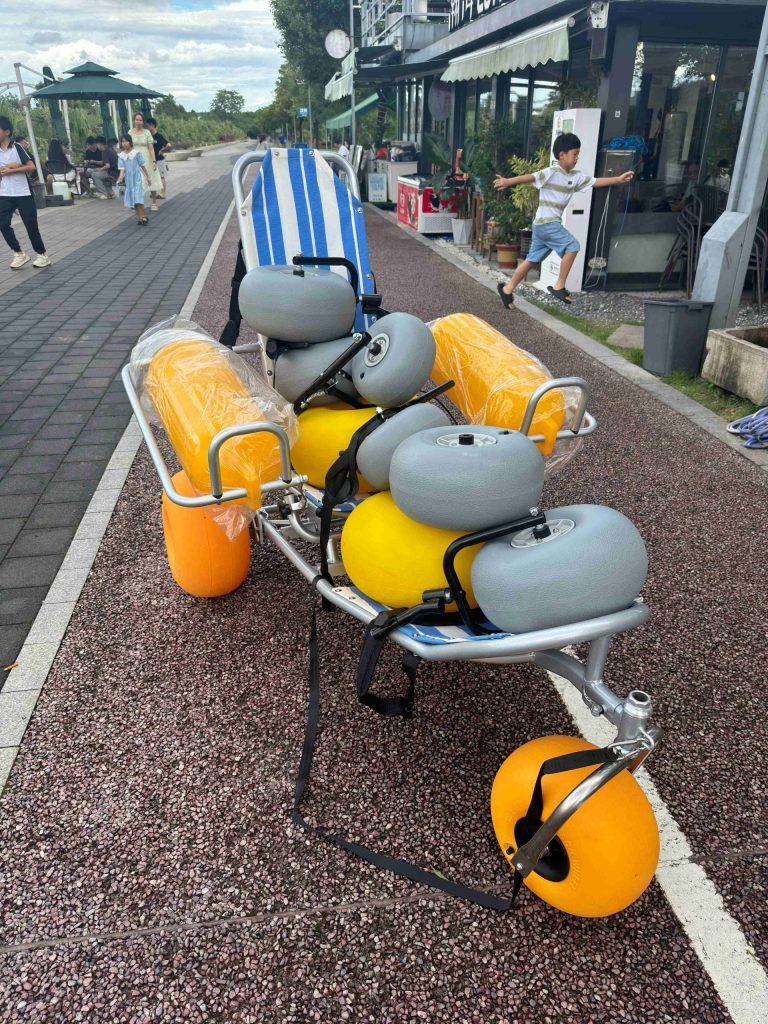
If you are looking for an amphibious wheelchair for sale, prioritize models with marine-grade stainless steel frames to withstand the harsh saltwater environment. Discover the ARY Beach Wheelchair capabilities for water entry if you plan on taking a dip.
Try Before You Buy: Beach Wheelchair Rental Companies
You don’t always need to buy. Major coastal destinations often have robust beach wheelchair rental companies.
- Public Loans: Many state parks and municipal beaches offer free beach wheelchair loans on a first-come, first-served basis. Check with local lifeguard stations.
- Private Rentals: Companies specializing in mobility aids for seniors and disabled travelers often deliver all-terrain wheelchair rentals near me directly to your hotel or vacation rental.
- Duration: Rentals can range from hourly to weekly. Weekly rates are generally more cost-effective for vacations.
Pro Tip: Reserve months in advance for peak summer travel. These niche items are in high demand.
The Magic Carpet: Beach Access Matting
Sometimes, you don’t need a new chair—you just need a better path. Beach access matting (often called Mobi-Mats) creates a firm, continuous surface over the sand. These blue synthetic pathways are an ADA compliant beach access staple, allowing standard wheelchairs, walkers, and strollers to reach the hard-packed sand near the water line.
While mats are fantastic, they often stop short of the water to prevent washing away. A terrain chair for sand is still recommended if you want to cross the final gap to the waves.
Top Accessible Beach Destinations
Not all coastlines are welcoming. When traveling to accessible beaches, look for destinations that prioritize inclusivity.
Gulf Shores, Alabama
Famous for its wide, hard-packed sand and extensive matting systems.
San Diego, California
Offers free power beach chair programs at several major beaches.
Virginia Beach, Virginia
Features the Grommet Island Park, a 100% accessible beach playground.
Barcelona, Spain
A global leader with assisted bathing services and amphibious chairs.
Explore our full beach series for detailed guides on global hotspots.
Safety First: Transfers and Tides
Navigating an unpredictable environment requires caution. Here are essential beach wheelchair safety tips:
- The Transfer: Moving from a day chair to a sand-friendly wheelchair can be unstable on shifting ground. Always perform transfers on the boardwalk or hard pavement before hitting the sand.
- Tide Awareness: Tides can come in fast. Never leave a manual chair unattended below the high-tide line.
- Sun Protection: Beach wheelchairs for disabled users often lack shade. Ensure you have an umbrella attachment or wear protective clothing, as the reflection off the sand is intense.
- Stability: Three-wheeled models can be tippier than four-wheeled ones. Tackle dunes head-on rather than traversing the slope sideways.
Investing in Adventure: Buying Your Own
For frequent beachgoers, renting becomes a hassle. Buying your own amphibious wheelchair for sale ensures you have the freedom to go whenever the tide calls.
Look for modular designs that break down to fit in a car trunk. Verify the materials—PVC is lighter and rust-proof, while stainless steel offers rigidity. Check floating beach wheelchair reviews to see how models handle wave action. The ARY Beach Wheelchair Model 2 is a favorite for its balance of portability and rugged capability.
Real Stories: User Testimonials
Don’t just take our word for it. Beach wheelchair user testimonials highlight the emotional impact of access.
“I hadn’t touched the ocean in 15 years. The first time I used a floating chair and felt the waves lift me up, I cried. It wasn’t just a chair; it was dignity.” — Sarah M., Florida
Reclaiming the Coast
The beach belongs to everyone. With the rise of ADA compliant beach access, rental networks, and innovative technology like electric beach wheelchairs, the barrier of sand is crumbling. Whether you are a senior needing beach mobility aids or an adventurer seeking an all-terrain wheelchair rental near me, the path to the water is open.
Don’t let the terrain dictate your boundaries. Plan ahead, get the right gear, and enjoy the salt air.
