
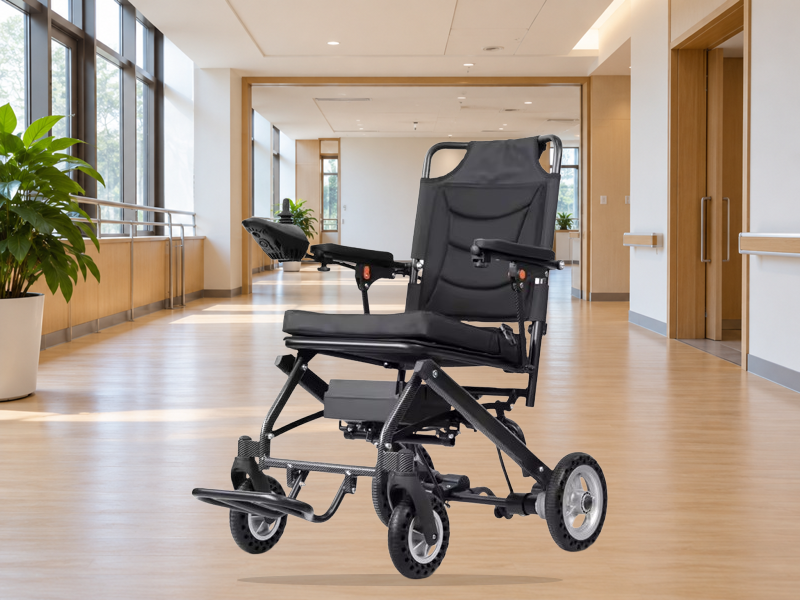
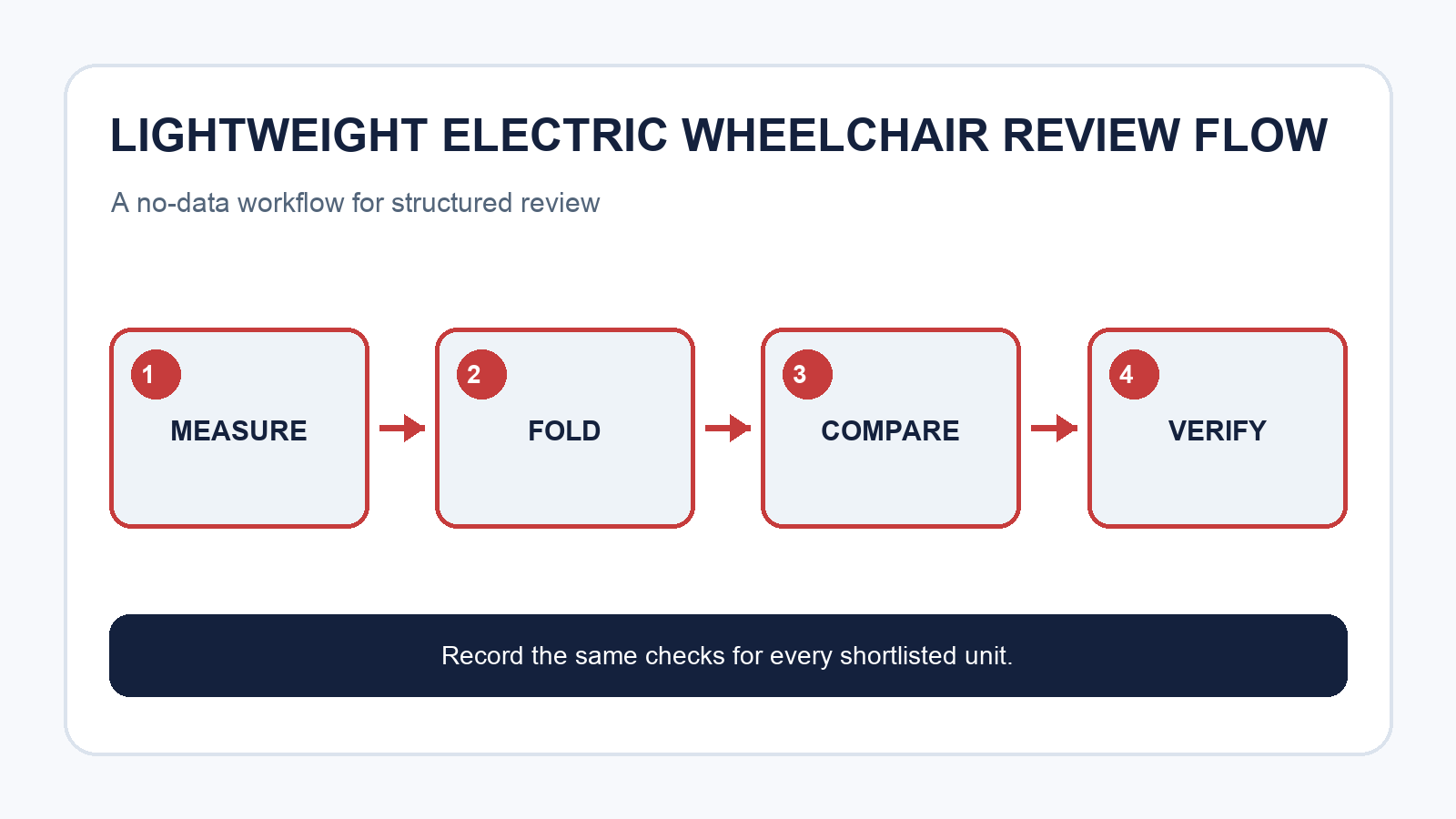
Buyers can compare a lightweight electric wheelchair by checking user fit, folded size, control access, handling, service records, and supplier documentation against one shared worksheet. A chair may look compact in a catalog yet create trouble when the seat does not suit the intended user, the folded unit does not fit a vehicle, or the joystick position conflicts with daily access.
Procurement teams also need evidence that a supplier can explain parts, packaging, inspection, and support without vague promises. This article gives distributors, clinics, dealers, and institutional buyers a repeatable method built around observed facts. It uses the same review sequence for every shortlisted chair, so a polished photo cannot outweigh a weak fit or an unclear service plan.
The goal is a buying record that another team member can read, repeat, and defend.
For public-access questions, read the ADA guidance on mobility devices. These access rules are separate from a sample review of fit, handling, and supplier support.
What should buyers measure before comparing models?
A lightweight electric wheelchair should be measured around the intended user, entry routes, transfer method, storage space, and vehicle opening before models are ranked.
Start with a written use profile rather than a product photo. Record seat access, armrest clearance, foot placement, controller side, turning space, door width, storage limits, and who will lift or guide the chair. The site’s wheelchair range can help a team see which chair categories belong on its early shortlist, but the local use profile must still control the comparison.
A useful worksheet separates observed facts, supplier records, evaluator notes, and open questions. Give each entry a date and source. Run the same check for every candidate, then keep any changed setup visible. This record helps procurement, training, and service teams discuss the same evidence without turning a short trial into a broad product promise.
Which fit dimensions belong on the worksheet?
Here is the practical test:
Measure the user and the physical route with the same tools for every model. Ask the supplier how each listed dimension was taken, since seat width, total width, and folded width describe different boundaries. If a value cannot be traced to a drawing, manual, label, or measured sample, mark it as pending rather than filling the gap with an estimate.
- seat and back support area
- armrest and footrest access
- open and folded outer size
- door, lift, and cargo clearances
Repeat the check under the same conditions and note who took part. If a supplier answer arrives later, attach it to the original question instead of replacing the earlier record. This keeps the review honest when a model, component, manual, or operating plan changes during sourcing.
Keep the chair stationary during fit checks and use a trained professional where personal mobility needs call for one. A B2B worksheet should separate user fit from shipping size; mixing those fields can make a compact shipping carton look like evidence of a suitable seat. Record the source and date beside every value so later revisions remain visible.
Key Takeaway: A useful shortlist begins with measured people, routes, and storage spaces, not a generic low-weight label.
How should folding and vehicle fit be tested?
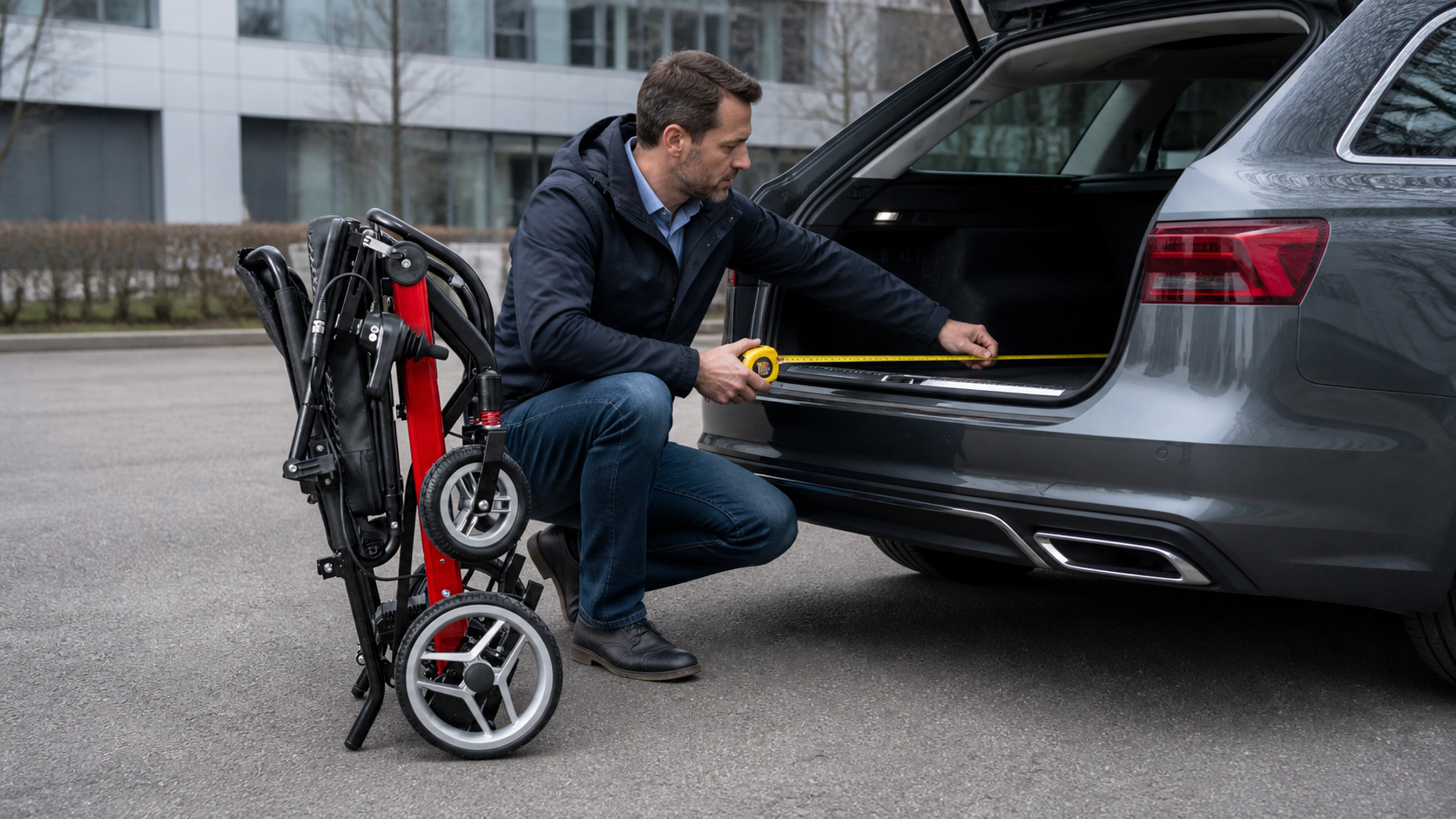
A lightweight electric wheelchair should be folded, lifted, positioned, and removed through the real vehicle or a faithful cargo mock-up before a travel claim enters a buying sheet.
Ask the person who will handle the chair to perform a supervised dry run. Watch where hands naturally grip, whether parts swing freely, whether loose accessories need removal, and whether the folded unit stands securely. The ultra-light product page shows one ultra-light product context, yet any shortlisted chair still needs its own measured cargo trial and written handling sequence.
What makes a folding trial repeatable?
The useful detail is this:
Set a clear starting condition, use the same vehicle opening, and list every part removed before the chair crosses the cargo sill. Record whether the battery, cushion, controller, or foot support stays attached. Do not turn a single smooth demonstration into a broad claim; repeat the sequence with the staff who will handle incoming samples, deliveries, or customer training.
- starting setup and loose parts
- folding steps in plain language
- safe handholds and pinch zones
- cargo orientation and restraint points
A good record includes a photo of the folded state, a simple sketch of cargo orientation, and notes on any part that needs separate protection. Weight belongs beside handling observations, not in place of them. Shape, balance, grip access, and lifting policy may change how a chair is moved even when two catalog weights appear close.
Key Takeaway: A folding claim becomes useful only after a repeatable handling and cargo-fit trial.
Which controls deserve a hands-on review?
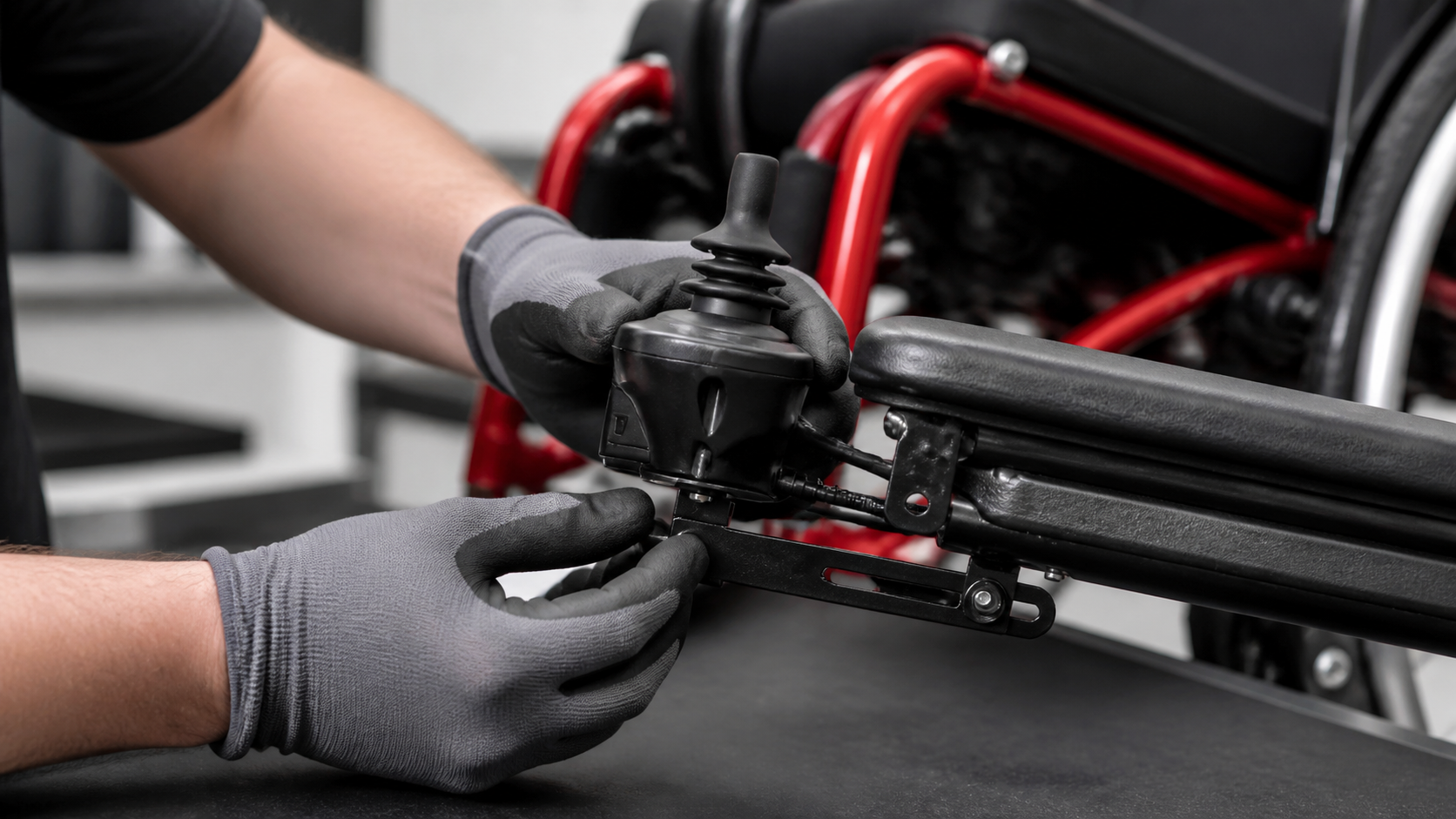
A lightweight electric wheelchair needs a hands-on review of joystick reach, mounting firmness, cable routing, power access, speed selection, freewheel controls, and attendant procedures.
Controller placement can affect transfers, table access, doorway clearance, and the way a chair is folded. Compare left- and right-side mounting options only when the supplier can document them for the exact model. A buyer can pair this review with the site’s electric wheelchair weight article when separating total chair weight from the daily handling details that influence real use.
How should teams record control access?
A simple rule helps:
Film or photograph the control position only with consent, then write what the evaluator could reach without leaning, twisting, or trapping a cable. Test the mounting bracket for unwanted movement while the chair is powered off. Ask for the manual section that covers freewheel use, charging connection, start-up, shutdown, and fault reporting.
- joystick reach and clear space
- mount position and fasteners
- cable path through folding points
- documented attendant controls
Run powered trials in a controlled area with trained supervision and a clear stop procedure. The comparison sheet should report observations rather than promise clinical outcomes. If staff cannot explain a control or safety step from the supplied documentation, log the question and request a written response before the model advances.
Key Takeaway: Control access, secure mounting, and clear instructions belong in the same review record.
What does a controlled surface trial reveal?
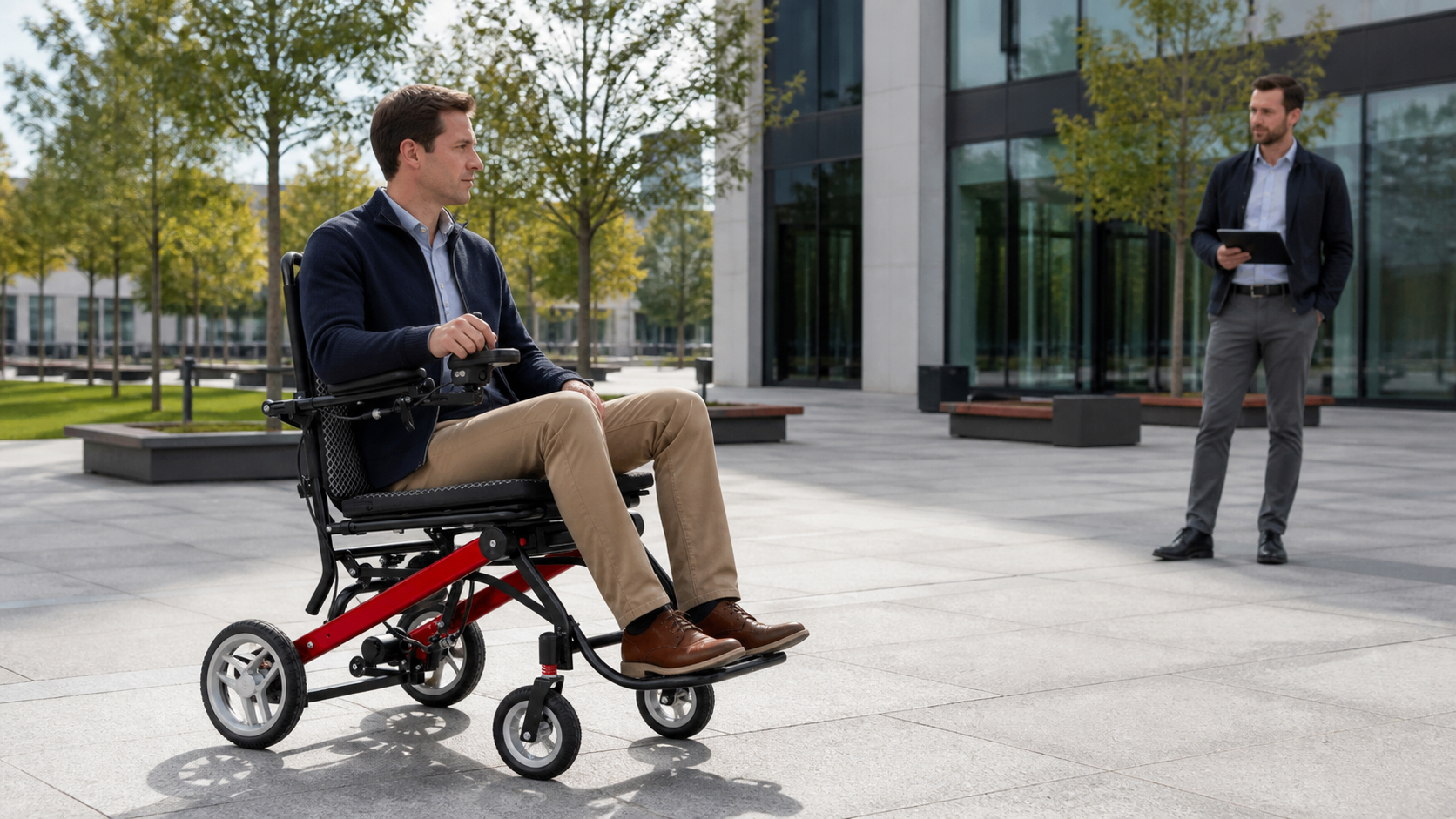
A lightweight electric wheelchair surface trial reveals steering response, caster behavior, braking feel, clearance, noise, and evaluator confidence on the routes named in the use profile.
Build a short course from dry level surfaces that the buyer can supervise: smooth indoor flooring, a threshold mock-up, a broad turn, and a firm outdoor path if the model is intended for that setting. Keep slope, weather, loose ground, and unsupported obstacles outside the trial unless the manual permits them and qualified staff manage the test.
Which test route gives useful observations?
Watch what happens next:
Use the same course, evaluator brief, chair setup, and observation sheet for each candidate. Note whether casters track cleanly, the chair holds a chosen line, controls return to neutral, and foot supports clear ordinary route features. Stop the trial if behavior conflicts with the manual or the evaluator feels uncertain.
- straight travel on level flooring
- wide turns in marked space
- documented threshold approach
- controlled stop and restart
A trial does not prove performance on every surface. It gives the purchasing team comparable observations under known conditions. Record tire state, battery state shown by the device, user setup, and floor type without converting them into unsupported range or speed figures. Short written notes often serve sourcing better than a polished promotional clip.
Key Takeaway: Comparable route notes are stronger than broad indoor or outdoor labels.
How should service support affect the final choice?
A lightweight electric wheelchair should rank higher only when service access, parts identification, inspection records, packaging, manuals, and supplier responses match the buyer’s operating plan.
Ask who receives a fault report, which details they request, how parts are identified, and what records follow a shipment. Buyers should request model-specific manuals, packing information, inspection fields, and a sample service communication path. Price can be reviewed later beside these records; it should not erase gaps in parts or technical communication.
What supplier records should buyers request?
This is where evidence matters:
Use a supplier checklist that names the exact model and revision. Request current photos of labels and packaging only for identification, not as proof of regulatory status. Ask how a serial or batch reference links to service records, and how the supplier handles a drawing, manual, or part change after an order is placed.
- model and revision identification
- manual and inspection records
- parts naming and support route
- packing and damage-report steps
Score each field with a short reason and an evidence link. Leave unresolved fields open instead of awarding points for confident sales language. A team that wants product-specific answers can contact us today with its use profile, target market, expected order workflow, and open technical questions ready for discussion.
Key Takeaway: The final rank should reflect fit, repeatable trials, and service evidence in one traceable record.
What do buyers ask about this mobility product?
The lightweight electric wheelchair questions buyers ask most often concern fit, permitted use, controlled trials, documents, and supplier support.
Can I compare chairs using catalog weight alone?
No. Catalog weight does not describe seat fit, folded balance, grip access, cargo shape, control reach, or the handling policy used by a buyer. Confirm what the stated weight includes, then pair it with a supervised sample and route review.
What’s the best lightweight model for every user?
There is no single model for every user. The better choice matches the intended user, route, storage space, transport method, documented controls, and available service path. A trained mobility professional may be needed for personal fit decisions.
How do I know if a folding claim is useful?
Treat it as useful after the exact chair has been folded under known conditions and the resulting size, loose parts, handholds, and cargo position are recorded. A video without a measured setup leaves too many open questions.
Can I request a sample before a larger order?
Yes, if the supplier offers that route and both sides define the sample scope. Use the sample to repeat fit, folding, control, route, packaging, and documentation checks rather than treating its appearance as the full review.
How do I compare supplier support?
Use the same written questions for each supplier. Compare response clarity, model-specific manuals, part identification, inspection records, packing guidance, and the route for reporting a fault or shipping issue.