
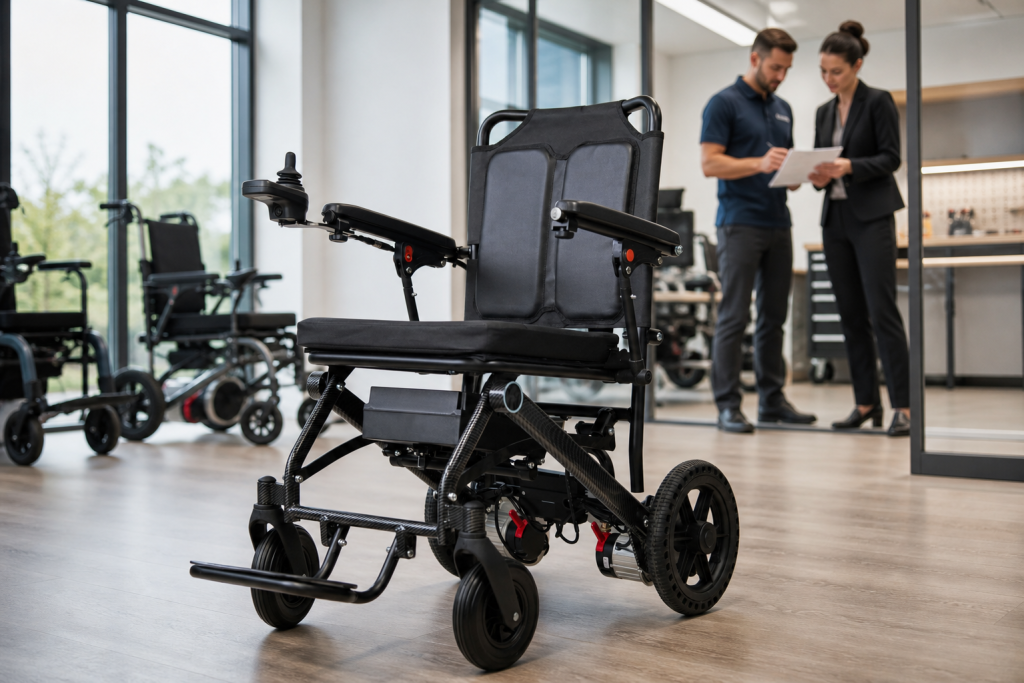
A brushless motor electric wheelchair becomes easier to review when buyers separate verified component evidence, operating observations, service records, and supplier responsibilities. The word brushless may appear in a title or quotation, yet that label does not verify the motor identity, controller pairing, configuration, operating result, or maintenance route for a specific chair. B2B teams need a method that asks what each claim means, where its source sits, and how a sample will be checked.
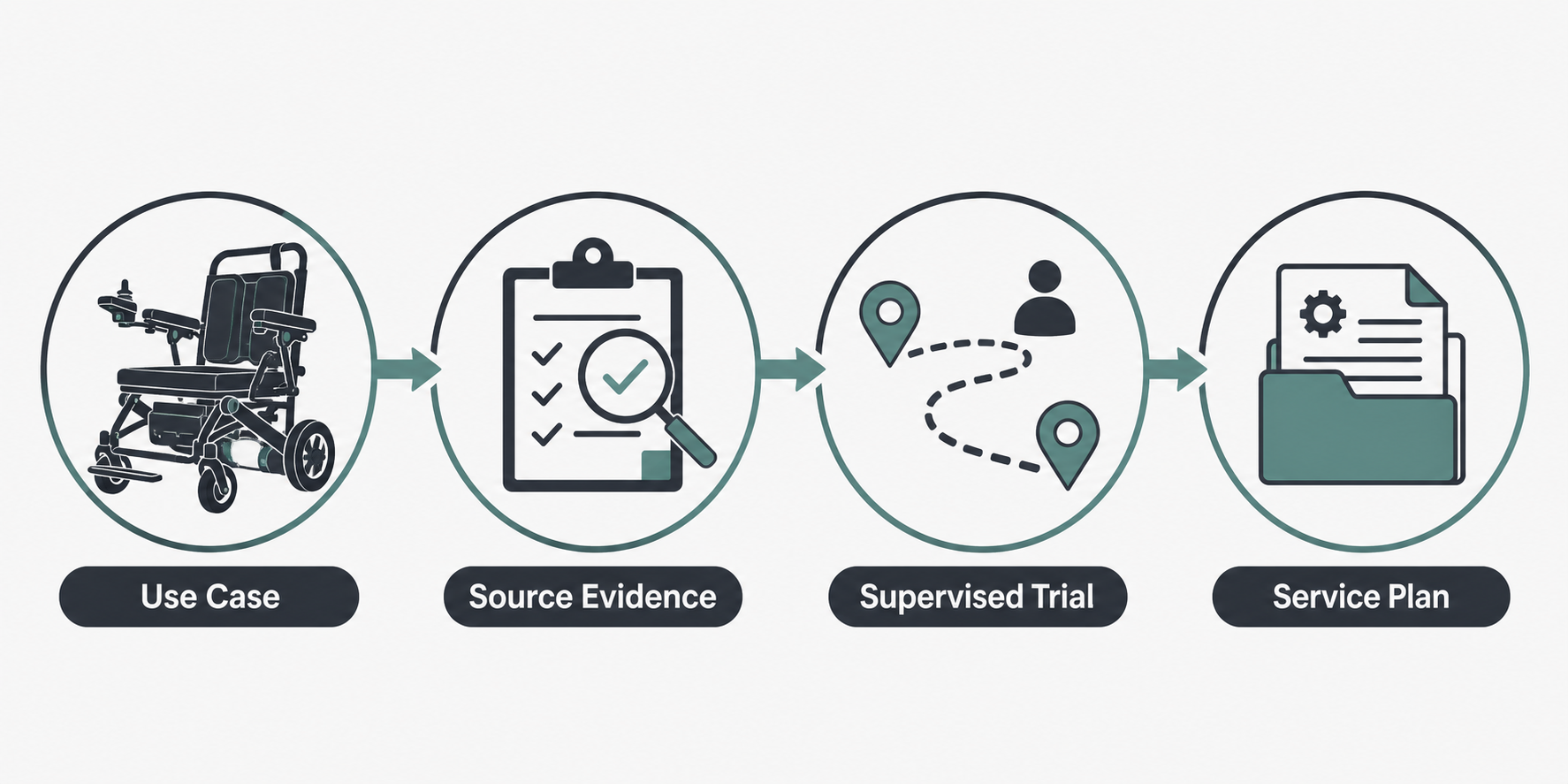
This guide helps distributors, purchasing teams, service managers, and facility operators build that method without inventing speed, range, durability, noise, or battery figures. It covers evidence requests, sample planning, control and cable review, folding and transport checks, service-file design, supplier comparison, receiving, and staff handover. Each stage keeps unanswered questions visible. That discipline turns a technology label into a traceable procurement record rather than a shortcut.
What does the brushless motor label actually prove?
A brushless motor electric wheelchair label proves only that a seller has described the product that way until the buyer receives model-specific documents, component identity, compatible-control evidence, and a verified sample record.
Ask the supplier to define the claim in writing. Request the exact chair model, revision, motor identifier, controller relationship, battery and charger context, applicable manual, and service route. A generic technology description can support background reading, but it cannot replace evidence tied to the offered configuration. Keep copied claims in a separate column until a source supports them.
Avoid using a motor label as a promise about speed, range, sound, heat, reliability, or service life. Those outcomes depend on a broader system and operating setting. If a supplier provides test material, record its method, sample identity, conditions, date, and owner. If those details are missing, mark the claim as unverified rather than rewriting it as fact.
Separate the supplier claim from its evidence
Here is the clean review rule:
Create three fields for every technical claim: the seller’s wording, the supporting source, and the buyer’s acceptance method. Add model and revision identity beside each field. This format lets engineers, buyers, and service colleagues discuss the same statement without changing its meaning. It also prevents a brochure line from appearing later as an approved specification.
- exact product, revision, and offered configuration
- motor and controller identity from a current source
- claim wording kept separate from buyer acceptance
- open evidence gap with owner and due date
Keep supplier clarifications as dated entries. If the offered chair changes, create a fresh configuration line and reopen affected checks. A buyer should be able to point from any accepted statement back to the document, sample, or supervised observation that supported it.
Key Takeaway: A technology label starts a question; model-specific evidence and a defined review method answer it.
Which source documents should buyers request?
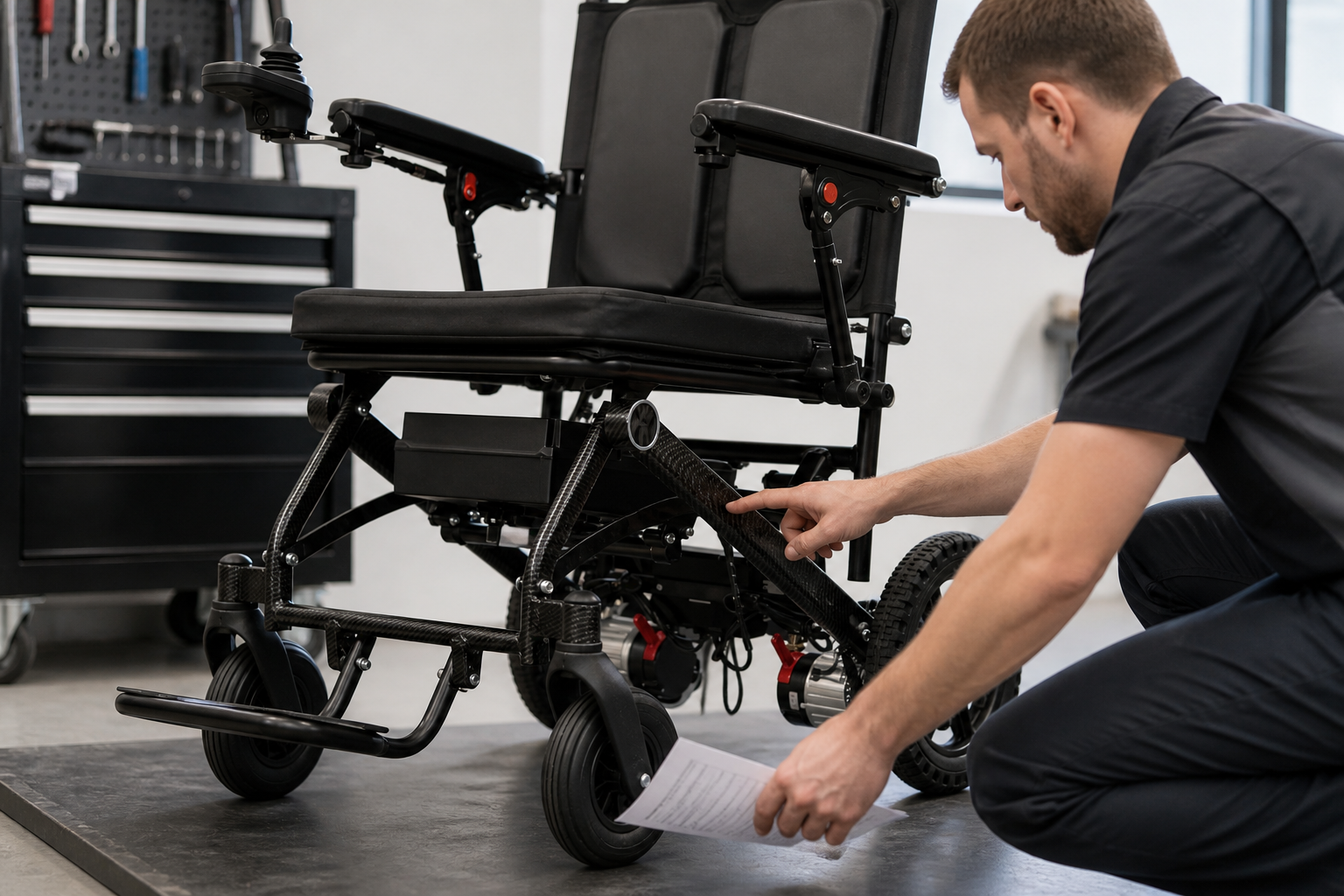
A brushless motor electric wheelchair evidence pack should include current product identity, configuration, user instructions, control and charging documents, parts references, service contacts, revision history, and written limits for staff tasks.
Ask for documents before the sample arrives. Compare titles, revision dates, model names, option codes, illustrations, and control descriptions across the pack. The electric wheelchair engineering overview gives related category context, yet the offered chair still needs its own current sources. A mismatch between a manual image and a sample part should remain open until the supplier explains it.
Map each document to a business action. Purchasing needs configuration and quotation links. Operations needs permitted daily checks, charging, storage, and issue reporting. Training needs mode and control instructions. Service teams need part identity, fault escalation, repair authority, and update routes. Receiving needs an approved configuration baseline. One PDF rarely covers every role well.
Build a document map with revision control
The useful question is not how many files arrived:
Record what each file controls, which model and option it covers, who supplied it, when it was received, and whether a later revision exists. Link unresolved conflicts to the affected acceptance field. Store original files rather than renaming them into vague folders. A clean index lets staff find the proper instruction without guessing from a similar product image.
- document title, revision, date, and supplier source
- covered model, option, control, and charger identity
- business owner and action supported by the file
- conflict, open question, and later update link
Ask how the supplier communicates later revisions and service notices. Record the reply beside the document map. If updates arrive through email, keep the thread with the affected file and decision. That practice protects context during staff turnover or a later fleet review.
Key Takeaway: A document map turns a folder of files into a controlled source system for purchasing, operations, training, service, and receiving.
How should a supervised sample review be planned?
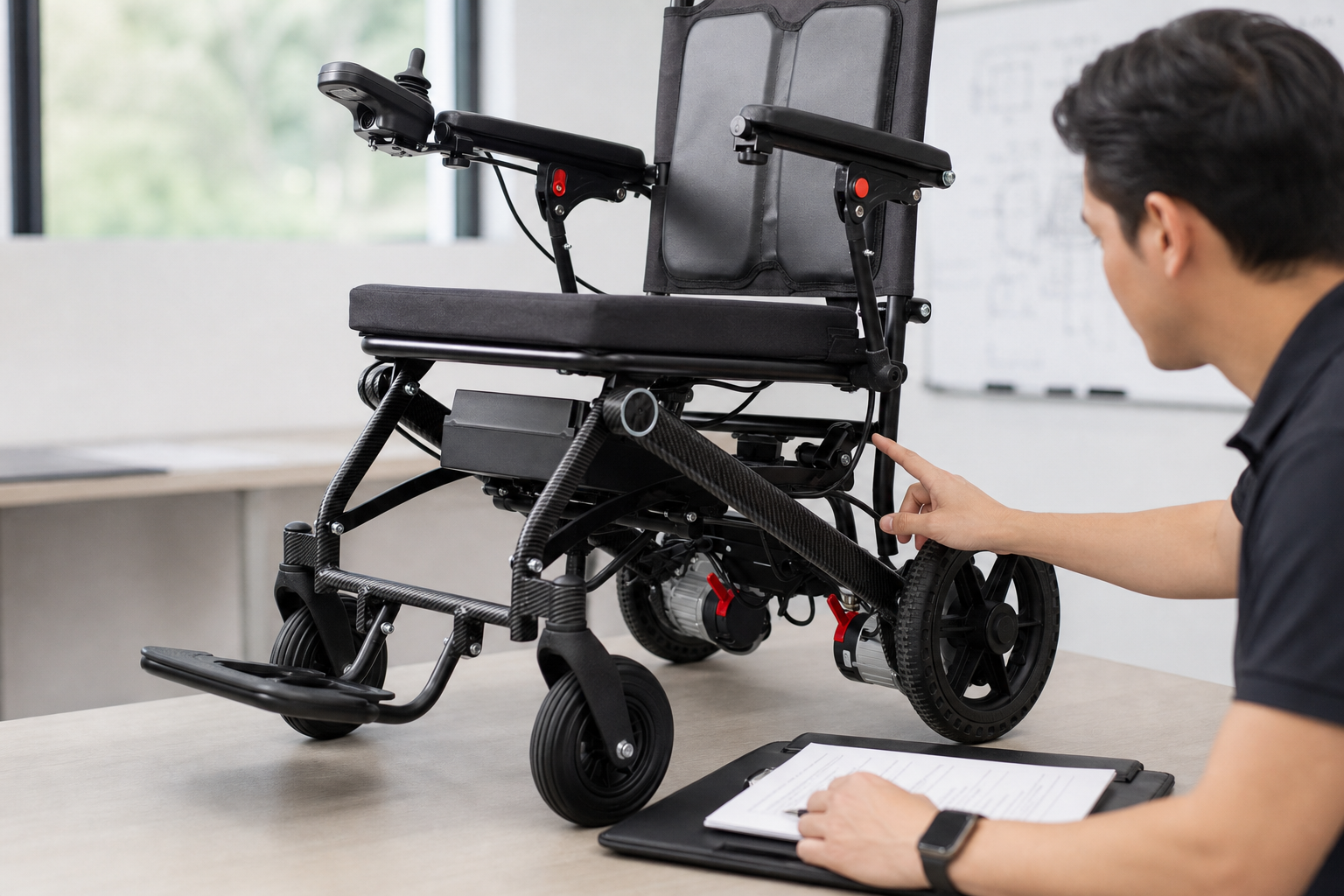
A brushless motor electric wheelchair sample review should follow a written route, configured-chair identity, permitted control checks, charging and storage plan, staff roles, observation fields, and clear stop conditions.
Plan the session before the chair moves. Confirm the sample identity, current instructions, controller side, seating setup, foot support, battery and charger pairing, and route. The lightweight electric wheelchair page can prompt handling questions, but only the exact sample source should govern folding, lifting, charging, or operation. Assign a leader, observer, and note owner.
Break the review into controlled checkpoints: visual inspection, control orientation, permitted power-on checks, low-risk supervised route, stopping and parking, storage, charging setup, folding if applicable, and issue reporting. Follow qualified guidance and local policy. Do not test beyond documented limits. If behavior differs from the source, stop that checkpoint and record the difference.
Use checkpoints that another team can repeat
This makes the sample session auditable:
Give each checkpoint a method, expected source, observer field, result status, and open action. Note floor, route, configuration, accessories, and staff assistance. Avoid broad statements such as smooth or powerful without a defined observation method. Record what happened in neutral language and attach a source or photo where useful.
- sample identity, configuration, and current instructions
- controlled route with permitted operating checkpoints
- neutral observation, result status, and stop reason
- owner for open action and repeated check
Keep the sample record beside supplier claims so reviewers can see where observation supports, conflicts with, or does not address a statement. A clean trial does not prove behavior in every setting. It confirms only the defined configuration and method recorded that day.
Key Takeaway: Repeatable checkpoints give a sample review more value than an informal demonstration.
What should service teams inspect and record?
A brushless motor electric wheelchair service review should record visible drive assemblies, controller, cables, connectors, battery housing, charger identity, frame joints, wheels, brakes, fasteners, and permitted maintenance steps without unsupported diagnosis.
Invite service staff into sample and receiving reviews. They should inspect accessible areas under the manual and local authority, noting visible condition, routing, clearance, attachment, labeling, and document match. Do not open sealed parts or adjust settings unless the proper instruction and role permit it. A visual difference can trigger a question without proving a technical cause.
Build a service file before a fault occurs. Include product identity, configuration, manuals, supplier contacts, parts references, issue form, escalation route, warranty or service terms, and closure record. Separate routine staff checks from technician work. Keep replaced-part identity and repeated function checks linked to the original report.
Create a service trail from observation to closure
The record should tell one continuous story:
Use dated events for report, triage, supplier reply, technician action, part reference, repeated check, and return decision. Preserve earlier entries. Attach photos and documents to the event they support. If the chair remains out of normal use, show the next owner and status clearly so operations staff do not rely on a private email.
- visible component and cable condition
- source instruction and permitted staff role
- supplier or technician action with part identity
- repeated check, return decision, and approver
Review the file during handover and at planned document checks. A service route should survive personnel changes. If a supplier updates a component or instruction, link the revision to affected chairs and decide which inspections or training records need review.
Key Takeaway: A service trail keeps observation, authority, action, parts, repeated checks, and return decisions connected.
How can teams compare quotes without unsupported rankings?
A brushless motor electric wheelchair quote comparison should score only defined requirements with traceable evidence while keeping assumptions, missing fields, sample status, service duties, and commercial terms visible.
Use identical fields across suppliers. Do not award a high score to a claim whose measurement method or source remains unclear. The power wheelchair supplier comparison offers a related procurement framework. Add model, revision, configuration, document source, sample result, open action, and owner beside every criterion used in selection.
Keep commercial and technical views connected but distinct. Price, lead time, packaging, training, service response, parts route, and documentation each need their own field. A lower quotation may carry unresolved configuration or service questions. A higher quotation may include options that the buyer did not request. Show those differences instead of compressing them into one unexplained total.
Make assumptions and gaps visible beside the score
Here is the safeguard against false precision:
Define the evidence needed for each score before reviewing proposals. If evidence is absent, use an open status rather than a guessed value. Record who can close the field and what source or sample check will count. Freeze a dated comparison copy when the decision is approved, then log later changes separately.
- defined requirement and acceptance method
- source, sample status, assumption, and gap
- commercial term and included option
- decision owner, date, and change history
Share the comparison with purchasing, service, operations, and training reviewers. Each group sees a different risk. A cross-functional signoff should confirm the record reviewed, not imply that every unknown disappeared. Keep accepted limitations visible in the purchase and receiving pack.
Key Takeaway: Evidence-led comparison protects buyers from confident rankings built on mismatched configurations or missing sources.
What should arrival and service handover preserve?
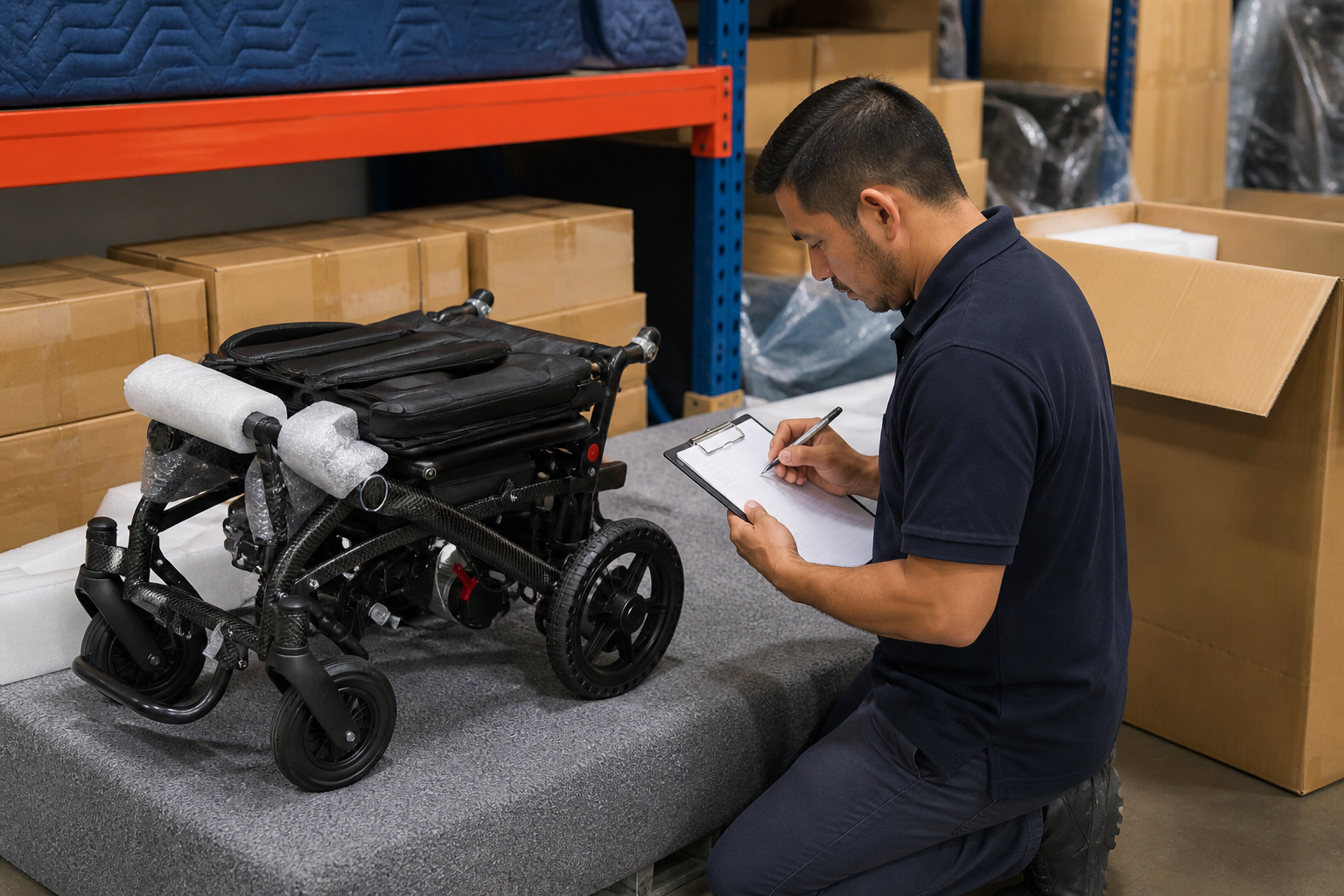
A brushless motor electric wheelchair handover should preserve approved configuration, source documents, sample observations, receiving results, charging and storage instructions, service contacts, issue reporting, and open-item ownership.
Receiving staff should compare the delivered chair against the approved configuration record. Check visible frame, wheels, seat, armrests, controller, cable route, battery housing, charger, foot support, documents, and supplied parts. Record shipping or packaging condition without claiming a hidden technical cause. Hold mismatched fields open and follow the buyer’s acceptance authority.
Staff handover should cover identification, current instructions, permitted checks, control orientation, charging and storage, folding or handling where applicable, cleaning limits, issue reporting, and service escalation. Attendance alone does not prove a skill. Use supervised practice and local policy, then record what was covered, which chair and document applied, and which action remains open.
Carry the evidence file into daily operations
The procurement record still has work to do:
Store the approved source map, configuration, receiving check, training record, and service route where authorized staff can find them. Link later updates to the same chair identity. If a component or document changes, review affected operating steps rather than assuming the earlier handover still covers them.
- approved configuration and receiving comparison
- current operating, charging, and storage sources
- training scope, supervised practice, and open action
- issue report, service contact, and closure route
A shared evidence file supports purchasing review, staff training, service decisions, and supplier conversations long after delivery. For a model-specific comparison sheet or documentation discussion, contact us today.
Key Takeaway: A good handover moves approved evidence into operations without losing configuration, source, service, or open-item context.
What do buyers ask about brushless motor wheelchairs?
Can I treat brushless as proof of longer service life?
No. Ask for model-specific evidence, methods, conditions, and service records before accepting any durability or service-life statement.
What's the best source for motor and controller identity?
Use current documents tied to the exact chair model, revision, and configuration, then compare them with the physical sample and supplier reply.
How do I know whether a sample result supports a claim?
Define the claim, source, configuration, method, conditions, observer, and acceptance rule before the supervised review begins.
Can ordinary staff open motor or battery housings during inspection?
Not unless current instructions and local authority permit that task. Keep visual checks separate from trained service work.
What should stay open after quote comparison?
Any missing source, mismatched revision, untested checkpoint, unclear option, service gap, or unresolved receiving duty should retain an owner and status.