
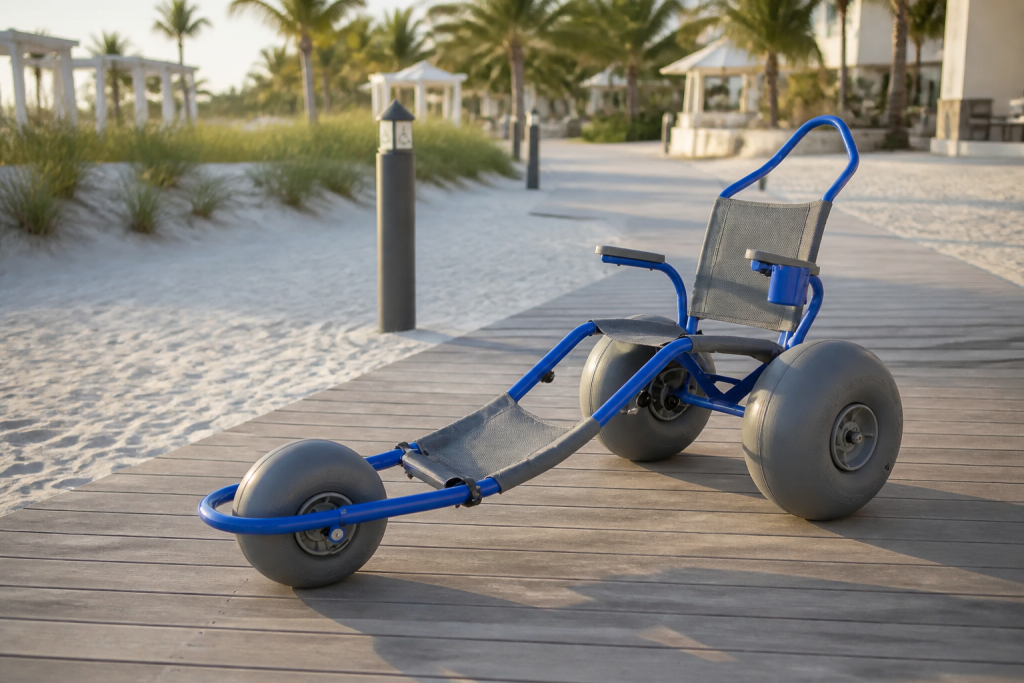
An all terrain beach wheelchair becomes a sound resort purchase when its geometry, route fit, care workload, storage footprint, and supplier support all match a documented operating plan. A photo of wide wheels on sand can look convincing, yet a procurement team still needs proof that the chair suits its boardwalks, turning points, staff routines, and guest service model. This buyer checklist turns that broad task into a usable review process. It starts with the route, moves through product and supplier records, then closes with receiving checks and a controlled pilot. Buyers can use the all terrain beach wheelchair product page as a visual reference while building a site-specific specification. The goal is not a universal model. It is a clear match between one facility, one operating plan, and one documented product configuration.
What route conditions should resort buyers document?
An all terrain beach wheelchair should be selected against a recorded route from guest pickup through sand access, turning space, rest points, and the return path. Resort teams often focus on soft sand alone. A real service route may include reception flooring, ramps, boardwalk gaps, packed sand, loose sand, grass, curb cuts, wash stations, and a storage doorway. Each surface changes rolling resistance and staff handling. The route record should name surface changes, narrow points, slopes, crossfalls, drainage channels, and places where another staff member may need to assist. Photos taken from both travel directions help suppliers understand the setting without relying on vague phrases such as “rough beach.” A simple route map also gives operations staff a shared basis for training, guest briefings, and later reviews.
How should teams map surfaces and turning points?
Route mapping should follow the same path staff plan to use during guest service. Measure clear widths at gates and doorways, note the tightest turn, and record where a long front wheel assembly must swing. Observe sand after wind, rain, grooming, and busy visitor periods because texture can change within one property. The beach series can help buyers compare chair layouts while they mark these conditions.
Here is the practical point: a route survey should describe what staff will actually face, not what a brochure image suggests.
- Mark every surface change from pickup to destination.
- Record clear widths at doors, gates, ramps, and wash areas.
- Photograph turning points from both directions.
- Note slopes, crossfalls, soft patches, and drainage edges.
- Identify safe places for a pause or two-person handoff.
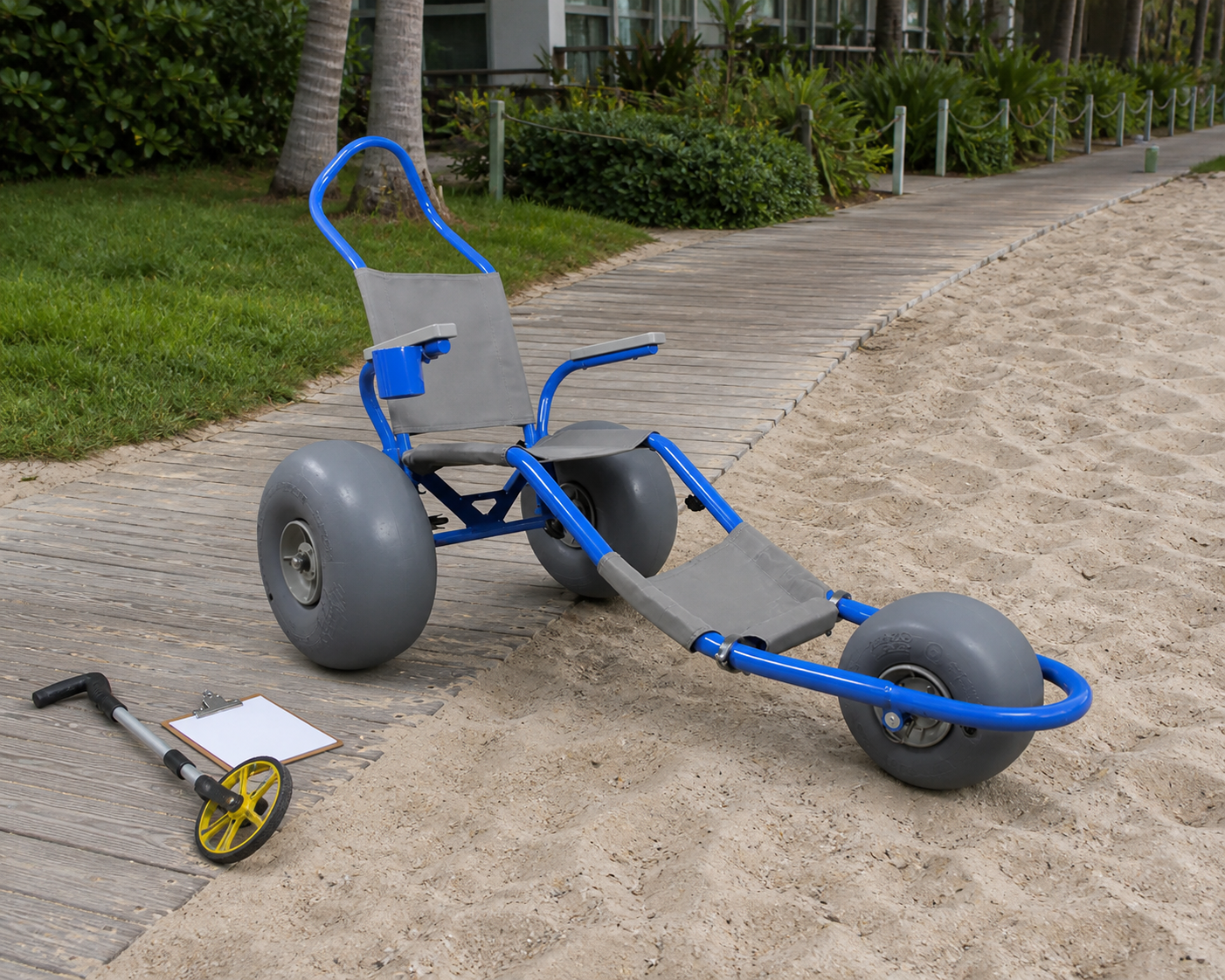
Run the survey with an empty test device or a suitable mock-up whenever site policy allows. Avoid using a guest as the trial load during an early route check. Staff can study push angles, line of sight, wheel tracking, and the effect of a long front section without creating service pressure. The route record should also state where the chair must never go. Water entry, steep slopes, steps, unstable edges, or public vehicle lanes may sit outside the planned service. Written boundaries make a supplier discussion more precise and give supervisors a basis for staff authorization.
Which product details belong on the buyer checklist?
An all terrain beach wheelchair checklist should cover frame layout, wheel geometry, seating support, transfer access, control points, cleaning access, transport method, and replacement-part records. Buyers should ask for the exact configuration quoted, since photos may show optional parts or a related model. Match each supplier response to a drawing, current photo, manual, or written declaration. If a feature matters to the route, add it to the purchase specification. A broad claim such as “works on sand” does not describe wheel count, tire type, front clearance, turning space, or staff effort. Product documents should let a reviewer connect each physical detail with a task on the mapped route.
What should procurement compare across supplier files?
Procurement should compare like with like. One quote may include supports, straps, cushions, a sunshade, or transport parts while another quote lists only the base chair. Request an itemized configuration and a labeled component list. The article on selecting a beach wheelchair for access offers a related framework for matching a chair with its setting.
What deserves a closer look? The small service details often shape fleet downtime more than a marketing headline.
- Frame material and finish stated without unsupported durability promises.
- Wheel size, wheel count, tire construction, and attachment method.
- Seat, back, arm, foot, and strap layout shown in current documents.
- User fit ranges supplied by the manufacturer for the quoted model.
- Tool needs for routine checks, cleaning, assembly, or transport.
- Parts list, manual version, warranty terms, and support contact route.
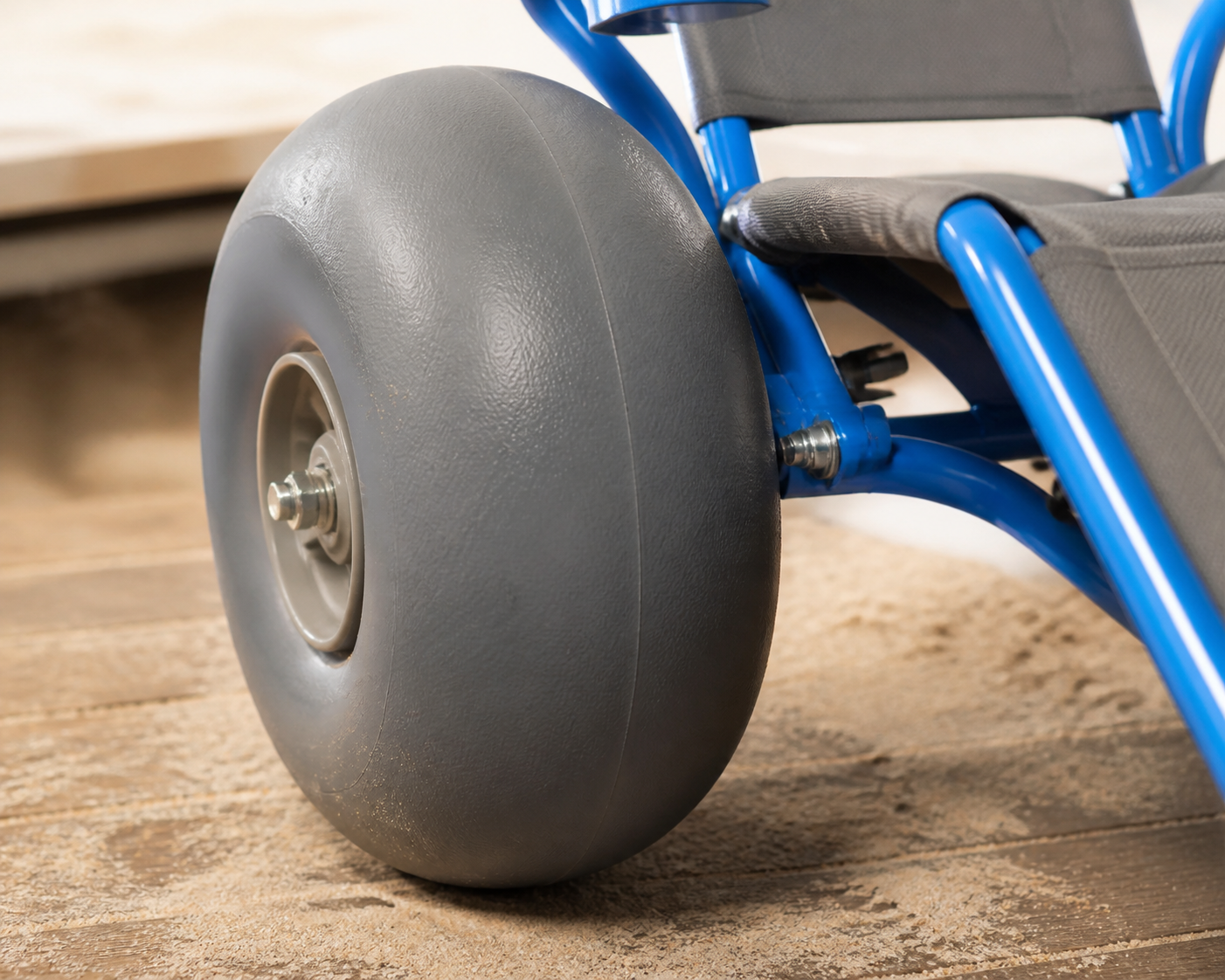
Ask how the chair arrives and what assembly remains. A resort may have limited technical staff on an island or seasonal property. One missing pin, unclear fastener, or unmarked strap can delay guest service even when the main frame arrives intact. Request packing photos or a packing list before dispatch. Confirm how loose components are identified and whether a receiving team can match them with the manual. Buyers should also ask how the supplier handles document revisions. A dated manual and a model-specific parts list are easier to control than screenshots exchanged in chat.
| Review area | Evidence to request | Site question |
|---|---|---|
| Route fit | Drawing, dimensions, current photos | Can staff clear every mapped turn and doorway? |
| Seating | Component list and adjustment notes | Does the quoted setup match the planned guest program? |
| Wheels | Construction and attachment record | Does the layout suit recorded surfaces and cleaning access? |
| Care | Manual and inspection points | Can staff perform checks with available tools? |
| Support | Parts process and response channel | Who handles a model-specific service request? |
How should resorts plan care, storage, and staff handoffs?
An all terrain beach wheelchair needs a care and storage plan before the purchase order is approved. Sand reaches hubs, joints, fabric seams, and low frame areas. Salt-laden air can also affect equipment kept near the shore. A facility should define where the chair is inspected, how loose sand is removed, which cleaning method follows the supplier manual, where components dry, and who signs the record. This plan does not require invented service intervals. It should use the current manual, site exposure, and local operating experience. The plan should also name a dry storage location with clear access around the chair, room for any detachable parts, and protection from guest traffic or stacked equipment.
Which operating records keep a fleet consistent?
Operating records should be short enough for real shifts. A long form that staff skip has little value. Use a pre-use check, a post-use care entry, a fault tag, and a periodic supervisor review. Each record should identify the unit, date, staff member, observed condition, and action taken. The all terrain beach wheelchair guide provides useful context for route and surface discussions, while the manufacturer manual remains the source for model-specific care.
Here is where discipline pays off: a clear handoff keeps a questionable chair out of service until a supervisor reviews it.
- Assign a unique internal unit code that does not alter the product label.
- Check wheels, attachments, straps, fabric, frame joints, and controls.
- Record cleaning, drying, and any part removed from service.
- Use a visible hold tag when staff find damage or unusual movement.
- Keep supplier messages and parts records with the unit history.
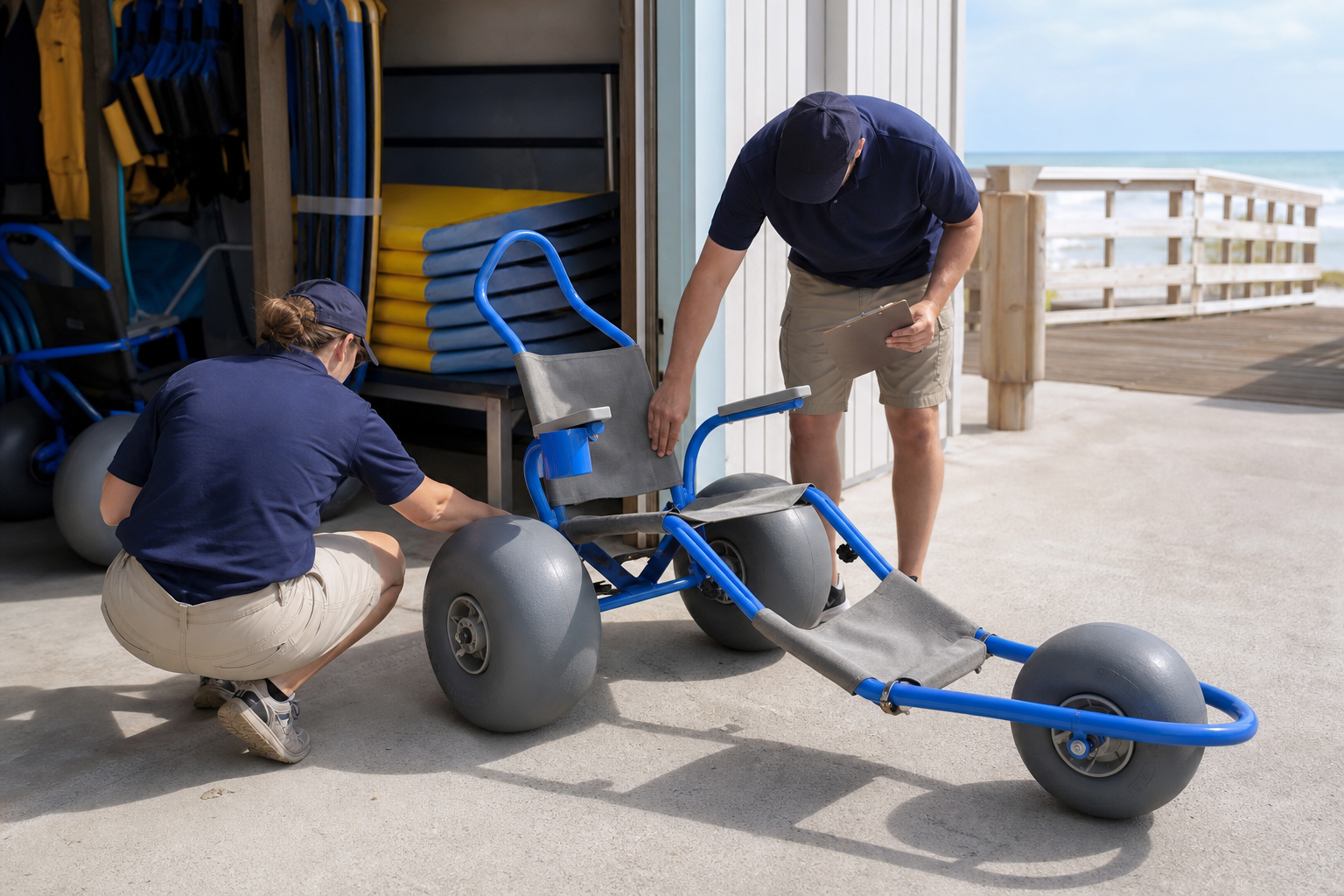
Training should separate authorization from familiarity. A staff member may recognize the chair yet still need supervised route practice before helping a guest. Build a short module around the mapped path, communication with the guest, transfer boundaries set by facility policy, safe pushing positions, stopping points, and fault reporting. Repeat the route review when beach grooming, construction, storms, or seasonal furniture changes the path. A buyer checklist should treat these operating tasks as part of ownership because staffing time and equipment availability are linked.
What should happen during receiving and pilot review?
An all terrain beach wheelchair should pass a documented receiving check and a controlled pilot before it joins a resort fleet. Receiving begins with the purchase specification, packing list, and model identifiers. Staff should inspect packaging condition, count components, match labels with documents, photograph the assembled unit, and record any shipping concern. Assembly must follow the supplied manual. If a part or instruction is unclear, pause and ask the supplier rather than improvising. The receiving record should also capture featured accessories and spare parts so later inventory reviews use the same baseline.
How can buyers run a controlled pilot?
A pilot should use a defined route, trained staff, clear stop rules, and a written observation form. Start with an empty device check, then follow facility policy for any user trial. Observe turning room, staff posture, wheel tracking, guest communication, cleaning time, and movement into storage. Do not turn one successful pass into a broad terrain promise.
The useful question is simple: does this exact configuration fit this exact operating plan?
- Confirm that every ordered component matches the purchase record.
- Test doors, gates, turns, ramps, surfaces, and wash-station access.
- Record staff comments without changing supplier specifications.
- Log any loose fastener, rubbing part, fabric concern, or handling issue.
- Close each issue with a named owner before general service begins.
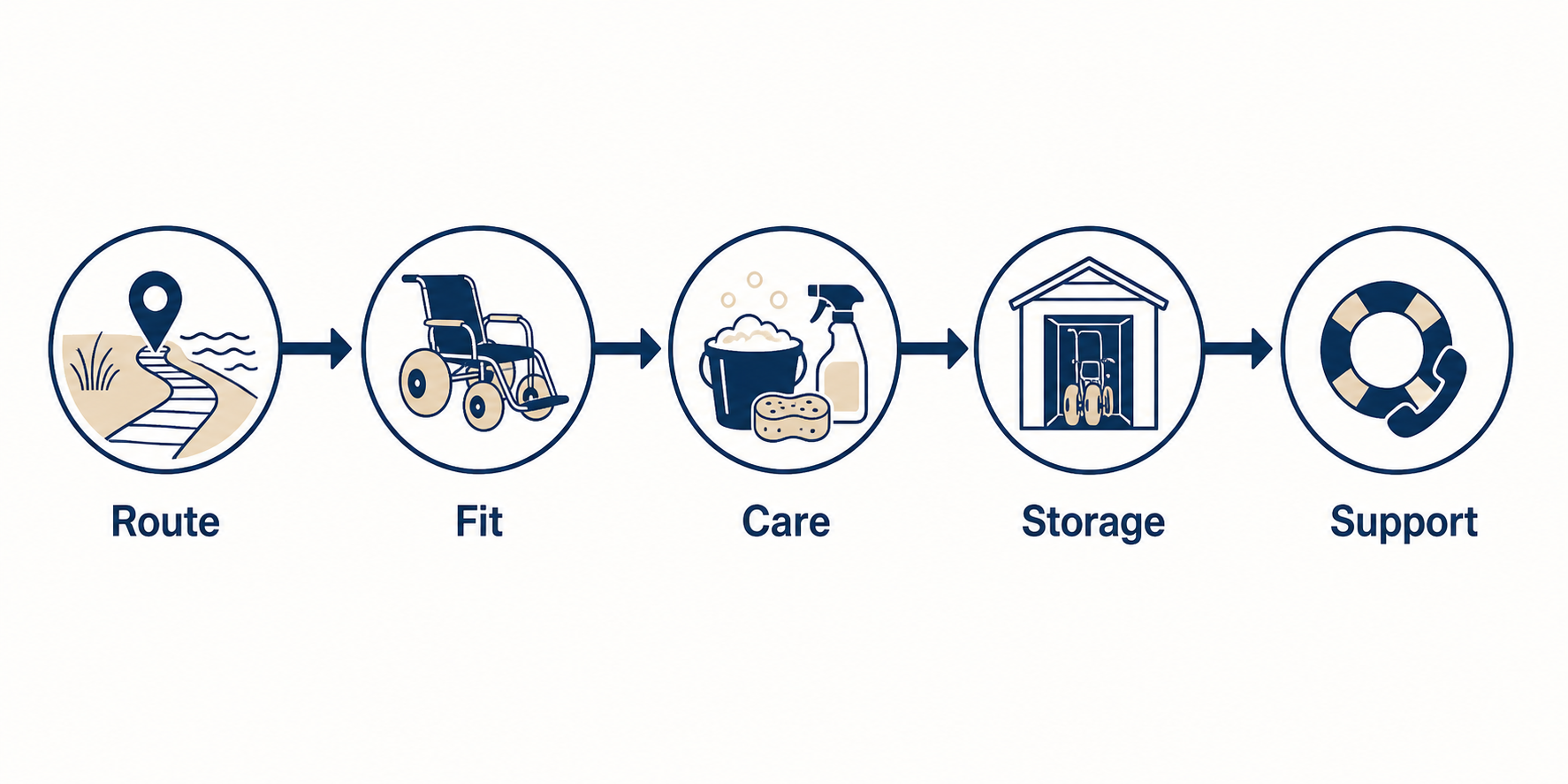
The pilot report should lead to a clear disposition: accepted, accepted with a documented condition, or held for supplier action. Keep photos and correspondence with the unit record. If the team changes a route or operating rule, revise the training sheet at the same time. Procurement can then use pilot findings when planning a later order, spare-parts stock, or fleet placement. This approach also helps buyers compare suppliers on evidence, response quality, and document control rather than sales language alone.
Buyers can also run a document drill before approving the invoice. Give a receiving supervisor the manual, packing list, component photos, and supplier contact route, then ask that person to identify the chair, locate every detachable part, and describe the hold process. Gaps found during this desk review are cheaper to fix before seasonal staff arrive. The same drill can test whether procurement, maintenance, and guest-service teams use matching model names and unit codes. Clear naming reduces delays when a staff member needs a part, a revised instruction, or a supplier reply during a busy operating day.
What should your resort team do next?
An all terrain beach wheelchair purchase should move forward only after route evidence, product records, operating capacity, receiving steps, and supplier support align. Start with a route walk and a short site brief. Send that brief with photos and boundary conditions to shortlisted suppliers. Ask each supplier to reply against the same checklist, then record gaps rather than filling them with assumptions. Review storage space and staff availability before agreeing on quantities. A small, controlled pilot often gives better purchasing evidence than a large opening order based only on a product photo. If your team wants to discuss a model-specific configuration, documentation set, or purchasing plan, contact us today with your route notes and expected operating setting.
What do resort buyers often ask?
An all terrain beach wheelchair raises practical questions about surfaces, staffing, fitting, care, and supplier evidence.
Can I use one chair on every resort surface? No. Surface fit depends on the exact chair, route, conditions, and operating limits. Map each surface and confirm it against model documents and a controlled site review.
What’s the best way to compare supplier quotes? Use one itemized checklist. Ask every supplier for the quoted configuration, current manual, component list, parts process, warranty terms, and written answers tied to your route.
How do I know if storage space is adequate? Measure the assembled chair and any transport or detachable parts. Leave working clearance for inspection, drying, movement, and fault isolation.
Can I accept a chair immediately after delivery? Not yet. Match the shipment with the purchase record, assemble it by the manual, complete a receiving inspection, and run the approved pilot process.
How do I know if staff are ready? Use supervised route practice and a short competency record. Staff should know service boundaries, guest communication steps, pre-use checks, care tasks, and fault reporting.