
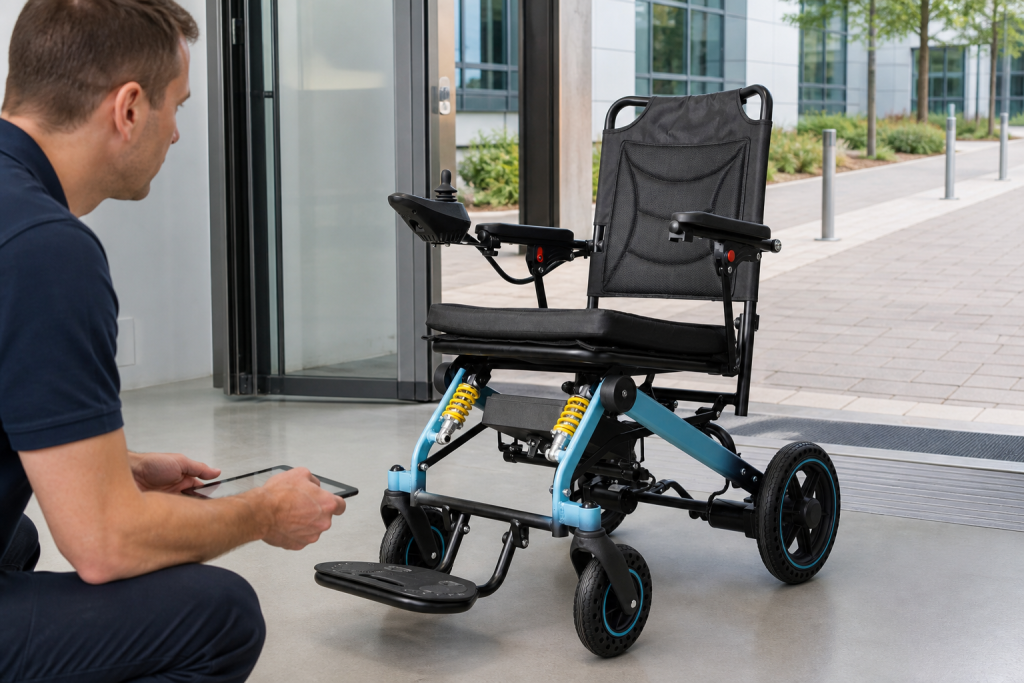
An electric wheelchair suspension review should identify the fitted components, intended route, tire setup, maintenance needs, and model-specific evidence before any comparison. Inspect the actual chair. Use a controlled route. Record observations without turning comfort impressions into unsupported performance claims. For U.S. facilities, align site procedures with official mobility-device guidance.
Electric wheelchair suspension becomes easier to review when buyers connect visible components, current product sources, route maps, supervised trials, maintenance boundaries, and arrival records. A photograph of a spring cannot prove how a chair will behave across every floor, threshold, ramp, or paved path. Procurement teams need a method that separates what they can see from what a supplier must document and what a supervised sample review may observe.
This article gives distributors, care facilities, rental programs, and purchasing teams a practical B2B review structure. It avoids invented comfort, terrain, speed, or durability claims. Instead, it shows how frame connections, spring assemblies, wheel relationships, route checkpoints, service roles, and change history can stay tied to one configured chair from the buyer brief through receiving.
What should an electric wheelchair suspension brief contain?
In practice, An electric wheelchair suspension brief should contain operating surfaces, route changes, visible component identity, configured-chair details, source documents, supervised checks, service roles, and receiving criteria.
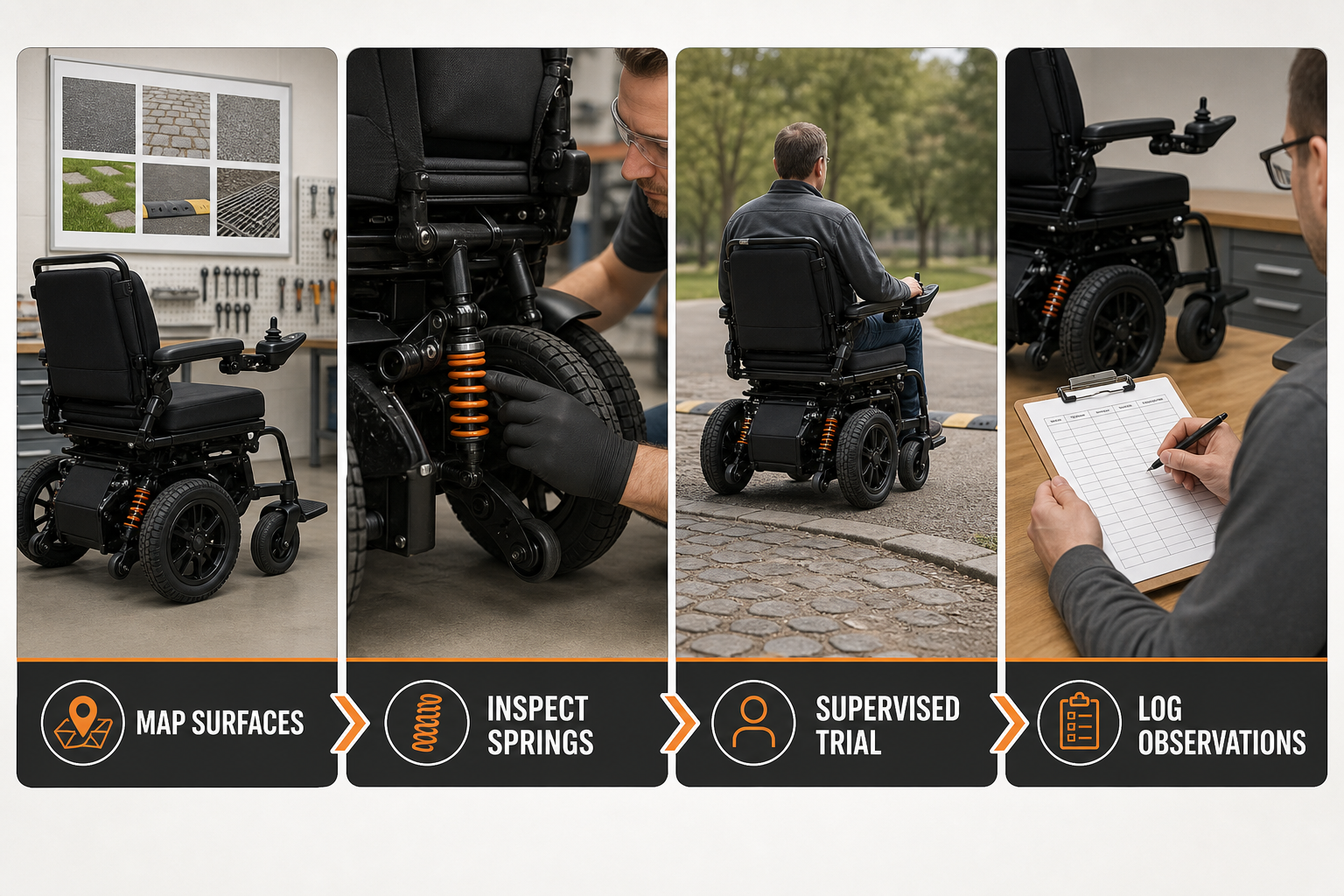
Start with real locations. Record indoor floors, doorway thresholds, lift entries, ramps, paved courtyards, joints, curb cuts, storage areas, and return routes that belong in scope. Do not describe a chair as all-surface or universally comfortable. Those phrases hide the buyer’s actual setting and may imply evidence that has not been supplied.
Build the brief around surfaces and sources
Here is the practical starting point:
Next, Give each route and component field an owner, source, status, and review method. Name the configured chair, wheel setup, visible spring location, cushion, foot support, controller position, and any supplied options. Mark gaps as open and keep commercial terms apart from technical review.
- indoor floors, thresholds, turns, ramps, and lift entries
- paved outdoor joints, curb cuts, slopes, and route boundaries
- visible spring, wheel, frame, seating, and control configuration
- source, supervisor, service role, open item, and owner
If a supplier changes wheels, springs, frame parts, cushion, or another option, create a dated configuration entry. Do not overwrite the earlier sample. A clear history helps buyers see which observations still apply and gives receiving staff a reliable comparison point.
Key Takeaway: A useful suspension brief replaces broad terrain language with named surfaces, components, sources, and review roles.
How should teams inspect visible spring assemblies?
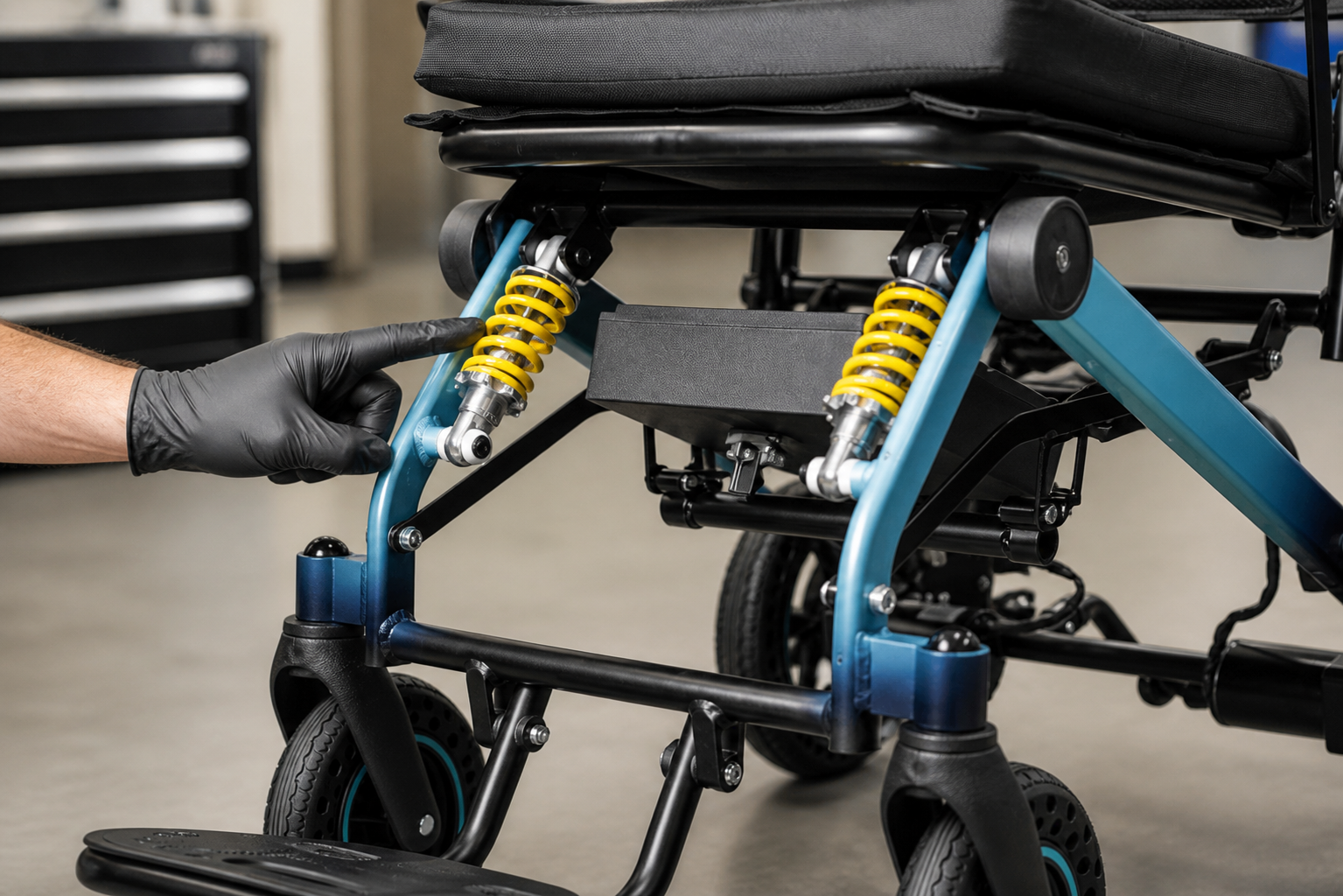
Meanwhile, Electric wheelchair suspension inspection should identify visible springs, mounting points, nearby frame members, wheel relationships, fasteners, clearances, and service boundaries without disassembly.
Review the empty stationary chair in good light. The electric wheelchair engineering overview can frame related structural questions, but the current source for the offered model should govern component names and permitted checks. Do not infer spring rate, travel, life, or comfort from color or size.
Keep the component check visual and traceable
The safe record stays close to visible facts:
For example, Photograph both sides from repeatable angles. Note component presence, mounting relationship, visible fastener condition, clearance from cables or moving parts, and any difference from the approved configuration. Keep adjustment, removal, lubrication, or replacement inside the assigned service role.
- spring location and relationship with frame and seat base
- visible mounts, fasteners, nearby cables, and clearances
- front caster and rear wheel relationship on the configured chair
- concern status, hold rule, service owner, and closure record
Use neutral language such as visible, aligned with approved photograph, source missing, or service review requested. Avoid a diagnosis based on appearance. A component image supports identification and comparison; it does not prove performance or remaining service life.
Key Takeaway: Visible component checks document identity and condition while leaving hidden or technical work to the proper source and role.
Which indoor route details belong in the record?
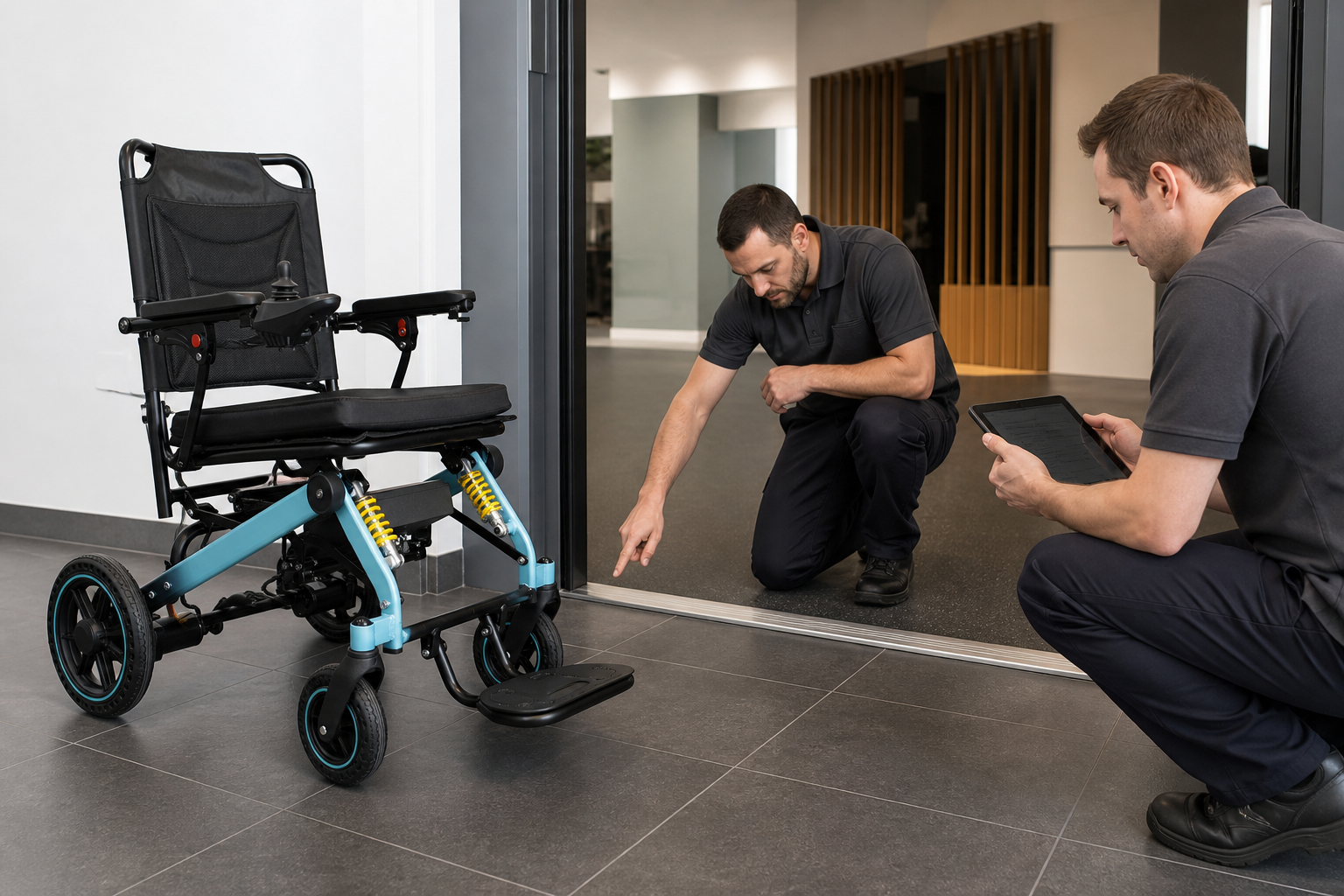
Still, Electric wheelchair suspension route records should name floor surfaces, joints, thresholds, doorway approaches, turns, ramps, lift entries, and staff checkpoints in travel order.
Map the facility before bringing a sample onto the route. The ergonomic electric wheelchair page can prompt questions about seating and control position, yet a route review still needs the exact chair configuration and real location. Record where the floor changes and which staff role supervises each checkpoint.
Map indoor checkpoints before a trial
This is where route context becomes usable:
Afterward, Create a simple path from storage through destination and return. Mark floor junctions, thresholds, turns, door approaches, lift entry, parking, and charging areas. Add stop rules and note which checkpoints were not tested. Do not convert a clean passage into a claim for every building.
- storage release, charging area, and corridor surface
- floor joint, doorway threshold, turn, and lift entry
- destination space, parking point, and return route
- supervisor, stop reason, open question, and follow-up owner
Use the configured sample planned for the program. A wheel, cushion, foot support, or controller change may alter the route method even when visible springs remain the same. Repeat affected checkpoints and label the new configuration in every photograph and note.
Key Takeaway: Indoor route records work when surfaces, sequence, staff roles, and configured parts remain visible.
How should paved outdoor routes be evaluated?
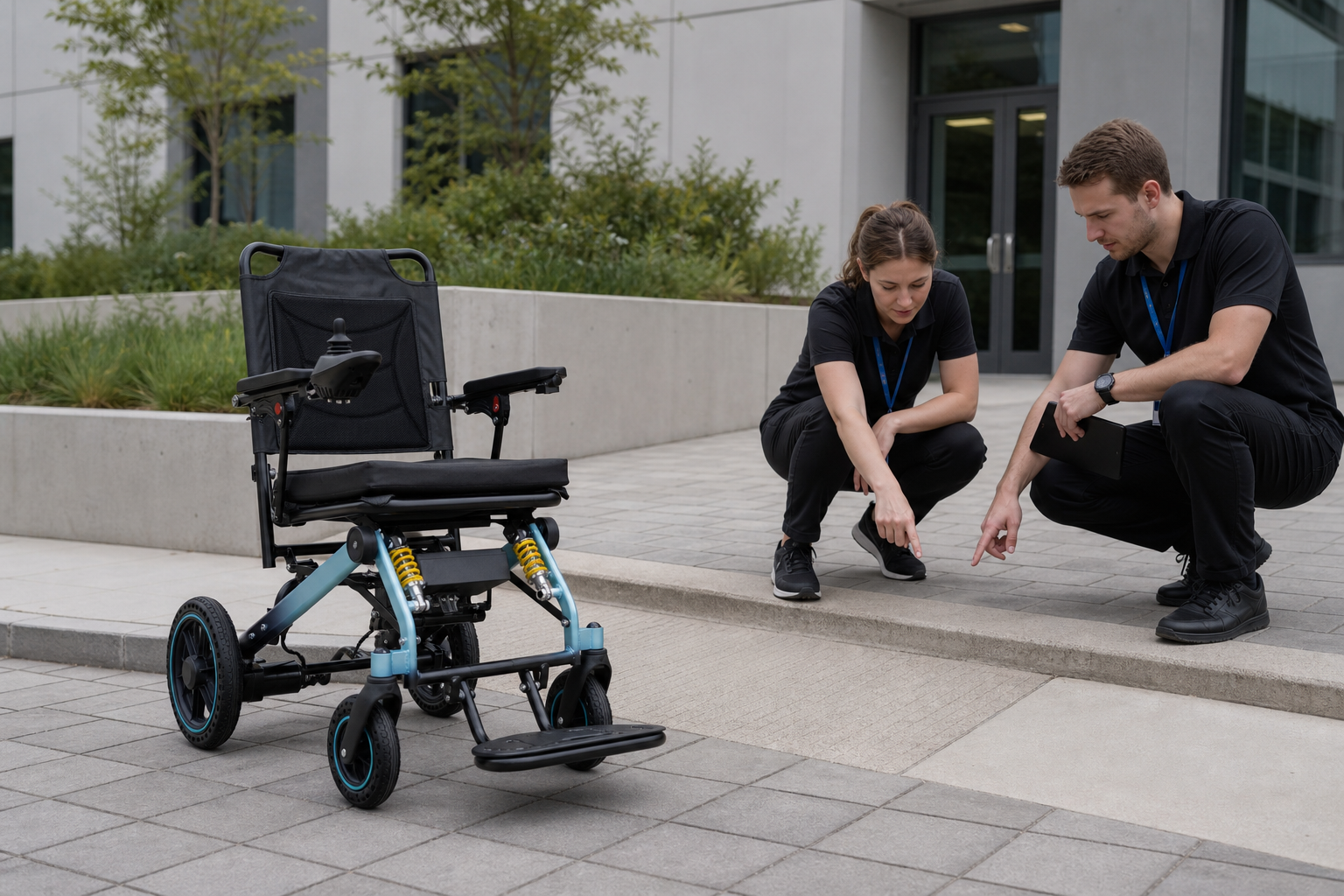
In practice, Electric wheelchair suspension outdoor review should use named paved surfaces, route boundaries, weather limits, curb cuts, joints, ramps, supervision, and stop rules rather than broad terrain claims.
Choose a route tied to the buyer’s real program. The outdoor power wheelchair article can prompt supplier questions, but it cannot prove that a different chair suits a given path. Keep grass, gravel, steep slopes, or rough ground out of scope unless current product sources and qualified reviewers place them there.
Separate route observation from product claims
The record should say exactly what was reviewed:
Next, Note paving type, surface joints, curb cut, ramp, route length method if the buyer uses one, weather condition, configured chair, supervisor, and stop rules. Describe observations without claiming shock reduction, comfort, traction, range, or stability beyond supplied evidence.
- paved surface, joint, curb cut, ramp, and route boundary
- dry or wet condition only when recorded through local policy
- configured chair, wheel setup, seating, and controller position
- supervisor, stopped checkpoint, issue owner, and repeat action
Photographs should provide context, not a score. Keep any measurements in a controlled worksheet with method and owner. If weather, surface, route, or configuration changes, treat the new review as a separate record rather than extending the earlier observation.
Key Takeaway: Outdoor review becomes defensible when it names a limited paved route and avoids universal terrain language.
What should supervised trial notes capture?
Meanwhile, Electric wheelchair suspension trial notes should capture configured-chair identity, route checkpoints, supervisor, source, observed chair actions, stop reasons, open items, and repeated checks.
Prepare the route and chair before a participant joins. Confirm current instructions, chair identity, visible components, controls, seating, foot support, battery status under permitted checks, and staff roles. Keep the trial focused on observable events within the defined setting. Do not write a diagnosis or promise comfort, safety, endurance, or health outcomes.
Use neutral observations at each checkpoint
Here is the discipline that keeps notes useful:
For example, Write what happened at a named point: trial paused before threshold, staff cue requested, route segment not tested, service question raised, or configuration photo updated. Avoid subjective claims that cannot be traced to a method or identified reviewer.
- configured chair, source revision, route, and supervisor
- checkpoint order, observed action, and stop reason
- seating, control, wheel, or spring question raised during review
- open item, accountable owner, repeated check, and closure
Keep participant information limited to what local policy permits. Store product and route evidence without unnecessary personal data. When a part or source changes, identify which checkpoints need another supervised review and keep earlier notes in the history.
Key Takeaway: Neutral trial notes document a defined chair, route, method, and moment without turning observation into a universal promise.
How do supplier documents support maintenance planning?
Still, Electric wheelchair suspension maintenance planning should use current component names, inspection instructions, service intervals when supplied, authorized roles, parts routes, issue records, and revision notices.
Ask the supplier which documents cover visible suspension parts, frame connections, wheel assemblies, cleaning, storage, routine checks, and service work. Require product and revision identity on every answer. Keep a marketing page, manual, parts reference, service bulletin, sample photograph, and commercial term in separate evidence fields.
Connect component identity with service ownership
A useful supplier pack answers the next action:
Afterward, Staff should be able to identify a concern, apply the buyer’s hold rule, find the current source, and route the chair to the assigned service owner. They should not have to guess whether a spring, mount, wheel, fastener, or frame action belongs to routine observation or trained service work.
- current component naming and configured-chair identity
- routine visual checks and service-only actions
- parts request, service contact, return record, and closure
- document revision, affected training, and repeated route checks
Track supplier revisions. When a part or document changes, mark affected daily checks, training records, route methods, and receiving fields. Preserve earlier evidence rather than replacing it. That history supports later service questions and supplier review.
Key Takeaway: Maintenance planning depends on clear component identity, role boundaries, service routing, and document change history.
What should buyers verify before approval?
In practice, Electric wheelchair suspension approval should verify configuration, component sources, route scope, supervised notes, maintenance roles, supplier gaps, receiving criteria, and change control.
Bring purchasing, operations, training, and service colleagues into one review. Read open items aloud. Confirm which chair, wheel setup, spring assembly, seating configuration, and document set the decision covers. Keep commercial terms visible but separate from technical evidence.
Close open actions before the order moves
The decision page should be easy to audit:
Next, List requirement, source, sample observation, open gap, owner, service dependency, receiving row, and approval status. If a supplier changes a component after approval, create a dated decision entry and repeat affected checks. Give receiving staff the file before shipment.
- approved chair and visible component configuration
- named indoor and paved outdoor route scope
- supervised trial, maintenance boundary, and supplier evidence
- receiving checklist, change route, owner, and closure status
This method does not rank suspension through invented numbers. It helps a buyer document what was visible, sourced, tested, left open, serviced, and accepted in a defined setting. For a model-specific route sheet or supplier discussion, contact us today.
Before approval, ask a colleague who did not attend the trial to read the decision file. That reader should be able to identify the chair, visible suspension parts, route boundaries, source versions, open concerns, service owner, and receiving checks without relying on spoken context. Any unclear field should return to its named owner. This simple review tests whether the record can support another shift, another warehouse, or a later service discussion. Date the reviewed copy and keep superseded versions available so future teams can see why a route or component decision changed.
Meanwhile, Key Takeaway: Approval should preserve configuration, route scope, source quality, service ownership, and later changes.
What FAQs do buyers ask about electric wheelchair suspension?
Electric wheelchair suspension FAQs should clarify visible checks, route records, comfort claims, service work, and configuration changes without replacing model-specific sources.
Can I judge suspension quality from spring size or color?
For example, No. Appearance supports identification only. Ask for current product sources, service information, configured-chair evidence, and a defined supervised review.
What’s the best route for a suspension sample review?
Use the buyer’s real indoor and permitted paved outdoor checkpoints, with qualified supervision, named stop rules, and a recorded configuration.
Still, How do I know if a spring concern needs service?
Follow the current product source and buyer hold rule. Visible damage, looseness, unusual alignment, missing guidance, or a configuration mismatch should reach the assigned service owner.
Can one trial prove comfort on every surface?
Afterward, No. One trial records a defined chair, route, method, participant context, and date. It cannot support a universal comfort or terrain claim.
What should remain in the suspension buyer file?
Keep the brief, component photos, source revisions, route maps, supervised notes, service actions, decision copy, receiving record, and gap closures.
Related planning resources: Review adult wheelchair fit, wheelchair weight review, wheelchair delivery checks before approving a product, sample, route, or supplier decision.