
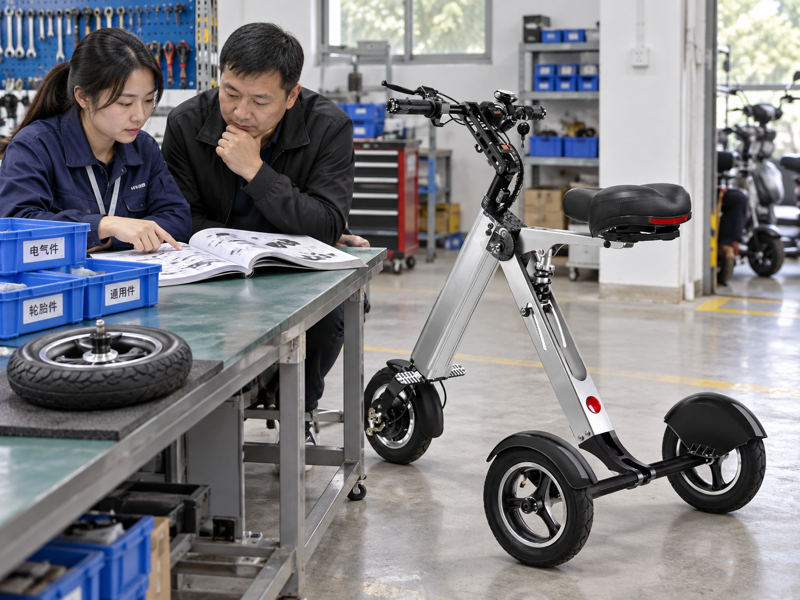
Choose spare parts by matching the exact scooter, model revision and approved part number before comparing prices. A repair can stall when a wheel, latch or controller arrives with the right general name but the wrong fit. Stocking more look-alike parts does not solve that problem. Build a mobility scooter spare parts plan around traceable references, current service information and the repairs your team is equipped to handle.
How do you identify the right mobility scooter spare parts?

Identify mobility scooter spare parts through the exact scooter model, relevant revision and the maker's approved parts record. Start with the complete unit before searching by the name of the failed item. A sales name can cover more than one production version.
Which records should the dealer request first?
Trace the unit before the loose part. Collect the model and serial details and any readable part marking. A clear photograph can support the request, but the parts team should confirm the approved reference.
- Identify the complete scooter and relevant revision.
- Record the existing part number where available.
- Ask the supplier to confirm the correct replacement.
| Record | Purpose |
|---|---|
| Model and serial details | Locates the correct product version |
| Approved part number | Defines the item to order |
Leave an uncertain reference open until the supplier resolves it. Key Takeaway: You can avoid selecting a part only because it resembles the one in a photograph.
Why do revisions matter for mobility scooter spare parts?

Revisions matter for mobility scooter spare parts because parts can change during a product's supply life. A wheel, mounting point or control assembly may differ from an earlier version. Compare the current product and model information with the unit being repaired.
Can an older parts list still be used?
Check which version the list covers. Ask the supplier how serial ranges or other records identify a change. Keep older lists for traceability, while making the correct current reference clear to the service team.
- Record the version or date of each parts list.
- Confirm which units a revised part fits.
- Retain written guidance on any approved replacement chain.
| Parts record | Question |
|---|---|
| Older list | Does it cover the unit in front of you? |
| Revised reference | Which models or serial ranges are included? |
A newer part is not automatically a universal replacement. Key Takeaway: The workshop can identify the right version before the order is placed.
Should mobility scooter spare parts be bought as pieces or assemblies?

Buy mobility scooter spare parts as individual pieces or assemblies according to the approved repair method and your service team's capability. A low-cost component may leave fitting, testing or additional parts outside the quote. Define the complete repair scope before choosing the item.
What does the quoted assembly include?
Open the contents list. Ask whether fittings, protective parts, instructions and other required items are included. Keep work that needs an authorised service provider separate from routine dealer handling.
- State the repair task the order must support.
- List included and excluded parts.
- Confirm who may fit and check the replacement.
| Order type | Clarify |
|---|---|
| Single component | What work and parts remain? |
| Complete assembly | What is supplied and which units does it fit? |
Compare the scope of the completed repair, not the item name alone. Key Takeaway: Your team will know whether the delivery is sufficient for the intended job.
Can mobility scooter spare parts be shared with other devices?
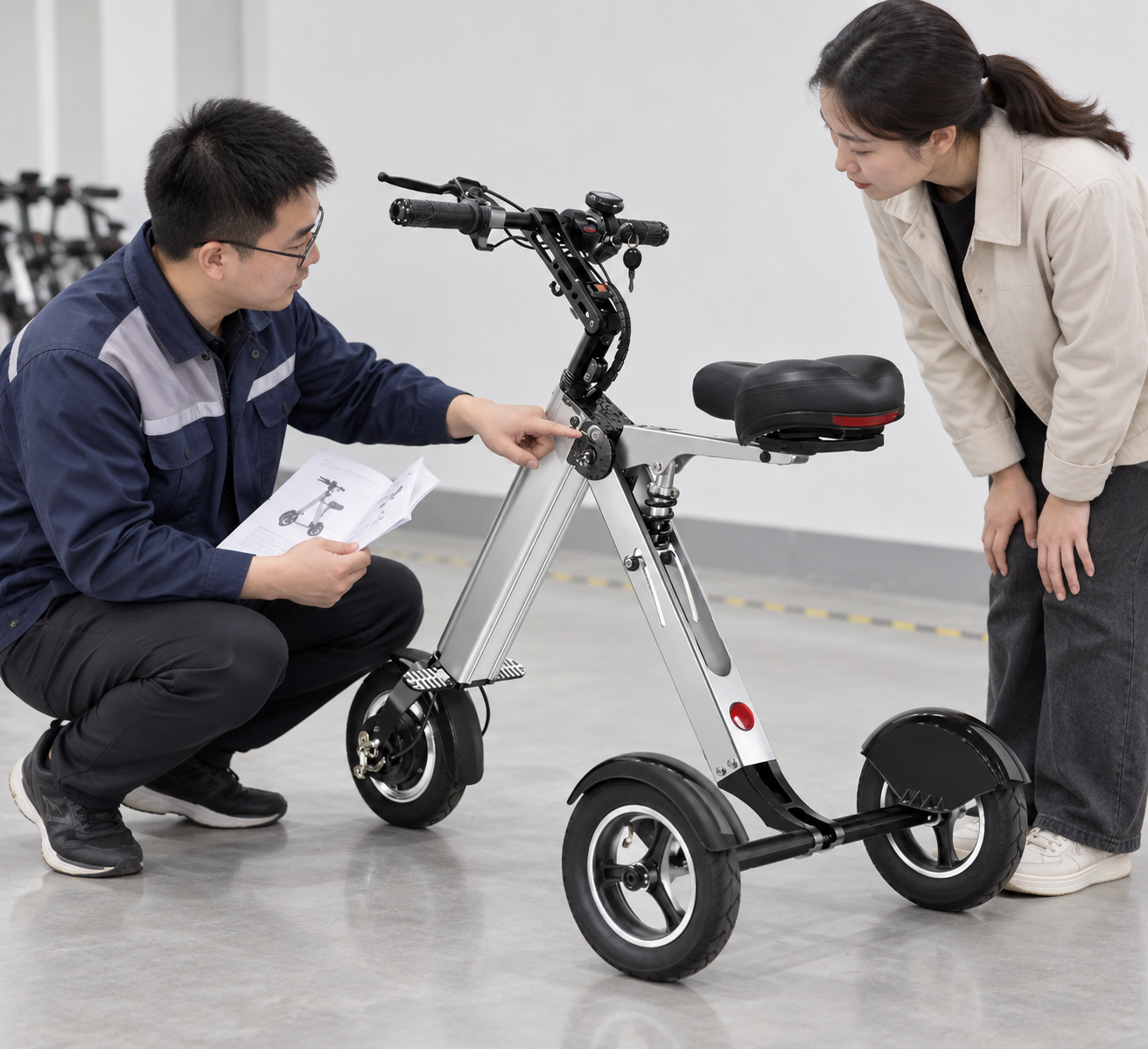
Mobility scooter spare parts should only be shared across devices when the maker confirms the exact match. Similar dimensions, plugs or appearance do not establish compatibility. Keep parts from an electric wheelchair separately identified until their approved uses are clear.
How should shared stock be labelled?
List the approved applications. A shared stock bin should show the exact part reference and the devices it is approved to serve. Keep the supplier's written match behind that local label.
- Use a unique stock reference for each approved item.
- List the confirmed models or revisions it fits.
- Keep unverified substitutes out of ready-to-use stock.
| Bin record | Supporting evidence |
|---|---|
| Part reference | Original supplier identification |
| Approved applications | Written model and revision match |
Update the label when the approved application list changes. Key Takeaway: A convenient stock system will not turn into an unverified substitution process.
Which mobility scooter spare parts should a dealer hold first?
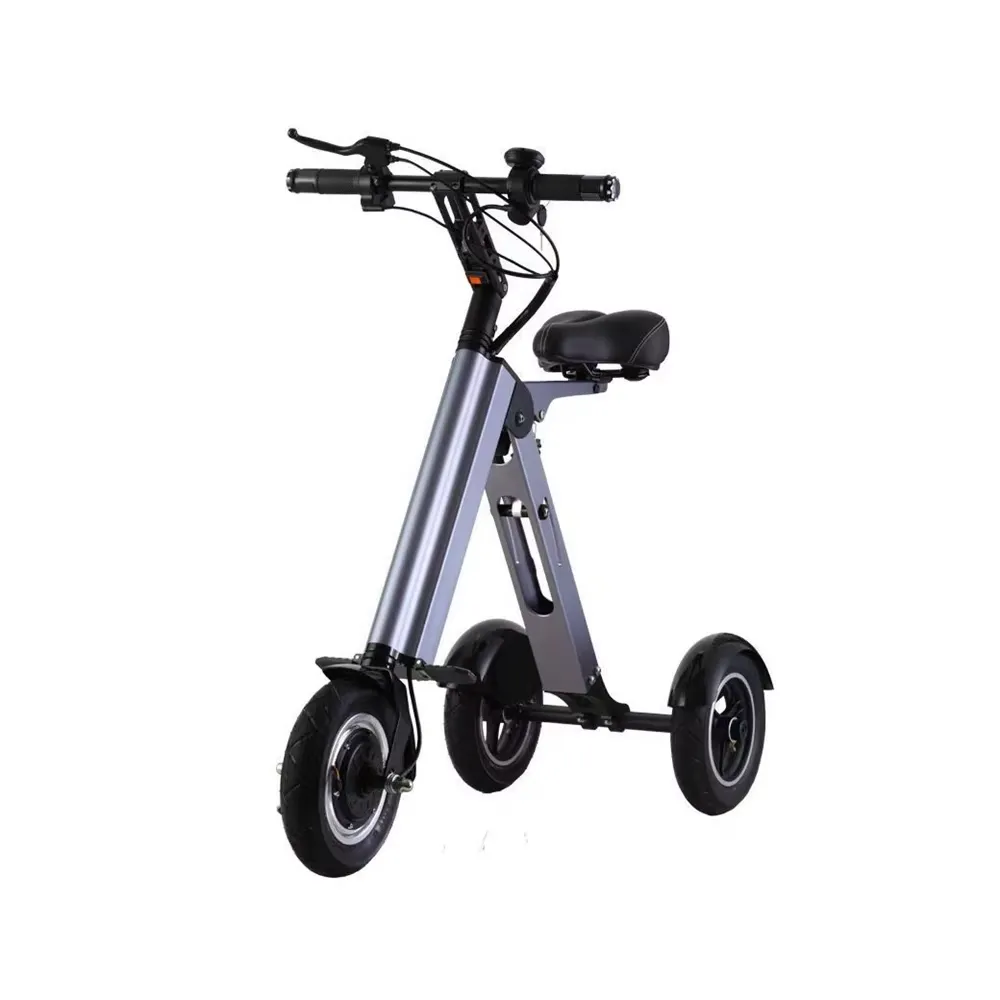
Prioritise mobility scooter spare parts using actual service demand, supply times and the consequences of not having a required item. Do not stock every catalogue part in equal quantities. Review the models your team sells and the repairs it is authorised to support.
What evidence should shape the opening stock list?
Start with your service records. Use fault history, approved maintenance needs and confirmed supply information to build the list. If evidence is limited, record the assumptions and set a review point after the first operating period.
- Identify frequently requested or operationally important items.
- Check current supply information with the supplier.
- Match stock decisions to service capability and the installed range.
| Input | Stock decision it informs |
|---|---|
| Service demand | Which items deserve regular review |
| Supply and repair needs | Where a shortage would delay support |
Revise the list when the product range or service evidence changes. Key Takeaway: You can explain why each stocked part deserves its shelf space.
What instructions should accompany mobility scooter spare parts?

Mobility scooter spare parts should have the fitting, checking and care information required for their approved use. Do not assume a part can be installed by any staff member. Ask the supplier team who is authorised to perform the work and which records are needed.
How should service limits be made clear?
Keep the task with the right person. UK assistive-technology guidance identifies risks from failing to follow the maker's instructions. Use the exact product guidance and refer work beyond the team's authority to an appropriate service provider.
- Obtain the current instructions for the part and device.
- Identify required skills, tools and checks through that guidance.
- Record who performs and approves the work.
| Information | Purpose |
|---|---|
| Approved method | Defines the required work and checks |
| Authorised personnel | Defines who may carry it out |
Do not fill a missing service procedure with a method copied from another model. Key Takeaway: The part order will support an approved repair process.
How do you control substitutions for mobility scooter spare parts?

Control substitutions for mobility scooter spare parts through written approval tied to the exact device and repair scope. A supplier's statement that an item is similar is not enough. Keep the original request and the approved change together.
What should a change request explain?
Ask what changes with the substitute. Request the new part reference, approved applications and any revised fitting or checking requirements. Let the responsible technical and purchasing staff review that information before release.
- Record the proposed replacement reference.
- Confirm the exact approved application.
- Review any change to fitting, checking or support requirements.
| Change field | Approval question |
|---|---|
| New reference | Is it approved for this unit? |
| New requirements | Can the service team meet them? |
Record the decision rather than relying on a verbal acceptance. Key Takeaway: An urgent stock shortage will not erase the model-match check.
How should mobility scooter spare parts be stored and tracked?

Store mobility scooter spare parts under their stated conditions and keep the original identity traceable through the stock system. Separate damaged, returned or unverified items from approved stock. Parts that look alike should not share an ambiguous label.
What information should remain with a small item?
Preserve the reference after unpacking. Use a suitable labelled container and retain the supplier or batch details required for traceability. Follow any special handling or storage instructions for the part type.
- Keep part and stock references connected.
- Retain relevant batch or receipt information.
- Clearly identify items held for review.
| Stock status | Handling rule |
|---|---|
| Approved ready stock | Identified and stored as required |
| Returned or uncertain stock | Held separately pending review |
Check the stock status before issuing a part to the workshop. Key Takeaway: Staff can distinguish a verified spare from an unresolved return.
How do you check incoming mobility scooter spare parts?
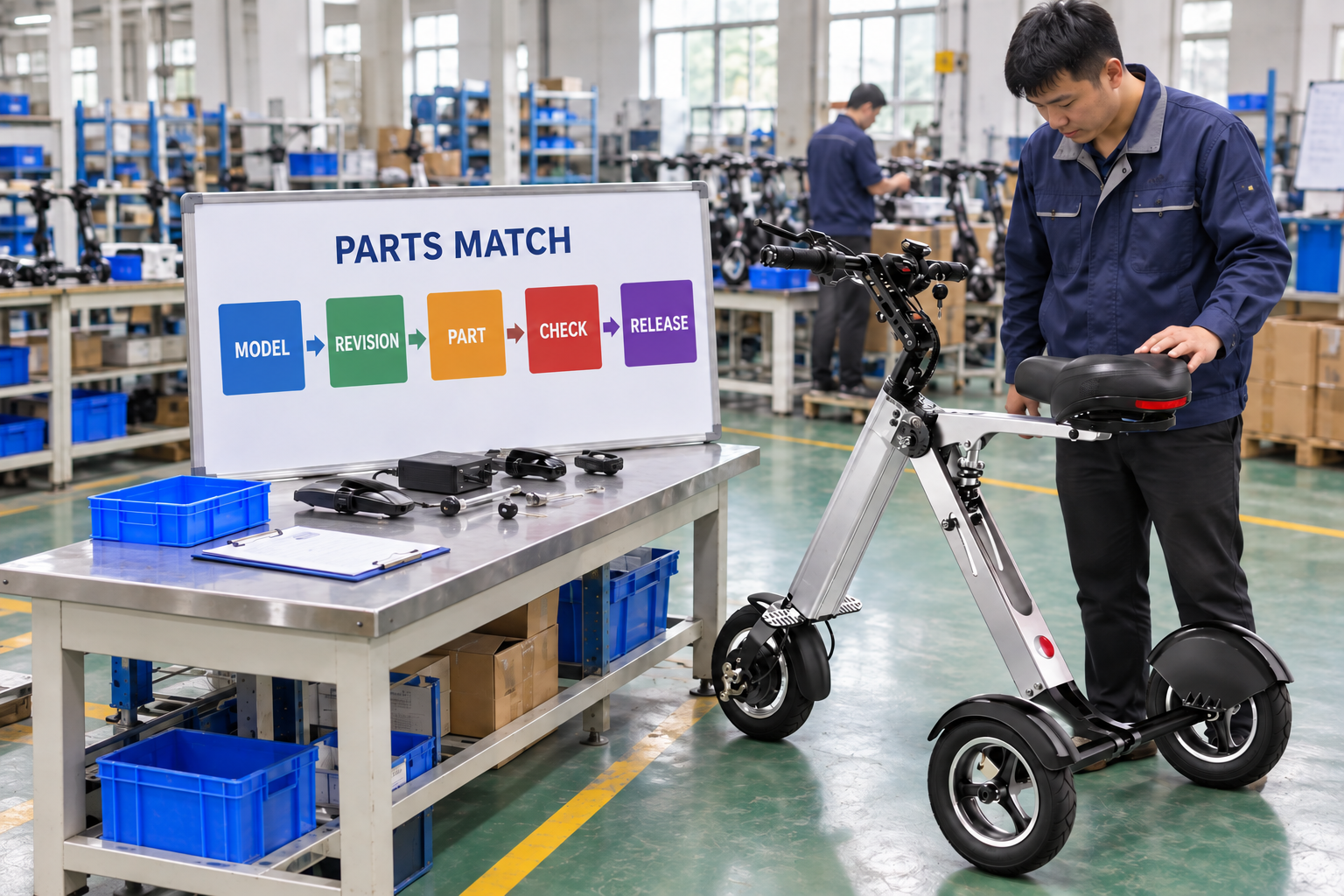
Check incoming mobility scooter spare parts against the approved order, part identity and agreed receiving criteria. Record visible damage, missing items and unexpected changes before putting parts into ready stock. Keep the result linked to the supplier and delivery record.
What should receiving staff avoid deciding alone?
Escalate a technical mismatch. The warehouse can compare identifiers and contents without declaring an unfamiliar part compatible. Refer technical differences to the responsible service team and supplier before release.
- Compare labels and contents with the approved order.
- Record any visible concern or discrepancy.
- Hold unapproved differences for technical review.
| Check | Result to record |
|---|---|
| Identity and contents | Matches or specific discrepancy |
| Condition and changes | Accepted, held or referred for review |
A held item should have a named owner for follow-up. Key Takeaway: Receiving checks can prevent the wrong part from reaching a repair bench.
How can you choose mobility scooter spare parts confidently?

Choose mobility scooter spare parts once the model match, revision, item scope and service process are clear. Keep those records through buying, receiving and issue to the workshop. Review the plan as the installed product range and service needs change.
Ready to build a traceable dealer parts list?
Send the model list and repair scope. Ary Medical can review a parts enquiry when the devices, revisions and support needs are identified. Include any unresolved part markings or supply questions for a model-specific reply.
- Provide the models and revisions you support.
- List the required parts or repair tasks.
- Request approved references, contents and current supply terms.
| Your enquiry | Supplier response to request |
|---|---|
| Device and repair records | Approved part or assembly identification |
| Stock and support needs | Current supply and service information |
Use the reply to close identity and repair-scope gaps before ordering. Key Takeaway: For a parts list tied to your installed range, contact us. Ary Medical supports traceable parts decisions from the quote to the workshop.
Frequently asked questions
Q1: Can I choose a spare part from a photo alone?
No. Use the photograph to support an exact model, revision and part-reference check.
Q2: What's the best way to decide which spares to stock?
Use actual service demand, current supply information and the repairs your team can support. Review assumptions as evidence builds.
Q3: Can I accept a newer part as an automatic upgrade?
No. Confirm its approved applications and any revised fitting or checking requirements for the exact unit.
Q4: How do I know whether to order a component or an assembly?
Define the repair scope with the responsible service team. Check what each offer includes and who may perform the remaining work.
Q5: Can a returned part go straight back into stock?
Not without the required review. Keep its identity and condition traceable and separate it from approved ready stock until released.