
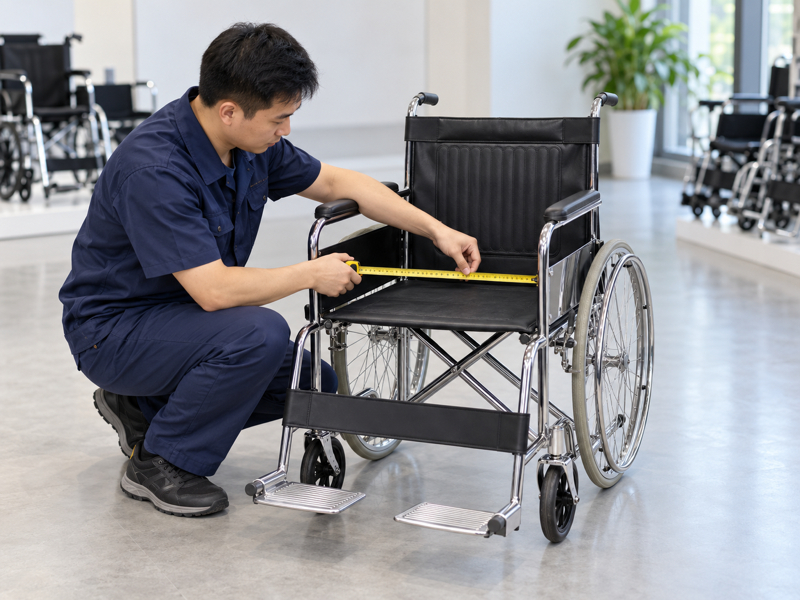
Choose manual wheelchair seat width by matching the usable seat opening with an individual seating assessment, then checking the complete chair in its real setting. A distributor can easily order from a single catalog dimension and later find that a cushion, winter coat or transfer method changes the fit. That mismatch creates rework for your team and discomfort for the user. Start with the person, request the exact model measurement method and confirm the full seating plan before purchase.
What does manual wheelchair seat width actually describe?
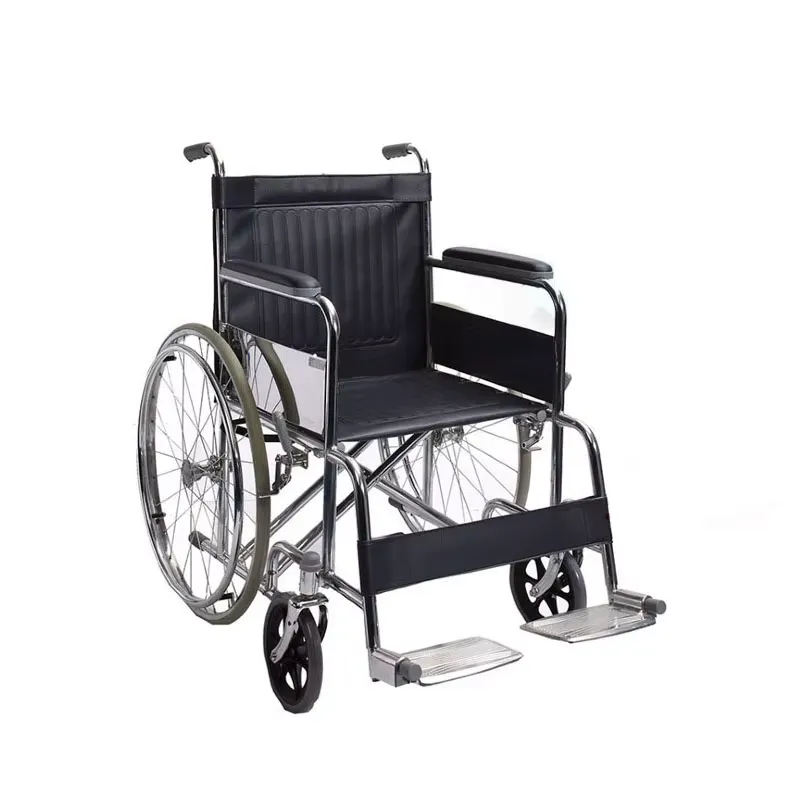
Manual wheelchair seat width describes the usable space between a chair’s side boundaries, according to the maker’s stated measurement method. It does not describe the chair’s total outside width. The pictured 809 model shows why those two dimensions need separate lines in a purchase brief.
Which width belongs on the order sheet?
Separate the seating space from the doorway space. Ask for a dimensioned drawing showing where each measurement starts and ends. A sling seat, side panel and arm support can each change what a buyer means by “between the sides.”
- Record the maker’s seat-width reference points.
- Keep outer chair width on its own line.
- Note the exact frame and seat version.
| Dimension | Decision it supports |
|---|---|
| Usable seat opening | Individual fit review |
| Overall chair width | Doorway and storage clearance |
A label without reference points can hide a costly mismatch. Key Takeaway: You can compare seats and routes without treating one width as both.
How should you measure manual wheelchair seat width?
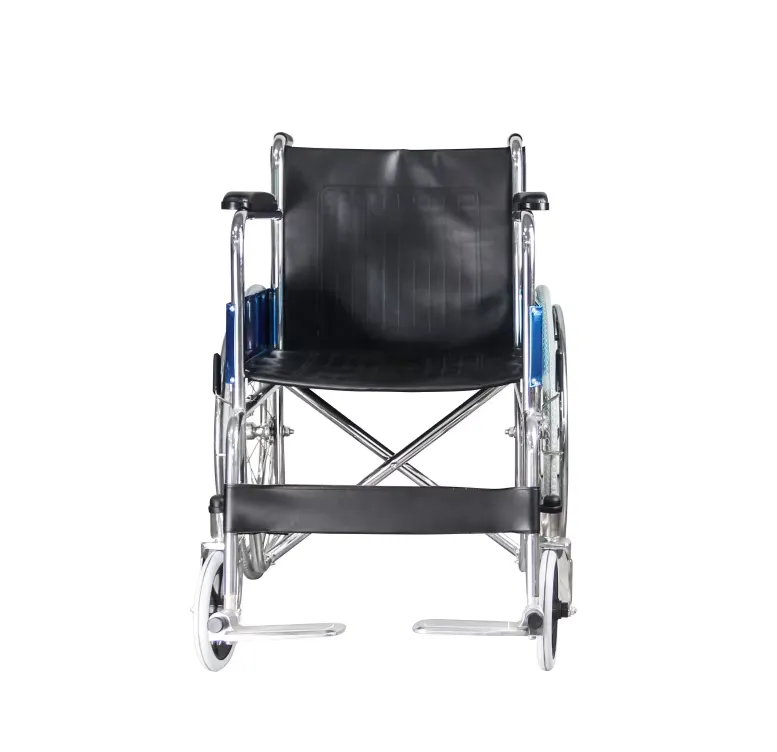
Measure manual wheelchair seat width at the points specified for the exact chair and its installed seat parts. Take the reading with the chair fully opened in its normal use position. A front photograph alone cannot establish a reliable number.
What makes a measurement repeatable?
Use the same starting points each time. Have the seller show the measuring line on a current model drawing or controlled sample. If a cushion or side guard changes usable space, record that installed setup rather than a bare frame reading.
- Identify both inner reference surfaces.
- State whether a cushion or side panel was fitted.
- Keep a dated record of the model and version.
| Record item | Why it belongs |
|---|---|
| Reference points | Makes later measurements comparable |
| Installed parts | Explains changes to usable space |
A consistent method matters more than a tidy-looking catalog figure. Key Takeaway: Your team can repeat the check when a sample arrives.
How does a person’s fit change manual wheelchair seat width?

A person’s seated posture, clothing and support plan determine whether a manual wheelchair seat width option fits appropriately. No single catalog width suits every user. Arrange an individual fitting review before treating a supplier size as the final answer.
What should a fit brief include?
Write down the person’s use case before comparing frames. The appropriate assessor should consider sitting position, pressure management, hand access and room for clothing together. The WHO wheelchair provision guidance covers assessment and fitting within service delivery. A sports chair belongs to another use case, so its dimensions cannot stand in for an individual fit decision.
- Record the relevant seated measurements and posture needs.
- List any cushion, support or clothing allowance.
- Identify who approves the final fit.
| Input | Who confirms it |
|---|---|
| Person and support needs | Qualified individual assessor |
| Product dimensions | Exact chair documentation |
A chair measurement and a person’s needs answer different questions. Key Takeaway: You can screen product options without replacing the fitting process.
Can manual wheelchair seat width affect transfers?
Yes, manual wheelchair seat width can change the space available for a user’s established transfer method. Arm supports, side guards and footrests also affect entry and exit. Review the whole chair with the responsible assessor before promising easier transfers.
What should the demonstration show?
Look beyond the open seat. Use an empty-chair demonstration to identify permitted component movements and clearance. Related transfer equipment has its own intended use and should not be assumed interchangeable with a wheelchair arm or footrest.
- Confirm the approved transfer plan.
- Check permitted arm and footrest movement.
- Record the final arrangement after each demonstration.
| Concern | Evidence to request |
|---|---|
| Side access | Model-specific arm or guard instructions |
| Foot clearance | Approved footrest position and handling |
A wider opening will not solve an obstruction at the arm or foot. Key Takeaway: The order can reflect a real transfer method rather than a seat number alone.
Why check seat depth with manual wheelchair seat width?
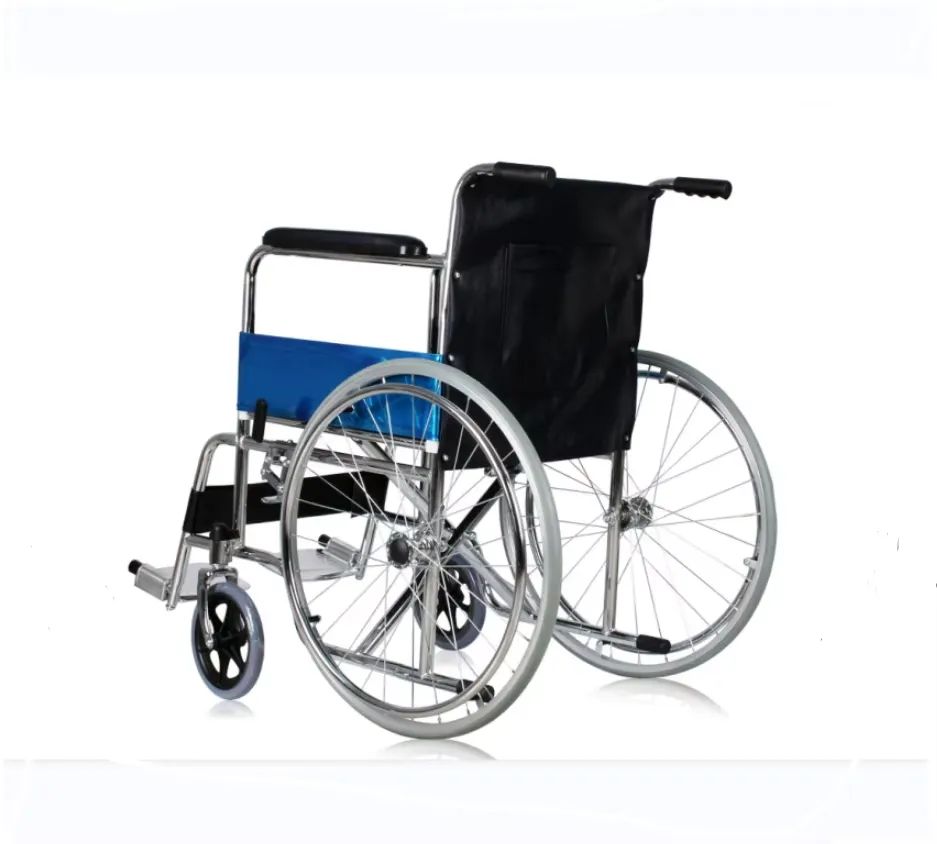
Check seat depth with manual wheelchair seat width because both dimensions shape the available sitting area. A width-only order may still leave the seat unsuitable for the assessed posture. Keep depth, back support and cushion details in the same fit record.
Which details should stay together?
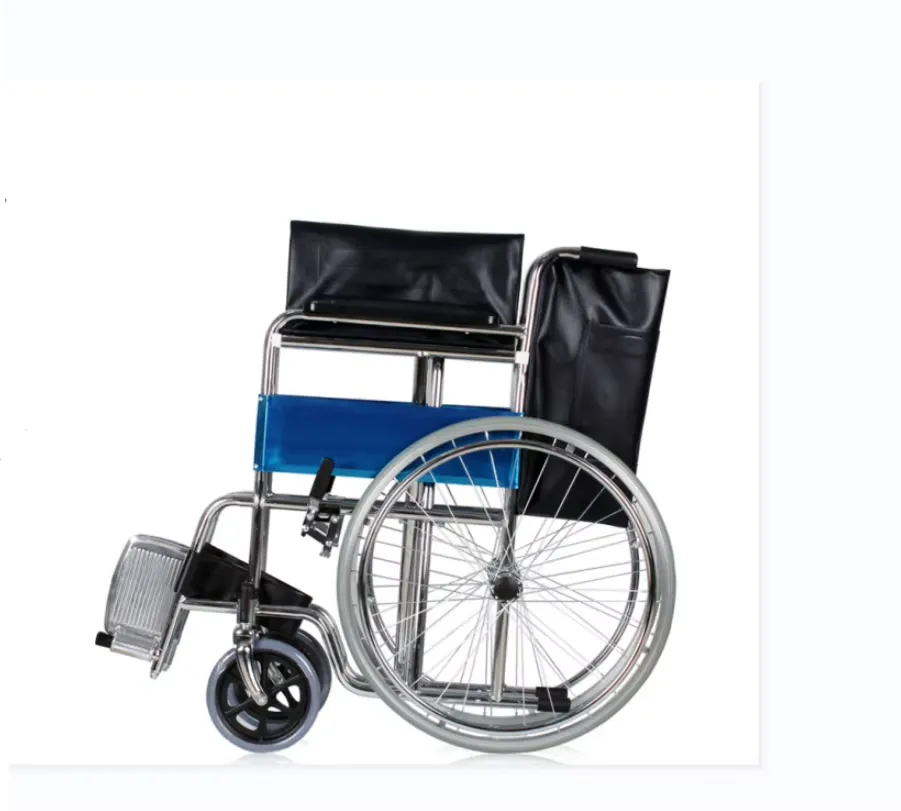
Treat the seating surface as a set. Ask for the exact product drawing and permitted seat options. The rear view of the 809 chair shows a sling back, yet a photograph cannot confirm a user’s support needs or the working depth.
- Record width and depth as separate measurements.
- Note cushion and back-support selection.
- Request an individual fit check before approval.
| Seat field | Review question |
|---|---|
| Width | Is there appropriate lateral space? |
| Depth | Does the full sitting surface suit the plan? |
Neither dimension compensates automatically for a poor match in the other. Key Takeaway: Your buyer can avoid reducing a seating decision to one figure.
Does manual wheelchair seat width change wheel-lock reach?
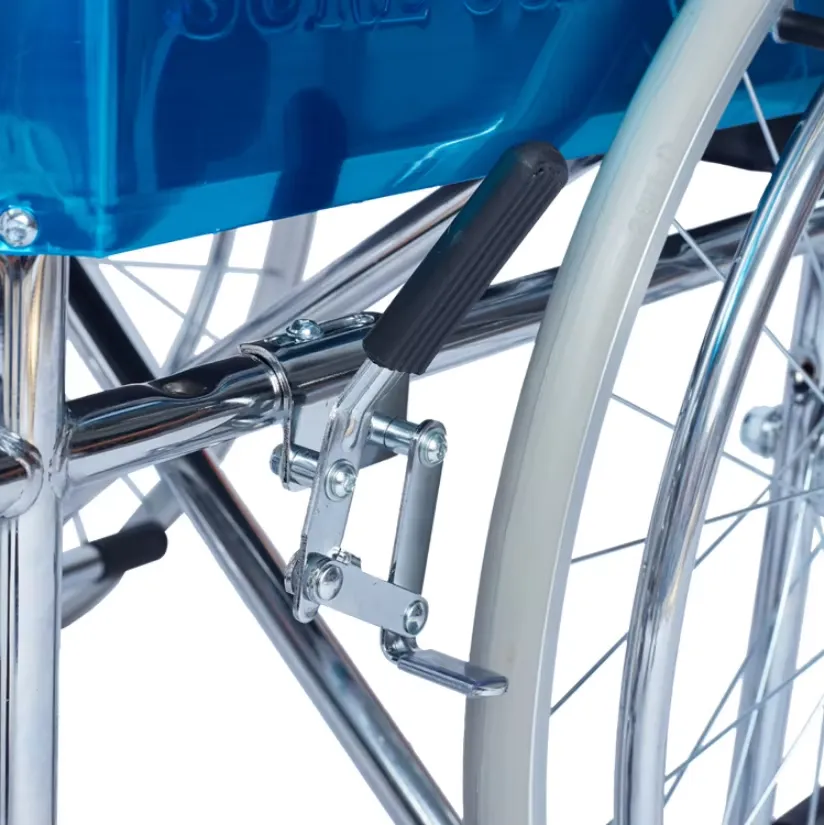
A change in manual wheelchair seat width can alter the user’s relationship to the rear wheels and wheel locks, even when the wheel hardware stays the same. Confirm the approved setup and the user’s reach through an individual review. Do not infer lock access from a close-up photo.
What should the dealer check?
Test the reach question on the complete chair. Identify the exact lock and wheel arrangement before arranging a supervised trial. The detail photo shows a lock lever, but its appearance alone does not establish its operating force or suitability for a particular person.
- Identify the installed wheel and lock version.
- Record reach concerns for the assessor.
- Use the maker’s lock instructions during any demonstration.
| Variable | Review point |
|---|---|
| Seat position | Relationship to rear wheel and lock |
| Installed lock | Approved operation and service information |
A small change in position can move a control relative to the user. Key Takeaway: The assessment can catch access concerns before bulk ordering.
How does manual wheelchair seat width interact with foot support?
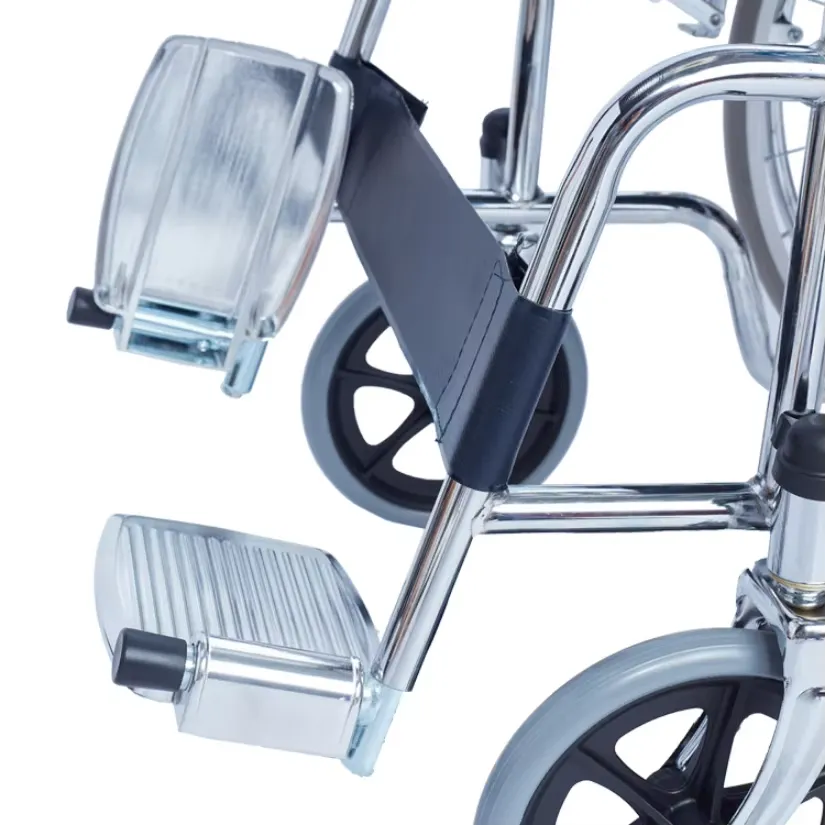
Manual wheelchair seat width belongs in a seating plan that also includes leg and foot support. The same clear seat opening can feel very different when footplates or leg supports sit in an unsuitable position. Keep those parts in the fit review.
What evidence helps with footplate planning?
Follow the posture down to the feet. Request the product’s permitted footrest settings and the individual support brief. The pictured footplates show the component type but do not confirm any adjustment range or clinical outcome.
- Identify the installed footrest assembly.
- Record approved settings and user needs.
- Check the whole seating position after any authorised change.
| Component | Record to keep |
|---|---|
| Seat | Usable width and depth |
| Foot support | Approved assembly and final setting |
Good seat space cannot compensate for an unsupported lower-body setup. Key Takeaway: Your specification keeps the seating plan coherent.
Will folding change the manual wheelchair seat width specification?
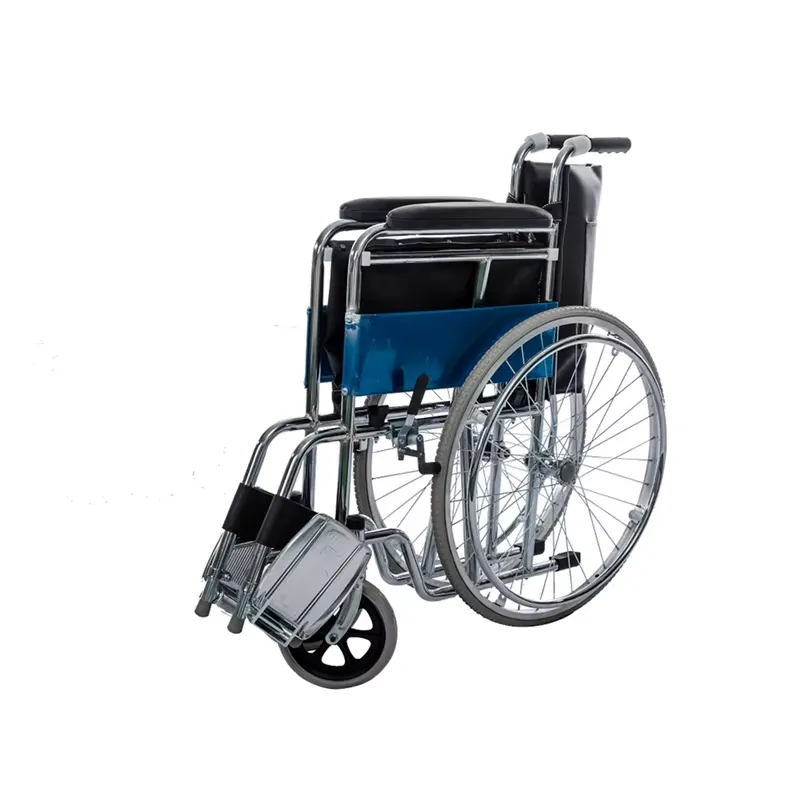
Folding does not replace the open-chair manual wheelchair seat width specification; it adds a separate storage and handling dimension. Verify the seat opening when the chair is fully set up. Then measure the folded package for the actual storage route.
Which two states belong in the record?
Keep use and storage measurements apart. Follow the maker’s fold and reopening directions rather than forcing a frame into a guessed width. Browse the AryMD product range for chair layouts, then ask for exact dimensions for the chosen model.
- Record the opened usable seat width.
- Record the folded overall package separately.
- Check reopening and pre-use steps.
| Chair state | Measurement purpose |
|---|---|
| Opened for use | Individual seating fit |
| Folded for storage | Vehicle or room clearance |
A compact package tells you little about usable sitting width. Key Takeaway: Buyers can compare transport and fit without mixing the figures.
What belongs in a manual wheelchair seat width comparison chart?
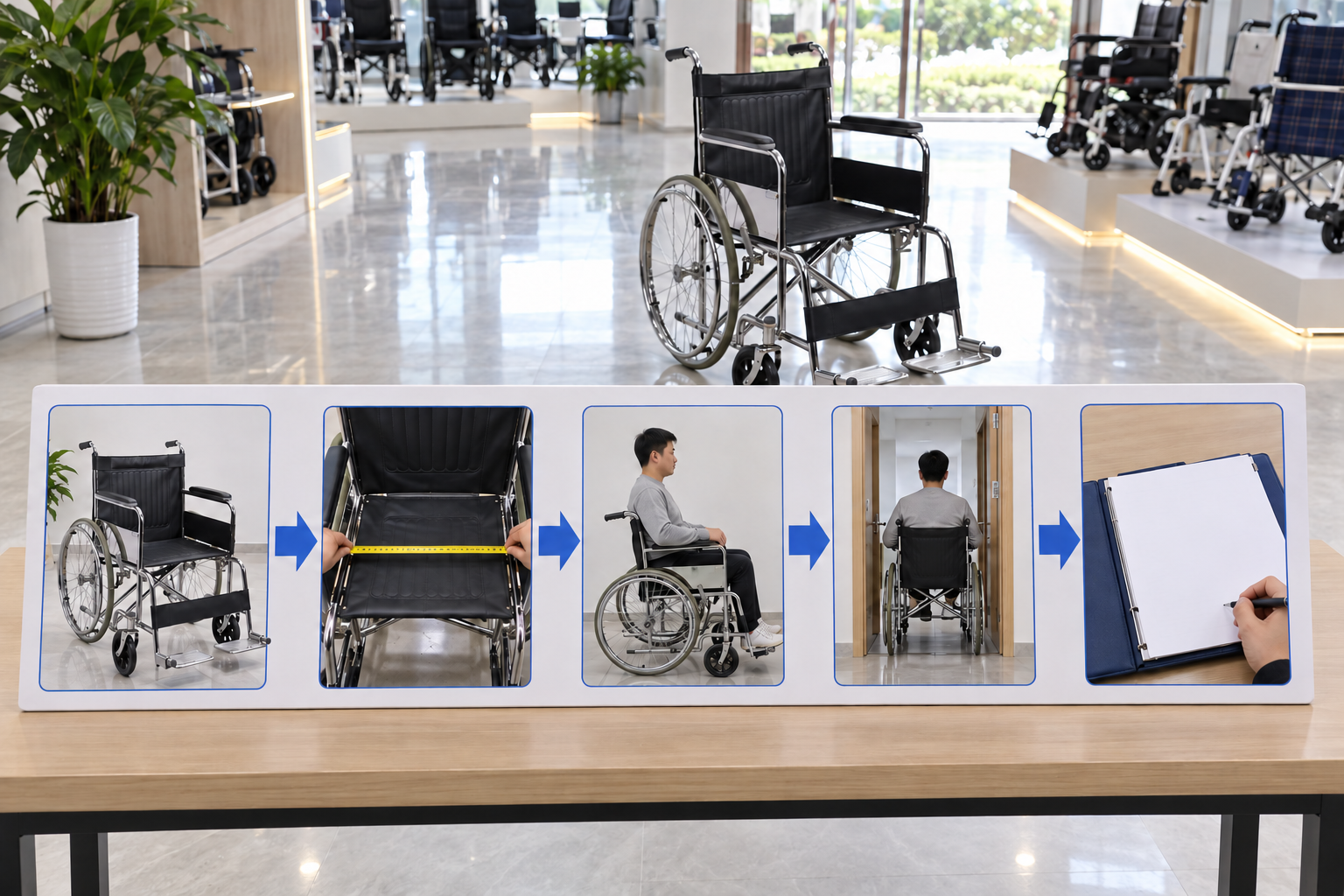
A manual wheelchair seat width comparison chart should join the user brief, seat measurement method, installed parts, route clearance and sign-off. A number alone leaves too many open questions. Keep evidence sources beside each decision line.
Can a buyer audit the final choice?
Make every acceptance point traceable. Use the visual workflow chart as a prompt for collecting records, not as proof of a specific chair’s performance. The AryMD team can clarify available product information while the responsible assessor confirms individual suitability.
- Identify user needs and the responsible reviewer.
- Request the current model drawing and installed-part list.
- Record the approved sample setup and route check.
| Chart line | Evidence |
|---|---|
| Fit | Individual assessment and seat setup |
| Supply | Model drawing and accepted sample |
A traceable comparison helps resolve differences between catalog and delivered setup. Key Takeaway: Your team can explain exactly why a width option was selected.
How can you order the right manual wheelchair seat width?
Order the right manual wheelchair seat width by sending an individual fit brief and asking for a model-specific, dimensioned response. Confirm the accepted sample or drawing before the purchase order is final. Keep any later approved change with the original record.
Ready to send a clear seat brief?
Start with the person and the actual chair. Ary Medical can review available chair options when you provide the seated-fit requirements and intended setting. Ask for the exact measurement method, compatible seat parts and current handling information.
- Share the reviewed seating and transfer requirements.
- Request the relevant model drawing and part options.
- Confirm the sample setup and sign-off route.
| Your input | Supplier response to request |
|---|---|
| Fit and setting brief | Matching chair configuration and dimensions |
| Accepted sample | Part list and current instructions |
The handover works best when both sides refer to the same approved setup. Key Takeaway: For a model-specific chair review, contact us. Ary Medical supports seating choices built around people and documented product facts.
Frequently asked questions
Q1: Can I choose seat width from a catalog number alone?
No. Use the published size to shortlist models, then confirm the measurement method and individual fit.
Q2: What’s the best way to compare two seat widths?
Use the same reference points and installed seat parts. Keep the user’s assessed posture and support plan beside both readings.
Q3: How do I know if a cushion changes usable width?
Check the cushion and chair together in the approved setup. A bare frame measurement may overstate the clear sitting space.
Q4: Can a wider seat make transfers easier?
Sometimes, but only within the reviewed transfer and seating plan. Arm supports and footrests may create separate limits.
Q5: Can folded width replace seat width on my order sheet?
No. Record use and storage dimensions separately so the chair fits both the person and the route.