
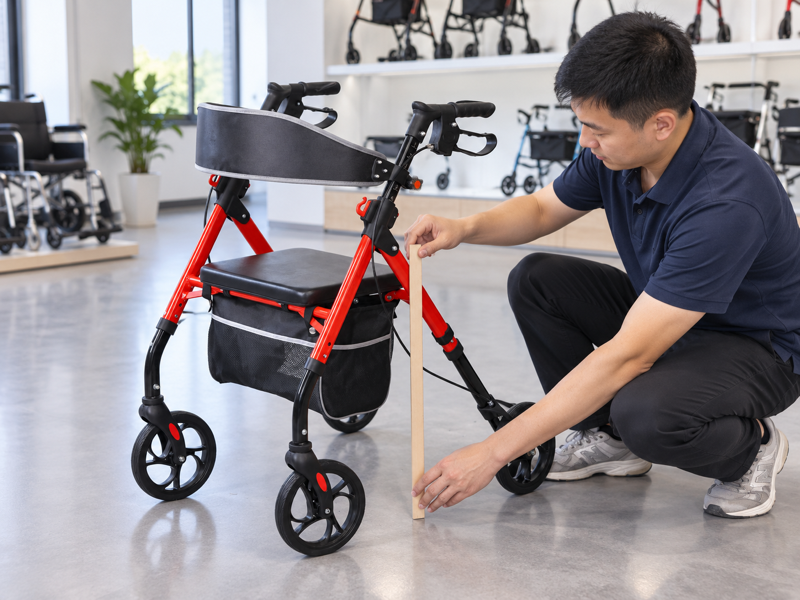
Choose rollator seat height by checking the exact seat measurement against the user's assessed resting needs and the routes where breaks will happen. A buyer may see a padded seat and assume it will suit every person, only to find an awkward rise or unsafe stopping place at delivery. Ask for the model's measured seat position, trained fit review and parking-brake instructions before ordering.
What does rollator seat height measure?
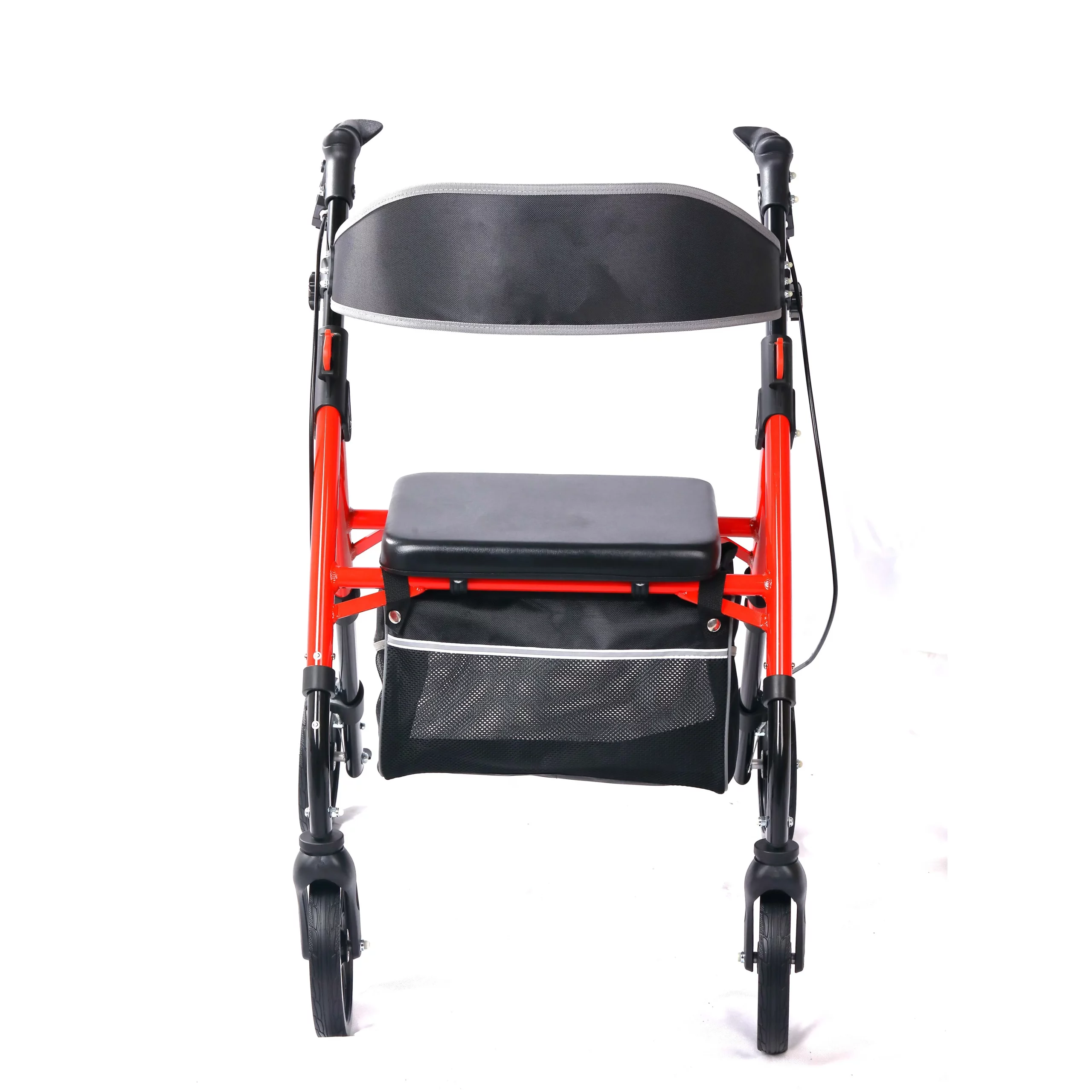
Rollator seat height describes the seat's position above the supporting floor under a stated measuring method. Ask where the maker measures, whether padding is included and which exact configuration was measured. A product photograph cannot provide a reliable dimension.
Which number should appear on a quote?
Define the measurement before comparing models. The red Shopping Walker image shows a padded seat above a hanging bag, but no verified seat-height value. Request an actual model drawing or measured sample rather than borrowing a figure from another rollator.
- Name the model and seat configuration.
- Ask for the floor-to-seat measurement method.
- Keep the resulting value with the product record.
| Quote field | Why it matters |
|---|---|
| Seat measurement | Supports model comparison |
| Measurement method | Makes figures comparable |
A bare number loses meaning when reference points differ. Key Takeaway: Your purchasing team can compare a stated seat, not a photograph.
Can rollator seat height be adjusted on this model?
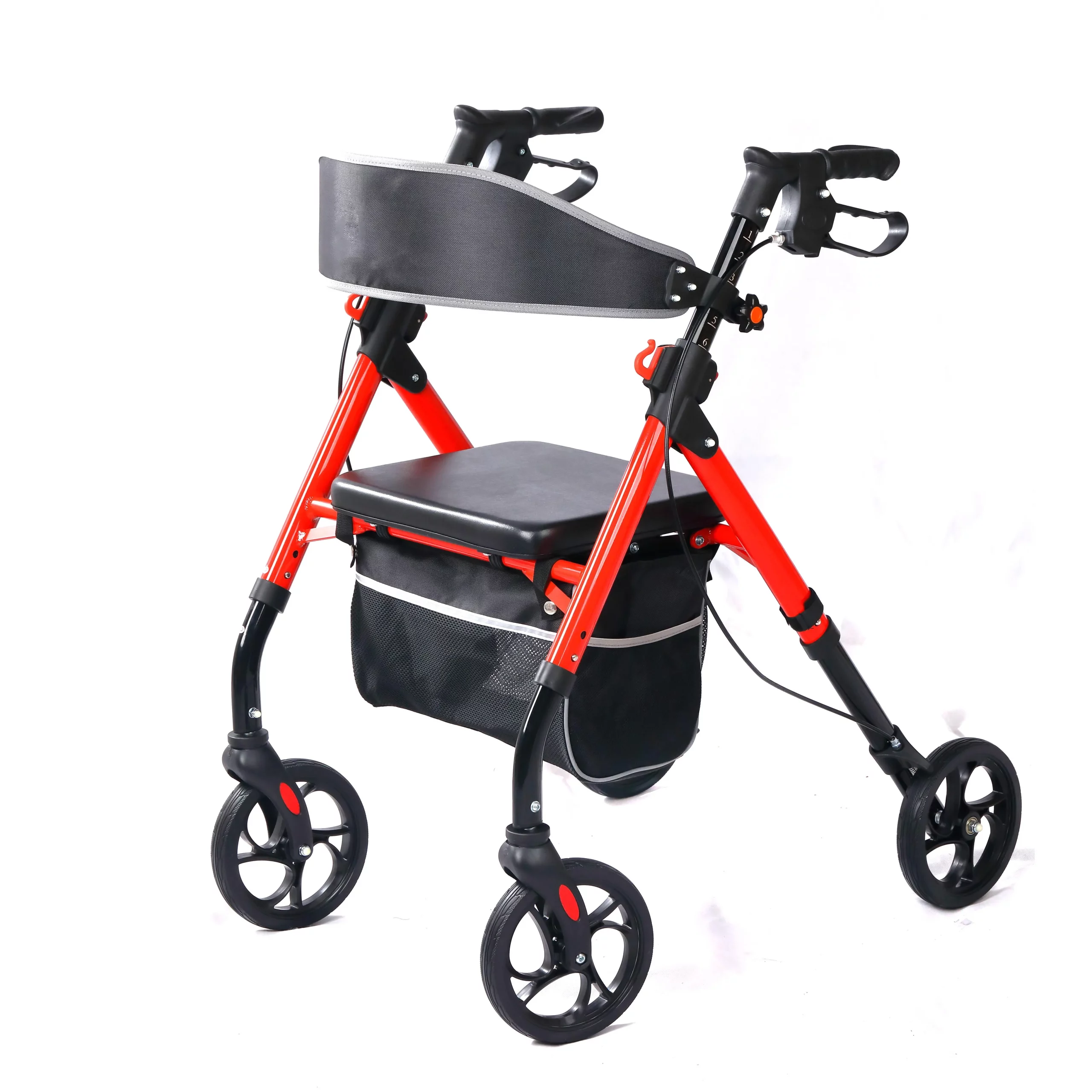
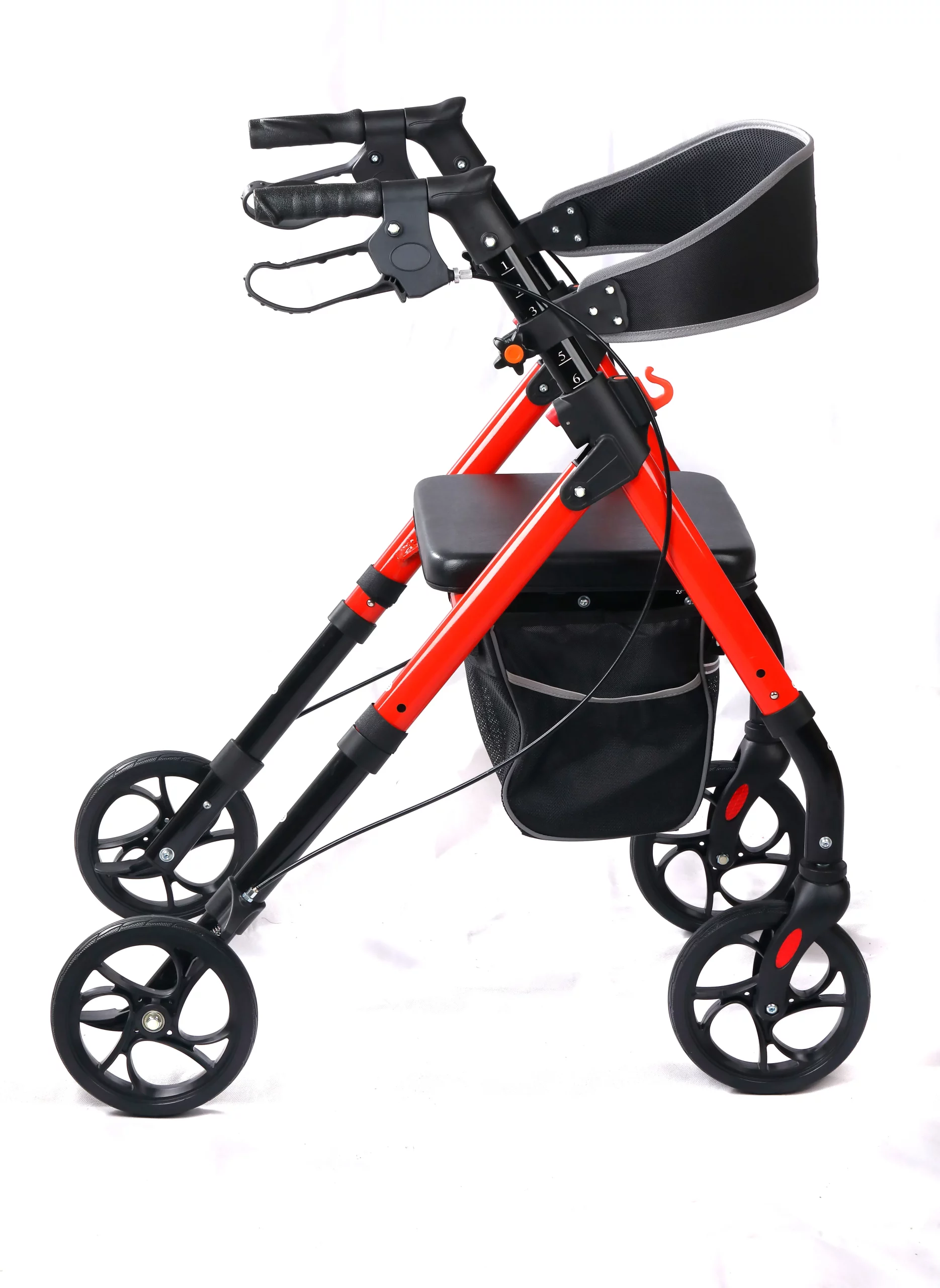
Rollator seat height should be treated as fixed unless the exact model instructions confirm an adjustment. The supplied photos show adjustable handle posts, not a visible seat-height mechanism. Ask the product team to identify any documented seat options.
What should you ask before promising adjustability?
Keep handle and seat settings separate. Confirm the available frame or seat configurations in writing. If the seat does not suit the user, a different model may be needed rather than a field modification.
- Check approved seat variants, if any.
- Identify the chosen frame and seat combination.
- Avoid unapproved spacers or altered mounting.
| Part | What photos show |
|---|---|
| Handle posts | Visible height-setting hardware |
| Seat mount | No confirmed height adjustment |
The image supports a question, not an adjustability claim. Key Takeaway: Sales staff can avoid promising a setting that may not exist.
Who should assess rollator seat height fit?
Rollator seat height fit should be reviewed for the individual user by appropriately trained personnel. Leg position, the ability to sit and rise, footwear and the full walking-aid plan can all matter. Do not prescribe a universal seat height from a buyer guide.
What belongs in the fit brief?
Let the user's real task guide the review. WHO describes trained assessment and fitting as core steps in assistive-product provision. Record who evaluated the seated rest and which model was tried.
- Identify the user and intended rest setting.
- Record the assessed sit-and-rise needs.
- Keep the reviewed model and seating plan together.
| Fit input | Review owner |
|---|---|
| Personal sitting need | Appropriate clinician or trained fitter |
| Model dimensions | Supplier or product team |
Both sides are needed before a stock choice becomes a personal recommendation. Key Takeaway: You can make a fit referral with useful product facts.
Does rollator seat height change handle settings?
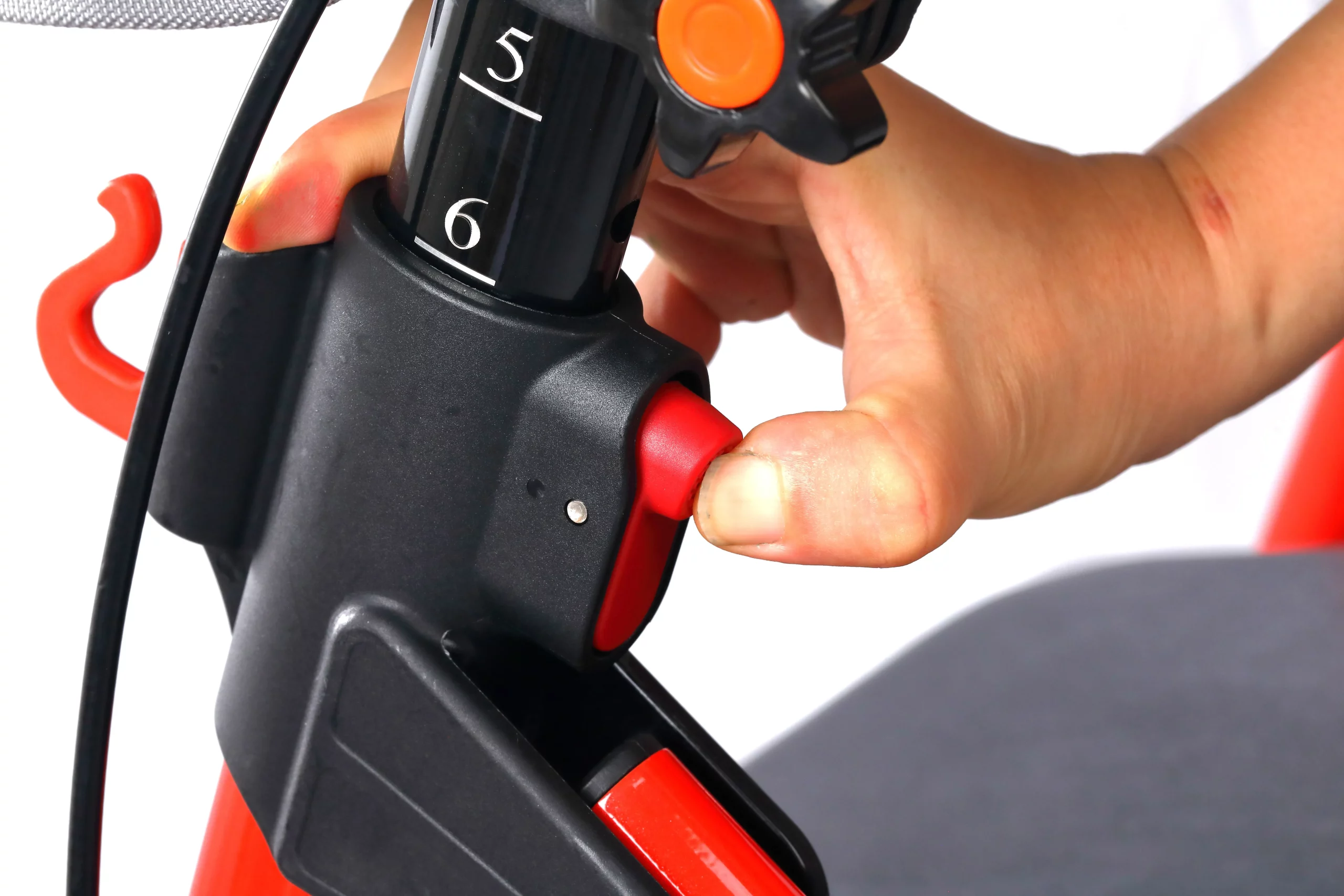
Rollator seat height does not by itself set the handgrip height. The photographs show handle-post adjustment controls on the same product, but those are a separate fit decision. Keep both settings in the user's record.
Why review the two positions together?
One frame serves walking and resting tasks. A person may find the grips suitable for walking while the seat remains awkward for a rest break. Use the walking-aids range to compare configurations without assuming the seat follows the handles.
- Document the approved grip position.
- Request the measured seat position.
- Refer any conflict between walking and resting fit.
| Position | Decision |
|---|---|
| Handgrip | Individual walking fit |
| Seat | Individual resting fit |
Separate records prevent an adjustment on one part from masking a problem with the other. Key Takeaway: The buyer can compare complete use rather than one comfortable grip.
How do brakes affect rollator seat height use?
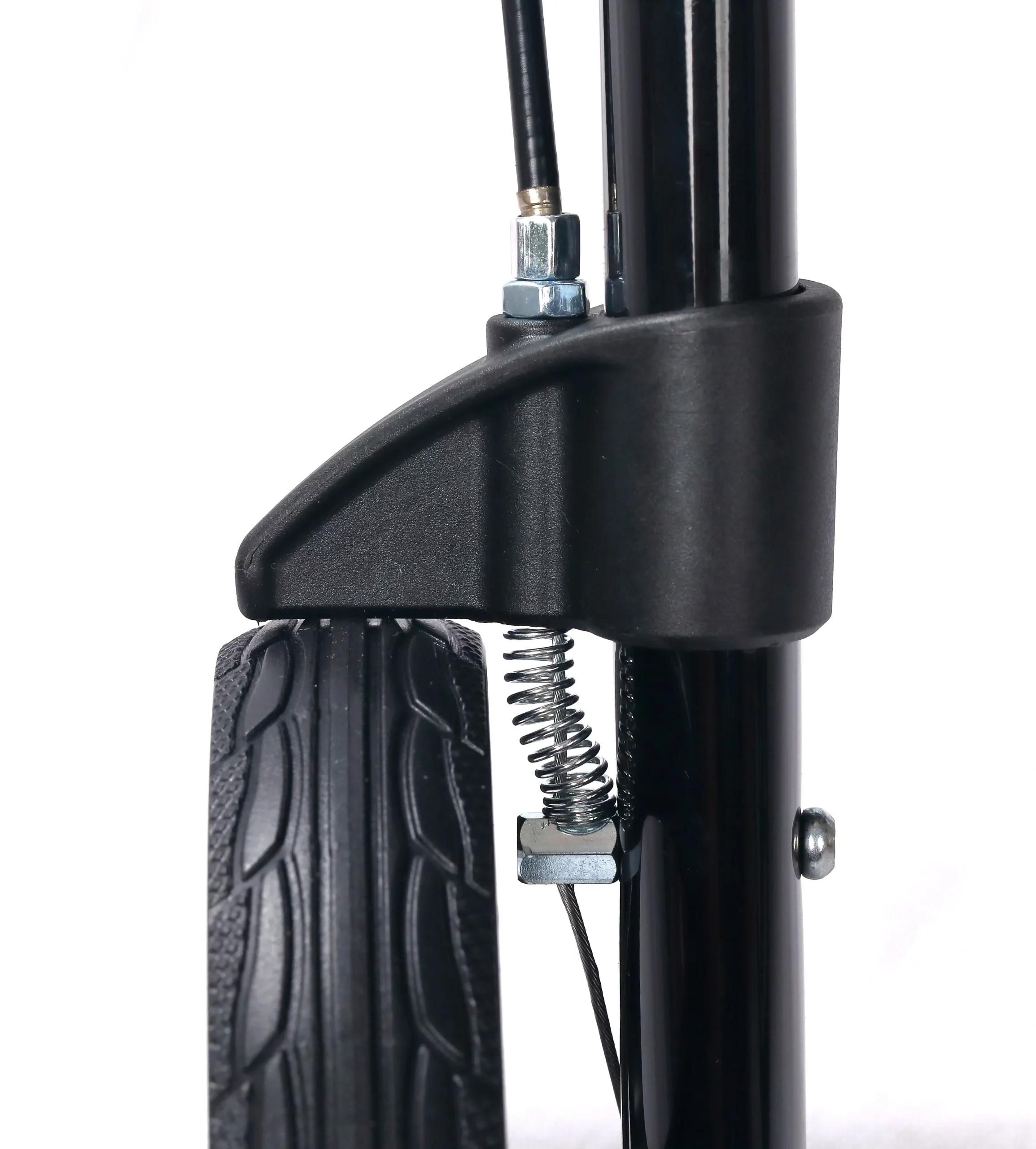
Rollator seat height matters only after the rollator can be parked as its instructions require before a rest. The paired hand levers and cable hardware are visible, but the photos do not prove parking-mode operation. Obtain the current brake instructions and trained demonstration.
What must be clear before anyone sits?
Check the stopping system before the seat. Oxford Health's four-wheeled rollator leaflet addresses brake checks and full opening of the aid. Confirm the exact model's parked state under its own guide.
- Identify the approved parking action.
- Check both brake sides through the model procedure.
- Keep seated-rest training with the user plan.
| Review | Basis |
|---|---|
| Parking function | Exact model instructions |
| Seated rest | User assessment and training |
A suitable seat dimension cannot compensate for an unclear parking routine. Key Takeaway: Your handover connects fit with stationary use.
What can a back strap tell you about rollator seat height?
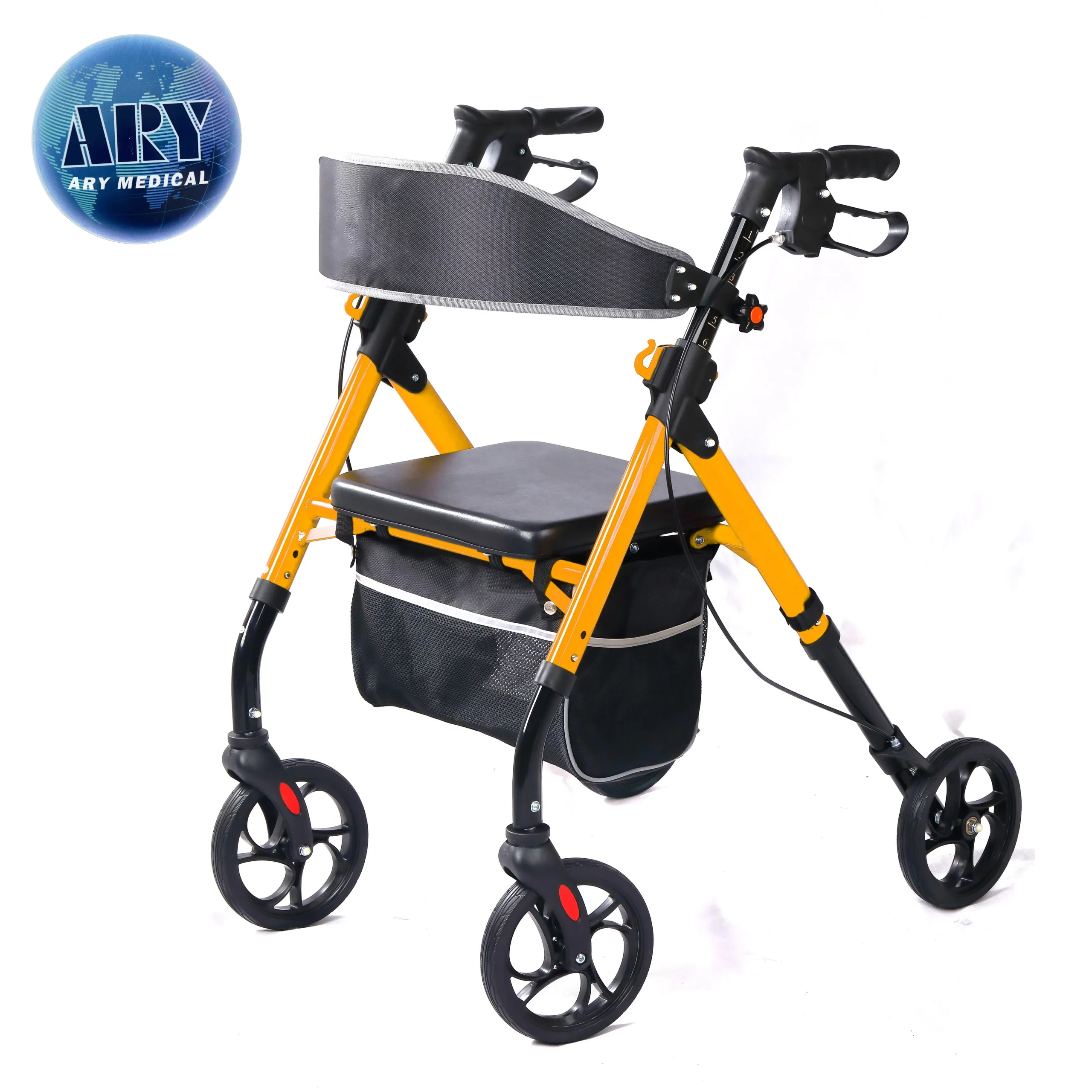
Rollator seat height is one part of the resting position; the curved back strap also changes how the seat is approached and used. The photo confirms a strap on this pictured design, not its support rating or every user's comfort. Check the permitted role in the model guide.
Which details need a fit review?
Look beyond the top of the cushion. Record seat depth and back-strap position from verified product data when available. Ask trained personnel to judge whether that complete rest setup suits the person.
- Identify seat and back-strap dimensions.
- Confirm intended support and load limits from documentation.
- Keep personal fit findings separate from sales photos.
| Feature | Evidence needed |
|---|---|
| Padded seat | Measured configuration |
| Back strap | Approved intended use |
The photographed strap should prompt a question rather than a comfort promise. Key Takeaway: A product comparison can include the full rest arrangement.
Does folding alter rollator seat height?
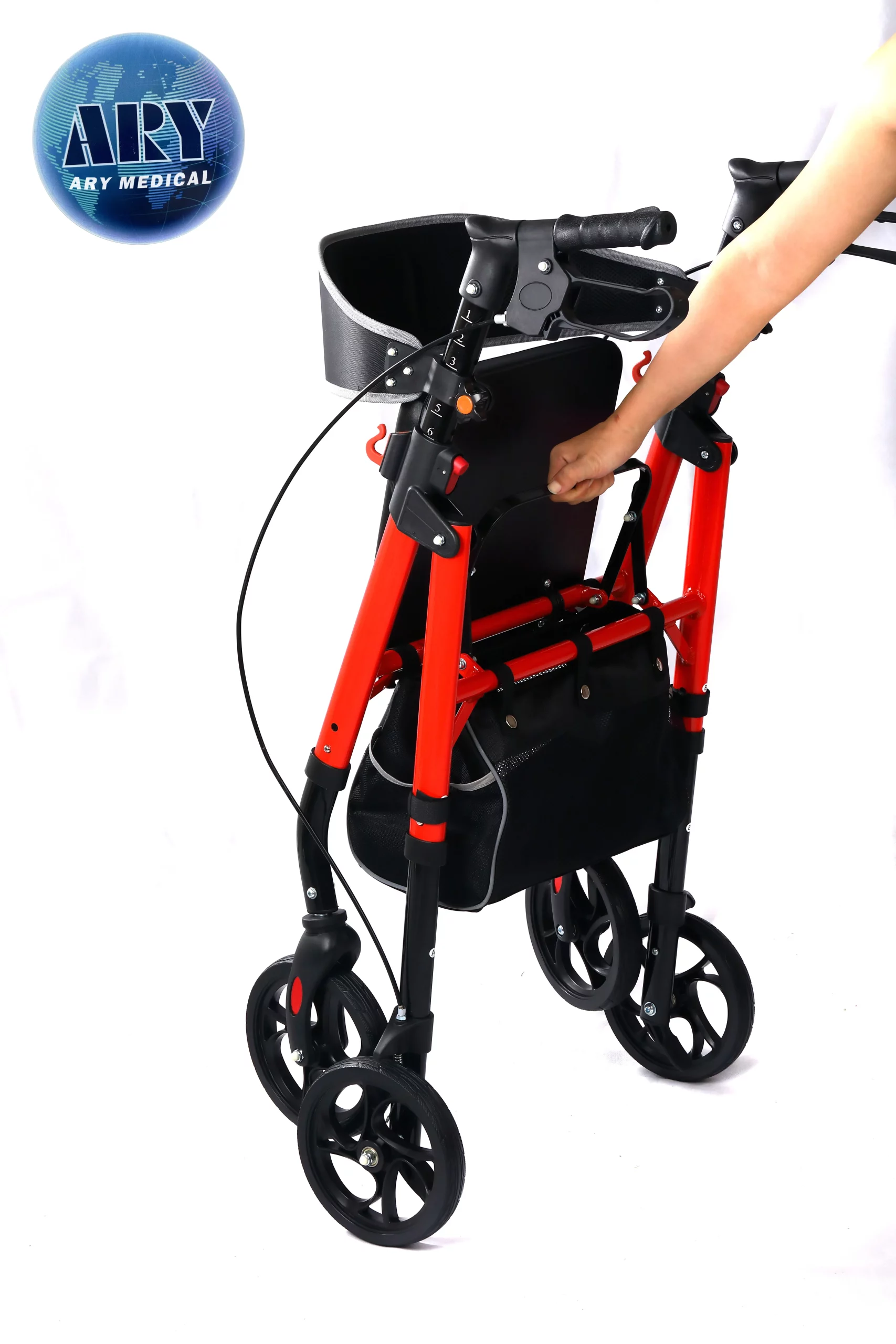
Rollator seat height should be assessed in the fully opened, ready-for-use configuration. The supplied folded photo shows a compact form, but not a safe seated position. Follow the exact opening and locking instructions before any fit review.
What should staff restore after transport?
Rebuild the use state before measuring. Check the maker's steps for opening the frame, placing the seat and confirming its required lock. Do not infer a folding sequence from the single image of a hand near the seat strap.
- Keep folded and open measurements distinct.
- Confirm the required open-frame checks.
- Recheck handle and brake setup after handling.
| State | Appropriate use |
|---|---|
| Folded | Transport or storage only |
| Fully opened | Reviewed walking and rest setup |
A compact shipping view is not a fit test. Key Takeaway: Your sample review can use the chair in its intended state.
Where should rollator seat height be reviewed?

Rollator seat height should be reviewed in the kinds of spaces where the user actually stops, subject to the maker's environment limits. The product-page route collage includes paving, grass and a speed bump, but proves no surface is approved. Ask the individual assessor to include real route conditions.
Which stop locations matter most?
Bring route details into the fit conversation. A narrow path, slope or uneven area can change where a break is feasible. A cane chair is a different product type with its own support and use instructions; compare needs before switching devices.
- Record common rest locations and surfaces.
- Check model-specific environment guidance.
- Avoid treating a marketing scene as a use permit.
| Route fact | Buyer question |
|---|---|
| Stop location | Is resting there appropriate? |
| Surface | Is it allowed by the model guide? |
The real route matters more than an attractive outdoor photograph. Key Takeaway: Your buyer brief can include places the seat will be used.
What rollator seat height records should buyers request?
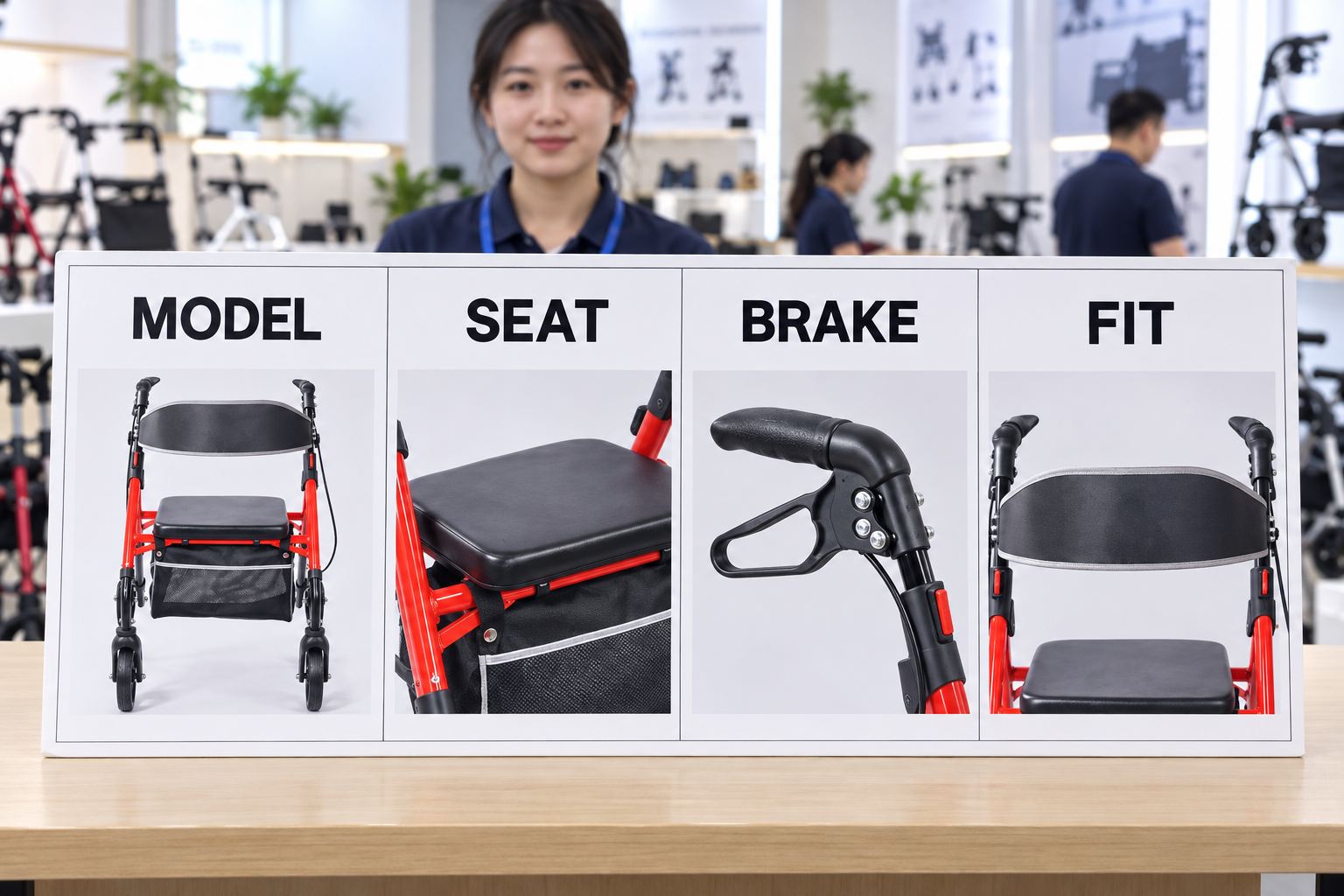
Rollator seat height records should include the exact measured configuration, user-fit review and any approved alternative. Keep brake and opening instructions with the same handover pack. The chart above organizes the enquiry; it does not certify a personal fit.
What should a supplier send back?
Ask for facts a reviewer can verify. Request the model drawing, current instructions and sample availability for the chosen configuration. The supplier team should distinguish confirmed specifications from options still under review.
- Identify the model and measured seat reference.
- Keep approved instructions and sample record.
- Record assessor feedback and open questions.
| Record | Use |
|---|---|
| Model drawing | Confirms the physical seat position |
| Fit note | Connects product choice to the user |
A short evidence pack travels better than an unsupported catalogue claim. Key Takeaway: Procurement can ask sharper questions before committing stock.
How do you choose rollator seat height for a rest break?
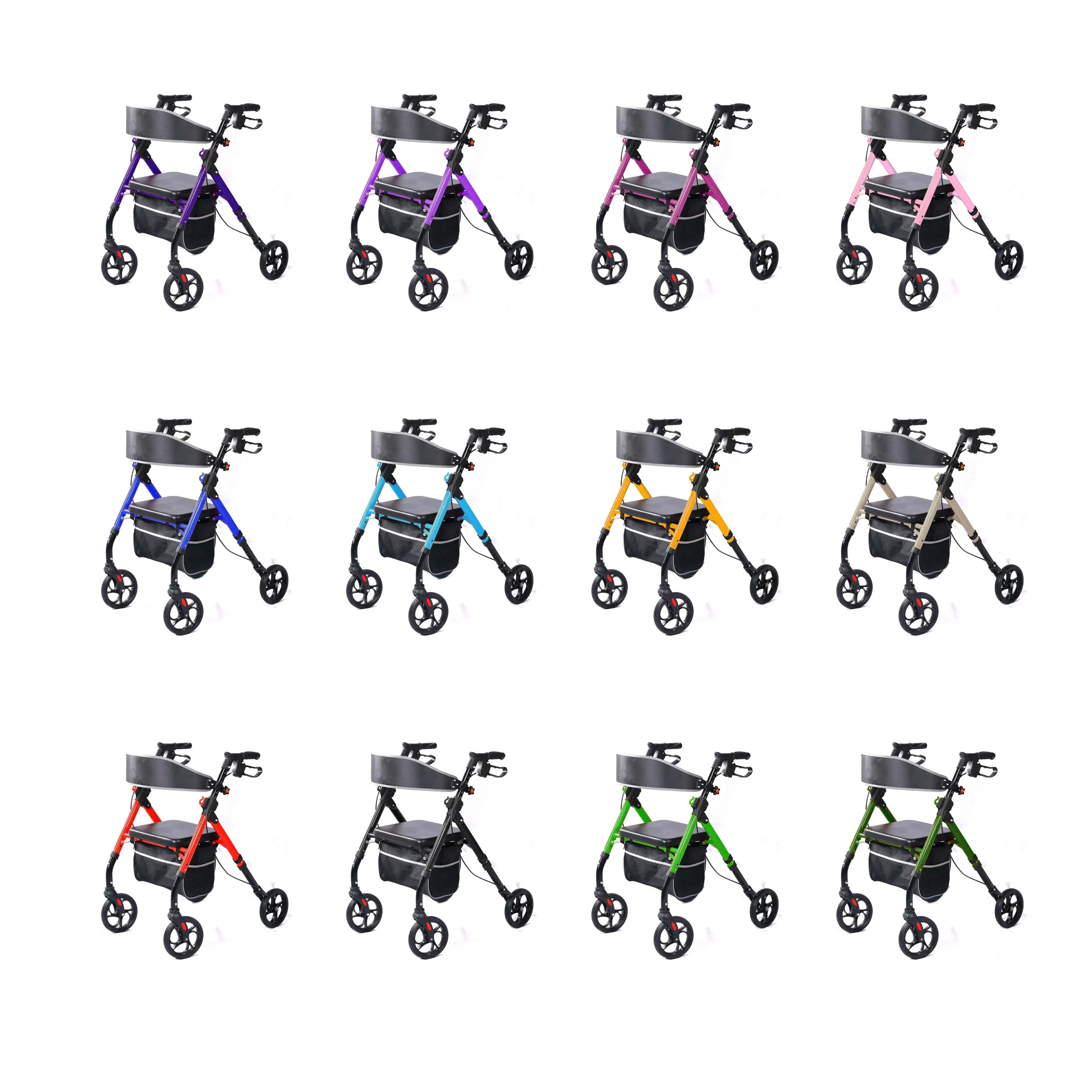
Choose rollator seat height through a confirmed model measurement and a trained review of the user's resting task. Check the brake routine, opened frame and planned stopping places at the same time. Do not convert a photograph into a personal prescription.
What should your enquiry include?
Send a brief that can be tested. List the user-fit contact, model candidate, rest locations and requested seat data. Ask which sample and instructions can support the final review.
- Request a verified seat measurement.
- Name the rest and route conditions.
- Arrange the appropriate individual fit check.
| Brief item | Supplier response |
|---|---|
| Seat and model | Measured configuration |
| User and route | Review and sample pathway |
This closes the gap between a product image and a usable rest setup. Key Takeaway: For model details and samples, contact us. Ary Medical backs choices that match a measured product to a real person.
Frequently asked questions
Q1: Can I change seat height by raising the handles?
No. Handle adjustment and seat position are separate; ask whether the chosen model has any approved seat option.
Q2: How do I know if a rollator seat suits me?
Use a trained individual fit review with the actual model. A product photo cannot establish your sit-and-rise needs.
Q3: What's the best seat height for every user?
There is no single universal setting. Match a verified model dimension to the person and use setting.
Q4: Can I sit on the rollator while it is folded?
No. Review seated use only when the frame is fully open under the model instructions.
Q5: Can I trust the route photos as proof of outdoor use?
No. The photos show settings only; check the maker's permitted surfaces and the user's route plan.