

Choose rollator brakes by confirming the exact model's lever, cable, wheel and parking instructions with a trained user check. A dealer can show a neat pair of hand levers, yet a buyer still needs to know how they are meant to slow and park the aid. Request the maker's current procedure and a service path before anyone relies on the seat for a rest.
What should rollator brakes do?
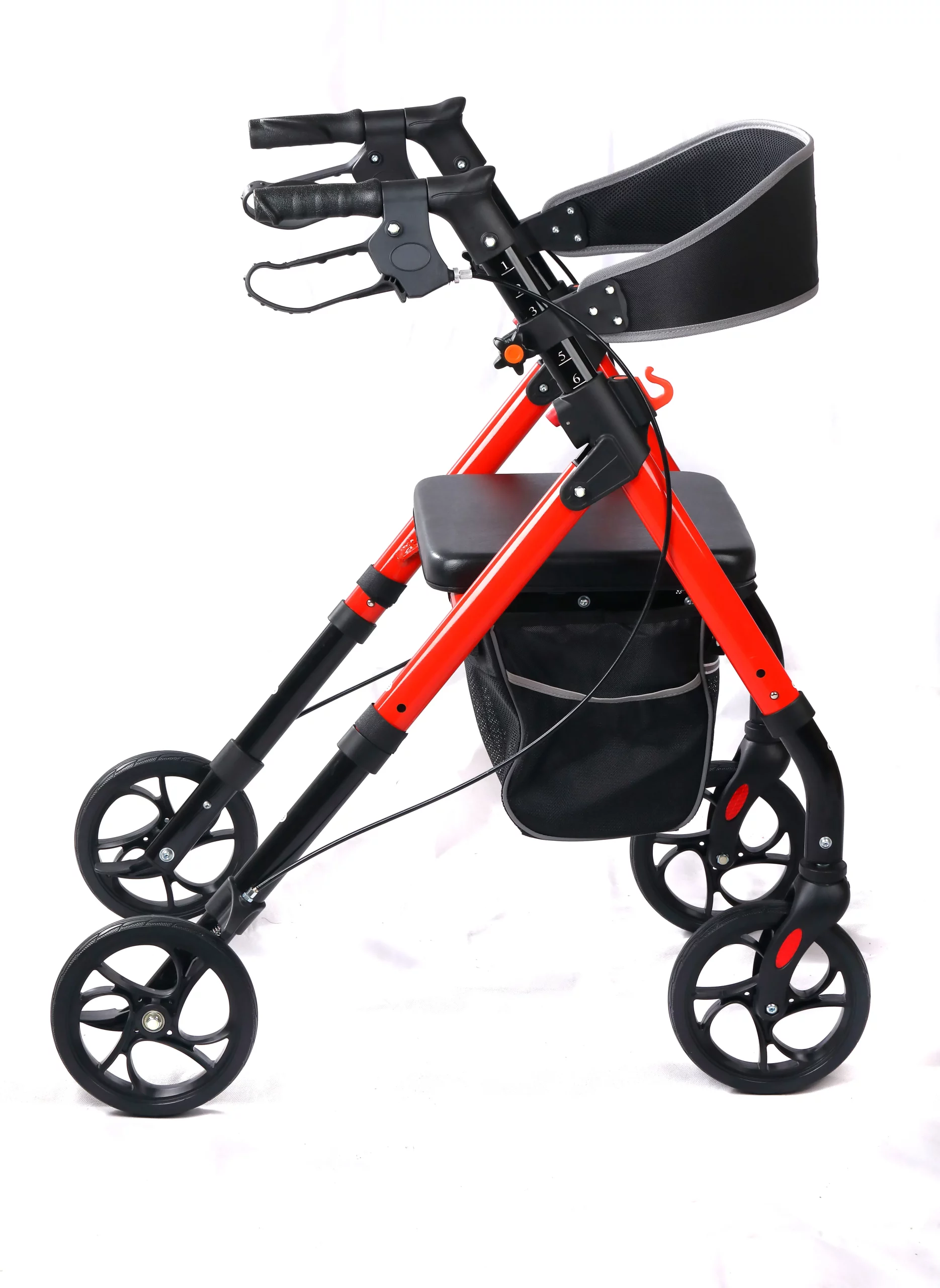
Rollator brakes should perform the slowing and stationary functions specified for the chosen four-wheel aid. The pictured Shopping Walker has two hand levers and cables leading down toward its wheel assemblies. Photos alone cannot prove braking force or the exact parking action.
Which functions need separate confirmation?
Name the task before testing a lever. Ask for model instructions covering walking control, stopping and any parking mode. Oxford Health's four-wheeled rollator leaflet calls for functioning brakes and user instruction.
- Identify each hand lever and related wheel side.
- Request the exact model's operating states.
- Keep demonstration within trained safe use.
| Function | Evidence to request |
|---|---|
| Slowing or stopping | Model procedure and trained trial |
| Stationary parking | Confirmed lock action and check |
A photographed lever is only the beginning of a brake review. Key Takeaway: The buyer can request performance evidence without inventing a claim.
What do photos reveal about rollator brakes?
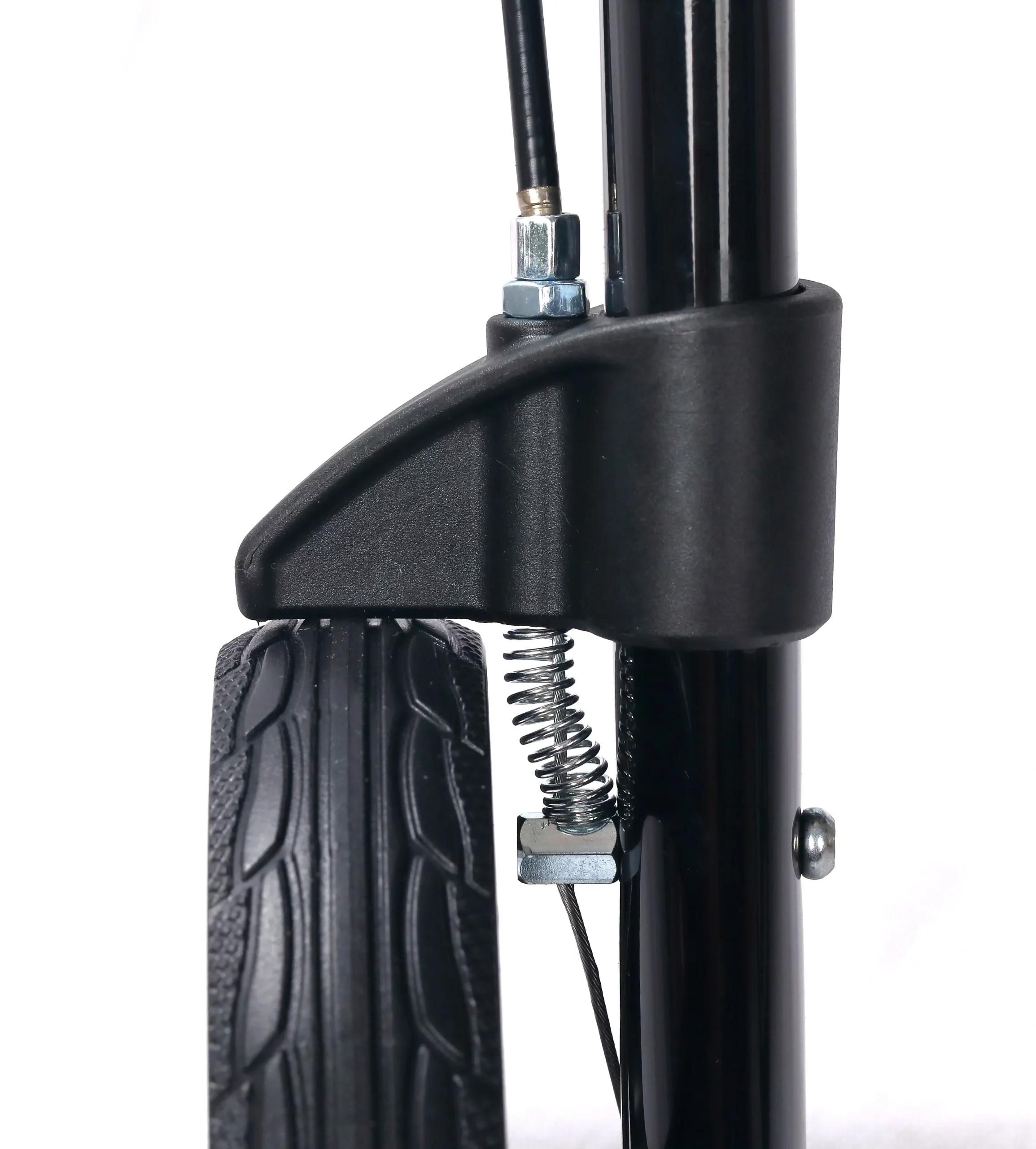
Rollator brakes in the source gallery visibly include paired levers, cables and wheel-side hardware. Those parts show the path a technician may need to identify. They do not establish an adjustment method, service interval or measured stopping distance.
How should a dealer use the close-up?
Separate observation from instruction. The wheel-side image helps locate a cable fitting and spring near a tyre. Ask the product team for an actual parts diagram before naming replaceable pieces.
- Use images to identify visible assemblies.
- Avoid diagnosing a brake from the photograph.
- Request the parts list and service guidance.
| Photo shows | Photo cannot prove |
|---|---|
| Lever and cable | Approved operating sequence |
| Wheel-side fitting | Correct adjustment or stopping result |
This distinction keeps sales copy honest and service work controlled. Key Takeaway: Your team knows when to consult the model document.
How should rollator brakes parking mode be confirmed?
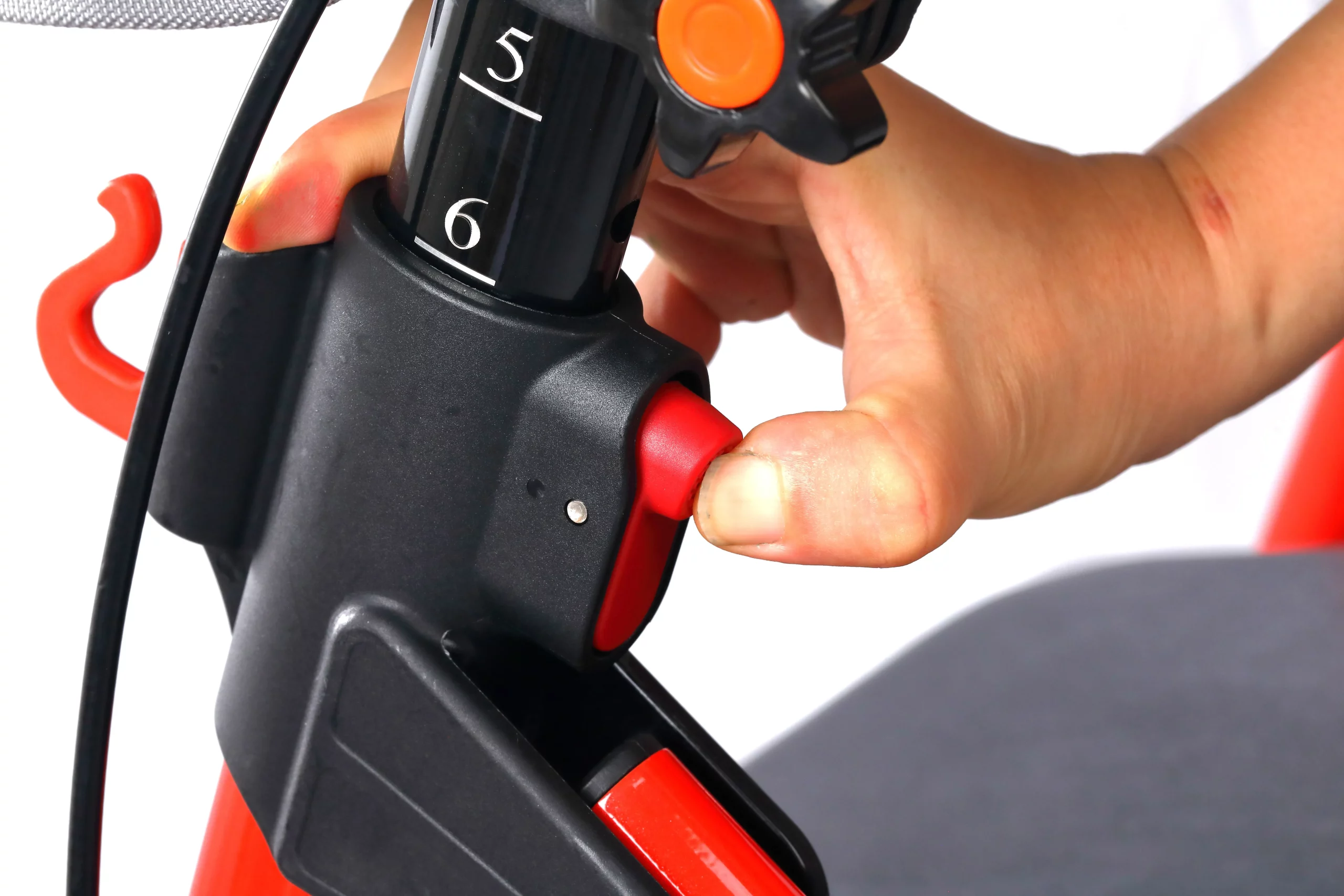
Rollator brakes parking mode should be confirmed from the exact model instructions and a trained sample demonstration. The lever shape resembles common loop-brake designs, but this image does not verify which motion locks it. Never write a universal push-or-pull rule for an unverified model.
What should the demonstration record?
Show the state, not just the hand motion. Identify how the maker says each side enters and leaves the parked state. Record the required pre-use check and the person trained to perform it.
- Use current instructions for the chosen model.
- Review both sides under a controlled procedure.
- Document the demonstrated parked state.
| Question | Answer source |
|---|---|
| How does it park? | Current model guide |
| How is it checked? | Trained handover procedure |
A written state check helps prevent a gesture from becoming a guess. Key Takeaway: Buyers receive a model-specific parking rule.
Why check rollator brakes before a seated rest?
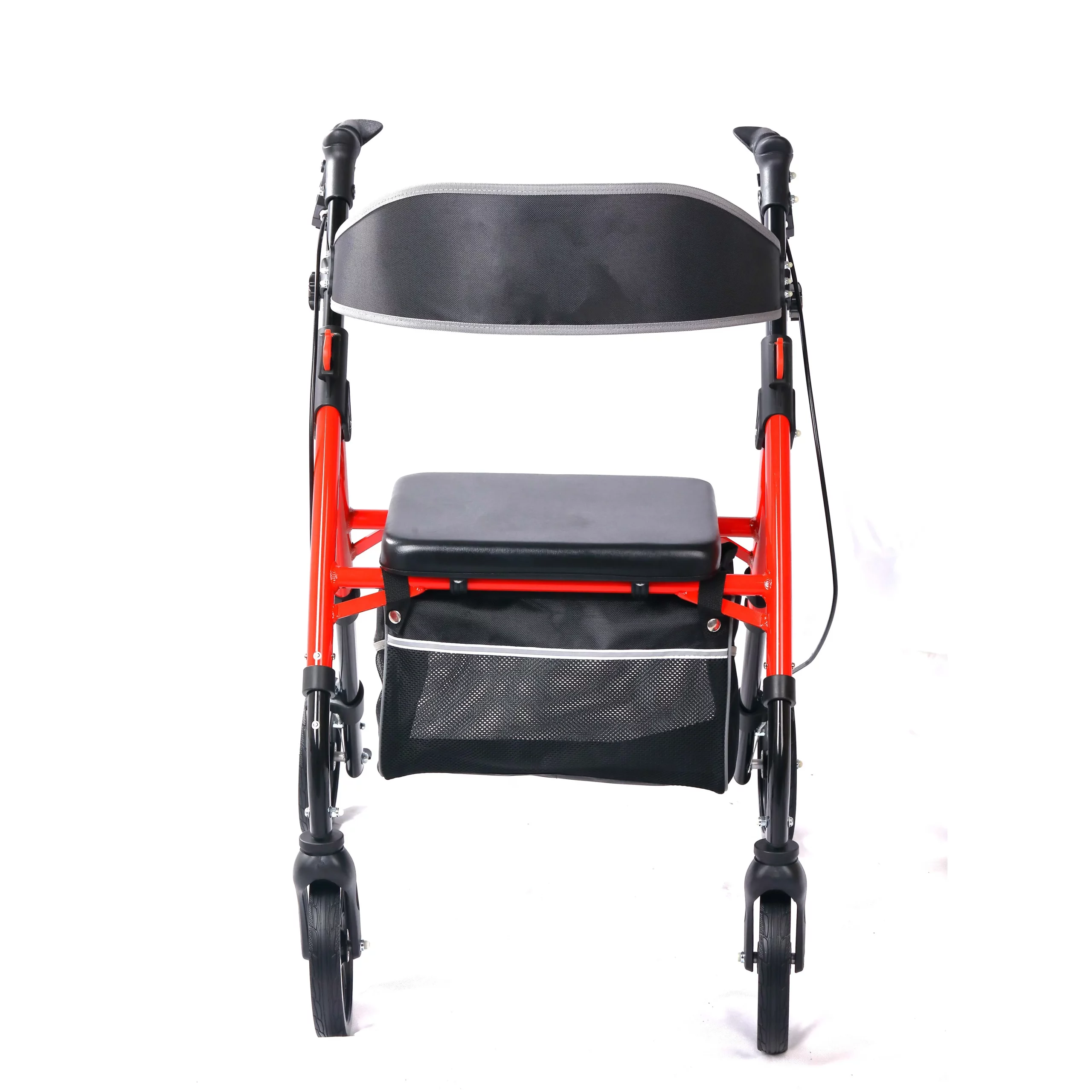
Rollator brakes need a verified parked state before a person uses the built-in seat under the model and individual use plan. The red rollator clearly has a padded seat and back strap. Neither the seat photograph nor a brake lever alone proves a safe rest setup.
What else belongs in that review?
Make the rest stop a complete task. Review full frame opening, the permitted surface and the person's ability to sit and rise with trained personnel. Oxford Health's rollator guidance stresses full opening and brake checks.
- Confirm the model's parking check.
- Use the individual seated-rest plan.
- Avoid moving the aid while occupied unless expressly designed for it.
| Rest factor | Review |
|---|---|
| Brake state | Confirmed by model procedure |
| Person and place | Assessed rest task and location |
The parking check and personal rest assessment support each other. Key Takeaway: A dealer can discuss seat use without promising universal safety.
Can handle fit change rollator brakes access?
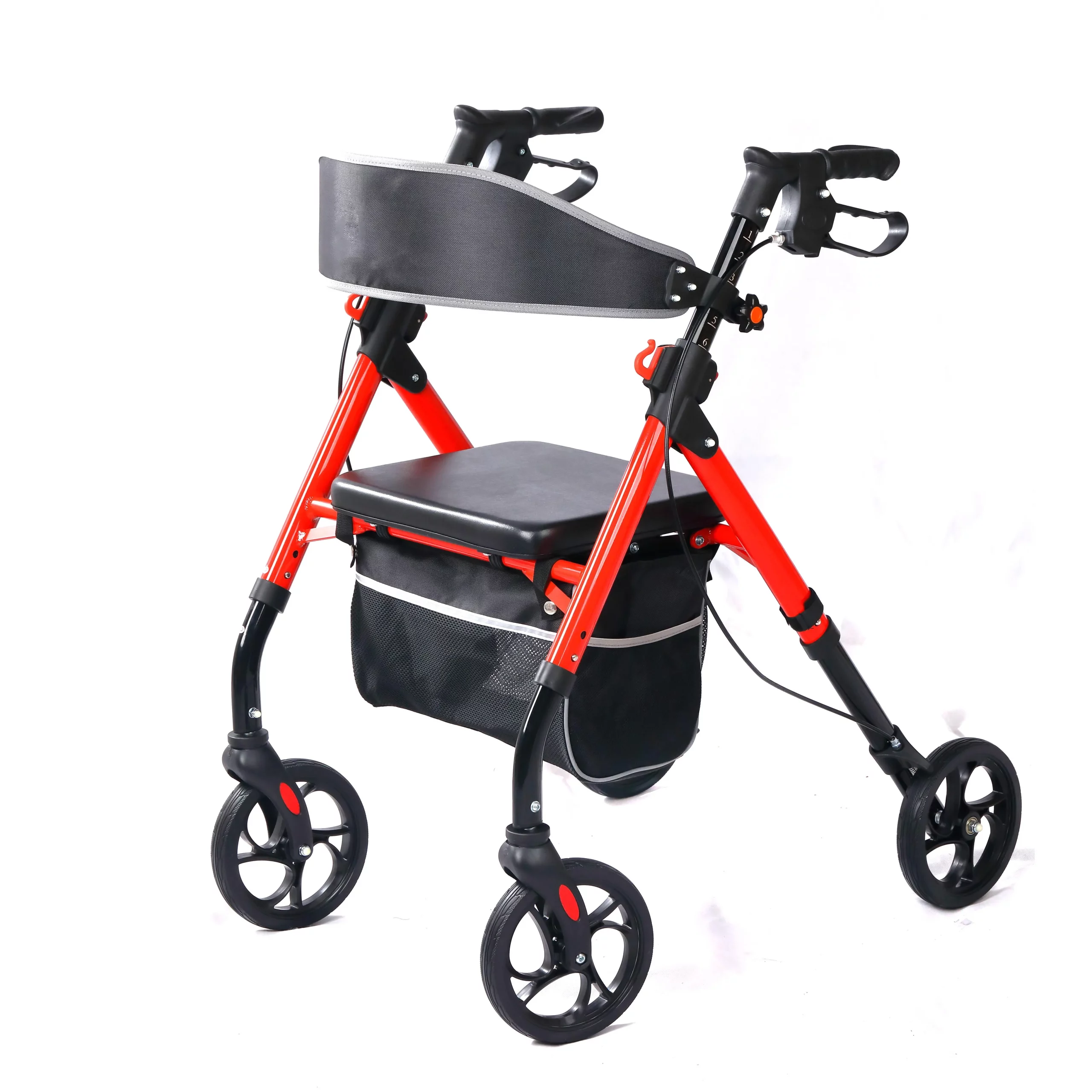
Rollator brakes can become harder to use if the handgrip position leaves the levers outside the user's comfortable reach. An approved handle-height change should trigger another trained brake-access check. The photograph shows adjustable posts but not any individual's correct setting.
What should the fitter observe?
Follow the hand from grip to control. Ask whether the user can reach both levers in the agreed walking posture. Keep the walking-aids range comparison separate from this model's final fit.
- Record approved left and right grip positions.
- Review both hand-lever access points.
- Refer any control concern for fit or service review.
| Setting | Recheck |
|---|---|
| Handle position | Grip and lever reach |
| Brake function | Model-specific operation |
A post setting is incomplete if the user cannot operate a required control. Key Takeaway: Fit and braking stay together in the handover record.
Do surfaces change rollator brakes decisions?

Rollator brakes decisions must account for the permitted route and surface, not a gallery image alone. The page shows grass, paving and a speed bump, but does not prove this rollator suits each one. Ask the user-assessment team to review actual conditions.
Which route facts should buyers collect?
Start with the path people really take. List slopes, wet paving, thresholds and stopping places without making a blanket terrain claim. A cane chair serves a different use case and needs its own assessment rather than a casual substitution.
- Record common surfaces and weather exposure.
- Check the maker's route limits.
- Plan a trained review for uncertain stops.
| Route issue | Question |
|---|---|
| Slope or threshold | Is the model intended for this setting? |
| Rest location | Can parking be verified there? |
Terrain changes the use question even when lever hardware stays the same. Key Takeaway: Your buyer brief can expose a route problem early.
When do rollator brakes need service?
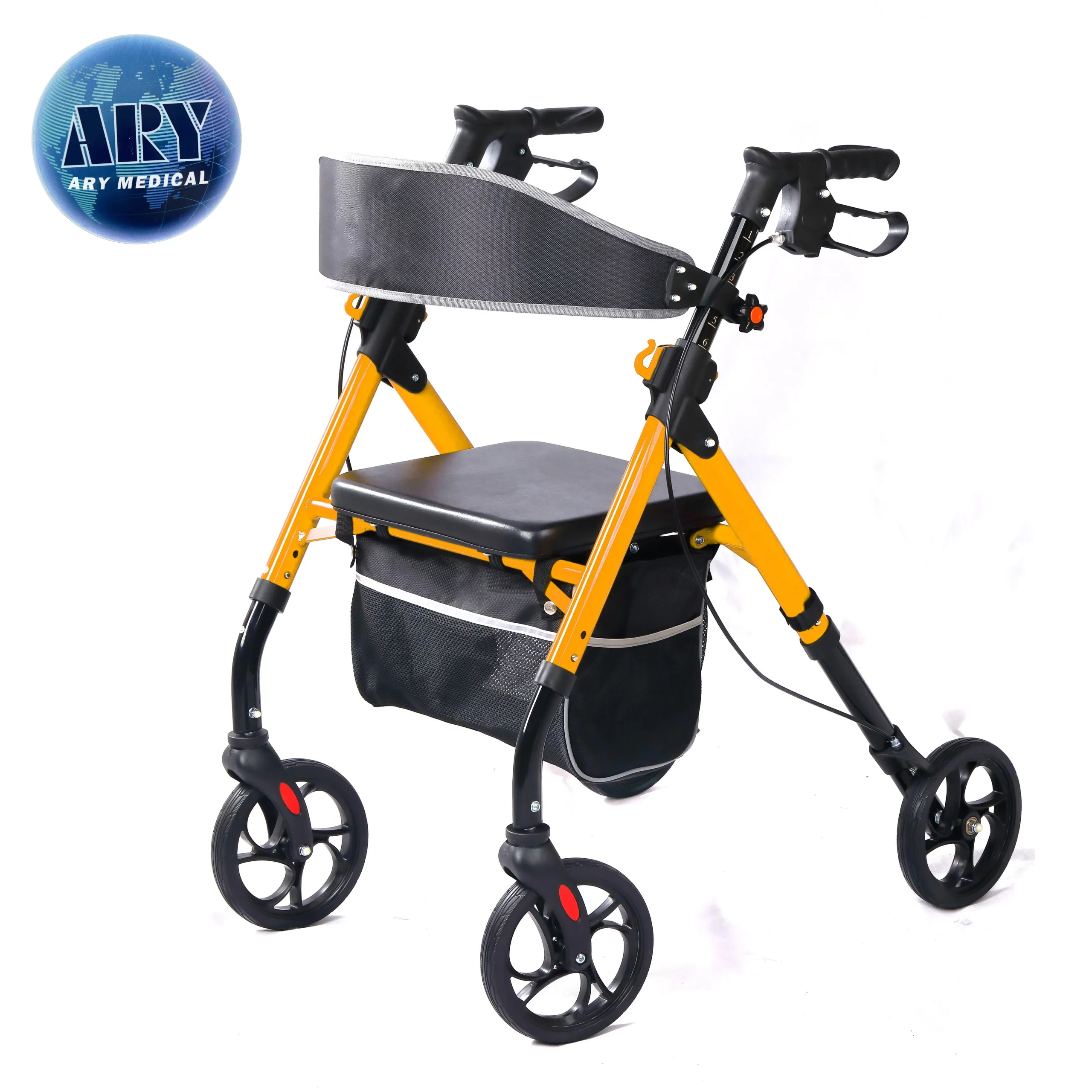
Rollator brakes need service review when lever feel, cable condition or wheel-side contact changes from the documented setup. Do not ask a user to compensate by gripping harder or changing cable tension without guidance. The service team should decide the approved response.
What facts help a technician?
Describe the symptom before the fix. Record the model, affected side, observed change and recent transport or repair. Use the supplier contact for parts and service clarification rather than an improvised adjustment.
- Identify lever, cable or wheel-side location.
- Document what changed and when.
- Request return-to-use checks after service.
| Report field | Value |
|---|---|
| Model and side | Locates the assembly |
| Observed change | Guides trained diagnosis |
A clear fault note can prevent a wrong replacement or unsafe field repair. Key Takeaway: Technicians receive facts, not an assumed diagnosis.
How does folding affect rollator brakes?
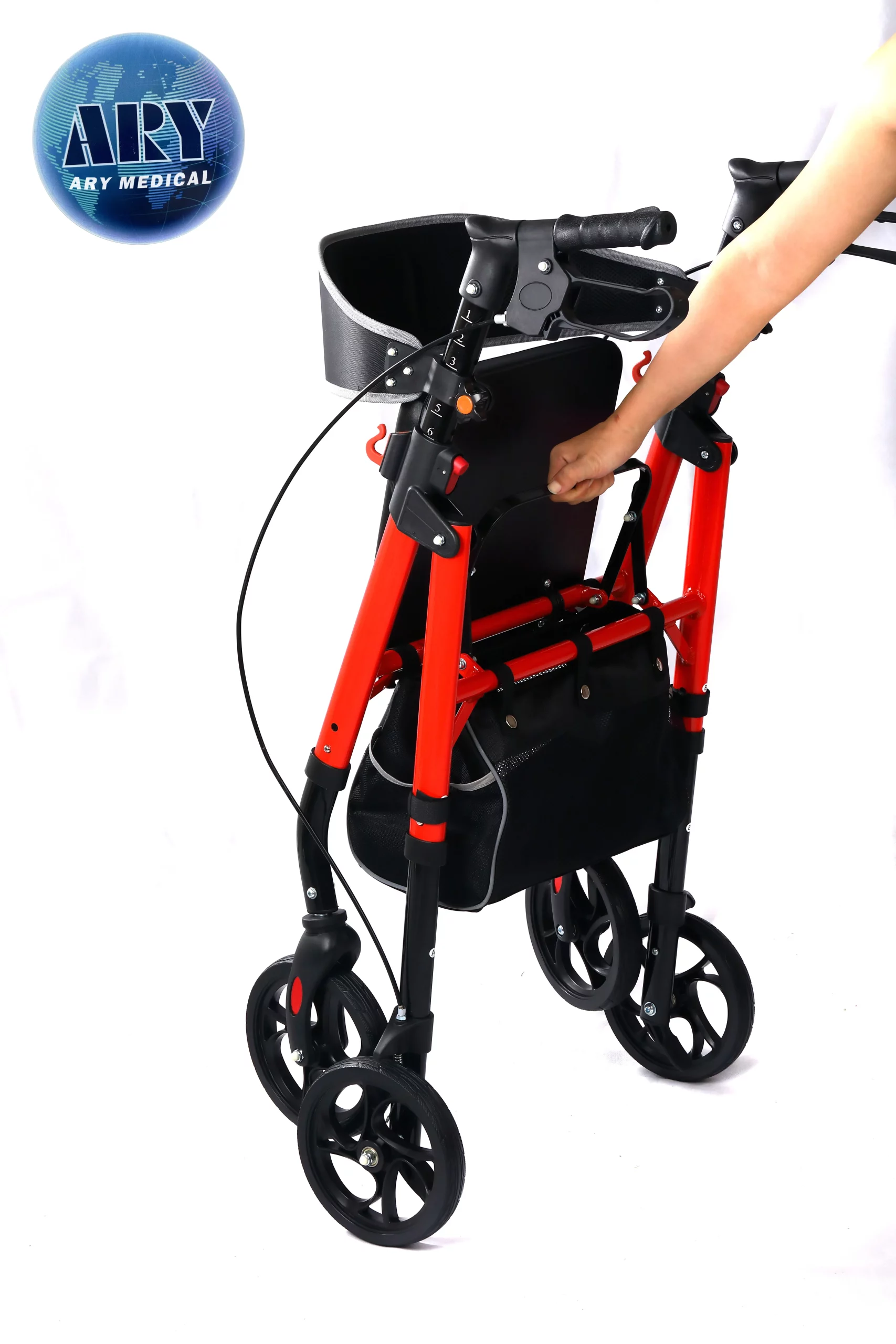
Rollator brakes should be rechecked after folding, transport or a relevant service change under the model guide. The source folded view shows cables near moving frame parts, but not an approved fold sequence. Protect routing and restore the full open configuration before use.
What should a receiver inspect?
Follow the cable through the fold. Ask for the maker's handling steps and trained check of both brake sides after reopening. Do not infer that a cable path is safe because it looks tidy in one photograph.
- Use the documented fold and reopen method.
- Inspect cables for obvious damage or trapping.
- Perform the required model brake checks.
| Stage | Review |
|---|---|
| After transport | Cable route and frame opening |
| Before use | Both braking functions as instructed |
A packed device can shift without showing obvious damage from a distance. Key Takeaway: The receiving team has a repeatable recheck.
What rollator brakes records help a dealer?
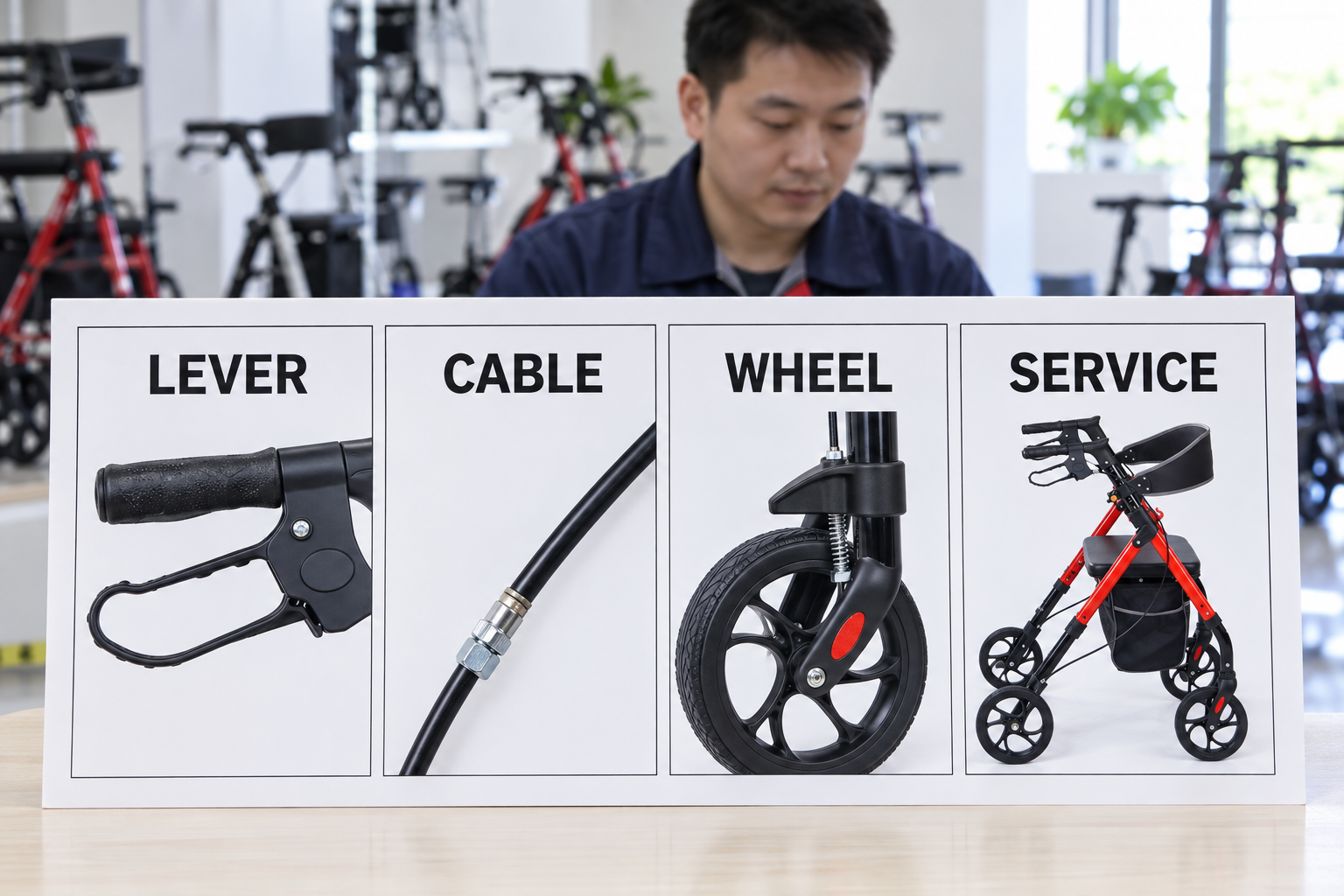
Rollator brakes records should include model identity, operating instructions, left and right observations, service contacts and user training. Keep any unresolved fault outside ready-for-use sign-off. The chart above is a handover prompt, not proof of brake performance.
What must the next colleague find?
Make the current version easy to follow. Store the maker's guide, approved fit settings and any service action together. WHO describes trained fitting and follow-up as part of assistive-product provision.
- Record current instructions and demonstrated functions.
- Log both side checks and any open concern.
- Name the trained service or fit contact.
| Record | Practical use |
|---|---|
| Operating guide | Shows model-specific action |
| Service history | Explains changes and next steps |
A traceable record outlasts one showroom demonstration. Key Takeaway: The next handler can tell whether the aid is ready or needs review.
How do you choose rollator brakes for a buyer?
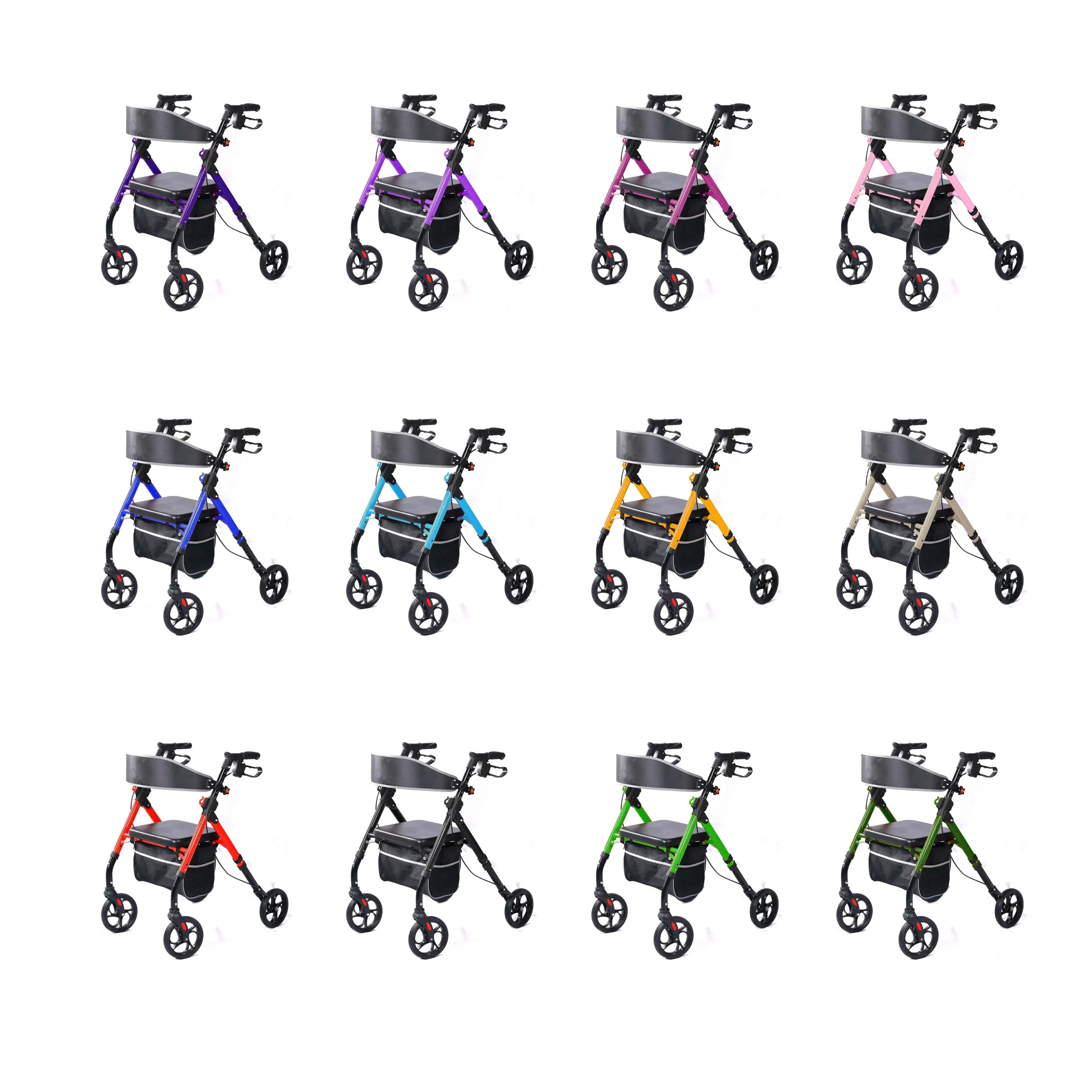
Choose rollator brakes by verifying model operation, user reach, parking use and service support on the actual aid. Pair that with the user's route and seated-rest plan. Avoid selecting from handle shape or a still image alone.
What should the buying brief say?
Ask for a demonstration you can document. Name the model, intended setting, user-assessment contact and any brake concern. Request the current instructions, a sample check and a clear fault route.
- Confirm operating and parking functions.
- Review both-hand access and route conditions.
- Record training and service responsibilities.
| Buyer question | Response to seek |
|---|---|
| How does it park? | Model instructions and demonstration |
| Who handles faults? | Parts and trained service route |
A useful answer can be checked again after delivery. Key Takeaway: For model details and a sample review, contact us. Ary Medical stands for walking aids whose use and support are clear before the first journey.
Frequently asked questions
Q1: Can I tell the parking action from a brake photo?
No. Use the exact model guide and a trained demonstration; lever shapes can mislead.
Q2: What's the best check before sitting on a rollator seat?
Confirm the maker's parked state on both sides as part of the person's trained rest plan. Use the aid fully open.
Q3: How do I know if a brake needs service?
A changed lever feel, damaged cable or uncertain wheel response warrants trained review. Do not guess at a cable adjustment.
Q4: Can I use a rollator with one faulty brake?
Do not rely on a suspected faulty aid. Follow the provider's stop-use and service process.
Q5: Can I use a route photo to judge brake suitability?
No. A photo does not establish the maker's surface limits or the person's safe route.