
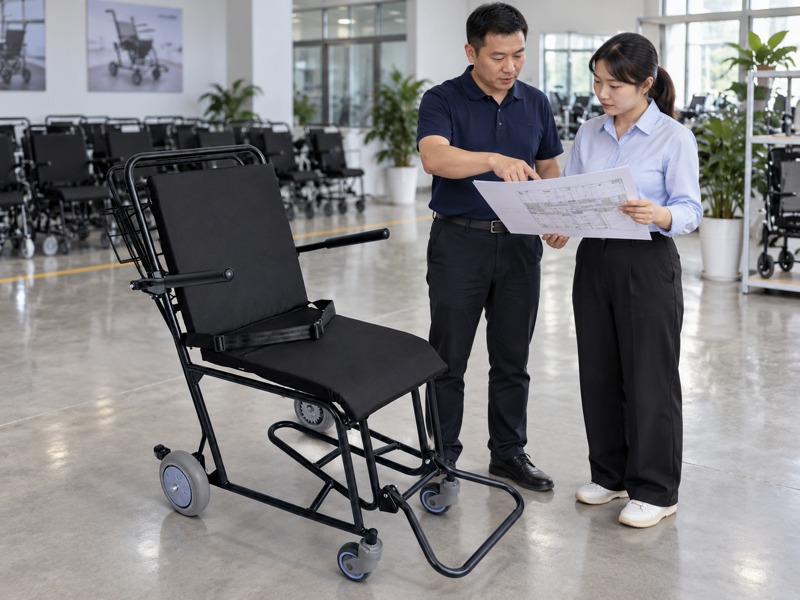
Choose an airport transport wheelchair fleet by matching the exact attendant chair to terminal routes, passenger needs, storage and a documented service plan. A compact black chair can look ready for a UAE terminal, yet its photo cannot prove aisle fit, airline approval or clearance for local trade. Nested-chair images show a storage idea, not a measured fleet capacity. Request a controlled sample and current instructions before you price quantity.
What should an airport transport wheelchair brief include?
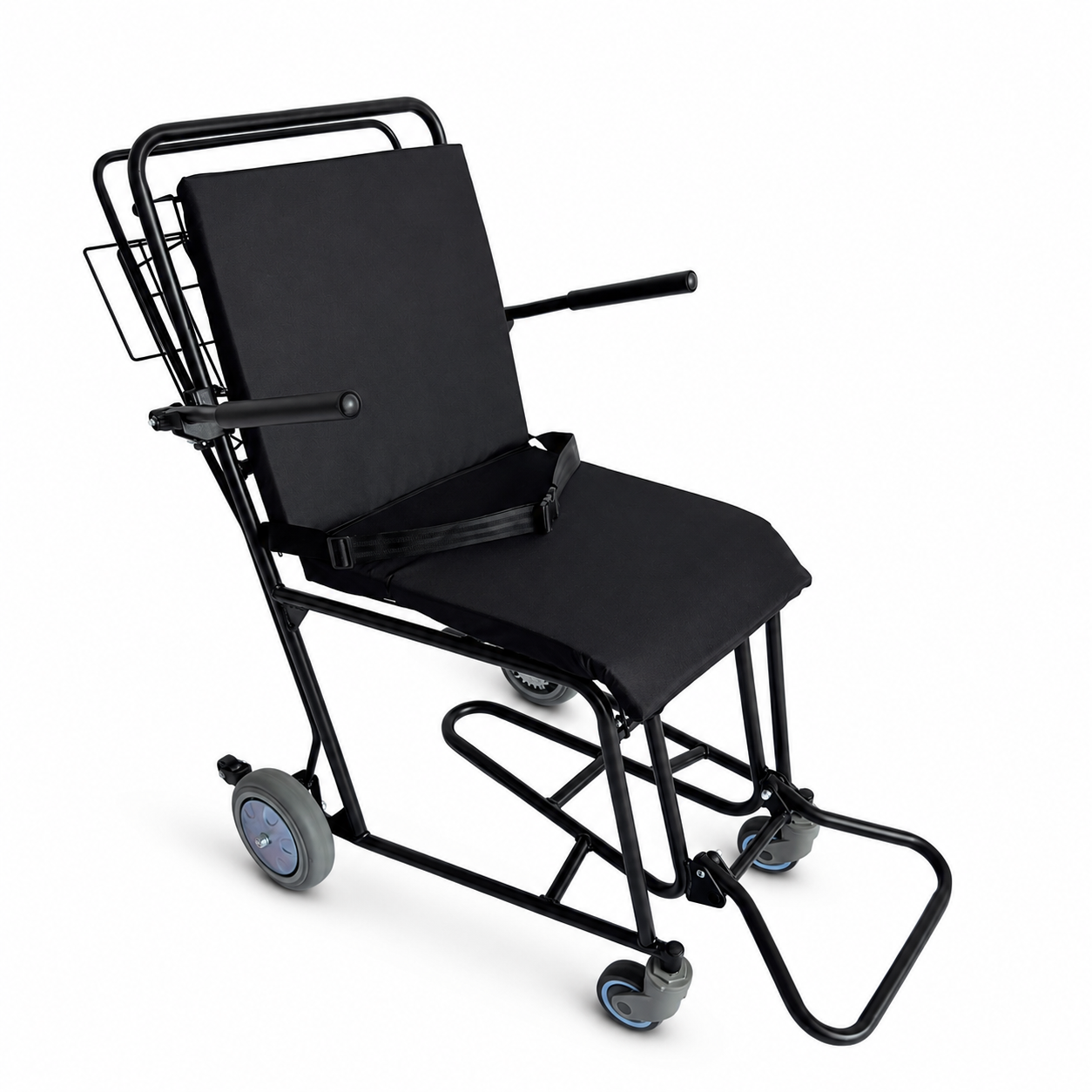
An airport transport wheelchair brief should identify the exact attendant-pushed chair, passenger service tasks, routes and trained handlers. The supplied black product view shows a belt, back, rear basket, small front casters and larger solid rear wheels. It does not establish where the chair may be used.
Which decisions start a fleet order?
Name the route before the quantity. Ask who will be assisted, where handovers occur and what role this chair serves beside a passenger's own equipment. Keep those questions with the model code and current guide.
- Identify the exact chair and attendant role.
- Map the service route and handover points.
- Name the staff and service owner.
| Brief field | Buyer question |
|---|---|
| Product identity | Which chair is being reviewed? |
| Service route | Where and by whom is it used? |
A clear task makes a sample more useful than a fleet photo. Key Takeaway: Your buyer can evaluate one defined chair for one defined service.
Can airport transport wheelchair units nest for storage?
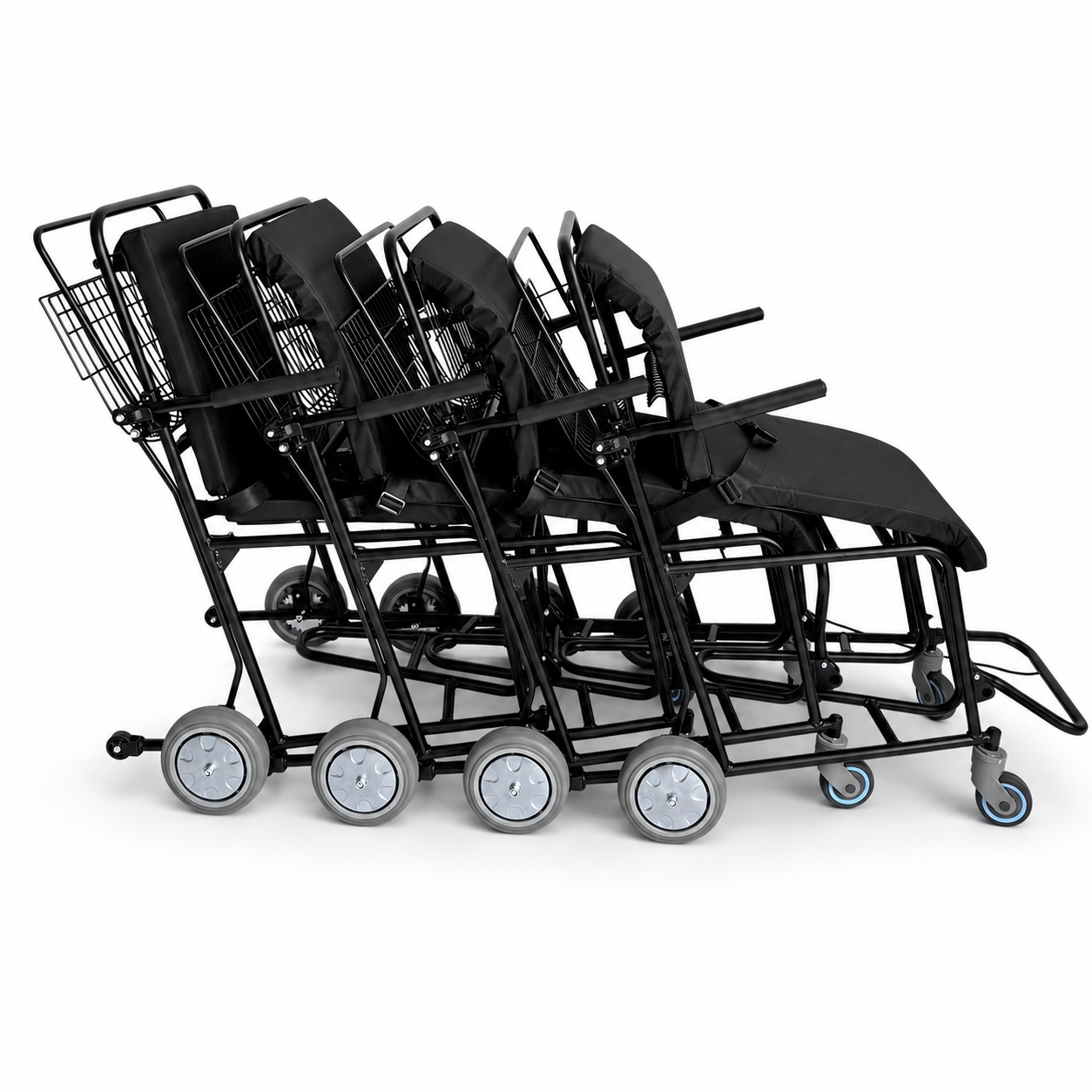
These airport transport wheelchair units are pictured nested, but the photos do not prove a maximum count, footprint or safe movement method. Ask for model-specific nesting instructions and measured storage data. The product range can orient buyers, but it cannot replace a fleet storage trial.
What should a storage review measure?
Count space, not silhouettes. Measure the actual store room, doorway, access aisle and approved grouped state. Have trained staff check how a chair is removed and returned without blocking daily operations.
- Request the maker's nesting method.
- Measure the intended storage area.
- Record handling and release checks.
| Storage issue | Evidence |
|---|---|
| Grouped chairs | Approved method and measured footprint |
| Daily access | Local room trial |
Five chairs in a studio image are not a rated rack capacity. Key Takeaway: Your terminal can plan storage from real measurements.
Which routes suit an airport transport wheelchair?
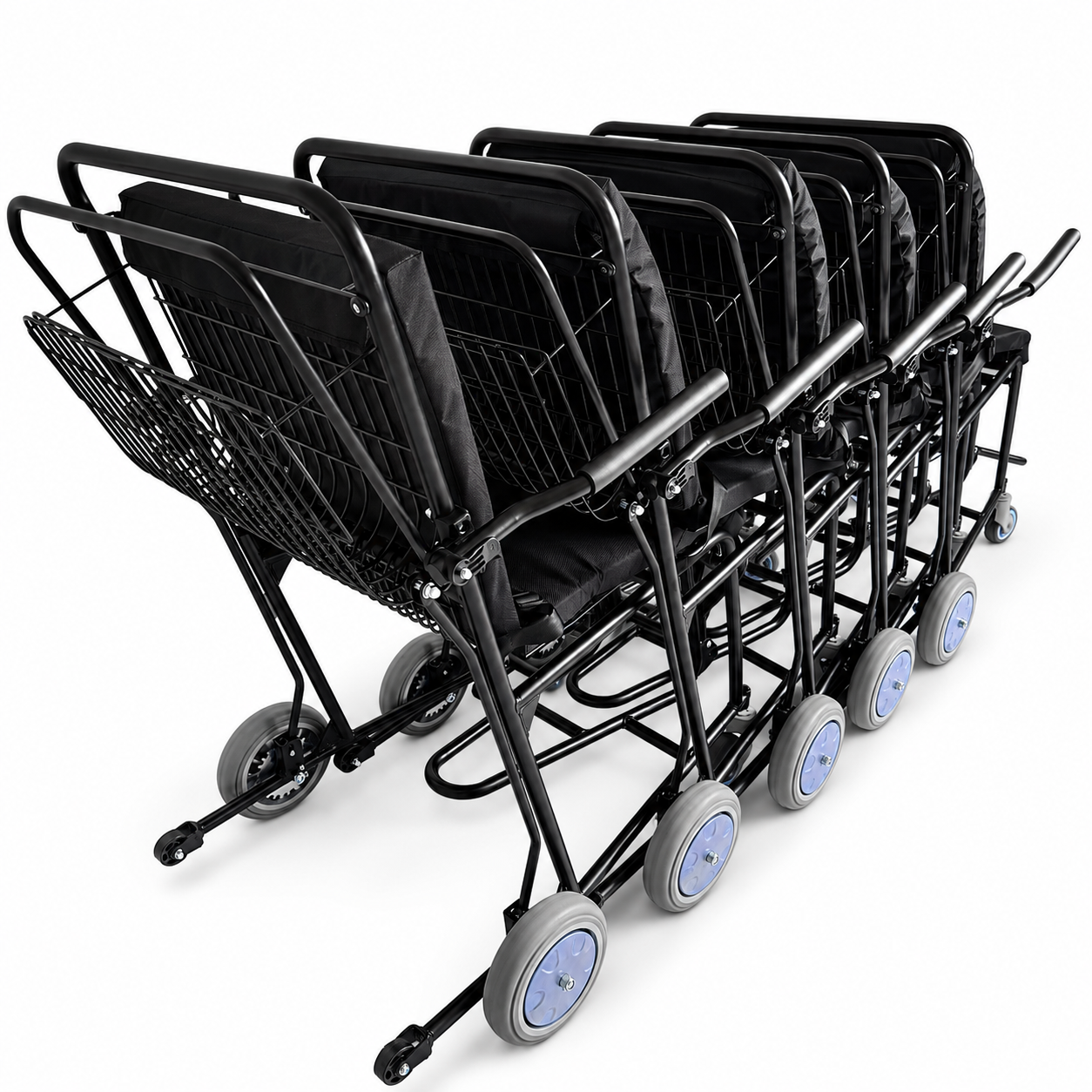
An airport transport wheelchair route must match the exact model's permitted surfaces, dimensions and attendant plan. A rear-angle fleet photo does not show a terminal threshold or turn. Walk the intended path with a controlled sample before writing a route claim.
What belongs in the route record?
Trace the trip from pickup to handoff. Record doorways, turns, slopes, waiting points and transfers without claiming universal suitability. Keep maker limits and passenger-specific needs beside the observations.
- Measure narrow and changing surfaces.
- Check permitted environment in the guide.
- Record a stop or escalation route.
| Route point | Review |
|---|---|
| Turn or doorway | Measured clearance |
| Change in level | Maker and local handling plan |
A chair may move well in a showroom but meet a different terminal route. Key Takeaway: Your team can test the actual path before scaling the fleet.
Who should handle an airport transport wheelchair?
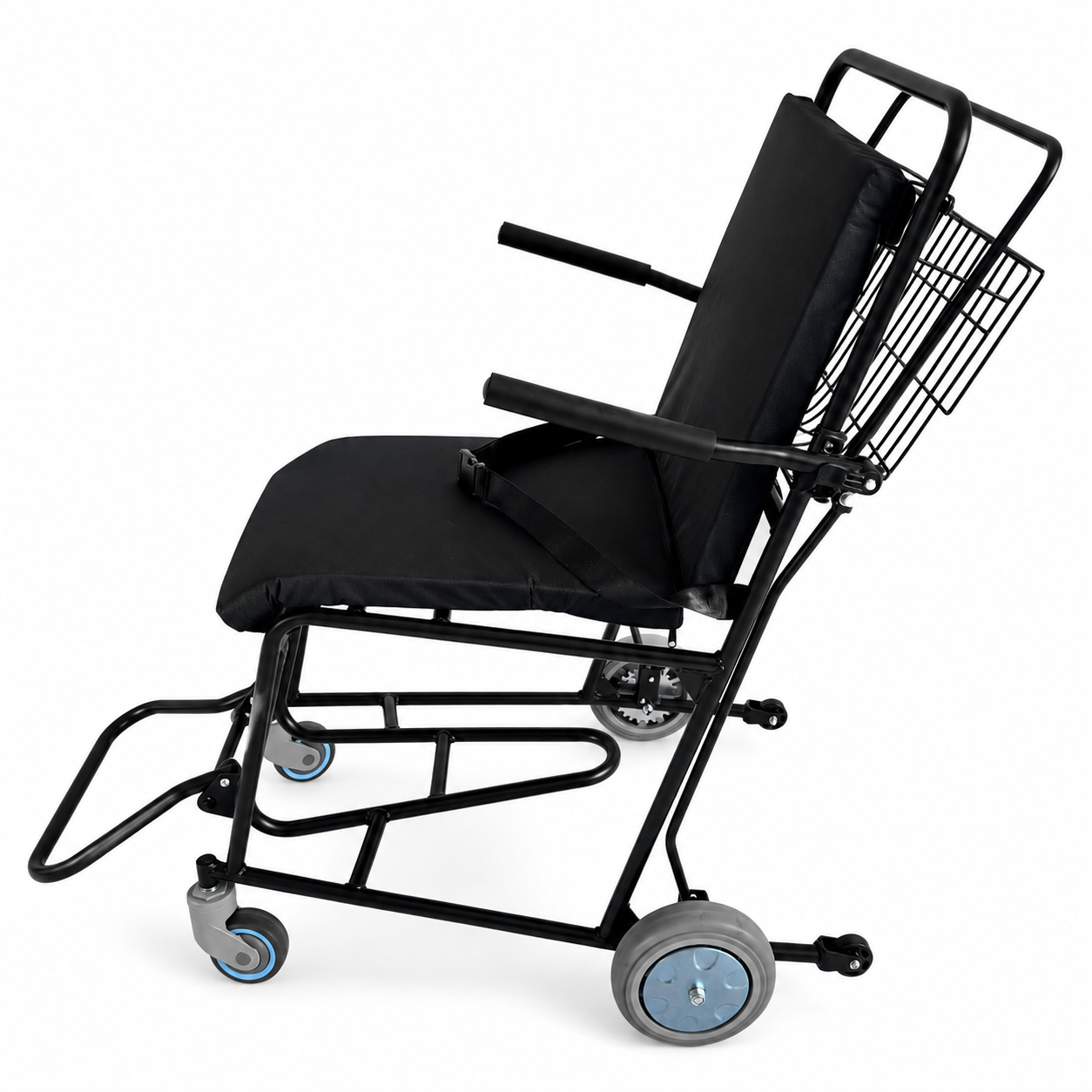
An airport transport wheelchair needs trained attendants who know the exact model, passenger communication plan and approved handling method. The side view shows a push handle and front support but no lifting or transfer instructions. Related transfer devices have separate uses.
What should staff learn before a shift?
Teach the task, then the chair. WHO's wheelchair provision guidance emphasizes fitting, training and follow-up in individual provision. Apply that people-centred approach while using this chair's own guide for controls, belt and handling.
- Identify the model and current manual.
- Practice permitted empty-chair handling.
- Record passenger handover responsibilities.
| Training item | Basis |
|---|---|
| Chair use | Exact maker instructions |
| Passenger support | Individual service plan |
A familiar-looking push chair can still have model-specific limits. Key Takeaway: Your staff can help without improvising a technique.
How should an airport transport wheelchair belt and basket work?
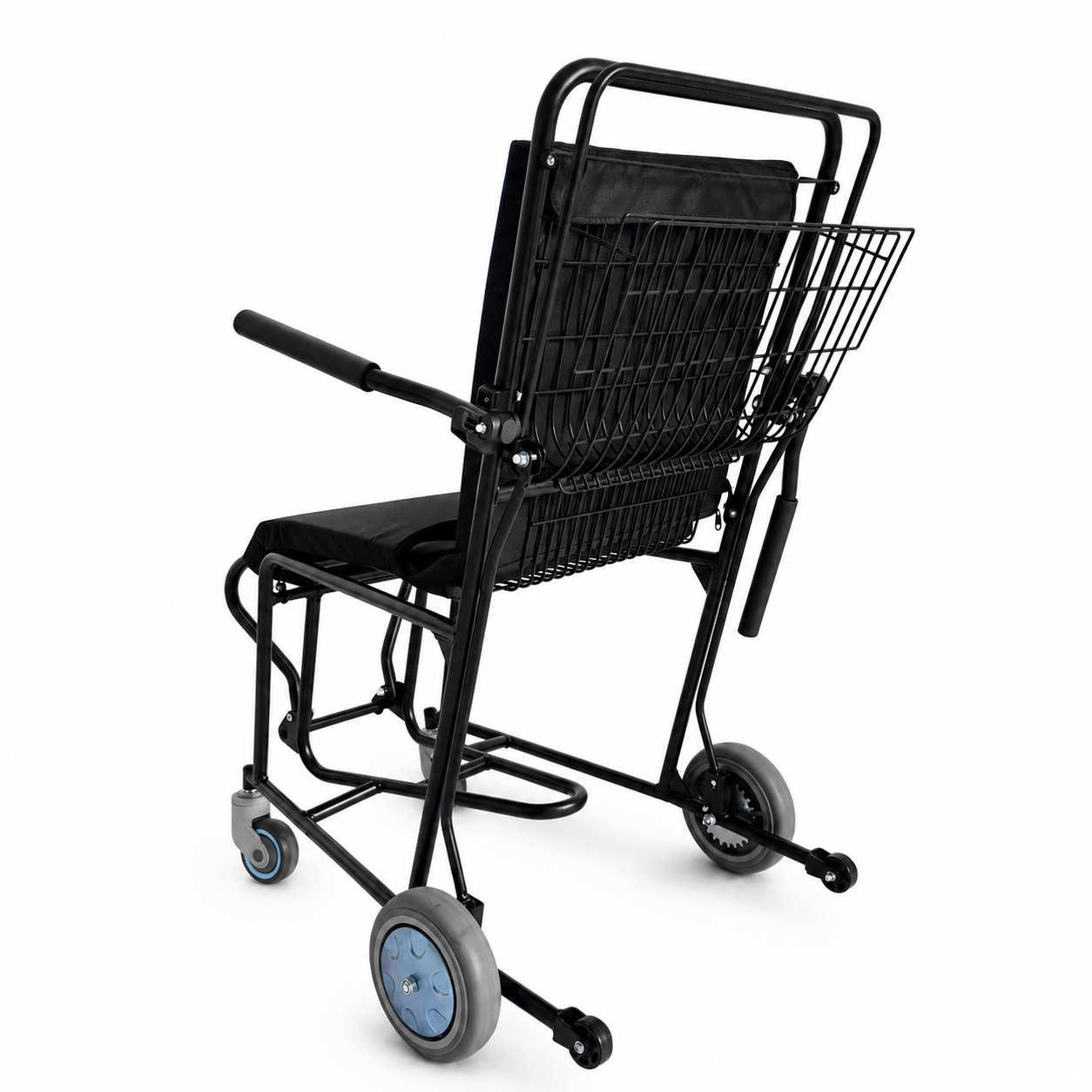
An airport transport wheelchair belt and rear basket should be used only within the maker's stated roles and the passenger's assessed needs. The rear photo shows both, but no capacity or restraint approval. Ask for model-specific instructions before placing items or making a safety claim.
Which questions belong in a briefing?
Keep each accessory in its own role. Clarify whether the belt is an occupant positioning aid, what checks it needs and what the basket may carry. Do not treat either part as aircraft restraint or luggage approval from appearance.
- Request belt purpose and fitting guidance.
- Ask for basket use and limits.
- Record any passenger-specific support needs.
| Accessory | Question |
|---|---|
| Belt | What use is expressly stated? |
| Basket | What may be carried and checked? |
Visible accessories are not a substitute for a use record. Key Takeaway: Your fleet briefing can avoid unsupported restraint and load claims.
What do airport transport wheelchair wheels reveal?
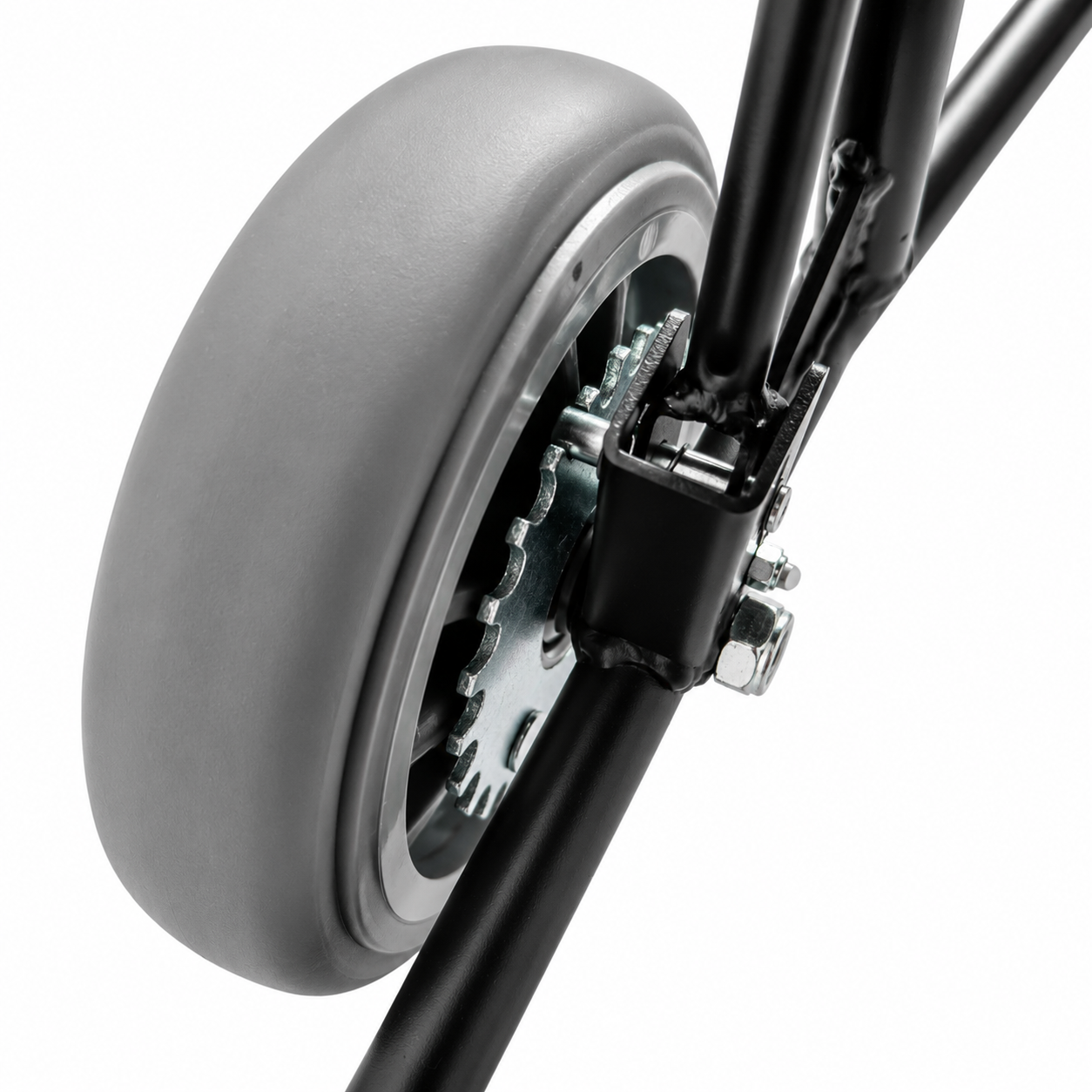
An airport transport wheelchair image reveals small front casters, larger solid rear wheels and a visible wheel-side mechanism, not braking performance or route approval. A close-up can help a service team identify where to ask questions. Use exact maker information for checks and repair.
What should a maintenance brief request?
Turn visible hardware into a parts question. Request wheel and brake assembly references, condition cues and the authorised service route. Avoid publishing stopping distances or wheel ratings without test evidence.
- Identify front and rear assemblies.
- Request model-specific check instructions.
- Hold damage or uncertain operation for review.
| Visible feature | Cannot prove |
|---|---|
| Wheel-side mechanism | Performance result |
| Solid rear wheel | Permitted terrain |
Photos support identification, not a pass certificate. Key Takeaway: Your service team can start a precise enquiry.
How should airport transport wheelchair stock be maintained?
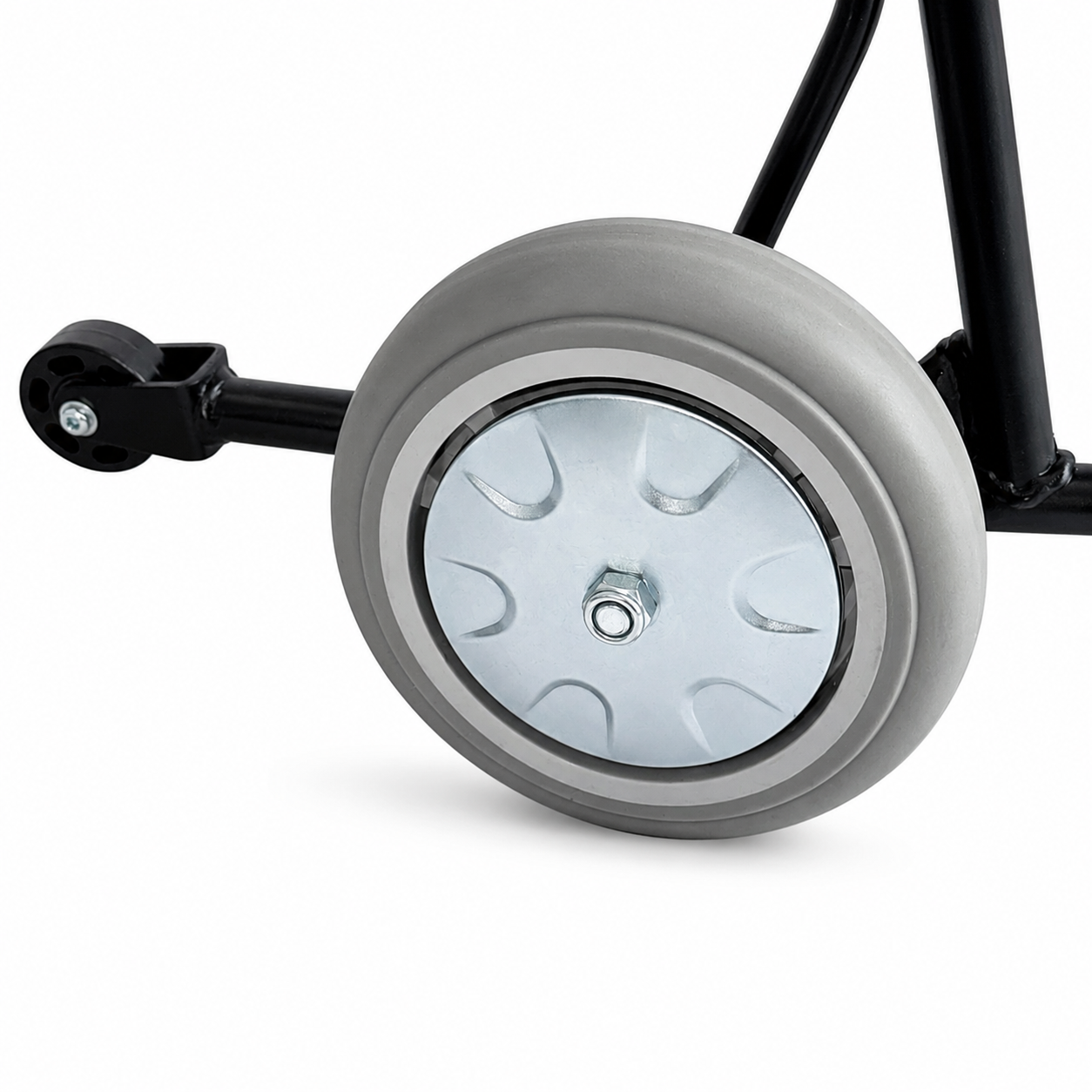
Airport transport wheelchair stock needs a current model file, parts route, cleaning plan and shift checks before returning to service. The rear-wheel close-up shows a component, not a repair interval. Ask for the maker's maintenance schedule and record local use.
What belongs in a fleet log?
Make each chair traceable. Track unit ID, observed issue, worker and resolution. A chair held for damage should not quietly rejoin the terminal fleet.
- Assign a unit identifier.
- Record checks and service events.
- Keep hold and release decisions clear.
| Fleet record | Purpose |
|---|---|
| Chair ID | Finds the correct unit |
| Release status | Prevents an unresolved return |
A fleet is easier to support when each chair has its own history. Key Takeaway: Your manager can see which units are available and why.
What UAE records should an airport transport wheelchair buyer ask for?
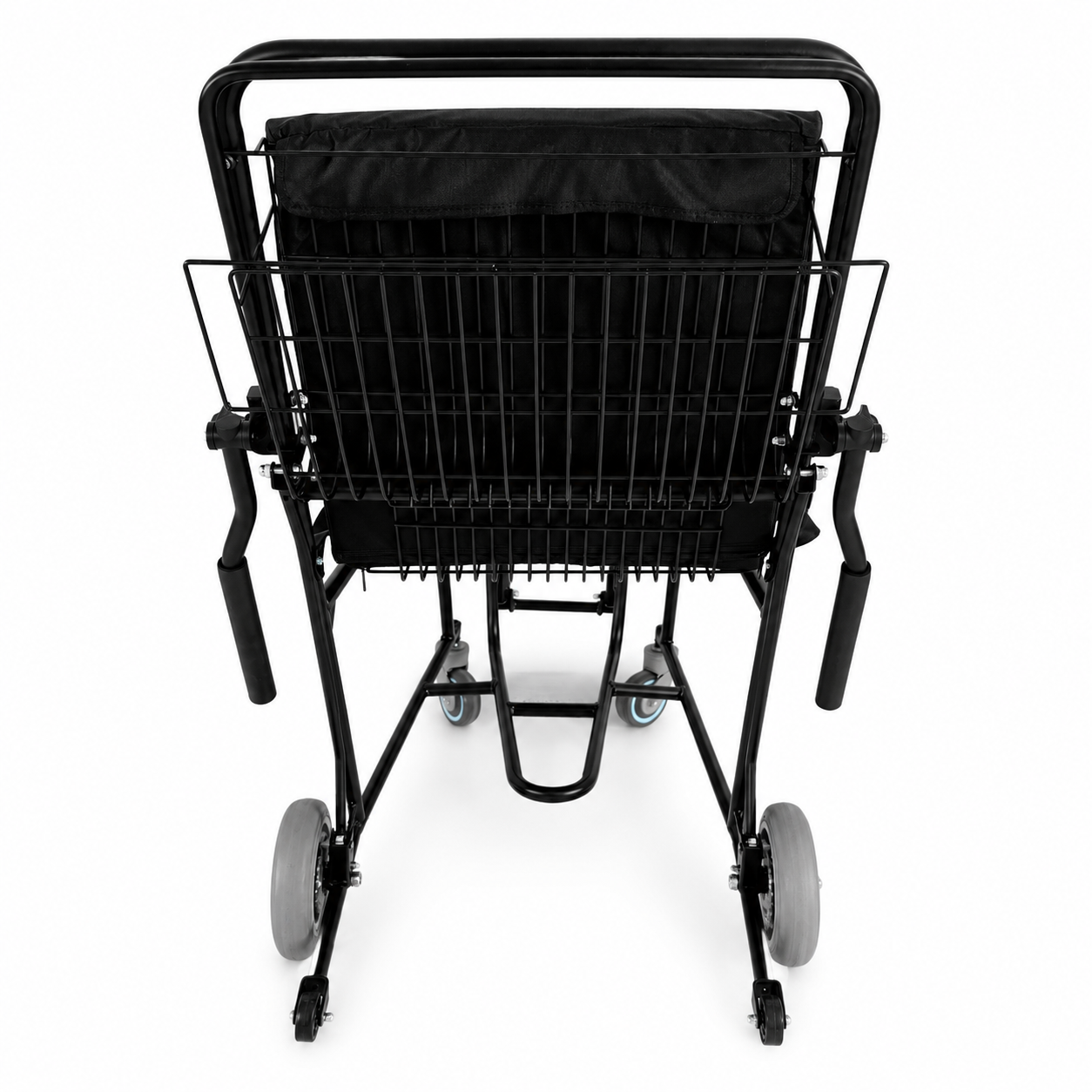
An airport transport wheelchair intended for UAE trade needs its exact product classification and applicable local records reviewed by the responsible importer before approval claims. The rear basket view does not establish any registration or clearance. Ask the supplier team for available model documents.
Where should local checks begin?
Classify the exact item before claiming clearance. The UAE Emirates Drug Establishment service describes a route for medical-device marketing authorisation. Whether that route applies to this chair must be determined for the actual product by qualified local support.
- Identify model and intended use.
- Assign the local importer and reviewer.
- Verify any proposed registration claim.
| Open item | Owner |
|---|---|
| Product classification | Qualified UAE reviewer |
| Applicable documents | Responsible importer |
A UAE destination alone cannot confirm product status. Key Takeaway: Your purchase can follow the right local route without invented approval.
What should an airport transport wheelchair fleet scorecard show?
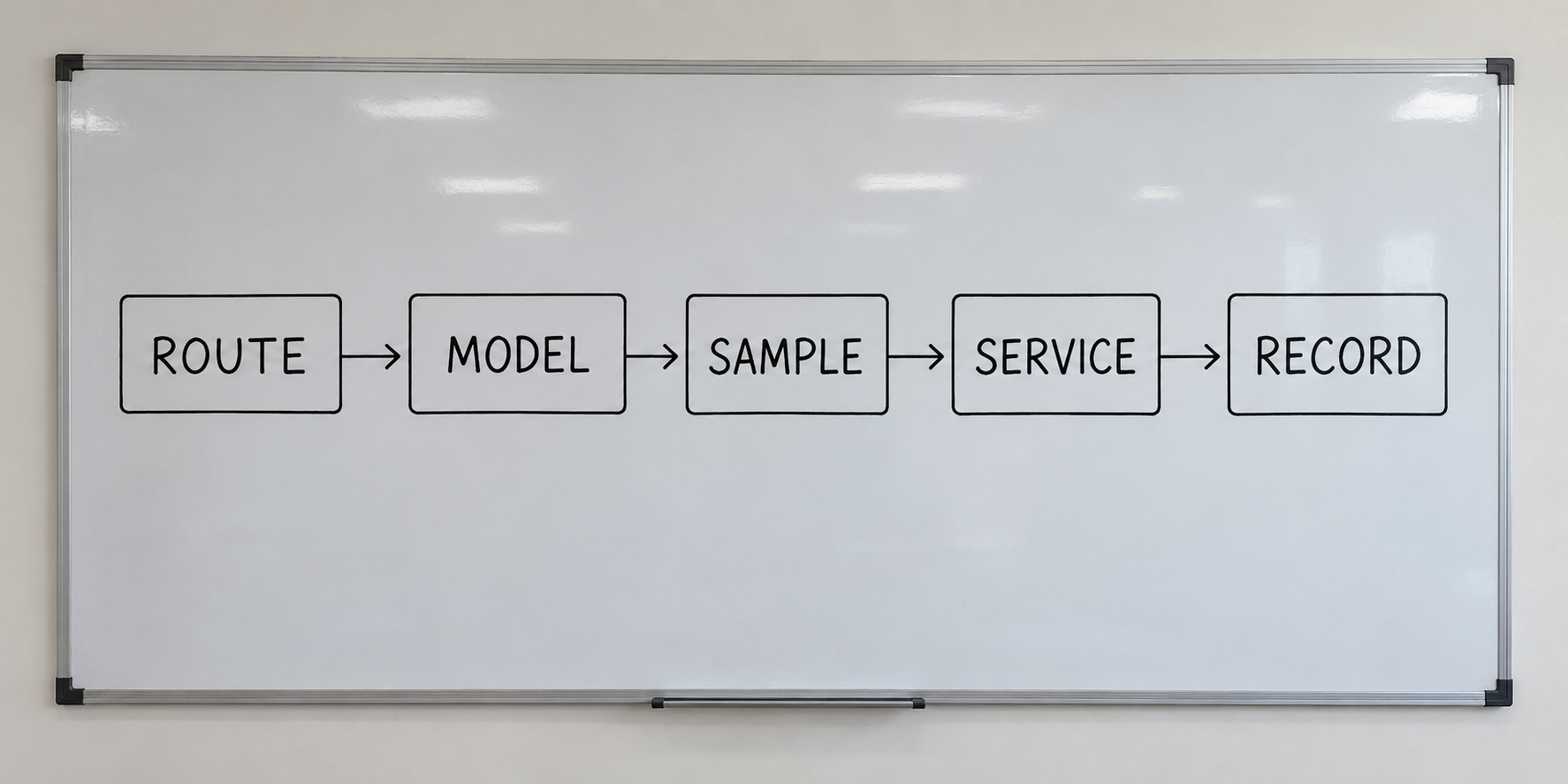
An airport transport wheelchair fleet scorecard should align route, model, sample, service and record. The chart presents those five fields without marking any as approved. Keep unknown dimensions or handling limits open until verified.
Can another buyer repeat the decision?
Put evidence beside every row. Attach the model guide, sample notes, measured route and service plan. Keep passenger needs and local review status separate from product claims.
- Record exact chair and sample.
- Link route observations and service terms.
- Flag missing local or maker evidence.
| Scorecard field | Decision |
|---|---|
| Evidence complete | Compare on the stated basis |
| Evidence missing | Request a named follow-up |
A blank cell is a question, not a free pass. Key Takeaway: Your procurement team can explain why a chair was shortlisted.
How do you request an airport transport wheelchair offer?
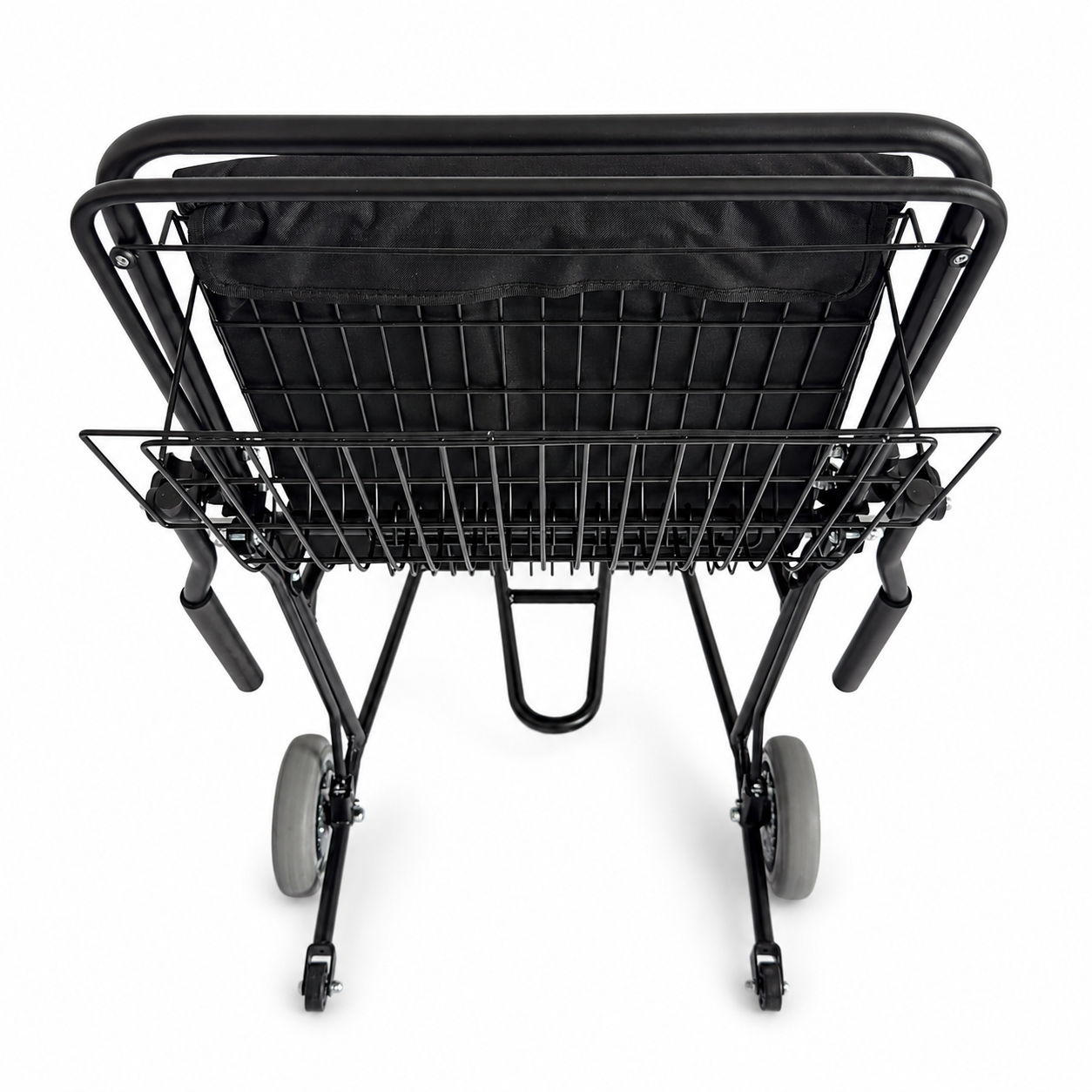
Request an airport transport wheelchair offer with the exact chair, terminal tasks, measured route and service questions. Ask for current fleet, nesting, maintenance and local-review documents before a volume commitment. Keep airline approval and load claims out of the enquiry unless evidenced.
Ready to send the fleet brief?
Send use and support questions together. Ary Medical can clarify available product information for the supplied black attendant chair. Ask for the current guide, sample and written commercial terms that your UAE team can review.
- Describe passenger service and route.
- Name chair and storage questions.
- Request parts, documents and quote terms.
| Buyer input | Supplier response |
|---|---|
| Route and chair | Model information for review |
| Fleet support | Parts, guidance and terms |
A defined brief produces a more useful fleet discussion. Key Takeaway: For a model-specific offer, contact us. Ary Medical supports terminal services grounded in real routes and verified chair use.
Frequently asked questions
Q1: Can I call this chair airline-approved?
No. A product photo cannot establish airline or airport approval; verify any exact claim with the relevant operator.
Q2: What's the best fleet size for a UAE terminal?
Use observed service demand, storage space and staffing plans; no universal quantity fits every terminal.
Q3: How do I know how many chairs can nest?
Request model-specific instructions and measure the actual grouped configuration.
Q4: Can attendants lift the chair by its arms?
Only if the maker expressly permits that handling point; do not infer it from appearance.
Q5: How do I know which UAE documents apply?
Have the responsible importer classify the exact product against current official requirements.