
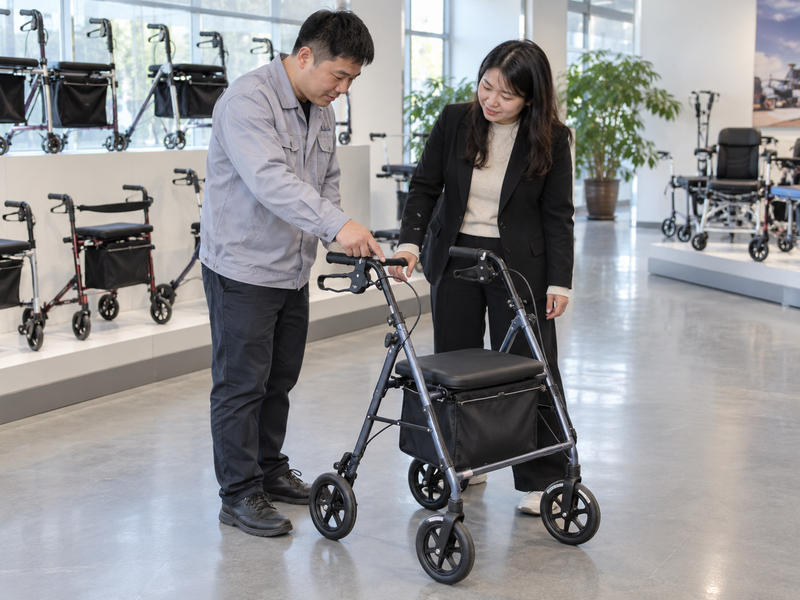
Check a rollator parking brake by using the exact model guide, confirming that the intended user can reach the control and recording a controlled sample result. A rollator may appear parked in a showroom while the buyer cannot tell how the lever was set or released. A model-specific demonstration and service record make that claim reviewable.
Which parking brake does the rollator use?
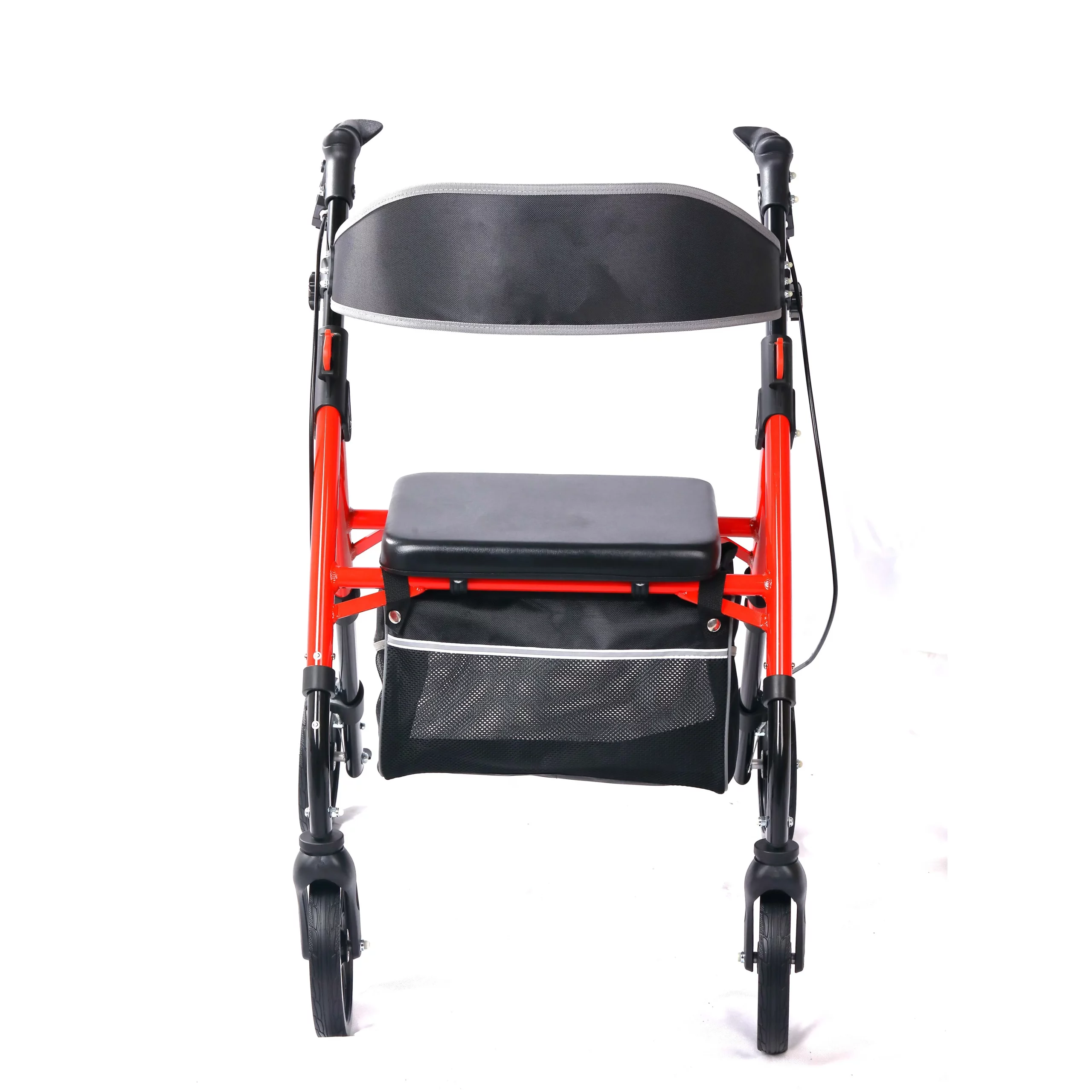
Rollator parking brake review begins with the exact rollator model and its maker-described parking mechanism. A hand lever in a photograph may have more than one action, but the image does not explain them. Ask for the current operating guide.
Which mechanism details matter?
Name the mode before trying it. Match the shopping walker configuration with its brake components. Keep cable, wheel and lever variants separated by part code.
- Record exact model.
- List brake parts.
- Identify parking action.
| Buyer check | Evidence to keep |
|---|---|
| Record exact model | Product guide |
| List brake parts | Supplier parts list |
A general “brake” label can hide a different parking control. Key Takeaway: Your buyer can describe the feature the unit actually has.
How should the control be reached?
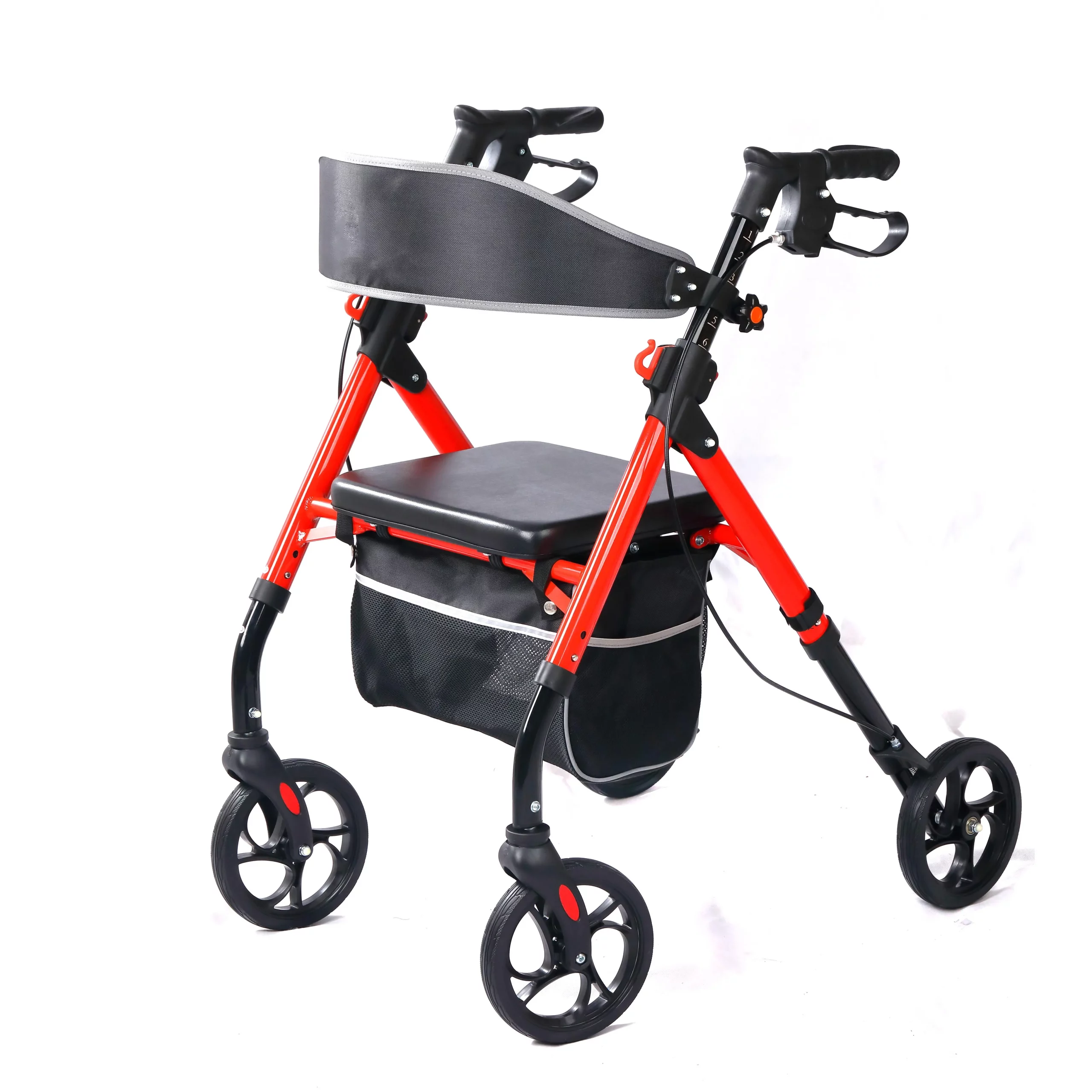
Rollator parking brake control should be reviewed from the intended user's standing position and handle-height setting. A lever can be visible yet hard for a person to operate. Ask an appropriate assessor to review individual access when needed.
What should a fit trial note?
Put hands on the real grips. Record handle setting, hand contact and the maker-approved control motion. Do not infer dexterity fit from a close-up photo.
- Record handle height.
- Observe lever reach.
- Note user concern.
| Buyer check | Evidence to keep |
|---|---|
| Record handle height | Configured sample |
| Observe lever reach | Supervised trial |
Control access matters before any parking claim. Key Takeaway: You can choose a model the intended user can operate.
How is the parking mode set?
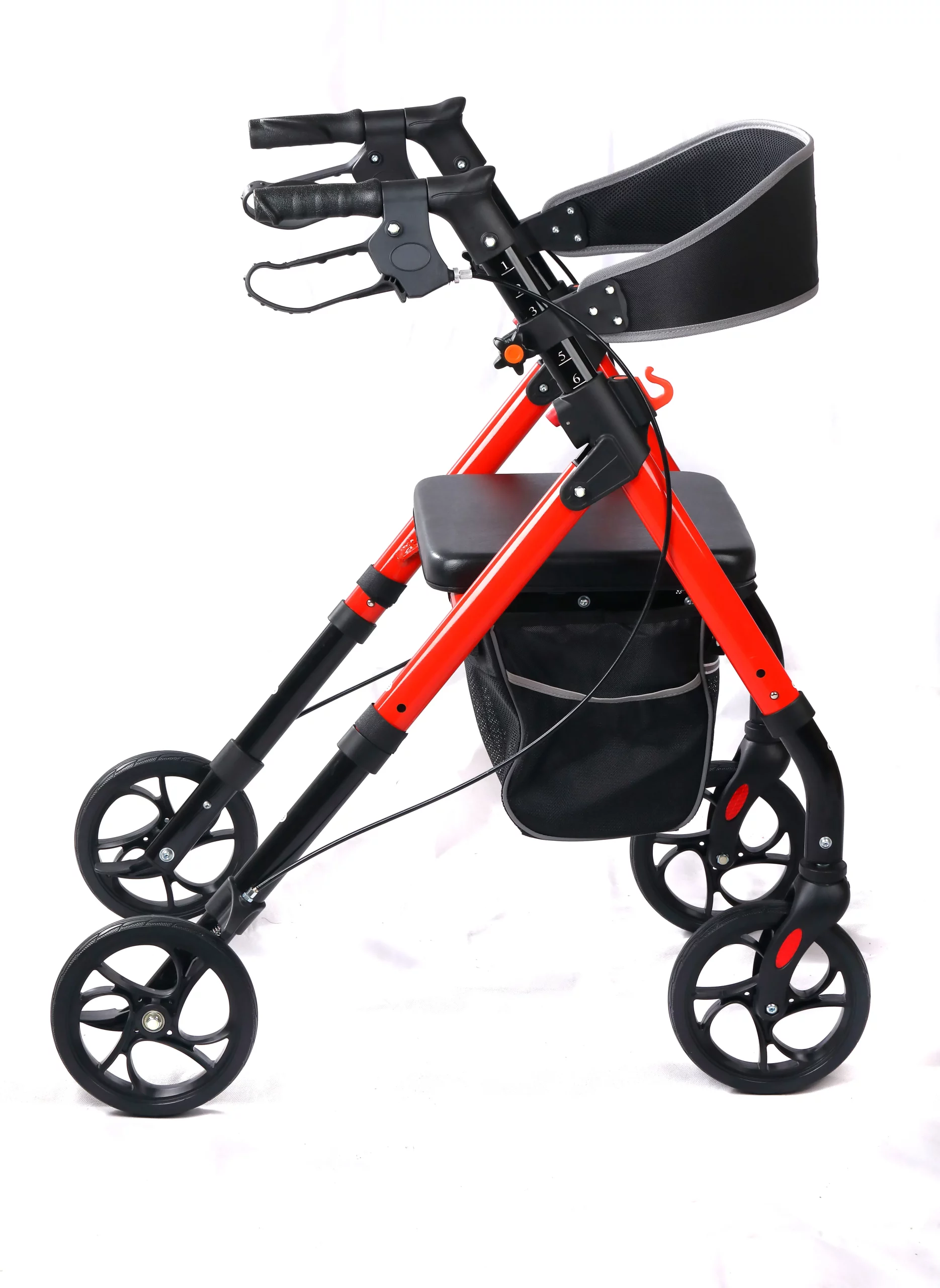
Rollator parking brake operation should follow the current guide for that exact model. Do not assume a familiar lever movement from another rollator. Have trained staff demonstrate the mode on an empty sample.
What should the demo show?
Watch the complete set-and-release sequence. Record the permitted action and any indicator described by the maker. Confirm the unit returns to its normal rolling state through the prescribed procedure.
- Use the maker guide.
- Demonstrate empty-unit action.
- Show approved release.
| Buyer check | Evidence to keep |
|---|---|
| Use the maker guide | Current instructions |
| Demonstrate empty-unit action | Trial record |
A wrong assumed sequence can leave the unit in an unintended state. Key Takeaway: Your dealer can teach one model-specific method.
Which surfaces belong in a review?
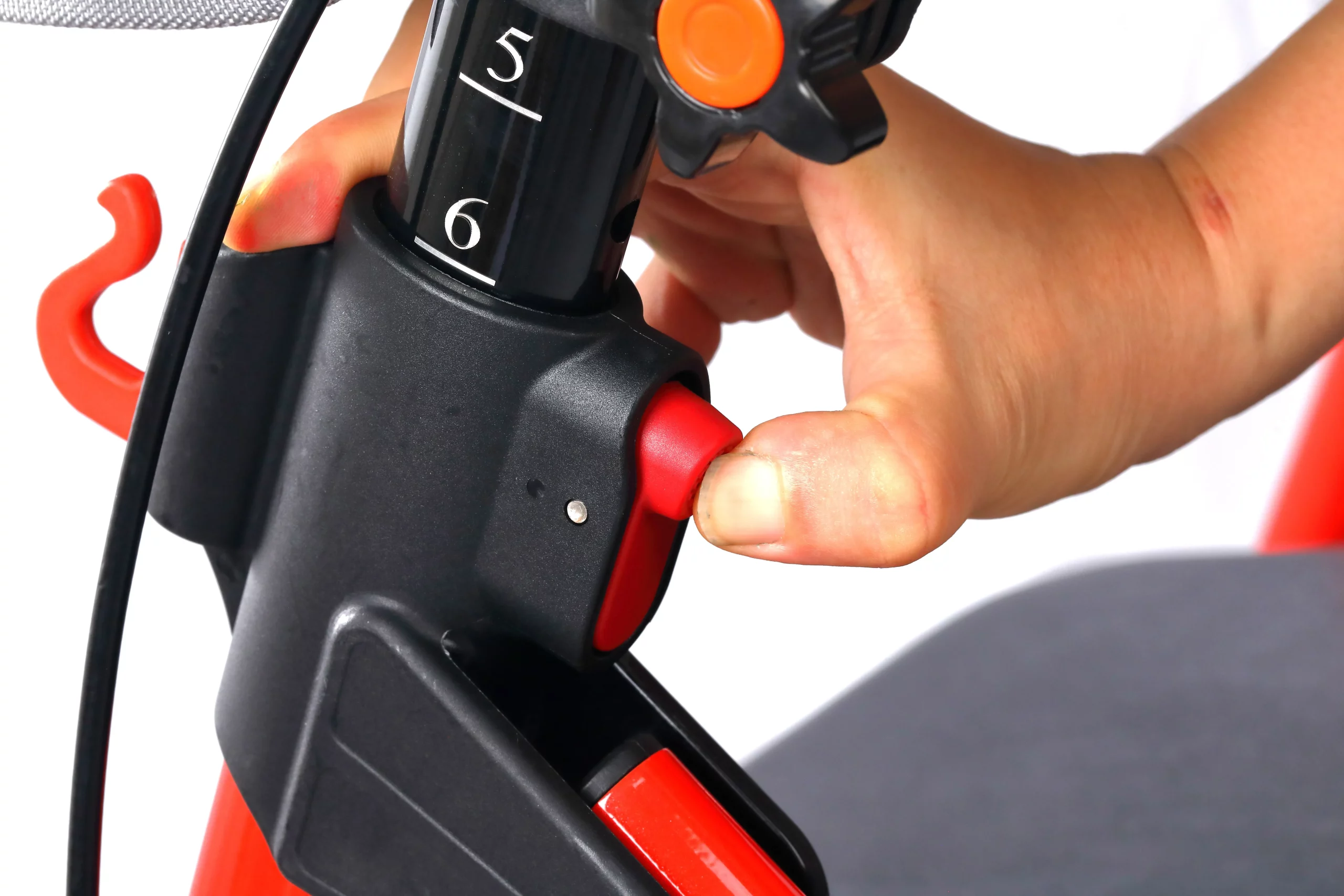
Rollator parking brake sample check should use a level, controlled surface and note the conditions tested. A single showroom result does not prove holding on every slope or floor. Follow maker limits for use and storage.
What should a route note include?
Record the floor beneath the wheels. Describe the sample surface and any wheel contact issue. Compare the walking aids options by their own guides rather than a shared assumption.
- Describe floor.
- Check wheel contact.
- Review use limits.
| Buyer check | Evidence to keep |
|---|---|
| Describe floor | Trial conditions |
| Check wheel contact | Observation note |
Surface details keep a parking observation honest. Key Takeaway: You can avoid promising a universal slope result.
What should happen before using the seat?
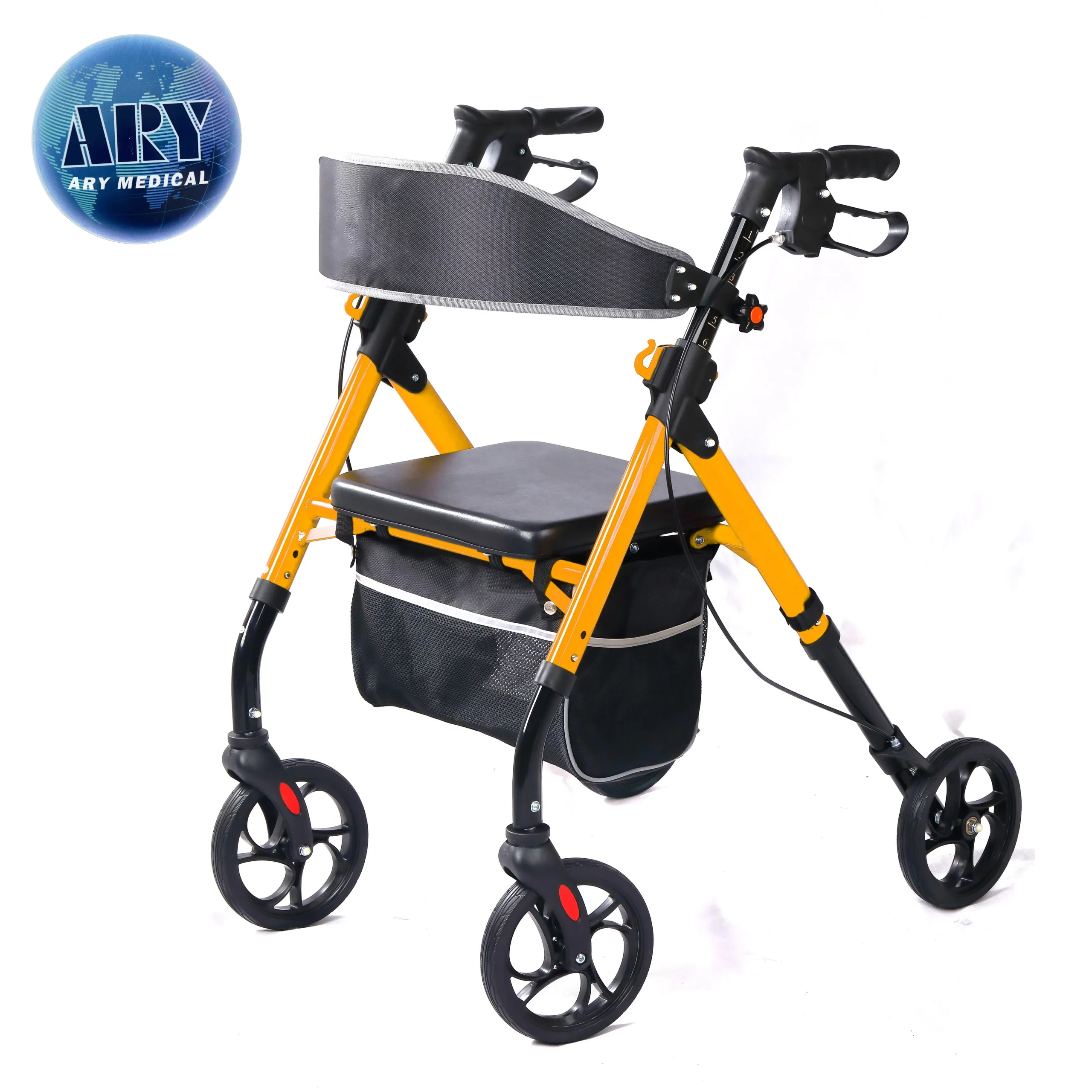
Rollator parking brake should be checked under the maker's prescribed procedure before a person uses the rollator seat. A parked appearance is not proof that the unit is ready. User training and individual suitability still matter.
Who should confirm the setup?
Do not treat the seat as a casual extra. Have trained staff explain the model's seat-use instructions. Refer personal balance or transfer questions to an appropriate assessor.
- Check the approved brake state.
- Confirm seat-use guidance.
- Record user training.
| Buyer check | Evidence to keep |
|---|---|
| Check the approved brake state | Maker checklist |
| Confirm seat-use guidance | Current guide |
A seating task brings different risks from walking with the frame. Key Takeaway: Your dealer can hand over the model with a clear procedure.
Which wear signs require service?
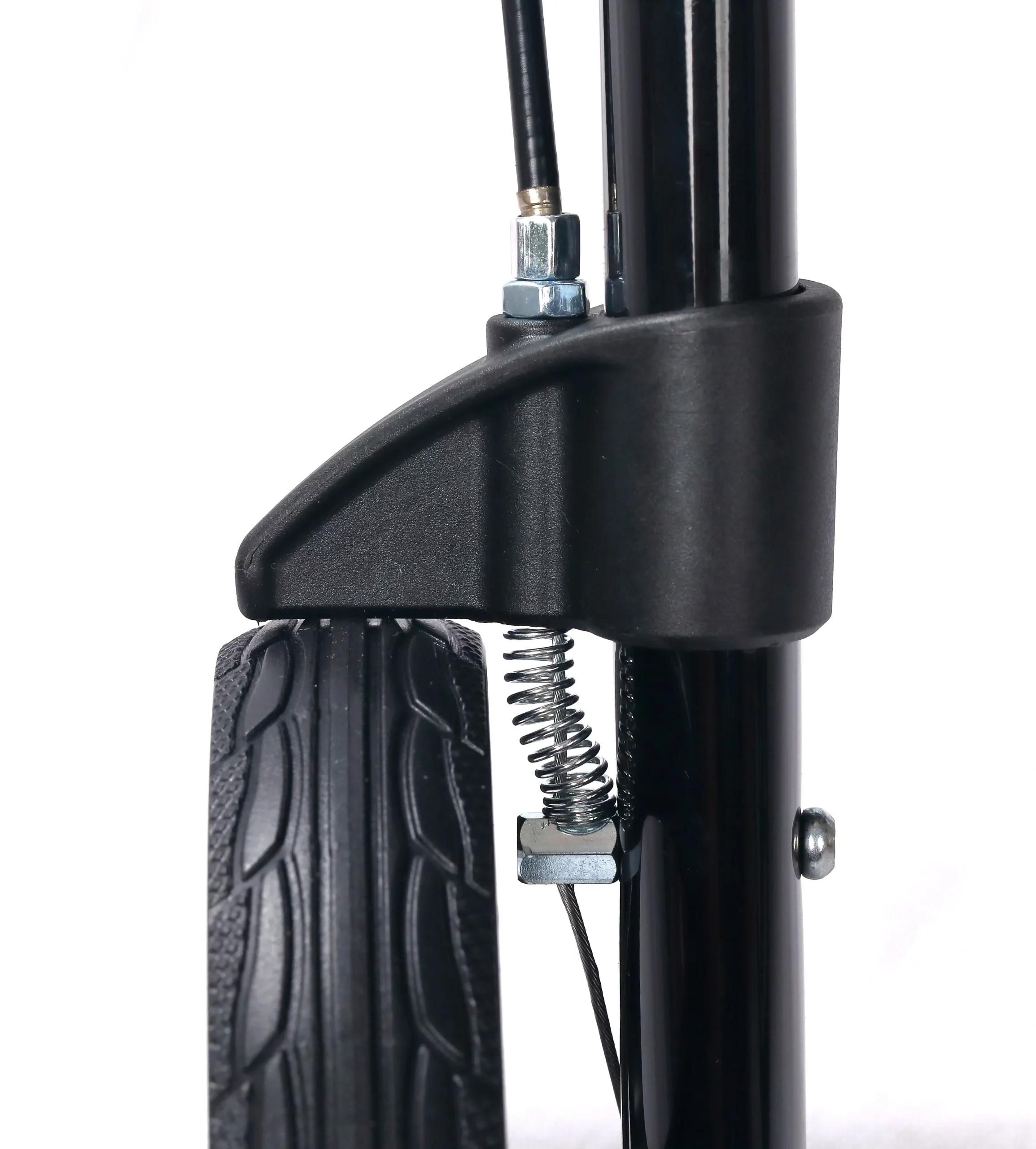
Rollator parking brake inspection should record changes in lever feel, cable condition or wheel contact without diagnosing from sight alone. Do not adjust a brake through a generic blog instruction. Refer abnormal function to qualified service.
How should a fault be described?
Capture behavior before changing parts. Photograph the complete rollator and relevant components. Record what staff observed under the current guide and whether the unit was held from use.
- Photograph components.
- Record lever behavior.
- Refer abnormal result.
| Buyer check | Evidence to keep |
|---|---|
| Photograph components | Dated images |
| Record lever behavior | Service intake |
An early record helps the supplier identify the proper repair path. Key Takeaway: Your after-sales team can avoid guessing at cable tension.
How should a parking-brake sample be tested?
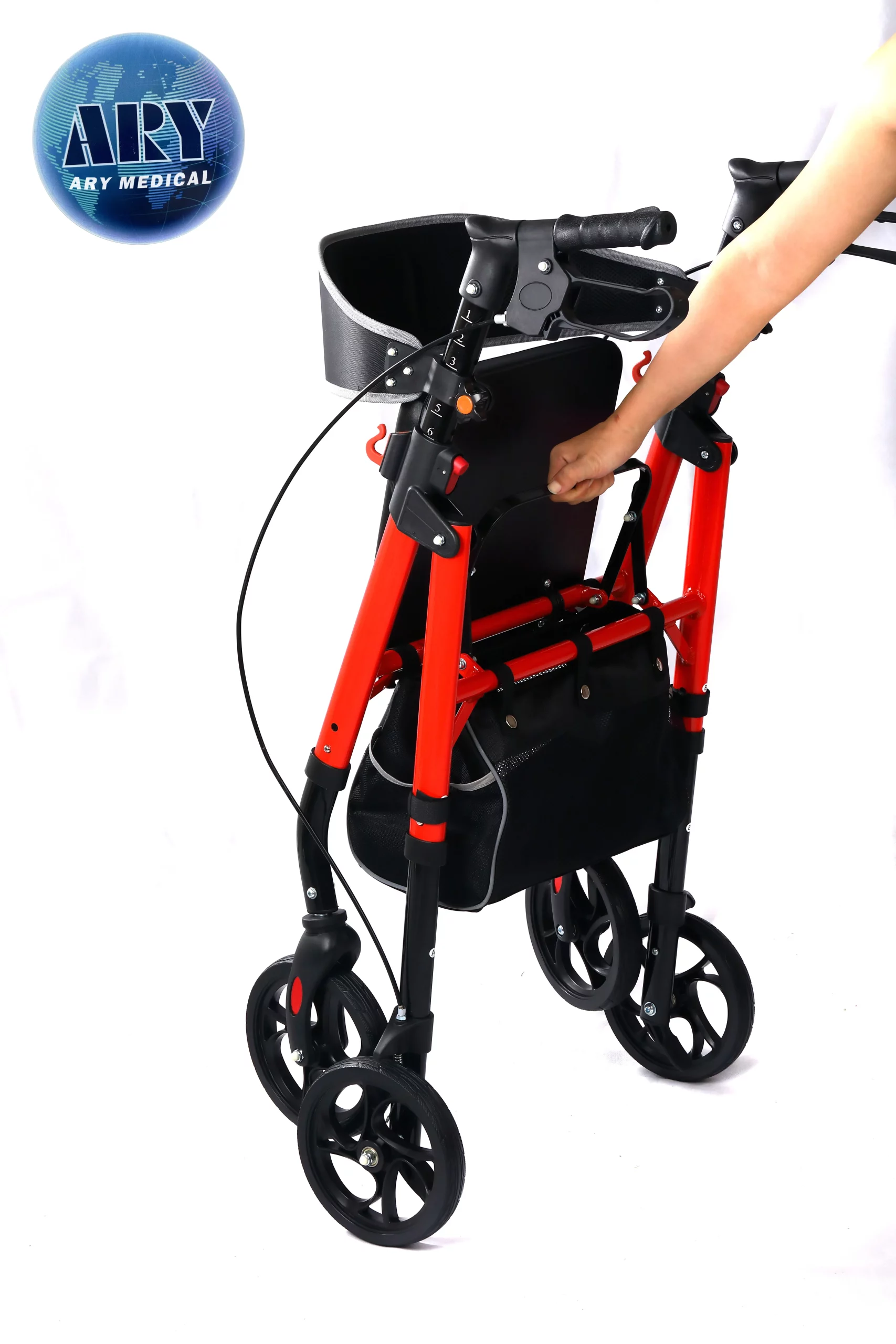
Rollator parking brake sample testing should follow the maker's method on an identified, empty rollator. A push against the frame is not a standardized performance rating. Record the exact procedure, surface and result.
What should a dealer observe?
Use a repeatable trial, not a dramatic stunt. Ask trained staff to demonstrate set and release, then note any irregular response. Stop the trial if the maker's check fails.
- Identify sample.
- Record test surface.
- Log observed response.
| Buyer check | Evidence to keep |
|---|---|
| Identify sample | Model and serial |
| Record test surface | Dated trial sheet |
A controlled trial is easier to review than a sales video. Key Takeaway: Your buyer can decide whether the sample needs service.
What should a spare-parts quote include?

Rollator parking brake support should identify the approved lever, cable, wheel or complete brake assembly for the exact model. A cane chair part is unrelated despite being another walking aid. Ask for an itemized kit and service method.
Which codes belong on the order?
Order assemblies by identity. Send the rollator model and fault record to the supplier. Ask whether the repair requires a qualified technician and which checks close the work.
- Name brake assembly.
- List included items.
- Confirm service path.
| Buyer check | Evidence to keep |
|---|---|
| Name brake assembly | Parts list |
| List included items | Itemized quote |
A near-match part can delay a simple repair. Key Takeaway: Your buyer can stock the kit that belongs to this rollator.
Which records support a parking decision?
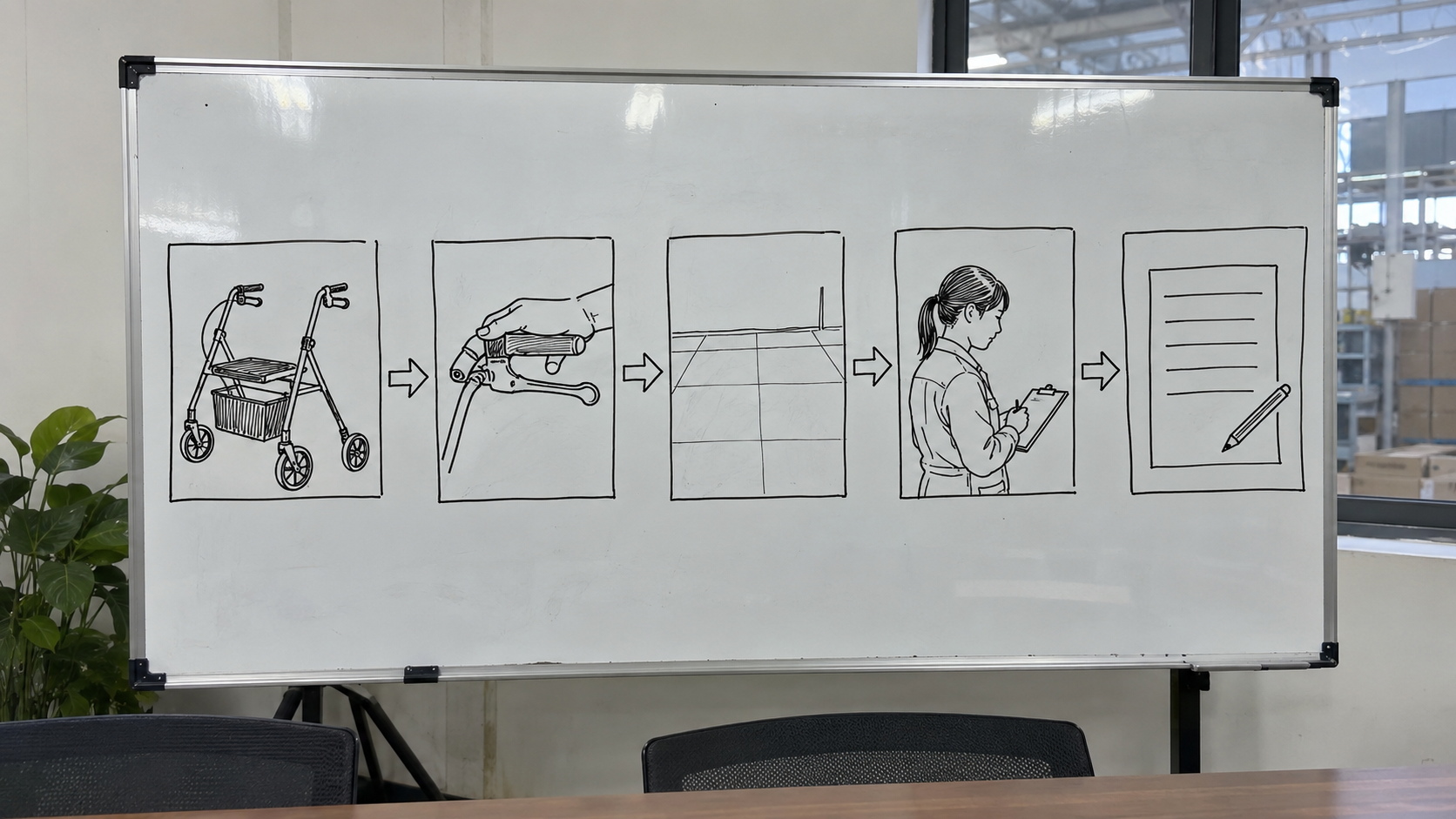
Rollator parking brake record should connect model, setup, surface, observation and trained reviewer. WHO's assistive product specifications support structured procurement but do not certify this brake. Keep unresolved behavior visible.
How should the review sheet be filed?
Give the result a context. Attach the current guide, trial date and any service ticket. Store the same record with the unit after delivery.
- Record model and setting.
- Log trial conditions.
- Name reviewer.
| Buyer check | Evidence to keep |
|---|---|
| Record model and setting | Sample identity |
| Log trial conditions | Test sheet |
A traceable result helps resolve later questions. Key Takeaway: Your team can distinguish a trial finding from a generic claim.
How can a buyer approve the parking brake?
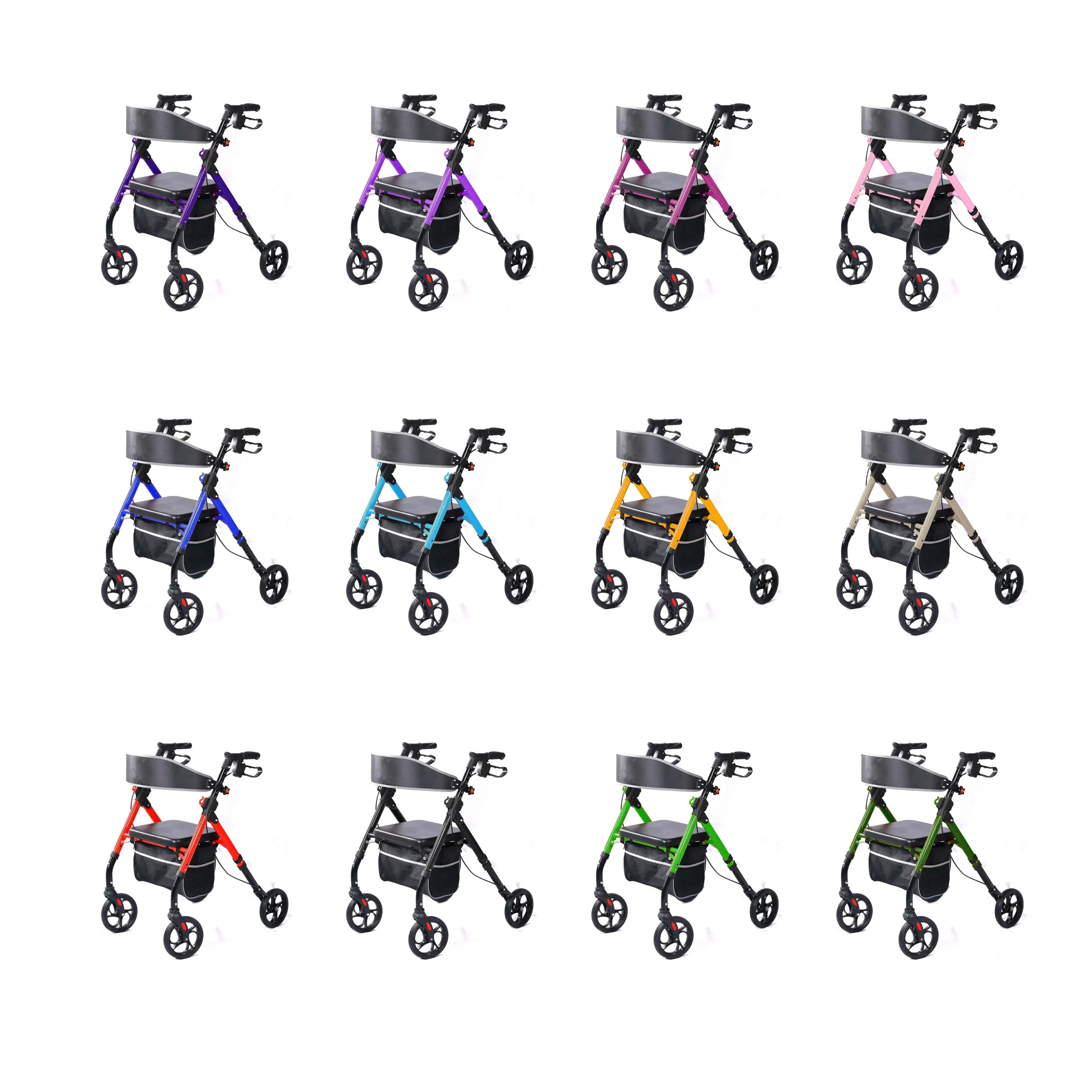
Rollator parking brake approval should follow an exact-model guide, accessible controls, controlled sample and a service plan. Do not release a unit with an unresolved brake concern. Ask the supplier for a written answer tied to the model.
What should the enquiry contain?
Send the unit and the observation together. Provide model, handle setting, surface, photos and service question. Keep the final decision recorded for staff training.
- Name the unit.
- Attach trial note.
- Request next step.
| Buyer check | Evidence to keep |
|---|---|
| Name the unit | Model and serial |
| Attach trial note | Observed result |
A documented approval is more useful than a blanket “safe” label. Key Takeaway: For a model-specific brake review, contact us. Ary Medical treats serviceability as part of every mobility decision.
Frequently asked questions
Q1: Can I assume every rollator lever parks the same way?
No. Follow the guide for the exact model.
Q2: What's the best surface for a sample check?
Use the maker's controlled procedure and record the actual floor.
Q3: How do I know if a user can reach the lever?
Use the configured rollator in an individual supervised fit review.
Q4: Can one test prove the brake holds on a slope?
No. Do not generalize beyond the maker's stated conditions and the observed trial.
Q5: Should a failed parking check stop delivery?
Yes. Hold the unit for qualified review and a recorded next step.