
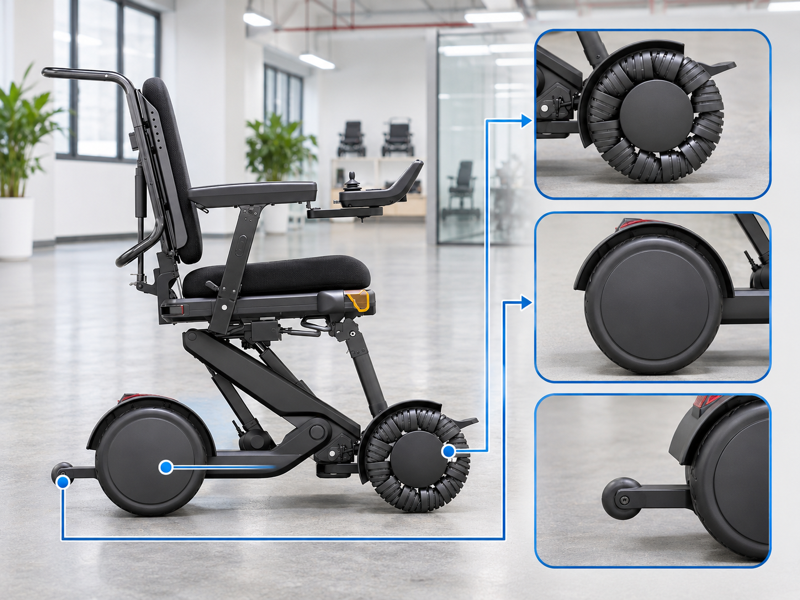
Prepare XSTO M4Pro wheel checks by identifying the exact front, rear and anti-tip assemblies before recording a concern. A generic tire note can confuse a roller-style front wheel with another part of the chair. That makes service and replacement questions harder to resolve. Use labeled product references and keep visual observations separate from technical findings.
What should XSTO M4Pro wheel checks identify?
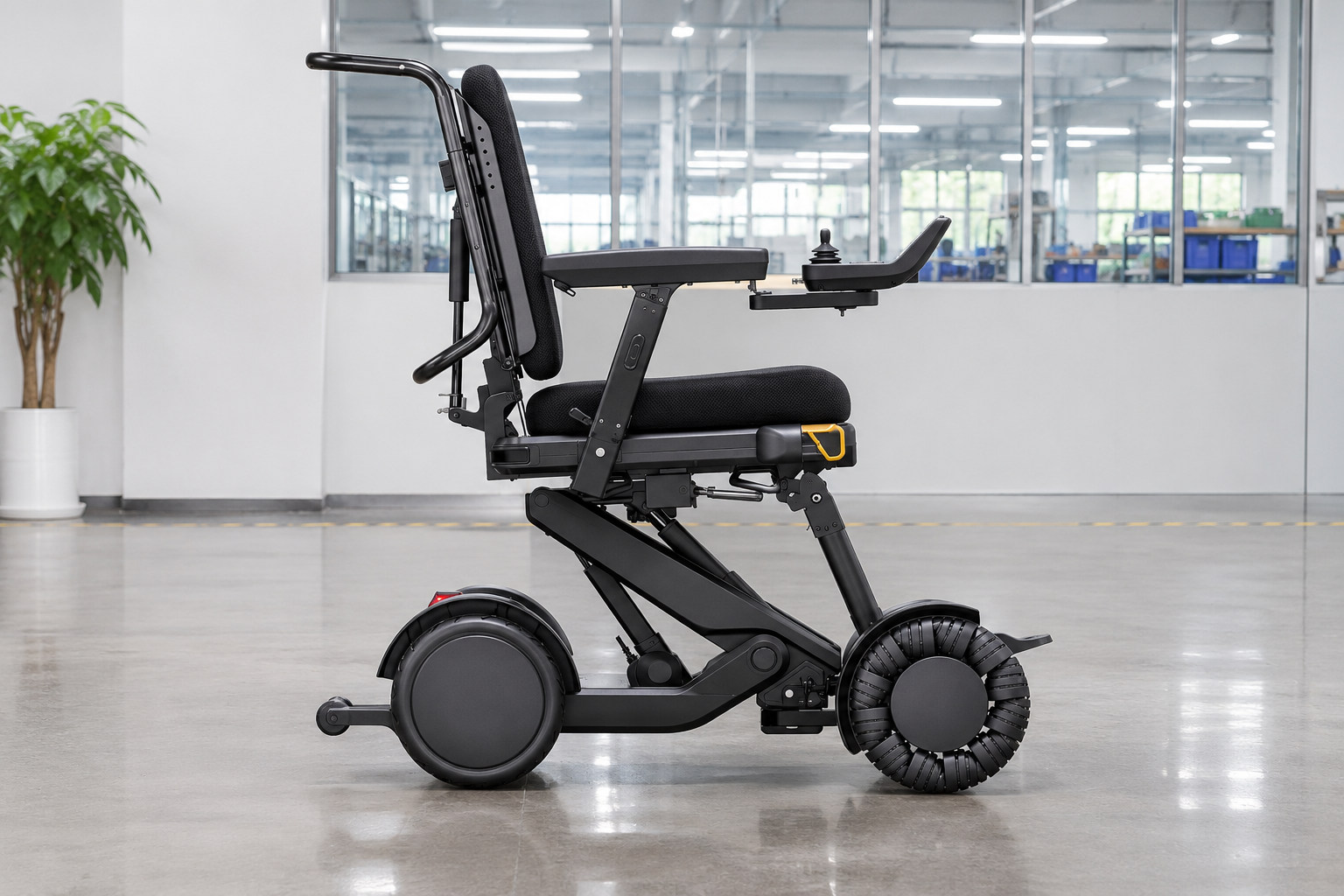
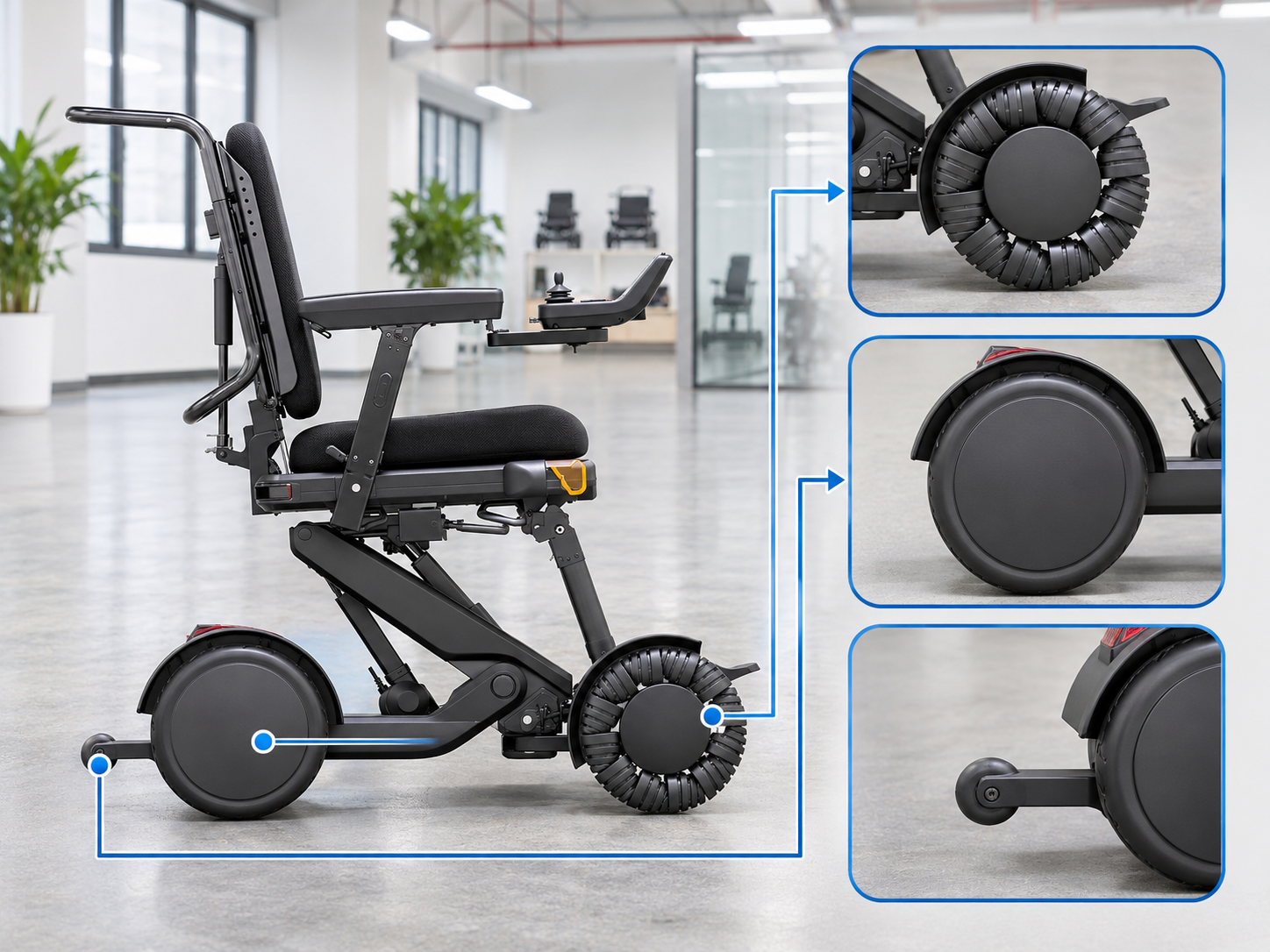
XSTO M4Pro wheel checks should identify the actual front wheels, rear drive wheels and anti-tip rollers on the supplied chair. The product images show distinct assemblies that need precise names in a service record.
Start with the wheel location
The part name should match the product. Ask the supplier to identify the relevant assembly in a labeled view. Keep the chair version beside any part reference. WHO guidance supports assessment, fitting and follow-up.
- Front assembly
- Rear assembly
- Anti-tip parts
| Review point | What to confirm |
|---|---|
| Front assembly | Roller-style front wheels |
| Rear assembly | Supplied drive-wheel setup |
| Anti-tip parts | Exact small-roller arrangement |
Key Takeaway: You can describe a wheel concern without confusing different parts of the chair.
How should front-wheel observations be described?
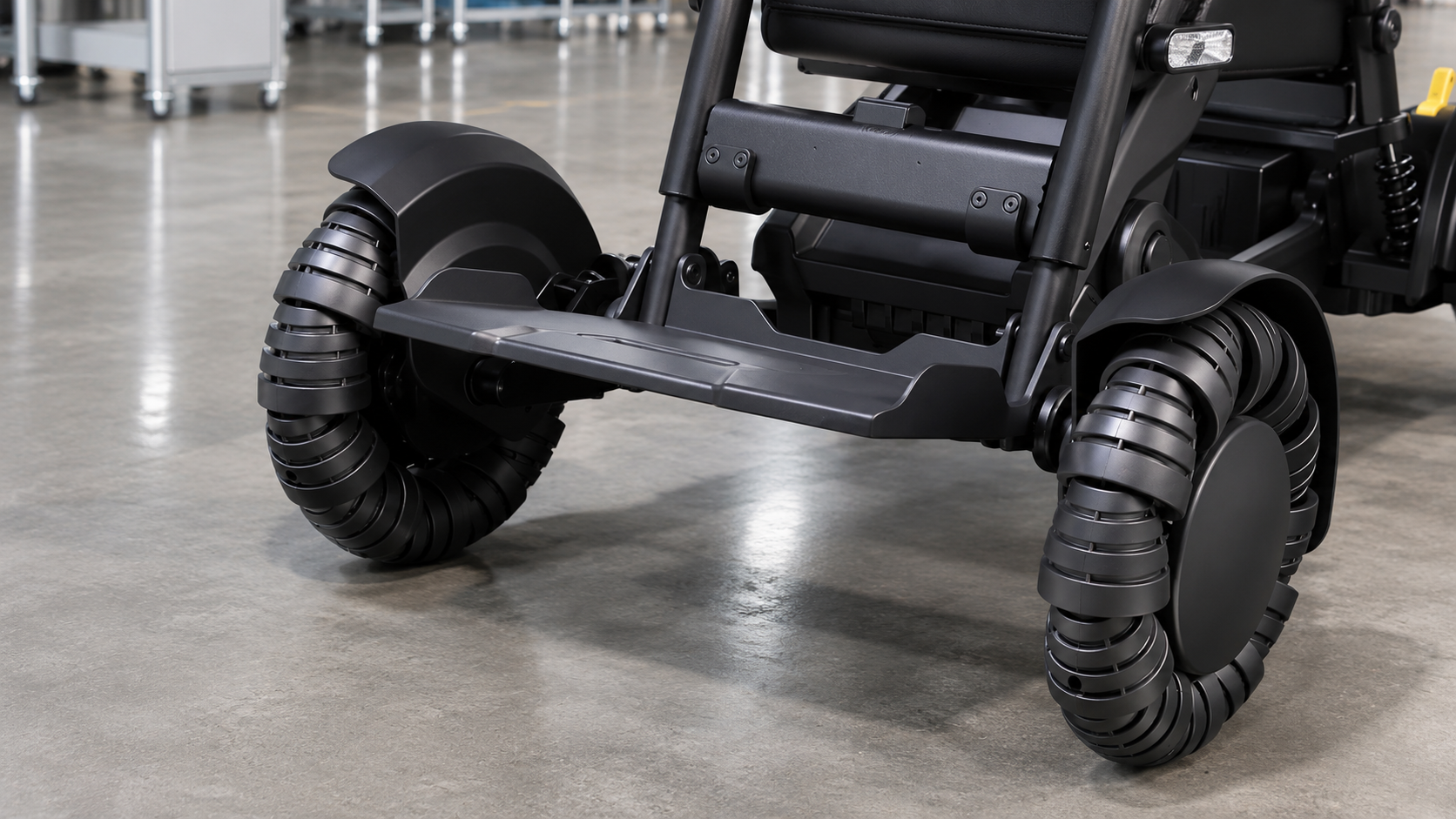
Front-wheel observations within XSTO M4Pro wheel checks should describe the specific visible area and the reported condition. The front rollers should not be treated as ordinary small caster tires in a generic checklist.
Which front-wheel area is involved?
Keep the description factual. Use a whole-chair view and a clear detail when the provider requests them. Avoid diagnosing a roller or bearing from a photograph alone. Keep the observation tied to the actual tire and wheel record.
- Location
- Observation
- Evidence
| Review point | What to confirm |
|---|---|
| Location | Exact wheel and visible area |
| Observation | Specific reported condition |
| Evidence | Requested context and detail images |
Key Takeaway: You can give support staff useful context without assigning an unverified cause.
What should XSTO M4Pro wheel checks say about tire type?
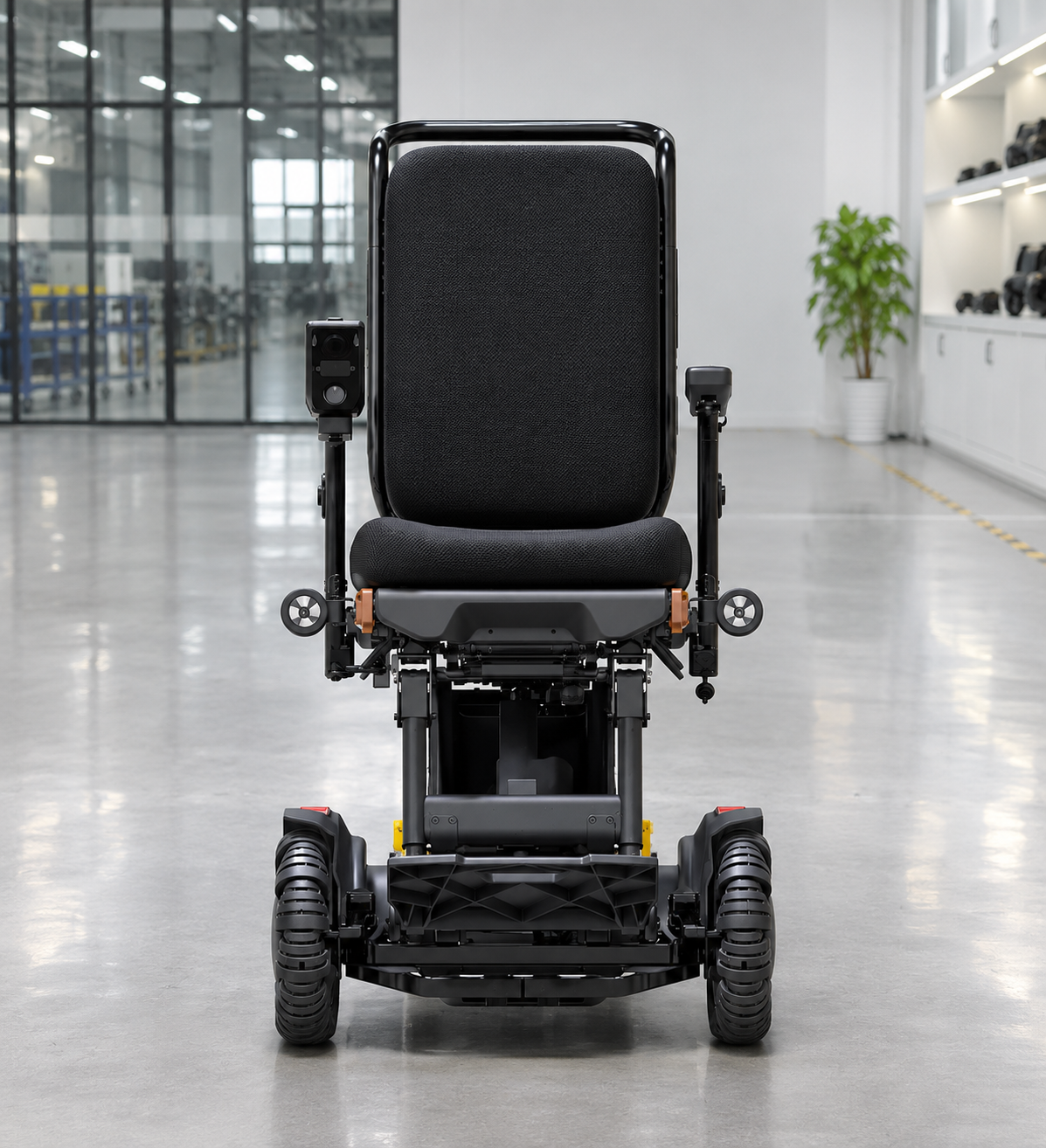
XSTO M4Pro wheel checks should use the tire and wheel information for the actual delivered version. A general wheelchair inflation checklist should not be applied merely because the product has tires.
Confirm the fitted wheel type
The guide determines the applicable care questions. Ask for current wheel specifications and matching instructions. Do not invent an inflation pressure, valve or maintenance method for an unidentified assembly.
- Wheel specification
- Care source
- Open question
| Review point | What to confirm |
|---|---|
| Wheel specification | Current supplied version |
| Care source | Matching maker guidance |
| Open question | Provider confirmation |
Key Takeaway: You can avoid applying another chair's tire routine to the M4 Pro wheel set.
How should turning radius and diameter be distinguished?
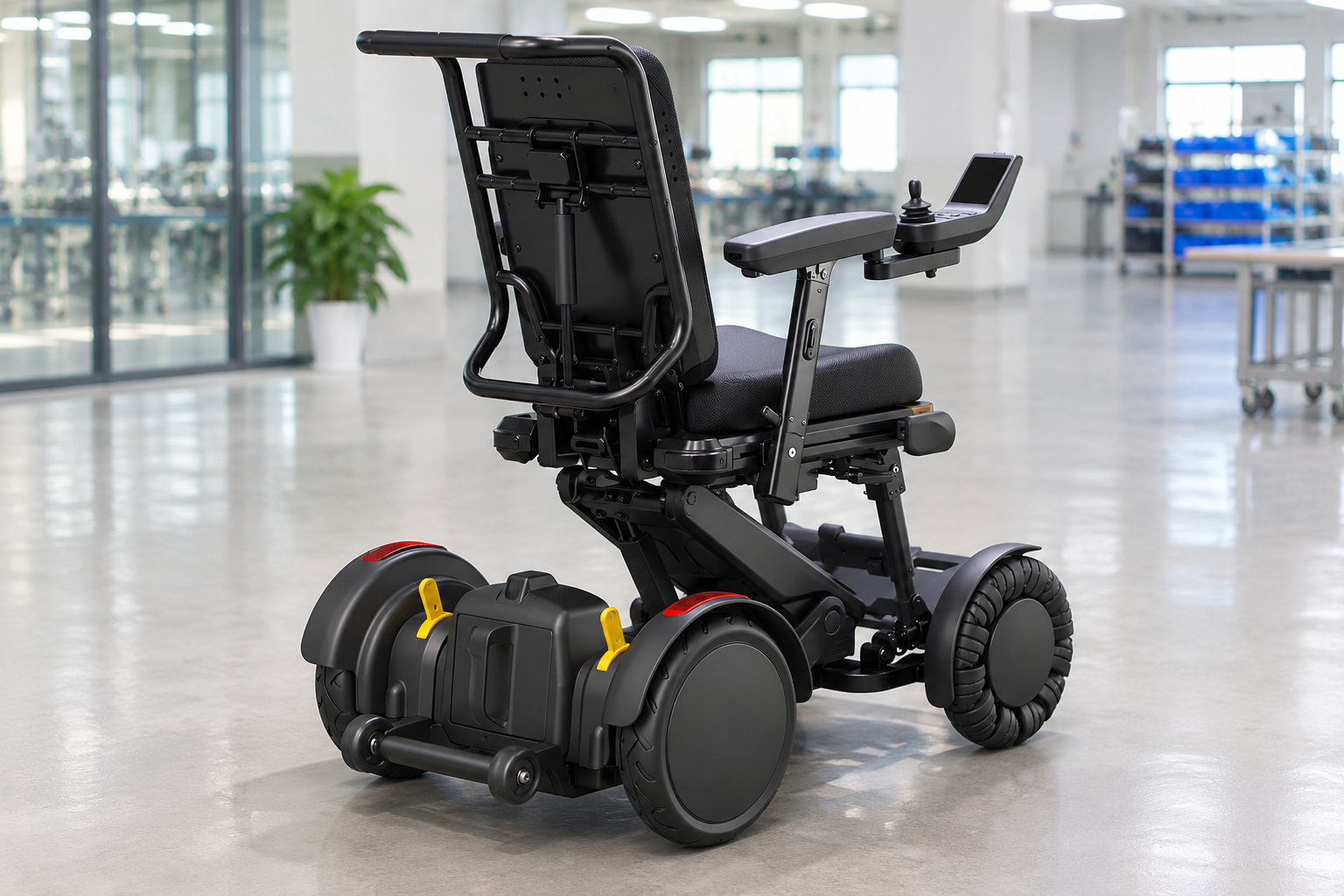
XSTO M4Pro wheel checks and space planning should keep turning radius and diameter clearly labeled. The reviewed manual gives a 1650 mm turning diameter, while other supplied material uses an 825 mm radius.
Read the measurement name
The two labels do not describe the same quantity. Ask for the current turning diagram and product state. Do not treat a turning figure as a doorway-width requirement or a guarantee for every room.
- Turning definition
- Product state
- Site geometry
| Review point | What to confirm |
|---|---|
| Turning definition | Radius or diameter stated |
| Product state | Current fitted arrangement |
| Site geometry | Actual route and room space |
Key Takeaway: You can interpret the figure without converting it into an unsupported access claim.
Can XSTO M4Pro wheel checks prove a route is suitable?
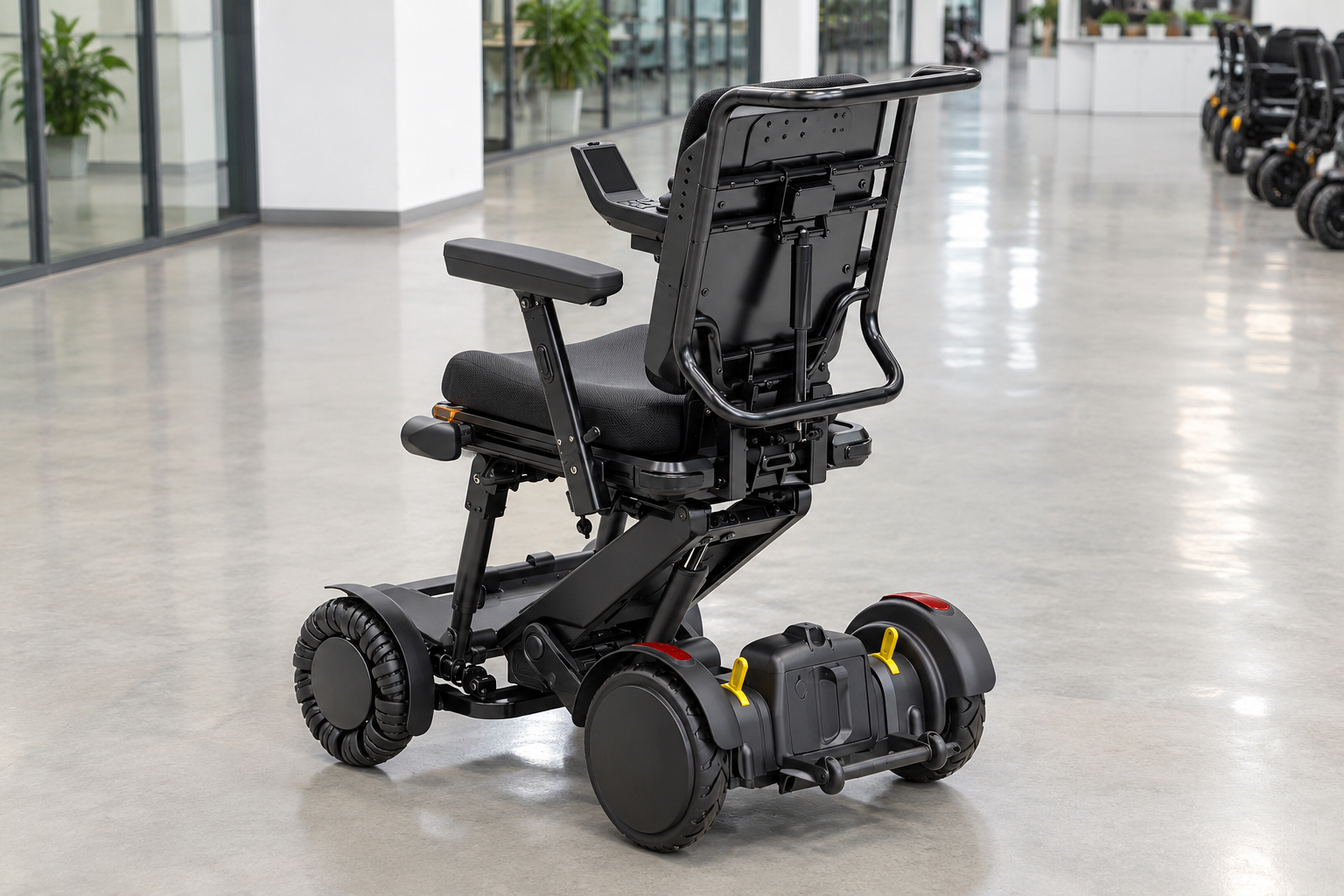
No, XSTO M4Pro wheel checks alone cannot prove that a route or obstacle is suitable. Product condition, permitted use, the actual site and the user's needs require the appropriate wider review.
Keep route decisions separate
A wheel inspection answers only part of the question. Use the matching guide and the responsible site process. Avoid treating a distinctive wheel design as permission for stairs or an unfamiliar surface. Keep any outdoor-use review separate from the component check.
- Product condition
- Use limits
- Site decision
| Review point | What to confirm |
|---|---|
| Product condition | Relevant service findings |
| Use limits | Applicable maker instructions |
| Site decision | Responsible route review |
Key Takeaway: You can keep a component check from becoming a broad terrain promise.
What should anti-tip-roller concerns trigger?
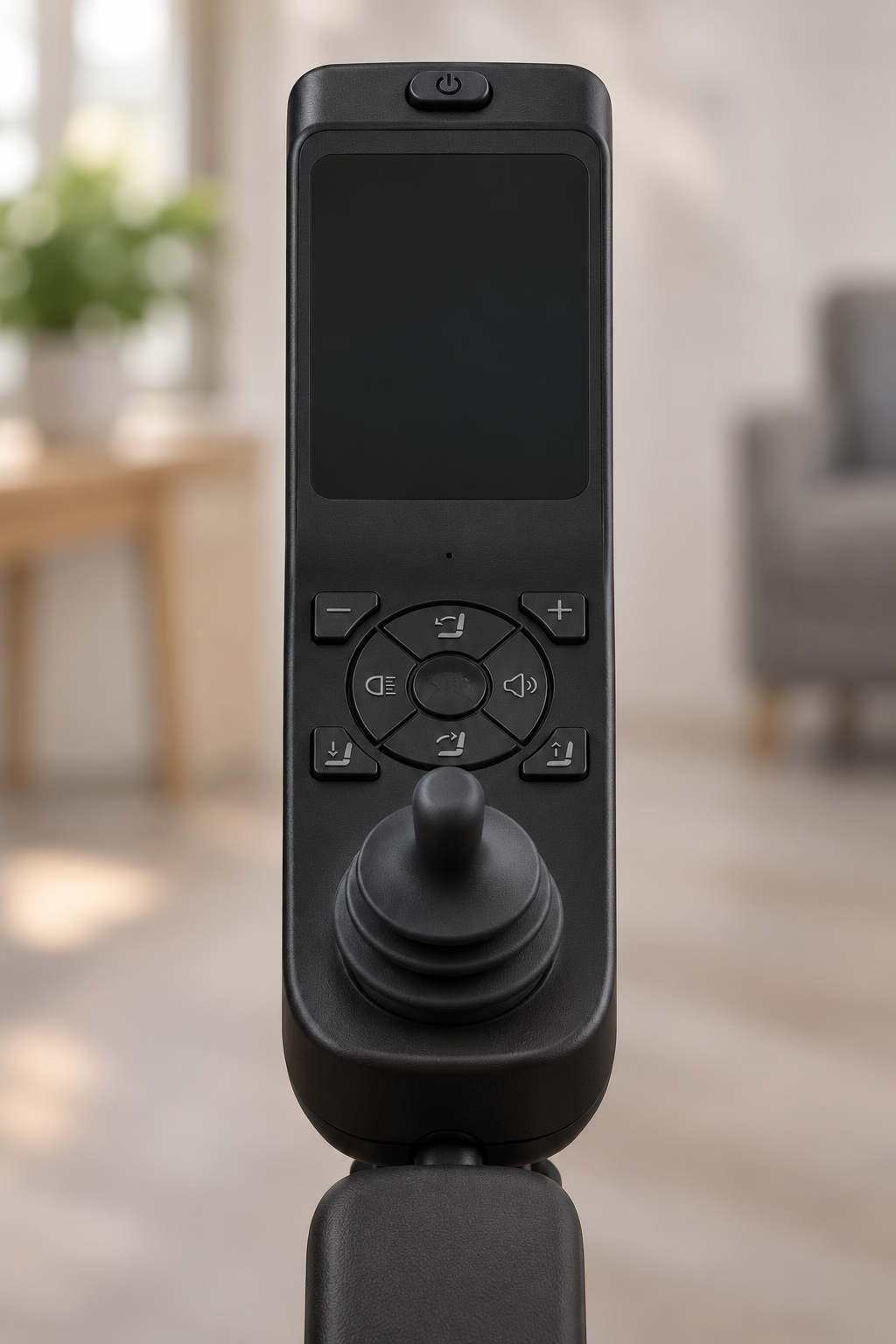
Concerns about anti-tip rollers during XSTO M4Pro wheel checks should follow the applicable service guidance. Staff should record the exact part and condition rather than remove or alter it to suit an unfamiliar task.
Retain the original product scope
The small part still has a defined role. Ask the provider which inspection or replacement process applies. Keep any proposed change outside ordinary care until it is properly reviewed.
- Part identity
- Observed concern
- Service action
| Review point | What to confirm |
|---|---|
| Part identity | Exact supplied roller |
| Observed concern | Factual condition record |
| Service action | Provider's applicable response |
Key Takeaway: You can report a small-component issue without suggesting an unapproved modification.
How should braking concerns be linked to wheel records?
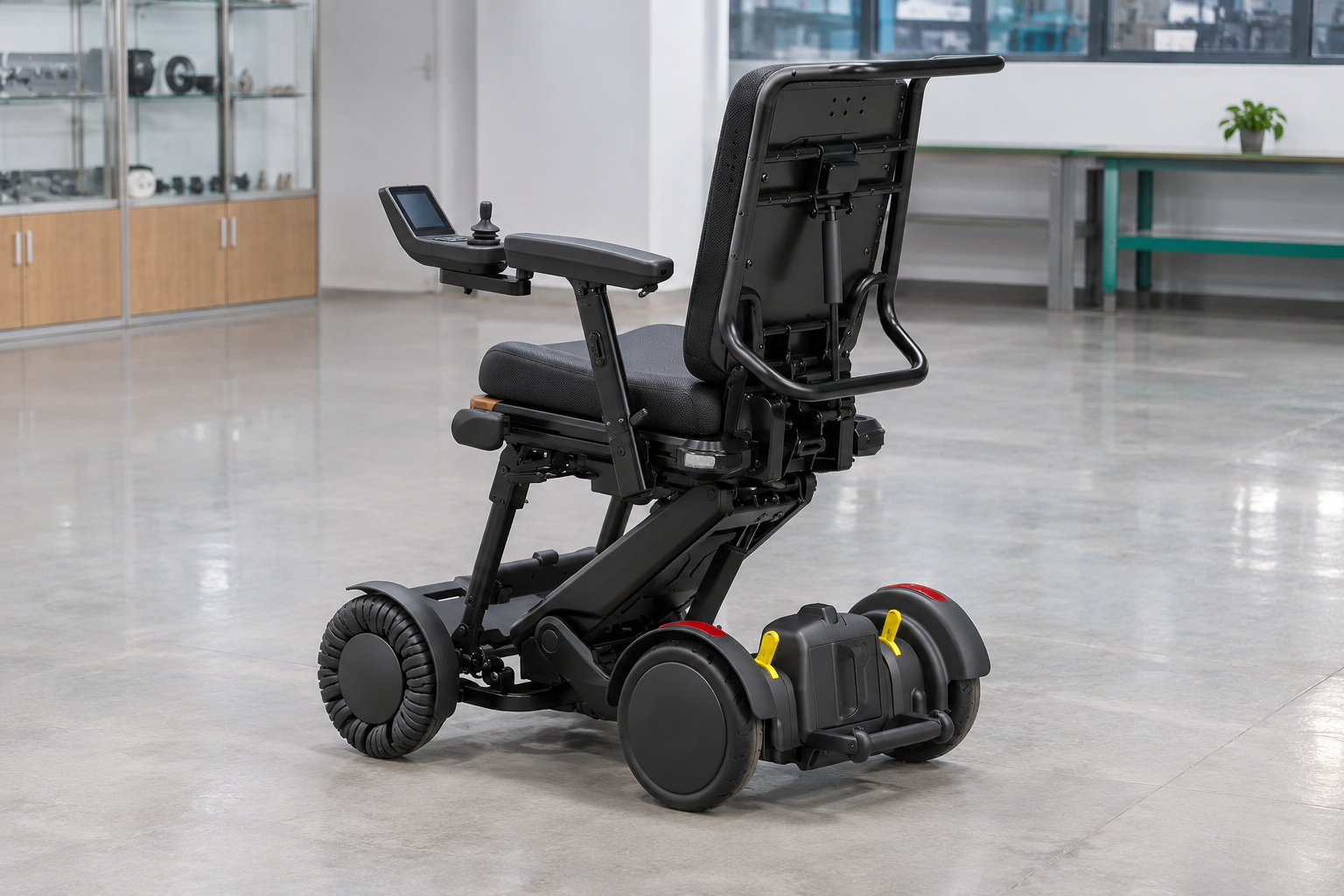
Braking concerns associated with XSTO M4Pro wheel checks should be recorded through the relevant technical service process. A visual wheel check cannot establish electromagnetic-brake performance or approve an improvised brake test.
Separate observation from performance testing
The service task needs the right method. Record the message or behavior reported and the actual unit identity. Follow the applicable guide and support response for the next step.
- Reported event
- Unit identity
- Technical review
| Review point | What to confirm |
|---|---|
| Reported event | Specific braking concern |
| Unit identity | Exact chair and version |
| Technical review | Responsible service process |
Key Takeaway: You can retain useful evidence without overstating what a visual inspection proves.
What should replacement-wheel requests include?
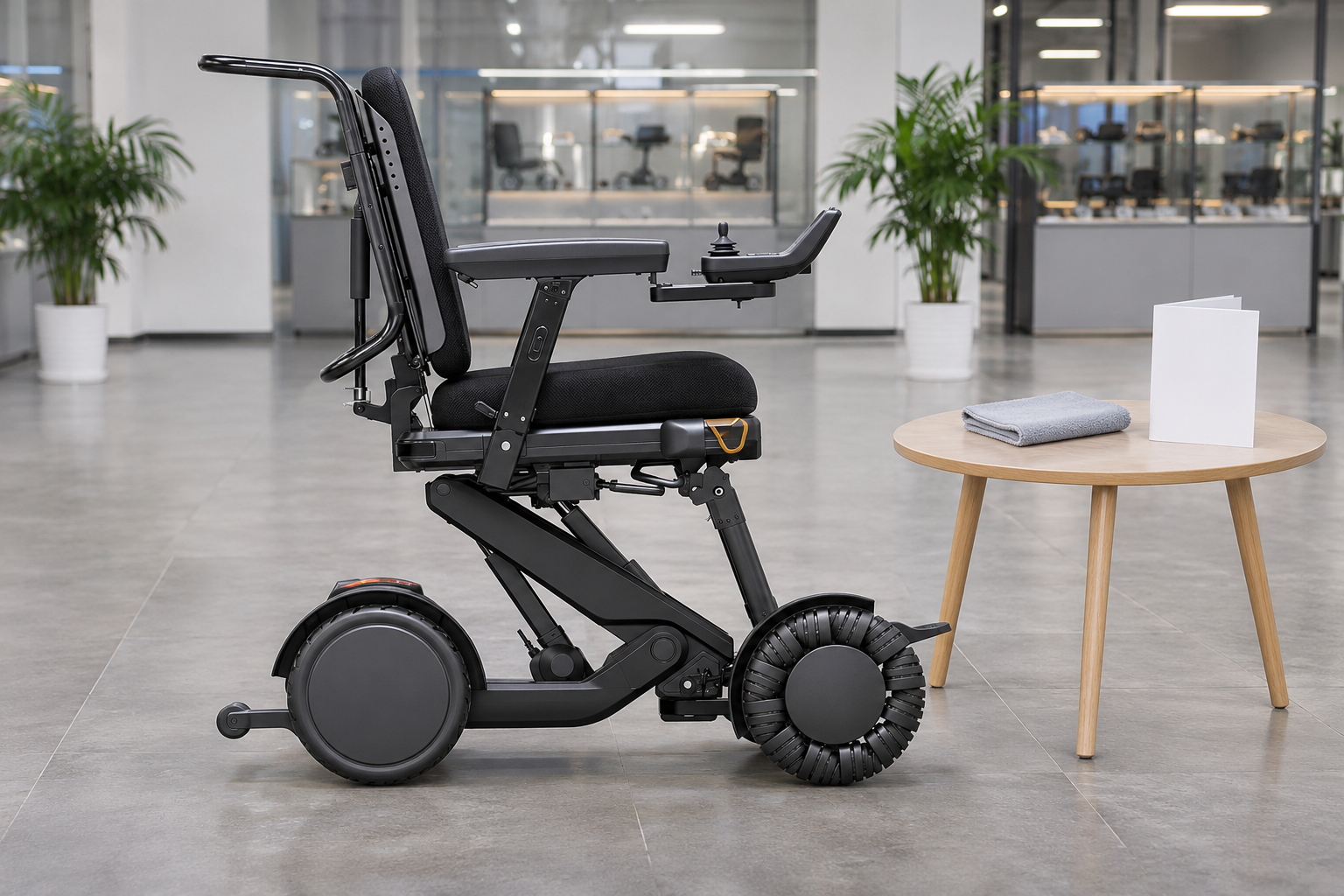
Replacement requests arising from XSTO M4Pro wheel checks should include the chair version, original wheel reference and the supplier's confirmed match. Similar diameter or appearance does not establish the same complete assembly.
Match the full replacement set
The wheel is more than its outer size. Request the applicable parts and service scope in writing. Avoid assuming that another M4 version's wheel or hardware will fit. Use the matching drive-wheel reference where that assembly is involved.
- Chair version
- Original part
- Replacement scope
| Review point | What to confirm |
|---|---|
| Chair version | Exact supplied model |
| Original part | Known wheel reference |
| Replacement scope | Confirmed complete set |
Key Takeaway: You can reduce incorrect parts orders without inventing fitting instructions.
Which records belong with XSTO M4Pro wheel checks?
Records for XSTO M4Pro wheel checks should retain the unit identity, observed condition and any completed service finding. Open concerns need a named next owner rather than an unexplained checked box.
Keep the record useful to the next person
A status needs a clear basis. Record the applicable inspection scope and the provider's response. Preserve changes to the wheel set within the unit history.
- Inspection scope
- Observed condition
- Follow-up owner
| Review point | What to confirm |
|---|---|
| Inspection scope | Actual reviewed items |
| Observed condition | Specific factual notes |
| Follow-up owner | Responsible service contact |
Key Takeaway: You can trace wheel-related work without claiming more than the record establishes.
How can you request XSTO M4Pro wheel checks guidance?
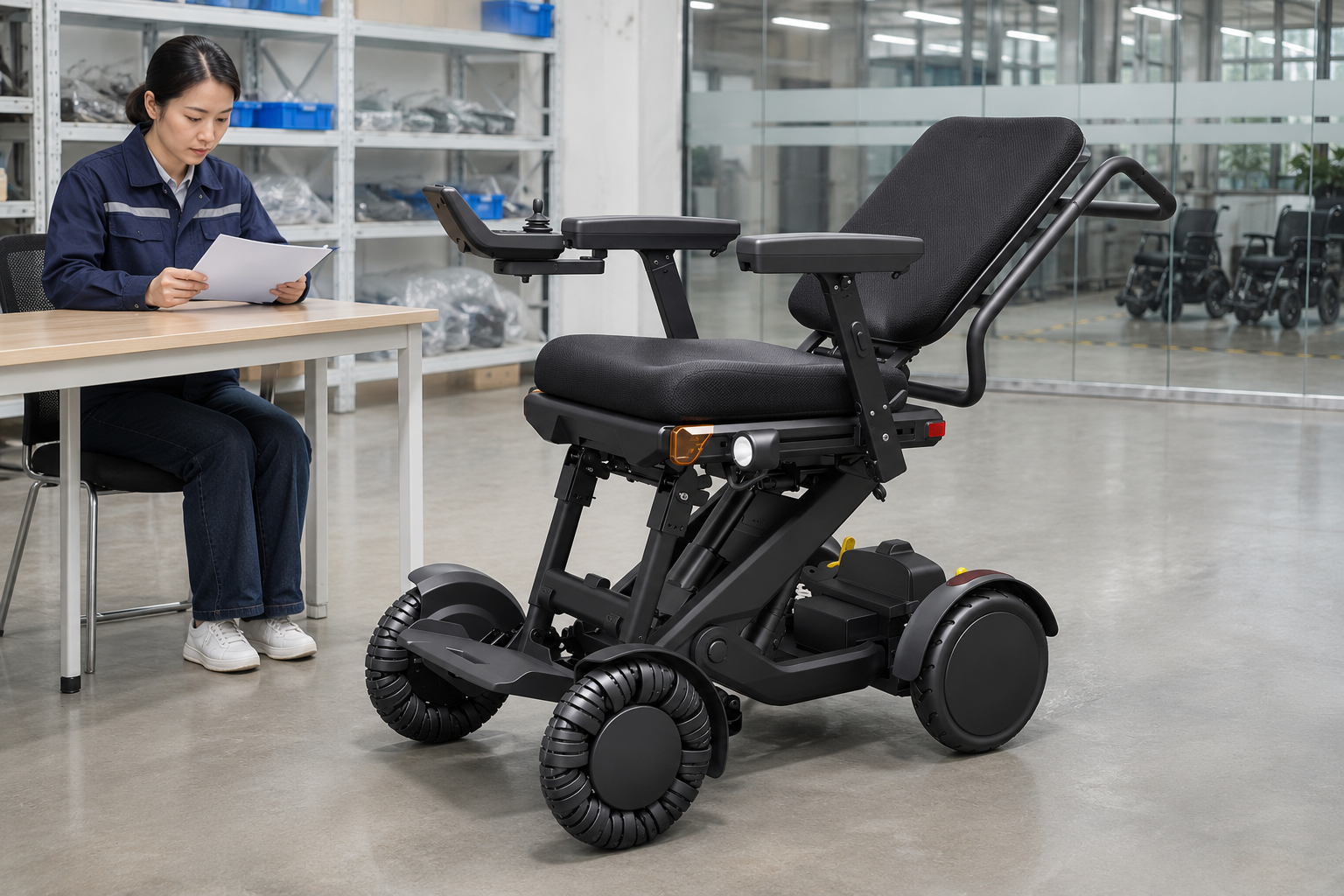
Request XSTO M4Pro wheel checks guidance with the exact chair and the specific wheel or braking question. Include the product reference and clear observations requested by the provider.
Send a component-focused service brief
Name the assembly before asking for a solution. Ask for the applicable instructions and confirmed parts scope where needed. Use the response to update the unit's service record.
- Affected assembly
- Known facts
- Requested response
| Review point | What to confirm |
|---|---|
| Affected assembly | Front rear or anti-tip part |
| Known facts | Identity and observation |
| Requested response | Inspection or service guidance |
Key Takeaway: You can obtain a clearer response without diagnosing or adapting the wheel system yourself. Contact us with your M4 Pro configuration and purchasing questions so we can discuss the product information and written scope you need. AryMD puts clear product facts at the center of buying decisions.
Frequently asked questions
Q1: Can I use an ordinary tire-pressure checklist without checking the wheel type?
No. Obtain the specifications and care guidance for the actual fitted assemblies before applying another product's routine.
Q2: What's the best way to describe a wheel concern?
Name the exact wheel location and what was observed. Include context and detail photos when the provider requests them.
Q3: How do I know whether a turning figure is a radius or diameter?
Read its label and request a current diagram. The reviewed manual states a 1650 mm diameter, which should not be confused with an 825 mm radius.
Q4: Can a visual wheel check prove brake performance?
No. Braking concerns need the applicable technical service process rather than an improvised test or an inference from appearance.
Q5: Should a replacement wheel be ordered by diameter alone?
No. Confirm the complete assembly and its match to the exact chair version through the supplier.