
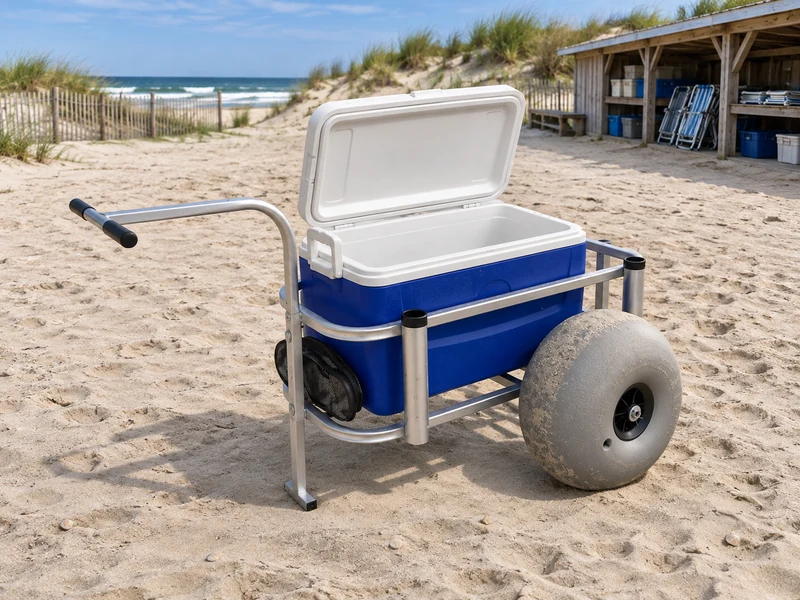
A beach cooler cart fits your cooler when the base is supported, the lid and latches can operate and the loaded arrangement is approved for the trip. A cooler can sit between the rails and still need to come out every time someone wants a drink. Check it with the lid open before approving the sample.
How do you check a beach cooler cart for fit?
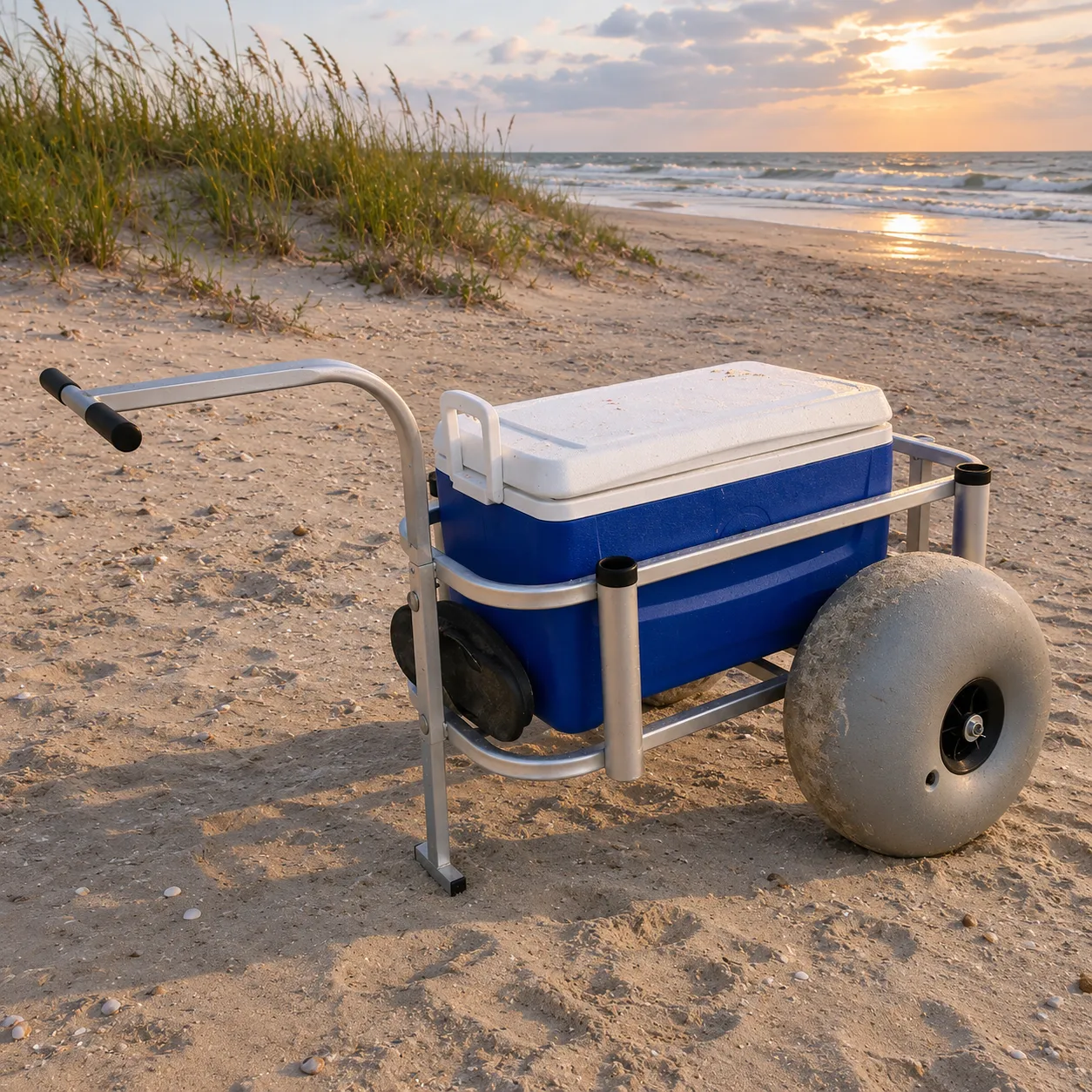
Test the beach cooler cart with the exact cooler, including its feet, hinges, latches and handles.
Which dimension should you start with?
Begin at the base. A catalogue may list the widest point across the lid even though the platform supports a narrower footprint.
- Measure the cooler base.
- Measure the usable deck between obstructions.
| Check | What to look for |
|---|---|
| Cooler footprint | Actual points of support |
| Deck space | Usable supporting area |
Key Takeaway: Base fit gives you a reliable first screen before testing access.
Where should you measure a tapered cooler?
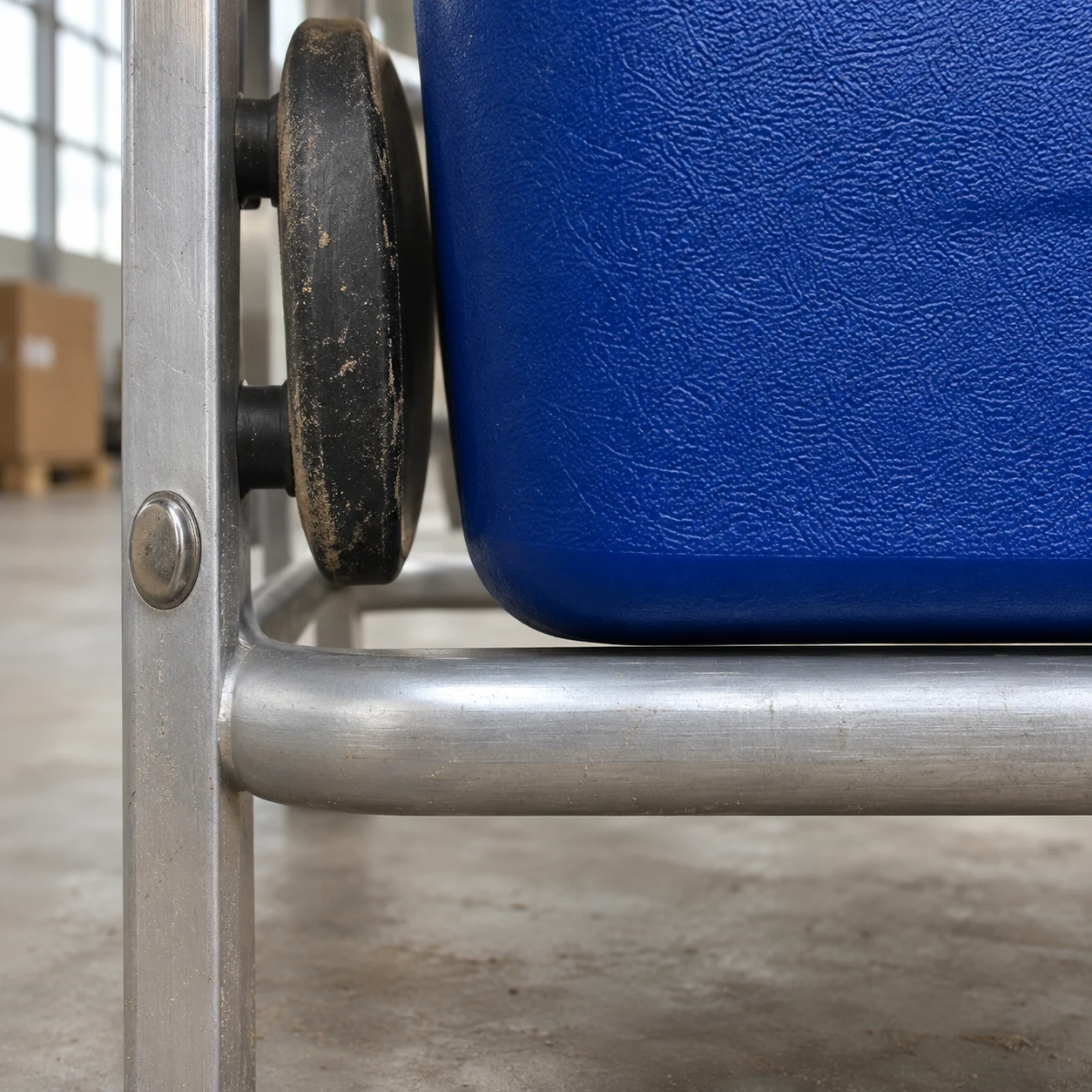
Compare the beach cooler cart clearances at both the cooler base and the height of any surrounding rail.
Can the base fit while the sides catch?
Look higher. Tapered walls can widen above the base and meet a rail or holder before the feet are fully supported. Allow space for any separately fitted beach accessories.
- Measure at rail height.
- Note any bulge or handle bracket.
| Check | What to look for |
|---|---|
| Lower measurement | Base footprint |
| Upper measurement | Width at obstruction |
Key Takeaway: A two-height sketch explains why a nominally suitable cooler may not seat properly.
Can the lid open while the cooler is loaded?
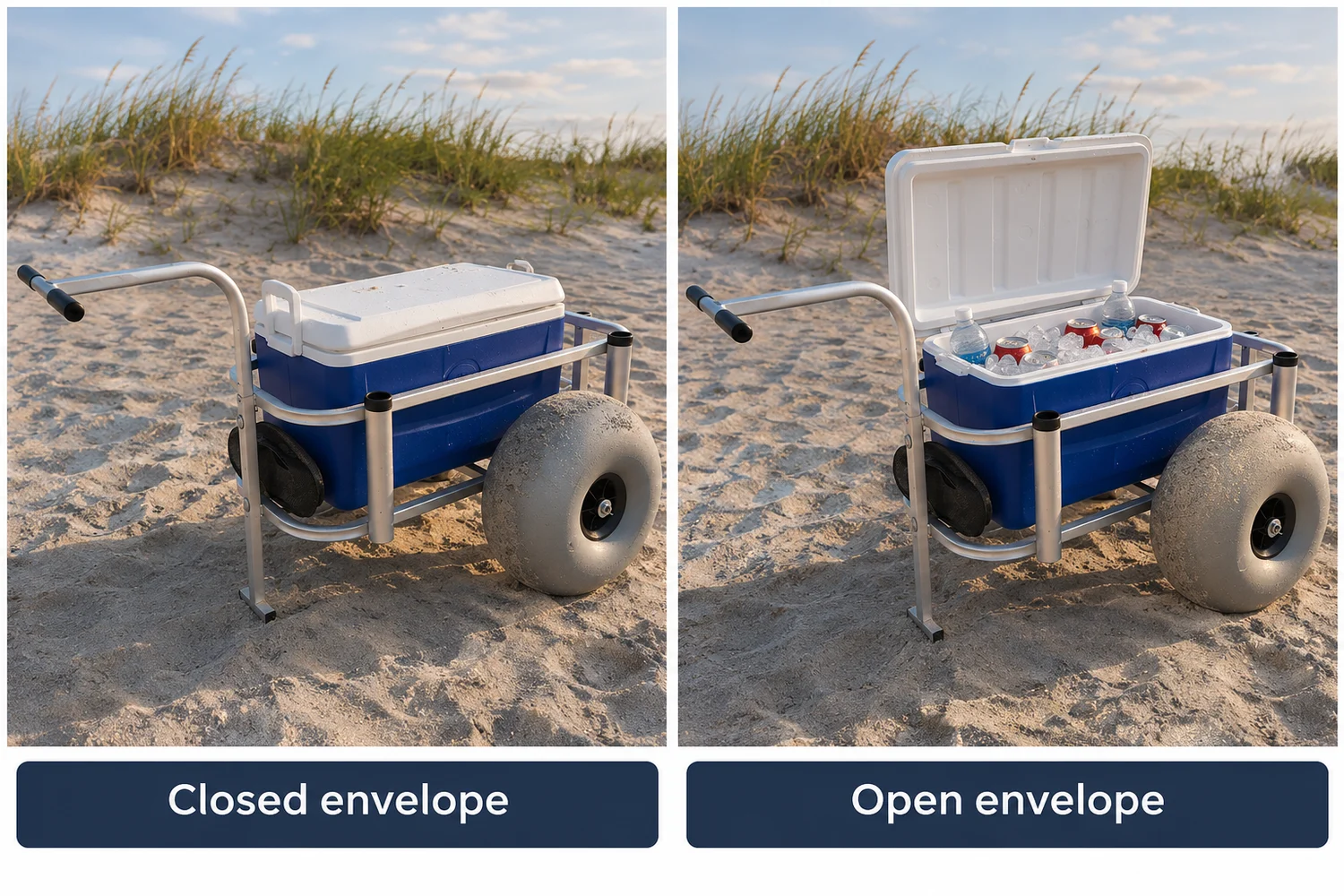
The lid should open as far as the intended use requires on the configured beach cooler cart.
What sits behind the hinge?
Look at the swing path. A handle, rod rack or stacked bag can block the lid even when the closed cooler looks comfortable.
- Allow for the hinge and handle.
- Try the opening with adjacent gear present.
| Check | What to look for |
|---|---|
| Closed envelope | Space for loading |
| Open envelope | Space for retrieving contents |
Key Takeaway: Checking both positions saves staff from unloading the cooler at each stop.
How do you reach the latches and drain?
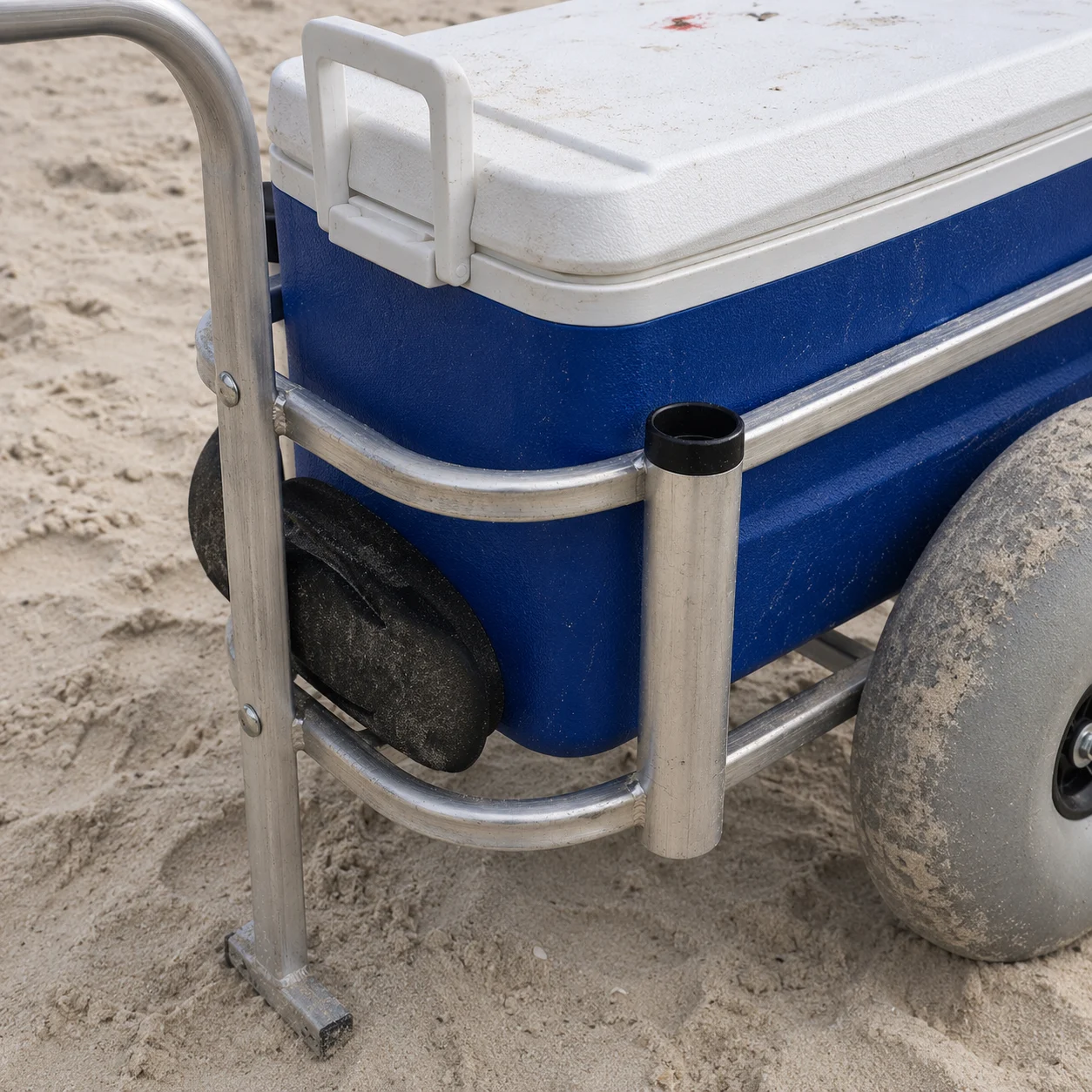
Choose a beach cooler cart layout that gives access to the fittings you expect to use on site.
Will staff empty the cooler on the cart?
Decide that first. If the cooler includes a drain, a side rail or tub wall can obstruct it; check the actual outlet location and the site's drainage arrangements.
- Identify existing latches and drain.
- Name where emptying would occur.
| Check | What to look for |
|---|---|
| Latch | Access for opening |
| Drain | Access if fitted and needed |
Key Takeaway: A layout can be suitable for serving yet inconvenient for cleanup.
What load figure should the buyer compare?
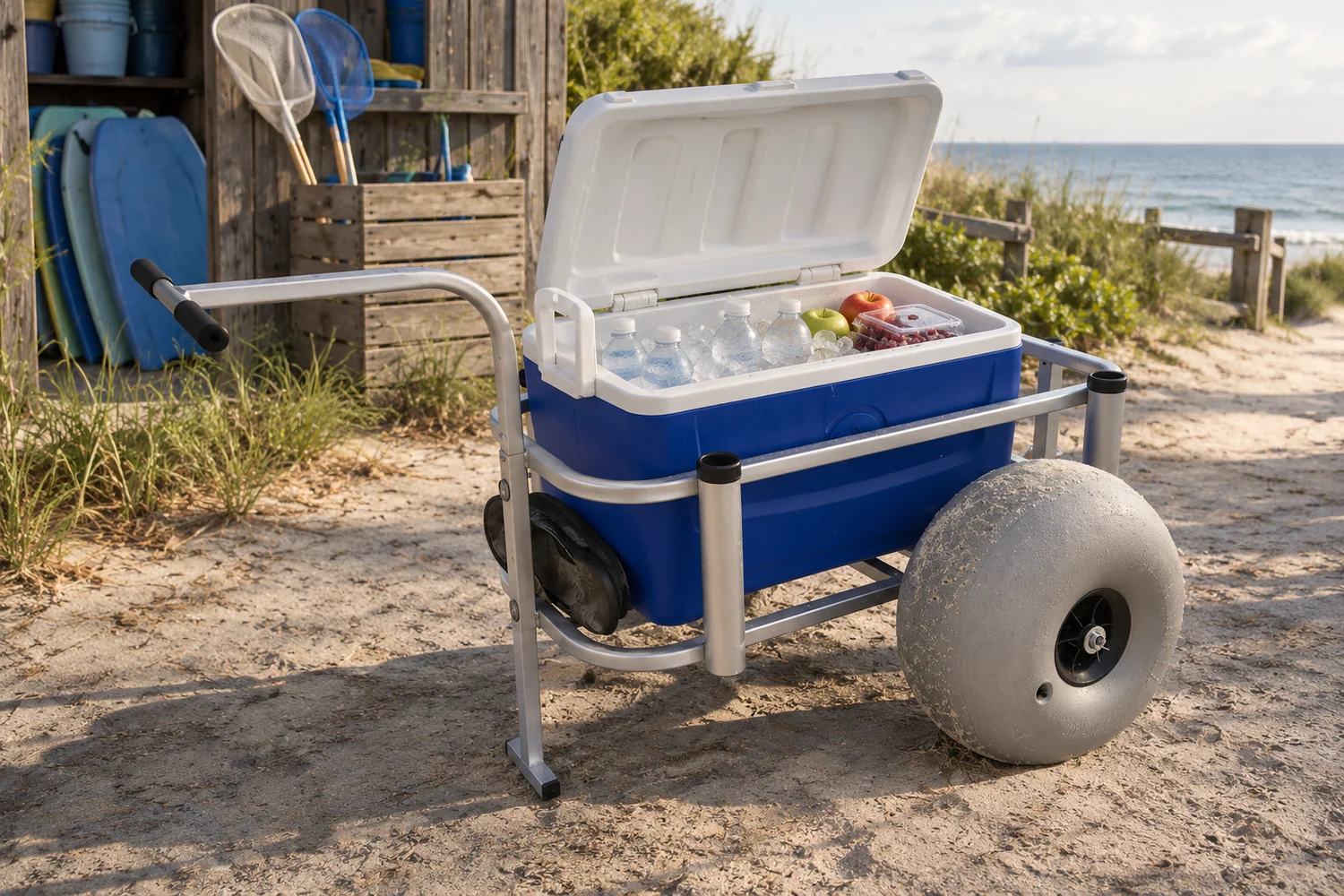
Compare the documented beach cooler cart rating and conditions with the complete planned load, including cooler and contents.
Why weigh more than the ice?
Include everything. The empty cooler, drinks, ice and bags all contribute to what the operator handles.
- Weigh the representative load.
- Request the rating for the complete cart.
| Check | What to look for |
|---|---|
| Equipment load | Actual contents and containers |
| Cart limit | Model-specific documented conditions |
Key Takeaway: A wheel or deck rating by itself does not establish the complete cart's capacity.
Can the cooler be secured on the deck?
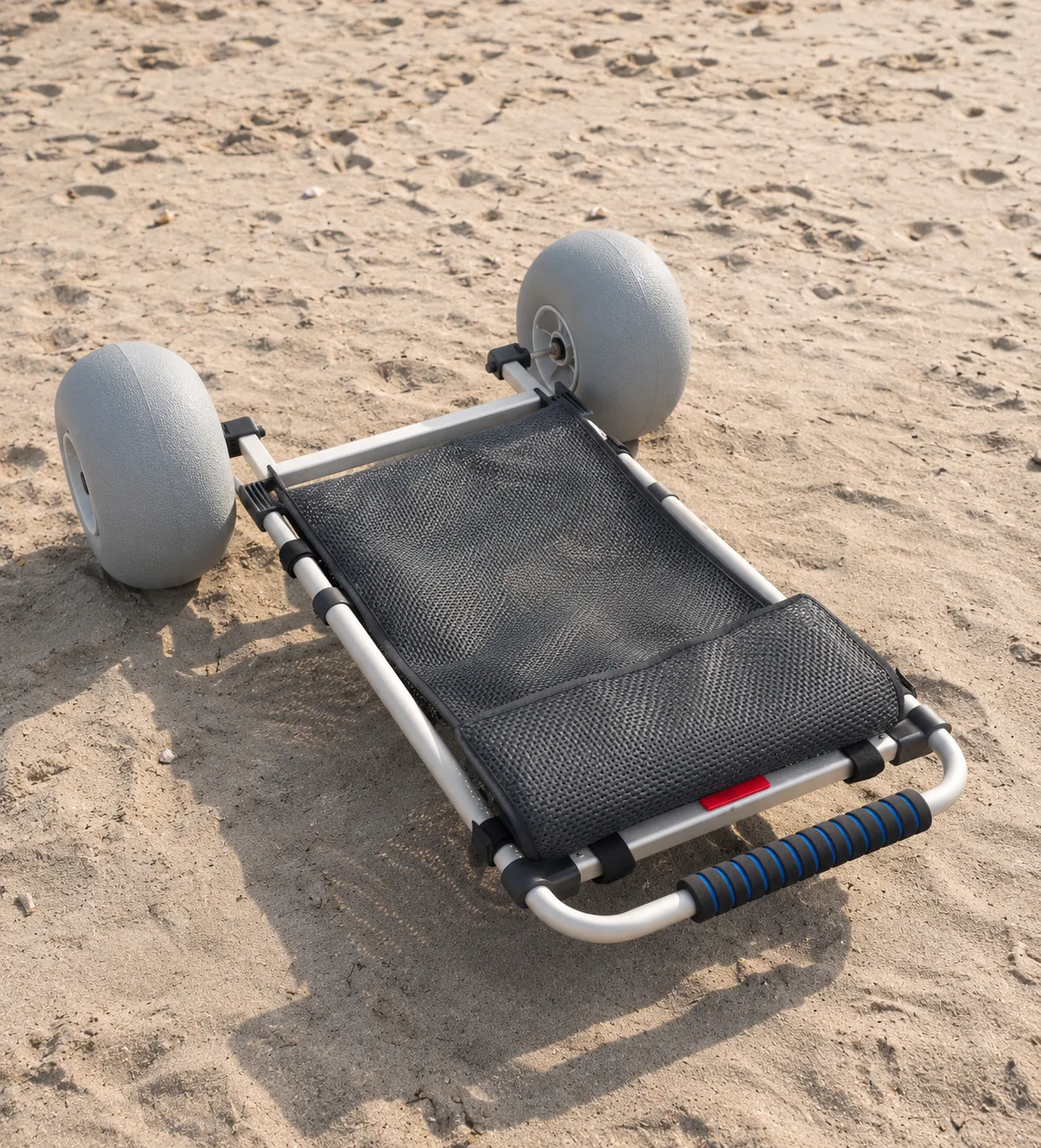
Use a restraint arrangement approved for the beach cooler cart and the cooler's configuration.
Should you assume any rail is an anchor?
Identify the attachment first. A convenient rail may be a cargo boundary without a documented restraint function. If tire configuration changes, revisit the balloon wheel selection as well.
- Ask which points may be used.
- Record what restraint comes with the cart.
| Check | What to look for |
|---|---|
| Boundary | Physical edge |
| Anchor | Approved restraint location |
Key Takeaway: A clear attachment plan avoids promising stability from a close fit alone.
What difference does a tub make?
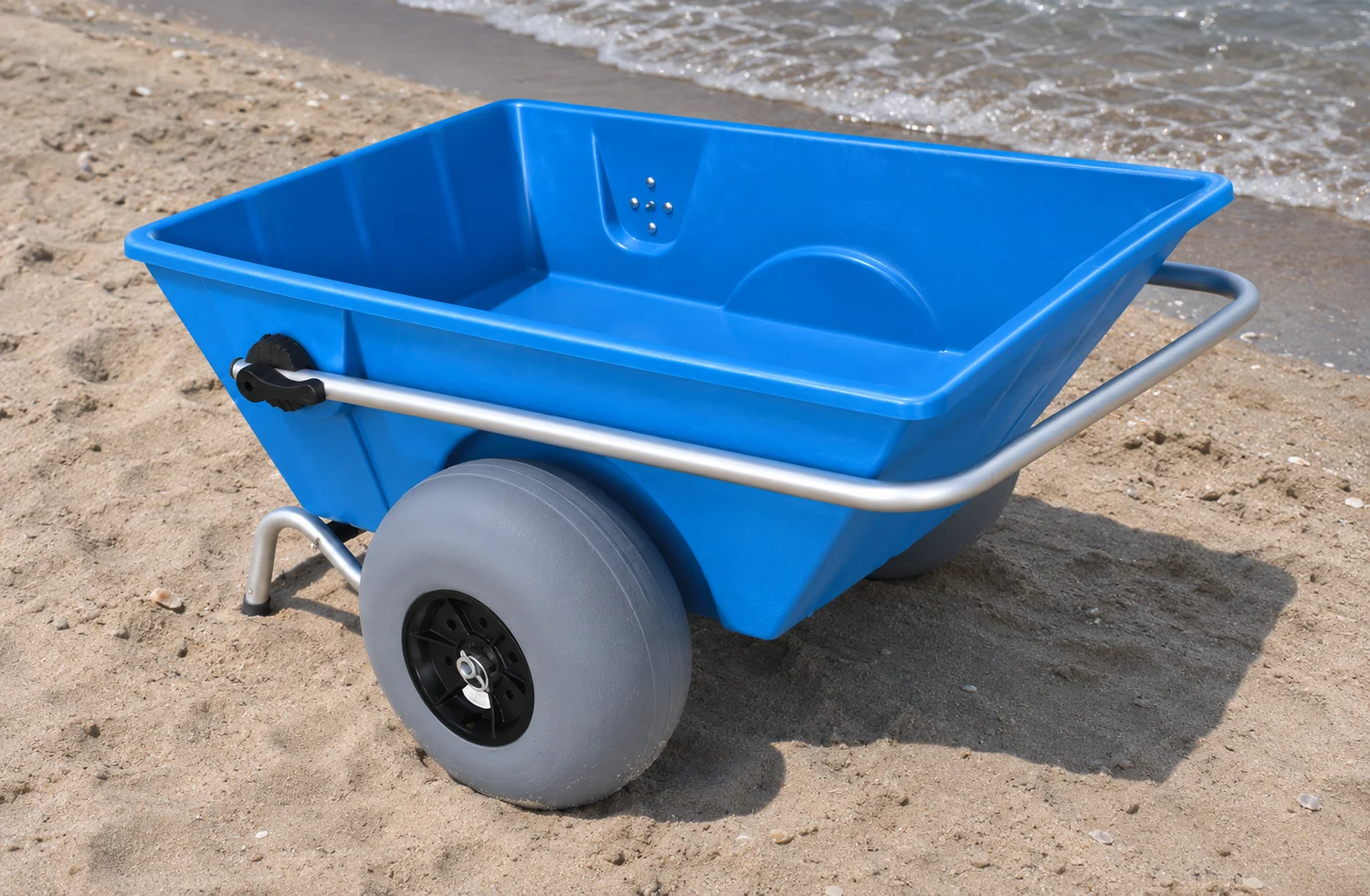
A tub-style beach cooler cart introduces internal contours and a lip that change loading and access.
Can you use the outer tub size?
Measure inside. Curved ends, sloping sides and raised areas can reduce space for a rectangular cooler base. For a workplace handling assessment, see the HSE guidance on pushing and pulling.
- Measure the narrowest usable internal width.
- Note the height of the tub edge.
| Check | What to look for |
|---|---|
| Outside tub | Overall cart envelope |
| Inside tub | Space for the cooler |
Key Takeaway: Match the cooler to the inside shape of the tub you will receive.
How should staff assess the loaded route?
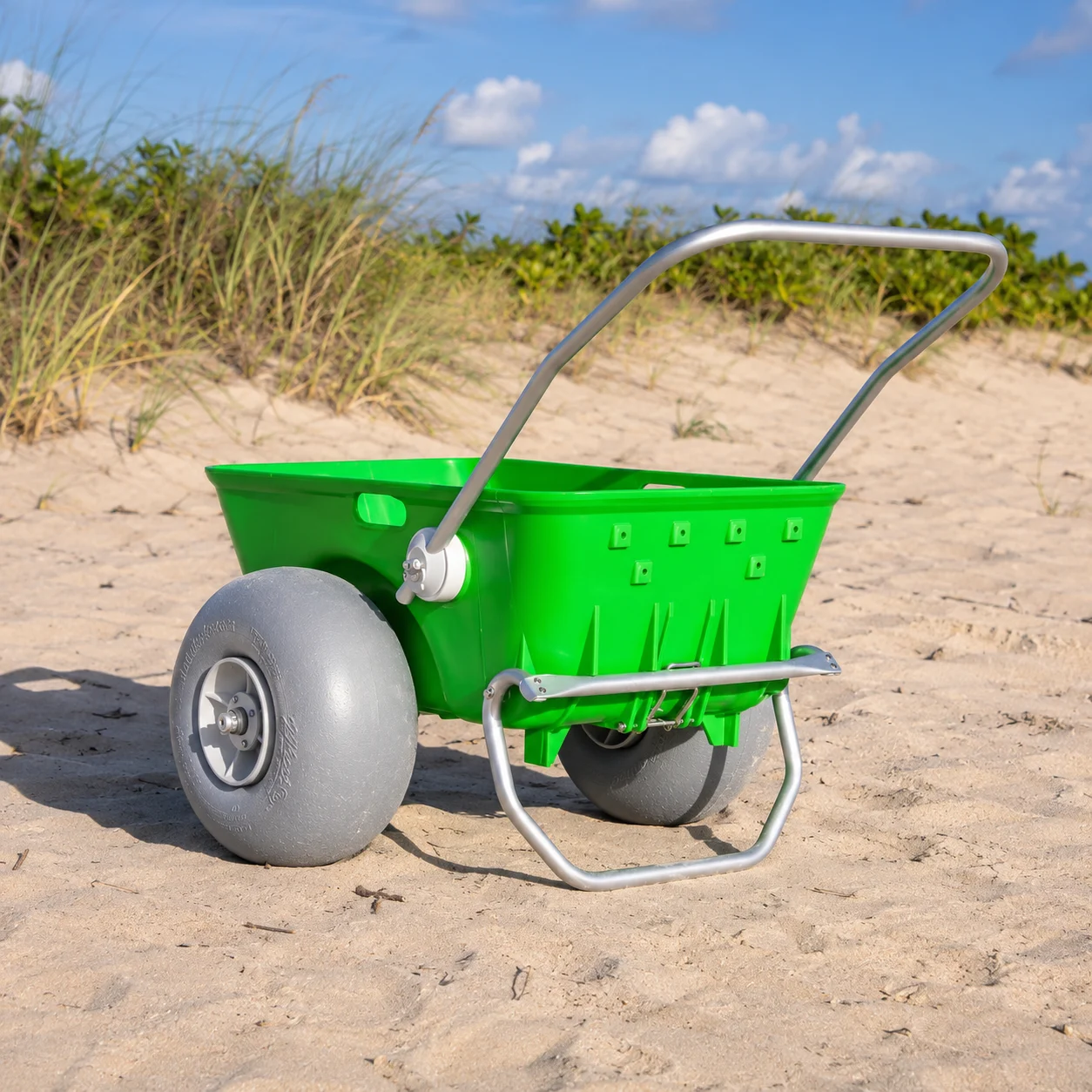
Review the loaded beach cooler cart on the proposed route under the maker's instructions and local handling arrangements.
Where does the trip change?
Follow the route from storage. A doorway, surface change or sharp turn can matter more than the open stretch of beach. Your product enquiry should name the actual service run.
- Record the narrowest doorway.
- Identify the turning and stopping areas.
| Check | What to look for |
|---|---|
| Equipment fit | Cooler on cart |
| Route fit | Configured cart on the service route |
Key Takeaway: The store-to-beach trip is the right unit for a handling review.
What if the cooler must be removed each time?
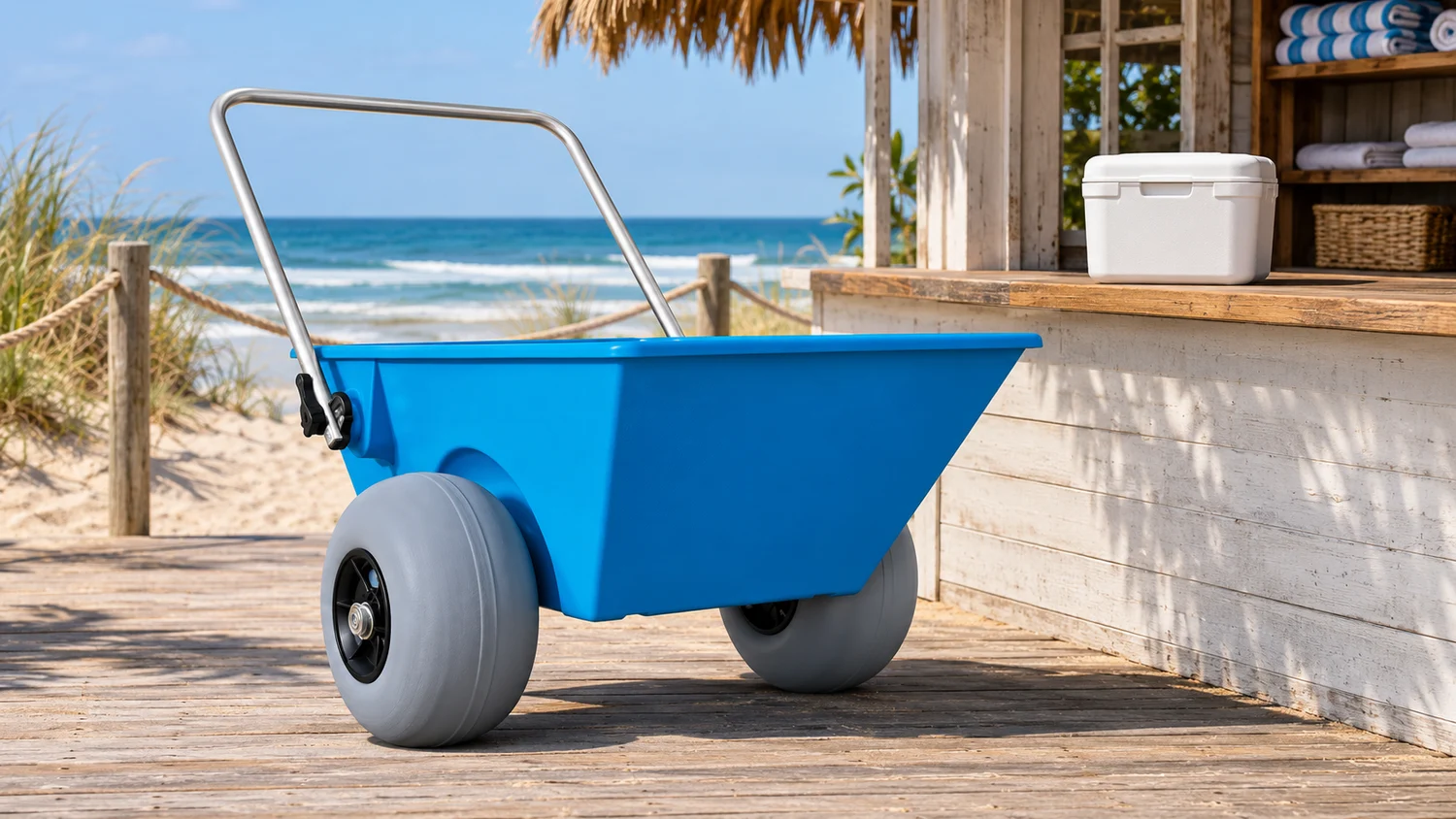
Choose a beach cooler cart and workflow that account for repeated removal of the actual cooler load.
Who handles the lift?
Ask before ordering. Staff may plan to unload a light, empty cooler at closing yet need access to a loaded cooler several times during service.
- Identify who handles removal.
- Confirm the approved method for the load.
| Check | What to look for |
|---|---|
| Occasional removal | Planned service task |
| Repeated access | Daily operating requirement |
Key Takeaway: The team should know whether the cooler can remain in place during service.
Which details should go on the order?
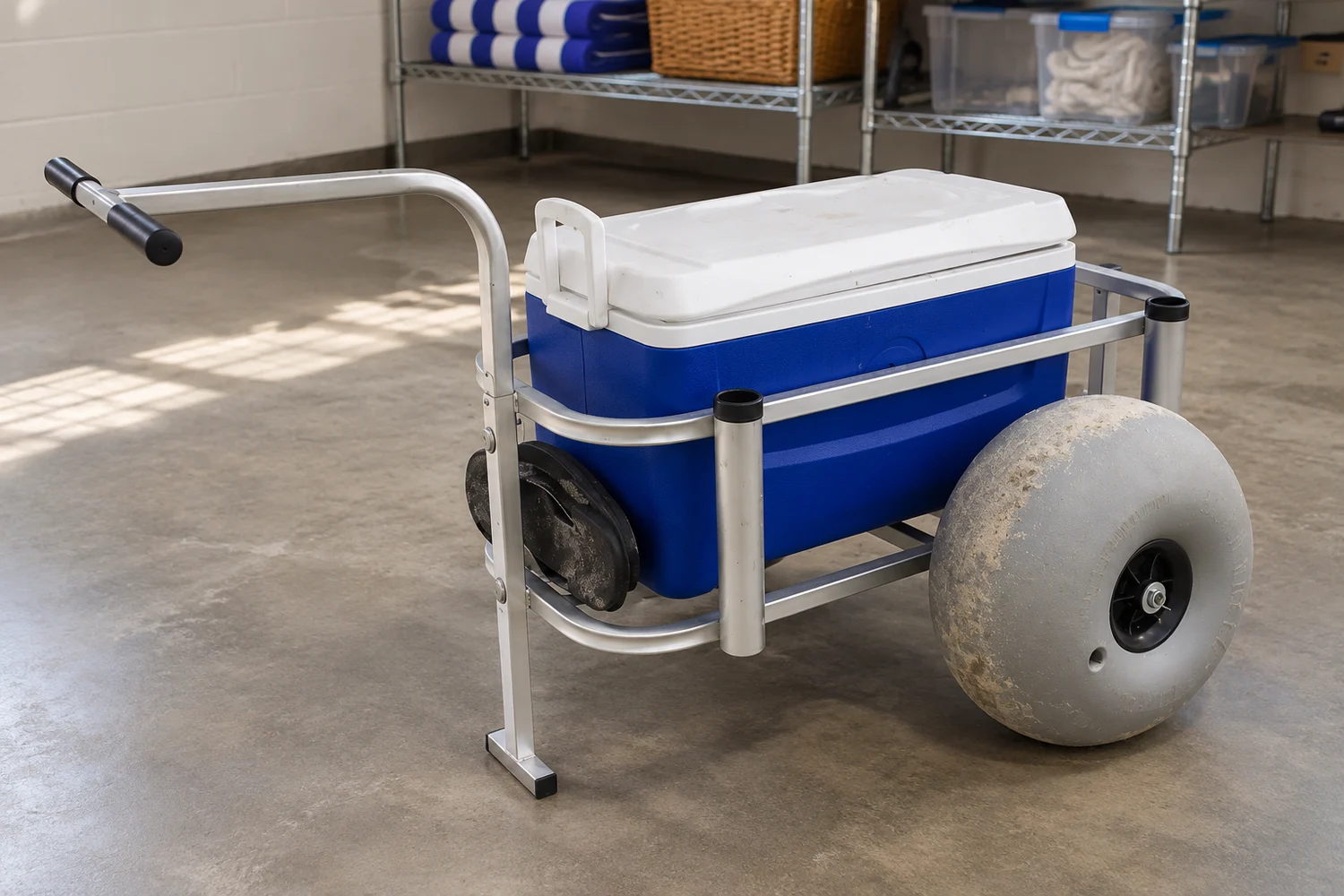
Write the beach cooler cart model, accepted cooler, deck or tub configuration and agreed accessories on the order.
How do you preserve the fit decision?
Keep the sample evidence. A later cart revision or different cooler lid can change the arrangement your buyer approved.
- Attach the sample fit photos.
- Request notice of material configuration changes.
| Check | What to look for |
|---|---|
| Approved sample | Named cooler and cart |
| Delivered unit | Configuration to compare |
Key Takeaway: A part-specific record answers the next buyer's question without repeating the whole trial. Contact us with the cart photograph and the load your team expects to carry. We judge cargo fit by what staff can reach once the cart is packed.
Frequently asked questions
Q1: Can I use the cooler's capacity in litres to choose a cart?
No. Two coolers with the same volume can have different outside dimensions and fittings.
Q2: What's the best measurement to take first?
Measure the base footprint and the usable supporting area of the cart.
Q3: How do I know the lid will clear the handle?
Try the exact cooler in its loaded position and open the lid through the required travel.
Q4: Can I use the cart's outer tub width for fit?
Use the narrowest relevant internal dimension. Outer width is useful for route clearance.
Q5: Does a cooler in a product photo come with the cart?
Check the written sales contents. A display can include separately supplied gear.