
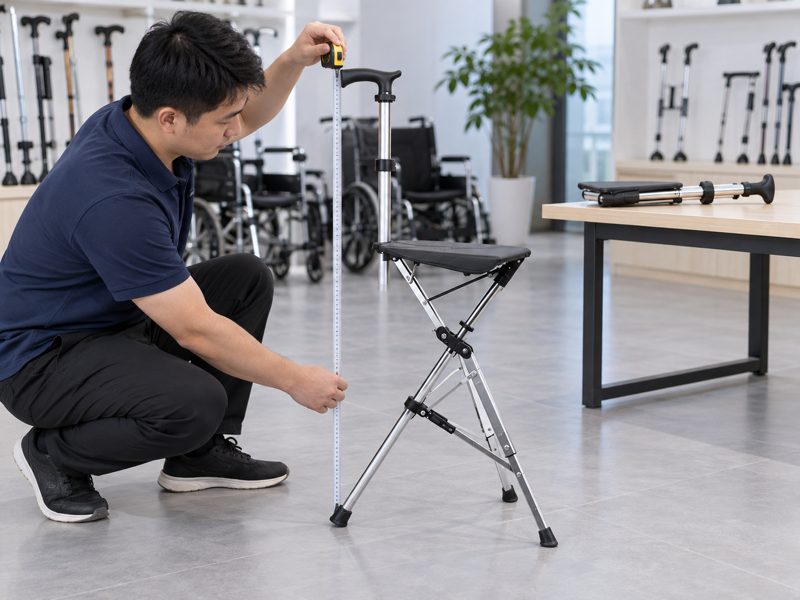
An adjustable cane seat has a useful height range when the exact maker positions match a person’s reviewed walking and resting needs. A buyer may spot a telescoping shaft in a photo and assume that any mark gives a suitable setup. The open seat and its three feet still need a separate check. Request current model measurements, a sample and trained fit advice before promising a range to dealers or users.
What does an adjustable cane seat adjust?
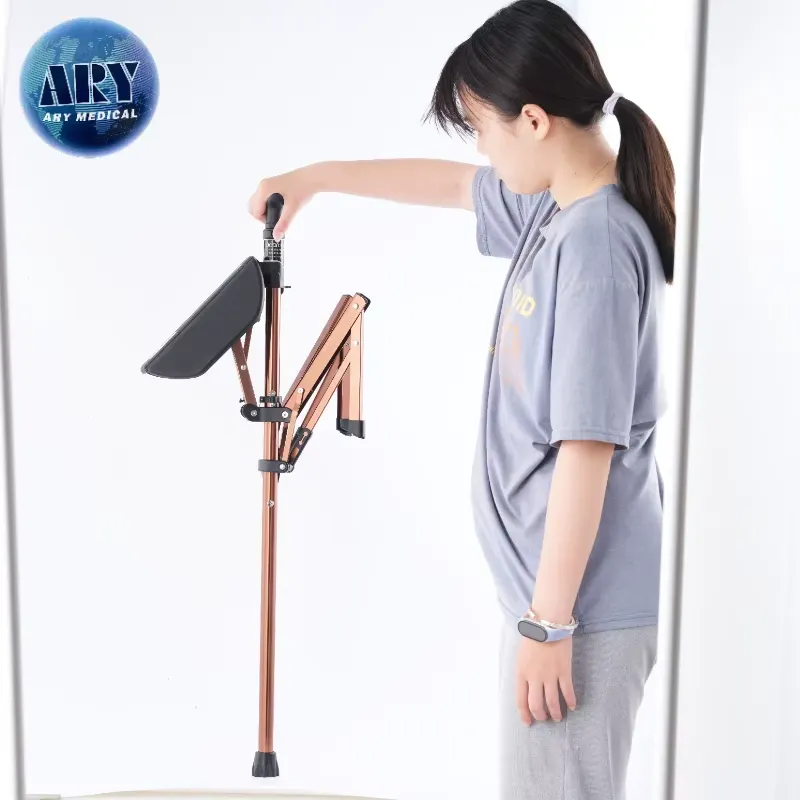
An adjustable cane seat may offer permitted shaft positions, but the exact adjustment must be confirmed from its current instructions. The product photo shows a telescoping cane section and folding triangular seat. It does not prove a specific handle or seat-height range.
Which dimensions should be kept separate?
Name the setting before recording a number. Ask for model drawings that define walking-handle height and opened-seat position. An adjustment to one part should not be assumed to move every other part as expected.
- Identify the handle adjustment points.
- Request opened-seat measurements separately.
- Keep the exact product version with the data.
| Dimension | Use |
|---|---|
| Walking handle | Personal walking fit |
| Opened seat | Resting access review |
One adjustable tube does not answer every fit question. Key Takeaway: You can ask the supplier for the two measurements buyers actually need.
How should an adjustable cane seat handle fit be chosen?
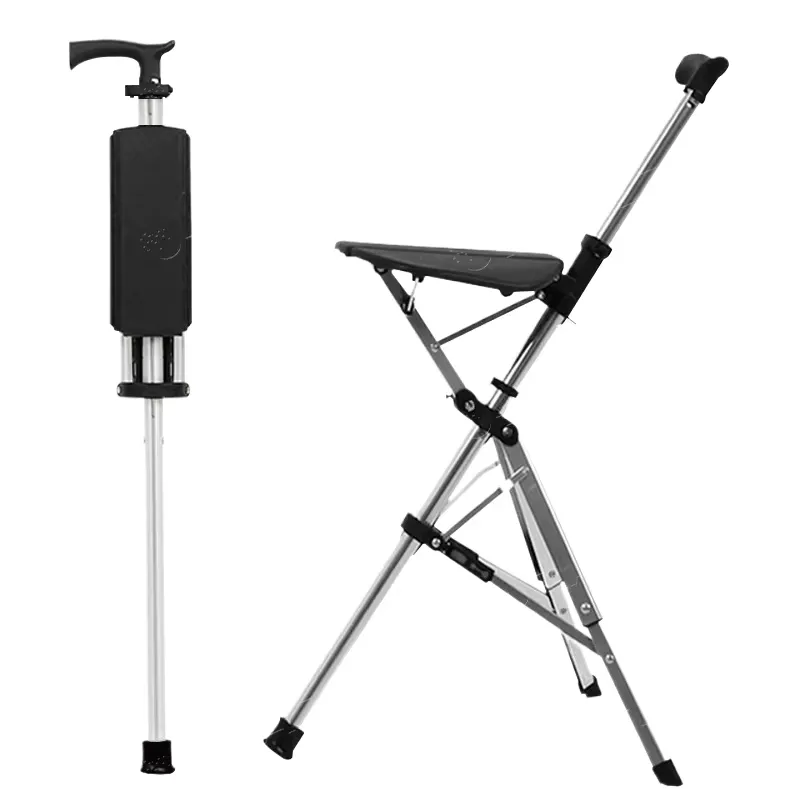
Choose an adjustable cane seat handle position through individual walking-aid advice within the maker’s permitted settings. A tall or short-looking photo cannot establish the right position for a person. Check the current sample with the intended user.
Who should confirm the walking setup?
Put the person in the measurement. The NHS walking-stick guide lists correct stick height and a need for a seat among selection questions. A suitable professional should review the user’s walking goals and the device’s available settings.
- Record the person’s walking needs.
- Use the exact maker range.
- Document the setting accepted during the fit review.
| Input | Owner |
|---|---|
| Product settings | Manufacturer documentation |
| Personal position | Qualified individual review |
A manufacturer range offers choices; it does not choose for the user. Key Takeaway: Your handover can name the position actually reviewed.
Which adjustable cane seat height range is available?
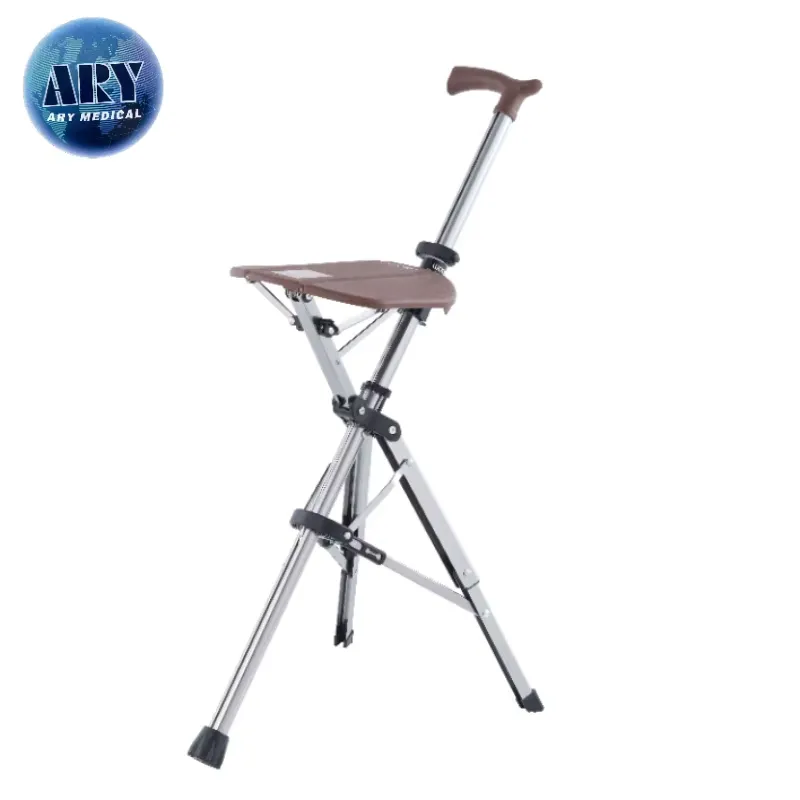
The available adjustable cane seat height range is whatever the exact current model documentation confirms. Do not quote a number from a picture or an older product page without verification. Request the measurement method and allowed positions.
How can a buyer compare two versions?
Use one method for both samples. Ask where each dimension begins and ends, then record the chosen configuration. The AryMD product range helps locate models, but it cannot verify a setting by itself.
- Request current dimensioned model sheet.
- Confirm permitted shaft positions.
- Compare like-for-like measurements.
| Record | Why keep it |
|---|---|
| Reference points | Makes ranges comparable |
| Current model revision | Avoids mixing versions |
A neat range figure can be misleading without its measuring line. Key Takeaway: You can compare product options without inheriting a stale number.
How does an adjustable cane seat lock its shaft?
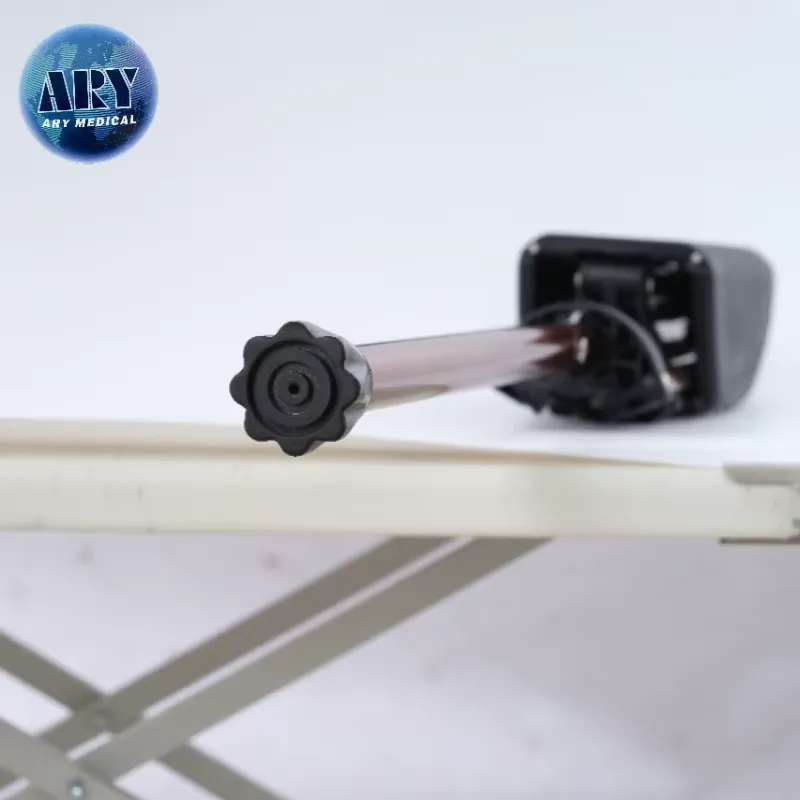
An adjustable cane seat locks its shaft through the mechanism approved for the exact model. The close-up of a lower shaft and rubber tip does not show whether a handle position is locked. Follow the maker’s instructions and inspect a sample.
What should the demonstration show?
Check the lock before use, not from memory. Have trained staff show the permitted change and final check without forcing a collar or button. Record any unusual movement for service, and send model questions through the AryMD contact page.
- Identify the actual lock or collar.
- Follow the approved adjustment method.
- Verify the final position as directed.
| Step | Evidence |
|---|---|
| Adjustment | Current model instructions |
| Final check | Observed approved setup |
A visible index mark is not proof of a secure position. Key Takeaway: Your dealer can teach the actual locking method.
Do all three feet matter on an adjustable cane seat?
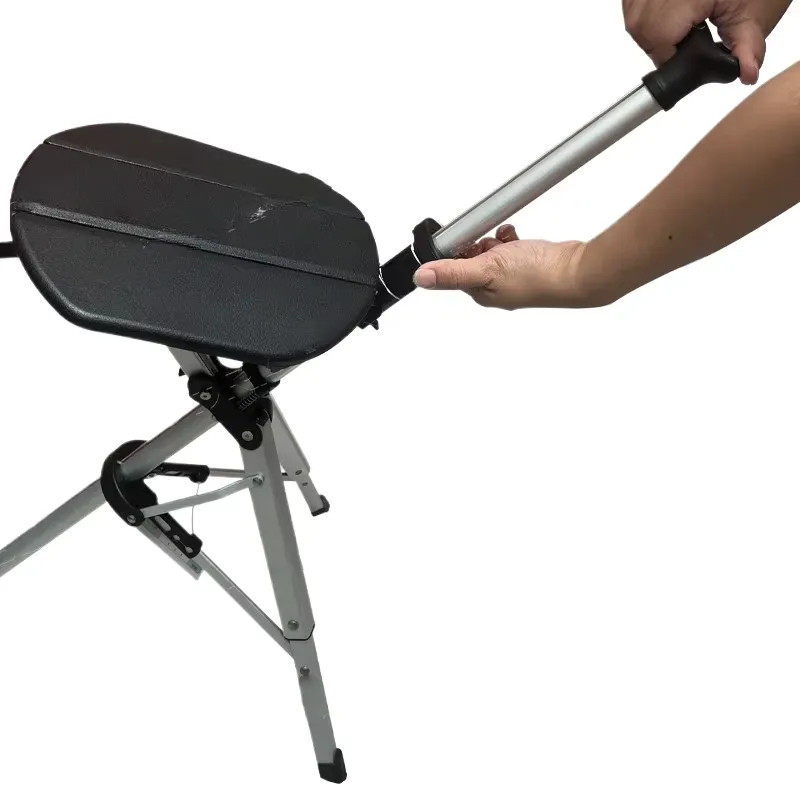
Yes, all three rubber-tipped feet matter when an adjustable cane seat is opened for its intended rest position. A shaft change should be reviewed with the full frame and floor setting. A hinge photo cannot certify balance or grip.
Which parts should staff inspect?
Look from handle down to floor. Check visible foot condition, brace position and the maker’s floor guidance. If a tip or hinge is damaged, follow the service route before use.
- Identify all three floor-contact tips.
- Review hinges and support braces.
- Record relevant surface conditions.
| Part | Question |
|---|---|
| Three tips | Are all present and in condition? |
| Brace and hinge | Do they reach the intended setup? |
One sound tip cannot represent the whole base. Key Takeaway: You can catch a missing component before someone sits.
How does an adjustable cane seat seat fit enter the choice?
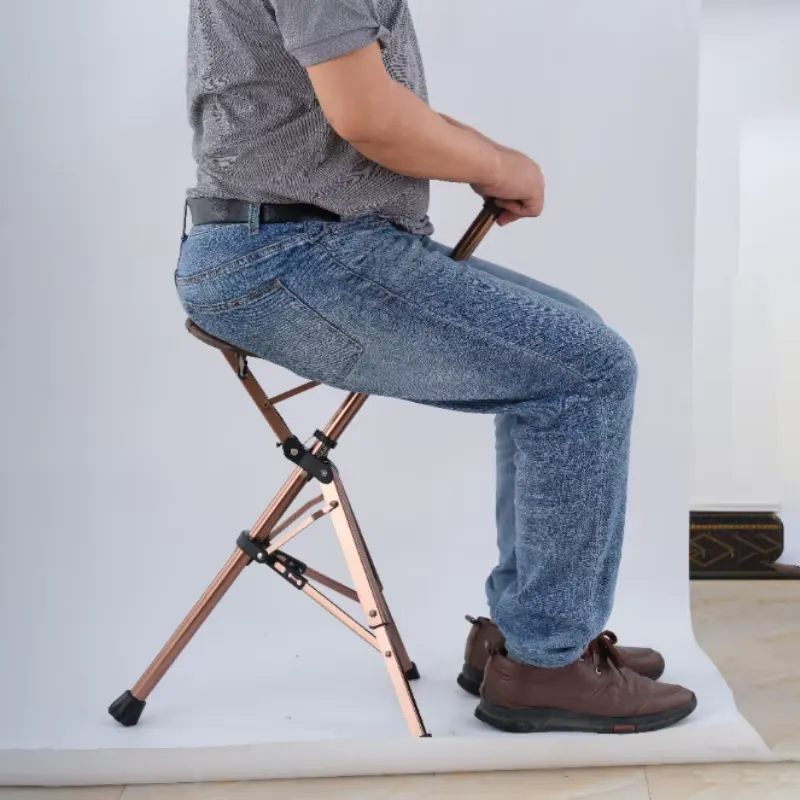
Seat fit enters an adjustable cane seat choice through the person’s assessed resting needs and the exact opened product. A seated adult photo shows one example, not a universal fit. Keep sitting access separate from the walking-handle setting.
What should a rest trial consider?
Review the transition into the seat. A trained adviser should review the intended user and place of rest using current maker guidance. Do not promise comfort, stability or suitability from the triangular seat’s appearance.
- Record intended rest setting.
- Confirm opened-seat position and access.
- Keep individual assessment with the order.
| Fit question | Evidence |
|---|---|
| Walking handle | Approved user setting |
| Resting position | Individual trial and model guide |
One device performs two tasks, each with its own review. Key Takeaway: Your buyer can compare usable options without replacing professional assessment.
Will folding change an adjustable cane seat setting?
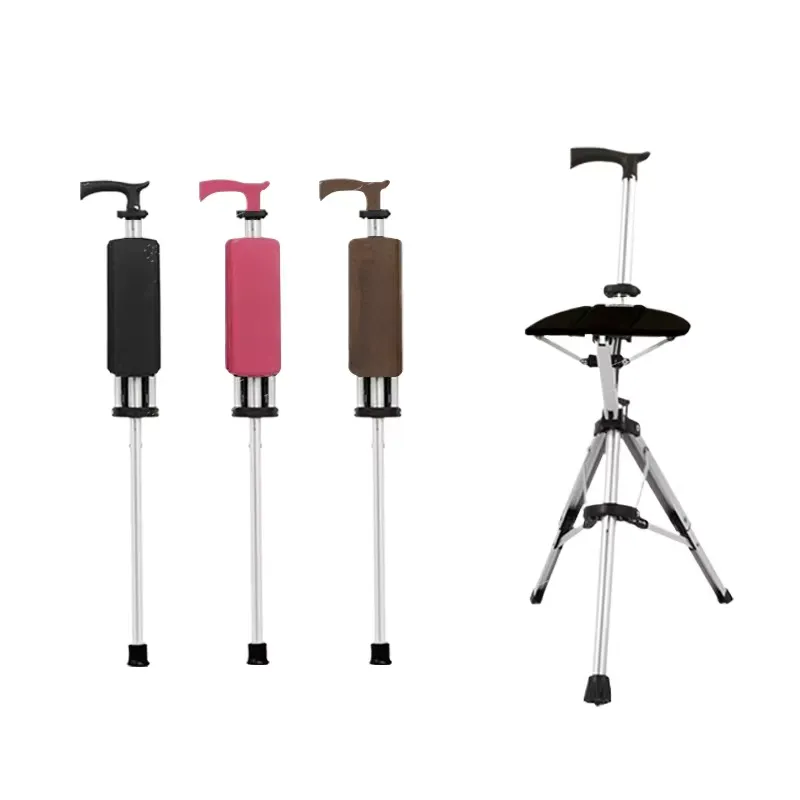
Folding can affect the setup check for an adjustable cane seat because the seat and legs move around the same shaft. Use the maker’s sequence and recheck the approved handle position after reopening. The comparison photo does not give an operating method.
What should a handler record?
Track settings through the fold. Keep the approved walking position and open-seat arrangement together. If a part no longer locks as expected, stop and seek service.
- Follow current folding instructions.
- Protect the shaft lock and seat hinge.
- Complete the prescribed return-to-use check.
| State | Record |
|---|---|
| Folded | Storage position and protected parts |
| Reopened | Restored approved setting |
A device can look open while one setting remains wrong. Key Takeaway: Staff can restore the reviewed setup after storage.
When should an adjustable cane seat be serviced?
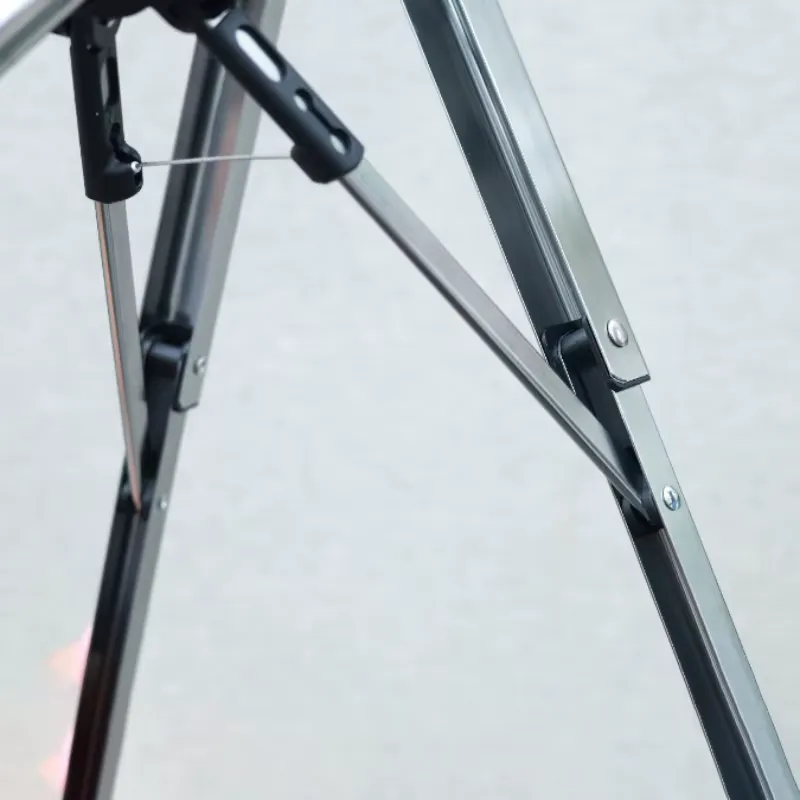
Service an adjustable cane seat when the shaft lock, braces, seat hinge or rubber feet show damage or unexpected movement. Do not compensate by choosing another height mark. Record the model and observed concern for the right technician.
What makes a service request useful?
Show the part in context. The support-brace close-up can guide a photo angle but not a diagnosis. Ask the AryMD team for model-specific part information when a component is unclear.
- Identify the affected part and position.
- Describe what changed during use or storage.
- Follow current stop-use and repair guidance.
| Service field | Use |
|---|---|
| Model and part | Locates the right assembly |
| Observation | Targets a focused review |
Changing a setting cannot fix a worn hinge or tip. Key Takeaway: Your team can report the problem without inventing a remedy.
What should an adjustable cane seat fit chart show?
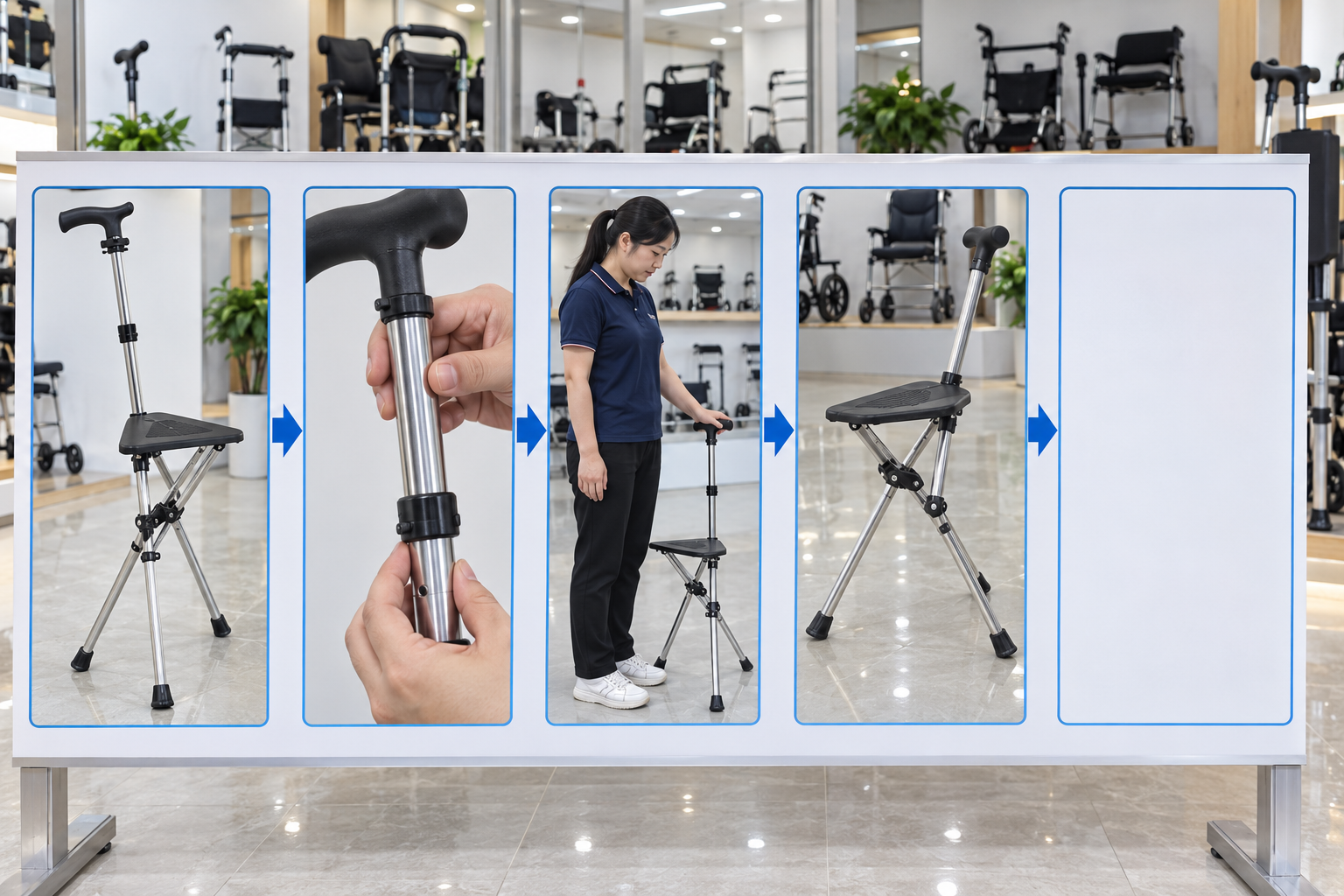
An adjustable cane seat fit chart should show model identity, shaft setting, individual walking review, open three-leg seat and a blank pending record. It should not display a passed fit test before one occurs. Keep actual dimensions and decisions in the real file.
How can the chart guide a buyer?
Leave unknown settings open. Use the five visual stages to request product data and arrange a trial. A blank final panel keeps the illustration from becoming an approval claim.
- Attach current model range.
- Record the trained fit review.
- Flag any open seating or floor question.
| Stage | Evidence |
|---|---|
| Product | Current model instructions |
| Person | Individual fit decision |
The chart is useful when every claim points to a real record. Key Takeaway: You can see what still needs measuring.
How do you order an adjustable cane seat?
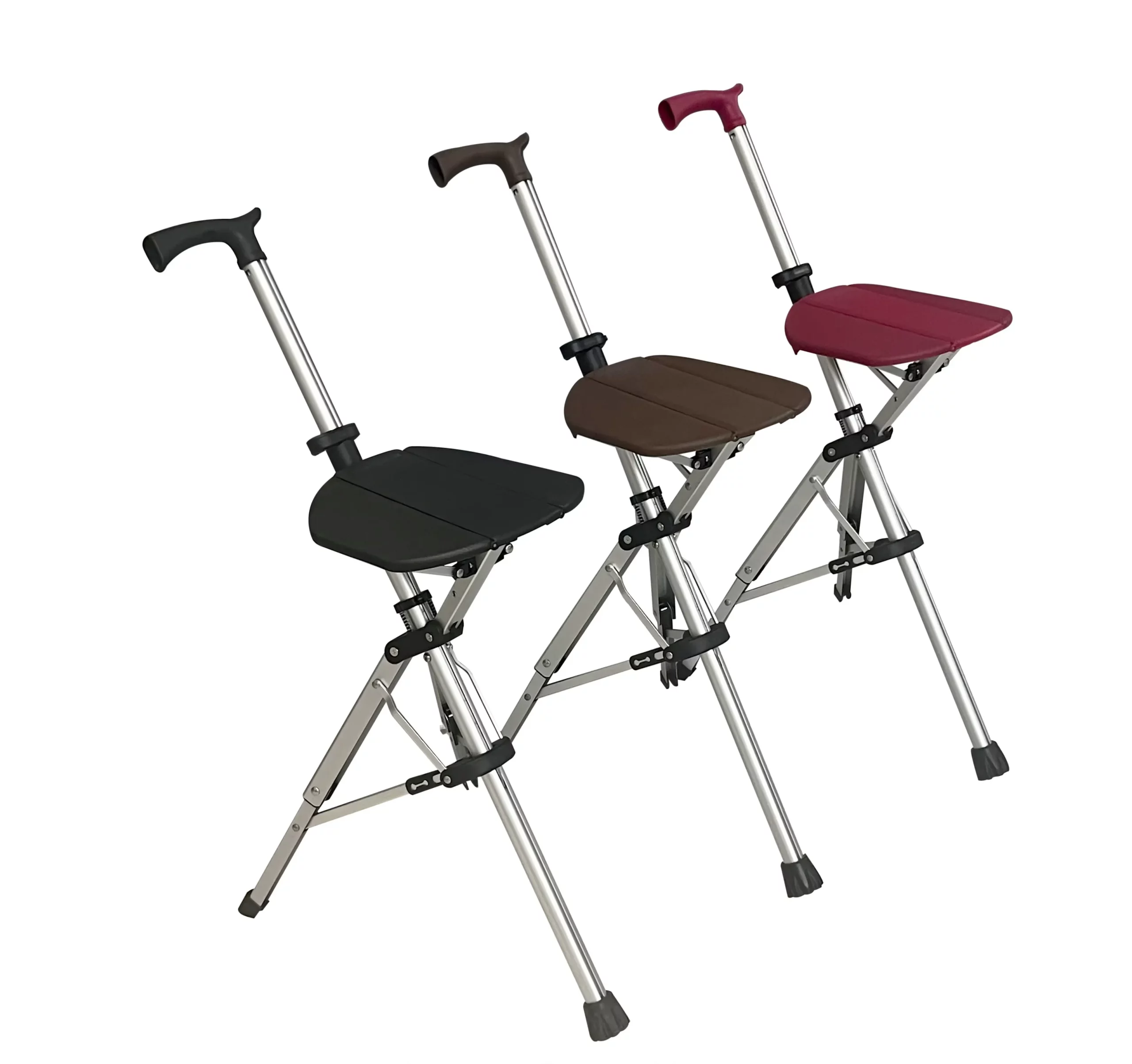
Order an adjustable cane seat by sharing the intended walking and resting brief, then asking for current adjustment and seat data for the exact model. Request a sample and approved instructions. Keep individual fit with the appropriate adviser.
Ready to compare height options?
Send both use cases in one request. Ary Medical can review available cane-seat configurations when you describe the target setting. Confirm the chosen model and service information before larger orders.
- Share the person’s use and setting needs.
- Request current dimension methods and sample.
- Record the fit and handover owner.
| Your brief | Supplier response to request |
|---|---|
| Walking and rest needs | Relevant model options |
| Sample questions | Current instructions and parts |
A clear comparison starts with the actual person and product. Key Takeaway: For a model-specific height review, contact us. Ary Medical supports adjustments chosen through verified ranges and real fit.
Frequently asked questions
Q1: Can I choose handle height from a product photo?
No. Use the documented model range and an individual fit review.
Q2: What’s the best height range for everyone?
There is no universal range; match verified model options to a person’s needs.
Q3: How do I know if the shaft is locked?
Follow the exact maker check after adjustment. A visible mark alone is not proof.
Q4: Can the seat height be inferred from handle height?
No. Request both measurements for the exact open device.
Q5: Should I keep using it if a tip is worn?
No. Follow the maker’s stop-use and replacement guidance.