
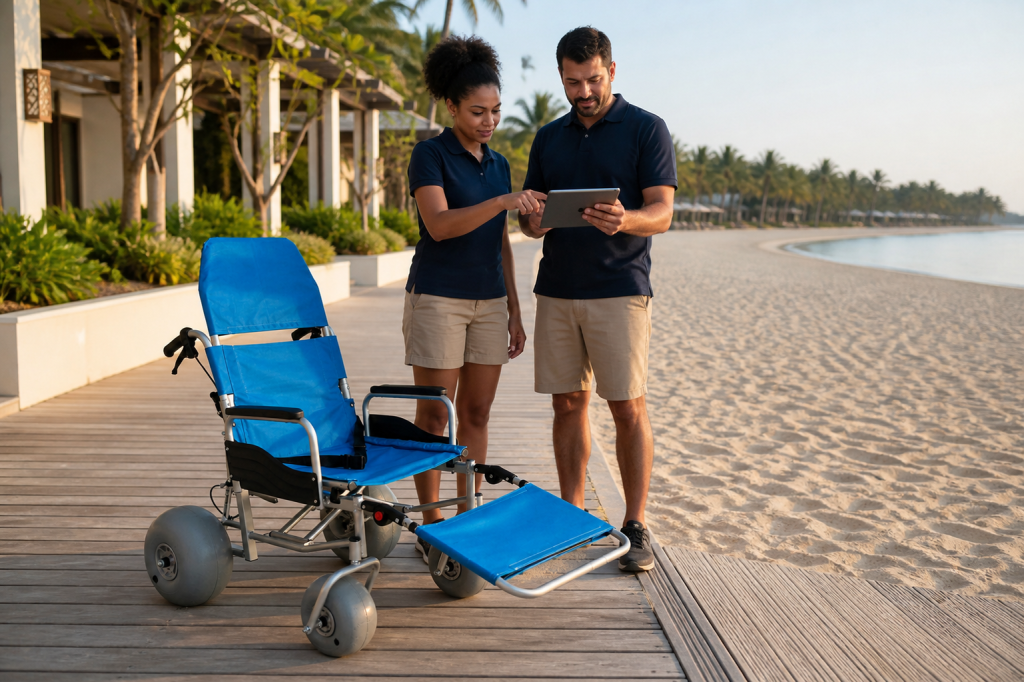
A beach route can look open from a lobby window while soft sand, narrow turns, crowding, debris, or an abrupt boardwalk edge creates a hard stop for operations. All terrain beach wheelchair route planning turns that uncertainty into a documented opening decision. Resort teams can define access points, inspect surface conditions, stage staff handoffs, test an empty chair, and record route status before guest service begins. This guide offers a practical B2B framework without promising that one chair fits every beach or guest. Manufacturer instructions, local access rules, weather notices, and resort policy remain the operating authority. Managers should adapt each step around their site, product model, staffing plan, and daily conditions.
Treat each route as a live service plan rather than a permanent line on a map. The plan should name ownership, checked segments, current status, staffing, communication channels, and a return path. It should also show how a closure reaches front desk and booked guests. This operating view connects physical access with daily hospitality work. A route may remain physically present while service closes because staff coverage, equipment status, or a handoff area has changed. Written status gives every department the same answer at a given time. It also gives supervisors a clean basis for reopening after a fresh review, without relying on memory or pressure from a schedule.
Route records should remain easy for busy teams. Use a consistent name, date, time, owner, status, and short operational note. Avoid unsupported ratings or permanent claims. A current record should tell staff whether a booking can proceed, where handoffs occur, and who can answer a question. Archive older records under resort policy, but keep only current status visible at service points. This practice reduces mixed messages between lobby, recreation, and beachfront operations. It also helps managers spot recurring trouble at one segment, such as debris near an access edge or crowding around a shaded meeting point. Those patterns can guide site work, staffing, or a revised guest message.
Where Should All Terrain Beach Wheelchair Planning Begin?
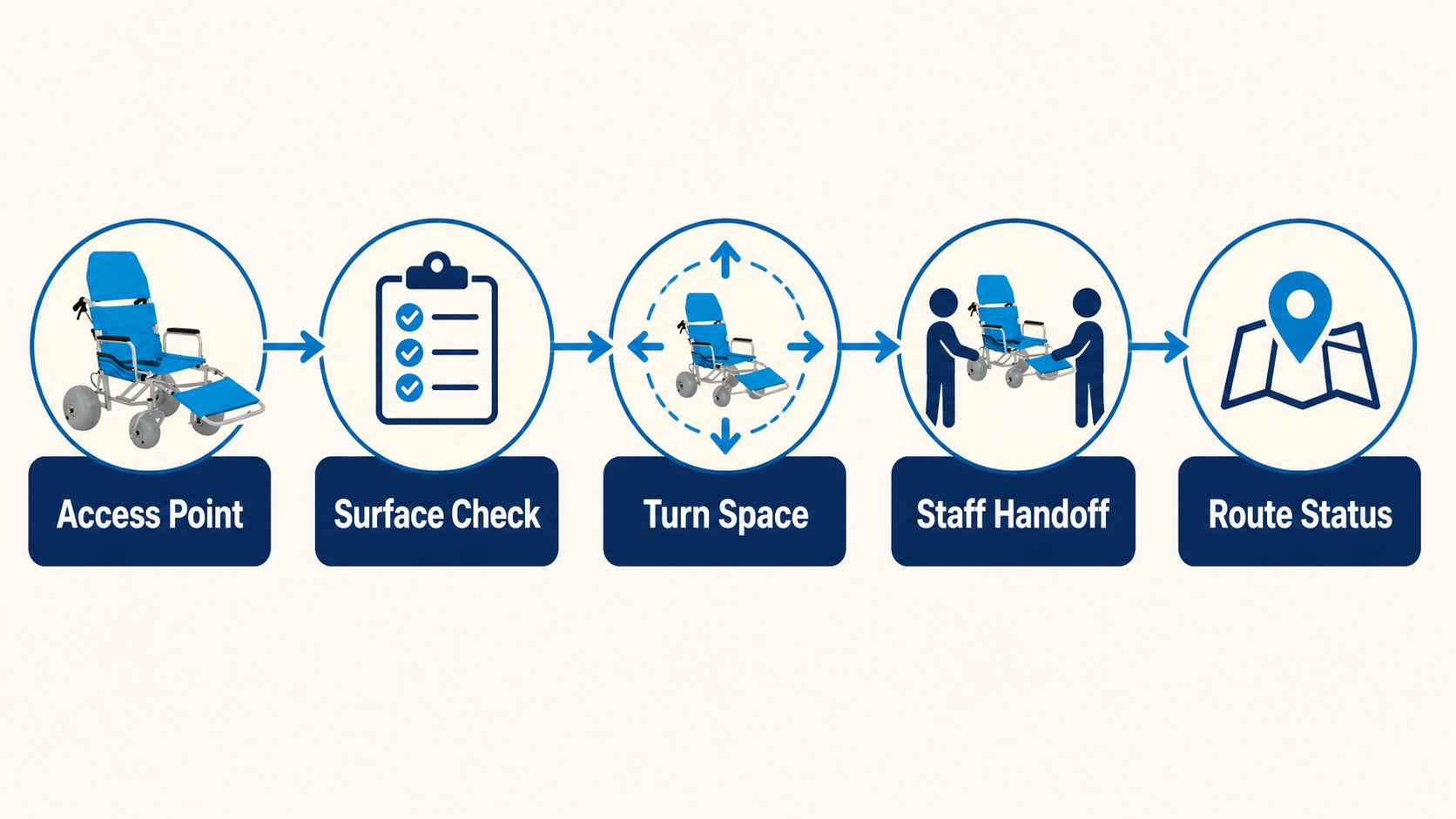
All terrain beach wheelchair route planning should begin at a named access point and continue through a current surface review. Teams need a clear start, a clear destination, and a clear return path. A route may connect lobby, storage, boardwalk, access mat, firm sand, soft sand, and a shaded rest area. Each segment carries different space plus staffing needs. Managers can connect route planning with a wider Beach Series operations plan, so staff do not treat every mobility product in the same way.
Name the Access Point and Route Owner
Here is the practical point: every active route should have one named opening point and one person who owns status. That owner does not perform every check, yet they confirm that checks close before service opens. The access point should offer firm staging space for the empty chair, staff, guest, and companion without blocking a public path. Give each route a plain name that staff can say over radio or phone. Avoid vague phrases such as near the beach. A route name should connect with a real landmark, storage point, or service desk. Staff can then report a closure or handoff without confusion. The route record should also name an alternate meeting point when resort policy allows one.
- Give each route a short plain-language name.
- Assign one owner for opening status.
- Use a firm staging space near access.
- Keep public and emergency paths clear.
- Name an approved alternate meeting point.
Review Every Surface Segment
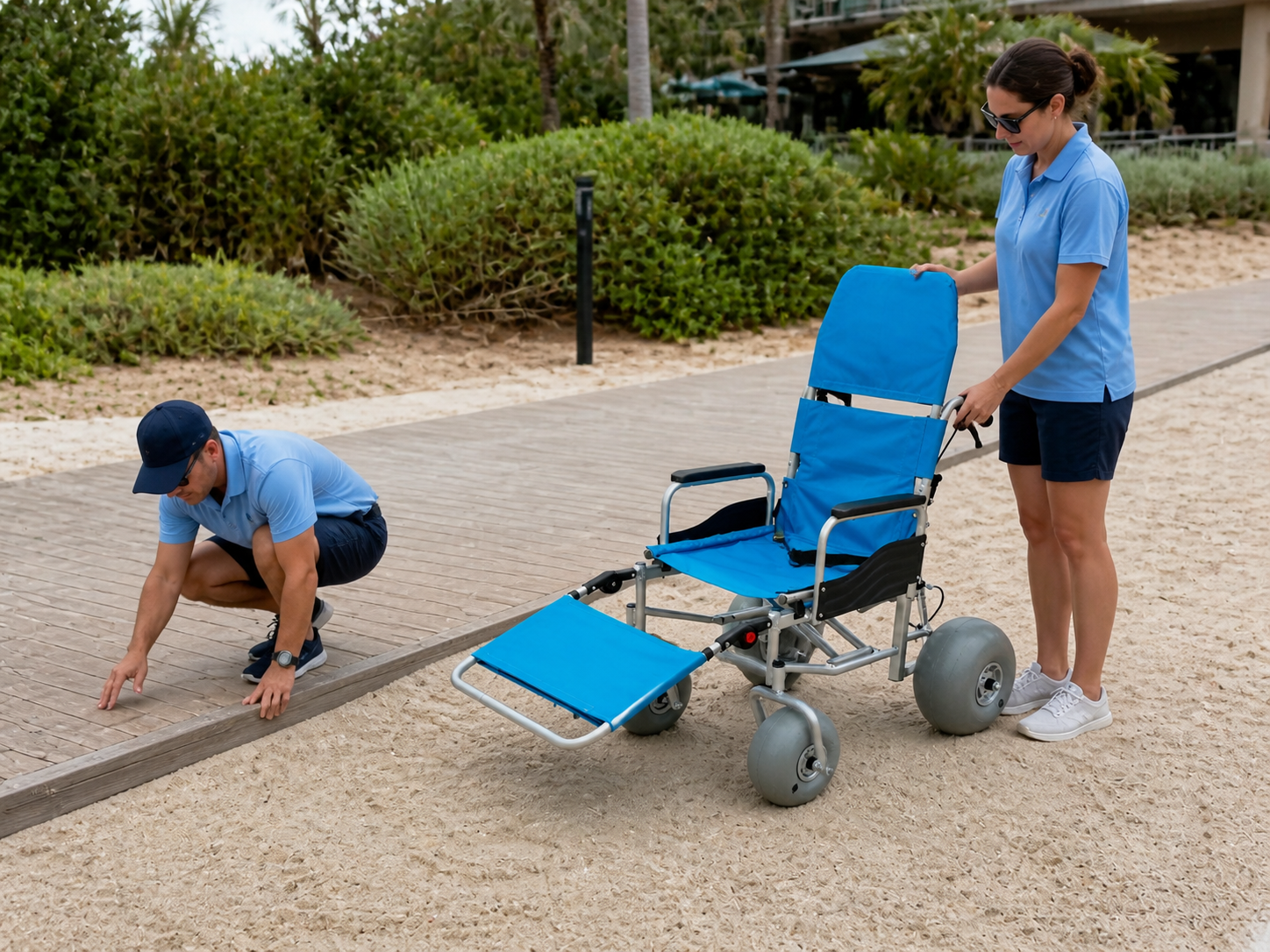
The route is only as clear as its segments: walk from storage through every planned surface before opening. Check boardwalk edges, access mat placement, sand firmness, standing water, debris, crowded areas, shaded pauses, and return access. Avoid treating a product label as proof that any surface will work. Current conditions and model instructions decide whether a segment remains open. Staff should record observations with plain status language rather than unsupported ratings. A relevant all terrain beach wheelchair article can help teams discuss category use, yet daily route decisions still belong with local operations.
- Walk the full outbound and return route.
- Check each change in surface.
- Note debris, water, crowding, or blocked space.
- Confirm that rest and handoff points remain open.
- Close any segment that lacks a clear status.
What Makes a Route Work for Daily Operations?
An all terrain beach wheelchair route works for daily operations when it has usable space, planned pauses, and staff handoffs that match site policy. Route review should cover more than forward movement. Teams need room for approach, turning, repositioning, conversation, and return. A guest should not arrive at a narrow dead end where staff must improvise. Managers can reduce that risk through empty-chair walkthroughs and clearly named meeting points.
Check Turn Space and Rest Points
Look beyond a straight line: a route needs places where staff can pause and reposition without crowding guests or other visitors. Review corners, gates, boardwalk ends, mat edges, shaded shelters, and shoreline boundaries. Staff can move an empty chair through each point under a controlled trial, then note any awkward angle or blocked approach. Do not publish measurements unless a qualified site review has verified them and keeps them current. A visual route card can show direction plus named stops without claiming compliance. The product page for a resort’s beach wheelchair can help teams identify chair geometry, while site checks decide available space.
- Check approach space at every gate or corner.
- Identify stable pause points along the route.
- Keep shaded areas free from stored items.
- Review boardwalk and mat edges from both directions.
- Close a dead-end segment before guest arrival.
Plan Staff Handoffs Before Service
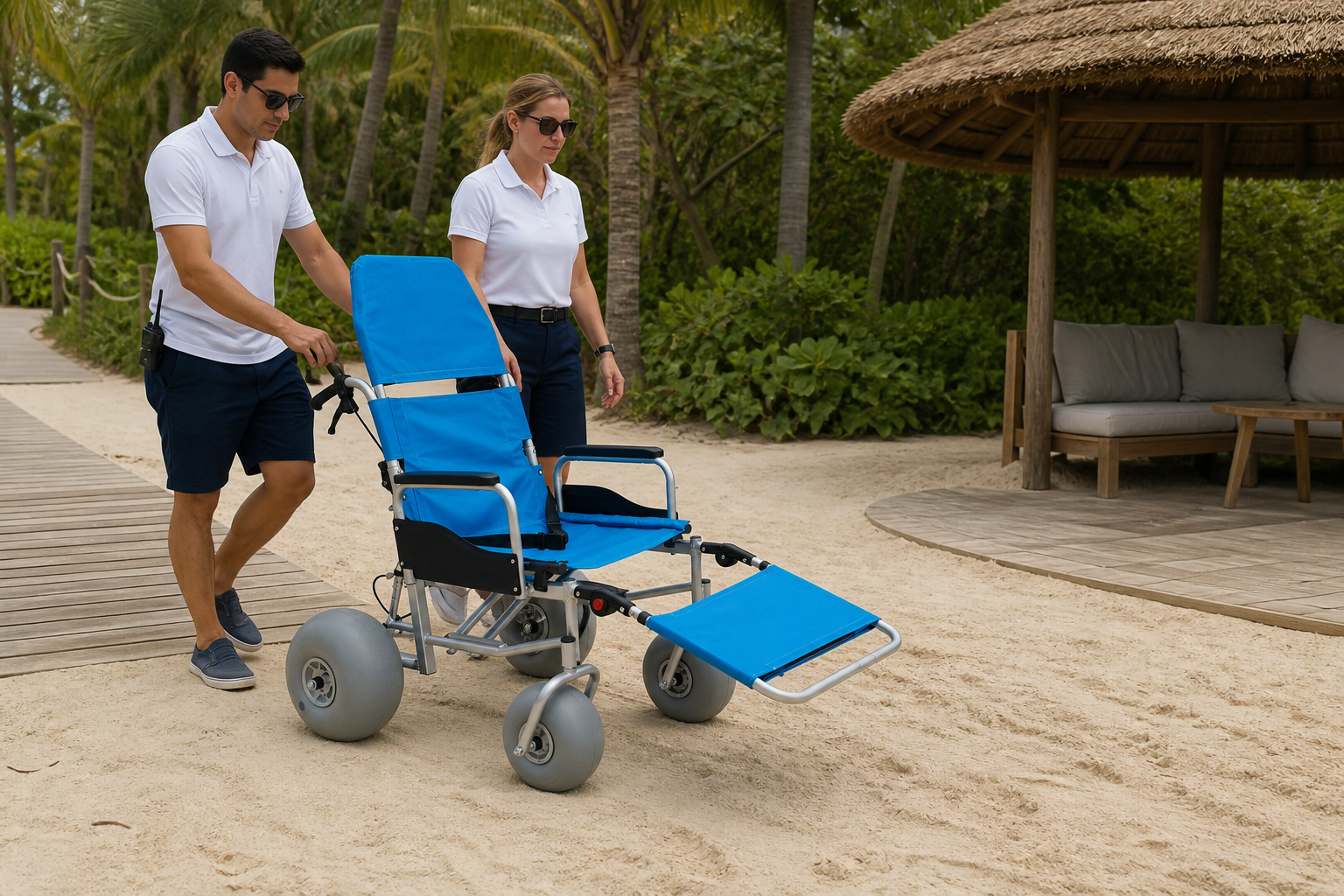
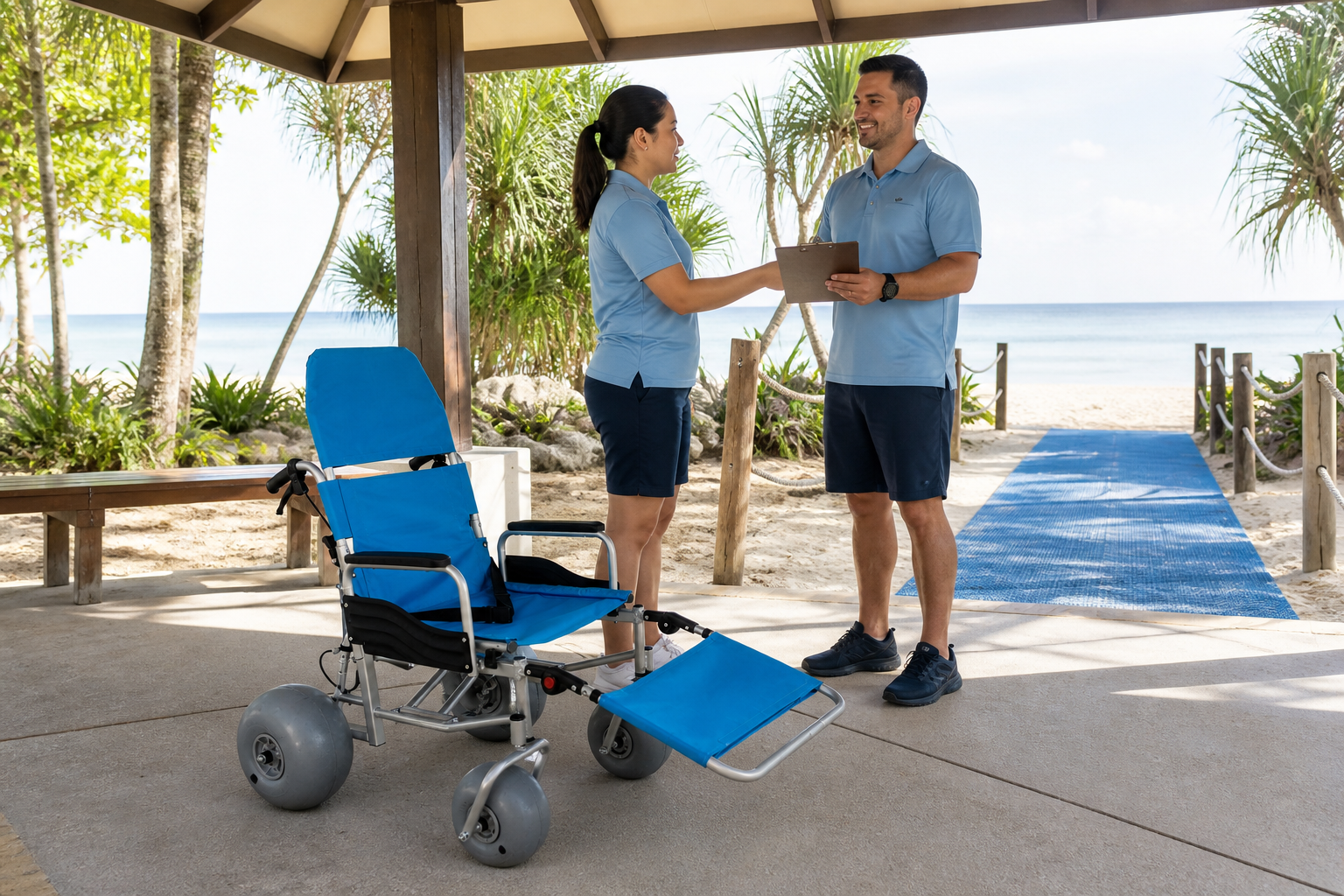
Here is where timing matters: staff positions should change at planned locations rather than during a difficult surface segment. Name who leads communication, who guides equipment, and who can close a route. A handoff point needs space for staff to exchange responsibility while keeping the chair stable. Use one verbal confirmation before a new person takes control. Staff should know whether a supervisor, beach attendant, or lifeguard direction can pause service. They should also know how a guest or companion can request a stop. Clear handoffs make route service calmer because nobody needs to debate roles beside moving equipment.
- Assign communication and equipment roles.
- Place handoffs on firm open ground.
- Use one verbal confirmation before responsibility changes.
- Give every person authority to request a pause.
- Keep a supervisor reachable during active service.
How Should Teams Test and Open a Beach Route?
All terrain beach wheelchair teams should test a route with empty equipment, review findings, and publish a simple status before accepting guests. An empty-chair trial lets staff observe movement, turning, handoffs, and return access without involving a guest. It does not replace manufacturer guidance or a qualified site review. Staff should stop the trial whenever conditions appear unclear. After the test, a route owner can mark status with a short value that every service team understands.
Run an Empty-Chair Route Trial
Practice reveals hidden friction: move the verified empty chair from storage through every planned segment at normal walking pace. Staff should use real positions, callouts, pauses, and handoff points. Watch for wheels sinking, foot support contact, awkward turns, blocked sight lines, loose mat edges, or places where staff cannot stand comfortably. Do not use extra force as a substitute for route closure. If a segment causes uncertainty, return equipment by a known path and escalate the question. The trial can also confirm whether storage access and the final return path remain clear. Use a Beach Wheelchair ST V3.0 page only as a product reference when that model matches local equipment.
- Use a verified empty chair for the trial.
- Follow planned roles and callouts.
- Pause at every surface and staffing handoff.
- Watch chair clearance plus staff footing.
- Record any segment placed on hold.
Publish a Clear Route Status
A short status prevents guessing: use a small set of values that staff can recognize, such as open, limited, review, or closed. Add a timestamp, route owner, and one operational note when needed. Avoid labels that sound like a permanent safety guarantee. Route status belongs to a specific time and set of conditions. Share updates with front desk, rental staff, beach operations, and any other team named by resort policy. When status changes, contact affected bookings through the agreed channel. The message should state what changed, which segment is unavailable, and what options currently exist. Do not promise reopening until a new review closes.
- Use one shared status vocabulary.
- Add time plus route owner.
- Send changes to every service team.
- Contact affected guests promptly.
- Require a fresh review before reopening.
How Should Weather and Closures Change the Route Plan?
All terrain beach wheelchair route planning should treat weather, tides, water, debris, and crowding as active operating inputs. A route that opened earlier may need a pause later. Resort policy should name who monitors notices, who closes service, and how teams receive updates. Staff should never feel pressure to keep a route open because a booking exists. A calm closure message protects trust better than a vague promise or a rushed workaround.
Define Practical Closure Triggers
Make the decision path visible: list site conditions that require staff review or route closure under local policy. Examples may include blocked access, standing water, heavy debris, damaged mats, crowding at a handoff point, missing staff coverage, or an unresolved equipment concern. These examples are not universal thresholds. Each resort should base triggers on local authority, product guidance, and site risk review. Staff need a simple escalation contact and permission to stop service early. A closure should remain active until an authorized review changes status. This rule keeps reopening decisions separate from schedule pressure.
- Name conditions that trigger review.
- Give staff one escalation contact.
- Close access after an unresolved equipment concern.
- Keep closure active until authorized review.
- Record reason, time, and route owner.
Communicate Closures and Alternate Plans
Respectful updates need plain language: tell guests which route changed, what service is unavailable, and whether an approved option exists. Avoid blaming weather, staff, or equipment before facts are clear. Do not direct guests toward an unreviewed path. Front desk and beach teams should use the same status message, so a guest does not hear conflicting answers. If a booking moves, record the new meeting point and time. If service cannot proceed, explain the next available step under resort policy. After conditions change, repeat the route review rather than reopening from memory.
- State the closed route or segment.
- Share only current approved options.
- Use one message across all teams.
- Update booking records after any change.
- Recheck the full route before reopening.
What Do Resort Teams Ask About Route Planning?
All terrain beach wheelchair teams often ask about route ownership, daily checks, empty-chair trials, status language, and closures. These direct answers keep decisions tied to current conditions and local authority.
Can one route stay open for an entire season? No fixed status should replace current checks. Weather, debris, crowding, equipment, or staffing can change service conditions.
Does an all terrain label mean every surface works? No. Product guidance, site review, route conditions, and individual needs shape service decisions.
Should staff test a route with a guest? Begin with verified empty equipment. Any guest service should follow product instructions, resort policy, consent, and an opened route.
Can front desk staff reopen a closed segment? Only if resort policy gives them that authority and required review has closed. Otherwise, route status should remain closed.
What belongs in a route record? Use route name, time, owner, status, checked segments, closures, handoff notes, and communication status. Avoid unrelated personal data.
All terrain beach wheelchair route planning works when teams name each segment, test real handoffs, publish current status, and close service without hesitation when conditions change. Managers can adapt this framework around their product model plus local beach rules. For route planning questions, product review, or B2B sourcing support, contact us today.