

A bariatric shower chair should be specified from user dimensions, intended loads, support needs, bathroom fit, transfers, service, and configuration-specific evidence. Buyers often compare capacity labels while ignoring usable seat width, arm spacing, base footprint, foot contact, and test scope. A larger number cannot correct poor fit or missing traceability. This guide turns a broad heavy-duty label into measurable B2B requirements, sample gates, and supplier controls. The final specification must remain clear enough for receiving staff to verify.
1. What Is a Bariatric Shower Chair?
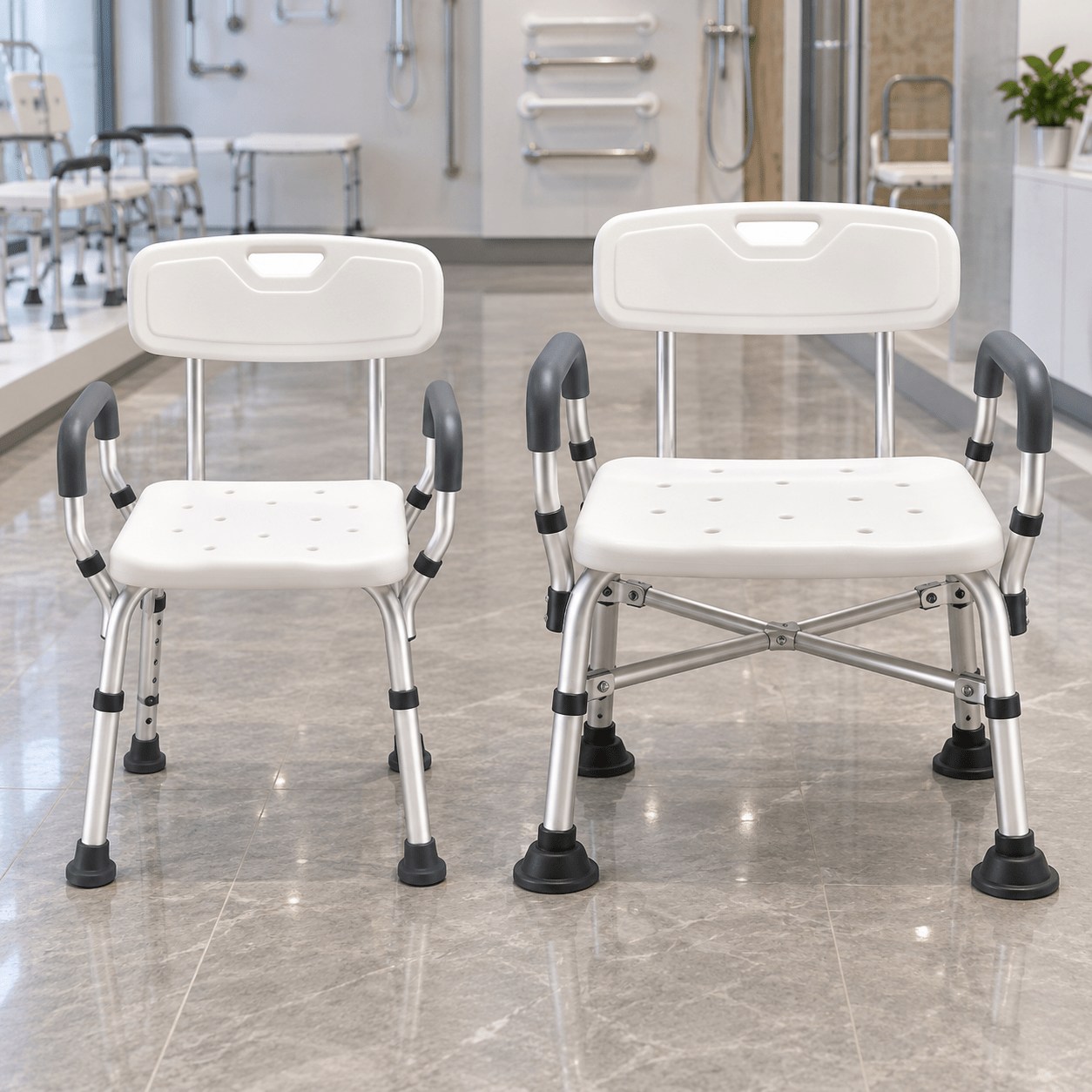
A bariatric shower chair is a bathing chair designed and evidenced for a defined heavy-duty user range and task. Its wider or reinforced appearance does not prove suitability without dimensions, intended use, load evidence, and configuration identity. The product boundary should also name excluded transfer and transport functions.
Which Features Define Heavy-Duty Design?
Review load paths and user-contact geometry across the complete product. Wider seats, frames, supports, feet, and fasteners should work as one system.
- Reinforced frame and joint arrangement.
- Wider usable seat and support spacing.
- Base footprint, feet, locks, and fasteners.
Which Labels Cannot Define Suitability Alone?
Terms such as bariatric, extra wide, high capacity, hospital grade, and reinforced lack value without definitions. Ask what changed: the answer should connect design, evidence, and use.
- Request exact product and revision identity.
- Separate verified specifications from marketing terms.
- Record conditions and excluded uses.
| Label | Required definition | Evidence | Buyer risk |
|---|---|---|---|
| Bariatric | User range and configuration | Fit and product file | Assumed suitability |
| High capacity | Safe working load basis | Applicable report | Number without traceability |
| Reinforced | Structural change | Drawing and inspection | Cosmetic difference only |
A heavy-duty category needs measurable boundaries. Key Takeaway: define what the label means for fit, loads, and use before comparing suppliers.
2. Who Needs a Bariatric Shower Chair Review?
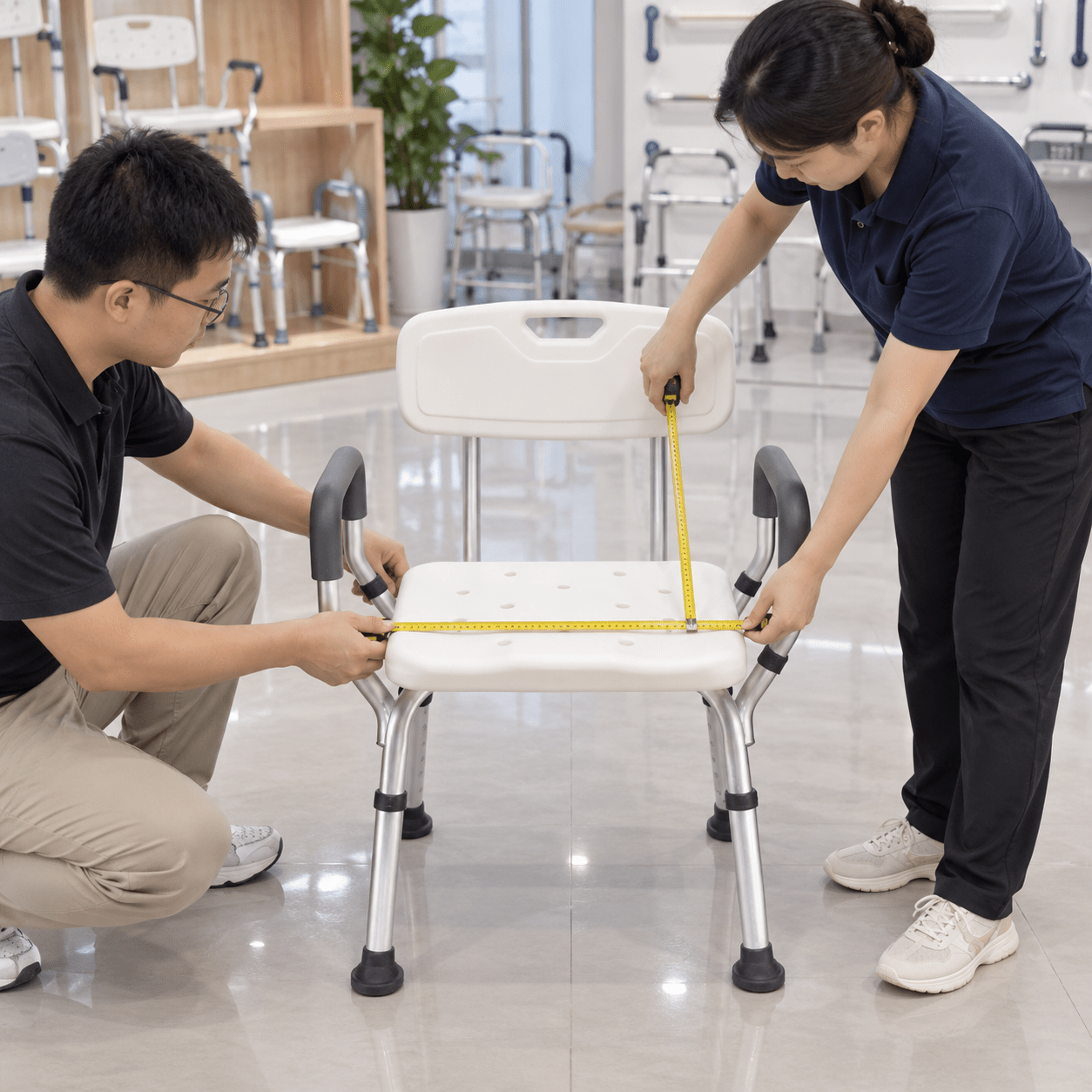
A bariatric shower chair review applies when user dimensions, intended loading, support, or transfer tasks fall outside a standard product’s approved range. Individual suitability still requires qualified assessment. Review the exact seat, supports, and height setting offered.
Which User Dimensions Affect Configuration?
Measure usable contact space rather than selecting from body mass alone. Hip width, thigh depth, lower-leg length, arm position, and reach all influence the setup.
- Hip width and seated depth.
- Between-arm clearance and back width.
- Seat height, foot placement, and reach.
Which Tasks Need Individual Assessment?
Sitting, standing, side access, caregiver support, washing, and repositioning create different load and space demands. Weight is only one input: task geometry often decides usability.
- Observe the approved transfer route.
- Check contact without harmful pressure or obstruction.
- Record caregiver space and restrictions.
| User factor | Product field | Task effect | Evidence |
|---|---|---|---|
| Hip and thigh dimensions | Seat width and depth | Contact and movement | Measured fit review |
| Arm position | Between-arm width and height | Support and access | Task trial |
| Transfer route | Supports and base | Approach clearance | Qualified observation |
User range must include dimensions and tasks. Key Takeaway: select a heavy-duty configuration around the complete assessed use case.
3. Which Dimensions Fit a Bariatric Shower Chair?
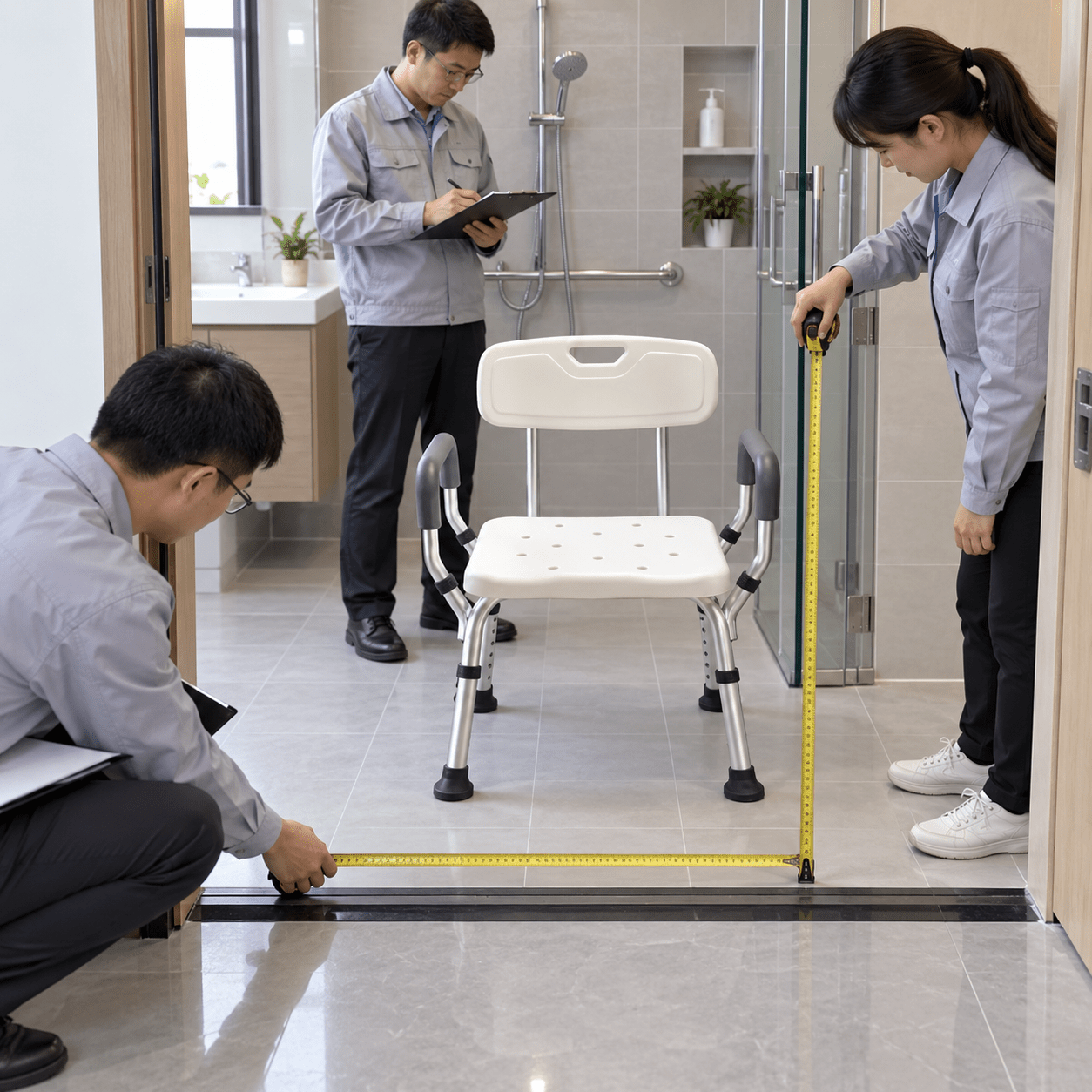
A bariatric shower chair fits when usable seat and support dimensions match the user while base and overall dimensions fit the bathroom. Wider seating often produces a wider leg spread or operating envelope. Tolerance and padding state can also change a close dimensional result.
Which Seat and Support Dimensions Matter?
Record reference points and installed options. Padding, contour, arm mounts, and back shape can reduce usable clearance.
- Seat width, depth, and height.
- Between-arm width and arm height.
- Back width, height, and contact area.
Which Base Dimensions Affect Bathroom Fit?
Measure overall width, leg spread, floor contact, doorway, tub base, walls, controls, and caregiver zone. Check both sides of the fit: a user-ready seat can still fail the room.
- Confirm every foot sits on suitable floor.
- Preserve route and emergency access.
- Include door, curtain, and control movement.
| Dimension | User need | Bathroom limit | Pass rule |
|---|---|---|---|
| Usable seat | Contact and movement | Enclosure clearance | User and room both fit |
| Between arms | Support without obstruction | Wall and approach | Task remains workable |
| Base footprint | Stable load path | Floor and tub width | Full contact achieved |
The approved size joins user and environment. Key Takeaway: verify usable dimensions, footprint, and clearances on the same configuration.
4. How Should a Bariatric Shower Chair Frame Be Built?

A bariatric shower chair frame should carry intended loads through the seat rails, legs, braces, joints, and feet without relying on appearance. Material, geometry, manufacturing, and inspection records all contribute to confidence. Inspect production samples because small joint changes can alter load paths.
Which Structural Areas Carry Load?
Trace force through seat mounts, frame rails, leg joints, cross-braces, back mounts, arm mounts, fasteners, adjustment holes, and floor contacts.
- Inspect tube, weld, and molded interfaces.
- Check joint play and permanent deformation.
- Verify supports included in the tested design.
Which Material Properties Need Evidence?
Strength, stiffness, corrosion resistance, waterproofing, finish, cleanability, and repairability should match wet use. Material names are incomplete: configuration and processing decide performance.
- Match materials with current drawings.
- Inspect coatings, drainage, and end caps.
- Compare with folding wet-area frame considerations.
| Structural area | Load role | Evidence | Inspection |
|---|---|---|---|
| Seat rails | Carry seated load | Drawing and test scope | Alignment and damage |
| Leg joints | Transfer load to feet | Material and process record | Play and deformation |
| Support mounts | Carry task-specific forces | Configuration evidence | Fasteners and locks |
Frame review should connect design and production. Key Takeaway: inspect the complete load path and its traceable materials rather than a reinforced look.
5. How Is Bariatric Shower Chair Capacity Verified?
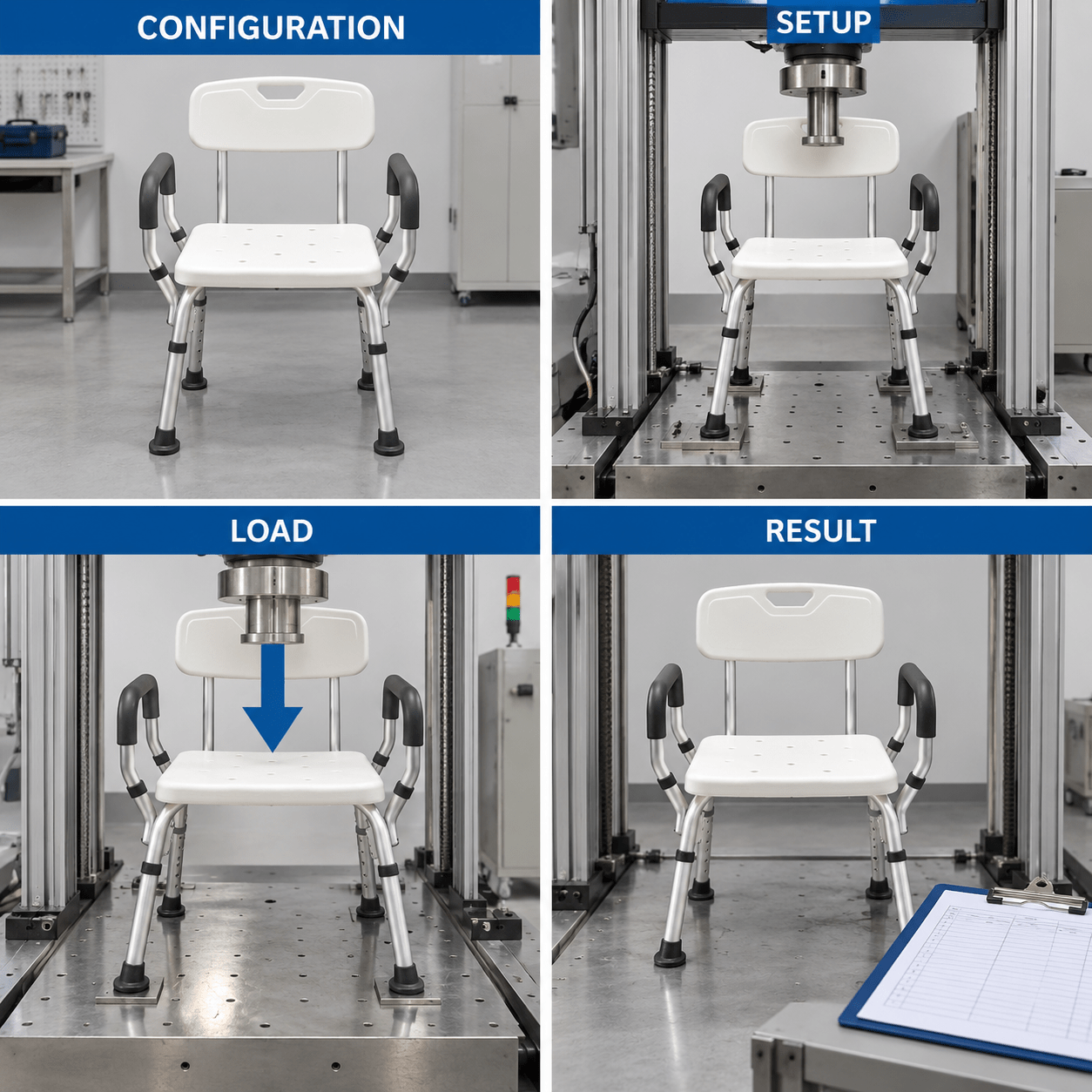
A bariatric shower chair capacity is verified only through evidence that names the configuration, method, setup, load conditions, acceptance criteria, results, and revision. A printed limit alone cannot show what was tested. Evidence should also state limits on adjustments and accessories.
Which Capacity Definitions Need Clarification?
Separate safe working load, maximum user mass, test load, proof load, static load, and dynamic task conditions. Do not convert one term into another without an approved basis.
- Ask how the rating was defined.
- Identify included supports and height setting.
- Record intended and excluded actions.
Which Test Records Should Buyers Request?
Review method, sample identity, setup, load direction, duration, repetitions, results, deviations, and report ownership. Trace every number: it should lead to an exact product state.
- Match photographs and drawings to the offer.
- Check report date and revision.
- Hold generic family evidence for clarification.
| Evidence field | Buyer question | Warning sign | Action |
|---|---|---|---|
| Sample identity | Is this the offered chair? | Generic family name | Request match |
| Test setup | Which components and positions? | Missing options | Clarify scope |
| Result | What passed under which criteria? | Summary only | Review full record |
Capacity belongs to evidence and conditions. Key Takeaway: approve a rating only when its test scope matches the delivered configuration.
6. Which Supports Suit a Bariatric Shower Chair?
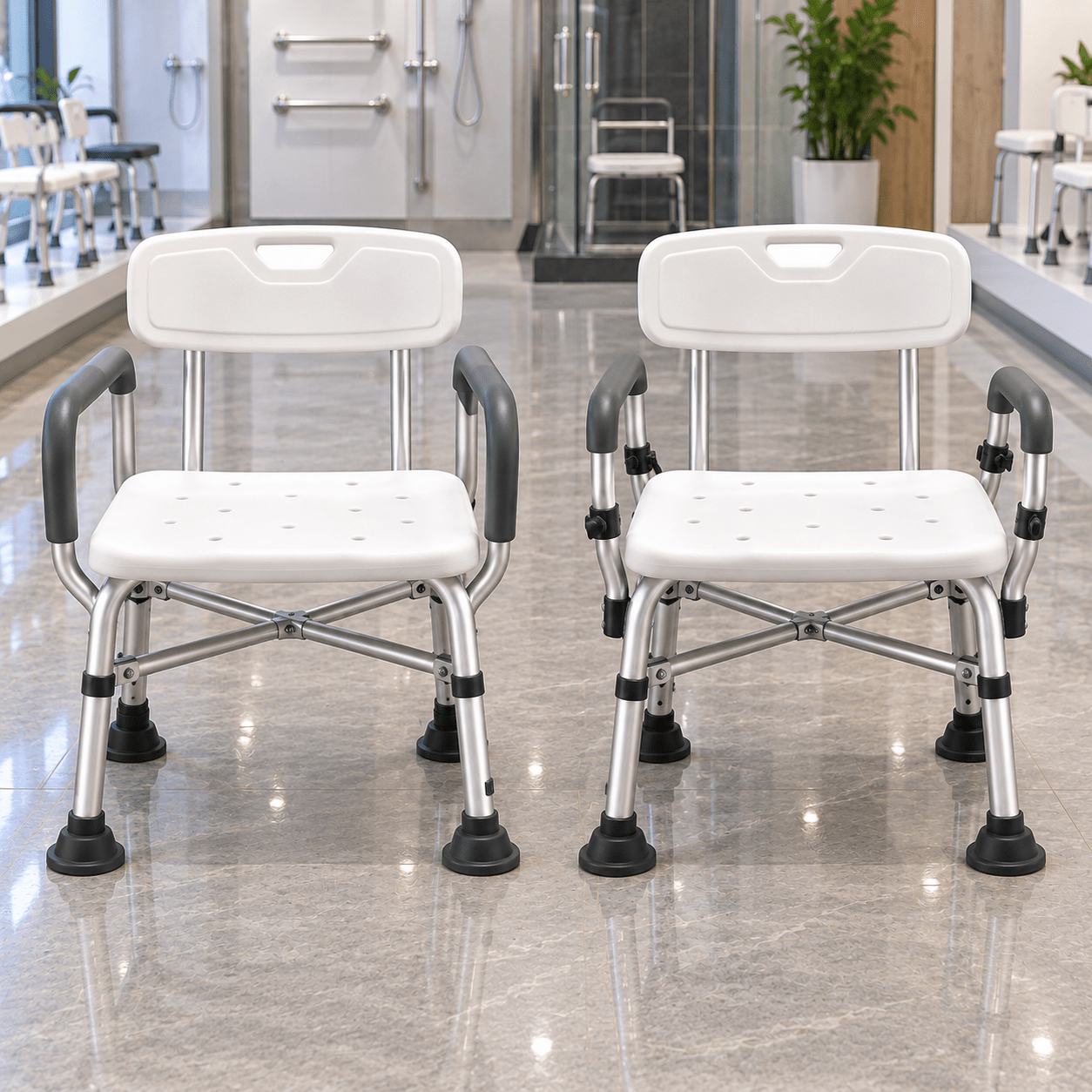
A bariatric shower chair needs supports that provide usable clearance, contact, access, and serviceability. Wider parts do not automatically improve comfort or transfer safety. Cleaning and replacement compatibility also affect lifecycle use.
Which Seat and Back Features Affect Fit?
Review usable width, depth, contour, drainage, padding, back height, flexibility, and side clearance. The seat must fit both user and product frame.
- Check contact and movement at the offered size.
- Preserve washing and caregiver access.
- Inspect padding and drainage after cleaning.
Which Arm Features Affect Transfers?
Arm spacing, height, length, grip, mount, and removal method can help or block a route. Test the actual support: optional arms may change dimensions and load evidence.
- Observe push-off only when intended.
- Test removable locks through full cycles.
- Keep side access clear where required.
| Support | Fit question | Transfer conflict | Buyer check |
|---|---|---|---|
| Seat | Is usable width adequate? | Front or side obstruction | Measured task trial |
| Back | Does contact suit posture? | Wall and washing access | Position observation |
| Arms | Is spacing and height workable? | Lateral route | Configuration test |
Supports must work together. Key Takeaway: approve seat, back, and arms as one user-and-transfer configuration.
7. How Does a Bariatric Shower Chair Fit Bathrooms?
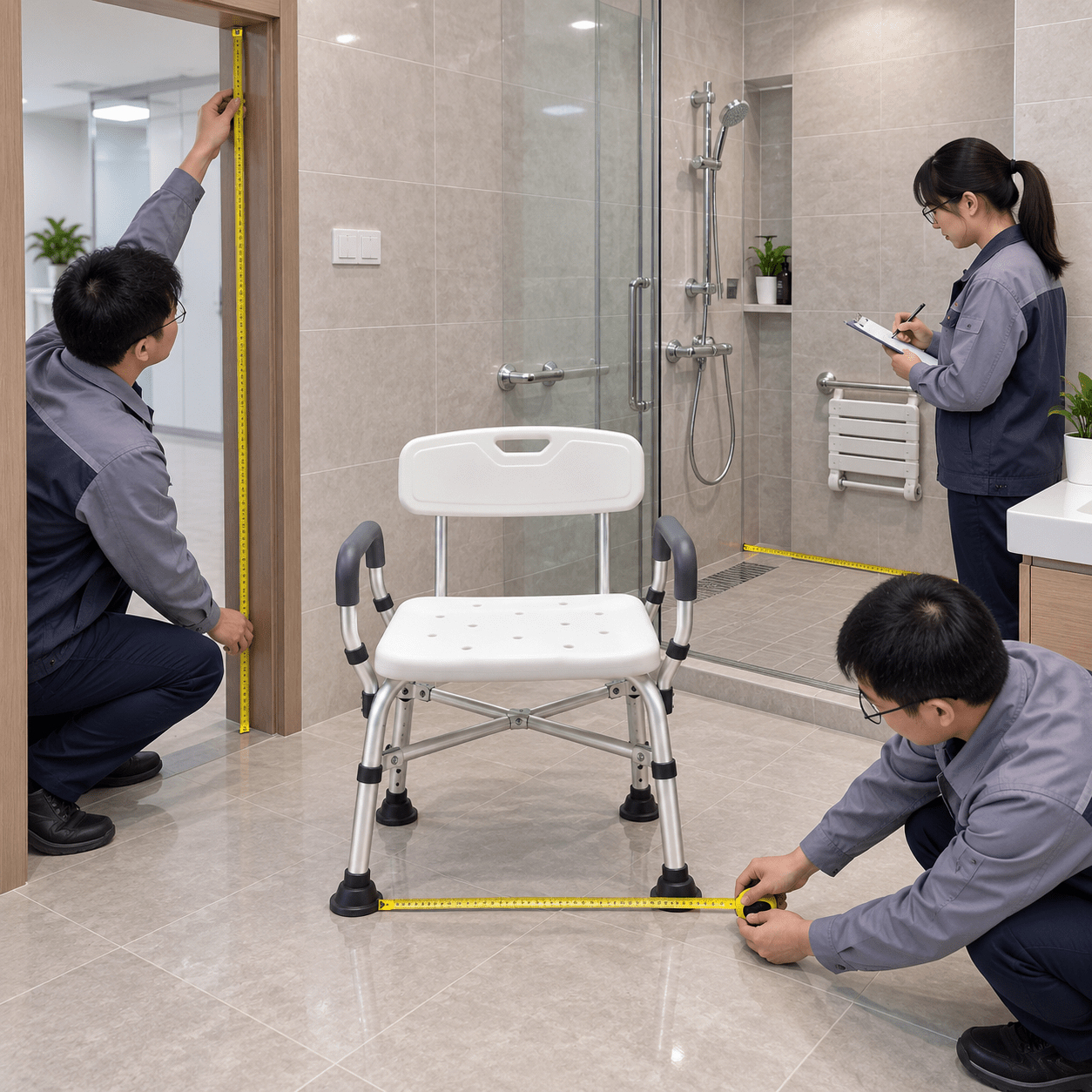
A bariatric shower chair fits a bathroom only when the doorway, approach, floor, tub, drain, walls, controls, and caregiver area accommodate its complete operating envelope. A wider base may require a different product category or room. Inadequate handler space may require another solution.
Which Floors and Openings Need Measurement?
Measure the narrowest route and usable contact surface. Include doors, enclosures, thresholds, tub curves, drains, and moving fixtures.
- Door and corridor clear width.
- Shower or tub floor contact area.
- Wall, controls, and caregiver clearances.
Which Placement Conditions Need Testing?
All feet should contact the approved surface with permitted leg settings. Do not force the fit: walls and tub curves should not become unintended supports.
- Observe rocking and frame twist.
- Check support and control access.
- Record excluded bathroom layouts.
| Bathroom field | Product field | Test | Failure sign |
|---|---|---|---|
| Doorway | Overall width | Full route | Contact or forced angle |
| Floor | Base footprint | Placement | Partial foot contact |
| Caregiver zone | Operating envelope | Workflow trial | No safe working space |
Room fit determines whether the chair can be used as intended. Key Takeaway: measure and test the full route before approving a wide product.
8. How Should Buyers Test a Bariatric Shower Chair?

A bariatric shower chair sample test should begin with identity, completeness, dimensions, assembly, locks, feet, supports, and instructions before any task-based review. Use controlled conditions and stop rules. Record every condition so later samples remain comparable.
Which Receiving and Assembly Checks Come First?
Match model, revision, parts, fasteners, options, labels, manual, and packaging. Inspect damage before assembly or adjustment.
- Verify every structural and support part.
- Check leg and support lock engagement.
- Record deviations from the offer.
Which Task-Based Trials Need Documentation?
Observe fit, transfers, floor contact, cleaning, handling, and staff work with qualified input. Use a staged gate: a failed baseline should stop later trials.
- Run a no-user technical check first.
- Align with institutional equipment planning where applicable.
- Close critical exceptions before approval.
| Stage | Setup | Observation | Gate |
|---|---|---|---|
| Receiving | Packed sample | Identity and condition | Configuration match |
| Technical | Empty chair | Locks, feet, frame, supports | Baseline pass |
| Task | Approved environment | Fit and workflow | Qualified approval |
The sample should answer both fit and supply questions. Key Takeaway: approve only after configuration, technical, and task gates pass.
9. How Do You Compare Bariatric Shower Chair Suppliers?

A bariatric shower chair supplier should control product identity, materials, dimensions, load evidence, instructions, packaging, parts, support, and changes. A polished prototype does not prove repeatable production. Heavy-duty claims depend on consistent components and processes.
Which Documents Must Match the Offered Chair?
Quotation, drawing, bill of materials, reports, manual, labels, packing, and parts map should describe the same configuration.
- Cross-reference model and revision.
- Record options and approved deviations.
- Require notice before any substitution.
Which Service Capabilities Need Proof?
Feet, supports, fasteners, and other replacement parts need controlled identity and compatibility. Run a mock case: observe whether the supplier can diagnose and close a realistic issue.
- Name the technical owner.
- Review warranty evidence and exclusions.
- Test escalation and change communication.
| Supplier area | Evidence | Common gap | Gate |
|---|---|---|---|
| Configuration | Signed schedule | Options not traceable | Correct before sample |
| Load evidence | Matched report | Family-level scope | Clarify before approval |
| Service | Parts and mock case | No compatibility control | Do not scale |
Supplier readiness extends past production. Key Takeaway: approve the manufacturer and support system behind the exact heavy-duty configuration.
10. How Should You Buy a Bariatric Shower Chair?

A bariatric shower chair should be bought through a task brief, dimension schedule, bathroom review, evidence check, sample trial, exception closure, and controlled purchase order. Price comparison should use the same configuration and service basis. The buying file should define rejection and escalation procedures.
What Belongs in the Buyer Brief?
Define user ranges, tasks, dimensions, bathrooms, supports, target market, evidence, sample scope, cleaning, parts, and service expectations.
- Use task and fit fields rather than diagnosis labels.
- Identify mandatory gates and optional preferences.
- State excluded applications.
Which Conditions Belong in the Purchase Order?
Attach approved configuration, evidence, packaging, receiving checks, training, parts, support, and change control. Preserve category boundaries: link any commode need with the toilet-chair range rather than assuming one chair covers both.
- Fix model, revision, and options.
- Define critical defects and acceptance.
- Require approval before substitutions.
| Project stage | Output | Owner | Release rule |
|---|---|---|---|
| Brief | User, task, room, and evidence scope | Buyer | Requirements complete |
| Sample | Fit and technical decision file | Evaluation team | Critical issues closed |
| Order | Controlled production specification | Procurement | Approved state preserved |
The order should reproduce the evaluated chair. Key Takeaway: release volume only when fit, evidence, room, support, and production identity agree.
Conclusion
Heavy-duty selection demands more than a capacity label. Buyers need user dimensions, bathroom fit, support geometry, traceable load evidence, sample testing, parts, and supplier change control. For help building a configuration-specific shower-chair sourcing brief, contact us today. A reliable bariatric product respects both higher loads and the practical space, service, and dignity of daily bathing.
FAQ
Can a capacity label prove bariatric suitability?
No. Suitability also depends on seat and support dimensions, bathroom fit, transfers, intended use, test scope, and individual assessment.
What’s the best seat width for a bariatric product range?
No single width serves every user. Build ranges from measured user groups, usable seat definitions, between-arm clearance, support options, and bathroom constraints.
How do I know whether a wider base fits the bathroom?
Measure the complete route and contact surface, then place the exact sample. Confirm every foot sits correctly and user plus caregiver access remains available.
Can one test report cover every option?
Only when the report clearly identifies or justifies those options within its scope. Added arms, backs, legs, feet, or frame changes may require separate evidence.
How should distributors approve a heavy-duty sample?
Use staged receiving, identity, dimension, assembly, technical, bathroom, task, cleaning, support, and exception-closure gates before production release.
