
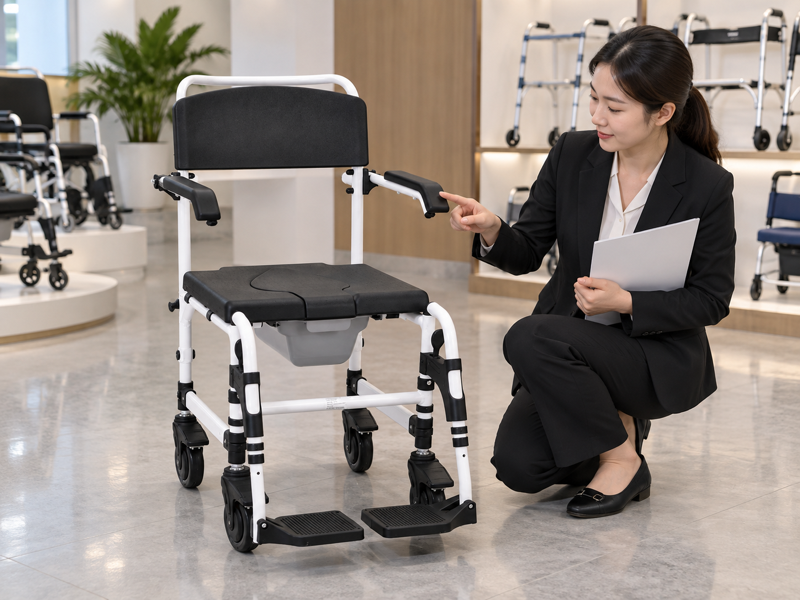
Choose commode chair armrests by matching the exact chair assembly to an assessed access and transfer plan, then confirming what each support may do. A buyer can see black arm pads in a product photo and assume they lift, detach or bear transfer loads. That assumption may fail once the chair arrives. Ask for the current model instructions, identify the wheel variant and record the approved arm position before ordering.
What are commode chair armrests meant to support?
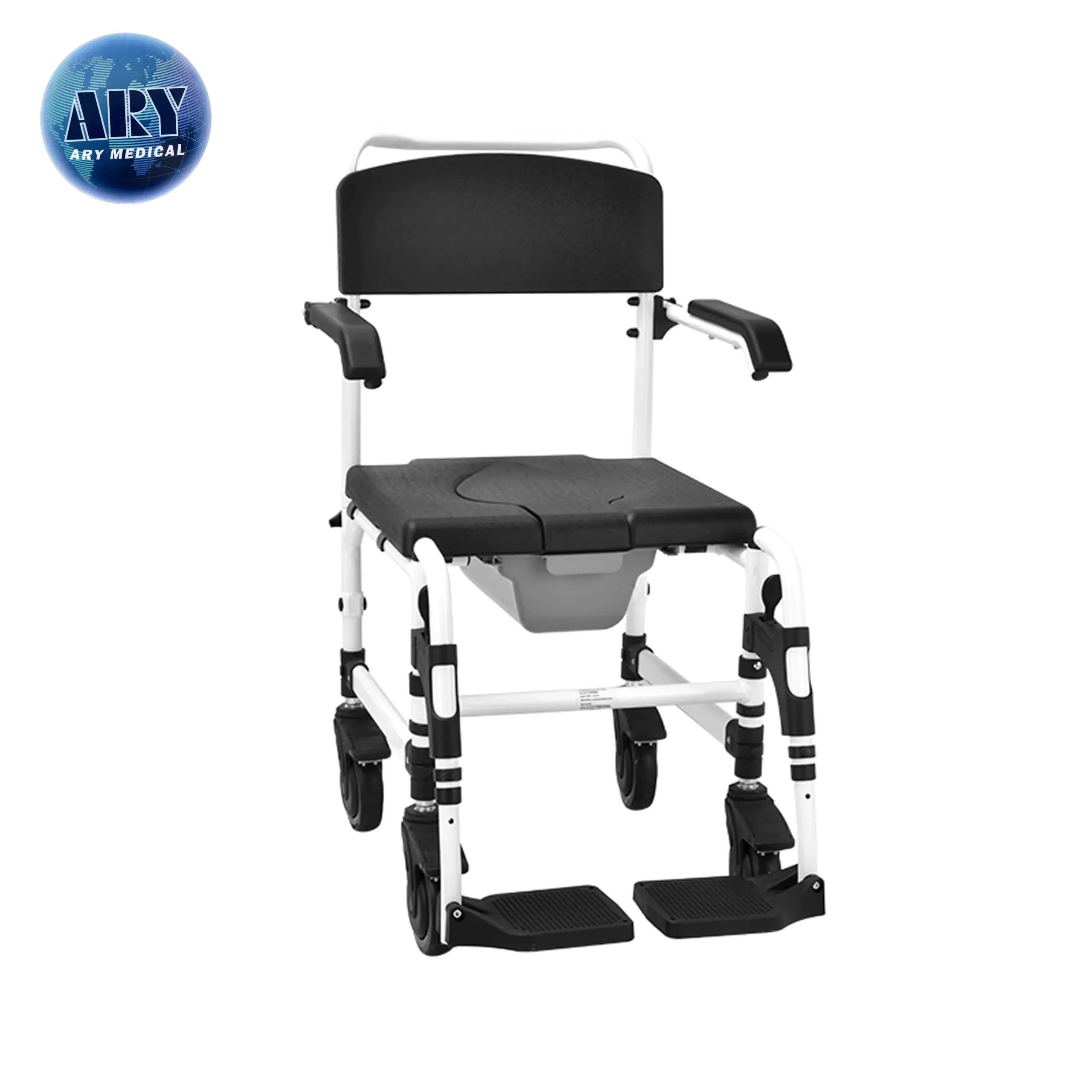
Commode chair armrests should be used only for roles stated in the exact manufacturer instructions and individual plan. The small-caster photo shows black pads on white side rails but does not establish a load rating or transfer method. Start with product identity.
Which facts should a buyer request?
Name the role before the part. Ask for the current chair model, arm assembly and intended-use description. Keep the visible pad separate from any claim about lifting or body-weight support.
- Identify both arm assemblies and sides.
- Request stated uses and limits.
- Record the assessed user plan.
| Evidence | Decision |
|---|---|
| Maker role | What the arm may do |
| User plan | Whether that role fits the person |
A strong-looking arm is not a documented support rating. Key Takeaway: You can discuss access without promising an unsupported transfer aid.
Can commode chair armrests move for access?
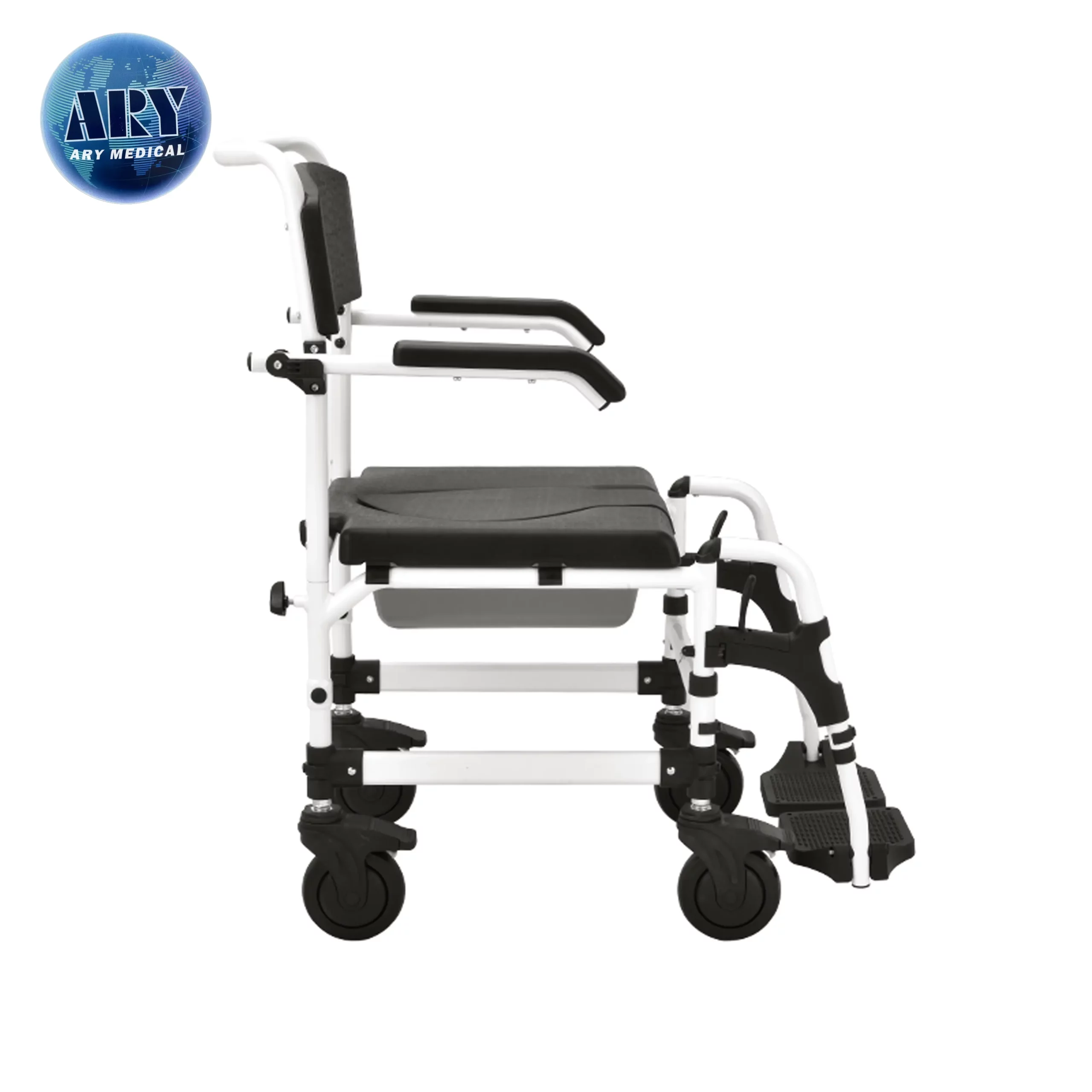
Commode chair armrests may move for access only where the exact model permits that movement. The side photo shows an arm profile and fittings, not a complete adjustment sequence. Confirm the allowed positions and return checks.
What should an empty-chair demo establish?
Show the permitted movement on the actual sample. Have trained staff use the current instructions. Do not infer a removable arm from a visible hinge or a similar chair image.
- Identify permitted arm positions.
- Record any lock or refitting step.
- Keep the final position with the setup file.
| Question | Source |
|---|---|
| May it move? | Exact model instructions |
| How is it restored? | Approved return-to-use check |
Access depends on what the installed assembly actually permits. Key Takeaway: Your team can explain movement without relying on a photograph.
How do commode chair armrests affect transfer planning?
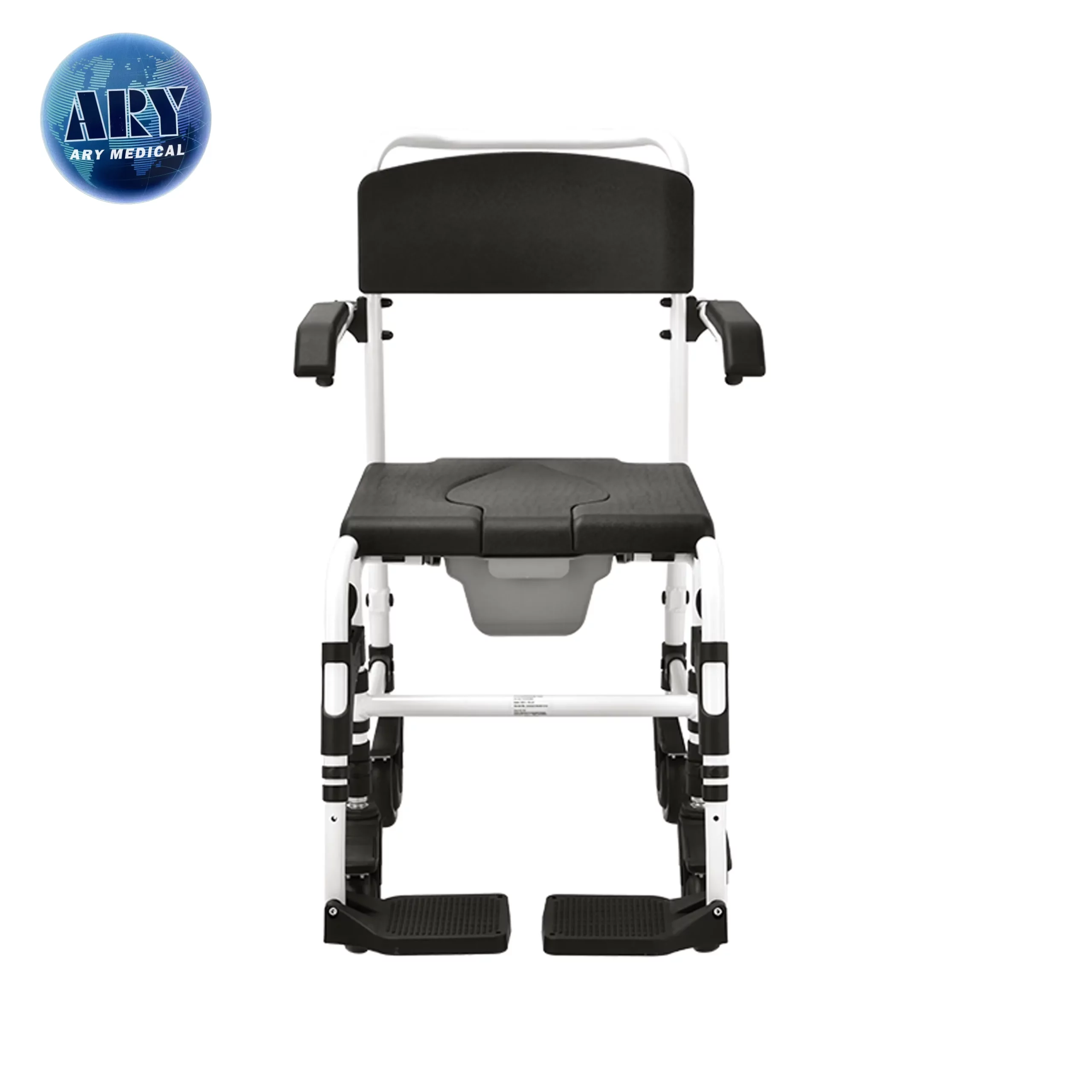
Commode chair armrests affect transfer planning through side clearance, user reach and the approved handling method. A transfer plan should be assessed for the person and exact chair. A product photograph cannot approve a technique.
What should the care team decide?
Keep product permission and personal method together. The Medway care-provider notice asks that wheeled commodes be used under maker instructions and that care plans identify the correct equipment. Related transfer devices require their own intended-use review.
- Record the person’s assessed method.
- Check permitted arm and foot-support positions.
- Name the staff who approve the final setup.
| Decision | Responsible evidence |
|---|---|
| Product movement | Current maker guidance |
| Personal transfer | Individual care assessment |
A convenient opening is not a complete transfer plan. Key Takeaway: You can ask for an arm layout that supports the assessed method.
What loads may commode chair armrests carry?

Commode chair armrests may carry only the loads and tasks specified for their exact assembly. An arm pad is not automatically a lift handle or weight-bearing transfer support. Ask for the maker’s limits before a demonstration.
What should staff avoid inferring?
Appearance is a poor load test. The shared model-review scene shows an empty chair and paperwork, not a tested arm. Keep unverified capacity wording out of sales and training materials.
- Request approved arm uses.
- Identify prohibited handling if stated.
- Refer unclear force or support needs.
| Proposed task | Required confirmation |
|---|---|
| Resting an arm | Fit and intended-use guidance |
| Lifting or transfer loading | Explicit model permission and assessed plan |
An unsupported assumption here can change how the chair is handled. Key Takeaway: Your buyers can keep product claims within the documented role.
Do commode chair armrests vary by wheel version?
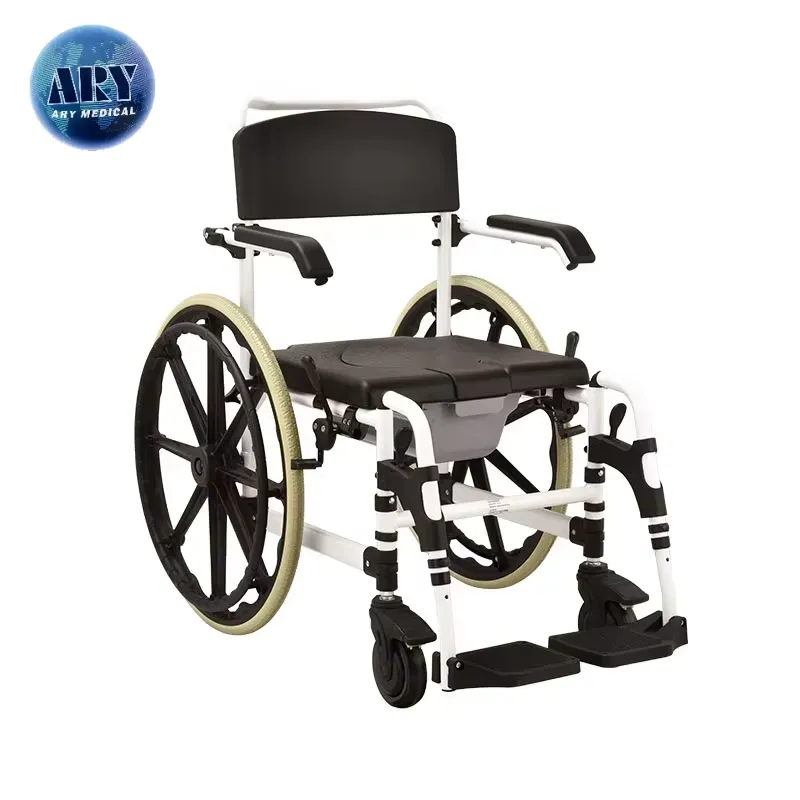
Commode chair armrests may differ between small-caster and large-rear-wheel commode variants, so match the arm assembly to the exact model. The large-wheel photo is a different configuration. Do not assume its arms interchange with the small-wheel frame.
Which identifiers prevent a wrong part?
Keep the wheel version on the order sheet. Ask for model and revision records beside the arm part number. Compare the toilet-chair range for context, then verify the selected chair itself.
- Identify the wheel configuration.
- Record arm side and assembly.
- Ask for current compatible part reference.
| Variant field | Why it matters |
|---|---|
| Wheel layout | Identifies the chair version |
| Arm assembly | Supports correct replacement |
Similar upholstery can sit on different frames. Key Takeaway: Your service team can avoid a visually plausible but wrong arm.
How do commode chair armrests relate to foot support?
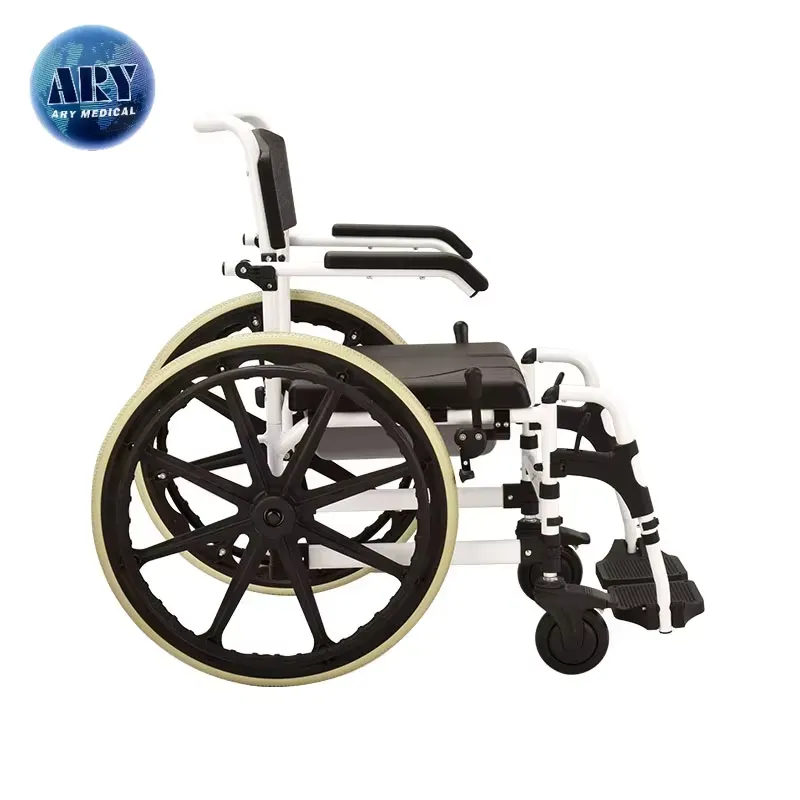
Commode chair armrests work within a full seated setup that includes footplates, seat and the container below. A side profile can show those parts together but not a safe transfer sequence. Review clearances on the exact configured chair.
What should the empty-chair review cover?
Check the whole path into the seat. Keep the footplate position and arm role linked in the assessed plan. Ask for current handling directions rather than moving several components by guesswork.
- Identify supplied foot supports.
- Confirm permitted positions for access.
- Record the final seat and arm arrangement.
| Part | Review point |
|---|---|
| Arm | Approved role and position |
| Foot support | Approved access clearance |
Changing one support may affect space around another. Key Takeaway: Your order brief can describe the complete access layout.
How should commode chair armrests be cared for?
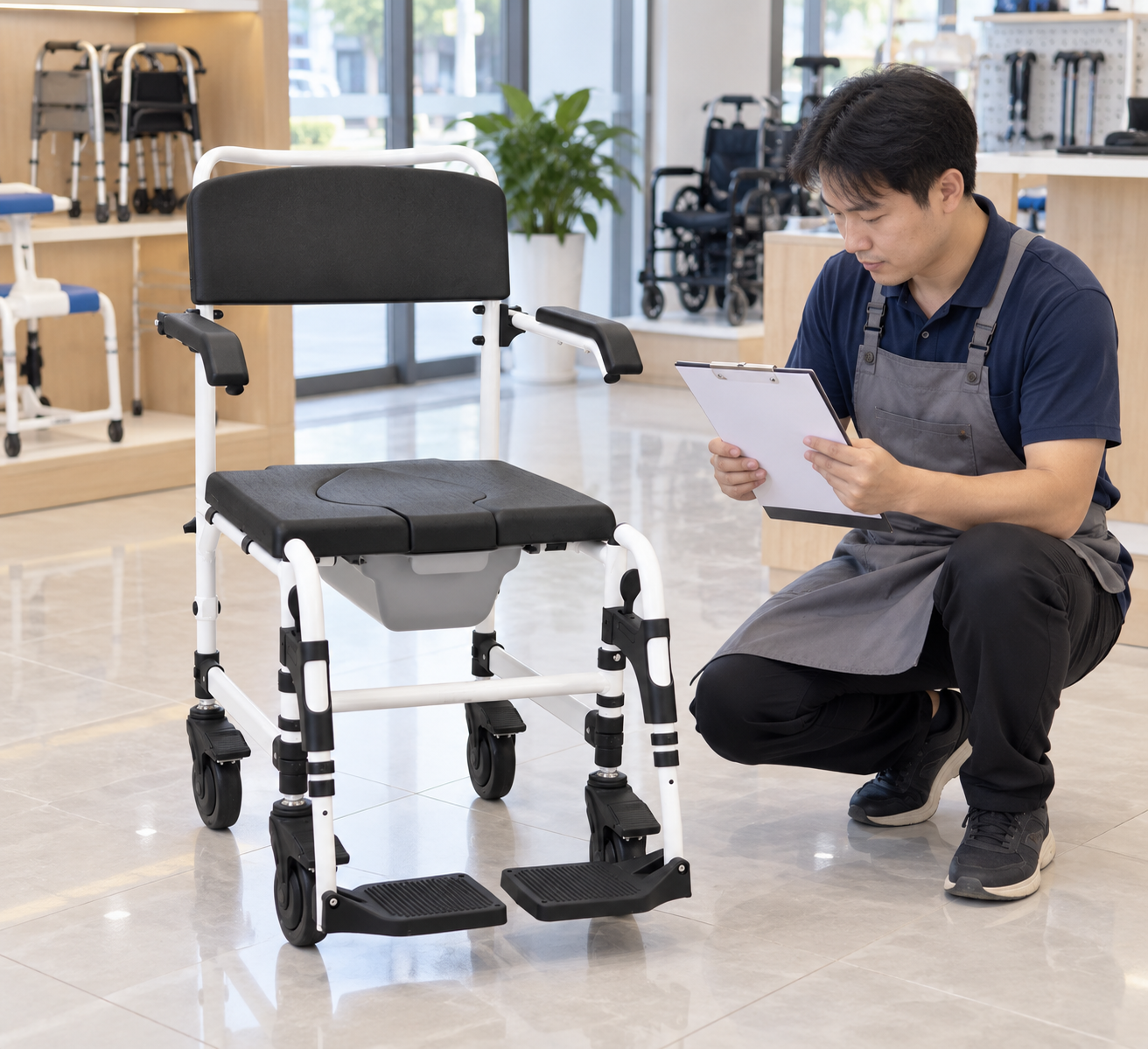
Care for commode chair armrests using the exact material and cleaning instructions for the chair and local care setting. The care-review photo does not prove chemical resistance. Include joints and pads in the written inspection plan.
Which surfaces need a named method?
Keep cleaning and service distinct. Ask for compatible cleaning products and any permitted part removal. Do not assume a different wheel variant has identical arm materials or fittings.
- Identify arm pads and mounting points.
- Use the maker’s compatible care guidance.
- Record damage for service review.
| Surface | Question |
|---|---|
| Pad | What care method is approved? |
| Joint or fastener | What inspection is required? |
A clean pad can still sit on a loose fitting. Key Takeaway: Staff can care for the arm without improvising a chemical or repair.
When do commode chair armrests need service?
Commode chair armrests need service review when a pad, bracket or permitted movement changes unexpectedly. Do not keep using a doubtful support merely because it remains attached. Identify the model, side and observed concern.
What should a dealer report?
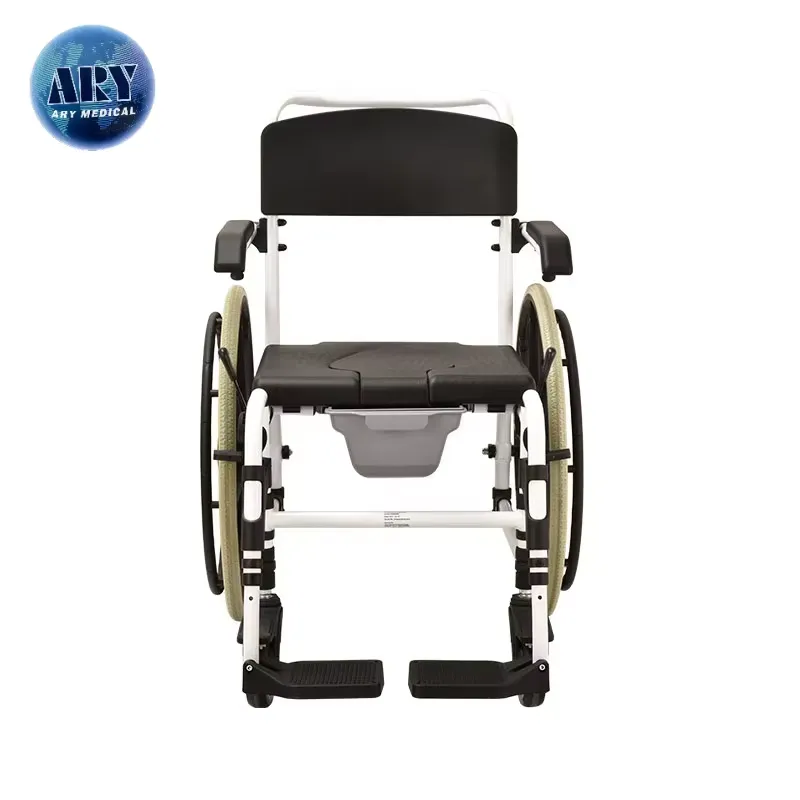
Describe the symptom in its frame context. A front view of the large-rear-wheel variant can help locate the part, but not diagnose it. Ask the AryMD team for current parts and service information.
- Photograph arm and mounting area.
- Record side, model and revision.
- Follow the prescribed stop-use and repair path.
| Report item | Value |
|---|---|
| Part and side | Locates the assembly |
| Observation | Supports focused review |
A precise note helps the supplier identify the right component. Key Takeaway: You can obtain service help without guessing which bracket failed.
What should a commode chair armrests access chart show?

A commode chair armrests access chart should show model identity, arm assembly, maker instructions, assessed access plan and a blank pending record. It should not display a completed transfer approval from an illustration. Keep real evidence with the order.
How can the chart help buyers?
Leave unknown steps open. Use each visual stage as a question for the supplier or care team. A blank final sheet shows that product and personal reviews must be completed.
- Attach current arm instructions.
- Record the care-team access plan.
- Flag unresolved movement or load questions.
| Chart stage | Evidence |
|---|---|
| Product | Exact maker role and part |
| Person | Assessed access and transfer plan |
The chart adds value only when tied to real records. Key Takeaway: Your team can see which access point still needs confirmation.
How do you order the right commode chair armrests?

Order the right commode chair armrests by sending the exact commode model, wheel version and assessed access needs to the supplier. Request approved arm positions, parts and current handling guidance. Keep personal transfer decisions with trained staff.
Ready to review the full chair?
Send the product and person brief together. Ary Medical can review available commode-chair configurations once the model and access questions are clear. Confirm a sample and the final setup before wider purchasing.
- Share model, wheel version and arm part.
- Ask for permitted movement and service guidance.
- Record who reviews the individual plan.
| Your brief | Supplier response to request |
|---|---|
| Product and arm identity | Current compatible options |
| Access needs | Relevant model information |
An exact brief reduces assumptions about a visible arm. Key Takeaway: For a model-specific access review, contact us. Ary Medical supports care equipment chosen through documented roles and assessed needs.
Frequently asked questions
Q1: Can I assume every commode armrest lifts out of the way?
No. Confirm permitted movement for the exact model and arm assembly.
Q2: What’s the best armrest layout for transfers?
Use the layout supported by maker instructions and the person’s assessed transfer plan.
Q3: How do I know if an arm can bear my weight?
Ask for the exact maker-stated role and limit. Appearance cannot establish a rating.
Q4: Can arms from a large-wheel variant fit a small-wheel chair?
Only with a confirmed compatible part for the exact model and revision.
Q5: Should a loose arm pad remain in use?
No. Follow the model’s stop-use and service guidance for a doubtful support.