

Choose commode chair cleaning methods by matching the exact chair materials to manufacturer instructions and the care setting’s current UK infection-control plan. A white frame, black seat and removable-looking container can tempt staff to apply one familiar product everywhere. Some surfaces or fittings may need another method, and a photo cannot prove chemical tolerance. Request model-specific care guidance, assign cleaning responsibility and keep a clear record before the chair enters service.
What should commode chair cleaning cover?
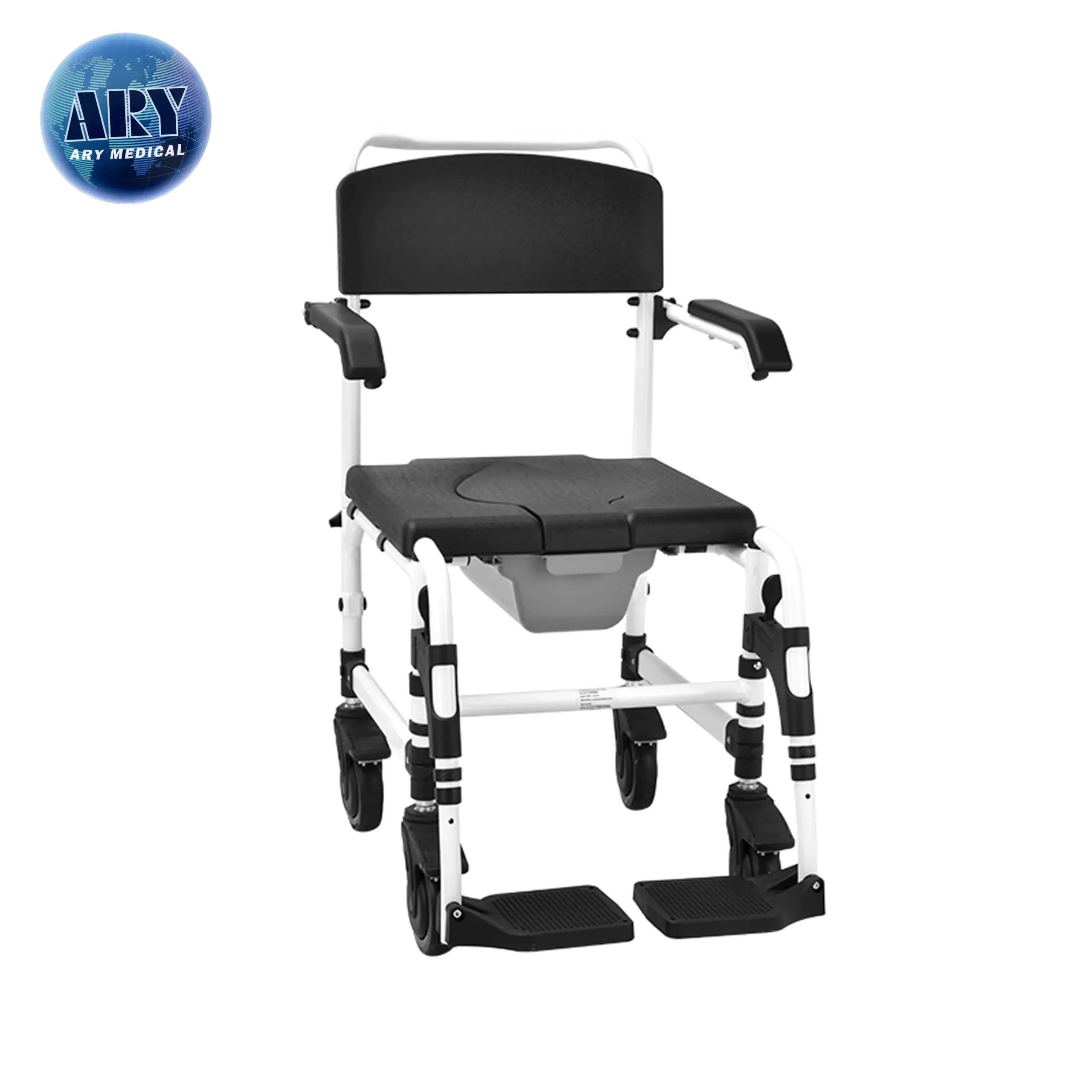
Commode chair cleaning should cover every care-relevant surface and removable component named by the exact maker, plus the local setting’s procedure. The pictured chair shows a black seat, white frame, arms, wheels, footplates and an empty gray container. It does not identify a chemical or frequency.
Which product facts start the record?
Begin with the exact chair. Request the model and revision, materials and current care instructions. Keep small-caster and large-rear-wheel variants separate if their assemblies differ.
- Identify model and configured parts.
- Request compatible care methods.
- Record the setting and responsible team.
| Record field | Purpose |
|---|---|
| Model and materials | Defines product-specific method |
| Setting policy | Defines local responsibility |
A generic “wipe the chair” note misses part and material differences. Key Takeaway: Your staff can build a procedure around the device actually supplied.
Who sets a commode chair cleaning routine in the UK?

A commode chair cleaning routine in a UK setting needs both maker compatibility and the applicable local infection-control policy. England, Scotland and other nations may use different policy documents. A buyer should not impose one site’s method on every customer.
What should the care lead document?
Separate product directions from setting rules. England’s adult social care IPC resource calls for clear responsibility, frequency and methods aligned with manufacturer instructions. A toilet-chair product range offers model context, not a cleaning protocol.
- Identify the applicable local policy.
- Assign method, frequency and owner.
- Check every product against maker guidance.
| Source | Role |
|---|---|
| Manufacturer instructions | Product compatibility |
| Local IPC procedure | Setting-specific schedule and duties |
Both sources are needed before staff can follow a reliable routine. Key Takeaway: Your UK customers can adapt a model-specific guide to their own policy.
How do seat and container affect commode chair cleaning?
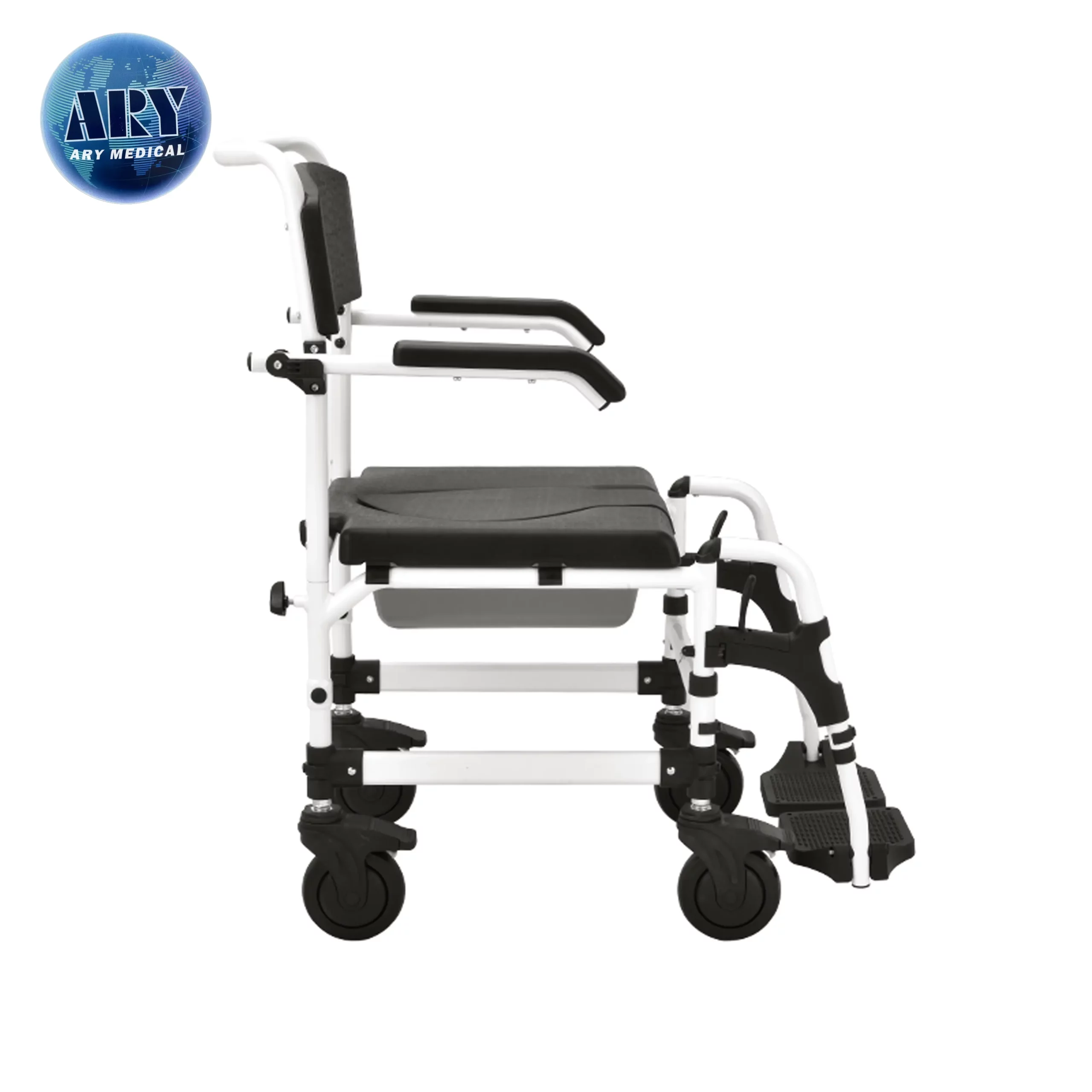
Seat and container areas affect commode chair cleaning because they are distinct components with their own material and handling instructions. The side photo shows an empty container beneath the seat, but not its approved removal method. Ask for current part guidance.
What should the part map show?
Identify each surface before assigning a step. Compare this model’s seat and container with any 3-in-1 toilet chair only as separate products. Do not transfer a dismantling or chemical method between them.
- Name seat cover and contact surfaces.
- Identify the exact container assembly.
- Keep approved removal and refitting directions.
| Part | Review question |
|---|---|
| Seat | Which surfaces and care method apply? |
| Container | What handling and cleaning steps are allowed? |
A photo of an empty container is not an instruction to remove it. Key Takeaway: Staff can clean the right part without improvising a mechanism.
How do arms and joints enter commode chair cleaning?
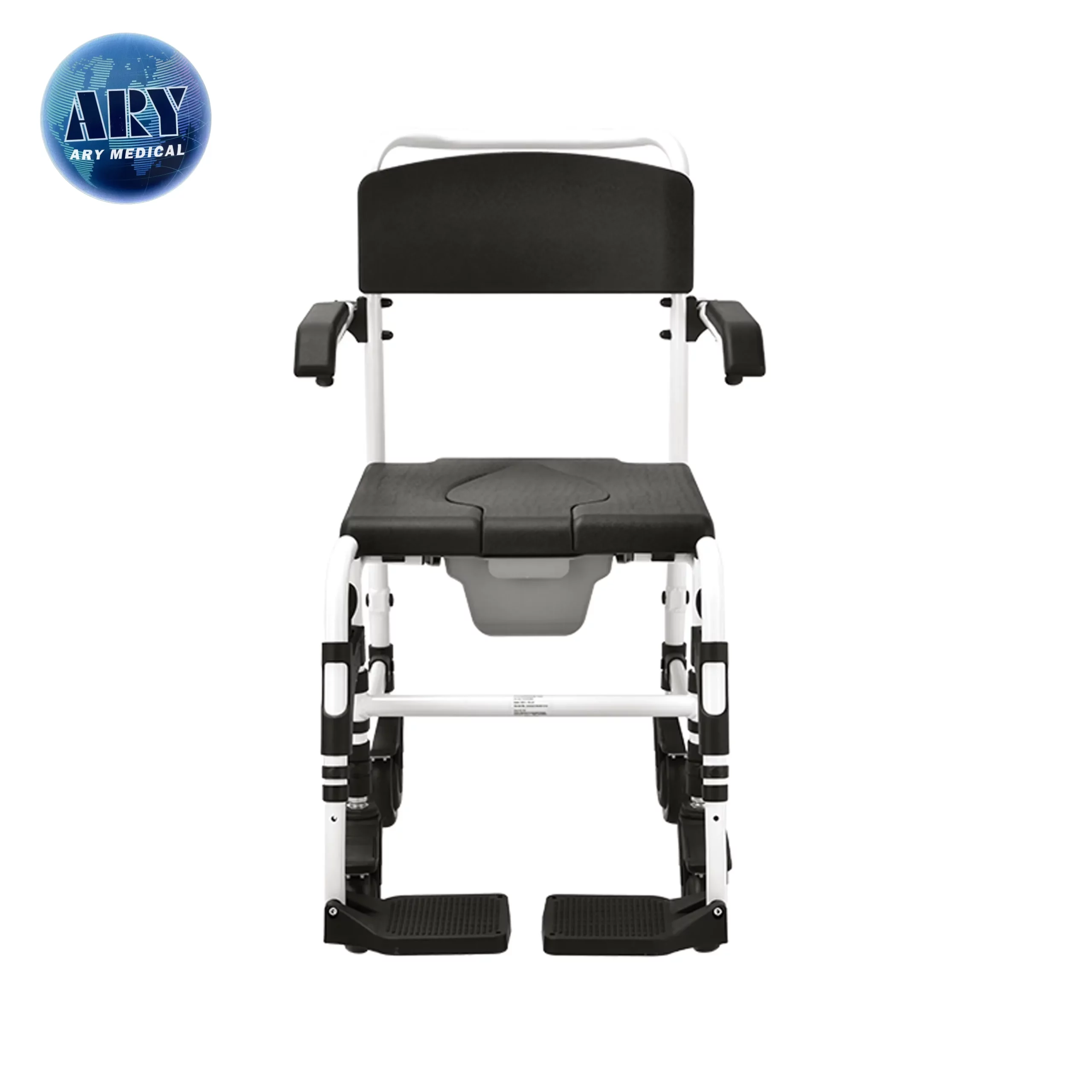
Arms and joints enter commode chair cleaning because they are touched and may include different pads, fasteners and moving parts. The front view shows the black arm supports but cannot prove their chemical resistance. Use the current material list and care guide.
Which details help a cleaning team?
Look beyond the large seat surface. List arm pads, side fittings and joints that the maker includes in routine care. Note damage separately for service rather than treating cleaning as repair.
- Identify pads and mounting points.
- Check the approved method for each material.
- Escalate cracks or loose fittings.
| Area | Record |
|---|---|
| Arm pad | Compatible method and condition |
| Joint or fitting | Care and service distinction |
A clean pad can still sit on a damaged bracket. Key Takeaway: Your routine can cover touch points without hiding repair needs.
What wheel parts matter in commode chair cleaning?
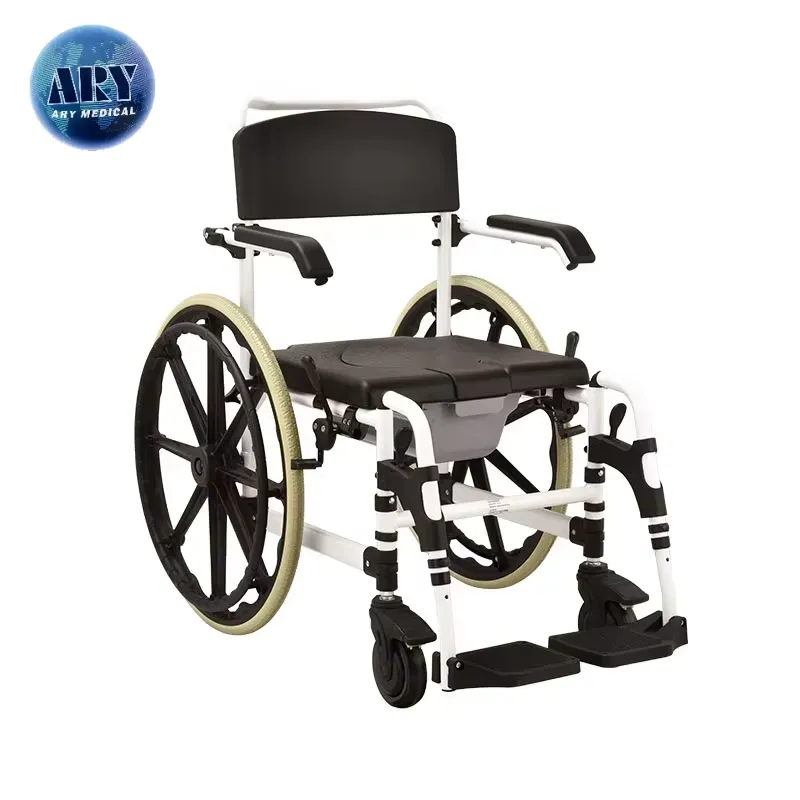
Wheel parts matter in commode chair cleaning because small casters and large rear wheels are different assemblies. Both can collect dirt, yet neither image proves a particular wet-cleaning tolerance. Ask for each variant’s frame and wheel care instructions.
How should variants stay separate?
Do not merge two wheel lists. Record the exact wheel layout and any maker guidance for frames, locks and footplates. A large-rear-wheel photograph is a configuration reference, not approval for a wash process.
- Identify front and rear wheel assemblies.
- Keep variant-specific care directions.
- Report corrosion or damage for service.
| Variant | Review need |
|---|---|
| Small-caster chair | Current caster and frame guidance |
| Large rear-wheel chair | Current wheel and frame guidance |
Similar seat surfaces do not make wheel cleaning identical. Key Takeaway: Your team can write instructions for the chair on hand.
Which products suit commode chair cleaning?
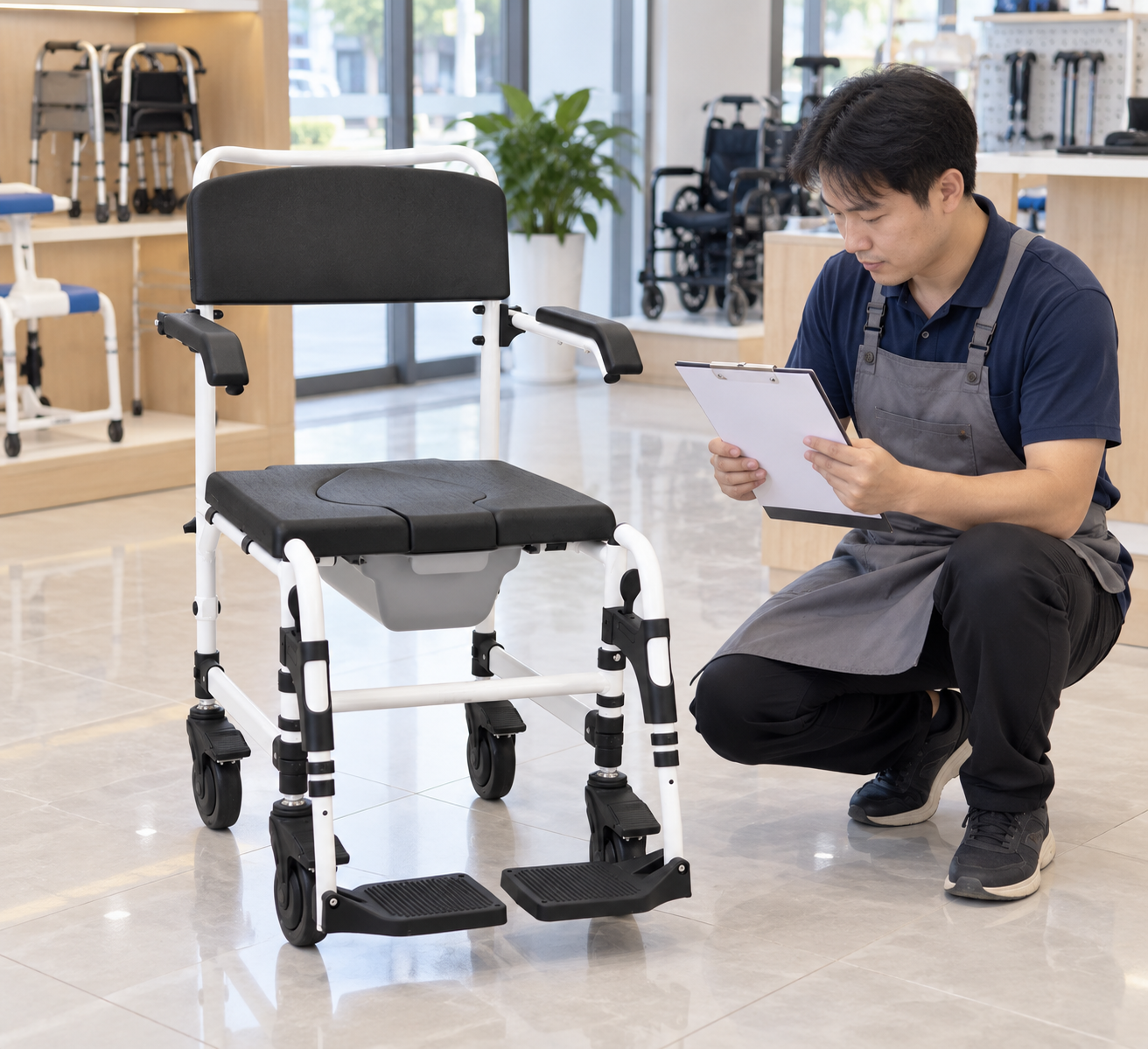
Products for commode chair cleaning must suit the exact materials and the care setting’s approved procedure. Do not name a universal disinfectant, dilution or contact time from a product photo. Obtain compatibility and local infection-control direction first.
Where can a UK team check its framework?
Use the local manual with the maker file. The Scottish care-home IPC manual links disinfectant selection to equipment compatibility and maker instructions. The AryMD team can supply available product care information, while the local care lead selects the procedure.
- Request maker-compatible product classes.
- Follow the setting’s approved chemical process.
- Keep preparation and contact details in local records.
| Decision | Responsible source |
|---|---|
| Equipment compatibility | Manufacturer instructions |
| Use at the setting | Local IPC policy and product label |
A familiar bottle may be unsuitable for one pad or finish. Key Takeaway: Your buyers can ask for compatibility without inventing a chemical recipe.
When should commode chair cleaning be recorded?
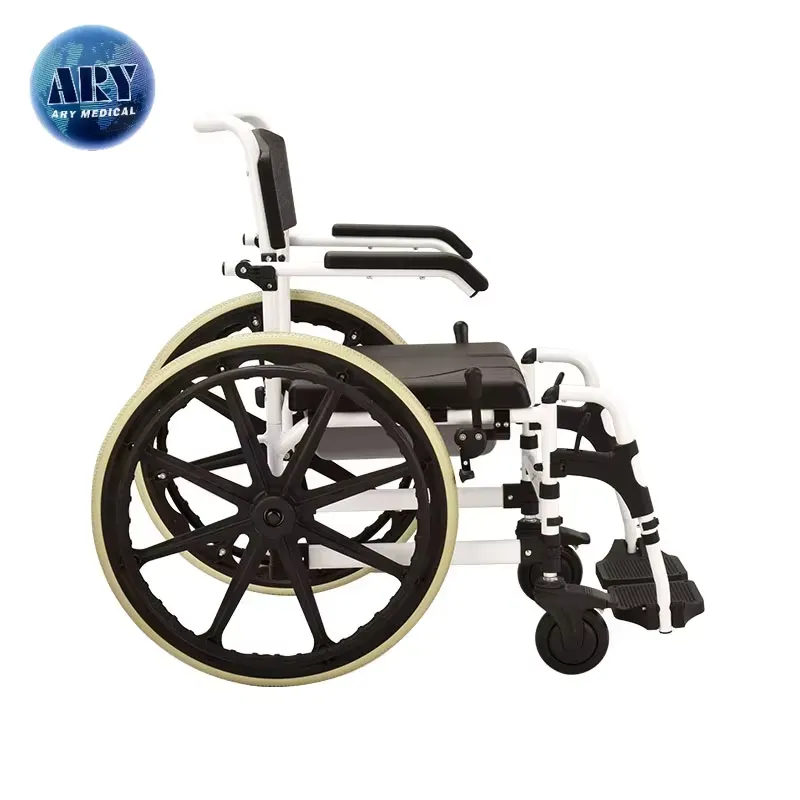
Record commode chair cleaning according to the setting’s current schedule, including handover between users and any event that triggers extra care. The large-wheel side view shows no completed cleaning. Keep actual dates, roles and actions in the real log.
What makes a record useful?
Write what happened, not what should have happened. The care-review scene is illustrative. Define who cleans, who checks and how unresolved damage is reported under the local procedure.
- Record the product identity and care event.
- Name the responsible staff member.
- Keep any exception or service concern visible.
| Log field | Value |
|---|---|
| Date and method | Shows actual care performed |
| Owner and exception | Supports follow-up |
A signed blank template does not prove a chair was cleaned. Key Takeaway: Your customer can audit care without confusing artwork with evidence.
What damage changes a commode chair cleaning plan?
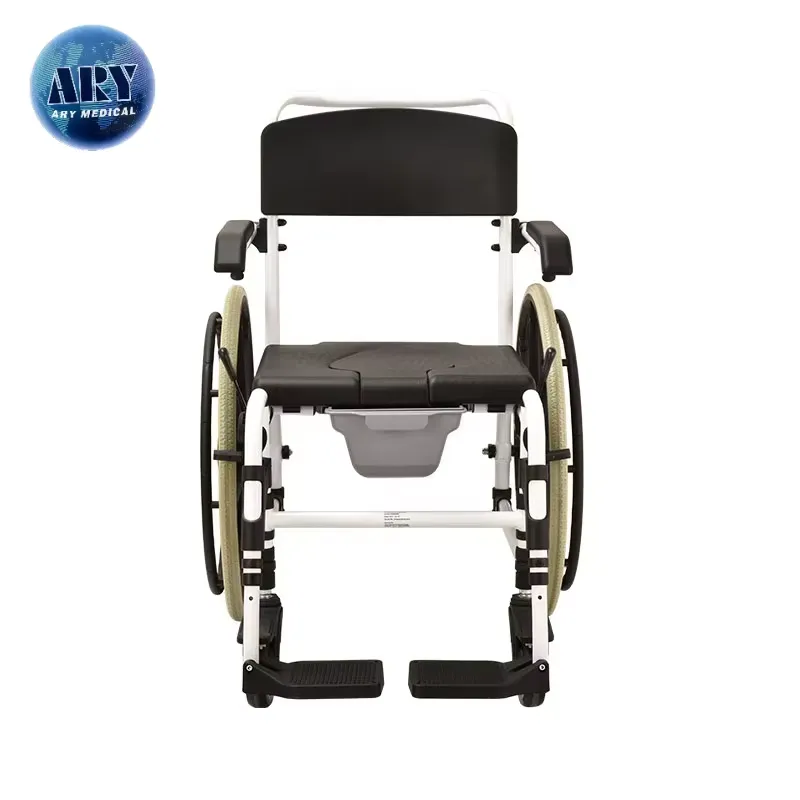
Damage changes a commode chair cleaning plan when surfaces, joints, wheels or the container can no longer be cared for as intended. Cleaning does not repair cracked parts or corrosion. Follow the maker’s service and replacement process.
How should staff report the issue?
Separate soil from damage. The large-wheel front photo can locate frame parts but not diagnose hidden wear. Route an exact model question through the AryMD contact page when current care or parts guidance is missing.
- Describe the affected material or assembly.
- Photograph visible damage where appropriate.
- Hold the chair for review if required.
| Observation | Next step |
|---|---|
| Soil within care scope | Follow approved cleaning method |
| Damage or uncertain condition | Use service review |
A damaged chair may need repair before another cleaning cycle. Key Takeaway: Your team can decide when care ends and service begins.
What should a commode chair cleaning chart show?
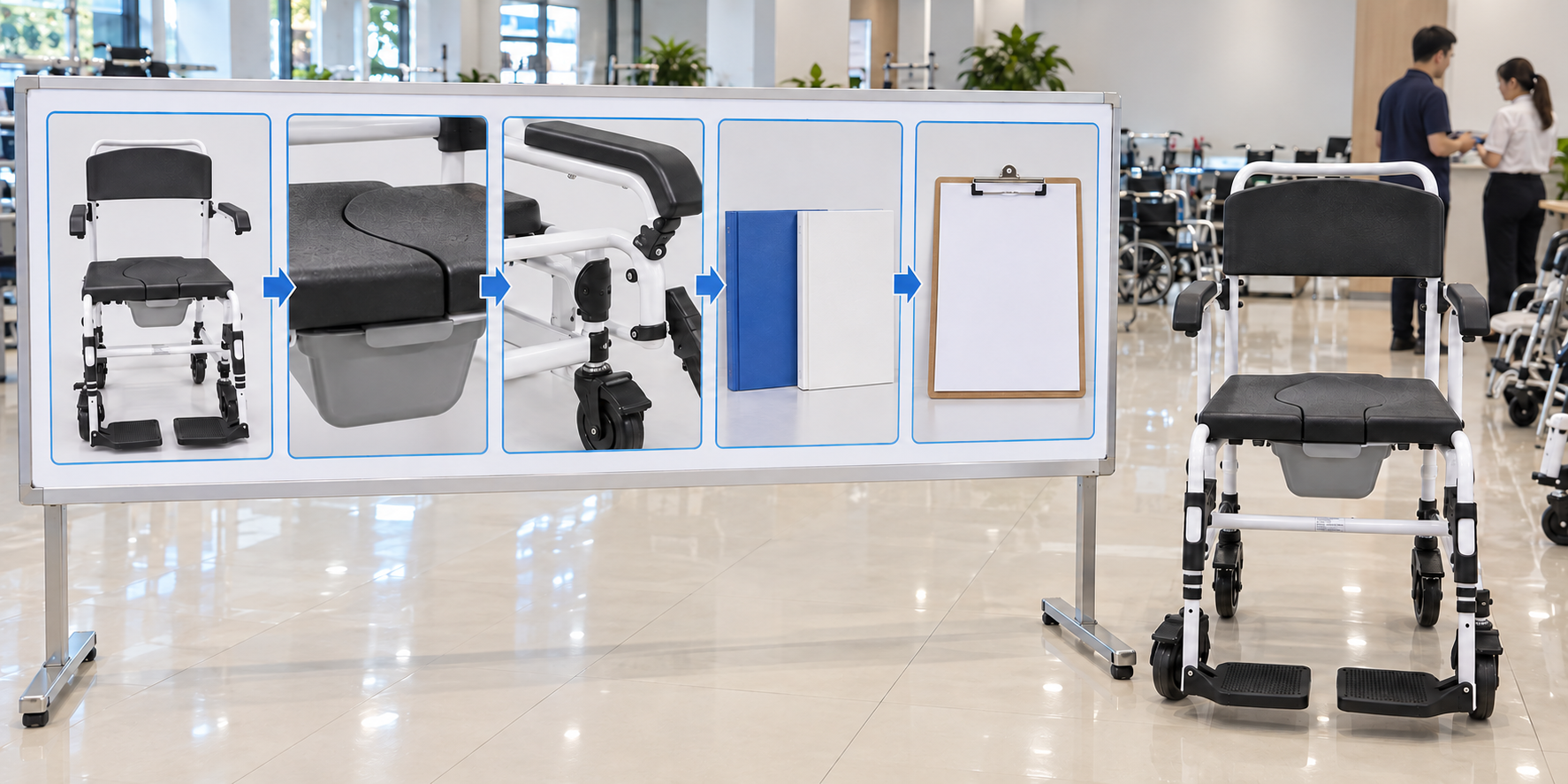
A commode chair cleaning chart should show model identity, seat and container, arms and wheels, maker and local policy files, and a blank pending record. It cannot certify that cleaning or disinfection occurred. Attach actual evidence after work is done.
How can the chart help a care buyer?
Keep the final record empty until completed. Use the five images to identify questions for the supplier and care lead. Maintain current instructions beside the local routine.
- Identify exact chair and components.
- Collect material and policy directions.
- Record open compatibility questions.
| Chart stage | Evidence |
|---|---|
| Product | Current materials and maker care |
| Setting | Local protocol and completed log |
A clear visual map helps staff locate the right documents. Key Takeaway: Your buyer can distinguish a plan from a finished cleaning record.
How do you request a commode chair cleaning guide?

Request a commode chair cleaning guide by sending the exact model and care-setting questions to the supplier. Ask for current material, part and care instructions. The local UK provider should fit those facts into its own infection-control process.
Ready to prepare a model-specific plan?
Send the product and setting together. Ary Medical can review available documents for the chosen commode configuration. Confirm small-caster or large-rear-wheel version and any seat or container options before rollout.
- Share model, wheel version and part list.
- Request current maker care information.
- Assign local policy and training owners.
| Your brief | Supplier response to request |
|---|---|
| Product configuration | Current material and part details |
| Care questions | Available maker instructions |
An exact brief prevents a generic cleaning rule from being copied across variants. Key Takeaway: For model-specific care information, contact us. Ary Medical supports equipment care built on verified materials and accountable records.
Frequently asked questions
Q1: Can I use one disinfectant on every commode chair?
No. Check material compatibility, maker directions and the local care policy.
Q2: What’s the best way to track cleaning between users?
Use the setting’s current log with model, date, method, owner and exceptions.
Q3: How do I know if the container can be removed?
Follow the exact maker instructions for that configuration; do not infer a mechanism from a photo.
Q4: Can cleaning make a damaged chair safe?
No. Damage needs service review under the maker and local process.
Q5: Do UK care settings all follow one identical policy?
No. Use the applicable national and local guidance together with the exact product instructions.