
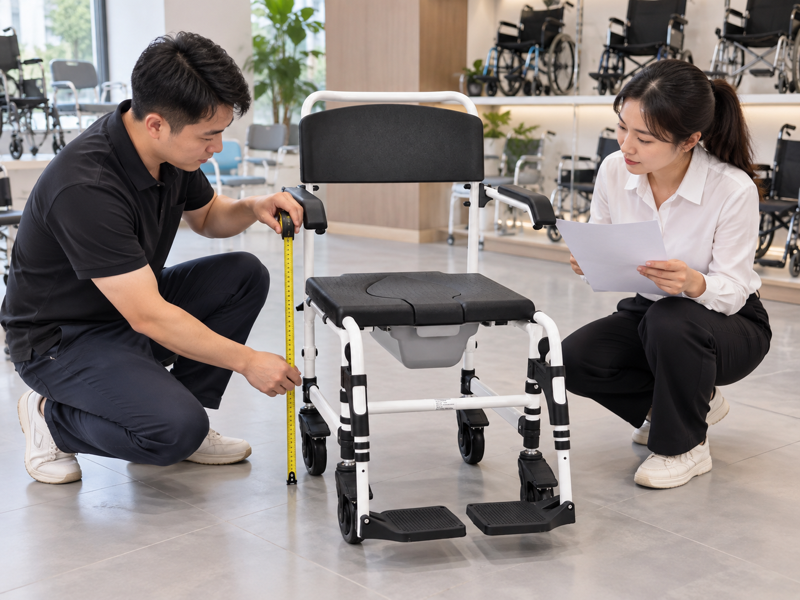
Make commode chair seat height checks easier by getting the exact model's measurement points, then reviewing the chair with the person's transfer and foot-support plan. A dealer may see a seat that looks easy to reach but later find that casters, a cushion or a bathroom threshold change the effective position. That mismatch can delay a handover. Request a dimensioned drawing and a trained fit review before choosing a setting.
What does commode chair seat height measure?
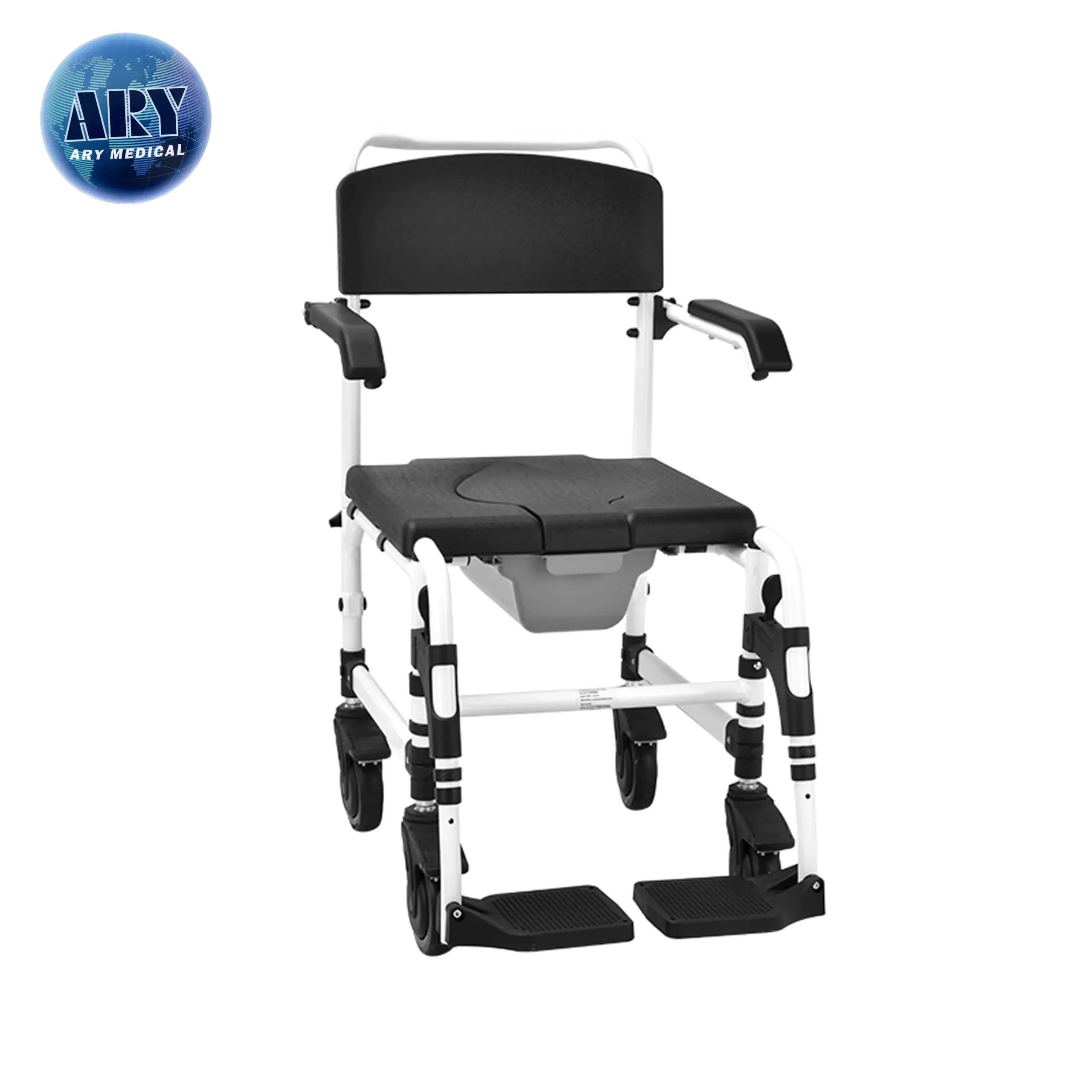
Commode chair seat height should state the maker's vertical reference from the floor to a defined seat surface on the exact chair. It is not the height of the backrest, arm support or bucket. The small-wheel front photo offers a layout view but no reliable number.
Which points belong on a drawing?
Draw both ends of the measurement. Ask where the floor line and seating surface are taken, and whether a cushion or cover was included. Keep the method beside any quoted figure so buyers can compare like with like.
- Identify the exact model and wheel form.
- Request labelled seat-height reference points.
- Record installed seat parts during measurement.
| Measurement | Use |
|---|---|
| Seat surface to floor | Individual fit review |
| Armrest to seat | Support and transfer review |
A bare number is hard to use without its reference points. Key Takeaway: Your team can ask for a repeatable height measurement.
How should commode chair seat height be checked on a sample?
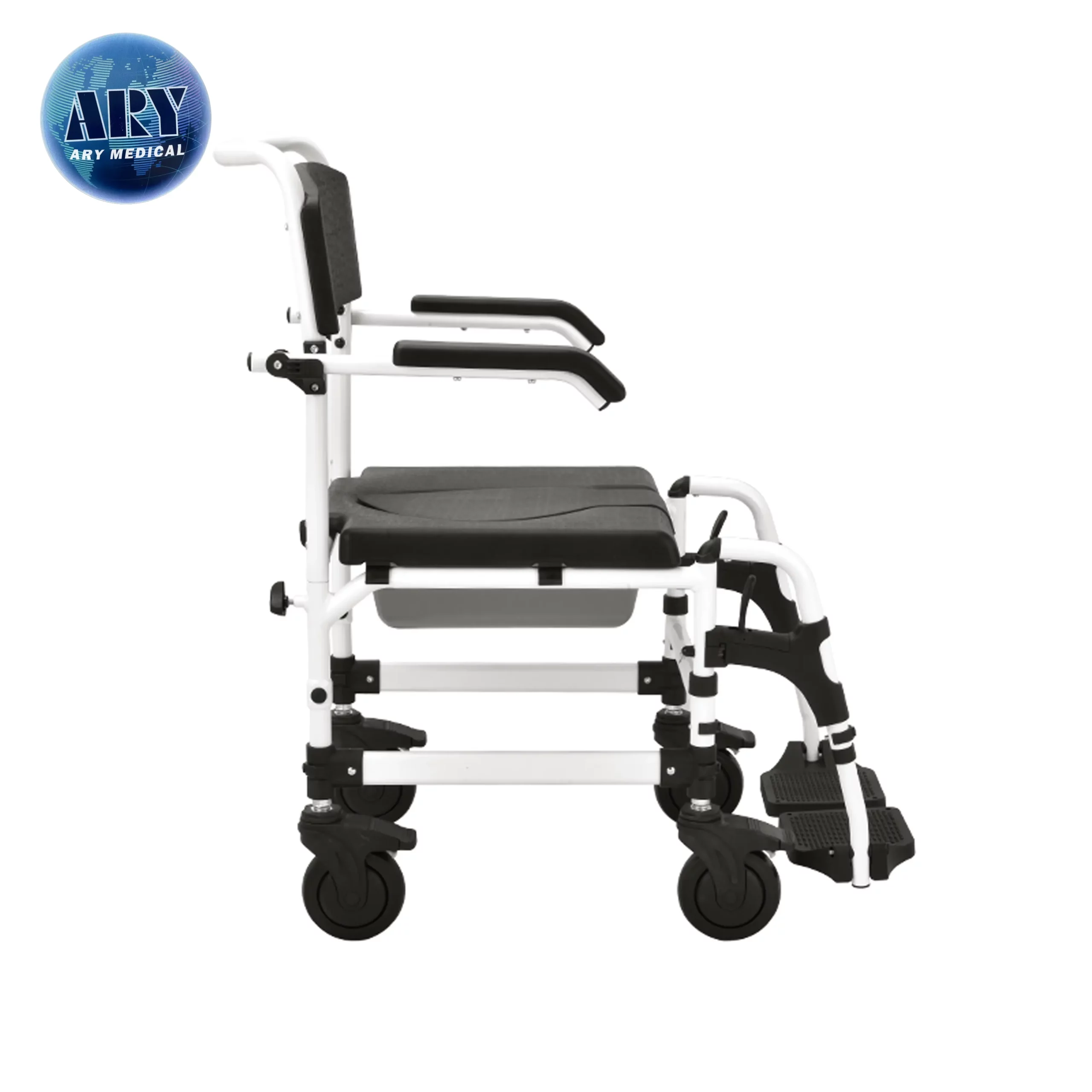
Check commode chair seat height on the exact sample in its normal use state using the maker's reference points. A side photo cannot establish floor-to-seat distance. Review the product range only for model choice, then measure the received chair.
What makes the result repeatable?
Keep the sample setup fixed. Document wheel variant, seat or cushion parts and the level surface used for measurement. Ask the supplier to explain any gap between a drawing and a sample rather than averaging two readings.
- Match sample identity with the quote.
- Use one stated measurement method.
- Record the full installed configuration.
| Check item | Reason |
|---|---|
| Wheel and seat setup | Defines the measured chair |
| Reference line | Makes later checks comparable |
A sample reading should describe one real configuration. Key Takeaway: Your buyer can verify a specification without borrowing another model's figure.
Who decides suitable commode chair seat height?
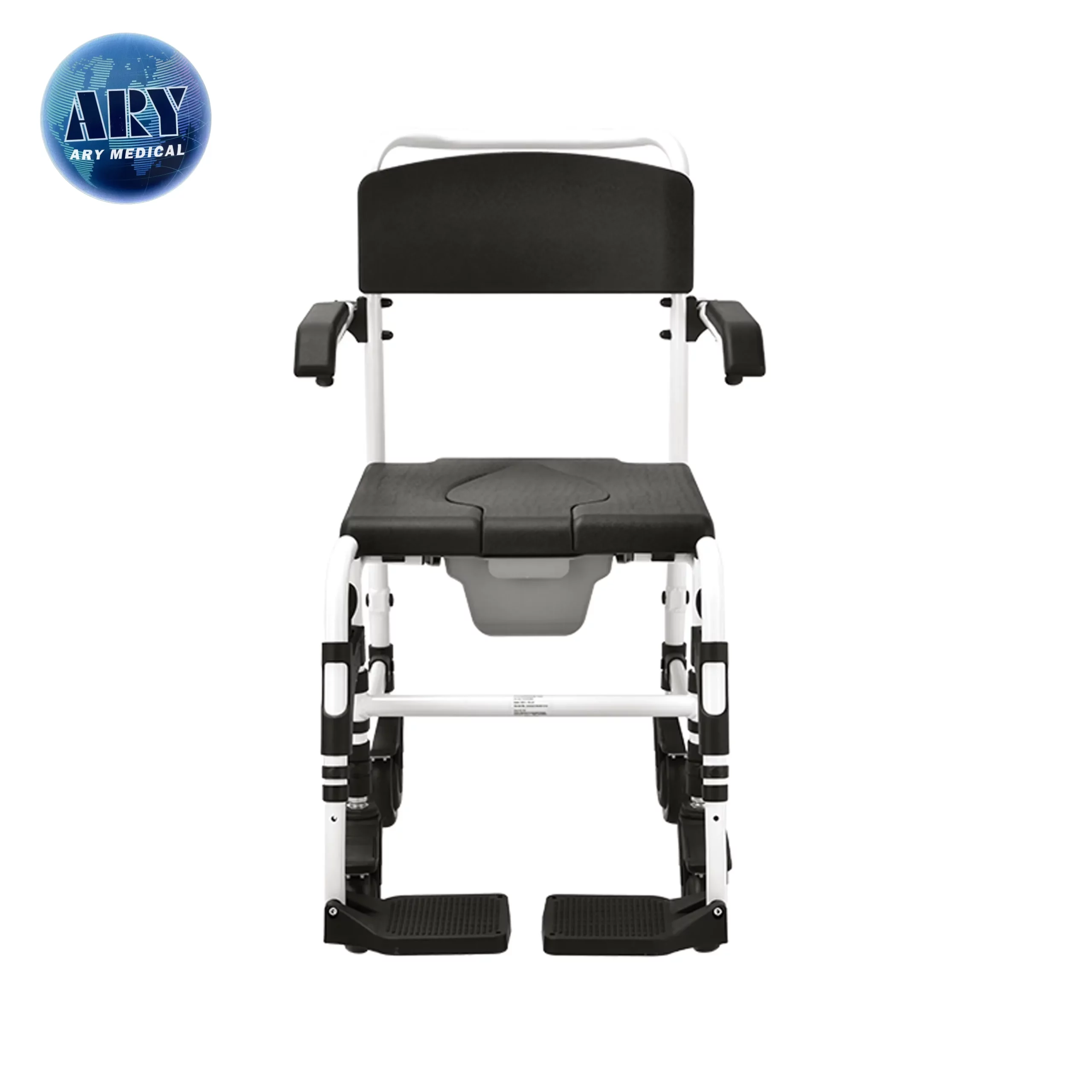
Suitable commode chair seat height depends on the person's assessed sitting and transfer needs, not a universal target. A second small-wheel front image still cannot prescribe one position. Arrange a relevant occupational-therapy or trained fit review where needed.
What belongs in the individual brief?
Start with the person's task. Record transfer method, foot contact, posture support and where the commode will be used. WHO's wheelchair provision guidance supports individual assessment and fitting, though the exact chair here needs its own instructions.
- Name the responsible fit reviewer.
- Record transfer and seated-support needs.
- Keep product limits with the user plan.
| Input | Owner |
|---|---|
| Personal needs | Qualified reviewer |
| Chair options | Exact supplier records |
An adjustable chair is not automatically suited to every user. Key Takeaway: Your order can follow the person's needs rather than a catalogue average.
How does commode chair seat height affect transfers?
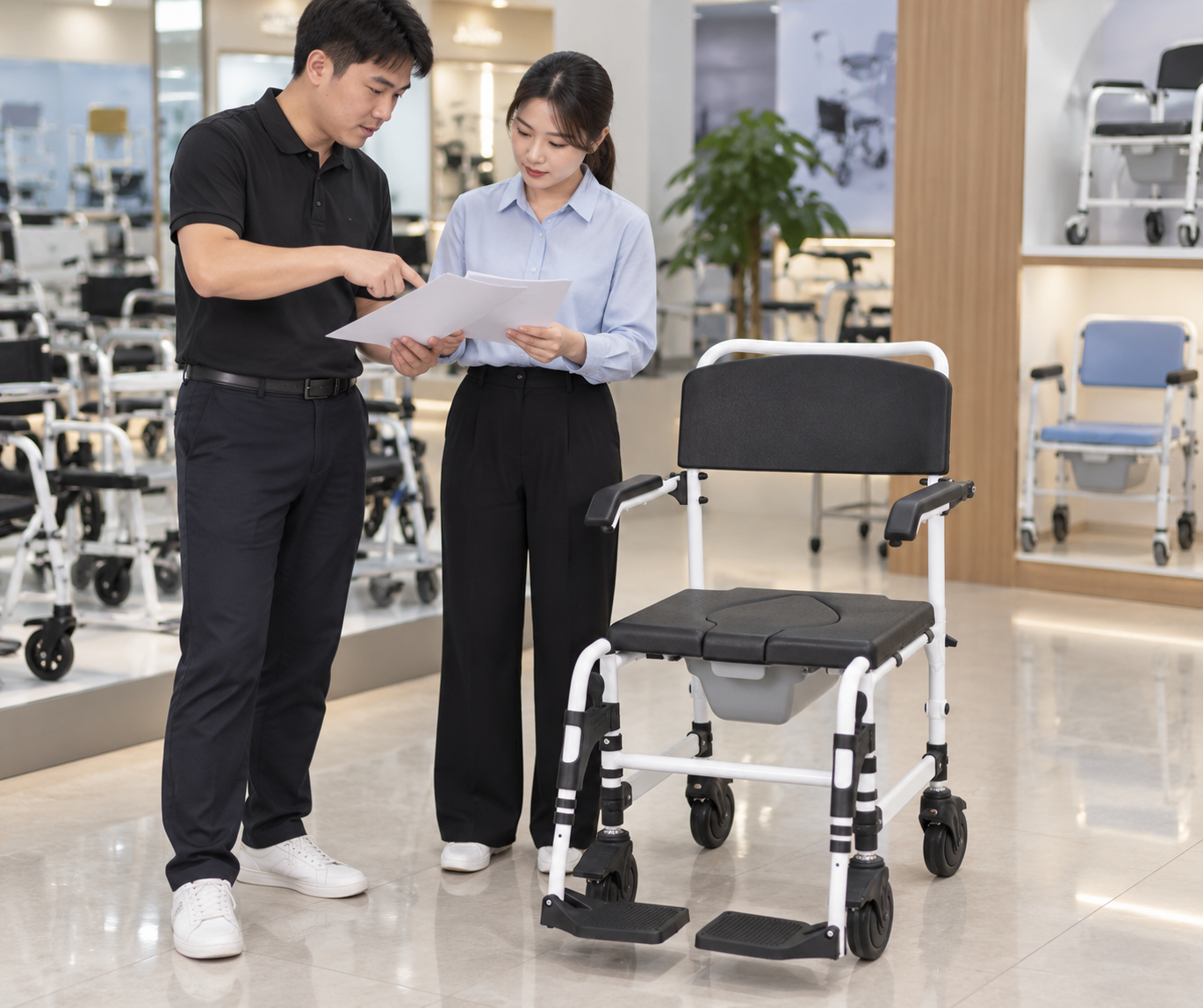
Commode chair seat height affects how the person approaches and leaves the seat within an assessed transfer plan. Arm supports, footplates and available floor space matter with it. Related transfer aids have their own intended use and cannot replace a commode fit decision.
What should a room trial observe?
Look at the complete route to the seat. Use the actual bathroom or bedside setting where possible, with trained personnel. Keep a product feature demonstration separate from the individual's transfer method.
- Measure approach and side clearance.
- Review arm and foot support positions under the guide.
- Record the accepted transfer arrangement.
| Issue | Review |
|---|---|
| Seat entry | Assessed personal method |
| Footplate clearance | Exact chair setup |
Height alone will not solve a difficult transfer. Key Takeaway: Your buyer can test the complete access path.
Do wheel variants change commode chair seat height?
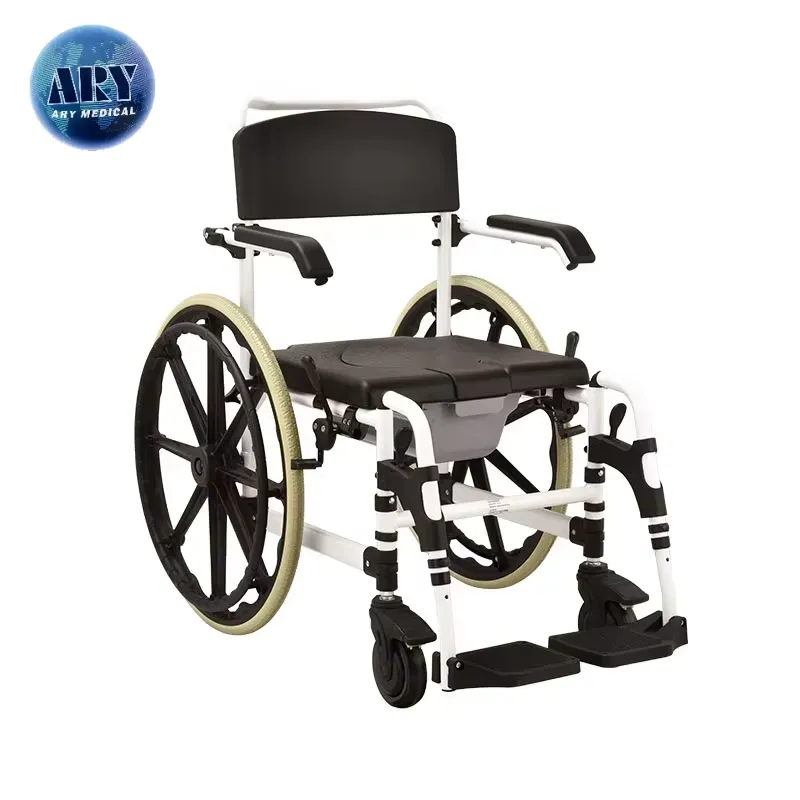
Different wheel variants may change commode chair seat height and handling, so compare model-specific drawings instead of assuming a shared figure. The source gallery includes a large-rear-wheel chair as well as a small-wheel version. Their parts and dimensions must be checked separately.
Which facts belong on separate quote lines?
Do not mix the two frames. Request seat-height range, wheel layout and brake information for each exact variant. A large rear wheel in a photograph proves only that the pictured assembly differs visually.
- Name small-wheel and large-wheel variants separately.
- Request each variant's measured range.
- Keep parts and service records distinct.
| Variant | Buyer request |
|---|---|
| Small-wheel | Its own dimension drawing |
| Large-rear-wheel | Separate dimensions and service data |
A shared product-family name does not create a shared height. Key Takeaway: Your quote can stay tied to the chosen wheel layout.
What does commode chair seat height change for feet?
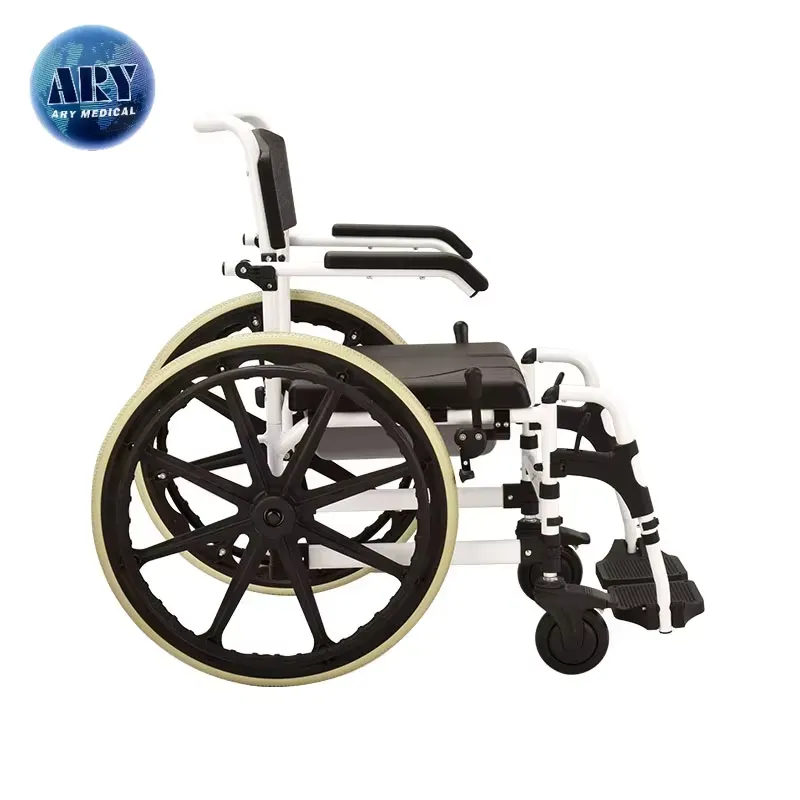
Commode chair seat height changes the relationship between the seat, floor and foot supports, so it needs a whole-chair review. The large-rear-wheel side image shows black footplates but not their range or permitted movement. Ask for the maker's actual instructions.
Which checks belong after adjustment?
Follow the change down to the feet. A trained fitter should review foot position and support within the person's plan. Do not infer a safe setting from the angle of a studio photograph.
- Identify the exact foot-support assembly.
- Use documented seat and foot-support options.
- Record the final reviewed arrangement.
| Changed point | Question |
|---|---|
| Seat position | What happens to foot contact? |
| Foot support | Which setting is approved? |
The seat and feet work as one arrangement. Key Takeaway: Your handover can keep foot support aligned with the user.
How should commode chair seat height settings be changed?
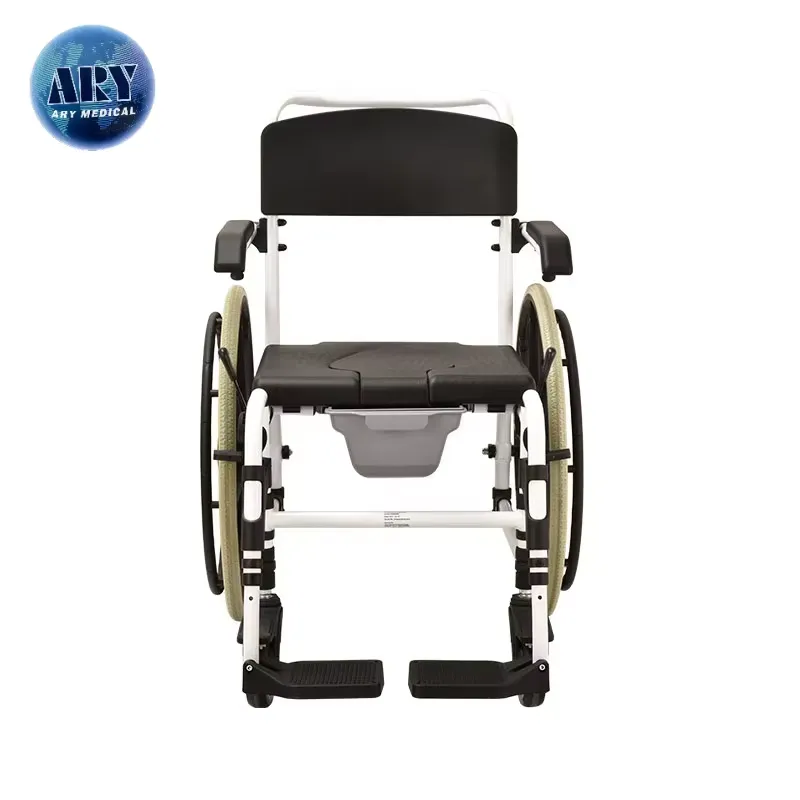
Commode chair seat height settings should be changed only through the exact model's approved method and by people trained for the task. The large-rear-wheel front view does not reveal a universal adjustment sequence. Stop if a part or lock does not behave as the guide describes.
What should the adjustment record hold?
Make each change traceable. Record the old and new reviewed positions, the responsible fitter and required checks. A later repair or wheel change should trigger a fresh fit review when it affects the agreed setup.
- Use current model instructions.
- Record who made and checked the change.
- Refer uncertain mechanisms for service.
| Record | Use |
|---|---|
| Before and after | Explains the change |
| Check and reviewer | Supports handover |
An adjustment is complete only after the agreed setup is reviewed. Key Takeaway: The next staff member can restore the accepted arrangement.
Why keep commode chair seat height with the care plan?
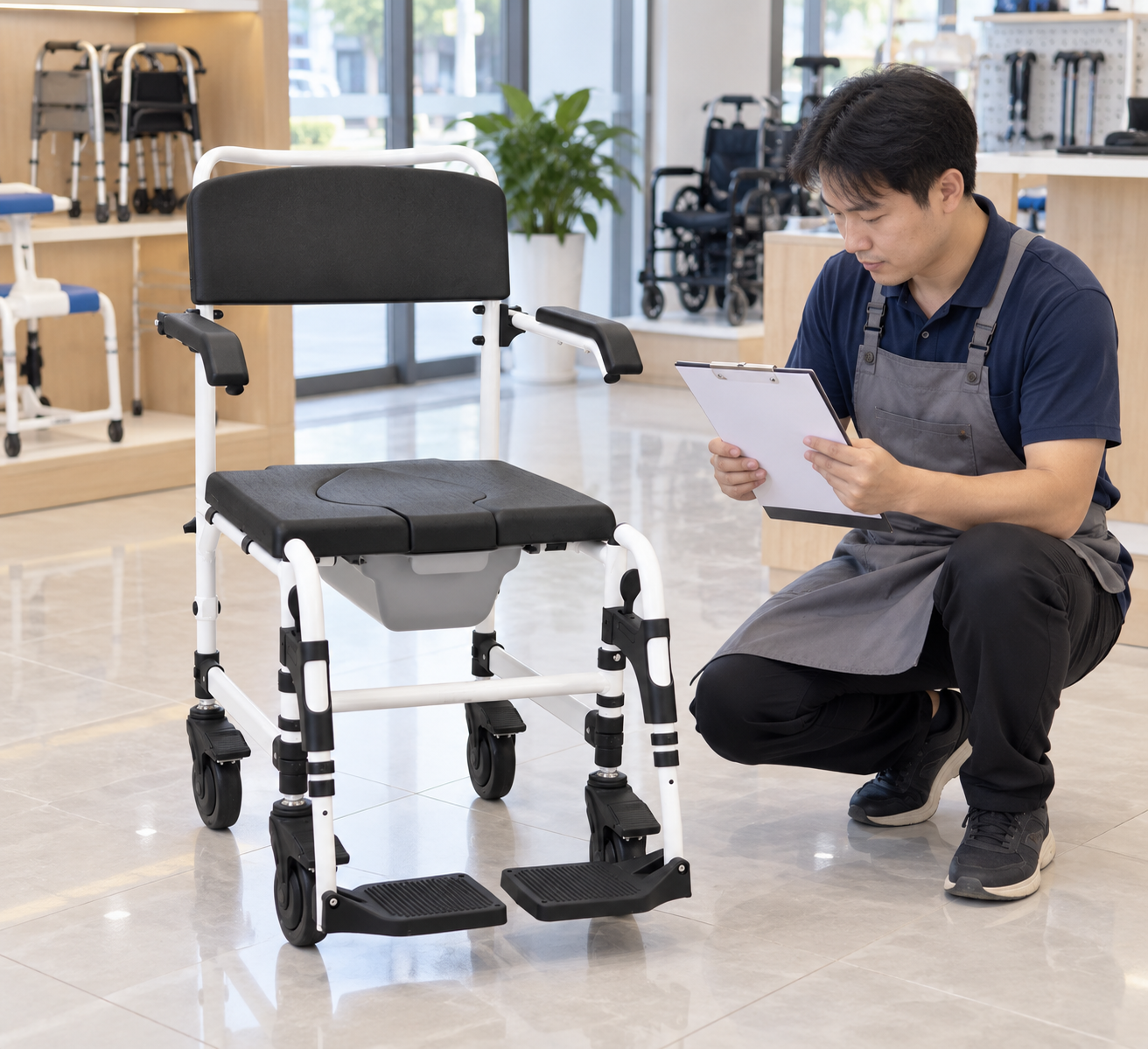
Keep commode chair seat height with the care plan because cleaning, bucket access and room layout may affect how the chair is handled. The illustrative care scene shows a worker reviewing records beside an empty chair, not a fit result. Ask the supplier team for current chair and bucket instructions.
What should carers be able to find?
Keep the measured setup easy to locate. Store model identity, reviewed seat setting, transfer plan and care route together. A used chair should not be returned to service with an undocumented change in seating position.
- Name the user and model record.
- Keep current height and transfer notes.
- Record changes during cleaning or service.
| File item | Purpose |
|---|---|
| Reviewed setting | Supports consistent fit |
| Care and service notes | Explains later changes |
A setting written only on a quote can be lost at handover. Key Takeaway: Your team can follow one current chair plan.
What should a commode chair seat height review record show?
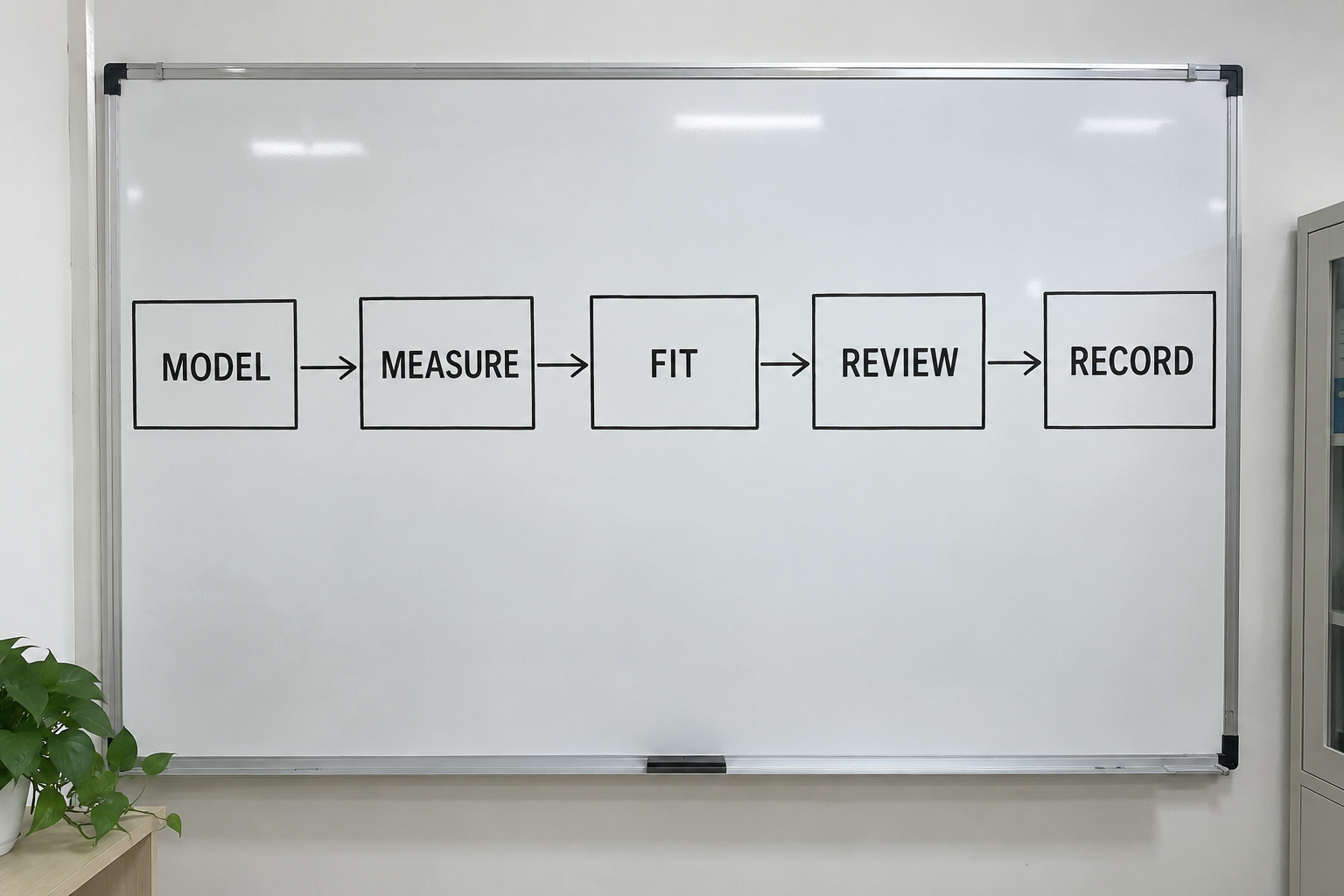
A commode chair seat height review record should show the model, wheel variant, measurement points, person's fit assessment and final setting. The chart follows model, measure, fit, review and record. Keep unverified catalogue figures as open questions.
Can another person repeat the measurement?
Store the method with the result. Attach the drawing, sample notes and the responsible reviewer's decision. Separate observed dimensions from the recommended personal position.
- Record exact model and installed parts.
- Identify both measurement reference points.
- Keep individual fit and change history.
| Record field | Value |
|---|---|
| Product measurement | Repeatable model data |
| Personal fit | Reviewed user setting |
One figure cannot serve both procurement and personal fitting. Key Takeaway: Your dealer can explain what was measured and why.
How do you request commode chair seat height data?

Request commode chair seat height data with the exact chair model, wheel layout, seat parts and measurement method. Ask for an appropriate individual review before prescribing a user setting. Avoid invented target numbers.
Ready to send the height question?
Send the drawing request with the use case. Ary Medical can clarify available dimension and option information for a named wheeled commode. Share the user's assessed needs through the proper care channel and ask for current instructions before ordering.
- Identify the model and wheel variant.
- Request measured range and reference points.
- Name the fit reviewer and next step.
| Buyer input | Supplier answer |
|---|---|
| Exact setup | Current dimension drawing |
| Use setting | Available adjustment guidance |
A precise height enquiry is easier to answer than a request for the best number. Key Takeaway: For model-specific dimensions, contact us. Ary Medical backs fit decisions grounded in the person and the actual chair.
Frequently asked questions
Q1: Can I choose seat height from a catalogue photo?
No. Request the exact model measurement method and arrange an individual fit review.
Q2: What's the best seat height for every user?
There is no universal target. It depends on the person's assessed transfers, posture and foot support.
Q3: How do I know where seat height was measured?
Ask for a drawing with floor and seating-surface reference points plus installed parts.
Q4: Can I copy a setting between wheel variants?
No. Verify dimensions and permitted adjustment for each exact model.
Q5: How do I know a changed setting is ready?
Complete the maker's required checks and the person's fit review before handover.