
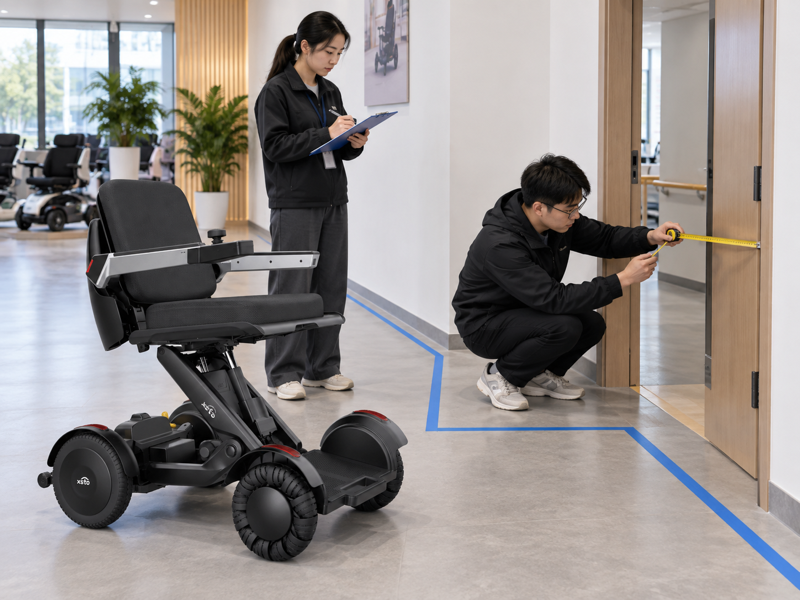
Choose an electric wheelchair turning radius figure by checking its definition and the space needed by the complete occupied setup on the actual route. A chair can appear narrow in a catalogue yet need more room to turn past a door, desk or footrest obstruction. For a Singapore dealer reviewing a flat or shared facility, the route details deserve their own record. Compare defined measurements with the user's fit needs and the local setting before promising access.
What does electric wheelchair turning radius actually measure?
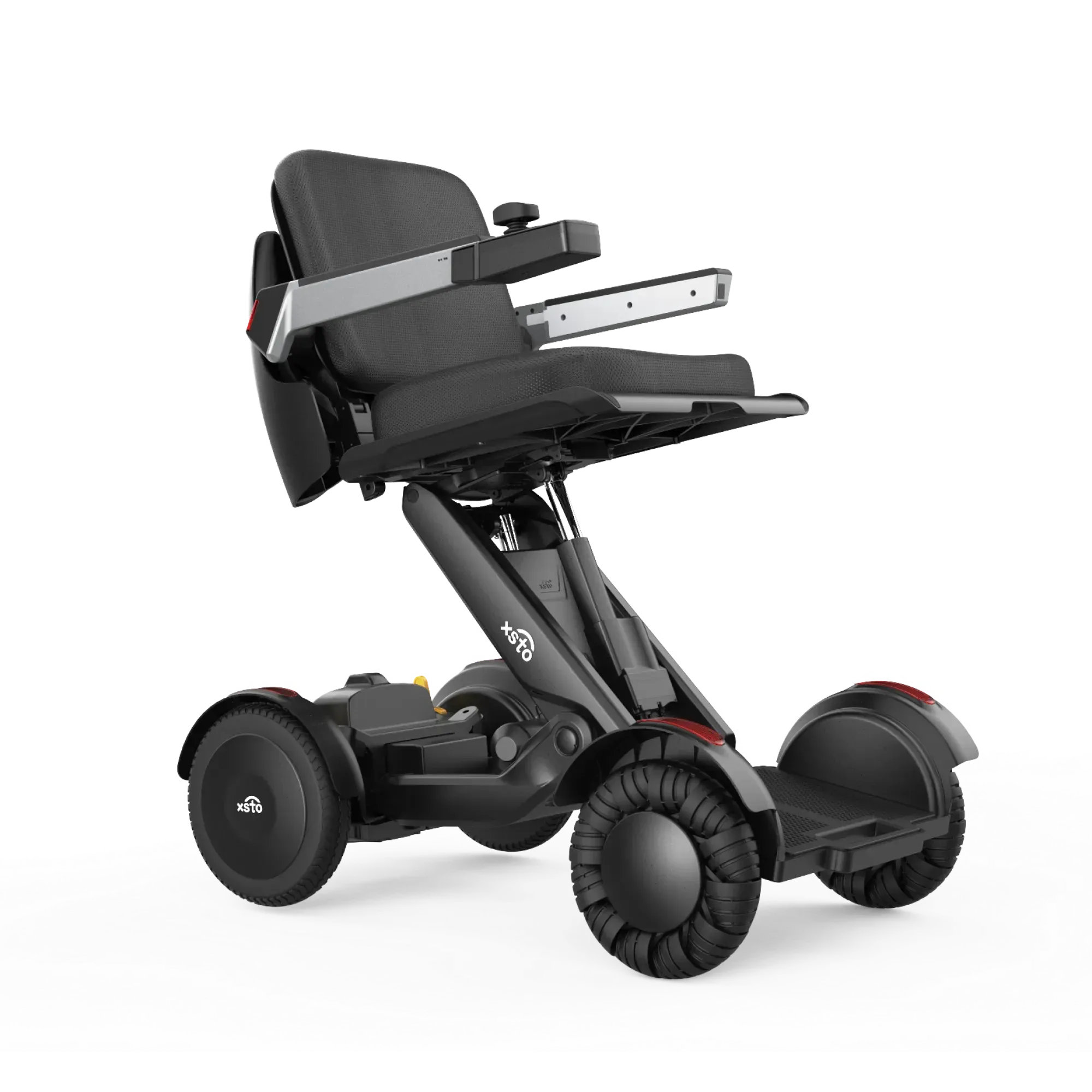
Electric wheelchair turning radius describes a stated turning measurement, so its reference points and method must be clear. Ask whether the supplier is reporting radius, diameter or another manoeuvring dimension. The words used in a brochure should not replace a measurement definition.
Which related measurements should you keep separate?
Check the label beside the number. ISO 7176-5:2008 covers wheelchair dimensions and manoeuvring space, with separate material on pivoting, reversing and turning diameter. Ask which relevant measure and setup support the figure supplied for your model.
- Retain the original term and unit.
- Request a drawing or method identifying the measured distance.
- Keep unlike measurements in separate comparison fields.
| Reported item | Clarification |
|---|---|
| Radius or diameter | Which distance and reference points are used? |
| Pivoting or reversing space | Which movement and boundaries were assessed? |
Do not rank different measures as though they are the same result. Key Takeaway: You can interpret the figure before using it in a buying decision.
Why is electric wheelchair turning radius different from chair width?
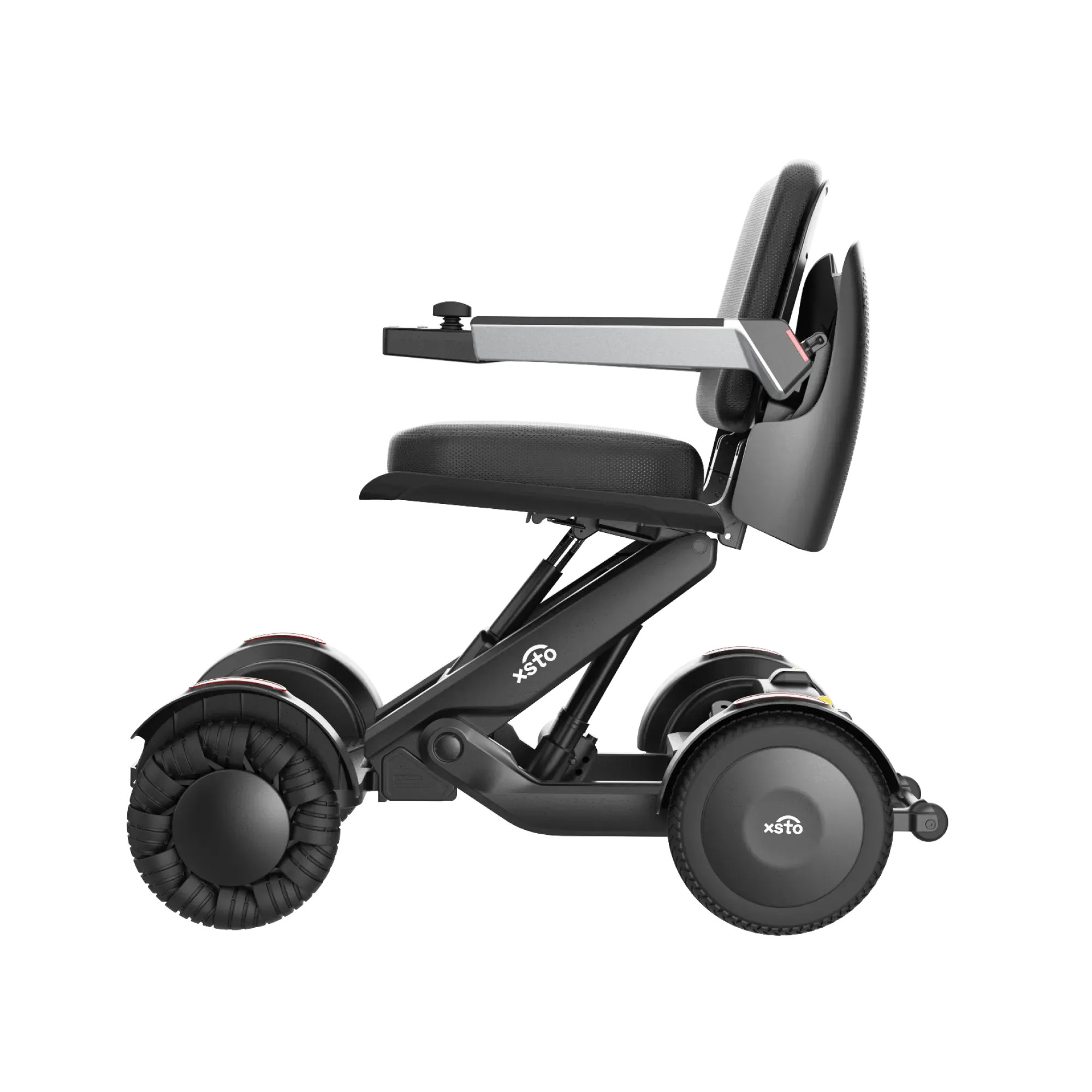
Electric wheelchair turning radius concerns a movement, while a stated chair width describes a dimension in a defined setup. Both can be useful, but neither replaces the other. Compare them with the complete chair details for the version being supplied.
Which parts project beyond the wheel path?
Follow the whole outline. The supplied product views show arm supports, a controller and a front platform as well as the wheels. Record the outer parts relevant to the agreed setup instead of measuring only the chassis.
- Identify the full supplied outline.
- Include relevant supports, controls and accessories.
- Distinguish a static width from space required during movement.
| Information | What it describes |
|---|---|
| Outside dimensions | The defined product setup at rest |
| Manoeuvring measurement | Space associated with a defined movement |
Use both measurements in the route review. Key Takeaway: A narrow-looking frame will not become an unsupported turning-space promise.
How does the user affect electric wheelchair turning radius review?
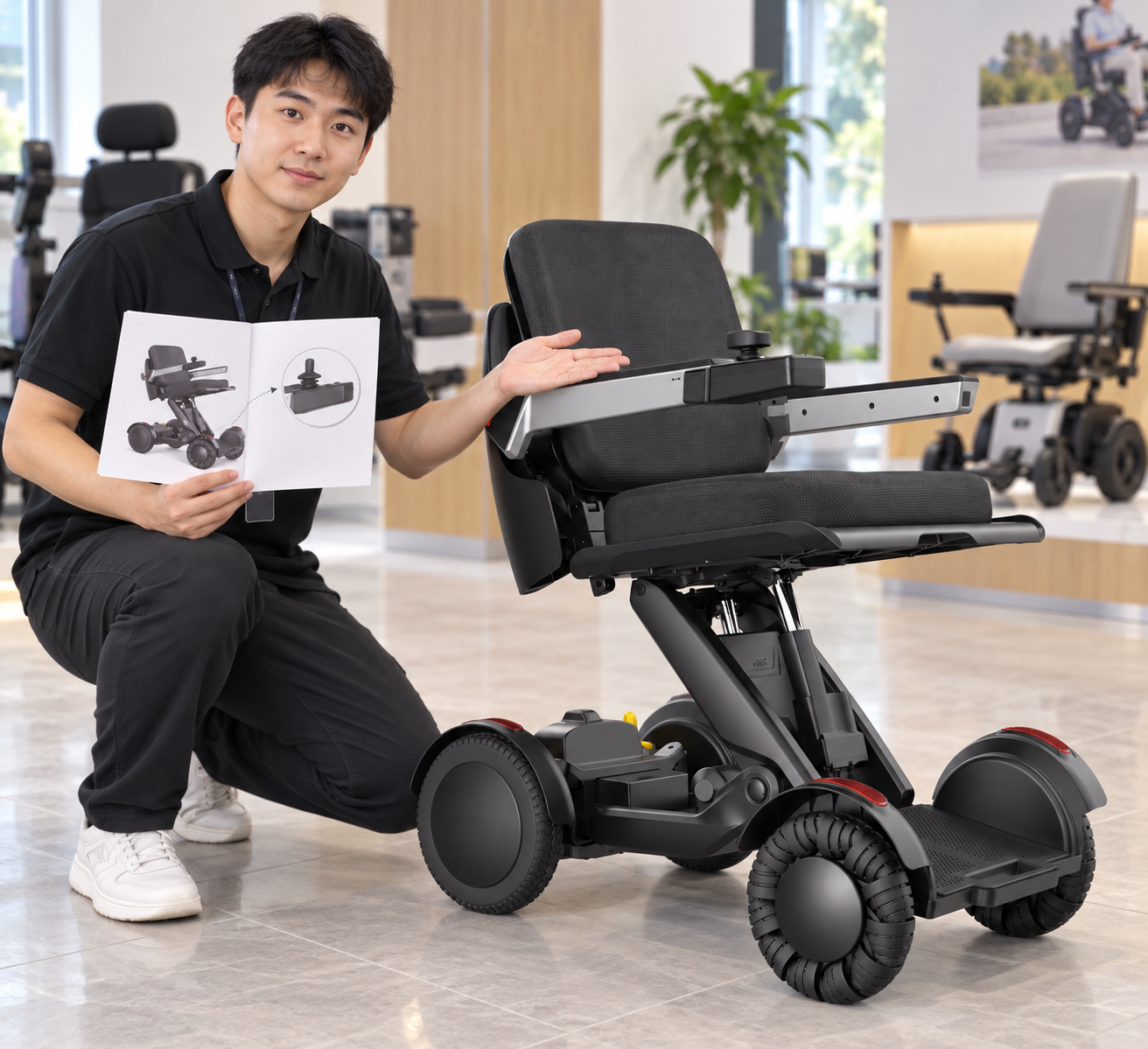
An electric wheelchair turning radius review should consider the space needed with the user's agreed seating and support setup. Empty product dimensions do not describe every occupied arrangement. Keep individual fit review alongside the product measurement records.
Does a reference-occupant test settle personal clearance?
Separate the standard setup from the individual review. The published dimension method includes measurements with a reference occupant. Use that evidence on its stated basis, then arrange the appropriate review of the actual user and prescribed setup.
- Identify the setup used for the published measurement.
- Retain the user's agreed seating and support needs.
- Review relevant clearance in the actual intended use.
| Setup | Role in the decision |
|---|---|
| Defined reference setup | Provides comparable product evidence |
| Actual user setup | Addresses the individual's fit and clearance needs |
Do not erase personal requirements to reproduce a catalogue dimension. Key Takeaway: The chosen chair can be assessed as it will actually be used.
Does electric wheelchair turning radius prove doorway access?
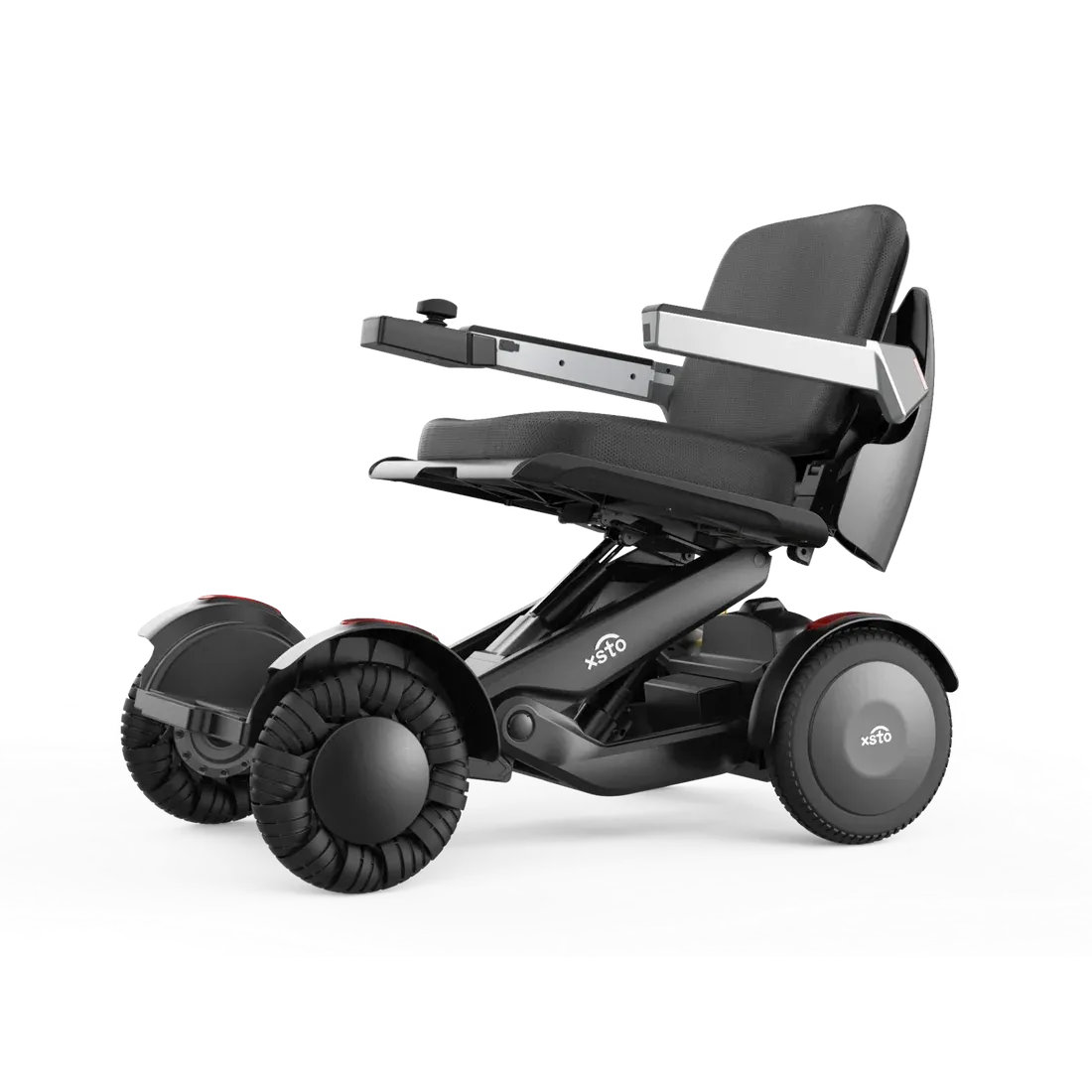
Electric wheelchair turning radius does not by itself settle doorway access. Review the opening, door swing and approach and exit space with the complete setup. Any use of related transfer equipment needs its own appropriate access review.
What should your route sketch show?
Draw both sides of the opening. Mark the approach angle, fixed furniture and the space available once the chair crosses the threshold. Use the normal intended layout rather than clearing objects that will remain in daily use.
- Measure the narrowest clear opening.
- Record the door position and approach angle.
- Include room needed to exit and continue the route.
| Route section | Question |
|---|---|
| Approach and opening | Can the setup reach and pass the opening as intended? |
| Exit space | Can the movement be completed beyond it? |
Check the route as a connected task, not a series of isolated widths. Key Takeaway: You can identify the point that needs a closer trial.
Can electric wheelchair turning radius mean zero clearance?
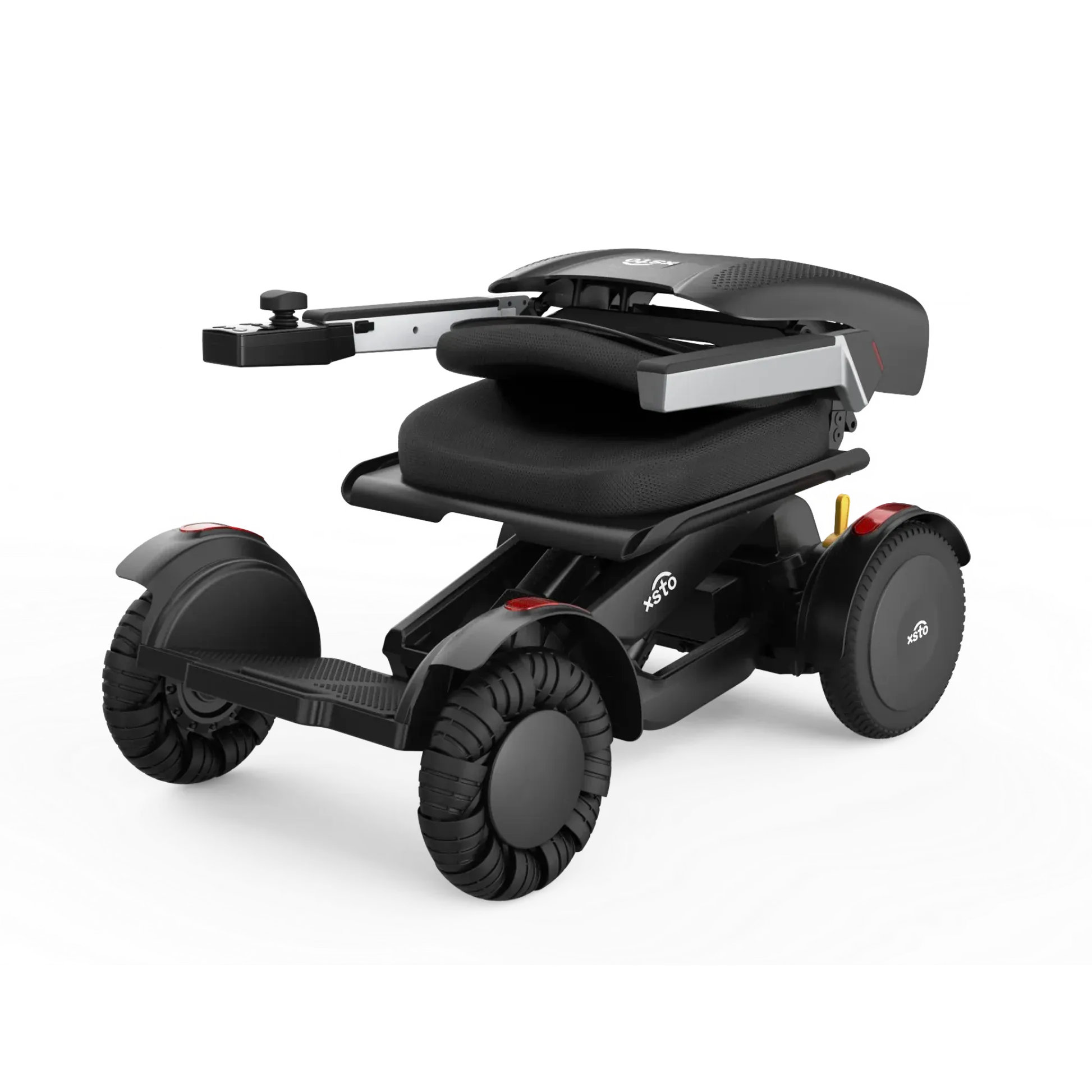
No, an electric wheelchair turning radius claim about rotating in place does not mean the occupied chair needs no surrounding clearance. The chair and relevant supports still occupy and move through space. Ask how the claimed manoeuvre is defined for the actual model.
What should the supplier show beyond the rotation claim?
Ask for the swept space and setup. Request the relevant dimensions, fitted setup and method behind the statement. Do not infer a usable room size from a phrase about rotation alone.
- Clarify the claimed movement and its conditions.
- Identify the complete setup used.
- Review the outer space needed for that movement.
| Claim | Supporting detail to request |
|---|---|
| Rotation capability | Defined movement and conditions |
| Required clearance | Relevant outside dimensions and manoeuvring space |
A movement capability and a clearance requirement answer different questions. Key Takeaway: You can discuss turning features without promising access to an unreviewed space.
Which settings belong in an electric wheelchair turning radius test?
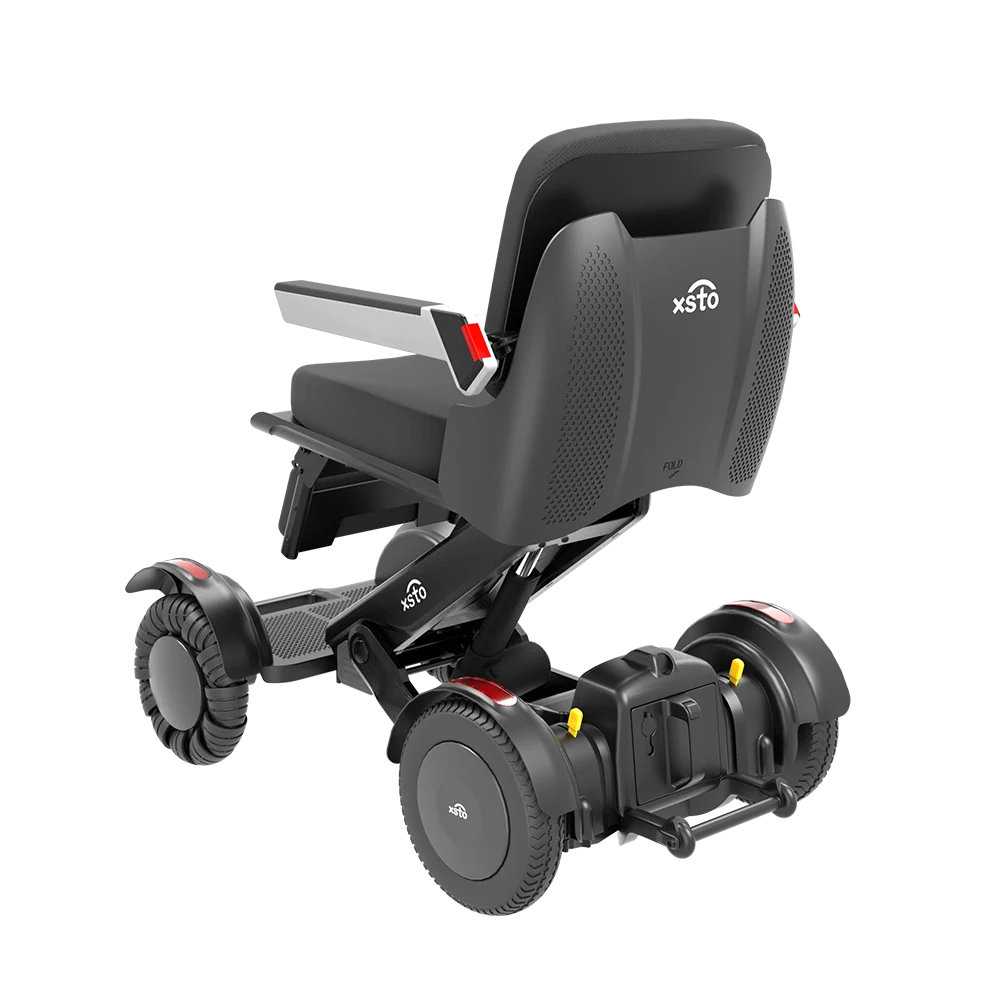
An electric wheelchair turning radius test or review should record the seat, supports, controls and accessories used. Keep the supplied setup consistent with the evidence being compared. Ask the supplier team to explain any difference between the sample and proposed order.
What changes deserve another clearance check?
Keep the relevant settings visible. A different foot support, control position or accessory can change the outer layout being reviewed. Follow the approved setup and arrange further review when an agreed setup changes.
- Identify the exact chair and fitted items.
- Record the relevant settings used in the review.
- Retain approved changes and any required follow-up.
| Record | Why retain it |
|---|---|
| Fitted items and settings | Defines the reviewed outline |
| Later approved changes | Identifies what needs checking again |
Keep a dimension result attached to the setup that produced it. Key Takeaway: Your team can see when an older clearance record may no longer apply.
How should electric wheelchair turning radius be trialled?
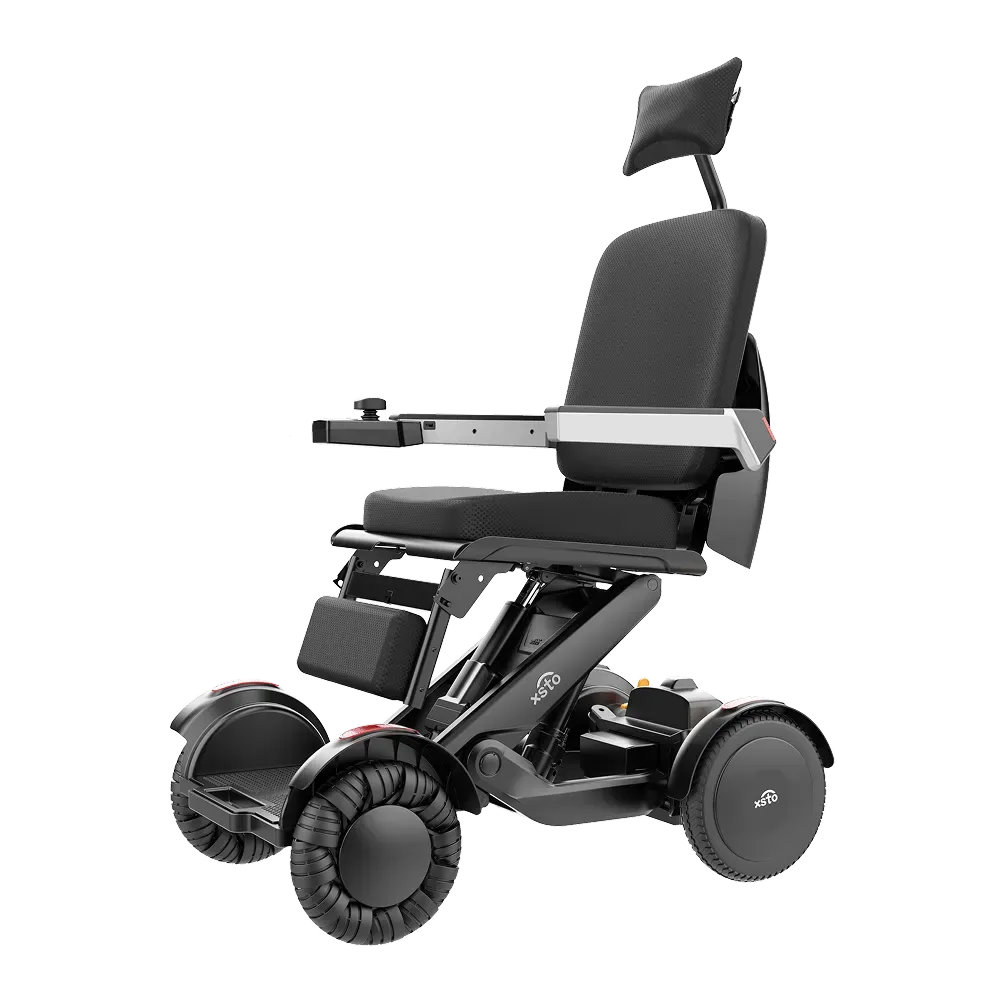
Trial electric wheelchair turning radius through a suitable controlled route review, following the chair's instructions and the user's assessed needs. Check the space and setup before any individual trial. Do not use an unfamiliar chair to discover its limits near obstacles.
What can the team resolve while the chair is empty?
Start with the plan and product outline. Review the measured route, fixed obstructions and relevant product dimensions first. Arrange the proper support for any occupied trial and record concerns rather than forcing the chair through a tight passage.
- Compare the route with the documented setup.
- Arrange appropriate trained support for the planned activity.
- Record the outcome and any point requiring further review.
| Review stage | Purpose |
|---|---|
| Space and empty-product check | Identifies obvious layout conflicts |
| Appropriate occupied trial | Reviews the individual's intended use |
An unresolved point is a finding that needs action, not an assumed pass. Key Takeaway: The trial can produce useful evidence within a clear scope.
Does electric wheelchair turning radius prove local compliance?
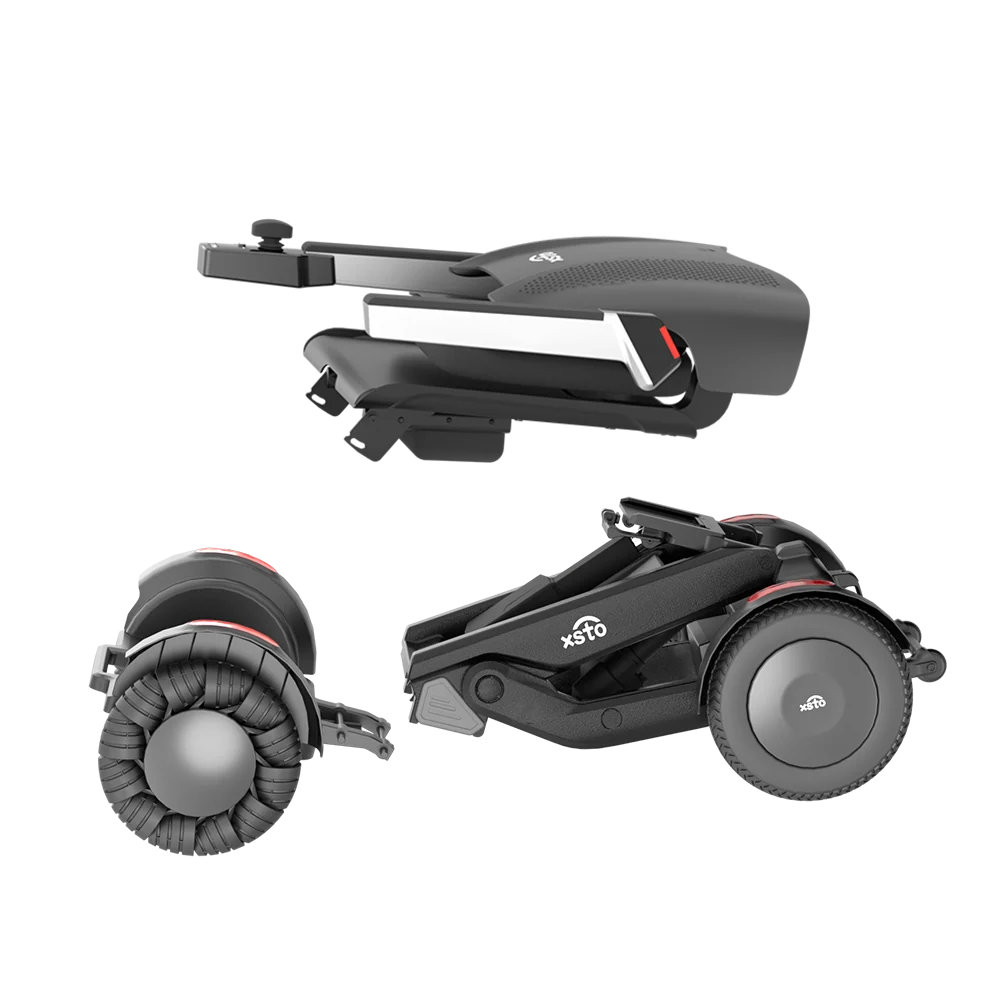
Electric wheelchair turning radius does not establish that a device or location meets every applicable local requirement. For Singapore enquiries, review the relevant device rules and site conditions separately from turning measurements. Keep the conclusion specific to the route and purpose assessed.
Where should a Singapore buyer check device requirements?
Keep the local-rule check in its own record. Use the current LTA personal mobility aid requirements and the responsible site's access guidance for the actual use. Do not treat a successful showroom turn as proof of permission or compliance everywhere.
- Identify the intended location and use.
- Check current requirements with the responsible source or adviser.
- Retain the route review separately from those checks.
| Question | Evidence source |
|---|---|
| Does this setup fit the route? | Defined dimensions and an appropriate route review |
| Is the intended use compliant? | Applicable current rules and responsible site review |
Keep the two conclusions distinct when advising a buyer. Key Takeaway: Your access advice will not claim more than the review established.
What records explain electric wheelchair turning radius?
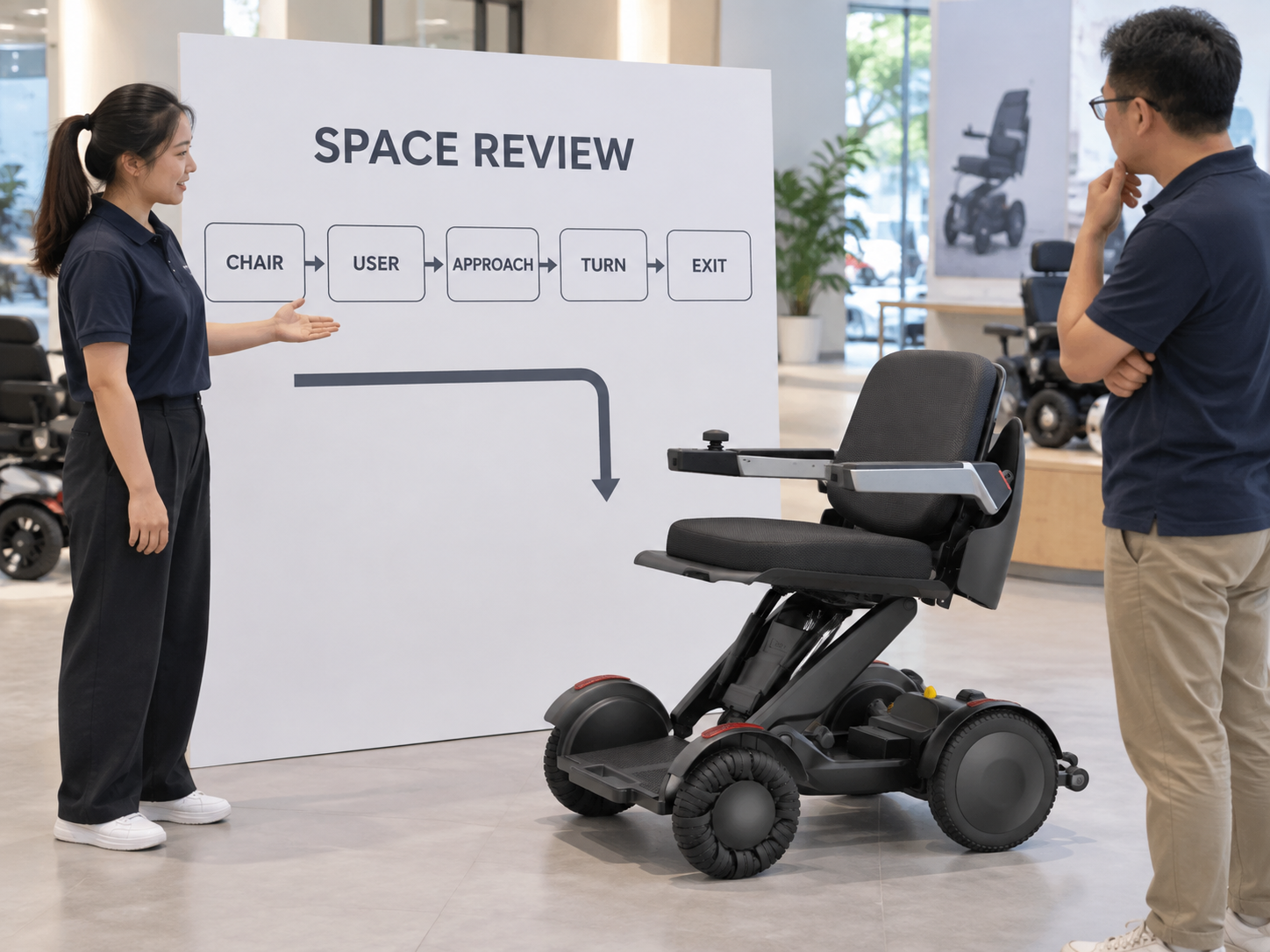
An electric wheelchair turning radius comparison sheet should retain the original measurement, method, setup and relevant route findings. Mark missing definitions or conditions clearly. A smaller figure should not win the comparison simply because another supplier disclosed more detail.
Could another reviewer follow the basis of the shortlist?
Keep the evidence next to each result. Attach the relevant report or product record and a simple route sketch. Separate confirmed observations from statements that still need an answer.
- Record the term, unit and method used.
- Identify the tested or reviewed setup.
- List route findings and open questions.
| Comparison field | Purpose |
|---|---|
| Defined measurement | Supports a like-for-like reading |
| Route findings and limits | Shows where the result is useful |
Resolve gaps before treating the table as a final purchasing recommendation. Key Takeaway: The shortlist can be explained through evidence instead of a single brochure number.
How can you compare electric wheelchair turning radius clearly?
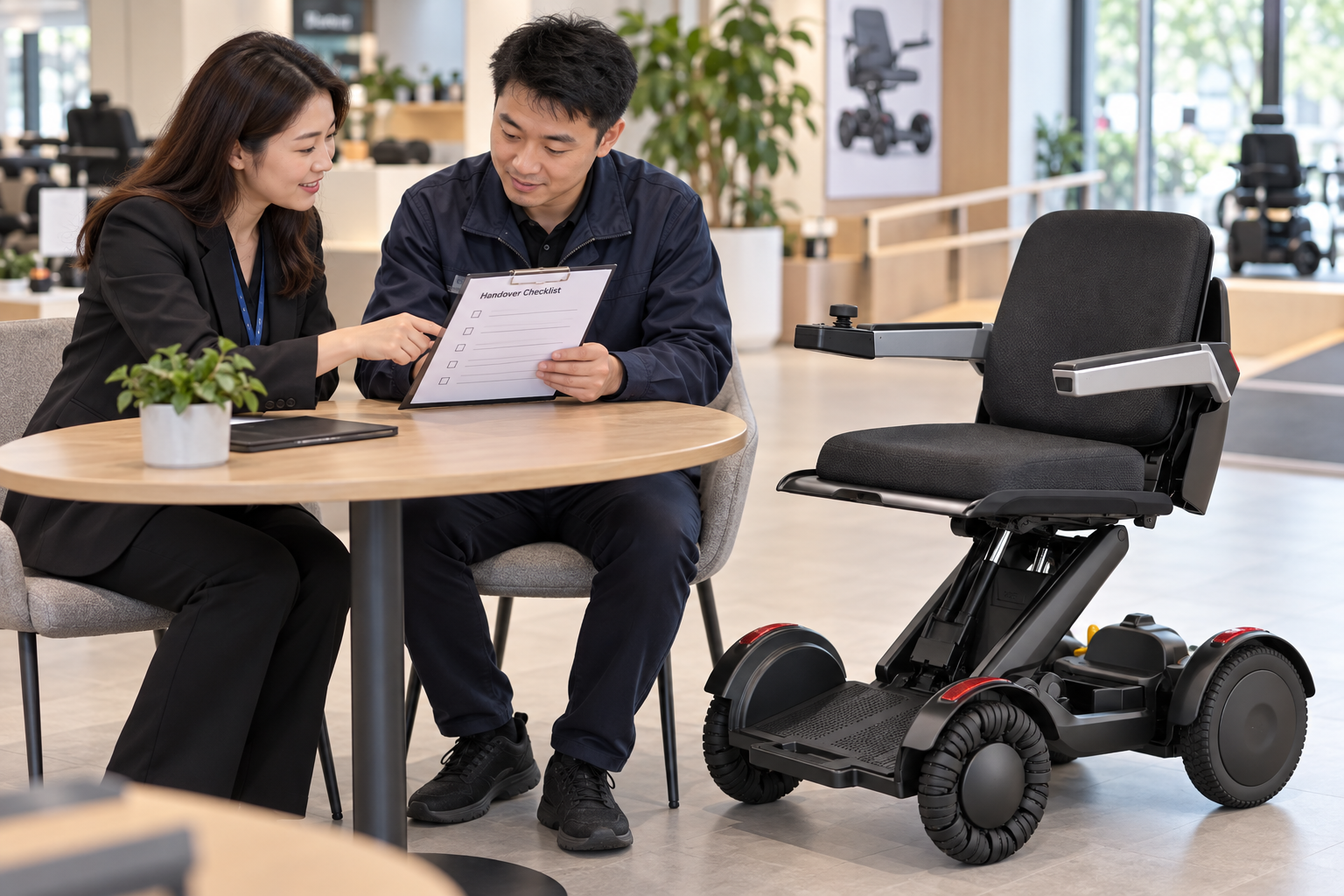
Compare electric wheelchair turning radius figures using clear definitions, the reviewed occupied setup and the actual route. Keep local requirements and individual fit needs in the decision. Ask for clarification wherever the evidence does not match the proposed use.
Ready to request comparable manoeuvring details?
Send the route and setup brief together. Ary Medical can review product details when the key openings, turns and required seating layout are clear. Request the exact definition and conditions behind the supplied measurement.
- Provide a simple route sketch and critical clearances.
- State the required supports, controls and accessories.
- Request defined dimensions and manoeuvring details for the model.
| Your brief | Supplier details to request |
|---|---|
| Route and occupied setup | Relevant layouts and dimensions |
| Turning question | Defined measurement, method and conditions |
Use the answer to decide which models need an appropriate route trial. Key Takeaway: For a comparison tied to your actual space, contact us. Ary Medical supports access decisions with clearly defined product details.
Frequently asked questions
Q1: Can I use empty-chair width to decide turning access?
No. Review the defined manoeuvring measurement, projecting parts and the agreed occupied setup.
Q2: What's the best turning-radius figure for a small flat?
There is no universal figure that proves a fit. Compare a defined measurement with the actual approach, opening, turn and exit space.
Q3: Can a chair that rotates in place need no clearance?
No. The chair, supports and user still occupy and move through space, so the relevant clearance must be reviewed.
Q4: How do I know if a new footrest changes the route fit?
Review the new approved setup against the existing record. A changed outer layout can require further clearance checks.
Q5: Can a showroom trial prove compliance with Singapore's local rules?
No. Check the applicable current device and site requirements separately from the physical route trial.