
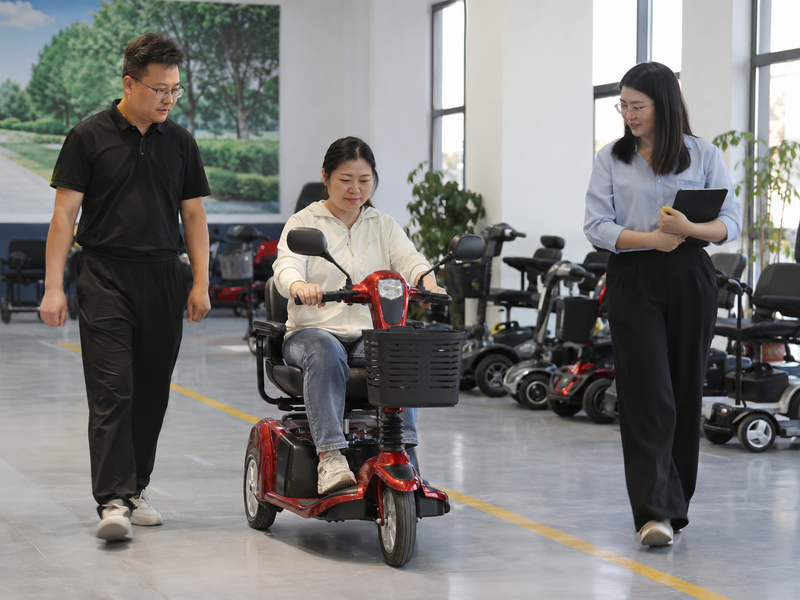
Run a mobility scooter sample trial by naming the purchase decision, matching the demo to the quoted model and recording observations on a relevant route. A buyer can enjoy a smooth showroom ride and still discover the controls or doorway do not fit at the destination. A controlled sample plan and signed notes turn that impression into evidence you can use.
What decision should a scooter sample answer?
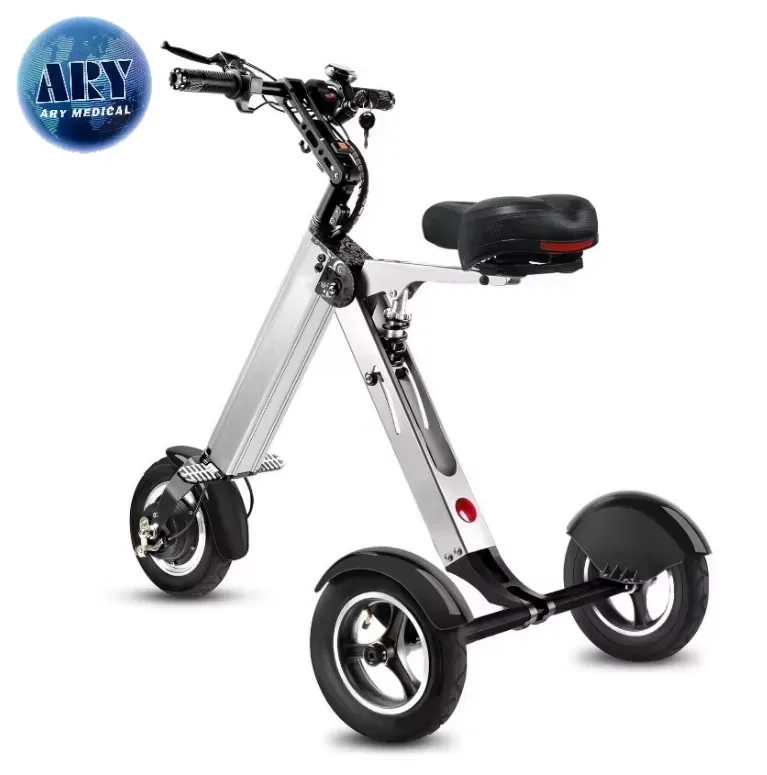
Mobility scooter sample should answer a named buyer question about fit, control access or the intended route. An unstructured spin around a showroom cannot support a fleet choice. Define the decision before the sample arrives.
How should the brief be written?
Begin with a question the trial can settle. Name the model from the scooter range and the buyer's operating setting. Separate a product demonstration from an individual clinical fit decision.
- Write one trial objective.
- Identify the exact model.
- Name the decision owner.
| Buyer check | Evidence to keep |
|---|---|
| Write one trial objective | Buyer brief |
| Identify the exact model | Sample label |
A narrow question produces observations a buyer can use. Key Takeaway: You can judge the sample against a real purchasing need.
How should the sample be identified?
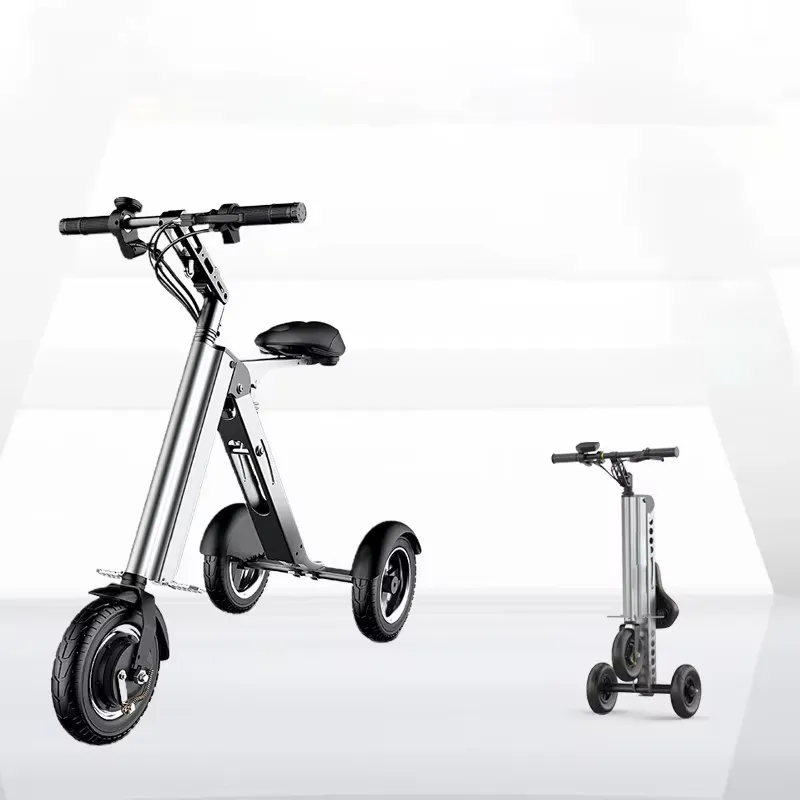
Mobility scooter sample records should show the unit model, revision, fitted accessories and current instructions. A borrowed demo unit may not match the quoted shipment. Photograph its complete configuration before any route trial.
Which identifiers should be copied?
Treat the demo as a specific unit. Record serial or batch details available on the sample and list options installed. Ask the supplier to state any difference between the sample and the order configuration.
- Capture the model plate.
- List fitted options.
- Compare the quote.
| Buyer check | Evidence to keep |
|---|---|
| Capture the model plate | Dated photo |
| List fitted options | Sample inventory |
An unmatched demo can make a good trial irrelevant to the purchase. Key Takeaway: Your buyer knows whether the tested scooter is the one being offered.
Who should take part in the trial?
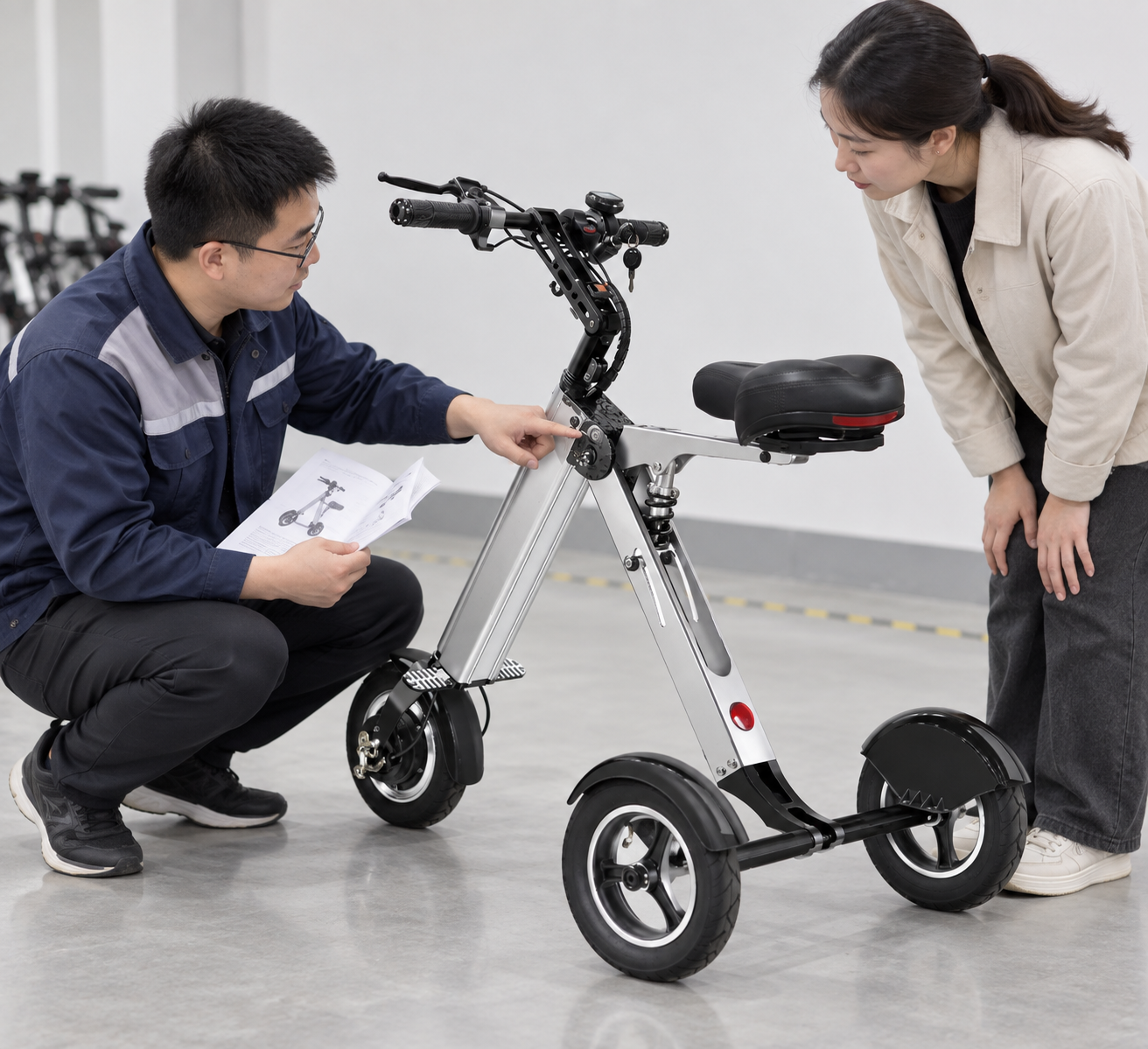
Mobility scooter sample participation should reflect the person or service setting that will use the scooter, with trained staff and appropriate assessment support. A sales representative alone cannot judge personal fit. Keep roles explicit in the trial plan.
Which responsibilities should be assigned?
A sample needs the right observers. Ask an appropriate assessor to lead individual fit decisions and trained staff to explain the controls. Record the buyer's procurement questions separately from clinical judgments.
- Name the participant.
- Assign trained staff.
- Record assessor input.
| Buyer check | Evidence to keep |
|---|---|
| Name the participant | Trial consent or site plan |
| Assign trained staff | Demonstration role |
Clear roles prevent a salesperson's impression from becoming a fit claim. Key Takeaway: You can use the sample result without overstating its authority.
How should a test route be chosen?
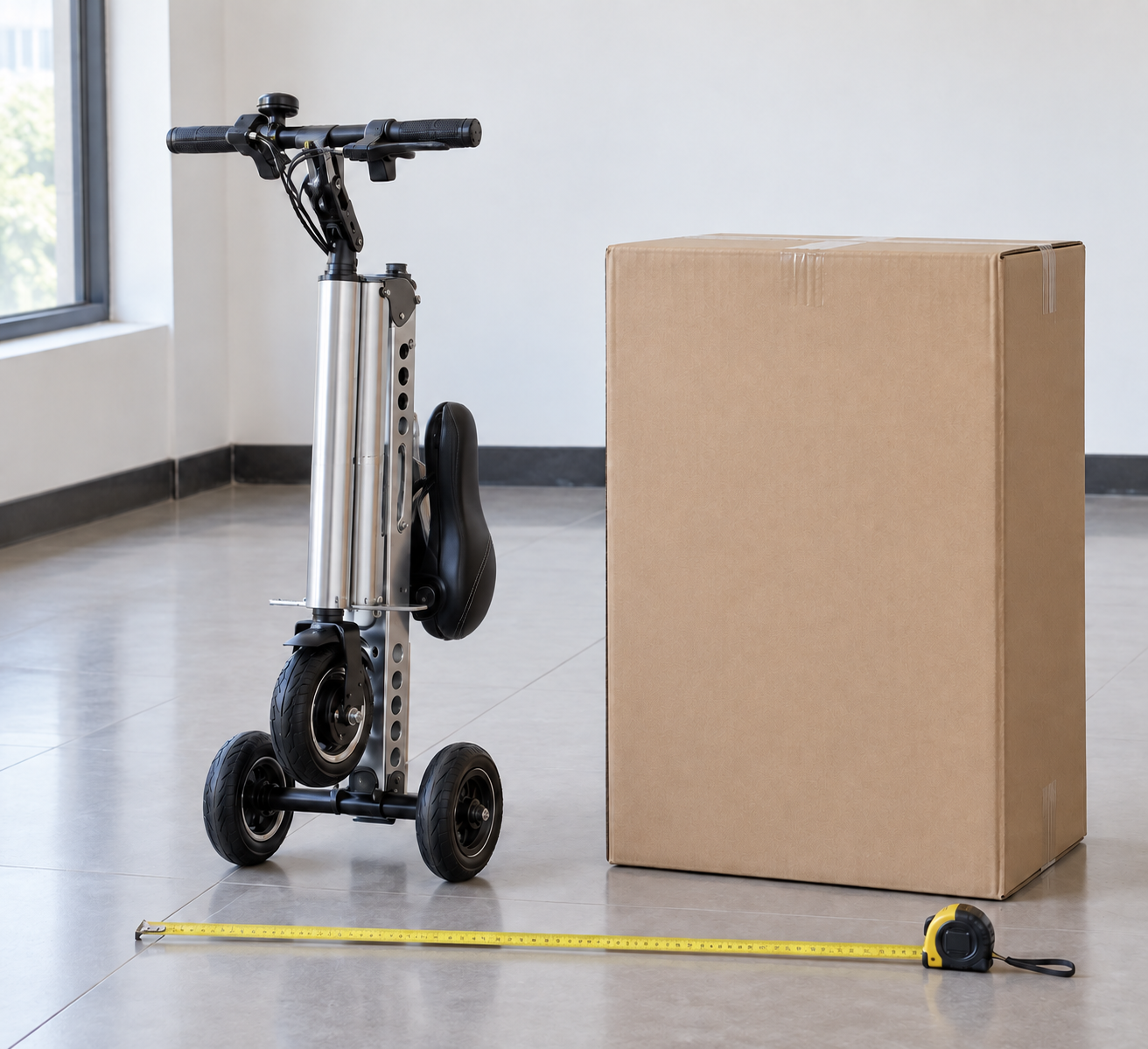
Mobility scooter sample route should resemble the intended environment while staying within the exact model's stated use limits. A polished indoor floor may miss narrow turns or thresholds at the destination. Measure the route before the trial.
What should be mapped?
Bring the use setting into the test. Mark doorway widths, turning points and surface transitions for the three-wheel scooter under review. Do not claim performance on a slope or rough ground without model-specific evidence.
- Measure the trial path.
- List surface changes.
- Check maker limits.
| Buyer check | Evidence to keep |
|---|---|
| Measure the trial path | Route sketch |
| List surface changes | Site note |
A representative route makes observed control access more meaningful. Key Takeaway: Your dealer can ask follow-up questions about the actual site.
What should be observed at the controls?
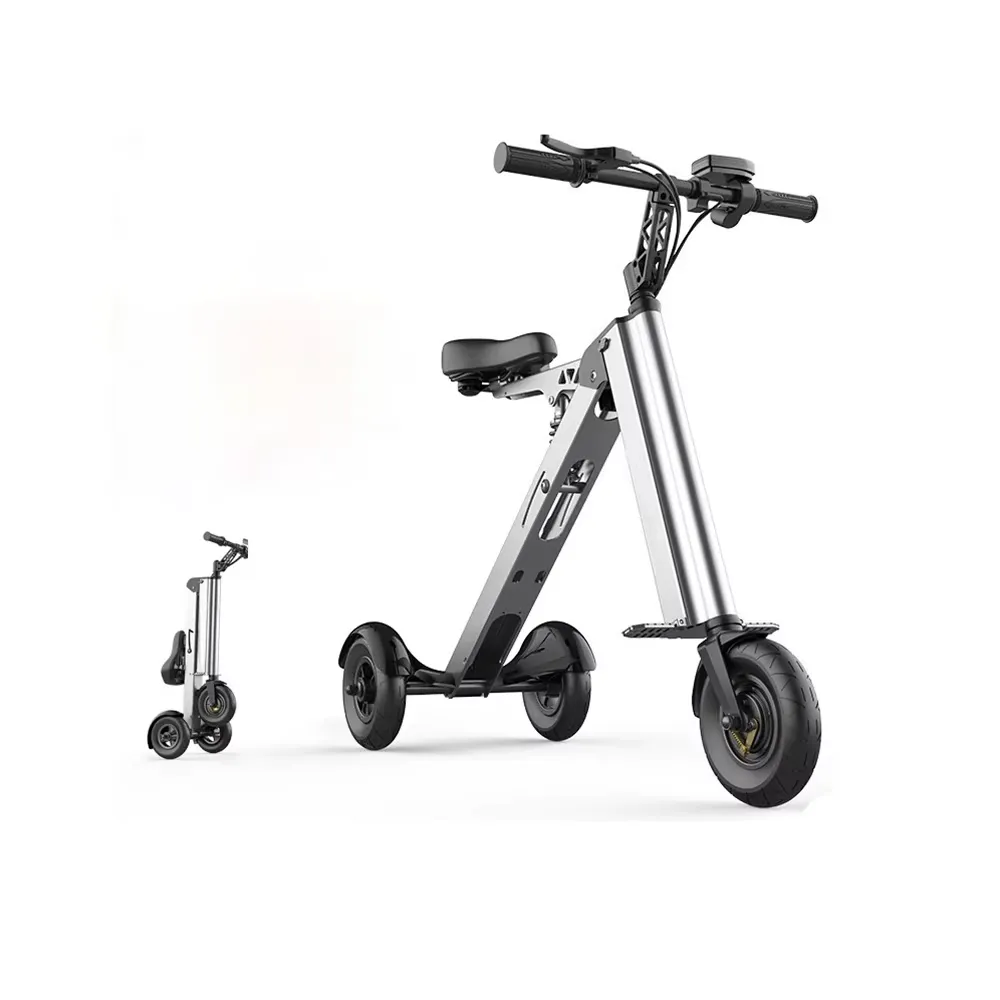
Mobility scooter sample control review should record reach, understanding and permitted adjustment on the exact unit. Do not infer comfortable operation from a hand resting on a parked scooter. Use the maker's training instructions for each control.
Which actions should be observed?
Watch a complete task, not a pose. Record starting, steering and stopping under supervision, plus any repeated reach problem. Do not change control settings beyond the approved guide during the trial.
- Check seated control reach.
- Record permitted settings.
- Log any missed control.
| Buyer check | Evidence to keep |
|---|---|
| Check seated control reach | Observed fit note |
| Record permitted settings | Maker guide reference |
A small reach difficulty can matter more than a polished demonstration. Key Takeaway: You can identify whether a different configuration merits review.
How should stopping and parking be reviewed?
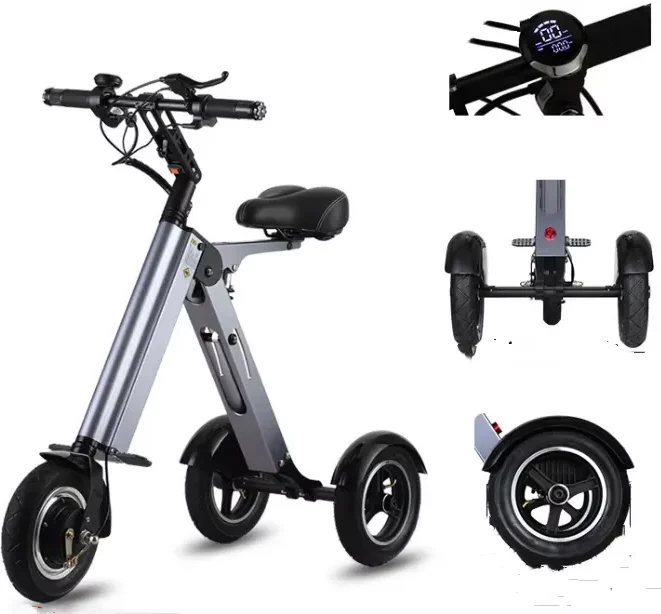
Mobility scooter sample stopping and parking checks should follow the sample's current operating instructions in a clear space. Do not promise a stopping distance or hill-holding result from one showroom test. Note what staff observed and under which conditions.
What belongs in the safety note?
Record conditions alongside the result. Identify the floor, operator, settings and guide version. If a control behaves unexpectedly, stop the trial and refer the sample for qualified review.
- Record the floor and route.
- Use approved stop steps.
- Note abnormal behavior.
| Buyer check | Evidence to keep |
|---|---|
| Record the floor and route | Trial conditions |
| Use approved stop steps | Guide checklist |
A careful observation is more useful than an unsupported safety claim. Key Takeaway: Your buyer can request follow-up before committing to a fleet.
What should the seat and approach review include?
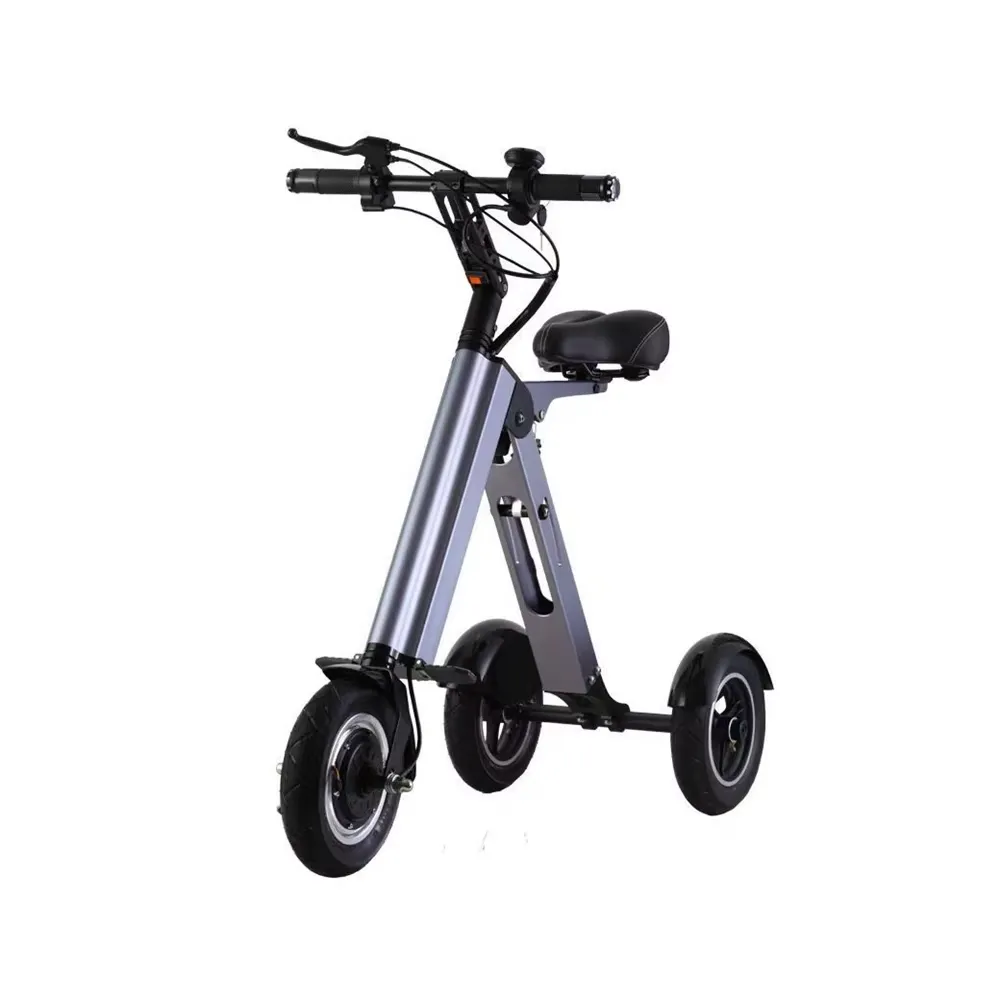
Mobility scooter sample fit review should include the seat, foot platform and route onto or off the scooter, not only the tiller. A folding scooter illustration cannot settle transfer access for this user. Record the actual configured sample.
Which spaces should be checked?
The journey begins before movement. Measure approach and seated clearances with the responsible assessor. Keep any transfer method within the person's plan and the maker's instructions.
- Record seat setup.
- Check approach space.
- List fitted accessories.
| Buyer check | Evidence to keep |
|---|---|
| Record seat setup | Fit note |
| Check approach space | Measured route |
A scooter can drive well yet fit poorly during entry and exit. Key Takeaway: You can treat access as part of the purchase decision.
How should battery condition be handled?
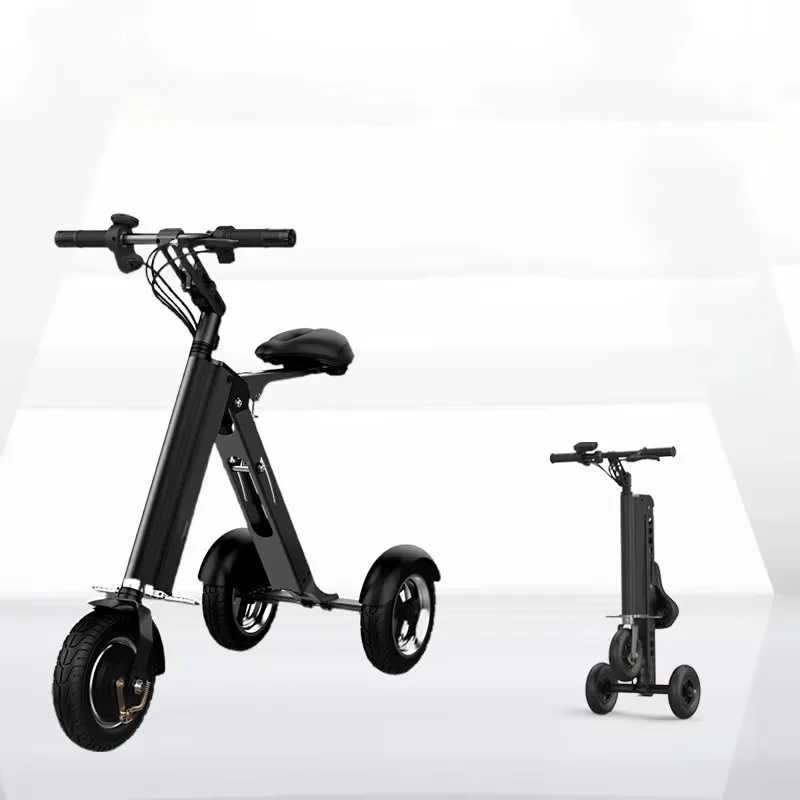
Mobility scooter sample battery observations need the exact pack identity and its current state before the route begins. One short trial cannot establish a universal range figure. Use the maker's charging and inspection instructions.
Which details should staff record?
Start with a known setup. Note the pack model, charging preparation and any displayed indicator as observations only. If the indicator or charger is unclear, ask the supplier rather than inventing a performance estimate.
- Identify the pack.
- Record preparation.
- Log observed indicator.
| Buyer check | Evidence to keep |
|---|---|
| Identify the pack | Battery label image |
| Record preparation | Charging note |
A known starting condition makes a trial easier to interpret. Key Takeaway: Your team can avoid turning one ride into a range promise.
What belongs in the sample report?
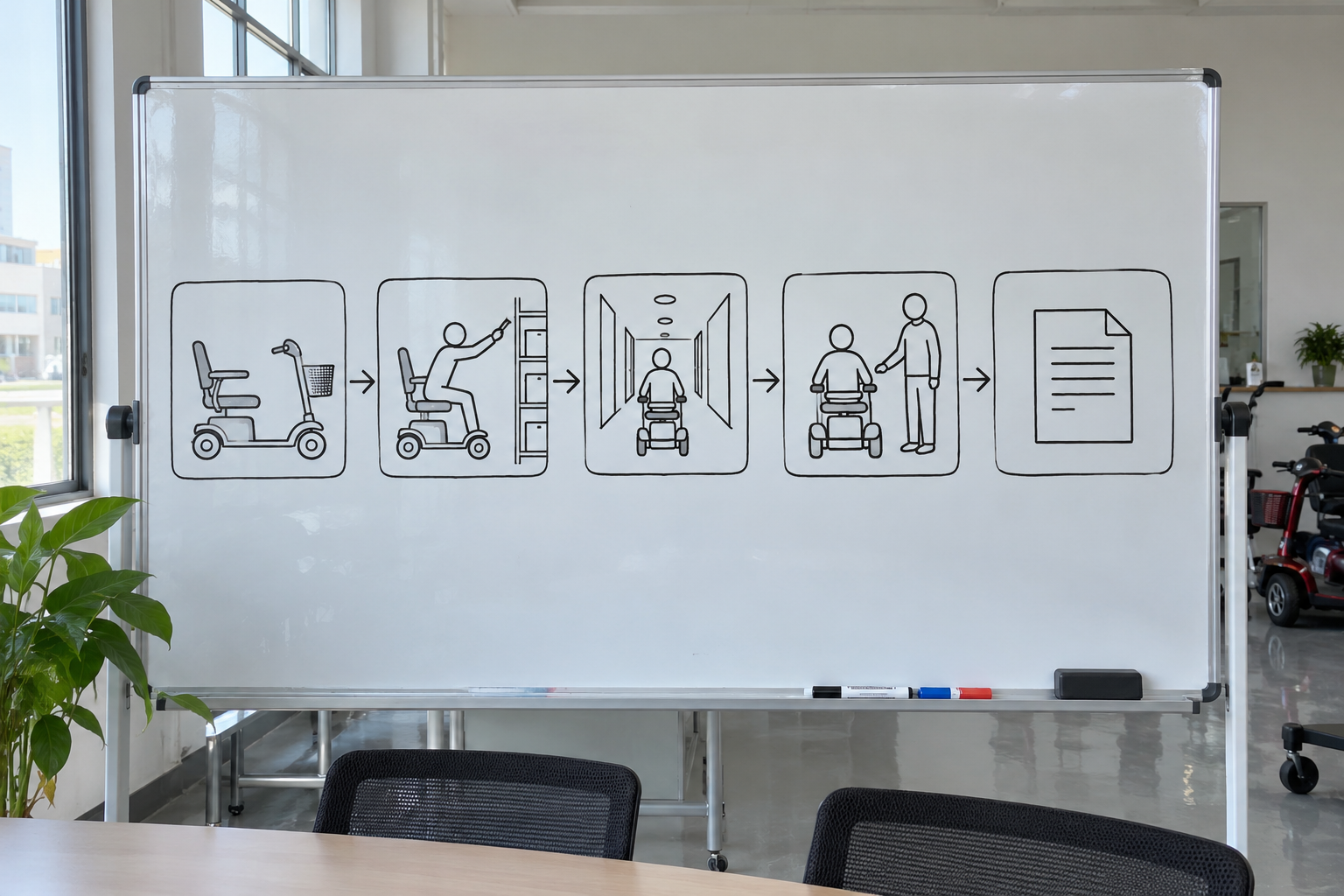
Mobility scooter sample report should connect model, participant, route, settings and observations to the buyer's original question. WHO's assistive product specifications provide procurement context, not an approval of this sample. Keep unresolved findings visible.
How should the result be filed?
Use a record another person can repeat. Attach photos, guide revision and the measured route. Distinguish observed behavior from supplier claims and individual assessment conclusions.
- Record the sample identity.
- Attach route conditions.
- List open questions.
| Buyer check | Evidence to keep |
|---|---|
| Record the sample identity | Model and serial |
| Attach route conditions | Measured sketch |
A report lets procurement compare more than a salesperson's memory. Key Takeaway: You can move from a demonstration to a documented decision.
How should a buyer decide after the trial?
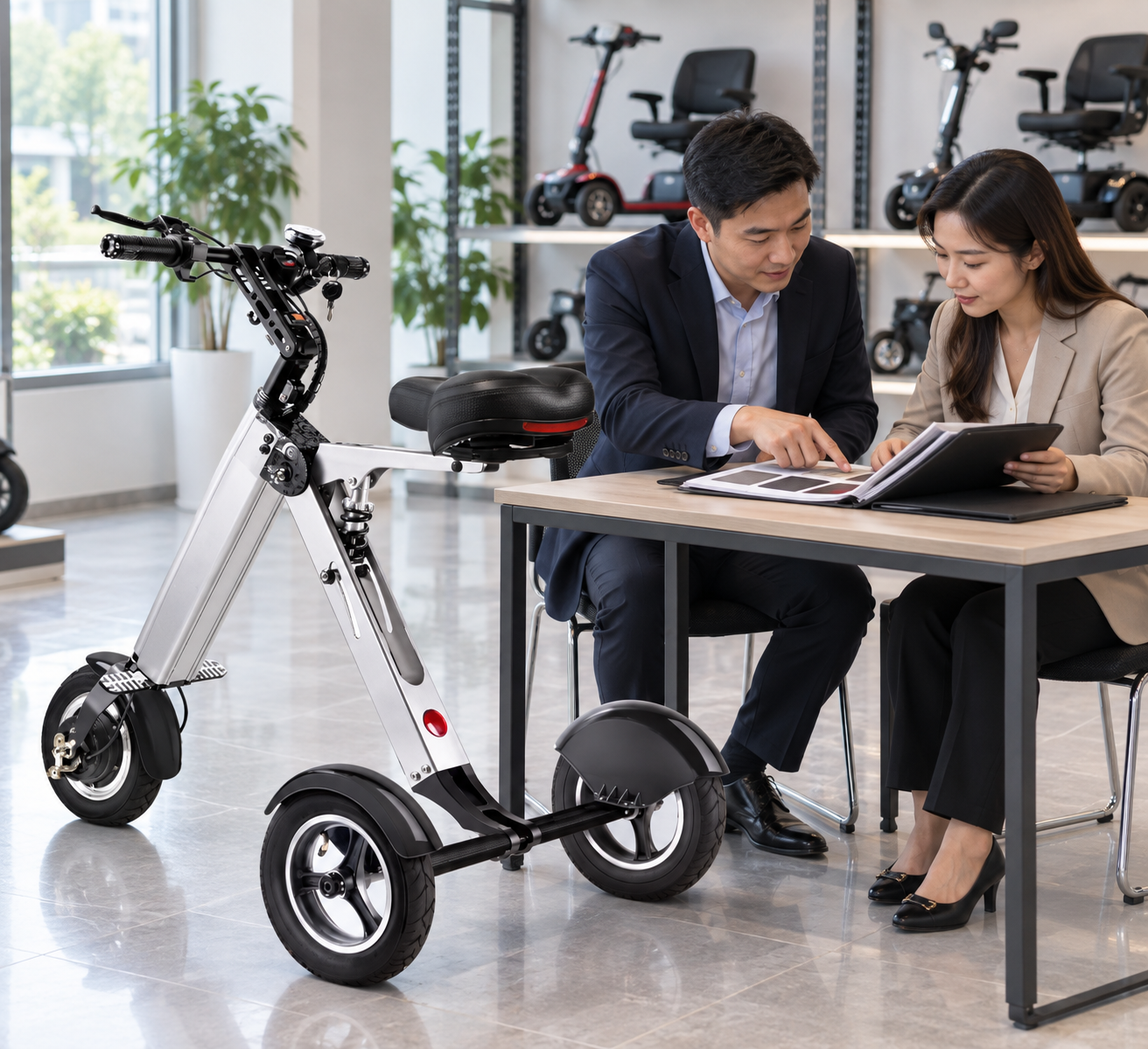
Mobility scooter sample results should be accepted only for the model and conditions actually tested. Ask for another sample or clarification when the quote differs from the demo. Keep a decision open if fit, route or service concerns remain.
What should the next enquiry contain?
Send the supplier the actual findings. Provide the trial report, intended order configuration and questions needing a written answer. Plan receiving checks that compare delivered units with the approved sample.
- Specify the accepted model.
- List unresolved issues.
- Set delivery checks.
| Buyer check | Evidence to keep |
|---|---|
| Specify the accepted model | Signed trial decision |
| List unresolved issues | Supplier response |
The trial is useful only when it changes a clear purchase decision. Key Takeaway: For a controlled sample review, contact us. Ary Medical favors decisions that survive the move from showroom to site.
Frequently asked questions
Q1: Can I approve a scooter after a quick showroom ride?
No. Define the buyer question and test the exact model under recorded conditions.
Q2: What's the best route for a sample trial?
Use a safe route that reflects the intended site and the maker's use limits.
Q3: How do I know whether the demo matches my quote?
Compare model, revision, accessories and current product documents.
Q4: Can one trial prove travel range?
No. A short ride cannot establish a general range claim.
Q5: Should I keep a signed trial sheet?
Yes. It makes the outcome reviewable by procurement, service and the supplier.