

A shower chair receiving inspection should connect the purchase order, carton, product identity, configuration, physical condition, assembly, function, documents, and final disposition. An intact carton can contain a bent leg tube, mixed hardware, or the wrong support option. Counting boxes is therefore not product acceptance. This guide gives distributors, importers, warehouses, care facilities, and quality teams a repeatable gate that keeps mismatched or damaged units out of saleable stock.
1. What Is a Shower Chair Receiving Inspection?

A shower chair receiving inspection is a documented sequence that reviews shipment, carton, product, configuration, condition, assembly, function, and records before inventory release. It separates evidence collection from disposition. The process should define what can be accepted, held, reworked, reviewed with the supplier, or rejected.
Which Inspection Layers Need Separation?
Shipment quantity, carton condition, internal protection, unit identity, components, visible damage, sample assembly, no-user function, and document presence answer different questions.
- Inspect from outside to inside.
- Preserve links between carton and unit.
- Apply the approved sampling or full-inspection plan.
Which Disposition States Need Definitions?
Accept, conditional accept, hold, quarantine, rework, supplier review, and reject need clear authority. Make status visible: unreviewed goods should never blend into released stock.
- Label and segregate held units.
- Record who may change disposition.
- Close every conditional action by a due date.
| Inspection layer | Main question | Evidence | Output |
|---|---|---|---|
| Shipment/carton | Did the consignment arrive as expected? | Count and condition record | Open or hold |
| Product/configuration | Is the correct complete unit present? | Identity and component check | Match or mismatch |
| Function/documents | Can the sample be released? | Test and file review | Accept or disposition |
Receiving is a controlled decision, not a carton count. Key Takeaway: separate inspection layers and use one unmistakable inventory status.
2. Who Owns a Shower Chair Receiving Inspection?

Shower chair receiving inspection needs assigned tasks for warehouse, quality, procurement, product, service, finance, and the supplier contact. Warehouse staff can record and segregate, while quality or technical staff may own configuration and function decisions. Authority should be set before the truck arrives.
Which Roles Need Assigned Tasks?
Define who counts cartons, photographs damage, opens samples, verifies identity, assembles a unit, performs no-user checks, records defects, contacts the supplier, and releases inventory.
- Give each role a written scope.
- Provide tools and clean inspection space.
- Protect evidence from disposal or mixing.
Which Findings Need Immediate Escalation?
Wet cartons, identity mismatch, missing critical parts, bent frames, cracks, unstable units, failed locks, sharp edges, or missing controlled documents may affect the full lot. Escalate early: continued unpacking can destroy evidence or spread mixed parts.
- Stop at the defined defect threshold.
- Preserve carton, unit, and batch references.
- Notify procurement and quality together.
| Role | Task | Authority | Escalation |
|---|---|---|---|
| Warehouse | Count, condition, segregation | Hold inventory | Shipment or carton defect |
| Quality/product | Identity, assembly, function | Accept or technical hold | Critical mismatch/failure |
| Procurement | Supplier communication | Commercial disposition | Rework, replacement, rejection |
Clear roles reduce lost evidence and unauthorized release. Key Takeaway: decide ownership, authority, and escalation before receiving begins.
3. Which Documents Guide Shower Chair Receiving Inspection?
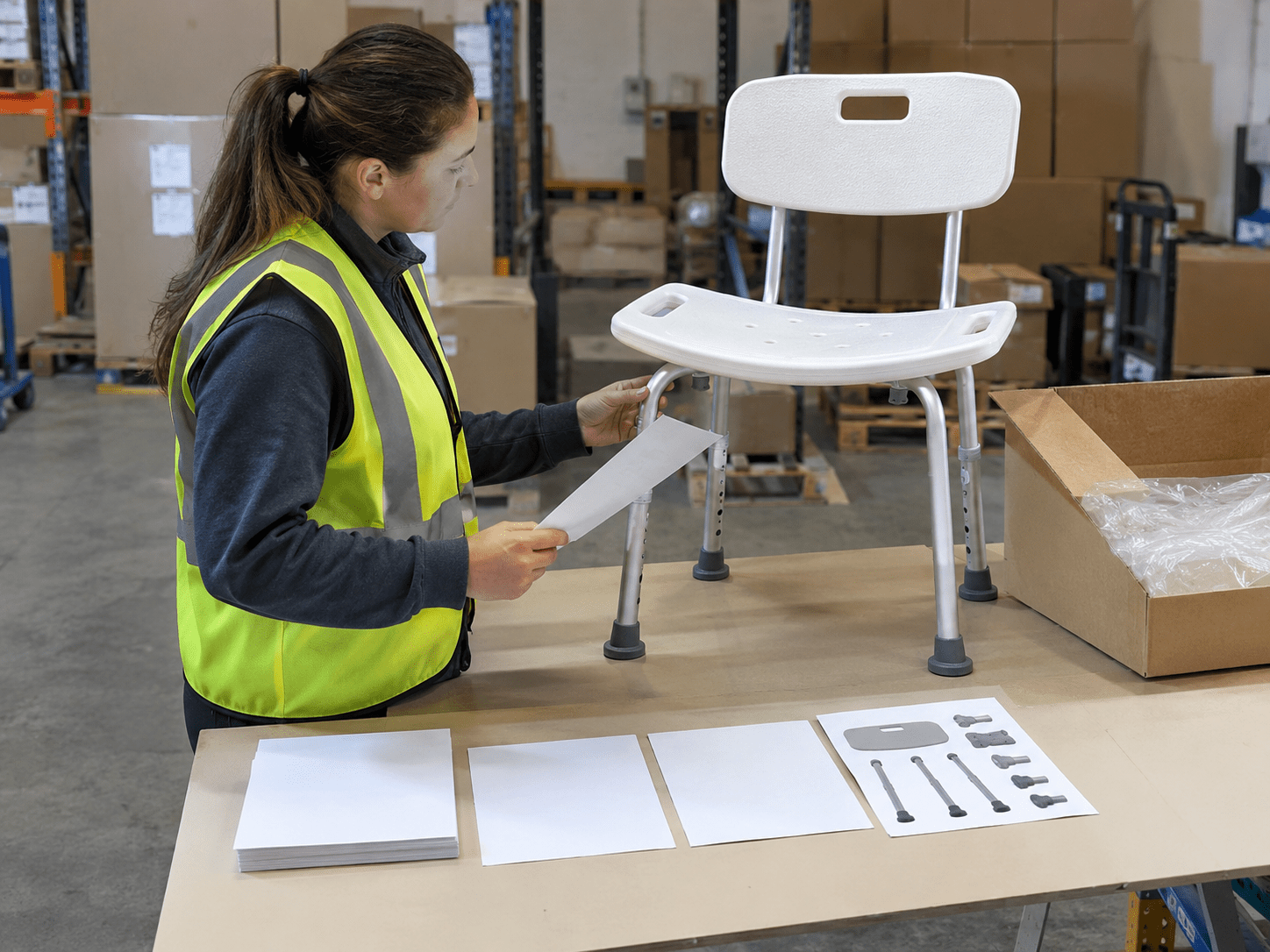
A shower chair receiving inspection should use the purchase order, configuration schedule, approved sample, controlled drawings, accepted change notices, packing list, and inspection plan. Supplier documents should also be checked for presence and identity. An old attachment can make a correct shipment appear wrong—or hide a substitution.
Which Purchase Records Need Matching?
Confirm model, revision, color, size, supports, feet, accessories, quantities, packaging, target market, and approved deviations against one controlled source set.
- Use the final purchase-order revision.
- Attach accepted changes to the inspection file.
- Resolve contradictions before disposition.
Which Supplier Documents Need Presence Checks?
Manuals, assembly guides, parts lists, labels, service path, and applicable technical evidence should match the received configuration and language needs. Match fields, not filenames: a familiar document title may cover another revision.
- Check model and option references.
- Record missing or obsolete files.
- Keep document gaps separate from product defects.
| Document | Required field | Mismatch risk | Action |
|---|---|---|---|
| Purchase order | Approved configuration and quantity | Wrong acceptance basis | Stop and reconcile |
| Packing list | Cartons, units, parts | Missing or mixed contents | Count and document |
| Manual/parts list | Correct model and revision | Wrong assembly or service | Hold affected release |
Controlled records create the acceptance baseline. Key Takeaway: inspect against the final approved file, including every accepted change.
4. How Does Packaging Enter Shower Chair Receiving Inspection?
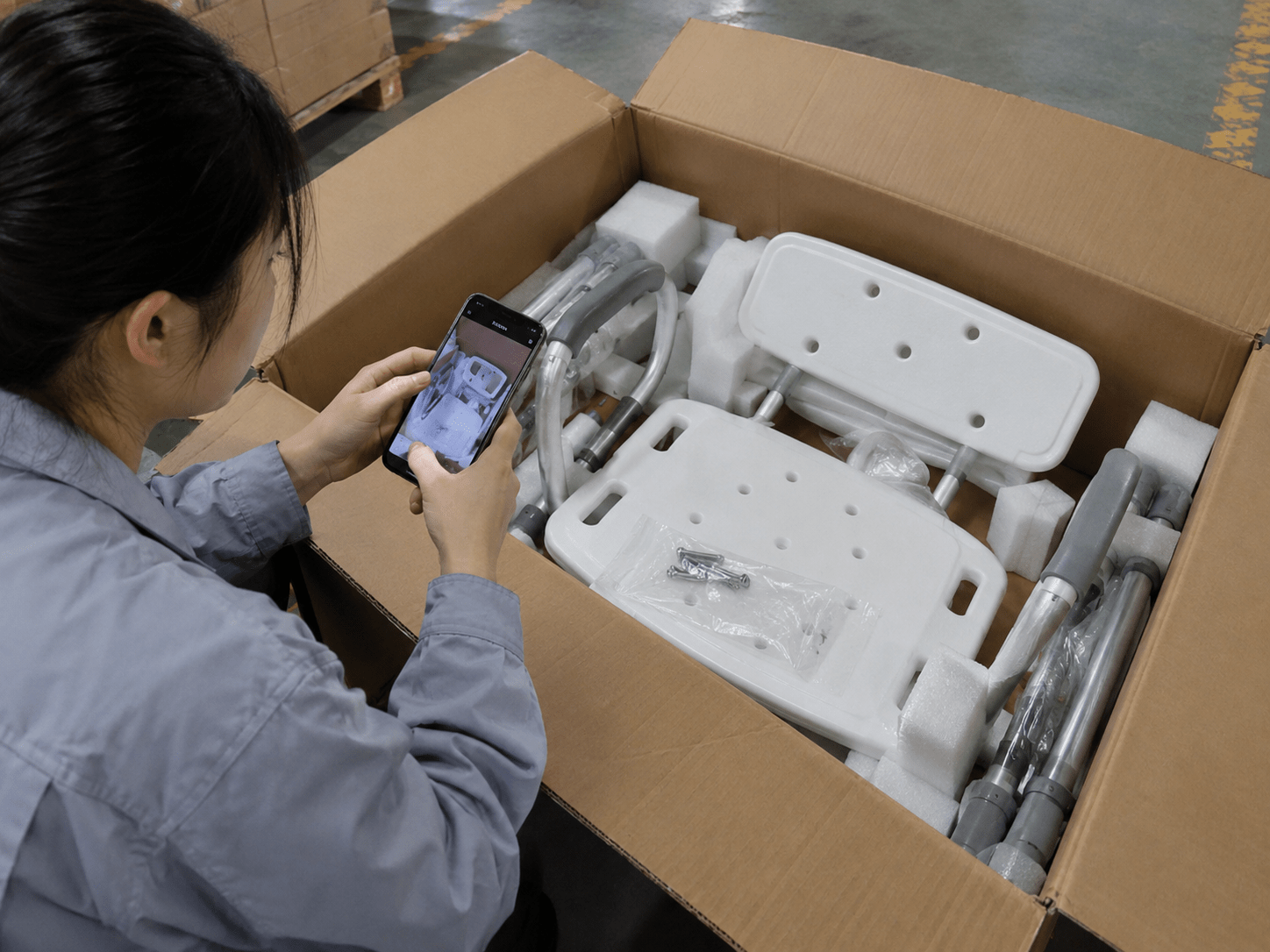
Shower chair receiving inspection records external carton condition before opening and internal protection as the product is exposed. Moisture, puncture, crush, broken seals, wrong orientation, or a normal-looking outer box with displaced inner parts all matter. Open in a way that preserves evidence.
Which External Conditions Need Recording?
Note carton identity, quantity, damage, moisture, punctures, compression, seal status, orientation, handling marks, pallet condition, and delivery exceptions.
- Photograph all sides before opening.
- Include scale or reference where useful.
- Link each image to carton and lot identity.
Which Internal Protection Needs Inspection?
Review bags, foam, separators, edge guards, restraints, moisture controls, part boxes, and loose hardware. Read the movement pattern: rub marks or displaced parts can explain hidden product damage.
- Record packaging position before removal.
- Keep suspect material for supplier review.
- Check whether protection presses locks or padding.
| Package layer | Expected condition | Defect | Disposition input |
|---|---|---|---|
| Outer carton | Dry, identified, structurally sound | Wet, crushed, punctured | Expand inspection/hold |
| Internal restraint | Parts separated and secured | Movement, rub, loose hardware | Inspect affected zones |
| Component protection | Clean and intact | Tear, moisture, pressure mark | Product condition review |
Packaging evidence helps trace where a defect occurred. Key Takeaway: document the package before it is dismantled or discarded.
5. How Does Identity Enter Shower Chair Receiving Inspection?
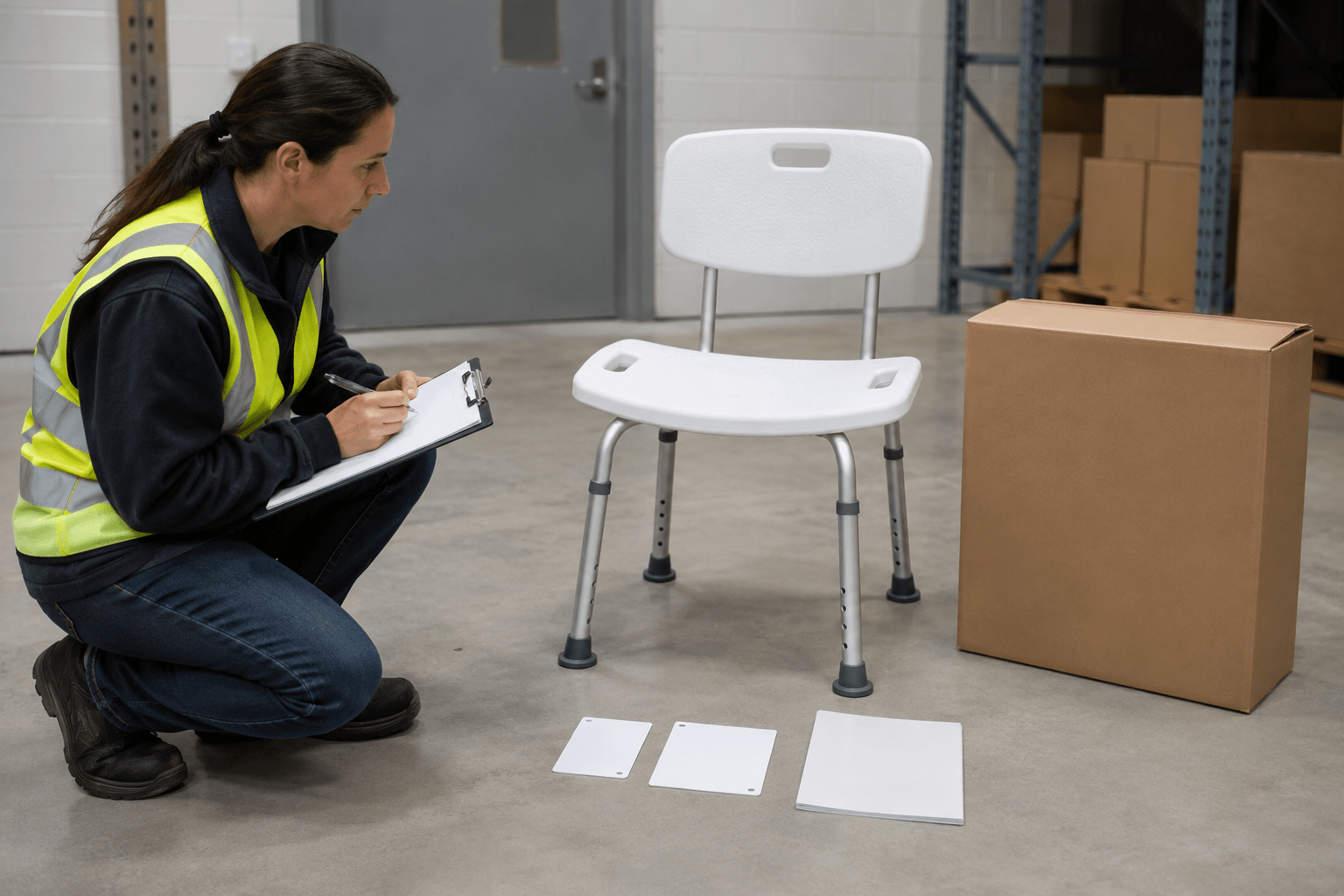
A shower chair receiving inspection should match model, batch or serial reference, revision, color, size, supports, feet, accessories, and target-market configuration across the carton, product, records, and documents. Visual similarity cannot prove identity. A substituted foot or back can change the approved system.
Which Product Fields Need Matching?
Use critical-to-configuration fields defined before shipment. Compare physical features with the approved sample or controlled images only where that method is authorized.
- Check every fitted and packed option.
- Record batch and revision where present.
- Treat unapproved differences as mismatches.
Which Labels Need Controlled Review?
Product, carton, manual, parts, battery where applicable, and inspection references should agree without introducing unsupported claims. Follow the identity chain: one correct label does not validate another component.
- Confirm placement and legibility.
- Check that labels belong to the item.
- Hold mixed or detached identities.
| Identity field | Approved source | Received state | Action |
|---|---|---|---|
| Model/revision | Purchase file and sample | Match or difference | Release or hold |
| Options/supports | Configuration schedule | Complete, missing, substituted | Reconcile |
| Market documents | Approved document set | Correct or obsolete | Correct before release |
Identity review prevents wrong stock from entering the system. Key Takeaway: match the whole configuration, not only the carton description.
6. How Does Completeness Enter Shower Chair Receiving Inspection?
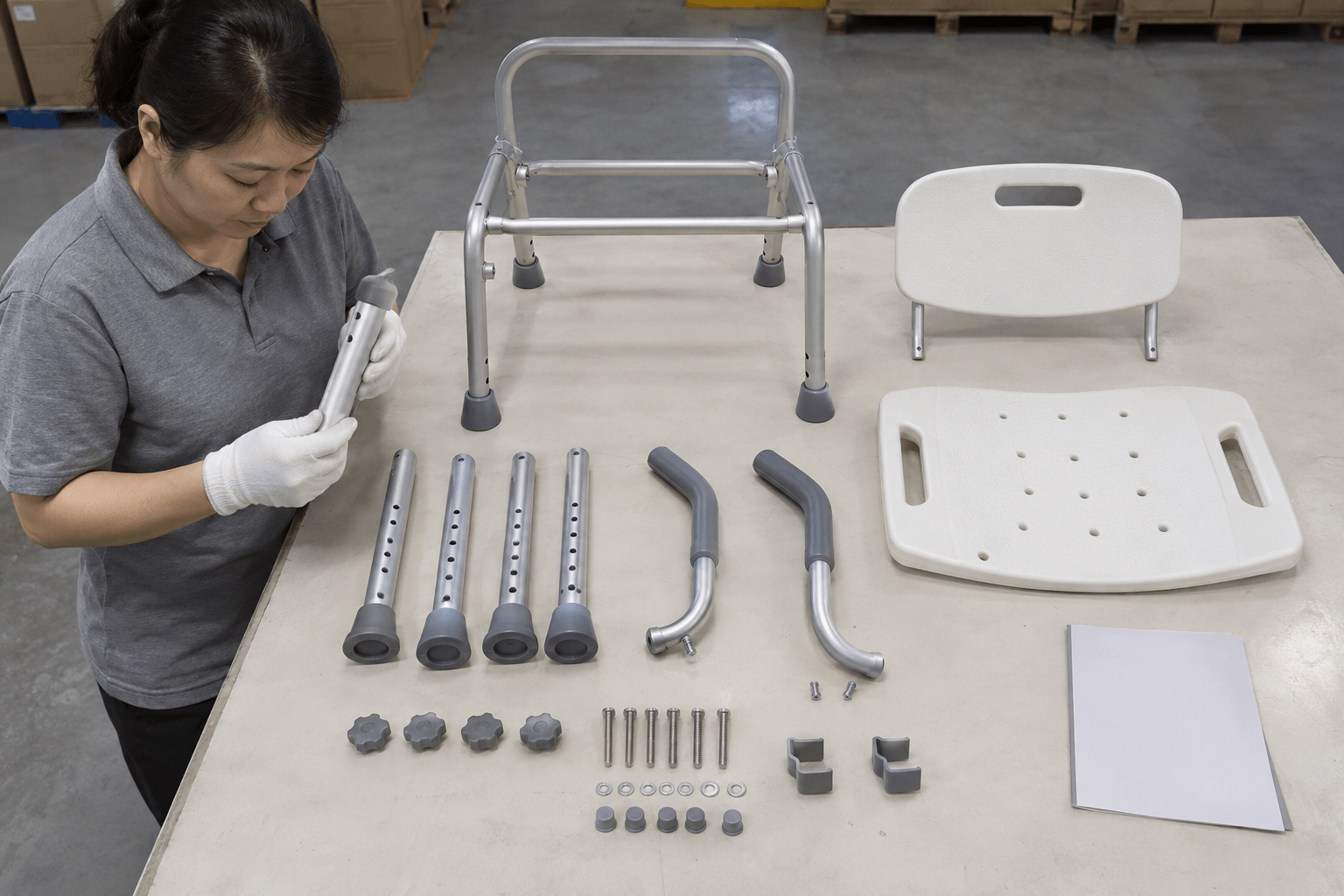
Shower chair receiving inspection should count the frame, seat, back, arms, legs, feet, fasteners, accessories, tools, instructions, and ordered options against a controlled parts list. Quantity alone is insufficient when pieces differ by side, orientation, revision, or material. Keep each sampled unit’s parts together.
Which Components Need Counting?
Lay out components in a clean area and compare part identity, quantity, and condition. Check bags and protective inserts before disposal.
- Separate left and right parts where relevant.
- Count hardware by controlled requirement.
- Photograph the complete set.
Which Option Errors Need Detection?
Wrong supports, missing padding, mixed feet, incorrect hardware, duplicate parts, and unapproved substitutes can survive a simple count. Inspect the set, not the pile: correct quantity does not guarantee compatibility.
- Compare geometry and mounting interfaces.
- Do not borrow parts from another unit.
- Record shortages by carton and lot.
| Component | Required basis | Received check | Status |
|---|---|---|---|
| Structural set | Approved bill/configuration | Identity and condition | Complete or hold |
| Hardware | Controlled count and type | Quantity, finish, interface | Match or mismatch |
| Options/documents | Purchase schedule | Presence and revision | Release condition |
Completeness must preserve unit identity. Key Takeaway: verify compatible parts and options, not just the total number of pieces.
7. How Does Damage Enter Shower Chair Receiving Inspection?
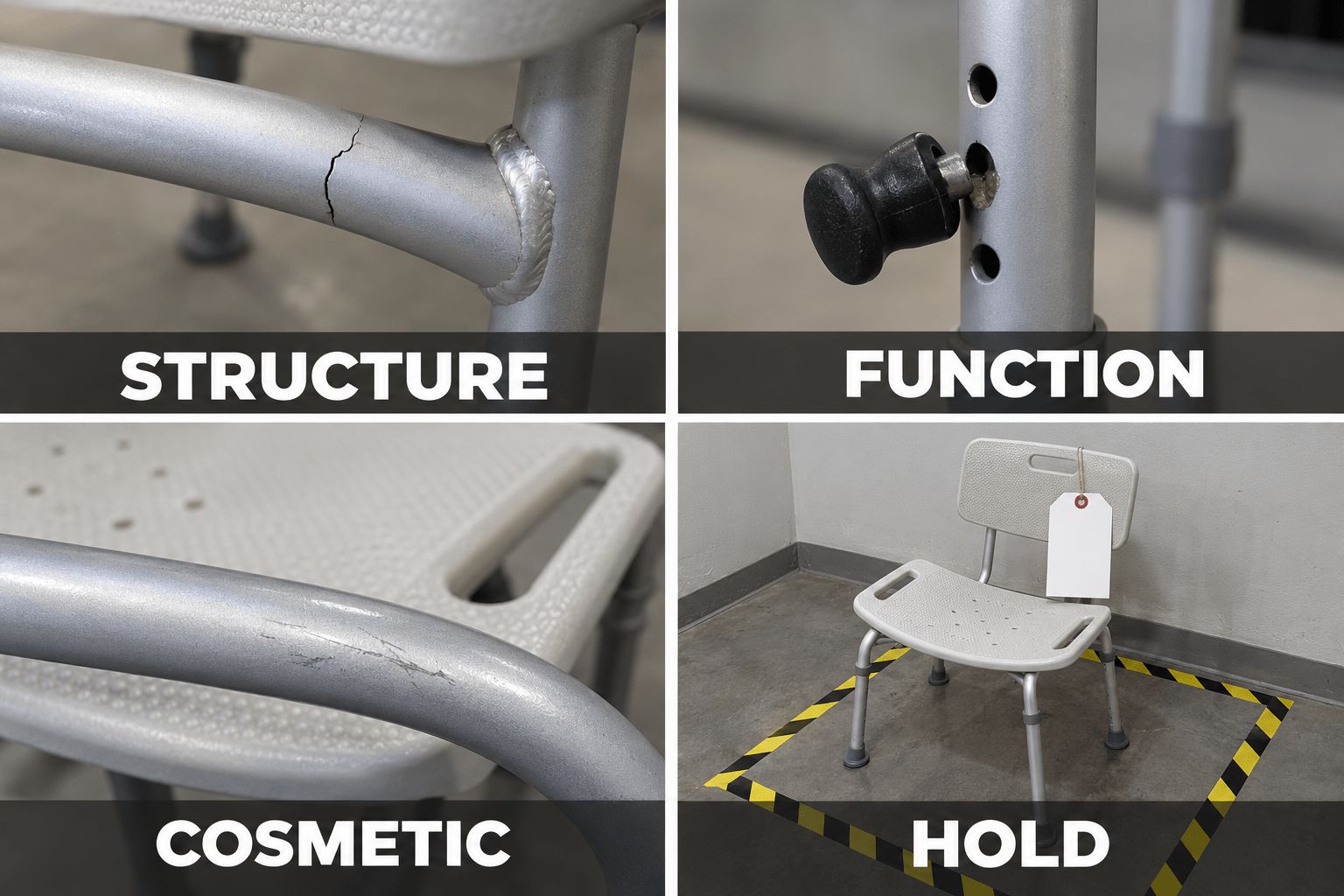
A shower chair receiving inspection distinguishes structural, functional, cosmetic, packaging-related, and documentation defects using pre-approved disposition rules. A bent tube, cracked seat, failed lock, loose joint, broken foot, or sharp edge needs a hold. A surface mark still requires classification rather than informal acceptance.
Which Structural Damage Needs a Hold?
Inspect tubes, welds, joints, seating, legs, locks, supports, and fasteners for deformation, cracks, separation, missing retention, or harmful edges.
- Use controlled lighting and multiple angles.
- Check symmetrical parts for alignment.
- Do not straighten or conceal evidence before review.
Which Cosmetic Damage Needs Classification?
Scratches, stains, color variation, rub marks, and label damage should be graded against an approved standard and assessed for cleaning, corrosion, or function implications. Classify before rework: appearance work can alter evidence.
- Record size and location without exaggeration.
- Separate function effect from appearance.
- Get authorized disposition for rework.
| Defect class | Example | Function effect | Disposition |
|---|---|---|---|
| Critical/structural | Crack, failed lock, sharp edge | Unsafe or uncertain | Quarantine |
| Functional | Wrong fit, loose mount, rocking | Task cannot be approved | Hold/review |
| Cosmetic | Controlled surface mark | None demonstrated | Grade per agreement |
Consistent severity rules protect both users and supplier discussions. Key Takeaway: never downgrade structural or functional uncertainty to a cosmetic issue.
8. How Does Assembly Enter Shower Chair Receiving Inspection?
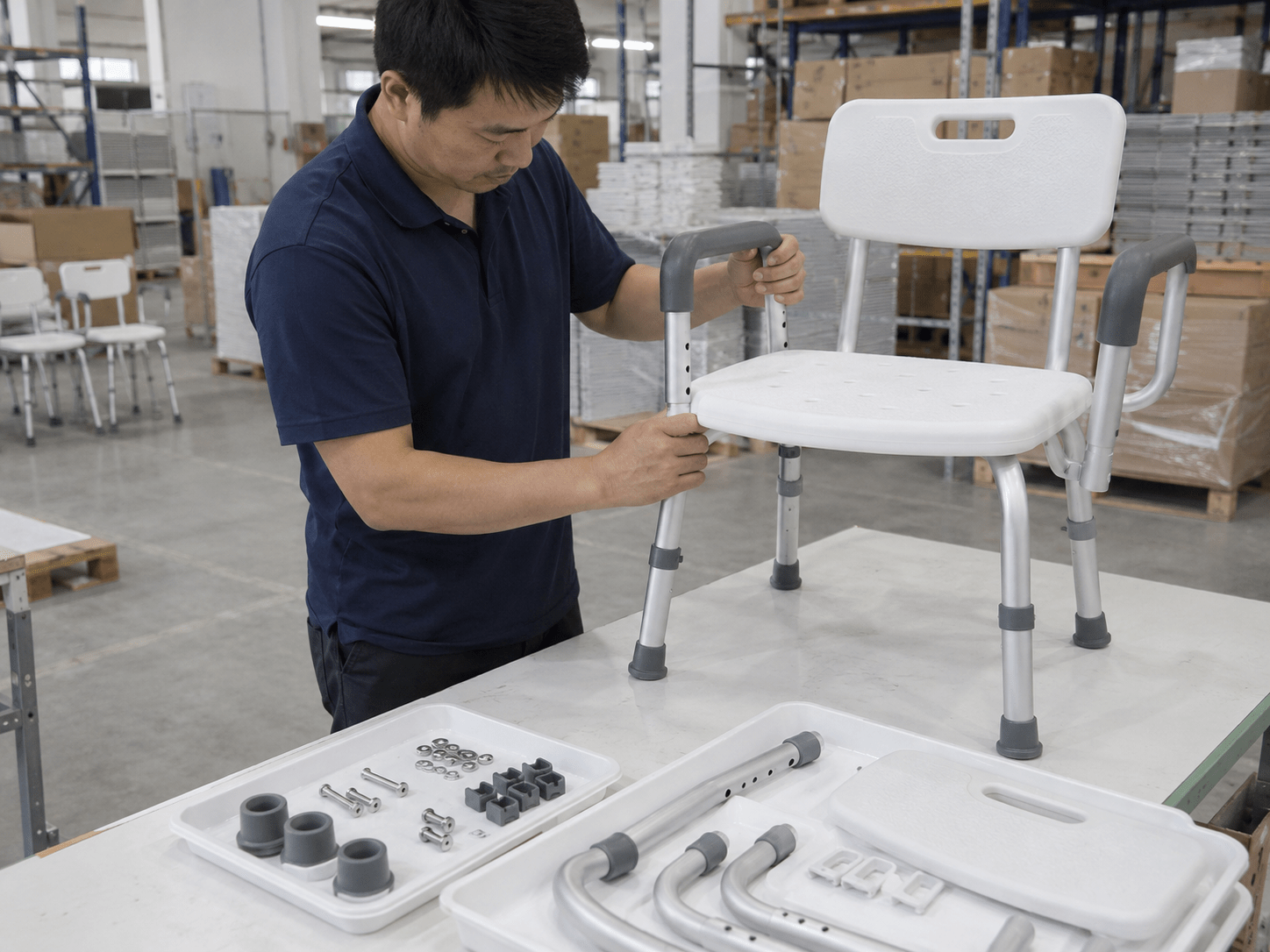
Shower chair receiving inspection should observe sample assembly because reversed legs, partial pins, wrong hardware, trapped padding, missing retainers, and forced fits may reveal product or instruction problems. Use trained staff, current instructions, and the supplied tools. Record any coaching beyond the expected user process.
Which Assembly Steps Need Observation?
Observe leg orientation, height-pin engagement, seat and back mounts, arms, feet, fasteners, accessories, and final settings in sequence.
- Record time only with context.
- Note unclear instruction steps.
- Keep unused and extra parts for reconciliation.
Which Assembly Errors Need Prevention?
Forced fitting, reversed components, mixed hardware, partly engaged locks, and missing retainers should stop the trial. Do not make the sample fit: difficulty may expose a tolerance, packing, or instruction defect.
- Photograph interfaces before correction.
- Separate operator error from part mismatch.
- Escalate repeat errors across samples.
| Assembly point | Correct condition | Warning sign | Release action |
|---|---|---|---|
| Legs/feet | Correct orientation and equal setting | Mixed parts or partial pin | Hold and reconcile |
| Supports | Fully seated and locked | Gap, movement, forced fit | Technical review |
| Fasteners | Correct type and secure assembly | Missing, damaged, substituted | Do not release |
Assembly observation tests the product-document system. Key Takeaway: treat unexpected force, ambiguity, and partial engagement as receiving findings.
9. How Does Function Enter Shower Chair Receiving Inspection?
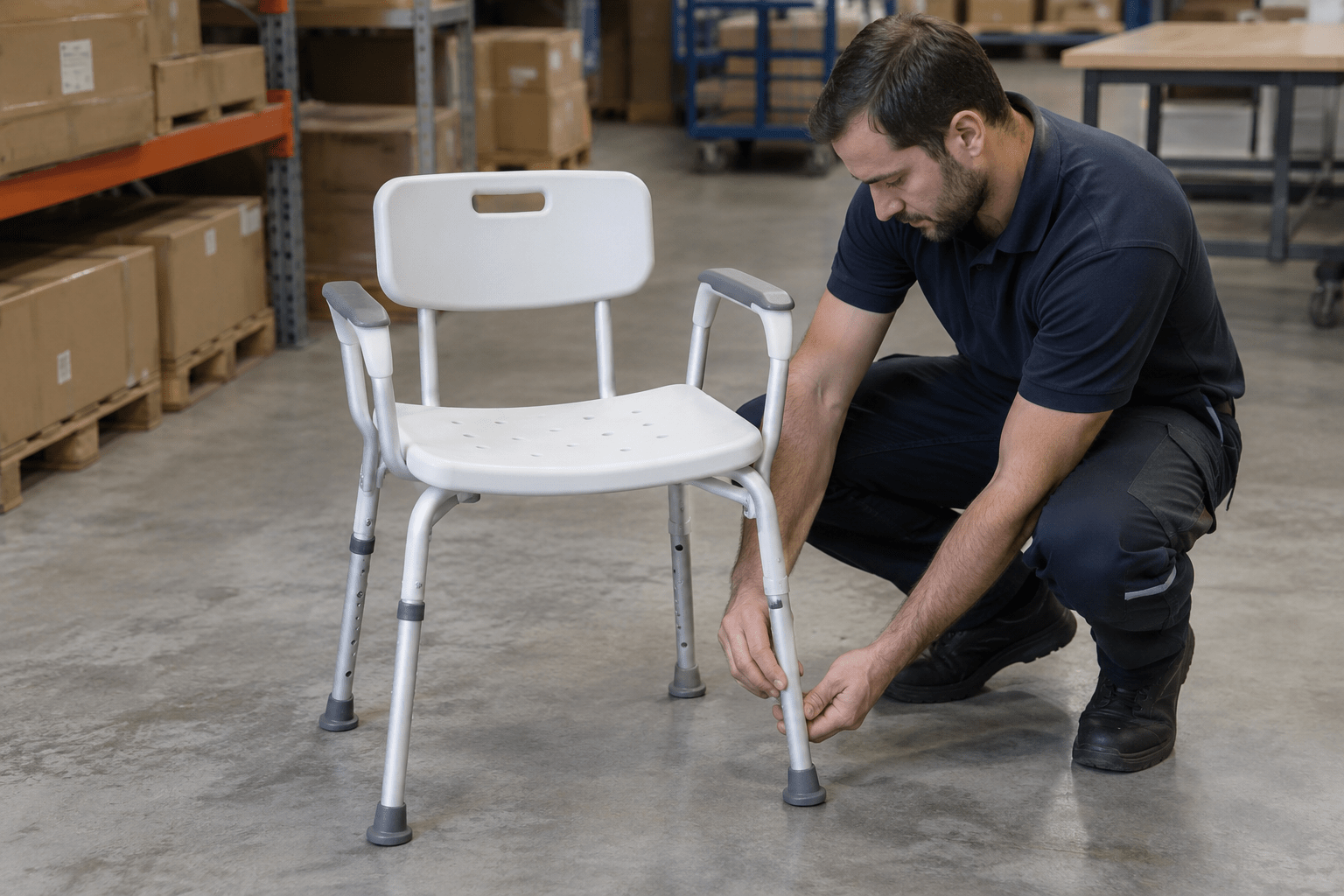
A shower chair receiving inspection should begin function review without a user: check rocking, locks, height changes, folding, support mounts, feet, drainage, brakes where fitted, and visible stability. Planned sample checks may then cover dimensions, handling, cleaning access, packing recovery, and room fit. Conditions must match the acceptance plan.
Which No-User Checks Come First?
Place the assembled chair on the defined surface, confirm all settings, cycle permitted mechanisms, and inspect after movement. Stop immediately for instability or structural change.
- Verify every lock individually.
- Confirm all feet contact the surface.
- Recheck fasteners and supports.
Which Sample Checks Need Planned Conditions?
Dimensions, folded state, cleaning access, drainage, vehicle handling, and bathroom fit need named setups and pass conditions. Keep the trial bounded: receiving staff should not invent load or user tests.
- Use the approved sample method.
- Record tools and environmental conditions.
- Link findings to unit and lot.
| Function check | Setup | Pass condition | Failure action |
|---|---|---|---|
| Empty-chair contact | Defined flat surface | No unexplained rocking | Hold and inspect |
| Locks/adjustments | No user, normal sequence | Full repeatable engagement | Quarantine failed unit |
| Handling/cleaning access | Approved workflow | Matches accepted sample | Supplier review if changed |
Function checks confirm that assembly produced the approved chair. Key Takeaway: use defined no-user tests and stop when the method or result is uncertain.
10. How Should Shower Chair Receiving Inspection Be Recorded?

Shower chair receiving inspection should produce traceable records for lot identity, sample selection, critical defects, photos, checklist results, supplier response, rework, release, and inventory status. Sampling rules should be approved before findings appear. Critical issues may trigger escalation beyond the original sample.
Which Sampling Rules Need Approval?
Define lot boundaries, sample-size source, selection method, critical-defect treatment, tightened review, stop rules, and traceability. The plan should not be changed merely to obtain a passing result.
- Keep selection independent of carton convenience.
- Expand inspection under defined conditions.
- Preserve failed and comparison samples.
Which Records Close the Receiving Gate?
Use the checklist, photographs, defect log, supplier disposition, rework evidence, verification result, release authorization, and final inventory state. Close every loop: an email promise is not a released lot.
- Track corrective action to completion.
- Reinspect reworked units.
- Link repeat issues to supplier-performance review.
| Receiving stage | Record | Owner | Gate |
|---|---|---|---|
| Initial review | Count, condition, sample identity | Warehouse/quality | Continue or hold |
| Defect disposition | Evidence and supplier decision | Procurement/quality | Rework, reject, accept |
| Closeout | Verification and inventory status | Authorized approver | Final release |
Records turn observations into controlled inventory decisions. Key Takeaway: release only when findings, actions, and final status are traceably closed.
Conclusion
A reliable receiving gate connects purchase records, package evidence, identity, completeness, damage classification, assembly, function, sampling, and final inventory status. It prevents a correct carton count from becoming an unsafe product approval. For help defining bath-chair configurations and supplier acceptance evidence, contact us today.
We help distributors translate product requirements into practical receiving checks and escalation rules. Quality begins before stock is released, not after the first complaint.
FAQ
Can an intact carton prove the chair is acceptable?
No. Internal movement, mixed parts, configuration errors, hidden damage, failed locks, and document mismatches can exist without visible carton damage. Inspect the product under the approved plan.
What’s the best way to record receiving damage?
Capture carton and unit identity, location, date, multiple clear views, affected component, condition, packaging context, inspector, and immediate disposition. Preserve evidence until the claim or corrective action closes.
How do I know whether a substitution was approved?
Find the controlled change notice or written approval linked to the purchase order and exact configuration. Supplier statements after delivery do not replace prior authorization.
Can warehouse staff perform functional checks?
Yes, when the checks are defined, no-user, within their training, and supported by clear stop rules. Technical or structural evaluation should go to qualified personnel.
How should rejected units be quarantined?
Identify, segregate, protect, and block them from saleable inventory. Record lot, reason, quantity, evidence, disposition owner, and any conditions for return, rework, or destruction.
