
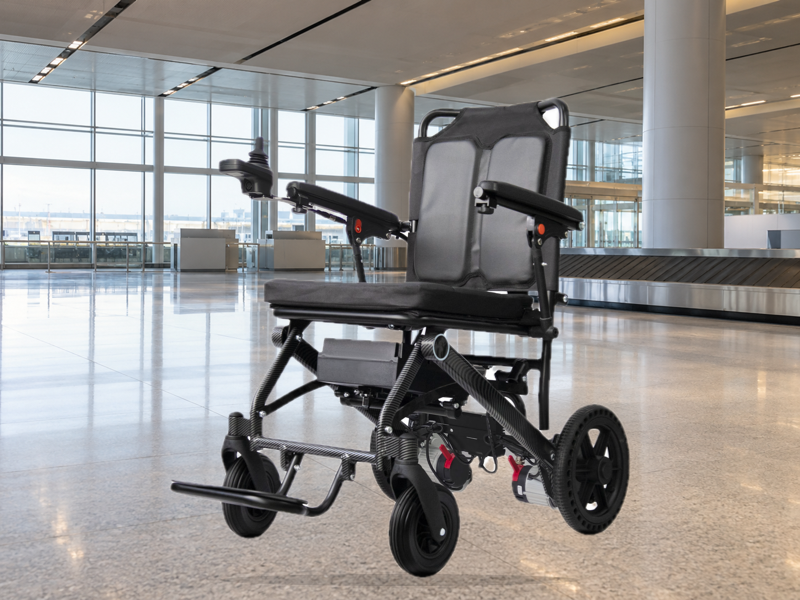
An airline approved electric wheelchair is ready to fly only after the carrier accepts the exact device and battery details for the planned route. The phrase often describes a chair designed with air travel in mind, but it is not a universal permit that binds every airline, airport, aircraft, or itinerary. Travellers and B2B buyers need current carrier rules, a model-specific device file, clear battery documentation, measured dimensions, and a handling plan that can be shared before departure.
Missing details can create long calls at the airport, rushed battery questions, or avoidable handling mistakes. This article gives distributors, travel coordinators, care organizations, and mobility suppliers a clear readiness method without treating a marketing label as approval. Each step produces a document or observation that can be checked again when the route, airline, device revision, or battery changes.
Before booking, consult the FAA guidance for wheelchairs and mobility-device batteries. Battery configuration and airline acceptance need separate checks. Airlines may apply more restrictive rules, so confirm the exact chair and itinerary with the operating carrier.
What does airline approved mean for a wheelchair?
An airline approved electric wheelchair means the device may suit air transport review, while the operating carrier still decides whether the exact chair and battery can travel on the booked route.
Treat the phrase as a prompt to check records, not as the end of the process. Airlines may ask about dimensions, weight, battery chemistry, battery removal, terminals, freewheel mode, and handling. Their instructions can differ by carrier, aircraft, route, and date, so a prior trip does not settle a new booking.
A useful worksheet separates observed facts, supplier records, evaluator notes, and open questions. Give each entry a date and source. Run the same check for every candidate, then keep any changed setup visible. This record helps procurement, training, and service teams discuss the same evidence without turning a short trial into a broad product promise.
Who gives the travel decision?
The answer is direct:
The carrier gives the operational decision for its flight after reviewing the information it requests. Airport staff may carry out the handling steps, while the traveller or coordinator supplies device details. The site’s battery planning article can frame battery questions, but the carrier’s current published rule and written response remain the travel reference.
- operating carrier and flight route
- exact chair model and revision
- battery type and device records
- requested handling instructions
Repeat the check under the same conditions and note who took part. If a supplier answer arrives later, attach it to the original question instead of replacing the earlier record. This keeps the review honest when a model, component, manual, or operating plan changes during sourcing.
Save the airline page, contact date, response channel, and staff reference if one is provided. Do not rewrite a conditional response as a blanket approval. If the itinerary uses more than one operating carrier, repeat the review for each carrier and record any conflict before travel day.
Key Takeaway: A marketing phrase cannot replace the operating carrier’s current decision for the exact trip.
Which battery details must match carrier rules?
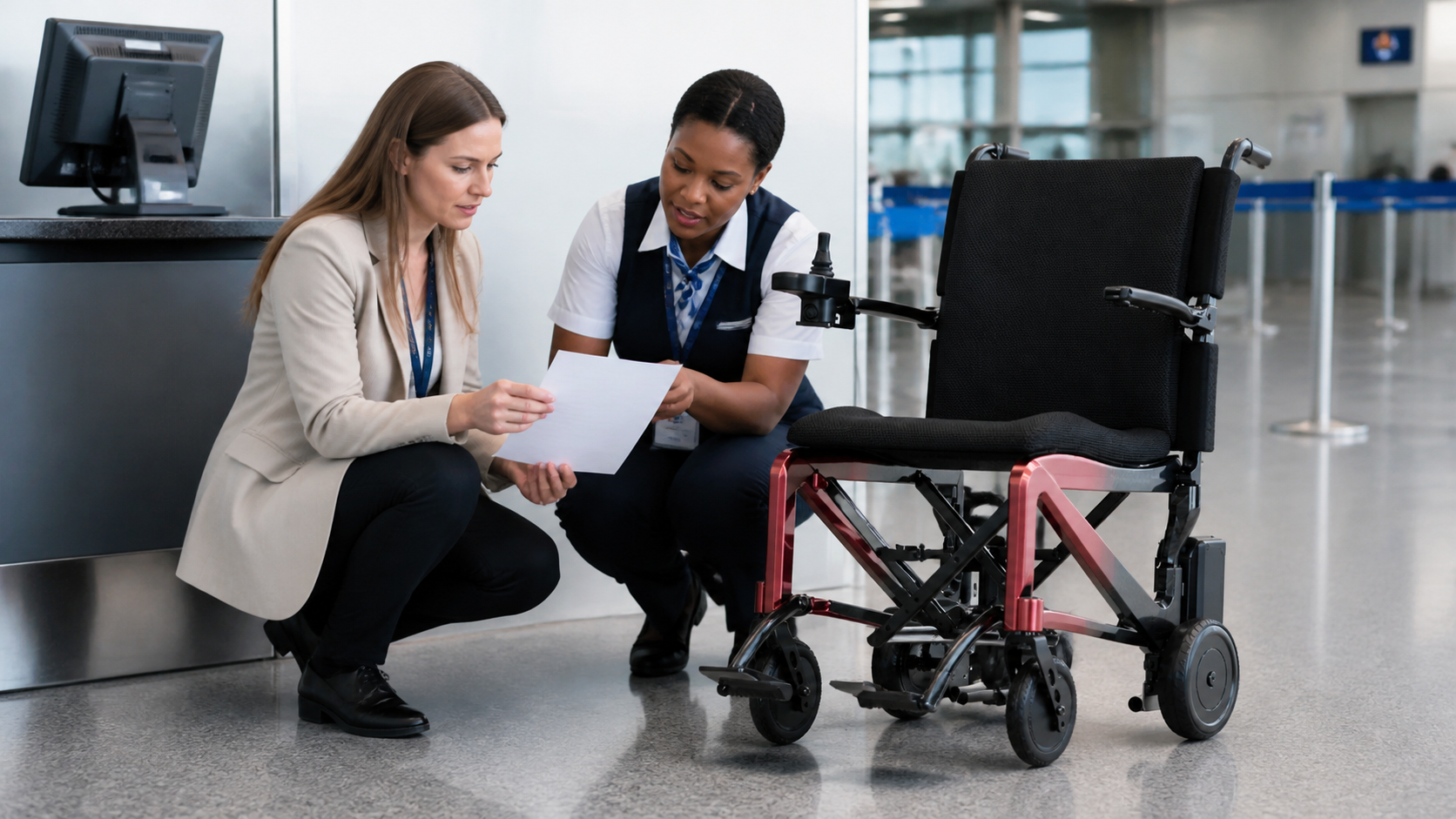
An airline approved electric wheelchair needs battery records that match the exact installed battery, carrier questions, removal method, terminal protection, and device handling instructions.
Ask the supplier for a model-specific battery document rather than a generic brochure. The traveller should be able to identify the battery on the chair and connect it to the supplied record. If a spare battery is planned, it needs its own review under the carrier’s current rules.
What belongs in the battery document set?
Keep the file simple:
Use the manufacturer’s record for battery chemistry, rating, location, and removal instructions, then check that labels and part references match the actual unit. Do not infer missing values from a similar model. The site’s flight preparation article offers broader flight context, while the carrier response should state what it needs for the booked service.
- battery identification and chemistry
- manufacturer rating documentation
- removal and terminal protection steps
- spare-battery plan when applicable
Place the documents where the traveller and coordinator can reach them without unpacking the chair. A digital copy is useful, yet airports may still benefit from a clear printed sheet. If the battery, chair, or itinerary changes, open the review again; old paperwork may describe a different configuration.
Key Takeaway: Battery records must match the physical chair and the carrier’s current questions.
How should dimensions and folding be checked?
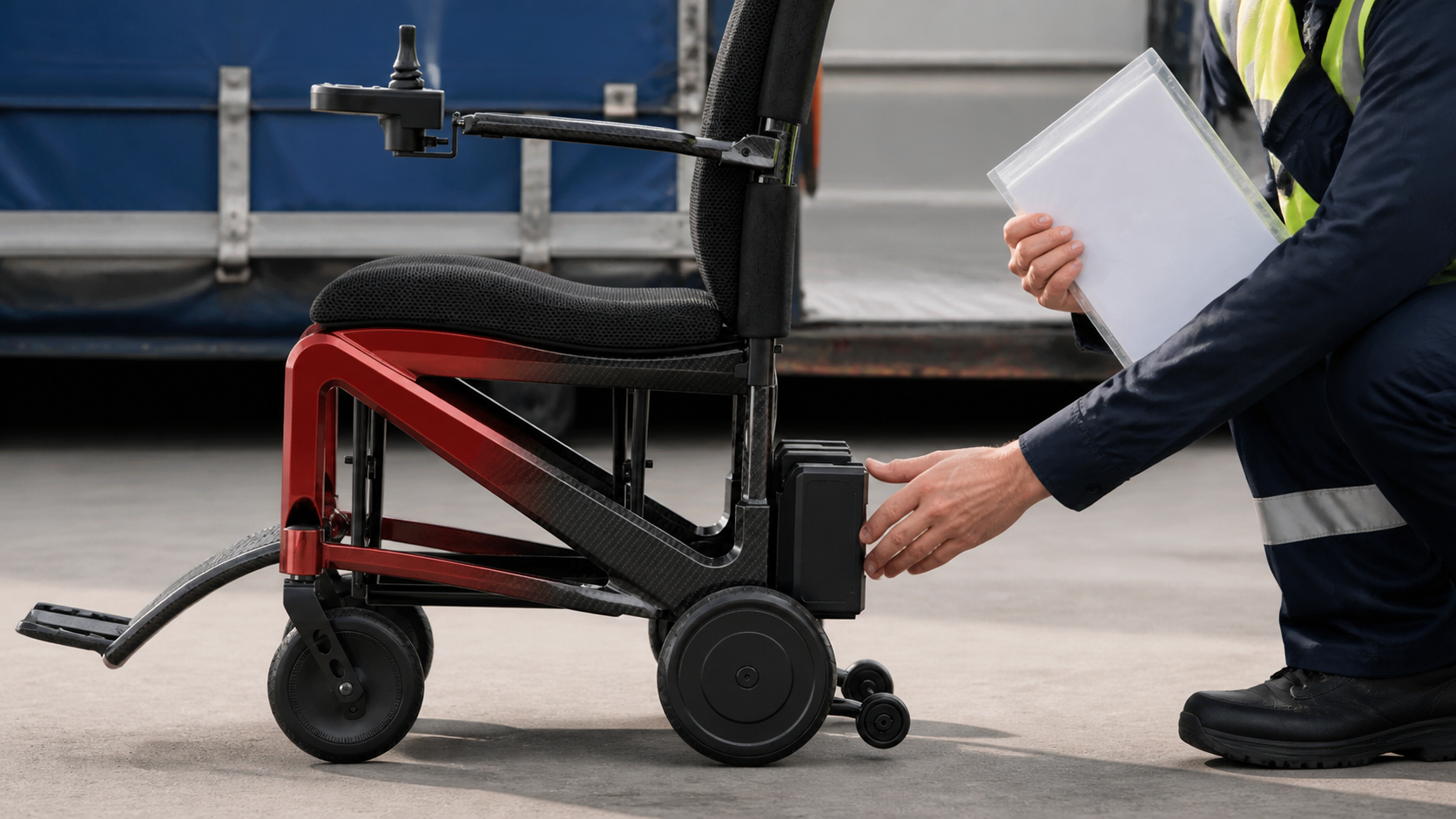
An airline approved electric wheelchair should be measured upright and folded, with loose parts, battery state, foot supports, controller position, and lifting points recorded for airport handling.
Measure the exact unit rather than relying only on a category page. Record which parts are removed for the folded state and where those parts will travel. The wheelchair range page can help a buyer compare chair categories, but a carrier needs details for the actual device presented at check-in.
Which measurements help airport teams?
Use a clear device sheet:
List upright outer dimensions, folded outer dimensions, total handling weight as documented for the chosen setup, and any part removed before loading. Add plain photos of freewheel controls, power isolation, secure handholds, and the intended folded state. Avoid decorative callouts that hide the mechanical points staff need to see.
- upright and folded outer size
- documented handling weight
- removable parts and storage
- freewheel and secure handholds
Run a supervised folding practice before the trip and write the steps in the order they occur. The traveller should not need to teach a complex sequence during boarding pressure. If the chair must remain upright, state that clearly and ask how the airport plans to move and stow it.
Key Takeaway: Measured device sheets reduce guesswork for the traveller, carrier, and handling team.
What handling plan reduces avoidable damage?
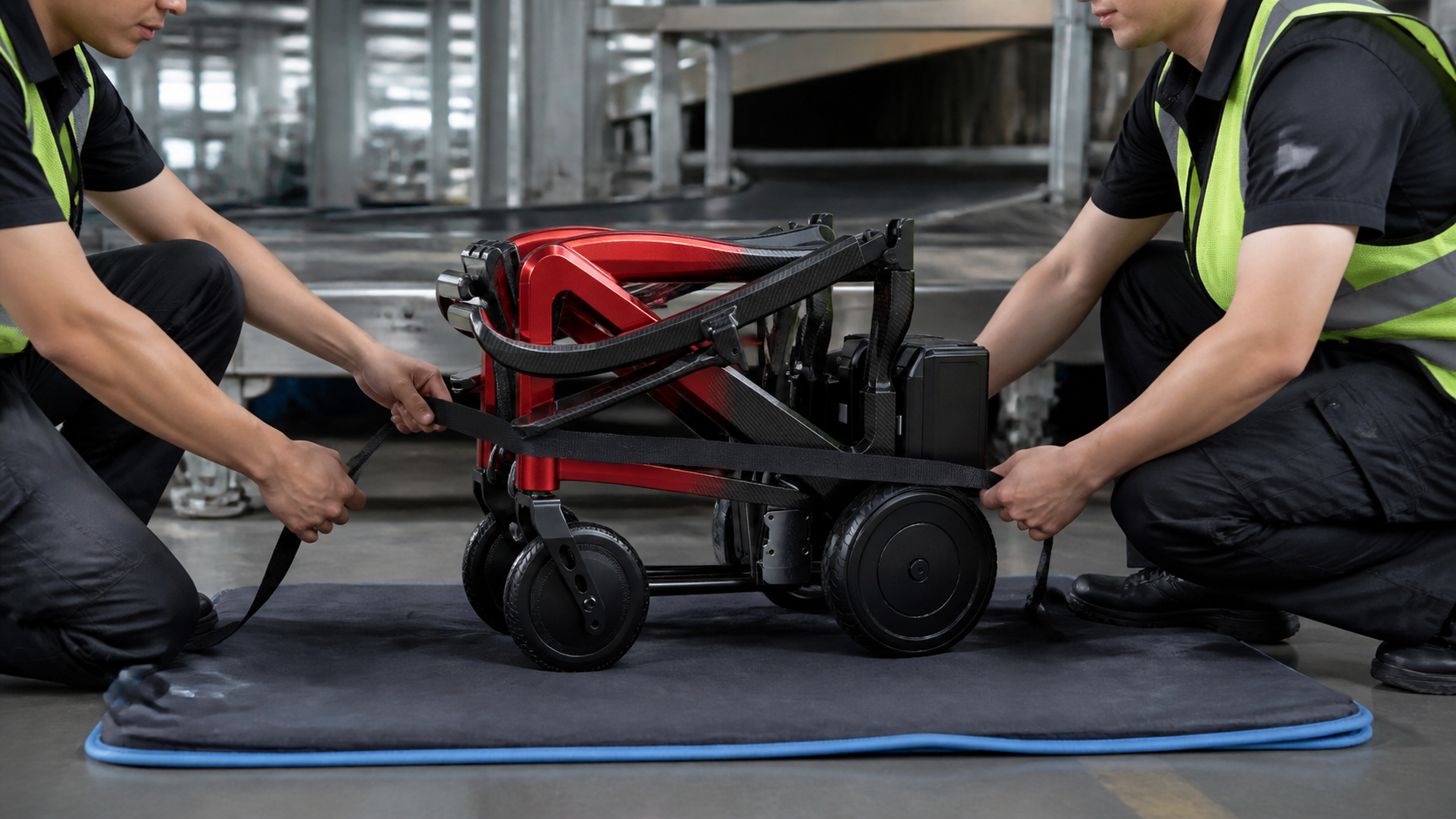
An airline approved electric wheelchair needs a handling plan that identifies power isolation, freewheel use, safe handholds, removable parts, protective points, and the return setup.
Keep the plan short enough for staff to scan beside the device. Use photos of the exact chair and avoid technical language that a general handling team may not know. A plain protective strap or cover can help only when it follows manufacturer guidance and does not press on controls, cables, wheels, or folding joints.
How should the chair be prepared at handover?
Focus on visible actions:
Power down the chair using the documented method, place controls in the agreed protected position, secure parts that the manual permits, and keep removed items with the traveller when carrier rules require it. Point out freewheel controls and approved handholds. Never ask staff to lift from an armrest, joystick, cable, or foot support unless the manufacturer explicitly names that point.
- power and freewheel steps
- controller and cable protection
- permitted restraint locations
- photo record at handover
Take condition photos at the handover point without blocking airport work. Keep the chair identification and handling sheet attached in a way the carrier accepts. On return, follow the documented start-up sequence and inspect visible controls, frame joints, wheels, and accessories before powered movement.
Key Takeaway: A short model-specific handling plan is more useful than a generic fragile label.
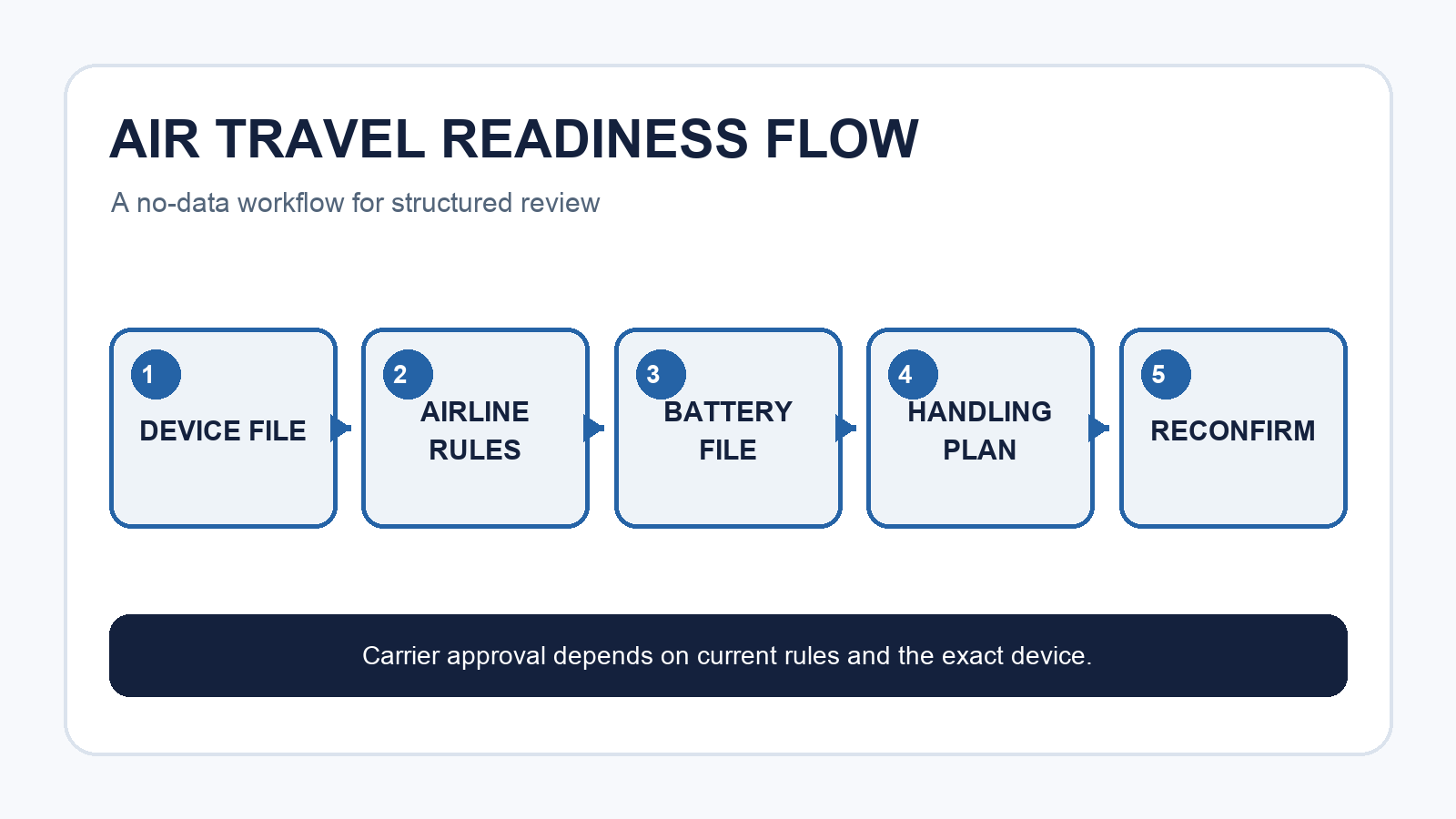
When should travellers and buyers reconfirm details?
An airline approved electric wheelchair should be reconfirmed after booking, after any itinerary or device change, and near departure using the carrier’s current contact route.
Record the operating carrier, flight numbers, connection airports, battery configuration, and mobility assistance request. Ask what information must be submitted before departure and what should be carried to the airport. A buyer evaluating travel products should also ask suppliers how model revisions are communicated to existing document holders.
What should B2B buyers ask suppliers?
Ask for traceable answers:
Request the exact model name, revision reference, battery document, manual, folding steps, handling diagram, parts list, and update channel. Ask who answers a carrier question when a traveller needs clarification. Supplier support cannot approve a flight, but it can provide accurate device records quickly and identify when a component differs from older paperwork.
- model and revision record
- current device and battery files
- handling and folding instructions
- document update contact
Keep unresolved questions open until the carrier or supplier answers in writing. If a team needs model-specific material for a planned market or travel program, it can contact us today with the intended routes, device configuration, battery record, and open document requests ready for review.
Key Takeaway: Reconfirmation keeps the travel file aligned with the current trip and the exact device.
What do buyers ask about this mobility product?
The airline approved electric wheelchair questions buyers ask most often concern fit, permitted use, controlled trials, documents, and supplier support.
Can I rely on the words airline approved on a product page?
No. Treat the words as a reason to start a carrier review. The operating airline still applies its current rules to the exact chair, battery, route, and aircraft used for the booking.
What’s the best time to contact the airline?
Contact the carrier soon after booking and follow its stated mobility-device timeline. Reconfirm near departure and whenever the route, operating carrier, chair, battery, or assistance request changes.
How do I know if my battery paperwork matches?
Match the document to the battery label, part reference, chemistry, rating, and removal method on the physical chair. Ask the manufacturer or supplier for clarification when any field differs or is missing.
Can I remove the joystick for travel?
Only follow the manufacturer’s instructions and the carrier’s handling plan. Some controls may fold, detach, or need protection in place. Do not improvise a removal method that could damage a connector or cable.
What should I do if the itinerary changes?
Open the review again. Check the new operating carrier, aircraft route, connection airport, assistance request, and battery rules, then save the current response with the revised travel file.