
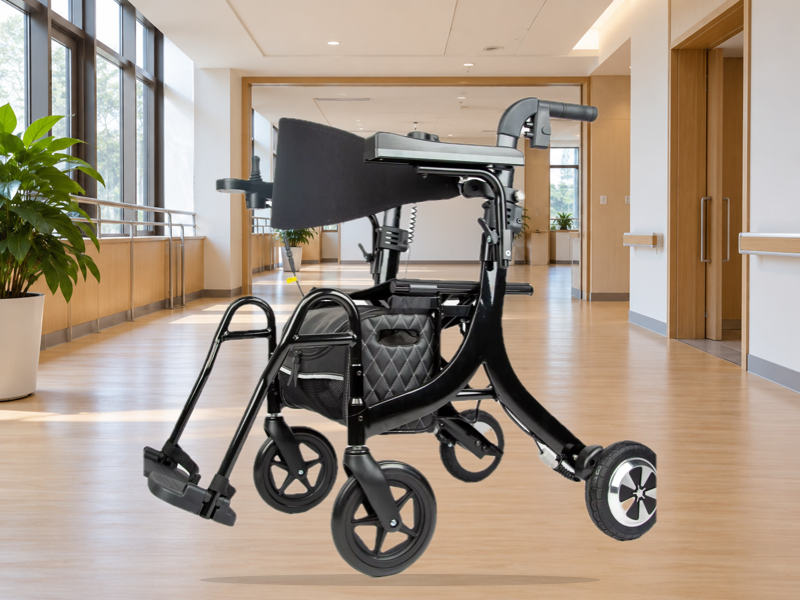
Buyers can compare the best electric rollator walker by testing user fit, manual braking, powered controls, floor handling, seat use, storage, and service support with one consistent method. A powered walker can combine several operating modes, which makes a photo-only review weak: handle position may suit one user but not another, controls may be hard to reach, or a seated setup may need different instructions from walking mode.
Dealers, clinics, community programs, and distributors also need model-specific manuals, parts records, packing guidance, and a clear fault-report path. This article turns those needs into a repeatable B2B review. It avoids medical promises and treats every trial as an observation under known conditions. The result is a sourcing sheet that records what the device does, who checked it, which documents support the claim, and which questions still need a written supplier answer.
For access-policy context, read the ADA mobility-device guidance. For personal fit and permitted operating modes, use the exact manual and qualified individual advice.
What user fit should buyers check?
An electric rollator walker should fit the intended user’s handle reach, walking posture, brake access, seat approach, foot placement, and route space before powered features are compared.
Build a use profile with the user, caregiver, clinical professional, or program staff who understand the setting. Record whether the device will be used for supported walking, seated rest, powered movement, indoor routes, outdoor firm paths, or a mix permitted by the manual. The electric walker product page shows another electric walker format that can help define the comparison set.
A useful worksheet separates observed facts, supplier records, evaluator notes, and open questions. Give each entry a date and source. Run the same check for every candidate, then keep any changed setup visible. This record helps procurement, training, and service teams discuss the same evidence without turning a short trial into a broad product promise.
Which fit checks belong on the worksheet?
Start with the person:
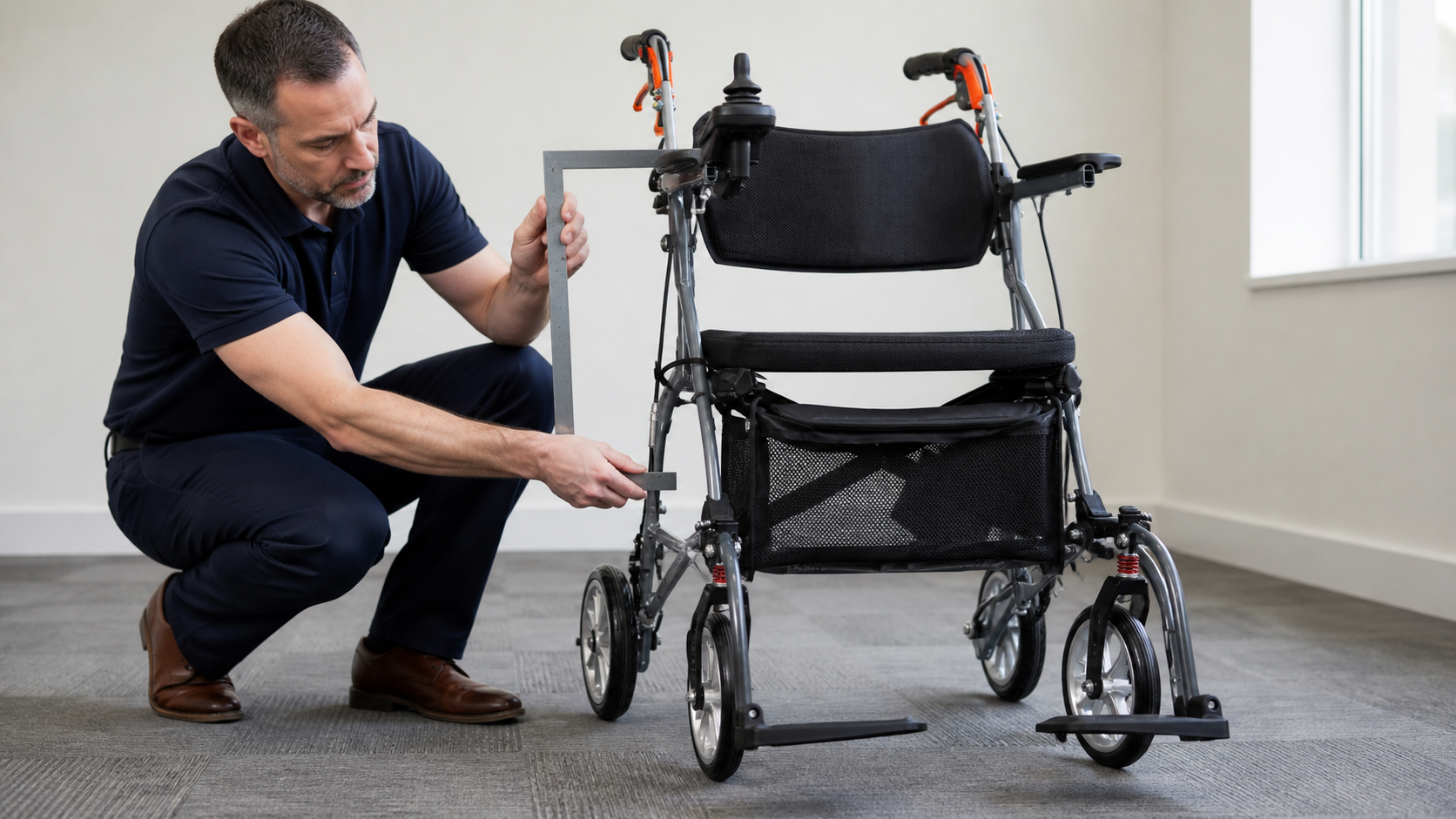
Set the device on level flooring, keep it stationary, and check grip height, elbow position, brake-lever reach, space behind the frame, and access to the seat. A buyer should record the adjustment position rather than writing only that the unit is adjustable. If the device offers powered seating or wheelchair-like use, follow the exact manual and qualified professional guidance.
- grip height and brake reach
- walking space inside the frame
- seat access and back support
- foot support use when provided
Repeat the check under the same conditions and note who took part. If a supplier answer arrives later, attach it to the original question instead of replacing the earlier record. This keeps the review honest when a model, component, manual, or operating plan changes during sourcing.
Use the same evaluator brief for every model and note any help needed for setup. Do not convert a short fit session into a health outcome claim. The worksheet should state who participated, which operating mode was checked, and which settings were used so another reviewer can repeat the setup.
Key Takeaway: Fit comes before feature count because every control depends on safe access and a clear operating mode.
How should brakes and powered controls be tested?
An electric rollator walker needs separate checks for manual brake reach, parking action, powered start and stop, joystick access, mode selection, and the documented emergency procedure.
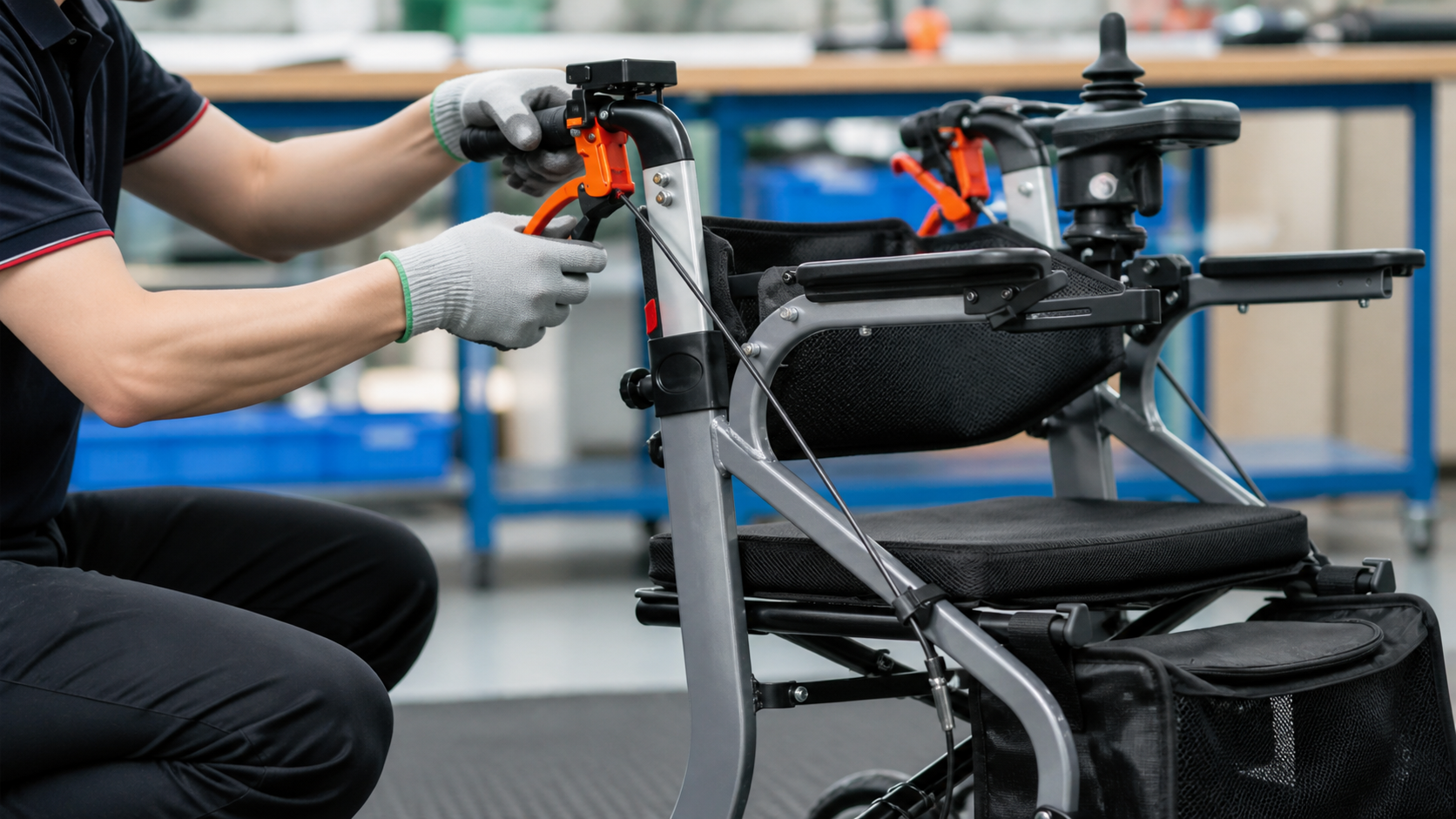
Manual walking and powered movement may use different controls, so the buyer should not blend them into one pass or fail box. Read the manual, label each control on a worksheet, and ask the supplier to explain any symbol or sequence that staff cannot trace to documentation.
What makes a control trial repeatable?
Use the same sequence:
Begin with the device powered off and stationary. Check lever reach, cable path, parking action, joystick mount, and visible fasteners without taking the unit apart. Move to powered trials only in a controlled area with trained supervision, a clear stop signal, and enough open space for the permitted mode.
- manual brake and parking action
- joystick reach and neutral return
- mode labels and start-up steps
- documented stop procedure
Record observations in plain language: easy reach, firm mount, unclear label, delayed instruction, or supplier answer pending. Avoid unsupported statements about injury prevention or recovery. The site’s walking aids range can help buyers keep electric products within a broader walking-aid review instead of choosing on powered features alone.
Key Takeaway: Separate manual and powered control checks so each operating mode has a clear record.
Which floors belong in a buyer trial?
An electric rollator walker buyer trial should use dry level indoor flooring, a documented threshold mock-up, broad turns, and any firm outdoor path permitted by the manual and use profile.
Create a short route that mirrors the planned setting without adding hazards. Mark turn space, doorway clearance, stopping points, and surface changes. If the device is intended for retail trips, the shopping walker page can help a team compare storage and shopping use as separate needs rather than assuming every walker serves the same route.
How should teams record floor behavior?
Watch the contact points:
Note caster tracking, frame clearance, wheel contact, brake feel, noise, storage movement, and the user’s ability to maintain the instructed position. Keep weather, loose ground, steep slopes, and crowded routes outside a basic supplier trial unless the manual permits them and trained staff set a safe test method.
- straight travel on dry level floor
- broad turn in marked space
- documented threshold approach
- controlled stop and parking action
Use the same tire condition, setup, route, and observation form for each candidate. A short trial cannot prove behavior on every route, but it can reveal differences under known conditions. Record any interruption, adjustment, or staff cue that affects the result instead of smoothing it out in the summary.
Key Takeaway: A fixed route gives buyers comparable observations without inventing broad terrain claims.

How should seat and storage modes be reviewed?
An electric rollator walker seat and storage review should cover the documented change between walking, parking, seated rest, powered use, foot support, and basket access.
Ask the supplier to name each permitted mode and point to the matching manual section. Check how the parking brake is set before seat use, where hands go during the change, whether foot supports fold or remove, and whether the basket remains accessible without pressing cables or controls.
Which mode changes need written steps?
Make each change visible:
Photograph the start and end states, then write the action sequence with the device stationary. Note parts that lock, fold, swing, or detach and any area where fingers could meet a moving joint. If the device allows powered seated movement, keep that check separate from walking and rest modes and follow professional guidance.
- walking to parked setup
- parked setup to seated rest
- foot support placement
- basket loading and cable clearance
Storage should be reviewed with realistic but non-sensitive items and within the supplier’s documented limit. Do not invent a capacity from basket appearance. Buyers should also check whether loading changes access to brakes, charging points, folding joints, or identification labels needed during service.
Key Takeaway: Clear mode steps prevent a multi-function label from hiding setup work or access conflicts.
How should service evidence affect the final rank?
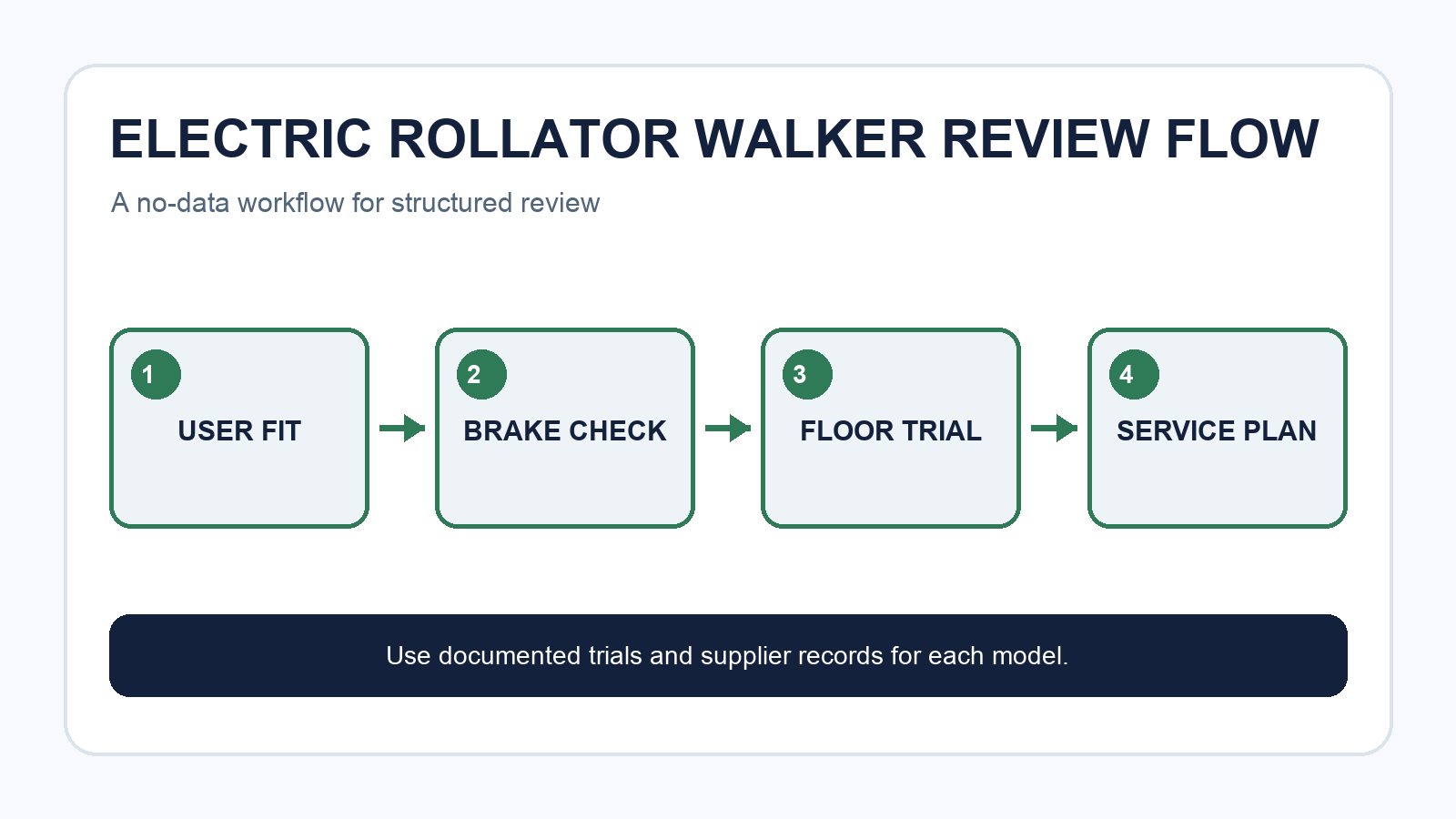
An electric rollator walker should rank higher only when manuals, model identification, inspection records, parts support, packing guidance, and fault reporting match the buyer’s service plan.
Powered controls, brake cables, wheels, seating parts, batteries, and folding joints may need different service information. Ask how the exact model and revision are identified, what photos or records a support team needs, and how replacement parts are matched without guesswork.
What supplier records should buyers request?
Use evidence that can be traced:
Request the current manual, inspection form, packing method, parts naming method, and a sample support workflow. Ask how document changes reach dealers and how a service request links to the device reference. Regulatory documents should be checked for the exact market and product; do not treat a logo or sales statement as proof.
- model and revision reference
- manual and inspection fields
- parts and service contact route
- packing and damage-report steps
Score each model with a reason and source link, then leave open questions visible. A team that wants a product-specific discussion can contact us today with its user profile, operating modes, target market, expected service route, and pending document list ready for review.
Key Takeaway: The final rank should join fit, controlled trials, mode clarity, and service records in one sourcing file.
What do buyers ask about this mobility product?
The electric rollator walker questions buyers ask most often concern fit, permitted use, controlled trials, documents, and supplier support.
Can I use an electric rollator as a wheelchair?
Only when the exact model and manual permit the intended seated mode. Multi-function devices differ. Follow the supplier’s instructions and seek qualified professional guidance for personal mobility and fit decisions.
What’s the best handle height for a user?
There is no universal setting. Handle height must suit the person, brake reach, posture, operating mode, and professional guidance. Record the chosen adjustment position during a supervised fit check.
How do I know if the brakes are suitable?
Use a controlled manual check under the supplier’s instructions, then record reach, parking action, cable condition, and staff observations. Do not rely on lever color, appearance, or a sales statement.
Can I test the walker outdoors?
Yes, when the manual permits the surface and trained staff set a controlled route. Use dry firm ground, avoid unsupported hazards, and record the setup and conditions for every model.
How should I compare multi-function models?
List each permitted mode separately and review its setup, controls, brakes, seat, foot supports, storage, documentation, and service path. A larger feature count is not a substitute for clear operation.