
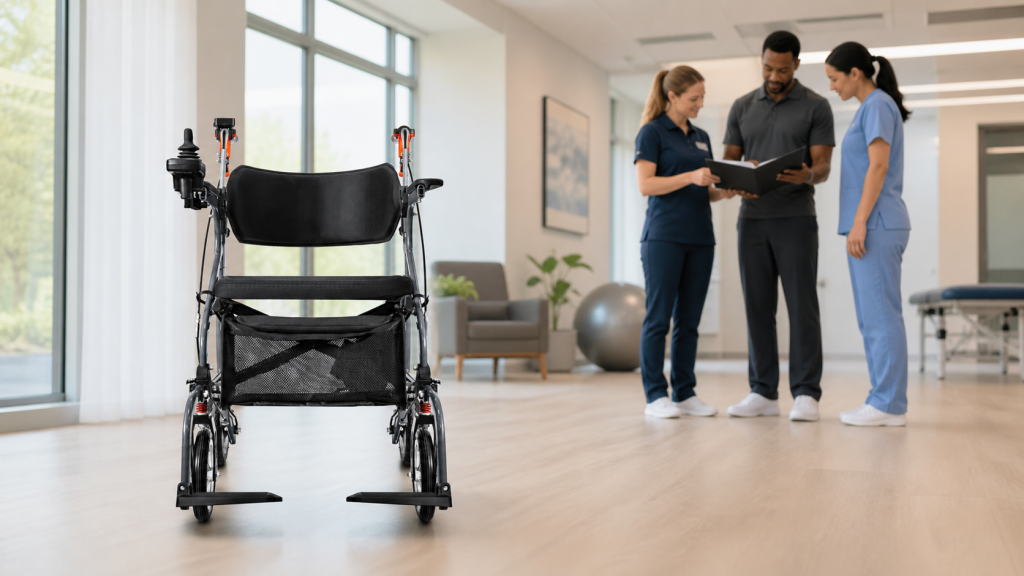
A powered walker handover should give staff one repeatable sequence for setup, braking functions, powered modes, manual handling, supervised practice, charging, and storage. Follow current instructions. Demonstrate each control. Record the exact model and approved configuration. For U.S. facilities, align local procedures with official mobility-device guidance.
A powered walker handover is easy to repeat when staff use one model-specific sequence for setup, manual brakes, powered controls, permitted modes, supervised practice, and record sign-off. Multi-function devices can change between walking support, seated rest, powered seating, or other configurations described by the exact manual. That flexibility also creates a training risk: a learner may remember the feature list but forget which parts move, which brake state applies, or which control is active.
This article gives distributors, community programs, clinics, and institutional buyers a practical staff handover. It separates each mode, names the helper role, and records every open question. The aim is a calm, repeatable lesson tied to the device in the room, not a medical promise or a claim that one setup suits every user and route.
What should staff check before the handover?
In practice, A powered walker handover should start with model identity, manual version, handle setup, brake state, seat and back support, foot supports, joystick position, battery state, and planned mode.
Place the device on dry level flooring and identify the starting configuration. State whether the lesson covers walking support, seated rest, powered seating, storage, or another supplier-documented mode. The electric walker product page offers a second multi-function context while the handover stays tied to the exact device.
A useful worksheet separates observed facts, model records, evaluator notes, and open questions. Give every entry a date, source, exact setup, and named reviewer. Run the same check for each candidate and retain any changed setup. This shared record lets procurement, training, warehouse, and service teams discuss the same evidence without turning a short trial into a broad product promise.
How can trainers prepare a repeatable setup?
Next, Name the mode before touching a control:
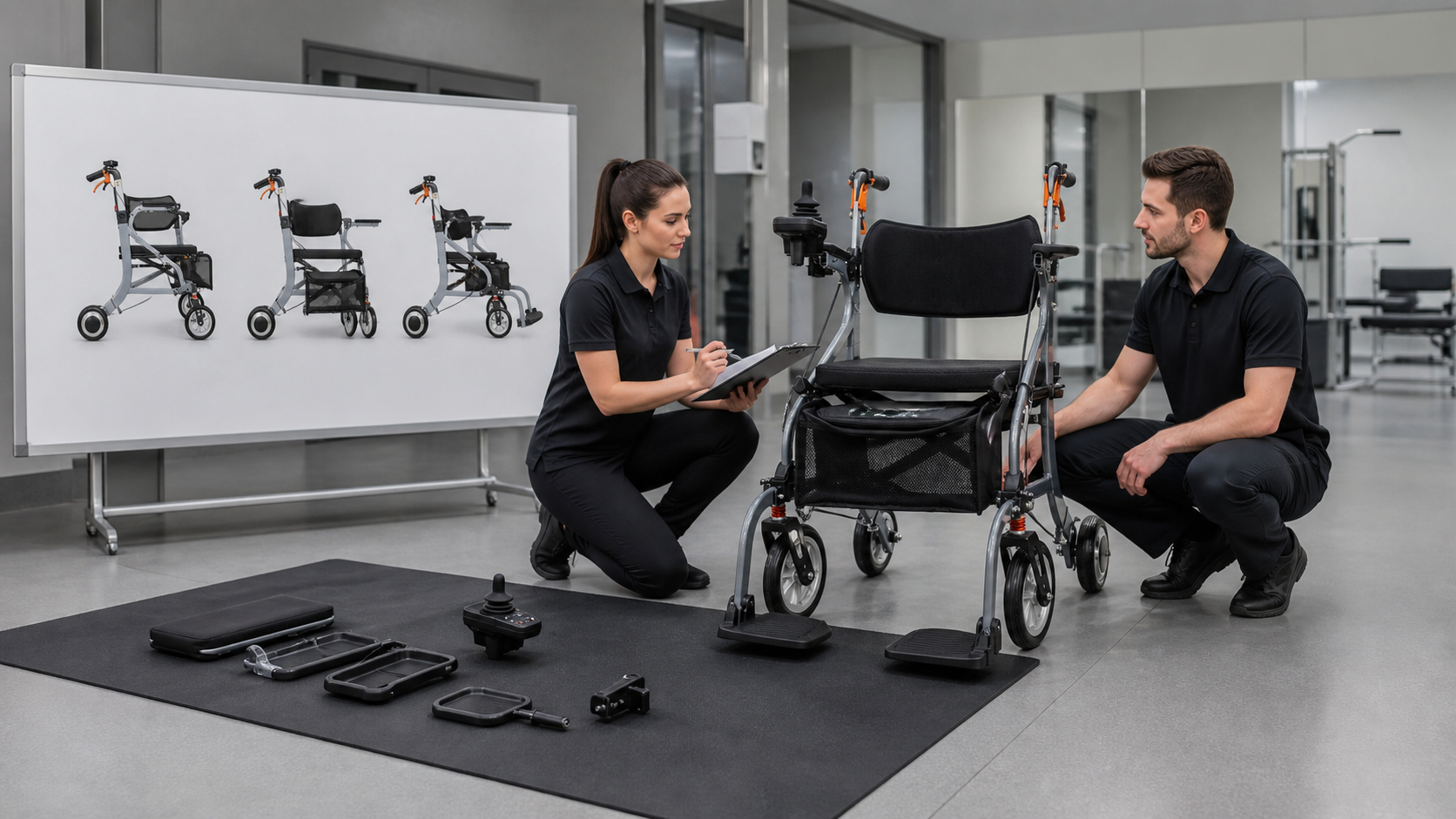
Check grip height, manual brake access, parking action, frame opening, seat, back support, foot support, storage compartment, joystick mount, cable route, and visible fasteners. Record adjustment positions rather than writing only that a part moves. Keep loose parts on a named clean mat during any documented mode change.
- model, manual, and starting mode
- handles, brakes, and frame space
- seat, back, and foot supports
- joystick, cables, and loose parts
Repeat the check under the same conditions and record who took part. If a supplier answer arrives later, attach it to the original question instead of replacing the earlier entry. That history helps when a model, component, manual, sample, or operating plan changes during sourcing. A score should include a short reason and source link rather than a bare number.
Meanwhile, If the physical setup does not match the handover sheet, pause and resolve the difference before practice. A new configuration needs a new row. Personal fit decisions may call for qualified input. Staff training should define what learners observe, what they may adjust, and what they must report.
Key Takeaway: A mode-specific starting record prevents later controls and practice notes from becoming mixed.

How should manual brakes and controls be taught?
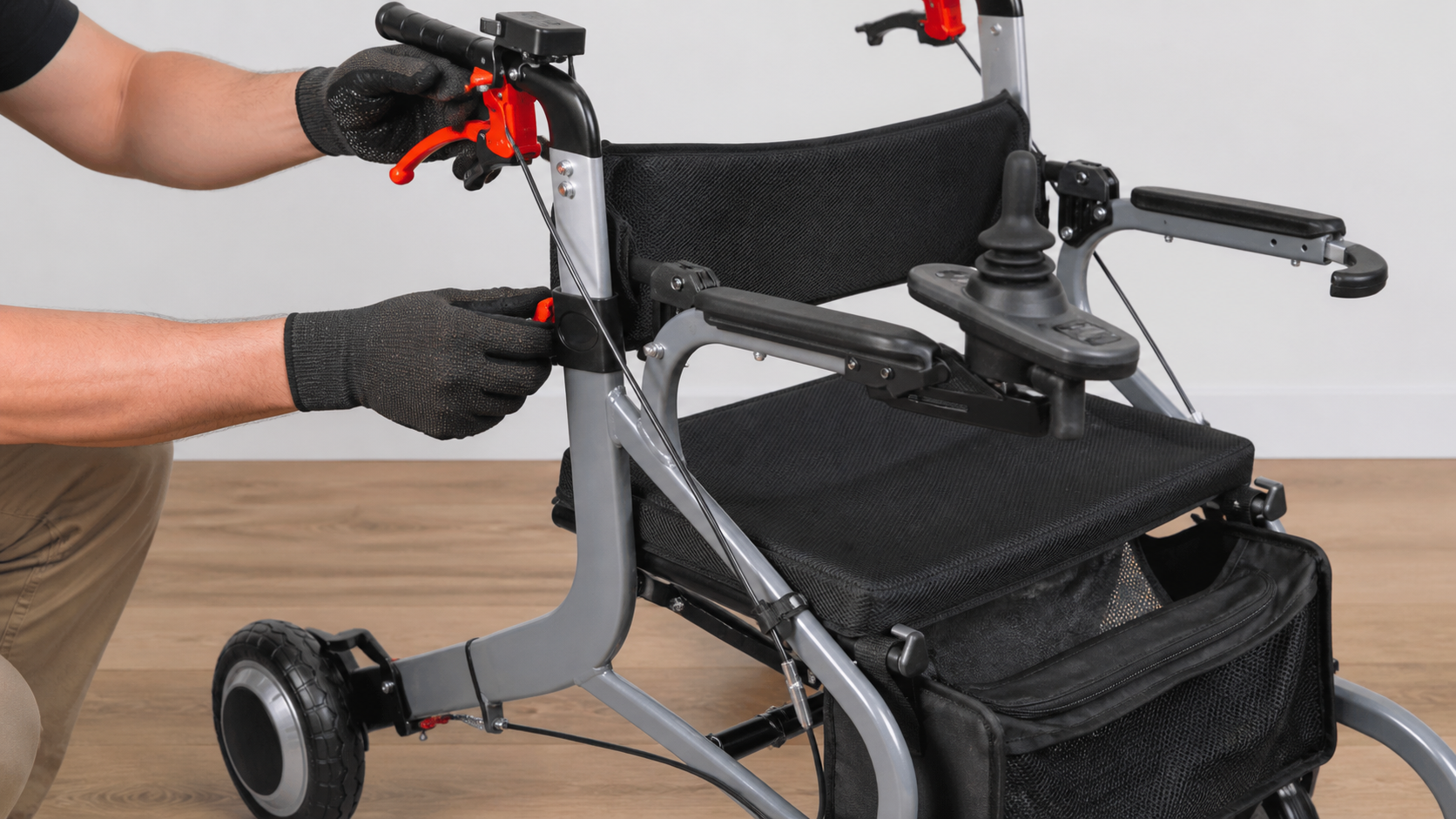
A powered walker lesson should teach manual brake reach, parking action, joystick identity, power-on, neutral control, powered stop, and fault reporting as separate actions.
For example, Manual walking support and powered movement may use different interfaces, so keep the records separate. The walking aids range can help buyers compare the device with a wider walking-aid range. The exact manual still defines which controls apply to each permitted mode.
A useful worksheet separates observed facts, model records, evaluator notes, and open questions. Give every entry a date, source, exact setup, and named reviewer. Run the same check for each candidate and retain any changed setup. This shared record lets procurement, training, warehouse, and service teams discuss the same evidence without turning a short trial into a broad product promise.
What makes brake and control practice clear?
Use the same order every time:
Still, With power off, have the learner identify both brake levers, show the parking action, point to the joystick, and check the visible cable route. For powered practice, use a marked area, trained supervision, a clear stop signal, and the documented mode. Record cues without hiding them behind a simple pass mark.
- left and right brake access
- parking action and release
- joystick and neutral position
- powered stop and report route
Repeat the check under the same conditions and record who took part. If a supplier answer arrives later, attach it to the original question instead of replacing the earlier entry. That history helps when a model, component, manual, sample, or operating plan changes during sourcing. A score should include a short reason and source link rather than a bare number.
Do not merge brake feel and joystick response into one score. A learner may understand one interface and need more practice with another. If a brake, control, indicator, or cable route appears different from the manual, stop the lesson and keep the question open for written clarification.
Afterward, Key Takeaway: Manual brakes and powered controls need separate teaching fields within the same handover.
Which operating modes need separate practice?
A powered walker handover should give each intended mode its own setup steps, user-contact parts, brake state, controls, helper role, route, and ending check.
Do not infer a mode from the device’s appearance or product category. Ask the supplier to name every permitted configuration and manual section. The shopping walker page gives a non-powered walker context that can help teams define which everyday tasks truly belong in their comparison.
In practice, A useful worksheet separates observed facts, model records, evaluator notes, and open questions. Give every entry a date, source, exact setup, and named reviewer. Run the same check for each candidate and retain any changed setup. This shared record lets procurement, training, warehouse, and service teams discuss the same evidence without turning a short trial into a broad product promise.
How should teams document mode changes?
Treat each mode as a complete task:
Record the starting state, parts moved or attached, hand positions, brake state, control used, helper action, and final confirmation. Run the change at a measured pace. Store removed parts in the named location. Repeat the sequence only after the device matches the documented end state.
- starting mode and manual source
- parts moved or attached
- brake and active-control state
- helper role and ending check
Next, Repeat the check under the same conditions and record who took part. If a supplier answer arrives later, attach it to the original question instead of replacing the earlier entry. That history helps when a model, component, manual, sample, or operating plan changes during sourcing. A score should include a short reason and source link rather than a bare number.
A larger mode count is not automatically better for the buyer. Rank only the modes the organization can document, train, store, and support. If two staff members use different sequences, keep both records and ask for clarification instead of blending them into an unsupported third method.
Key Takeaway: Mode value comes from documented, repeatable use rather than from the feature count.
How can a short indoor practice route be used?
Meanwhile, A powered walker practice route should use dry level flooring, a straight path, broad turn, planned stop, seat or mode station, and return point under trained supervision.
Build the route around the institutional setting and the learner’s role. Mark where manual walking ends, where a mode change may occur, and where powered movement begins if the manual permits it. Keep other people outside the route and state the stop signal before movement.
A useful worksheet separates observed facts, model records, evaluator notes, and open questions. Give every entry a date, source, exact setup, and named reviewer. Run the same check for each candidate and retain any changed setup. This shared record lets procurement, training, warehouse, and service teams discuss the same evidence without turning a short trial into a broad product promise.
Which observations belong in the route record?
For example, Watch the same route points:
Record caster tracking, frame clearance, brake use, control return, helper cue, turning space, seat access, storage clearance, and the final parked state. Name the mode beside every observation. If the learner or trainer asks to stop, record the point and reason without pressuring another attempt.
- straight path and broad turn
- manual brake and planned stop
- mode station and helper cue
- return, parking, and final state
Repeat the check under the same conditions and record who took part. If a supplier answer arrives later, attach it to the original question instead of replacing the earlier entry. That history helps when a model, component, manual, sample, or operating plan changes during sourcing. A score should include a short reason and source link rather than a bare number.
Still, A successful indoor route does not prove outdoor, slope, crowded, or personal-use performance. It confirms that the learner repeated the agreed staff task under one set of conditions. Create another module for any different surface or duty allowed by the manual and organizational procedure.
Key Takeaway: A short fixed route lets trainers compare staff actions without broadening the result beyond the room.
What belongs in the handover record?
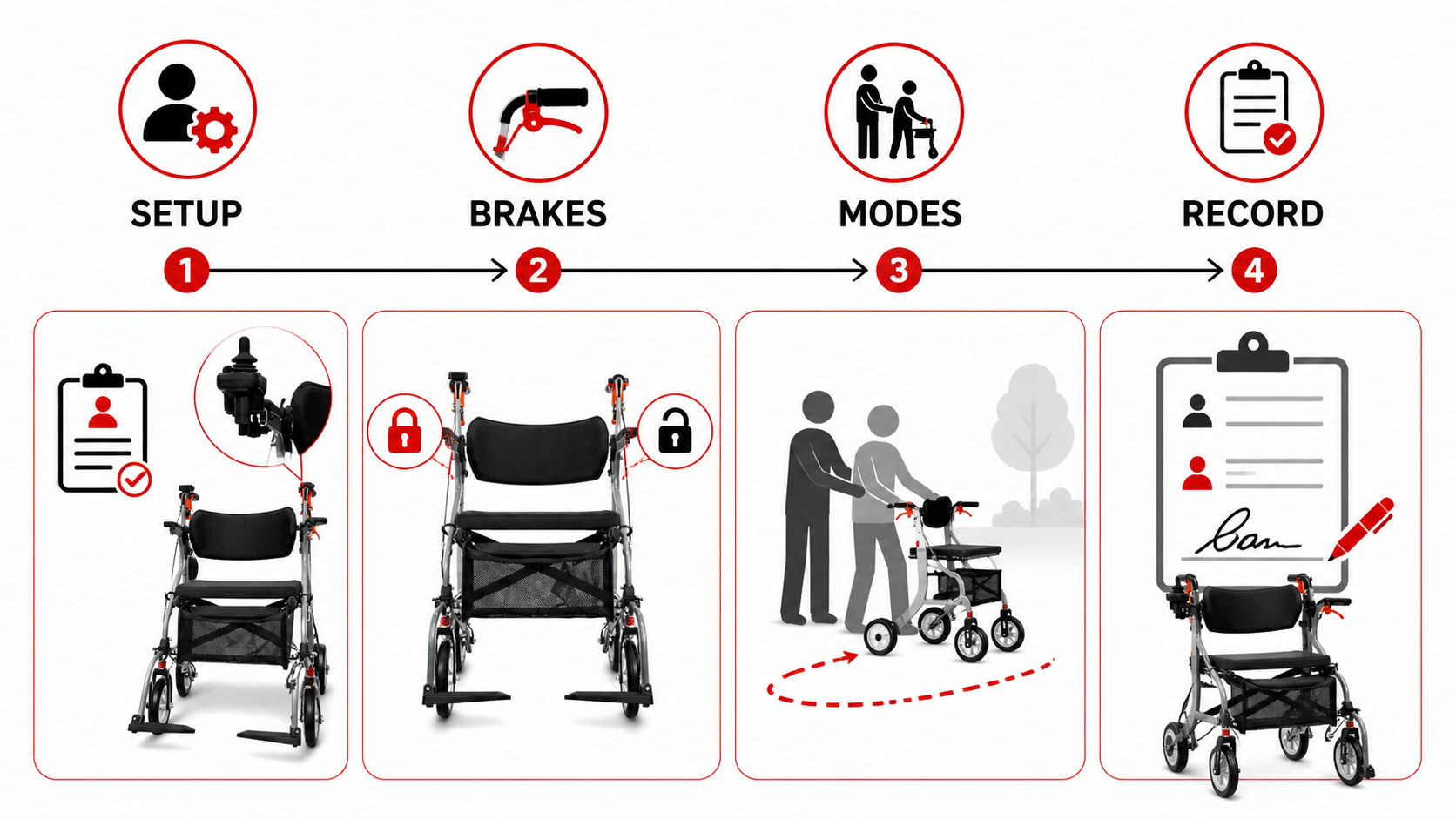
A powered walker handover record should include device identity, setup, manual, trainer, learner, modes, brake and control checks, route notes, open questions, and review date.
Afterward, Use a separate sign-off row for each module so a learner can complete brakes while keeping a mode-change question open. Record the device state at the end of the session and where loose parts, charger, and documents are stored according to the organization’s plan.
A useful worksheet separates observed facts, model records, evaluator notes, and open questions. Give every entry a date, source, exact setup, and named reviewer. Run the same check for each candidate and retain any changed setup. This shared record lets procurement, training, warehouse, and service teams discuss the same evidence without turning a short trial into a broad product promise.
How should staff close the handover?
Confirm the final state aloud:
In practice, Ask the learner to identify the parked or powered-off state, active mode, brake status, stored parts, issue-report route, and next review. Link cues and open questions to the sign-off. Buyers can contact us today with their staff roles, intended modes, route plan, and document list ready for a model-specific discussion.
- device and document identity
- module and mode completion
- observed cues and open question
- final state and review date
Repeat the check under the same conditions and record who took part. If a supplier answer arrives later, attach it to the original question instead of replacing the earlier entry. That history helps when a model, component, manual, sample, or operating plan changes during sourcing. A score should include a short reason and source link rather than a bare number.
Keep the original record when a refresher, new mode, changed device, updated manual, or new staff role is added. A dated history helps trainers see what changed. Limit personal information to what the organization needs for training administration and control access according to its policy.
Next, Key Takeaway: The handover record should show what each learner practiced and what still needs a written answer.
What do buyers ask about this mobility product?
The powered walker questions buyers ask most often concern setup, permitted use, controlled checks, records, and supplier support.
Can I teach every mode in one short session?
Meanwhile, Sometimes, but separate modules are clearer. The number of sessions should follow device complexity, staff roles, manual steps, observed cues, and organization policy.
What’s the best way to teach the brakes?
Begin stationary with power off, identify both levers and parking action, then use a marked supervised route for the documented mode.
For example, How do I know if a mode is permitted?
Check the exact model manual and written supplier record. Do not infer a mode from appearance, a similar product, or loose accessories.
Can one learner sign for the whole team?
Still, No, unless the organization’s defined policy says that role is an authorized trainer and separate learner records still show who practiced each module.
What should trigger a refresher?
A changed manual, device, control, mode, route, staff role, missed step, stored-part location, or unresolved question can trigger a focused refresher.
Related planning resources: Review electric walker comparison, electric walker supplier review, mobility product planning before approving a product, sample, route, or supplier decision.