

An electric walker supplier review should connect buyer requirements, model documents, sample condition, controlled route trials, packaging, receiving consistency, parts support, and response ownership. Test the exact sample. Record every revision. Score only evidence that can be repeated after an order. For U.S. facilities, align local procedures with official mobility-device guidance.
Also, Buyers can compare the best electric walker supplier by sending one precise buyer brief, checking configuration-specific documents, inspecting a representative sample, running a controlled route trial, and linking purchase approval with repeatable receiving and support records. Supplier pages may look similar, yet proposals often differ in control layout, walker modes, supplied parts, document quality, packaging, revision handling, and after-sales ownership.
A sound B2B comparison keeps commercial terms beside technical evidence without blending them. Buyers should record what a supplier has proven, what remains a proposal, and which point still needs a current source. That structure helps distributors, senior-living procurement teams, homecare suppliers, and mobility programs compare powered rollator offers without making medical claims or treating one sample as suitable for every user.
What should an electric walker supplier brief contain?
In practice, An electric walker supplier brief should contain target customer programs, intended product mode, route context, storage routine, required documents, sample scope, receiving rules, and service expectations. A request that only asks for price and catalog may produce proposals that cannot be compared. Give every supplier the same context and questions so the response reveals differences rather than formatting style.
Define buyer needs before requesting models
Here is the useful starting point:
However, Describe commercial programs in observable terms. Note whether the buyer supplies retail customers, facility teams, rental operations, or distributor stock. Record indoor route context, doorway and threshold questions, storage, transport, handover roles, expected language, and service channel. Keep individual user assessment outside the supplier comparison unless qualified parties and authorized data place it in scope.
- customer program, sales channel, and intended walker role
- route, storage, transport, and handover context
- required instruction, image, option, and service sources
- sample quantity, review owner, and open question
Next, Separate must-have evidence from optional preferences. Mark statements that need a sample check and statements that require supplier documents. A clear brief prevents an attractive extra feature from distracting teams from unresolved control, mode, support, or receiving questions.
For example, Key Takeaway: A supplier comparison begins with one buyer-led brief shared across all proposals.
Which documents should an electric walker supplier provide?
An electric walker supplier should provide configuration identity, current instructions, option records, control descriptions, maintenance boundaries, parts naming, packaging information, warranty process, and revision notices. Generic brochures help early screening, but they cannot define a delivered sample. Ask suppliers to label model, revision, option, date, and source owner on each reply.
Separate evidence by purpose and revision
Meanwhile, The document set should stay traceable:
Create a source register that distinguishes marketing pages, user instructions, option lists, parts references, service answers, packaging records, and commercial terms. The electric five-in-one walker page can frame mode questions, while the offered sample’s own documents must define its controls and permitted actions.
- model, revision, offered options, and response date
- instruction, control description, and mode-change source
- routine check, service boundary, and part identity
- packaging, warranty route, support contact, and revision notice
Instead, Record conflicts rather than choosing the most convenient statement. If a product page, quotation, and manual describe different configurations, ask the supplier to resolve the difference in writing. Keep prior versions so receiving and service teams can see what changed.

For example, A sample review should connect visible product structure with current configuration-specific sources.
Also, Key Takeaway: Traceable documents make supplier answers usable after quotation and sample meetings end.
How should buyers inspect an electric walker sample?
Buyers should inspect an electric walker supplier sample through identity, visible condition, frame, wheels, seat, backrest, basket, handles, brakes, joystick, supplied items, and document match. Begin with the stationary unoccupied product. Photograph useful views and record differences from the quotation without opening protected assemblies or performing unfamiliar adjustments.
Use one inspection form for every supplier
Still, Consistency makes the notes comparable:
Check frame finish and joints, wheel arrangement, seat and backrest attachment, basket position, handle relationship, brake levers, cables, joystick mount, visible fasteners, labels, and supplied accessories. A similar-looking part is not proof of identical function or compatibility.
- sample identity, revision, and option set
- frame, seating, basket, handles, wheels, and controls
- supplied items, current documents, and visible differences
- concern status, accountable owner, and closure record
However, Write neutral observations. “Joystick housing differs from quotation image” creates a clear supplier question. “Controller looks better” does not. Place every gap in a decision log and state whether it blocks route work, document approval, receiving baseline, or purchase.
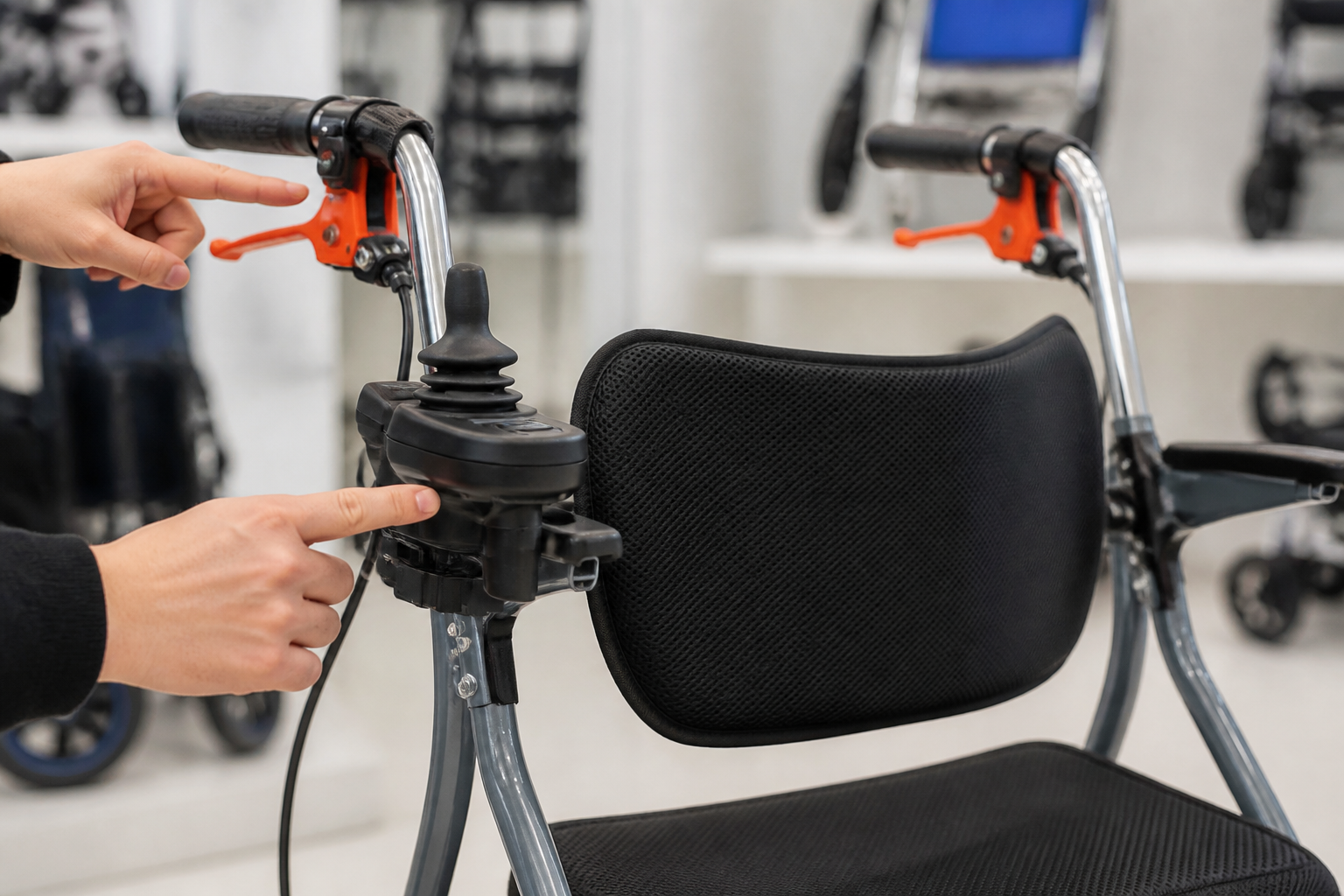
Afterward, Control inspection should verify placement and source identity without assuming functions from appearance.
For example, Key Takeaway: One inspection form turns sample observations into fair supplier comparisons.
How should controls and walker modes be reviewed?
Electric walker supplier controls and modes should be reviewed through current instructions, observable control placement, permitted transitions, staff roles, stop rules, and qualified supervision. Powered rollators may combine support, seating, pushing, braking, or powered functions in different ways. Buyers should never infer a mode from product shape or a neighboring model.
Review each permitted mode as a separate workflow
In practice, This is where clear boundaries matter:
Ask the supplier to identify every offered mode, the current source for that mode, required preparation, control cues, permitted transitions, and actions reserved for qualified service. Record handle position, brake lever location, joystick placement, seat and backrest relationship, and any supplied safety information without rewriting it from memory.
- named mode and exact configuration source
- preparation, visible control, and permitted transition
- staff role, supervision, stop rule, and issue route
- training record, open point, and repeat requirement
Instead, Keep demonstrations unoccupied until current guidance and qualified authority define later work. Attendance at a supplier demo should not become proof that staff can use every mode or configuration. Repeat affected checkpoints after a control, instruction, or option change.
Next, Key Takeaway: Mode review stays safe and useful when sources, roles, and transitions remain explicit.
What makes an electric walker route trial useful?
Also, An electric walker supplier route trial becomes useful when buyers define the configured sample, indoor context, checkpoints, supervisor, stop rules, and neutral observation method before movement begins. A casual lap around a showroom rarely reflects the facility or distributor program. Build a short route that represents expected commercial contexts without creating a universal suitability claim.
Use the same route and notes for each sample
The comparison needs a common frame:
Meanwhile, Record smooth floor, doorway context, broad turn, gentle threshold strip where approved, parking point, and storage return. Note mode, control position, supervisor, staff role, and stop reason. Do not add slopes, obstacles, or surface changes unless current sources and qualified oversight place them in scope.
- sample identity, route map, and observation order
- permitted mode, control position, and source revision
- doorway, turn, threshold, parking, and storage context
- stop reason, open question, owner, and follow-up
Keep statements factual: product cleared the marked doorway in this setup, staff requested clarification about brake cues, or basket position changed during an approved transition. Do not convert one trial into a promise for every person, building, or route.

However, A shared route lets buyers compare samples through the same observable checkpoints.
For example, Key Takeaway: A controlled route trial compares defined samples and contexts rather than broad claims.
How should receiving verify supplier consistency?
For example, Electric walker supplier receiving should verify that arrived units match the approved sample, purchase configuration, visible condition, supplied items, packaging record, and current documents. Sample approval does not prove that every later unit will match. Receiving teams protect the sourcing decision by repeating key fields and holding unresolved differences.
Turn the approved sample into a receiving baseline
The baseline should travel with the order:
Still, Provide receiving staff with sample photographs, configuration record, option list, document revision, packaging expectations, and difference rules. Check frame, wheels, seat, backrest, basket, handles, brake levers, joystick, cables, supplied items, and labels. The shopping walker page may prompt basket and storage questions, while the approved powered sample remains the acceptance source.
- approved sample, purchase record, and option identity
- arrived condition, packaging, and supplied items
- control, frame, seating, basket, wheel, and label match
- hold status, supplier response, closure, and release owner
Separate packaging damage from configuration drift or missing documents. Photograph differences before removing evidence. If a supplier proposes a substitute, reopen affected sample, route, training, parts, and receiving checks rather than approving through email alone.
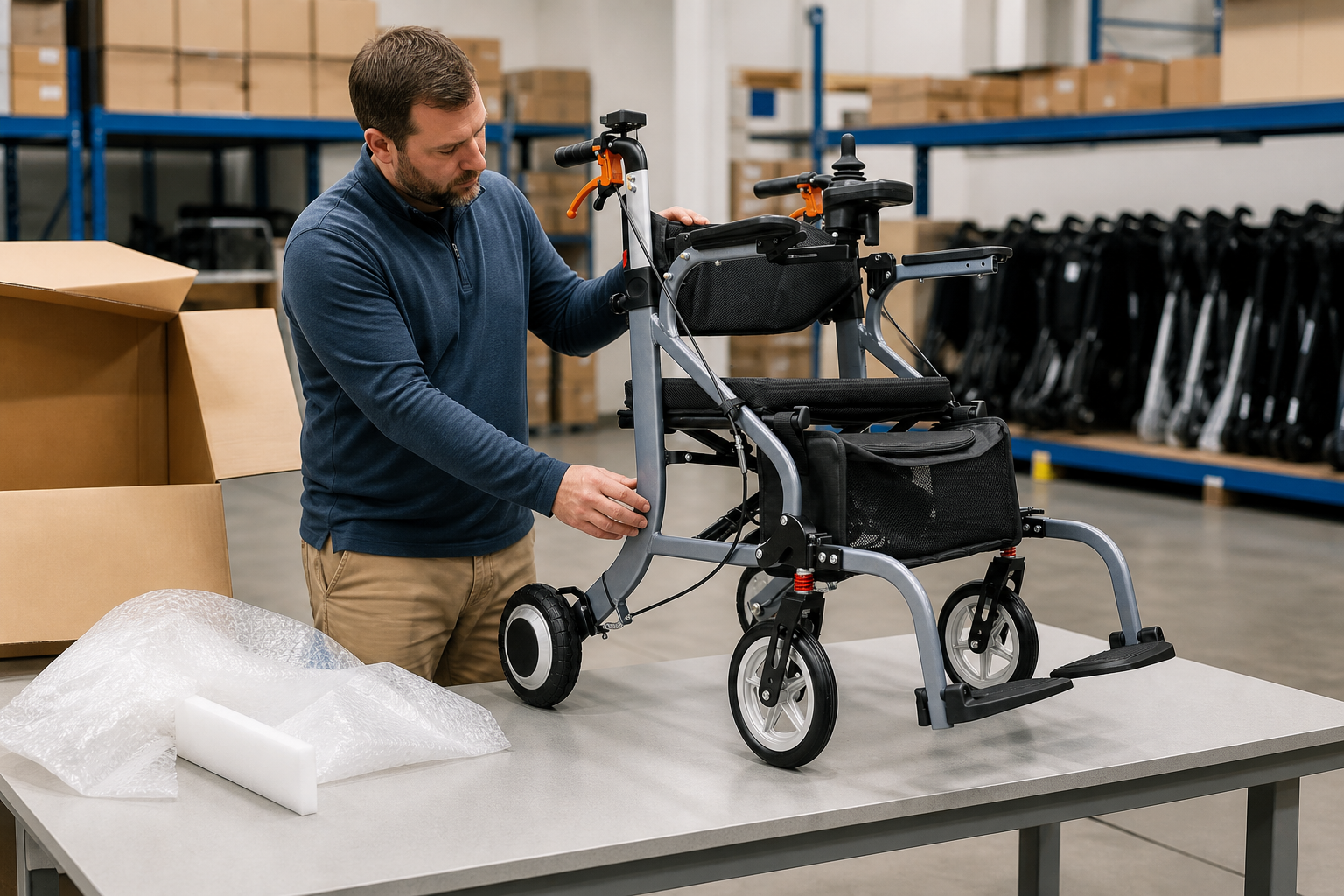
Instead, Receiving should compare every arrived unit with the approved configuration and sample baseline.
Afterward, Key Takeaway: Supplier consistency becomes visible through repeated receiving checks and controlled differences.
How should support and commercial terms shape approval?
Also, Electric walker supplier approval should weigh support ownership, parts identity, document revisions, response process, warranty route, packaging consistency, lead-time sources, and commercial terms beside sample findings. The lowest quoted price may not reflect extra receiving work, unclear parts, weak source control, or slow issue closure. Buyers should compare total program effort without inventing costs they have not measured.
Build one decision record across teams
The approval meeting needs shared evidence:
In practice, Bring purchasing, sales, operations, training, receiving, and service notes into one file. Mark each requirement as supported, open, not offered, or outside scope. State the source and owner. Keep negotiated terms separate from product claims so later teams know which statements came from contracts, manuals, samples, or internal policy.
- sample and route findings with source references
- instruction, part, service, and revision support
- packaging, receiving, warranty, and issue-response process
- commercial term, open risk, owner, and approval status
Ask how the supplier will notify buyers about configuration or document changes. A strong answer identifies timing, affected models, replacement sources, and contact ownership. Preserve earlier proposals and approval notes when revisions arrive.
However, Test communication through one realistic question before closing approval. Send a clearly identified sample concern and record who responds, which source supports the answer, whether another team must join, and how closure reaches the buyer file. This exercise does not rate every future interaction. It shows whether the named support route works during the current review and whether the answer can survive staff turnover. If the reply depends on an unwritten chat, request a dated source or formal clarification for the record.
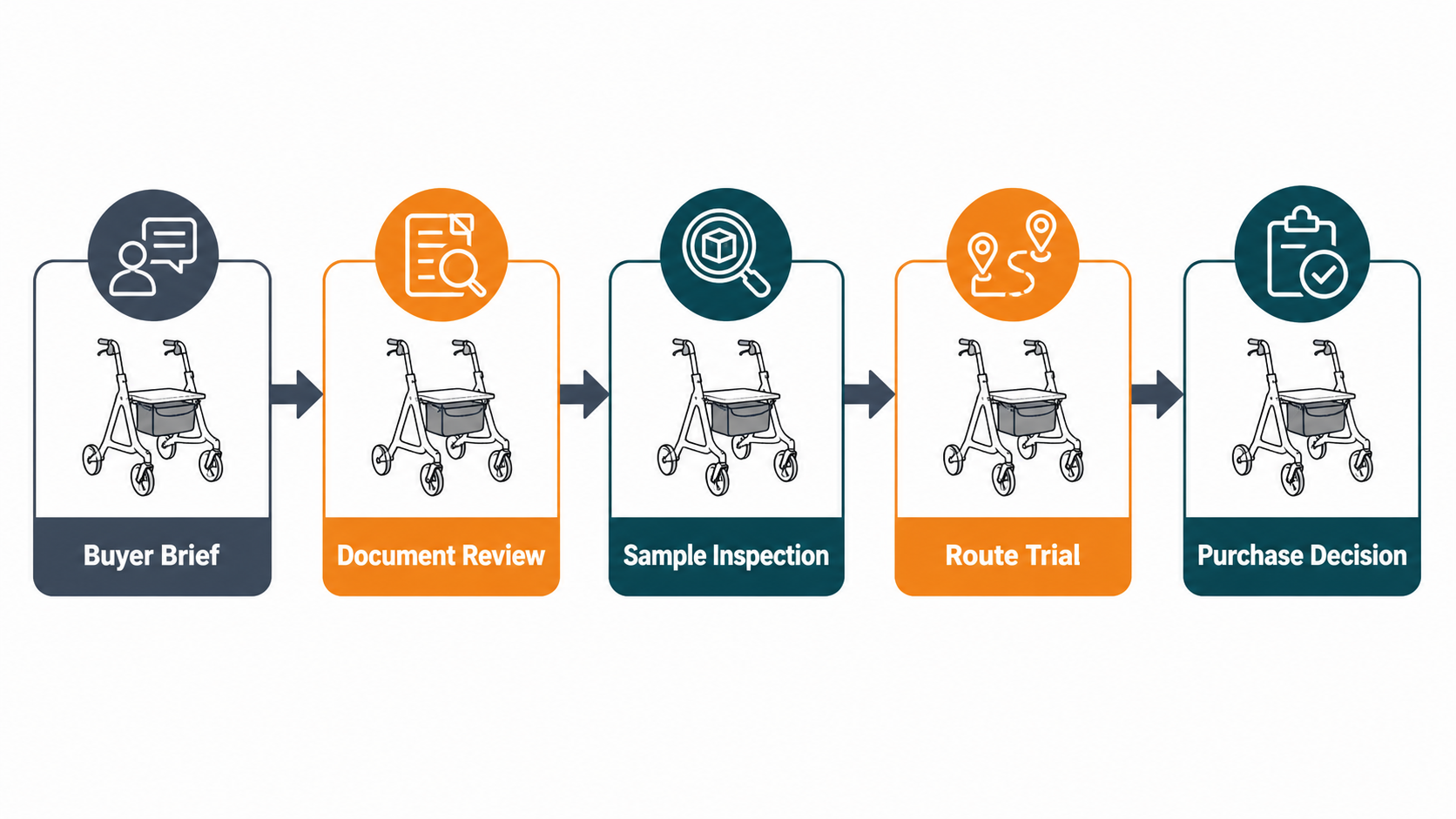
Which Supplier Evidence Should Buyers Record?
Next, The supplier workflow connects the buyer brief, documents, sample, route, and purchase decision.
For example, Close approval only when open items have owners and decision impact. A supplier may remain suitable with documented limits, while another proposal may need a new sample or source before acceptance. For a configuration-specific powered walker discussion or source request, contact us today.
Add a short pilot-order review when purchase scale or configuration complexity warrants it. Compare arrived units with the approved sample, note repeated differences, test the response channel, and verify whether document revisions reach every internal team. Keep this pilot separate from broad performance judgment.
Meanwhile, Its purpose is to test purchasing, receiving, issue routing, and supplier communication through real records. If a gap appears, state whether it affects the current order, later orders, training, service, product pages, or customer quotations. A precise action list gives the supplier a fair opportunity to close evidence while protecting the buyer from silent process drift.
Key Takeaway: Supplier approval should reflect the full operating record, not one attractive sample or quotation.
What FAQs do buyers ask about an electric walker supplier?
Instead, An electric walker supplier FAQ should clarify samples, mode evidence, route trials, receiving, and source revisions without replacing current product guidance.
For example, Can I approve an electric walker supplier without a sample?
Also, Sometimes early screening can proceed, but purchase approval carries more uncertainty without configuration-specific sample, document, and receiving evidence. Record that gap and its owner.
What’s the best way to compare multifunction walkers?
Still, List each permitted mode, exact source, preparation, controls, transitions, staff role, and stop rule. Compare the same fields across suppliers.
How do I know if a route trial result is reusable?
However, It is reusable for comparison when the sample, configuration, route, source, supervisor, checkpoints, and notes are documented. It is not a universal user or facility claim.
Afterward, Can receiving accept a visually similar substitute?
For example, Not without reopening affected approval checks. Similar appearance does not prove matching controls, parts, documents, or support.
What supplier changes should reopen approval?
In practice, A model, option, controller, mode, instruction, part, packaging, warranty, or support-process change should reopen the records it affects.
Related planning resources: Review powered walker handover, electric walker comparison, walking-aid product range, mobility product planning before approving a product, sample, route, or supplier decision.