

A floating beach wheelchair supports better guest use when a resort treats inspection, rinsing, drying, records, storage, and staff handoffs as one connected care system. Water access places fabric, straps, wheels, floats, pins, and frame joints in a demanding setting. A chair that looks ready from a distance may still have sand in a connection, a loose attachment, a wet strap, or an unresolved note from the prior shift. This article gives resort operators a practical care plan without inventing service intervals or product limits. Staff should follow the current manufacturer manual, site rules, local water conditions, and supervisor authorization for every unit. The floating beach wheelchair page provides a useful view of the product layout while teams build their own model-specific checklist and training record.
What should staff inspect before guest use?
A floating beach wheelchair should receive a complete visual and hands-on check before every approved guest session. Staff should identify the unit, read the latest handoff note, confirm that no hold tag remains, and compare the assembled chair with its model-specific checklist. The check should cover frame tubes, fasteners, attachment pins, wheels, floats, fabric, straps, arm supports, foot support, push points, and any detachable component named in the manual. Staff should also examine the planned route and water conditions under facility policy. A sound chair cannot make an unsuitable route or unsafe operating condition acceptable. If a team member finds a concern that falls outside training, the chair should remain out of service until a supervisor or supplier gives a documented response.
How can teams check wheels, floats, straps, and frame parts?
Teams can move around the empty chair in a fixed order so no area gets skipped. Begin at one side of the frame, follow each attachment point, then check the seating system and opposite side. Turn wheels by hand only when the manual permits it. Look for unusual movement, damaged surfaces, trapped debris, missing retainers, loose fabric, twisted straps, or parts that do not match the unit record. The beach wheelchair series helps buyers see different layouts, but the checklist must match the exact model in front of staff.
Here is the useful habit: touch and visually trace every connection that holds a wheel, float, seat, or support.
- Verify the unit code and current service status.
- Match detachable parts with the model checklist.
- Check wheel and float attachments for secure seating.
- Inspect fabric, stitching, straps, buckles, and adjustment points.
- Look along frame tubes and joints for visible damage or unusual movement.
- Confirm that the route and water conditions fit current facility rules.
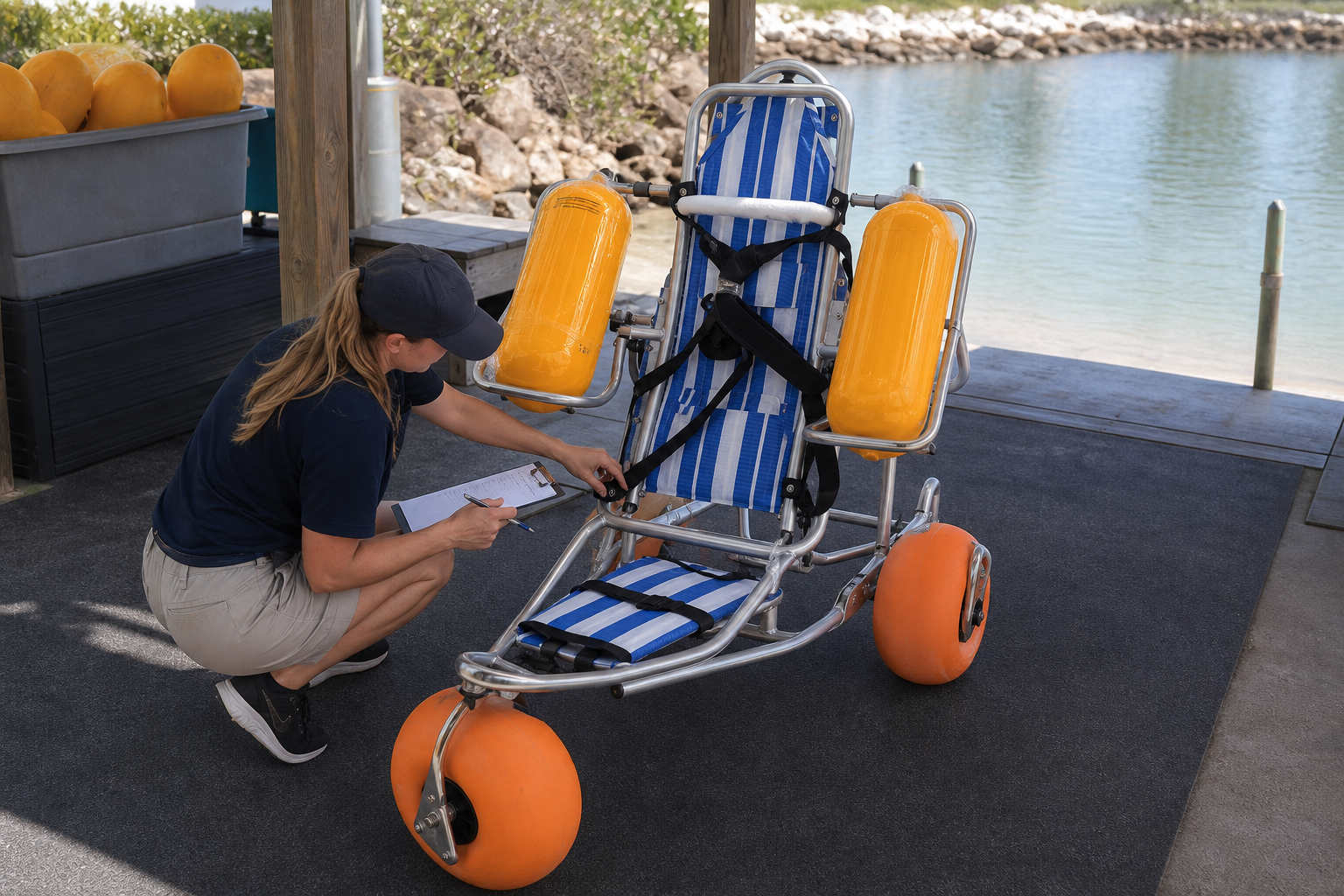
A pre-use record should be short and specific. A simple pass mark alone gives a later reviewer little context. Record the unit, date, staff member, condition, and any action. If the chair has detachable floats or wheels, note that the full set was present and attached according to the manual. Do not use a generic form across very different models unless each model has an attached component list. Color-coded photos can help staff identify parts, though the photo date and model revision should be controlled. A supervisor should approve any change to the checklist after a supplier update.
What care should follow shoreline use?
A floating beach wheelchair should move from guest handoff to a defined post-use care station where staff remove loose debris, apply the approved freshwater rinse, inspect the unit, and start complete drying. The manual should guide cleaning agents, water exposure, removable parts, and lubrication. Resort staff should not assume that a waterproof-looking part can accept a pressure washer or long soak. Gentle freshwater flow can carry sand and salt residue away from lower frame areas, wheel surfaces, float attachments, and accessible joints. Staff should keep runoff away from guests and follow local drainage rules. The chair remains a service unit during this process, so it should never be left in a public path without a status tag.
How should freshwater rinsing and drying be organized?
Rinsing should move from cleaner upper areas toward wheels and lower frame sections while the chair stays empty and stable. Use the supplier-approved method and pay attention to fabric folds, strap paths, fastener recesses, and attachment points. After rinsing, allow water to drain in a ventilated area. Separate removable parts only when the manual calls for that step. The existing article on floating beach wheelchair maintenance gives related commercial context.
The key detail is complete drying: putting a damp chair into a closed room can hide moisture and make the next shift’s check harder.
- Remove loose sand with the approved soft tool before rinsing.
- Use gentle freshwater flow instead of high-pressure spray.
- Open straps and fabric folds so trapped water can drain.
- Place the empty chair in a stable, shaded, ventilated area.
- Keep all parts under the same unit code during drying.
- Record any condition that changed during cleaning.
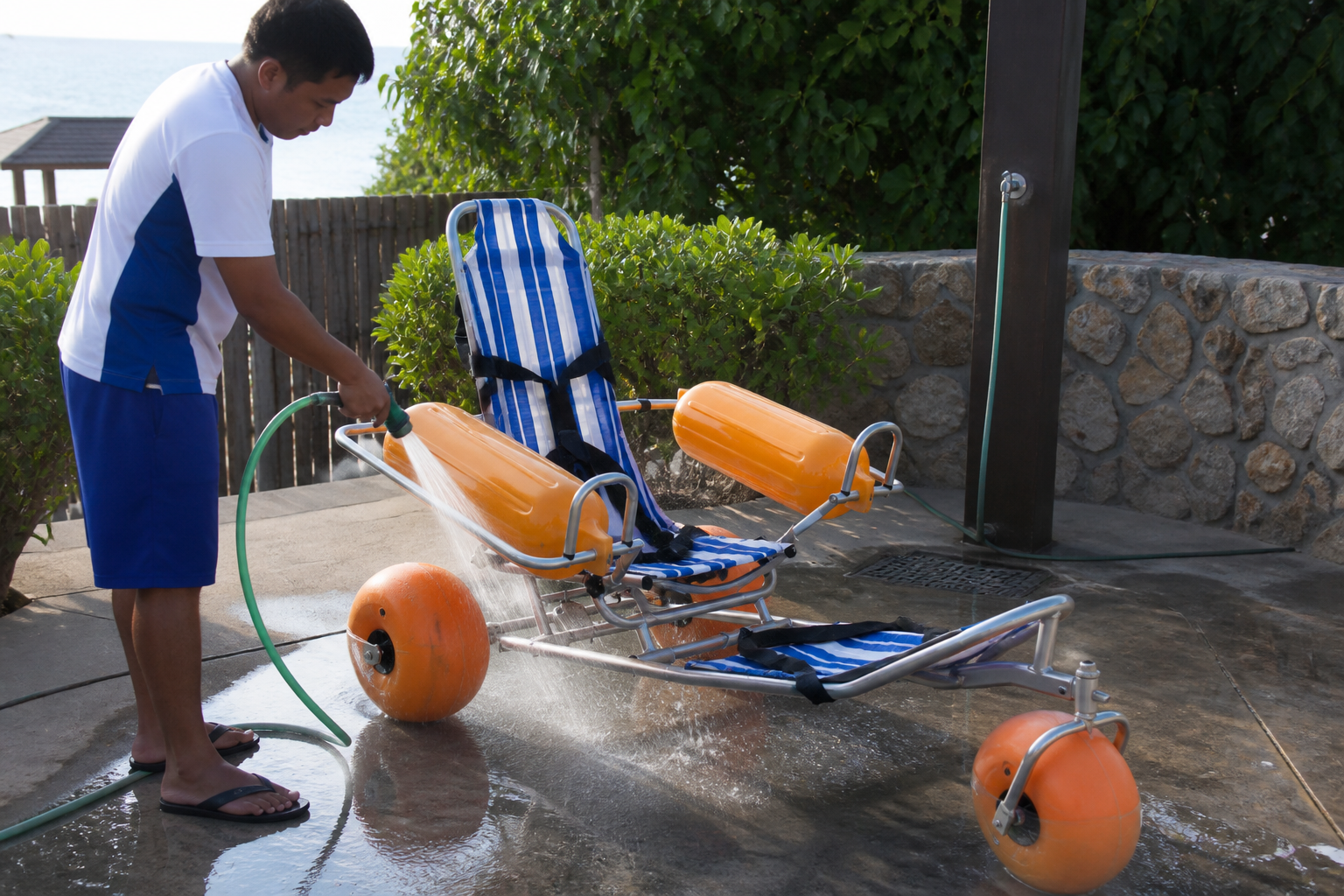
Staff should check the care station itself. A blocked drain, crowded rack, missing brush, or unlabeled hose can disrupt even a well-written routine. Place tools where staff can use them without crossing guest paths. Keep clean and used cloths separate. If a supplier approves a cleaning product, store the product data and dilution direction with the care procedure rather than relying on memory. Facilities should also decide who may return a chair to ready status. The person who rinses the unit may not be the supervisor who closes a fault note, and the record should make that distinction visible.
| Care stage | Staff action | Record needed |
|---|---|---|
| Handoff | Confirm guest session ended and unit returned | Unit code and return time |
| Debris removal | Remove loose sand by approved method | Condition note if unusual debris appears |
| Rinse | Apply approved freshwater flow | Care completion entry |
| Dry | Drain and ventilate all named parts | Ready or drying status |
| Review | Close faults or keep the hold active | Supervisor decision |
How should a resort store and record the chair?
A floating beach wheelchair should be stored only after named parts are dry, the unit status is clear, and the storage bay protects it from crowding, direct traffic, and unapproved handling. Storage planning starts with the full assembled footprint plus space for detached wheels, floats, straps, or tools. Heavy items should not rest on buoyant components or fabric. The bay should allow staff to inspect the chair without dragging it across other equipment. Air movement matters in a coastal setting, as does a clear path back to the staging area. If a unit remains in drying status, the next shift should see that status before moving it.
What belongs in a model-specific unit log?
A unit log should connect guest-use readiness with care, faults, parts, supplier messages, and supervisor decisions. Give each chair an internal code while keeping manufacturer labels untouched. Records can be digital or paper, but staff need one controlled location. The floating beach wheelchair guide offers product context; unit history should still reflect the exact chair owned by the resort.
This is where a short record beats memory: the next shift can see what happened, what remains open, and who owns the action.
- Unit code, model reference, and current configuration.
- Pre-use check, staff name, date, and service status.
- Post-use care entry and drying status.
- Fault description with clear photos when useful.
- Parts removed, replaced, or waiting for supplier review.
- Supervisor closure and return-to-service decision.
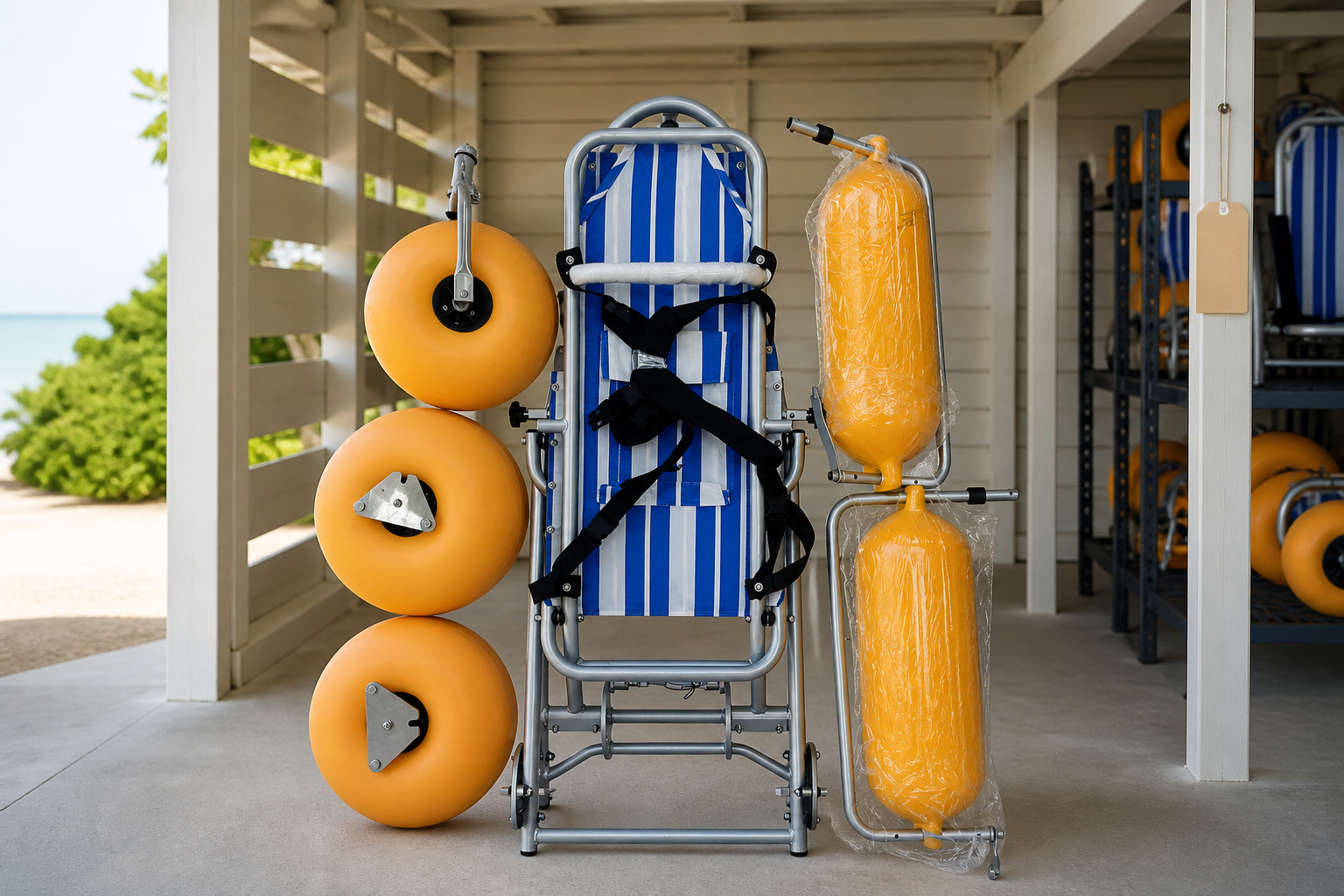
Set a retention period that fits facility policy and purchasing needs. Records can show recurring damage at one route point, repeated confusion about one attachment, or care delays during peak hours. Those patterns can lead to a better rack, clearer photo guide, revised staffing plan, or a supplier question. Do not turn observations into unsupported product claims. Treat them as site evidence tied to a unit, date, and condition. When a supplier replies, save the response with the related fault rather than in a separate inbox that supervisors may not see.
How should supervisors manage faults and staff handoffs?
A floating beach wheelchair should leave ready status whenever staff find a condition they cannot resolve within approved training and documents. A visible hold tag, blocked booking status, or controlled storage position should prevent accidental use. The fault record should describe what staff observed without diagnosing beyond their role. Phrases such as “left wheel has side movement during empty check” are more useful than “wheel is bad.” Add clear photos, the model and unit code, relevant manual section, and any recent care event. A supervisor can then decide whether trained staff can correct the issue, whether a supplier response is needed, or whether a qualified service provider should inspect the chair.
What should prompt a service hold?
A service hold should follow any missing part, insecure attachment, visible frame concern, damaged seating support, strap problem, unusual movement, unclear assembly, unresolved cleaning issue, or conflict between the chair and operating conditions. Staff should never feel pressure to clear a chair because a booking is waiting. The guest service team can offer another approved option while equipment staff protect the unit and record.
Here is the decision rule: if readiness cannot be confirmed from training and current documents, keep the chair out of service.
- Attach a visible status marker that cannot be mistaken for ready.
- Stop new assignments for that unit in the booking process.
- Record the observed condition using neutral language.
- Notify the named supervisor and attach supporting photos.
- Keep supplier replies, actions, and closure evidence together.
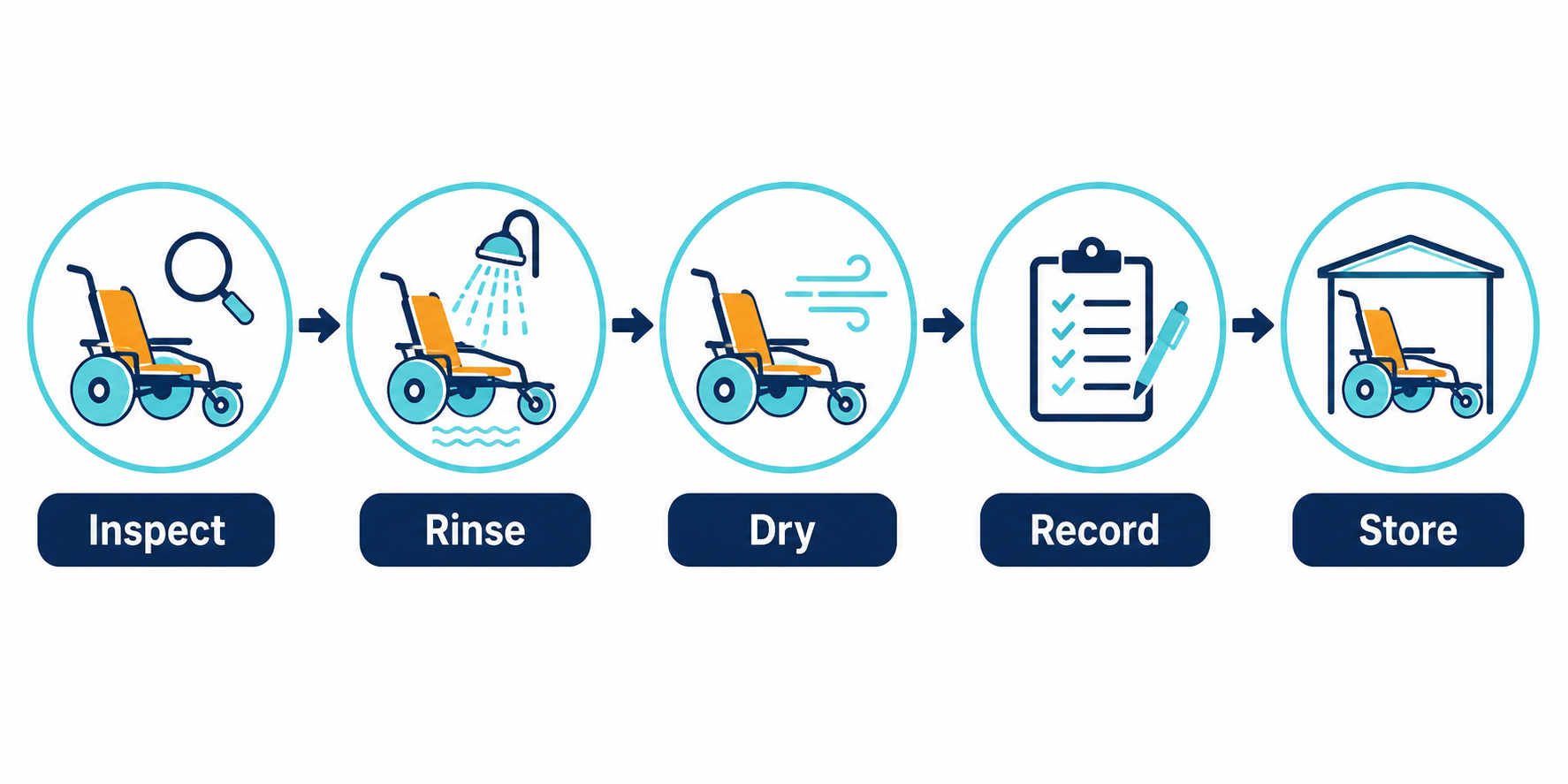
Shift handoffs should include ready units, drying units, held units, expected supplier replies, and any route condition that changed. A brief spoken handoff can help, but the controlled record remains the source. Supervisors should sample completed checks and watch staff perform the process on a set schedule based on facility policy. Coaching should focus on missed inspection points, vague notes, unsafe rushing, or unclear status changes. A care system works when every shift uses the same definitions and each open issue has an owner.
Supervisors can strengthen the handoff with a simple equipment board that shows only unit code, current status, and action owner. Detailed guest information should stay in the appropriate controlled system, not on a public board. This keeps equipment readiness visible without mixing care records with private guest data.
What should resort operators do next?
A floating beach wheelchair care plan should start with the current manual, a model-specific component photo, the approved route, the care station, and named staff roles. Walk through one complete empty-chair cycle: ready status, pre-use check, route handoff, return, debris removal, rinse, drying, storage, and next-shift review. Time the work for staffing purposes without turning that result into a product claim. Fix missing tools, unclear labels, or crowded storage before guest bookings depend on the process. Train a small authorized group, review their records, then expand the roster under supervision. For help discussing a product configuration, manual set, spare-parts request, or resort purchasing plan, contact us today with the model reference and operating setting.
What do resort operators often ask?
A floating beach wheelchair care program brings recurring questions about rinsing, drying, records, holds, and staff roles.
Can I use a pressure washer after every session? Usually not without written manufacturer approval. High pressure may force water or debris into joints and fabric areas. Follow the current manual and use the approved freshwater method.
What’s the best place to dry the chair? Use a stable, shaded, ventilated area with drainage and enough clearance around fabric, straps, wheels, floats, and frame parts. Keep the service status visible.
How do I know if a float attachment is ready? Compare it with the model checklist and manual, then check seating, retainers, visible condition, and unusual movement. Hold the unit if readiness remains unclear.
Can I store detachable parts on a separate rack? Yes, when the manual permits removal and the rack keeps every part dry, protected, and linked with the correct unit code.
How do I know if a fault can be closed? A named supervisor should match the action with training, documents, and any supplier reply. Record the decision before returning the chair to ready status.