
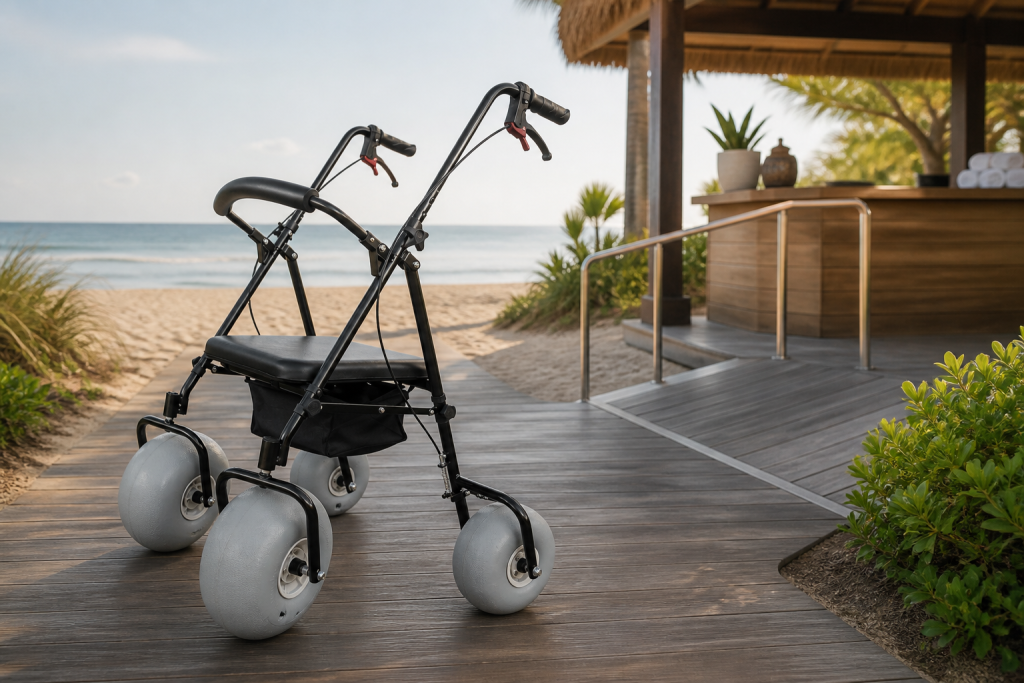
Beach walker selection supports better resort guest mobility when buyers match the device with a defined route, user program, staff role, fitting process, brake check, care routine, and supplier record. Large balloon wheels may help a walker move across loose coastal surfaces, yet wheel appearance alone does not establish suitability. A resort must describe where guests will use the device, who will fit it, which surfaces sit inside the program, where seated rest is allowed, and how staff respond when conditions change. This guide gives hospitality buyers a B2B selection framework without medical promises or invented performance figures. Teams can review the beach walker page for product layout while preparing a site brief that suppliers can answer in writing.
What guest program should beach walker buyers define?
Beach walker buyers should define a guest program before comparing models, because route boundaries, staff assistance, booking rules, and fitting needs shape the specification. Start with the service purpose. A property may want a walker for a boardwalk-to-sand route, a supervised beach activity zone, a firm shoreline path, or movement between an accessible room and a shaded seating area. These uses are not interchangeable. Name the start and end points, permitted surfaces, stopping locations, operating hours, weather limits, and staff coverage. The program should also state who decides whether current sand and route conditions remain within policy. A clear service description keeps procurement focused on real tasks rather than a broad promise about outdoor use.
How do route and staffing plans shape the specification?
Route and staffing plans determine the required turning room, handle control, wheel layout, seat use, storage access, and handoff procedure. Walk the route in both directions. Measure narrow points, observe crossfalls, and note places where wheels may meet a boardwalk gap or soft edge. The beach series shows related coastal mobility equipment, which can help a team separate walker use from wheelchair use.
Here is the planning test: every requested feature should connect with a named route or staff task.
- Mark permitted surfaces and clear service boundaries.
- Record gates, doors, turns, slopes, gaps, and loose-sand sections.
- Name staff roles for fitting, briefing, cleaning, and fault review.
- Set booking and weather decisions under facility policy.
- Identify rest locations and rules for using the built-in seat.
- Confirm how the walker returns to a care and storage point.
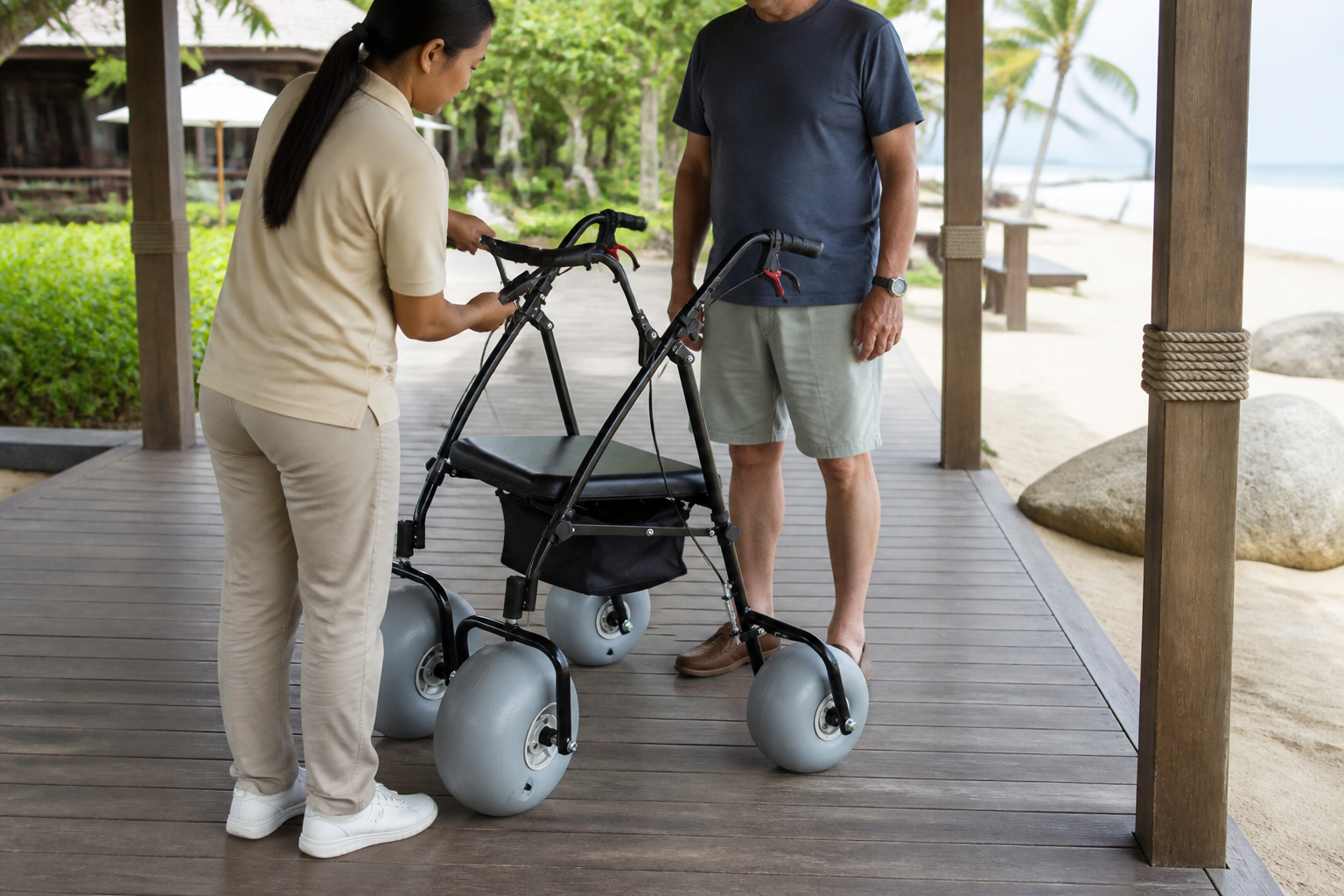
The service brief should describe intended users in functional terms that procurement can discuss without making a diagnosis. Examples include guests who can walk with an approved aid, operate hand brakes under staff instruction, and follow route boundaries. Clinical suitability belongs with the guest’s qualified adviser and facility policy, not a sales page. Resort staff should know when to decline the device and offer another approved option. If the program includes seated rest, staff need clear instructions about applying brakes, choosing a stable surface, and using the seat only as permitted by the manual.
Which beach walker features deserve buyer review?
Beach walker buyers should review wheel construction, frame layout, handle adjustment, brake controls, seat and pouch design, folding method, cleaning access, transport needs, and model-specific documents. Large balloon wheels can spread contact across soft ground, though actual route fit still depends on the device, surface, load, and staff control. Ask suppliers for current photos from front, rear, and side views, plus a drawing or dimension sheet tied to the quoted model. Request a clear component list and identify which items are standard or optional. If the walker folds, buyers should ask for the approved sequence and assembled versus folded footprint rather than guessing from a photograph.
How should buyers compare fit, brakes, seat, and wheels?
Buyers should compare each feature with a staff action. Handle adjustment connects with fitting. Brake levers and cable routing connect with pre-use checks and guest briefing. The seat connects with rest policy and stability rules. Balloon wheels connect with the mapped route, cleaning station, storage footprint, and replacement-parts plan. The article on a beach walker for sand adds useful route context.
What belongs in the quote review? Evidence that lets a team identify, inspect, fit, clean, store, and support the exact configuration.
- Handle range and adjustment method documented for the quoted model.
- Brake lever, cable, parking function, and adjustment points shown clearly.
- Seat, frame, pouch, and wheel attachment layout in current photos.
- Assembled and folded dimensions when folding applies.
- Manual, parts list, warranty terms, and supplier contact process.
- Packing list and assembly record for receiving staff.
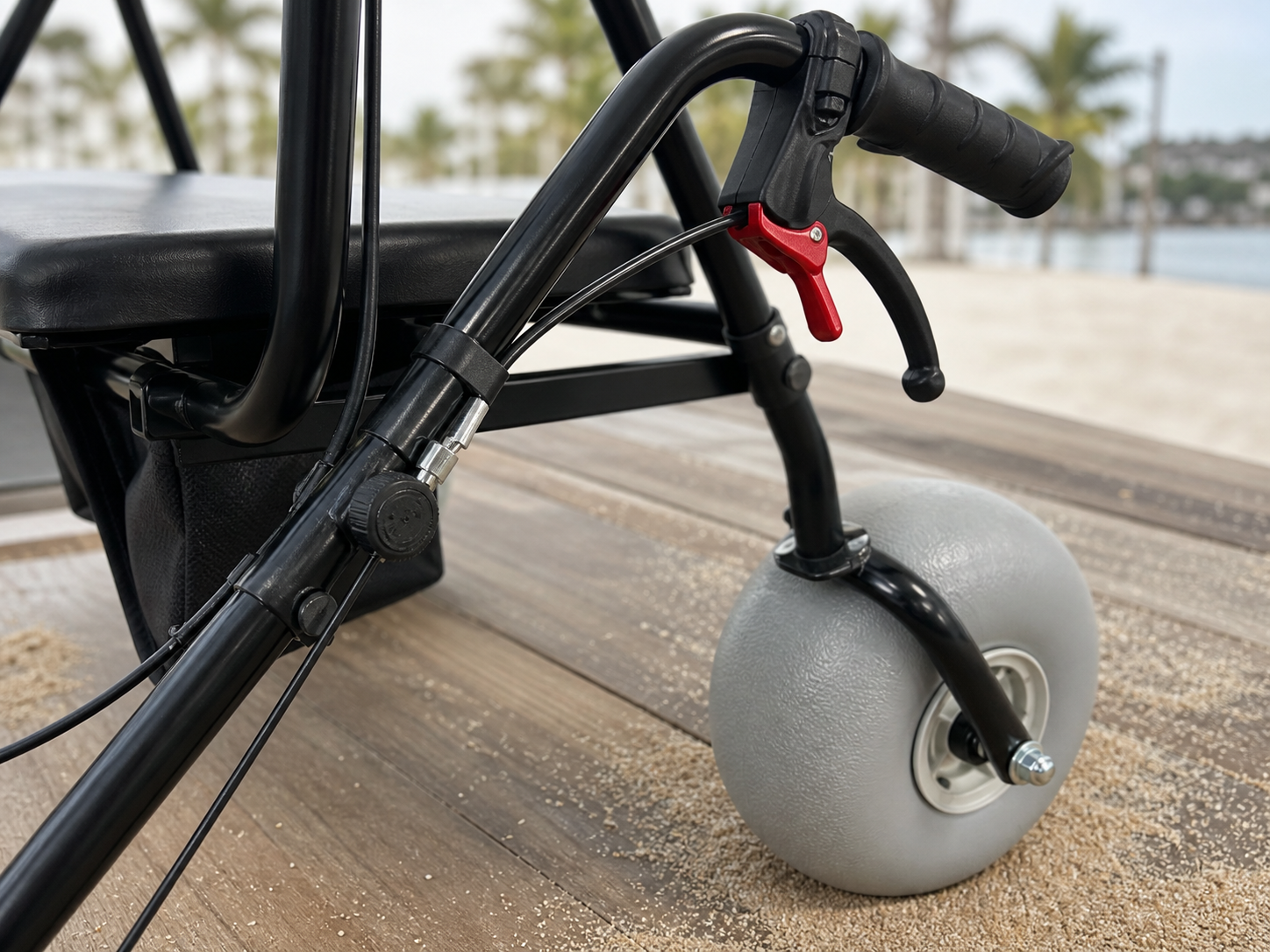
Avoid asking only which model is “best.” That question has no useful answer without a route and operating plan. Ask which documented configuration fits the measured doorway, turning area, sand condition, staff strength policy, care station, and storage bay. Buyers should also inspect how easily staff can reach common cleaning points and view attachments during a pre-use check. A hard-to-see cable route or attachment may require a photo guide and brighter inspection area. Those needs belong in the ownership plan, even if they do not change the base product.
| Review area | Supplier evidence | Resort decision |
|---|---|---|
| Route | Wheel layout and full dimensions | Does the walker fit mapped surfaces and turns? |
| Fit | Handle and adjustment record | Can authorized staff set and verify the device? |
| Brakes | Control and cable information | Can staff inspect and brief guests consistently? |
| Seat | Manual directions and frame layout | Where may seated rest occur under policy? |
| Care | Cleaning and parts guidance | Can the facility support daily operation? |
How should resorts fit and brief a guest?
Beach walker fitting should follow the manufacturer manual, facility policy, and any guidance supplied by the guest’s qualified adviser. Staff should begin at a stable staging area rather than adjusting the walker in loose sand. Confirm the correct unit and service status, inspect brakes and wheels, set the handle position by the approved method, and ask the guest to confirm comfort and control. A staff member should observe posture and reach within the limits of training, without making a clinical judgment. If the guest cannot control the brakes or follow route rules, pause the session and offer another approved service path.
What should staff cover during the handoff?
The handoff should be a two-way conversation. Explain the permitted route, brake operation, turning approach, seat rule, staff contact method, and conditions that require a stop. Ask the guest to show brake use and repeat key boundaries. The article on hospitality beach mobility support offers related operational context for resort teams.
The useful moment comes before the sand: a calm staging-area check gives the guest and staff time to ask questions.
- Confirm unit status and complete the pre-use inspection.
- Set handles using the documented adjustment method.
- Explain service boundaries and the planned route.
- Demonstrate brake and parking functions under the manual.
- State where seated rest is allowed and how staff can assist.
- Ask the guest to demonstrate controls before leaving the staging point.
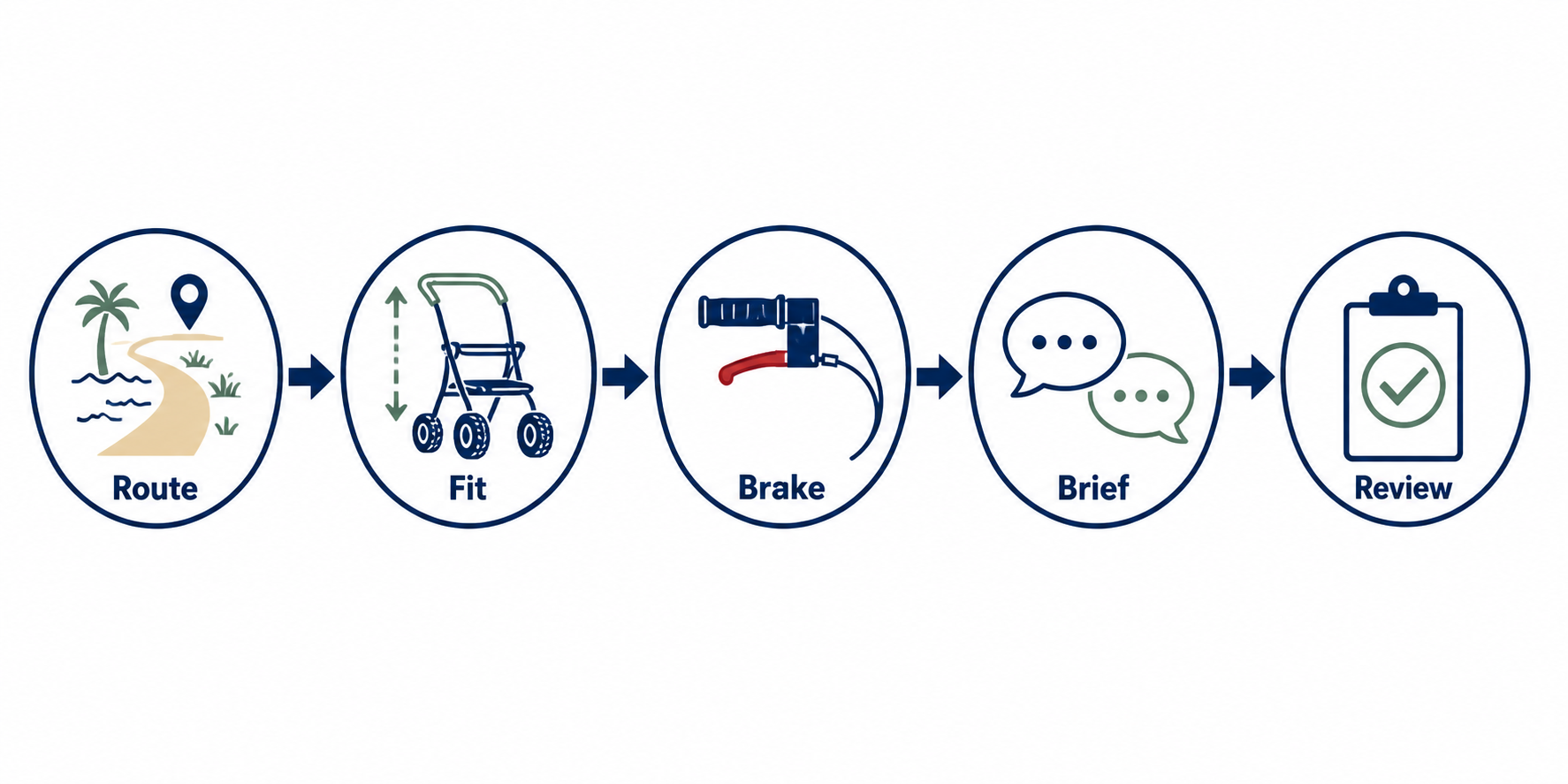
Staff should not pull the walker, push the guest, or improvise assistance outside training. Agree on communication before movement begins. A simple phrase such as “pause here” can help both people stop at the same time. On soft or changing sand, staff should watch wheel tracking and the guest’s control while keeping a respectful distance set by policy. If the route changes because of crowds, grooming, water, debris, or weather, return to the approved path rather than creating a new route during the session.
How should resorts care for and store beach walkers?
Beach walkers should move through a model-specific post-use routine that removes sand, checks brakes and attachments, dries named parts, records conditions, and returns only ready units to storage. Staff should follow the current manual for water, cleaning products, removable components, cable care, and folding. A soft brush may remove dry sand from balloon wheels and lower frame areas before an approved damp wipe. Pressure spray can drive debris into joints or cable areas, so it should not be used without written manufacturer direction. The seat, pouch, handles, and frame should dry before the walker enters a closed bay.
How can a short unit record keep the fleet ready?
A short unit record can connect pre-use checks, guest sessions, care, faults, and supervisor decisions. Assign an internal code while leaving product labels intact. Record the date, staff member, condition, cleaning action, current status, and any part awaiting review. Keep supplier replies with the same unit history instead of storing them in a separate message thread.
Here is why the record matters: a later shift can see whether a walker is ready, drying, or held without relying on memory.
- Log brakes, cables, wheel attachments, frame, seat, and pouch condition.
- Record sand removal, approved wiping, drying, and folding status.
- Use a visible hold marker for unresolved movement or damage.
- Attach photos that show the observed condition clearly.
- Name the supervisor or supplier action owner.
- Close the record before returning the walker to ready status.
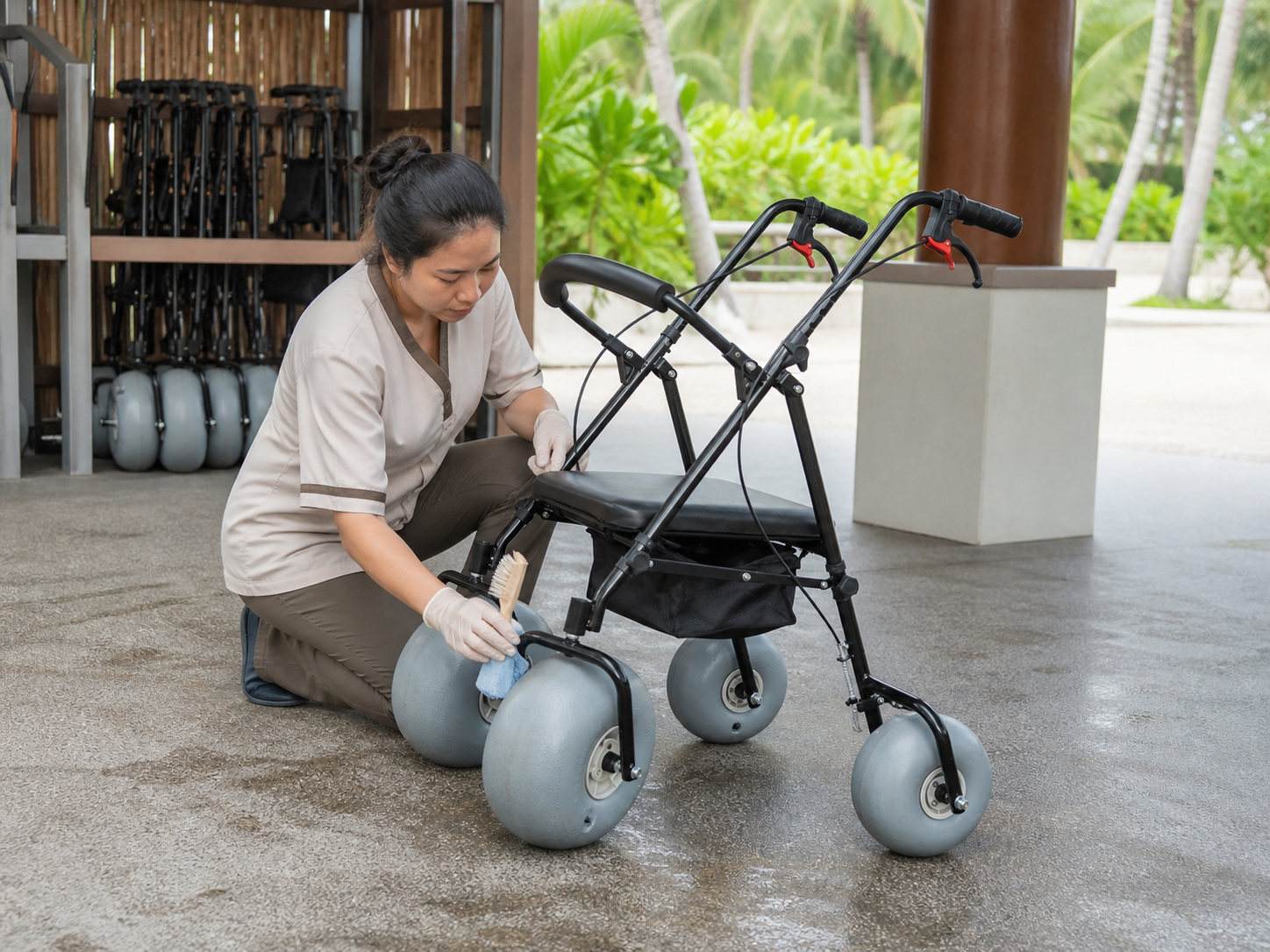
Storage needs room for the full device, safe folding when permitted, and air around fabric and cable areas. Do not stack luggage or heavy equipment against balloon wheels. Place walkers where staff can remove one unit without dragging others. If a property owns multiple similar models, use a photo and unit code at each storage position. The care station should have approved tools, clear drainage, and enough light for brake-cable inspection. A recurring fault at one wheel or frame point should trigger a supervisor review and supplier question, not an informal adjustment outside the manual.
Procurement should visit the storage and care area before setting an order quantity. Floor plans may show enough square footage while racks, doors, carts, and cleaning tools reduce usable clearance. Mark one full walker footprint on the floor, add space for staff movement, and test the path from the bay to the boardwalk. If folding is part of the plan, staff should demonstrate the approved sequence and confirm that cables, seat fabric, and wheels remain protected in the stored position. This review connects fleet size with daily handling capacity instead of treating storage as an afterthought.
What should hospitality buyers do next?
Beach walker selection should move from a guest program and route map into a written supplier checklist, receiving review, staff fitting practice, and controlled pilot. Build the service brief with operations, accessibility, housekeeping, maintenance, and procurement staff. Ask suppliers to respond against the same questions and identify any model assumption. Compare current documents rather than promotional phrases. After delivery, match the shipment with the purchase record, assemble it by the manual, photograph the accepted configuration, and test the approved route with trained staff before guest service. Start with a limited pilot, review notes, then revise the procedure where site evidence supports a change. For product configuration, document, parts, or purchasing questions, contact us today with your route description and guest service plan.
What do hospitality buyers often ask?
Beach walker procurement often raises questions about sand use, fitting, brakes, seated rest, and storage.
Can I use a standard indoor rollator on loose beach sand? Often no. Narrow wheels may sink or track poorly. Use a device documented for the planned surface and confirm fit through supplier records and an approved site review.
What’s the best beach walker for a resort? The best match fits the route, user program, staff role, fitting process, care capacity, storage space, and supplier support. A model name alone cannot answer that question.
How do I know if a guest can use the brakes? Staff should demonstrate the controls and ask the guest to show brake use in a stable staging area. Follow facility policy and any qualified guidance provided for that guest.
Can a guest sit on the built-in seat on sand? Only where the manual and facility policy permit seated rest on a stable surface. Staff should explain the parking-brake process and approved rest locations.
How do I know if the walker is ready after cleaning? Confirm that named parts are dry, the inspection has passed, no hold remains, and a supervisor has closed any open fault before setting ready status.