
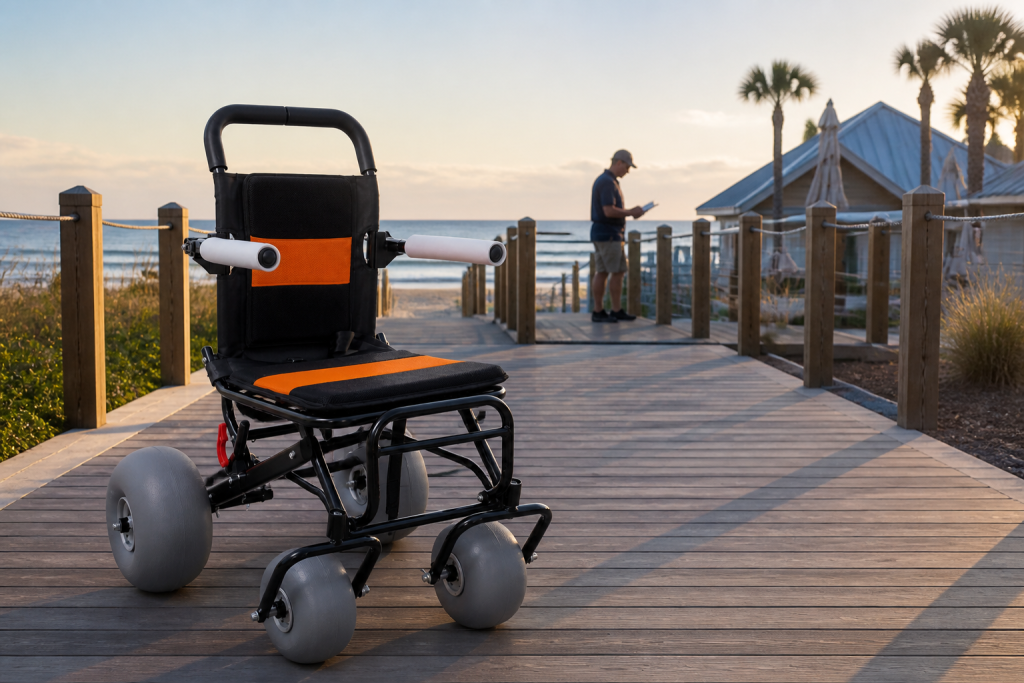
Reopening a coastal mobility program can expose small gaps that stayed hidden during storage. A missing pin, an outdated route note, or an unclear staff handoff can slow service on opening day. Resort and municipal teams need a calm return-to-service sequence that covers equipment, routes, records, and people without relying on memory. This guide provides that sequence for an All Terrain Beach Wheelchair fleet. It supports B2B operators who manage guest requests, storage rooms, beach access points, and supplier communication. Teams should pair every check with manufacturer instructions and local operating rules. A reopening checklist does not replace trained judgment, yet it gives managers a shared record and a consistent way to pause equipment when something looks wrong.
How Should a Resort Reopen Its All Terrain Beach Wheelchair Fleet?
An All Terrain Beach Wheelchair fleet should reopen through a documented return-to-service process that separates unpacking, inspection, route review, staff practice, and manager approval. Starting every chair at once creates noise and weak records. A staged process lets a team identify missing parts, storage damage, or unclear assignments while equipment remains away from guest service. Managers can compare each chair with product guidance from Ary Medical's Beach Series and record any model-specific question before use. The aim is simple: each chair receives a named asset record, a completed inspection, an approved operating route, and a clear handoff owner. If any check fails, mark that chair unavailable and contact its supplier rather than improvising a repair.
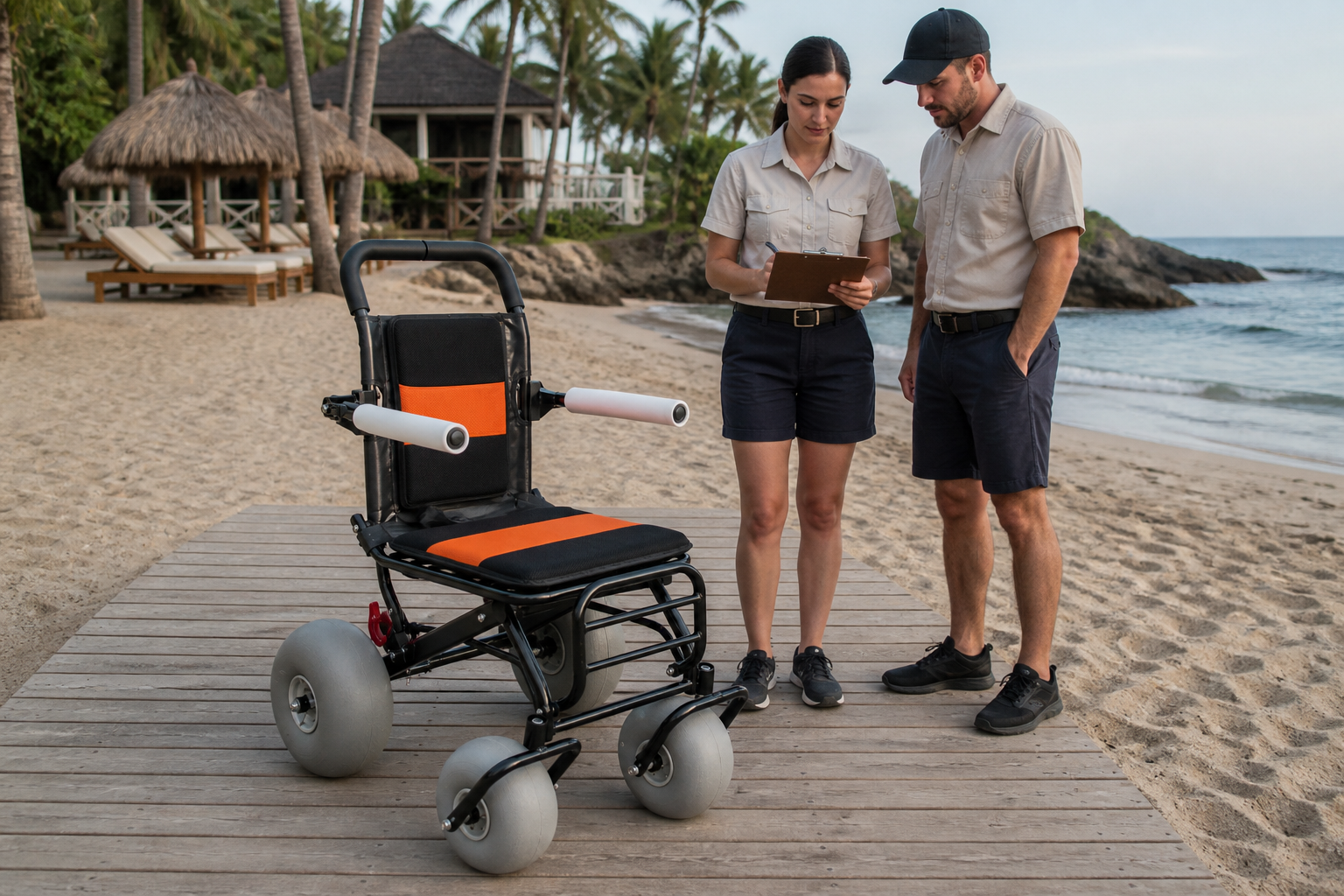
Build a controlled return-to-service sequence
Here is the practical move: divide reopening work into visible gates, then require a dated signoff at each gate. Move one chair through every gate before processing the rest of a fleet. That pilot exposes vague wording and missing tools before staff repeat a weak process. Keep the chair clean, dry, and away from guests while checks remain open. Compare visible components with the correct manual and purchase record. Do not assume two similar chairs share every fastening method or service rule. A manager can use a short status board with four labels: stored, under review, ready for staff practice, and approved for service. Staff should never move a chair forward because a deadline feels close.
- Confirm asset ID, model, and storage location.
- Match loose parts with the chair record.
- Record visible damage without guessing its cause.
- Assign one reviewer and one final approver.
This sequence also gives procurement teams cleaner evidence. A supplier question becomes specific when a photo, asset ID, and observed condition sit in one record. Resort leaders can then see which chairs are ready and which ones need attention. That clarity helps protect opening schedules without pushing uncertain equipment into service.
Divide ownership before guest service begins
What changes the outcome: every task needs an owner, a backup, and a stop point. Reception teams may receive a booking, operations staff may prepare a chair, and beach staff may handle its route. Those roles should connect through one shared handoff record. Write who confirms availability, who checks weather and route conditions, who briefs attendants, and who receives equipment after use. Keep approval authority narrow. A busy desk should not mark a chair ready simply because a guest is waiting. Managers can also list who contacts the supplier when a component question appears.
- Booking owner: confirms request details and service window.
- Equipment owner: completes pre-use checks and records findings.
- Route owner: checks access points and operating boundaries.
- Return owner: receives, cleans, dries, and closes the record.
A backup matters when shifts change or seasonal staff rotate. Put contact names inside operating documents instead of relying on a private message thread. Brief every role on what requires an immediate pause, such as a missing fastener, damaged seating, uncertain wheel retention, or a route blocked by current conditions. Clear ownership reduces rushed assumptions and leaves a trace that managers can review after each service day.
Which Route Checks Should Teams Complete Before Opening?
An All Terrain Beach Wheelchair route check should cover access points, surface changes, slopes, turning areas, stopping points, and a practical return path under current beach conditions. Product capability does not make every shoreline route suitable. Sand firmness, tide position, drainage, temporary obstacles, and crowd flow can change from one shift to another. Walk the complete route with trained staff before guest service, then record what they saw. Ary Medical's published overview of an all-terrain beach wheelchair across sand, grass, and gravel can help teams frame surface questions, but local observation and written site rules still control each operating decision.
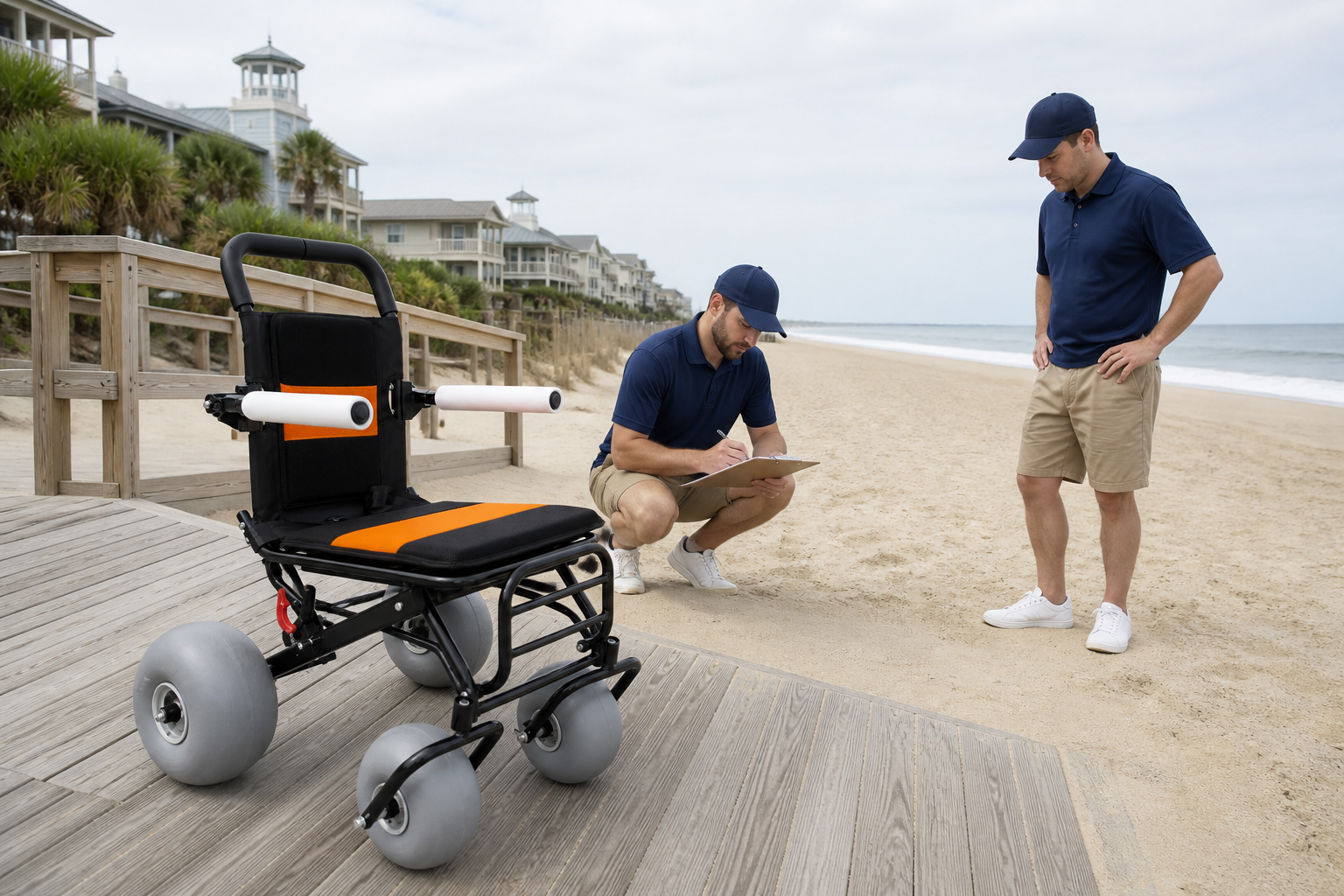
Audit every surface change and turning point
Start with what staff can see: map every place where wheels move from one surface onto another. A smooth boardwalk may end at loose sand, a ramp may meet a narrow landing, or a rinse area may create a wet turning zone. Record each surface change with a plain name that seasonal staff will recognize. Walkers should note available width, nearby edges, crowd pinch points, and where an attendant can stop without blocking other guests. Do not publish fixed route claims if conditions change throughout a day. Use a route status that staff can update before each booking window.
- Mark boardwalk-to-sand transitions.
- Identify wide areas for turning and staff repositioning.
- Note shade, rest, and communication points.
- Record a return route and an alternate stop point.
Run this audit with relevant site teams, not only mobility staff. Facilities may know about temporary repairs, while lifeguards may track beach boundaries or local access changes. Reception needs a simple version for guest communication. Keep technical notes in an operations record and convert them into short service language for booking staff. If a route condition falls outside written policy, pause service and escalate. A checklist supports a decision; it should not pressure staff into approving a route.
Set daily route status and clear pause rules
This is where discipline helps: define route states before a busy day begins. A three-state system can work well: open, restricted, and closed. Each state needs written criteria based on the site's policy, not a staff member's mood. Restricted may mean a shorter approved path or a different handoff point. Closed means no beach route service until a named reviewer completes another check. Record who set each status and when the next review will occur. Avoid permanent statements about sand or water because conditions can shift quickly.
- Open: approved path remains clear under current conditions.
- Restricted: only the documented alternate route may be used.
- Closed: staff stop the service and notify booking teams.
- Review due: a named employee checks conditions again.
Share route status across reception, operations, and beach teams at one agreed location. A printed sheet can work for a small site, while a shared digital log may suit a larger fleet. The method matters less than one current source of truth. If staff find a new obstacle during a booking, they should have authority to stop and return through the approved path. Managers should praise accurate pause decisions because they protect guests, staff, and equipment from improvised choices.
What Equipment Records Should Buyers Reconcile?
All Terrain Beach Wheelchair buyers should reconcile asset identity, purchase records, included parts, service notes, supplier contacts, and open questions before approving seasonal use. A fleet can look complete while records tell another story. One chair may have a replacement wheel, another may lack a documented accessory, and a different unit may carry an unresolved service note from a prior season. Link every physical chair with one record. Product pages such as Beach Wheelchair ST V3.0 provide a useful model reference, while purchase documents and manufacturer guidance remain the authority for the unit in front of your team.
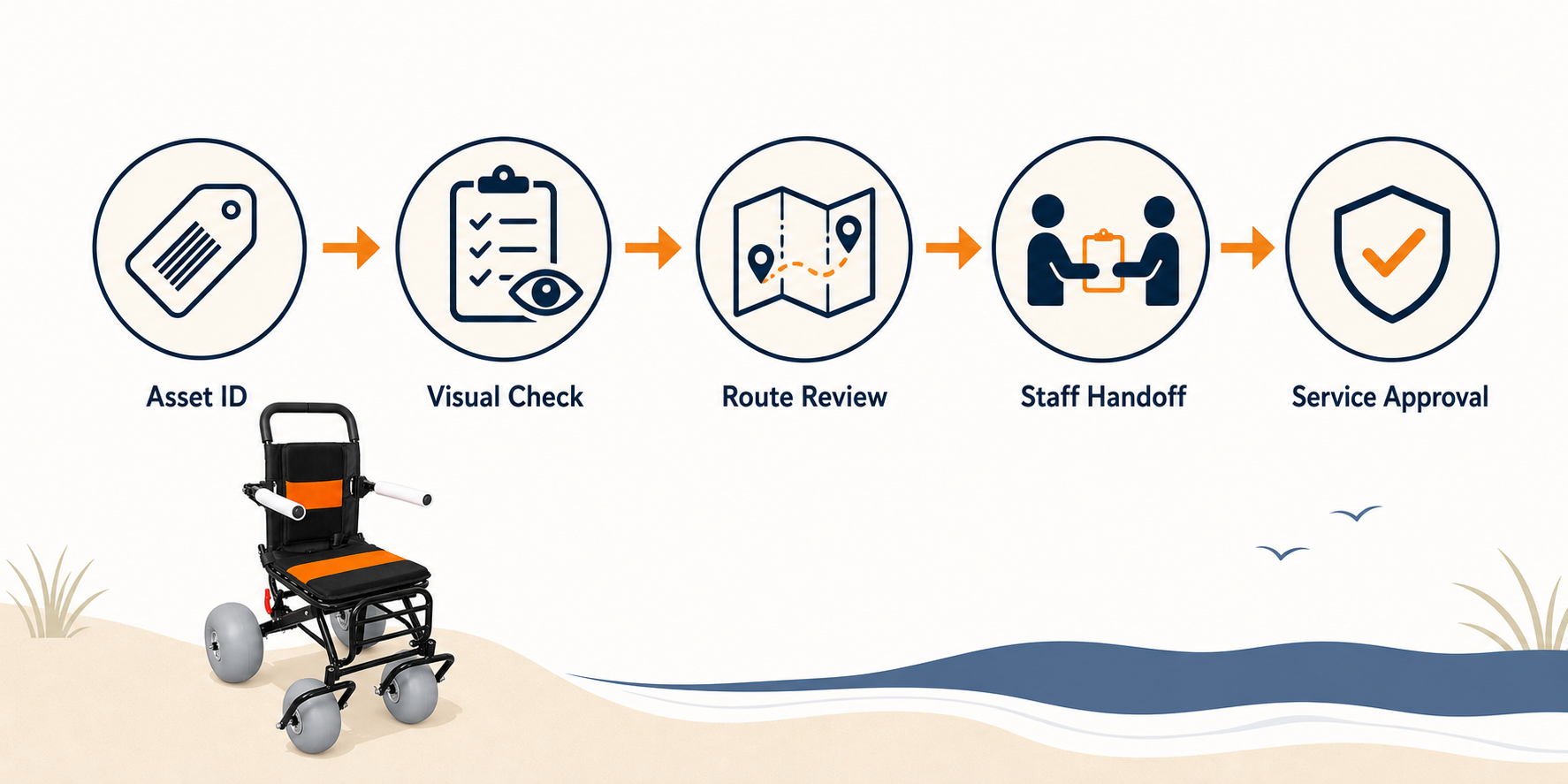
Match each chair with one reliable asset record
The useful habit is simple: make the asset ID visible on both equipment and records. A manager should be able to open one record and see model, purchase date, supplier contact, storage site, inspection history, and any open action. Keep photos focused on identity and observed condition. Avoid adding diagnoses that staff cannot support. When a wheel, seat, or frame component changes, record what changed, who authorized it, and which supplier document guided the work. That history helps a new manager understand the fleet without reconstructing old conversations.
- Asset ID and model name.
- Purchase and supplier references.
- Included parts and accessory list.
- Service history and open actions.
Use consistent field names across a fleet. Free-form notes have value, but they should sit beside structured fields that managers can sort. Add a clear availability state and the person who set it. If a unit remains unavailable, note what evidence will close the action. Procurement staff can review recurring part questions without claiming a defect pattern from a small sample. Accurate records also support replacement planning because the team can separate age, usage, storage, and unresolved service work.
Check supplier files and spare-part boundaries
Here is the buyer-side checkpoint: verify which manuals, diagrams, packing lists, and service contacts belong with each model. Do not treat a visually similar component as interchangeable. Ask the supplier for model-specific guidance when an item is unclear. Record approved part references without copying claims from unrelated listings. Procurement managers should also identify which work trained site staff may perform and which work must go back to a qualified service provider. That boundary belongs in the fleet record before service starts.
- Current operating and care instructions.
- Model-specific parts references.
- Named supplier contact and response channel.
- Written boundary for local versus specialist service.
Keep supplier conversations attached to the affected asset or purchase order. A generic inbox makes later review difficult. When requesting help, include a clear photo, asset ID, observed condition, and the exact question. Avoid broad language such as "it does not work" when a more factual note is possible. If a response changes an operating step, revise the checklist, date the change, and brief affected staff. This closes the loop between procurement, operations, and guest-facing teams.
How Should Staff Run a Daily Handoff?
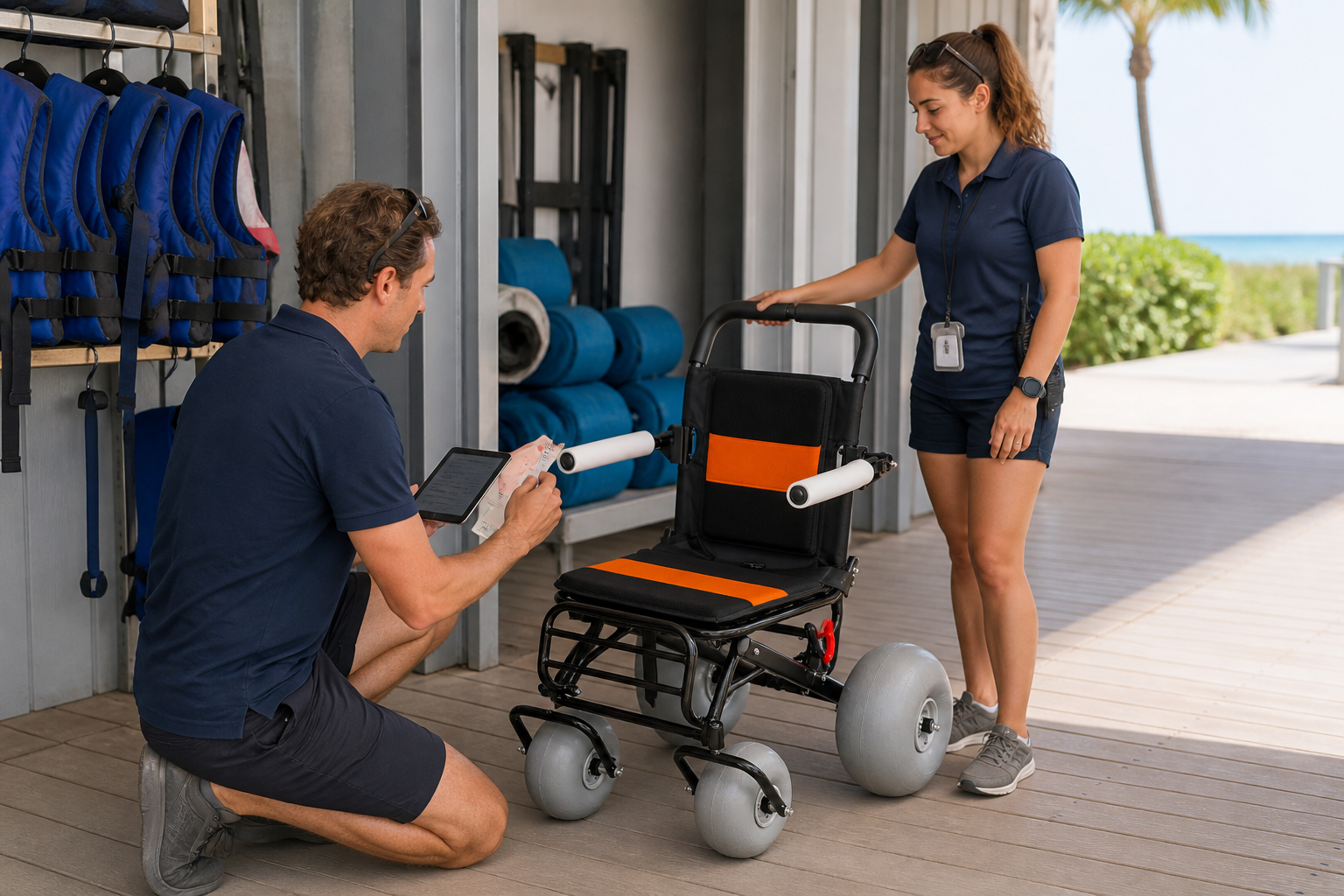
An All Terrain Beach Wheelchair daily handoff should confirm current route status, chair availability, attendant roles, guest communication, and the return process before equipment leaves storage. The handoff must be short enough for real shifts yet complete enough to prevent assumptions. Staff can compare related designs on Ary Medical's Beach Wheelchair page when discussing product categories, but they should use the correct unit record during service. A clear handoff begins with a ready/not-ready decision, gives the next person a concise briefing, and ends with a signed return note.
Use a short pre-service briefing
Keep the briefing concrete: state chair ID, route state, planned service window, assigned staff, and known restrictions. Confirm that booking language matches what operations approved. Staff should explain the service process in plain English without making medical or performance promises. Invite questions and record any request that falls outside site policy. If a guest needs support beyond the documented service, pause and involve the appropriate manager. A hurried yes can create confusion for every team involved.
- Chair ID and availability state.
- Current route and alternate stop point.
- Staff names and communication method.
- Return time, rinse area, and record owner.
The briefing should also cover what happens if conditions change. Name who can close a route and how reception will receive that update. Keep emergency procedures separate and aligned with local policy; a blog checklist cannot define them for every site. After briefing, one staff member repeats key details back. This readback catches mismatched times, locations, or roles before equipment moves. Managers can review handoff records weekly and revise any field that staff often leave blank.
Close every use with a documented return
The closing step protects tomorrow's service: receive the chair at a defined location and compare its condition with the opening record. Remove loose debris through the approved care process, then follow manufacturer guidance for rinsing and drying. Record any new observation before the chair returns to storage. Do not hide a concern because another booking starts soon. Mark availability clearly and tell reception if the next service window changes.
- Confirm chair ID and return time.
- Record visible condition and missing items.
- Complete approved cleaning and drying steps.
- Set the next availability state with a named owner.
Store records where operations and procurement can both find them. A photo may support a note, yet it should never replace a written description. If an action remains open, assign a due date and escalation route. Seasonal programs improve when managers use these records during short reviews, remove repeated confusion, and share clear questions with suppliers. For model guidance or a fleet discussion, contact us today with your site conditions, operating plan, and procurement questions.
Frequently Asked Questions
Q1: Should every stored chair receive a new seasonal check?
Yes. Each chair should receive a documented review because storage conditions, loose parts, and prior service notes can differ by asset.
Q2: Can one route approval cover an entire season?
No. A base route can be documented, but teams should reassess current conditions under local policy before service windows.
Q3: Who should approve a chair for service?
A named manager or trained role should approve it under written site procedures and applicable manufacturer guidance.
Q4: What should staff do when a component looks uncertain?
Pause. Mark the chair unavailable, record the observation, and seek qualified guidance before guest use.
Q5: How often should managers review handoff records?
Regularly. Choose a cadence that fits fleet activity, staffing changes, and site policy, then record any checklist revision.