

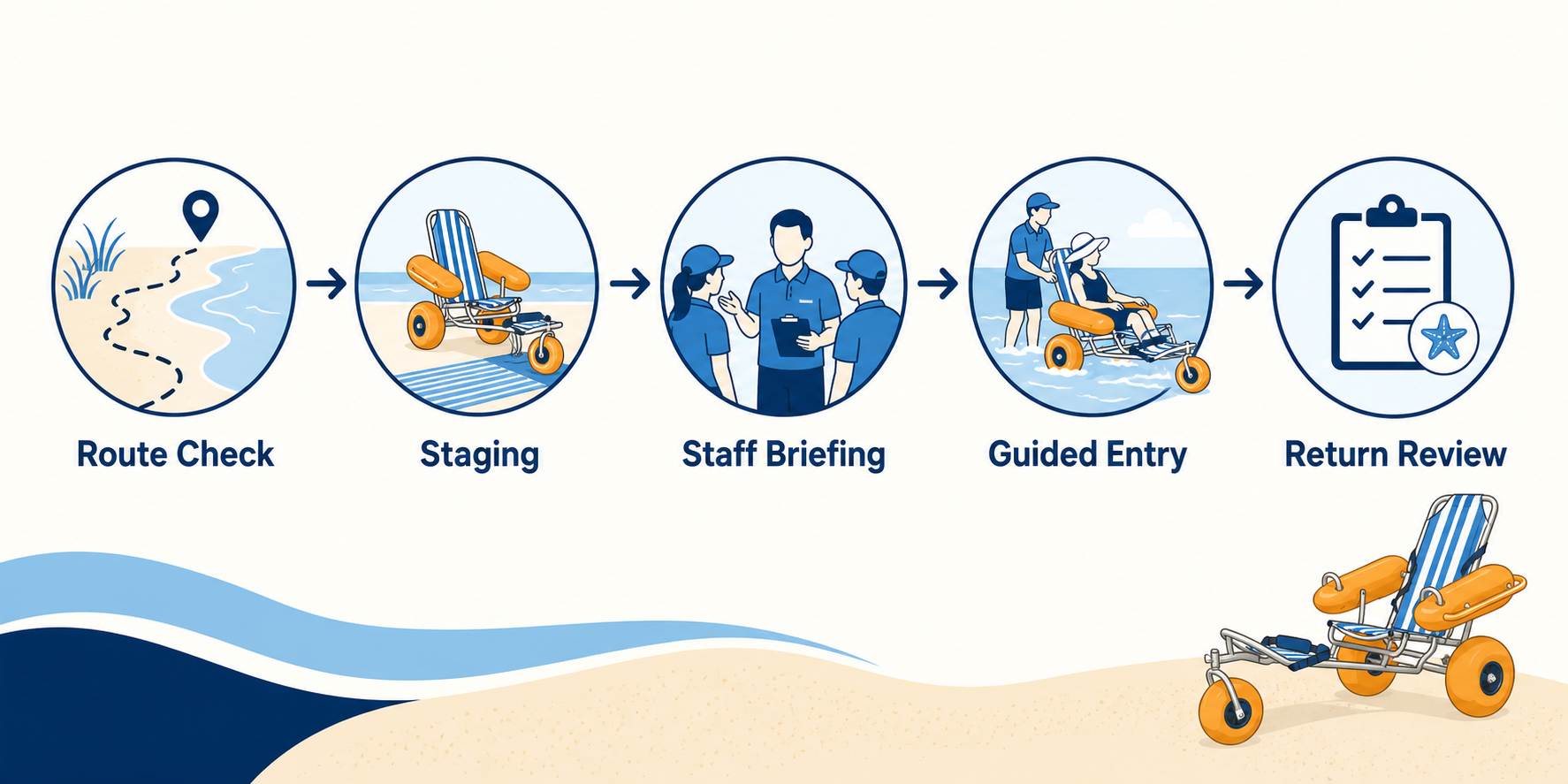
Offering guided water access asks more from a coastal team than placing equipment near a shoreline. Staff must connect booking details, beach conditions, staging space, route boundaries, attendant roles, and a clear return process. Without that connection, a Floating Beach Wheelchair program can depend too heavily on verbal habits that change between shifts. This guide gives resorts, public beaches, rental operators, and accessibility managers a practical route-audit framework. It does not set medical advice, performance limits, or universal water rules. Teams should follow manufacturer instructions, local regulations, lifeguard direction, and written site policy. The goal is a repeatable service path that staff can review before each operating window and explain to guests in calm, accurate language.
How Should Teams Audit a Floating Beach Wheelchair Route?
A Floating Beach Wheelchair route should be audited from storage through return, including every surface change, staging point, shoreline boundary, communication point, and alternate exit. A route is a complete service chain, not merely a line across sand. Begin where staff collect equipment, then walk through preparation, guest handoff, beach travel, approved water-entry area, exit, rinsing, drying, and storage. Ary Medical's Beach Series gives buyers a product-family reference, while each site must document its own conditions and operating limits. Record facts that staff can observe and update, such as blocked access, crowd density, surface firmness, waterline position, and available turning space.
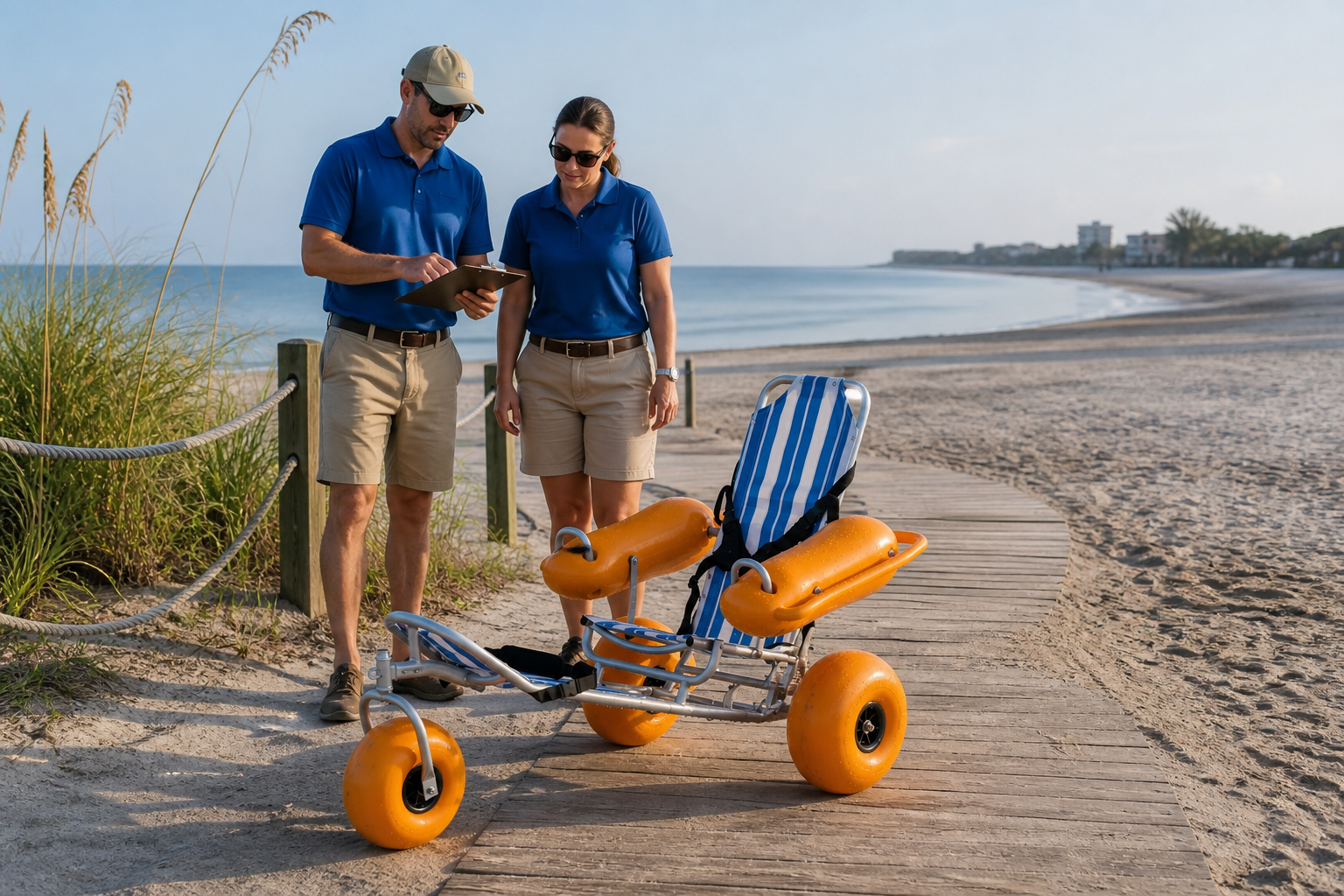
Walk the complete service path with assigned staff
Here is the route test that matters: ask each assigned role to walk the path together before a service period. Reception may understand booking details, beach staff may know current shoreline conditions, and facilities staff may know about temporary access work. Their shared walk reveals gaps that a desk review misses. Use the actual starting point, equipment, communication method, and return location. Staff should identify where the route narrows, where people may gather, and where a team can pause without blocking general access.
- Storage pickup and equipment preparation area.
- Guest meeting and briefing point.
- Sand route, water boundary, and approved exit.
- Rinse, dry, inspection, and storage return path.
Write route notes in plain language. A label such as "east access" may mean different places to new staff, so pair it with a recognizable landmark or site map. Keep a current version available to every shift. If one section cannot be inspected, mark the route unavailable until a named reviewer checks it. Do not let staff fill missing knowledge with a familiar path from a prior day. Conditions and site activity may have changed.
Record route conditions without making broad claims
Use observable language: describe what staff saw, when they saw it, and what site rule they applied. Notes such as "access blocked by maintenance barrier at 08:10" are stronger than vague labels. Avoid claims that a route or chair can handle every beach condition. Product information on Ary Medical's Floating Beach Wheelchair article can support product education, yet local teams still control live route approval. If a condition sits outside written policy, stop and escalate.
- Time and name of route reviewer.
- Current route state: open, restricted, or closed.
- Observed obstacle or surface condition.
- Next review time and responsible role.
Keep photos focused on access conditions and avoid including guests unless consent and site policy allow it. Link each image with a written note so later reviewers understand context. A route log should also show when a restriction ended and who reopened service. This protects staff from conflicting messages between reception and shoreline teams. Short, factual records support quicker decisions because a manager can see current conditions without searching through personal chats.
Where Should a Water-Entry Staging Zone Be Placed?
A Floating Beach Wheelchair staging zone should sit on an approved stable area that supports staff briefing, equipment checks, clear approach space, and an unobstructed return route. It should not depend on a single tide line or a crowded spot that disappears during peak hours. Teams need enough room for assigned attendants to work without rushing or blocking nearby access. Compare chair layout and handling points with the correct product guidance, including relevant Beach Wheelchair ST V2.0 information, then apply local site boundaries. Mark the staging zone on route records and name an alternate location for restricted conditions.
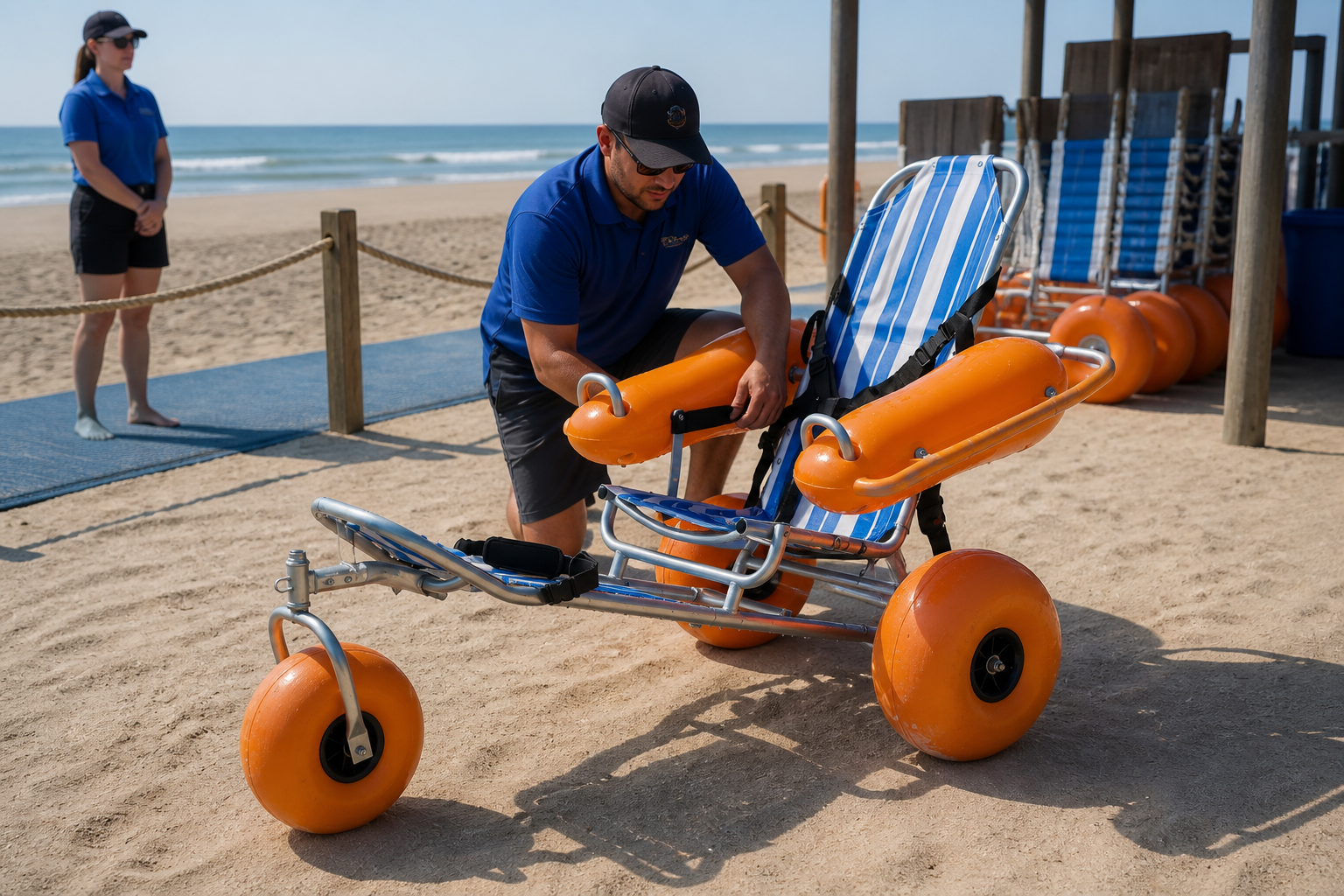
Separate briefing, preparation, and waiting space
The useful setup has clear zones: one area supports equipment preparation, another supports guest communication, and a separate waiting area keeps companions out of staff movement paths. These spaces can sit near each other, yet staff should know their purpose. Keep loose equipment contained and protect access lanes. Place route information where the team can review it without turning away from equipment. Avoid using temporary objects that create new trip or access concerns.
- Equipment check area with the correct record.
- Guest briefing point with clear staff sightlines.
- Waiting area outside active handling space.
- Open path back toward the approved exit.
Test the layout during a staff drill before opening. Ask one person to observe how people move rather than joining the handling team. That observer can spot blocked paths, unclear signals, and places where equipment crosses general foot traffic. Revise the layout in the route record. If the beach changes throughout a day, document when staff must move or close the staging zone. A labeled alternate prevents a hurried choice during a live booking.
Define a boundary staff can explain clearly
Plain language builds confidence: staff should describe where guided water access begins, where it ends, and what conditions cause a pause. Use site-approved wording and avoid guarantees. A guest should hear the same explanation from booking staff and shoreline staff. If policy requires a specific attendant count or local authorization, place that requirement in the operating record. Do not infer such rules from product appearance or another facility's practice.
- Approved service boundary and exit point.
- Current route state and any restriction.
- Staff roles during entry, pause, and exit.
- Method for stopping service when conditions change.
Invite questions before movement begins. If a request falls outside the documented service, pause and involve a manager. Keep emergency plans aligned with local authorities and trained personnel; this route guide should not replace them. After a staff drill, collect the phrases that caused confusion and replace them with clearer wording. Consistent language supports respectful service and reduces pressure on seasonal employees who may otherwise improvise answers.
What Roles Should Staff Assign Before Water Entry?
A Floating Beach Wheelchair service should assign a route lead, equipment lead, guest communication lead, and shore observer before leaving the staging zone. One person may cover more than one role at a small site only when written policy permits it and responsibilities remain clear. The route lead confirms current status, while the equipment lead completes product checks. The communication lead explains the process and listens for questions. The shore observer monitors access conditions and keeps the return path visible. Ary Medical's comparison of floating and all-terrain beach wheelchairs can help procurement teams distinguish product categories, but staff duties must come from local training and service rules.
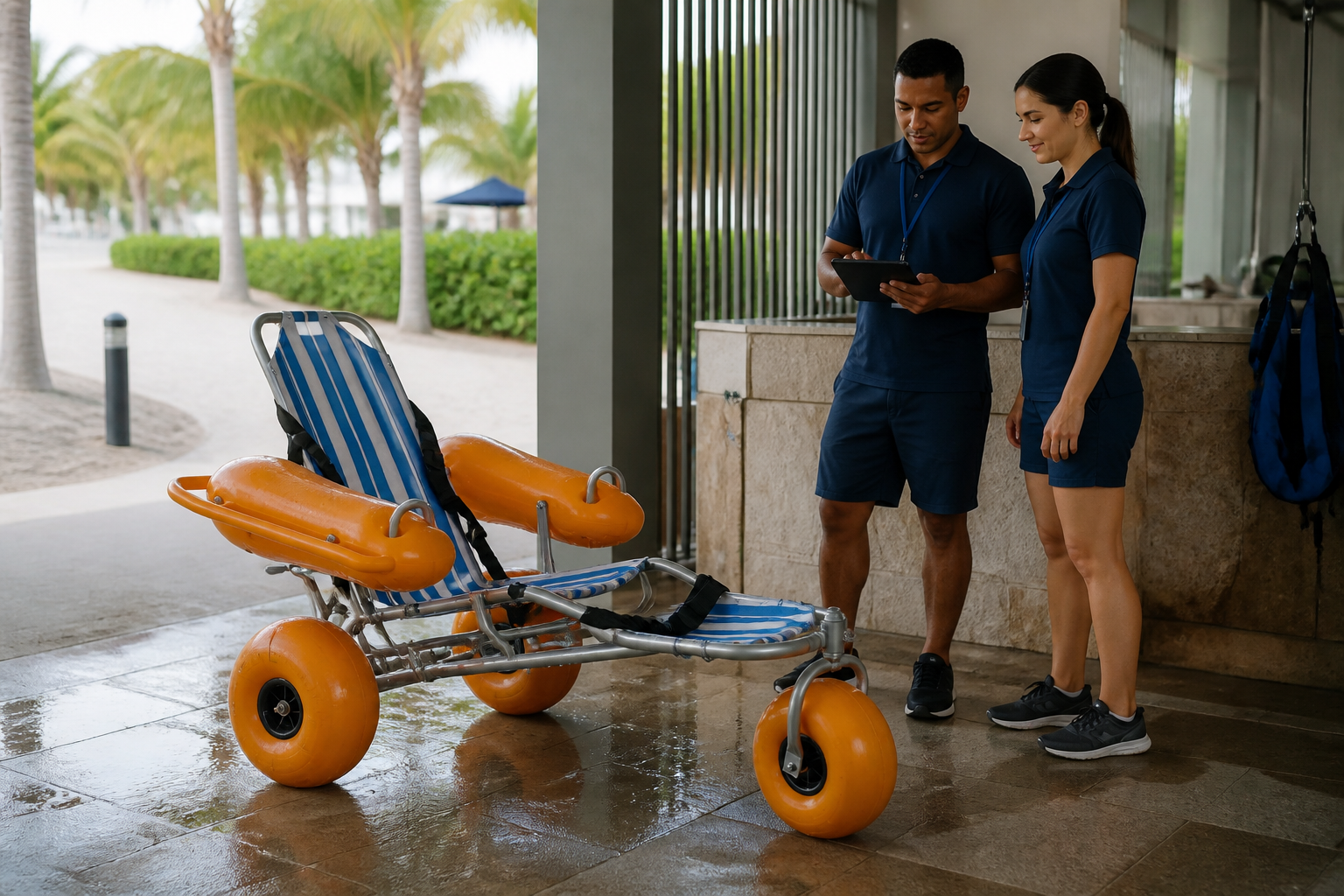
Assign one voice for guest communication
A single communication lead reduces mixed messages: one trained staff member should explain the service sequence, confirm that questions were heard, and tell the guest when the team pauses. Other attendants still communicate about immediate handling, but they should not offer conflicting route or product claims. Use respectful, direct language. Do not make medical statements or promise a specific experience. Ask how the guest prefers staff to communicate and follow applicable site procedures.
- Introduce assigned staff and their roles.
- Explain the route and current boundaries.
- State how a pause or return will be communicated.
- Confirm questions before movement starts.
The communication lead should also connect front-desk notes with shoreline staff. Avoid placing private or health information in a general route log. Store only what policy permits and what the service team needs. If new information changes the planned service, stop and involve the right manager. A short readback works well: the lead repeats the route, destination, and return plan, then asks the team to confirm. This catches mismatched assumptions without turning the briefing into a long meeting.
Give the shore observer a real stop authority
This role cannot be decorative: the shore observer needs authority to call a pause when current conditions no longer match the approved route. That person should watch the access path, general beach traffic, water boundary, and return corridor rather than focusing only on one component. Place the observer where sightlines remain useful and communication stays clear. Define the exact call or signal used for a pause during staff practice.
- Watch route conditions and nearby traffic.
- Maintain a clear view of the approved exit.
- Call the agreed pause signal when needed.
- Record what changed and who reviewed it.
Managers should support stop decisions that follow policy. Staff will hesitate if a pause regularly leads to criticism about schedule impact. After any route closure, record the observed reason, time, and reviewer without assigning blame. A short debrief can show whether signage, staffing, or route timing needs adjustment. That evidence also helps procurement and operations teams separate equipment questions from site-layout issues.
How Should Teams Review Each Service Window?
A Floating Beach Wheelchair team should review every service window through a short opening check and a documented return check tied to current route status. The opening check confirms equipment identity, staff roles, approved path, staging zone, and communication method. The return check records chair condition, route changes, cleaning and drying actions, and next availability. A reusable form keeps these records comparable without forcing staff into long narratives. Managers should read patterns cautiously and seek supplier guidance for product questions rather than guessing from one observation.
Use an opening record that fits a real shift
Keep every field purposeful: a form that takes too long will collect weak entries, while a form with only a checkbox may hide useful context. Ask for chair ID, route state, staging location, assigned roles, review time, and a ready/not-ready decision. Add one short area for observed conditions. Link any open equipment action with the asset record rather than repeating details in multiple places.
- Chair ID and availability.
- Route and staging status.
- Assigned staff and communication lead.
- Opening decision, time, and reviewer.
Train staff with completed examples that use factual wording. A blank form alone does not teach judgment. Review early entries during seasonal onboarding and correct vague notes quickly. If a field rarely affects decisions, remove it. If staff keep adding the same missing detail, add a structured field. A lean record should help shifts act, not merely create paperwork. Store records under access controls that match organizational policy.
Close the record after rinsing, drying, and review
The service is not closed at the shoreline: equipment must return through the approved care process and receive a documented availability decision. Follow manufacturer instructions for rinsing, drying, storage, and any permitted care. Record missing parts, visible changes, and unresolved questions. Keep the chair unavailable when a trained reviewer cannot resolve a concern. Notify booking staff before another reservation starts.
- Return time and receiving staff member.
- Approved cleaning and drying actions.
- New observation or open action.
- Next availability state and owner.
Managers can compare opening and return records during a regular operations review. Look for repeated communication gaps, staging conflicts, or route closures, but avoid declaring a product trend without enough evidence. Send model-specific questions with clear photos and asset details. A good record turns a vague complaint into a useful supplier conversation. For help matching a product category with your site and workflow, contact us today and share your operating environment, route plan, and fleet goals.
Frequently Asked Questions
Q1: Should a water-entry route be reviewed every day?
Yes. Review it at a cadence set by local policy and again when conditions, access, or staffing change.
Q2: Can the staging zone move during a shift?
Sometimes. Move it only through the site's documented approval process and update every team that uses the route record.
Q3: Does a floating design make every shoreline suitable?
No. Product design does not replace local route review, manufacturer guidance, trained staffing, or site restrictions.
Q4: What belongs in a service-window record?
Only useful facts. Record asset ID, route status, roles, timing, observations, actions, and the next availability decision.
Q5: What should staff do when conditions change mid-service?
Pause. Follow the site's trained process, use the approved return route, and document what changed.