
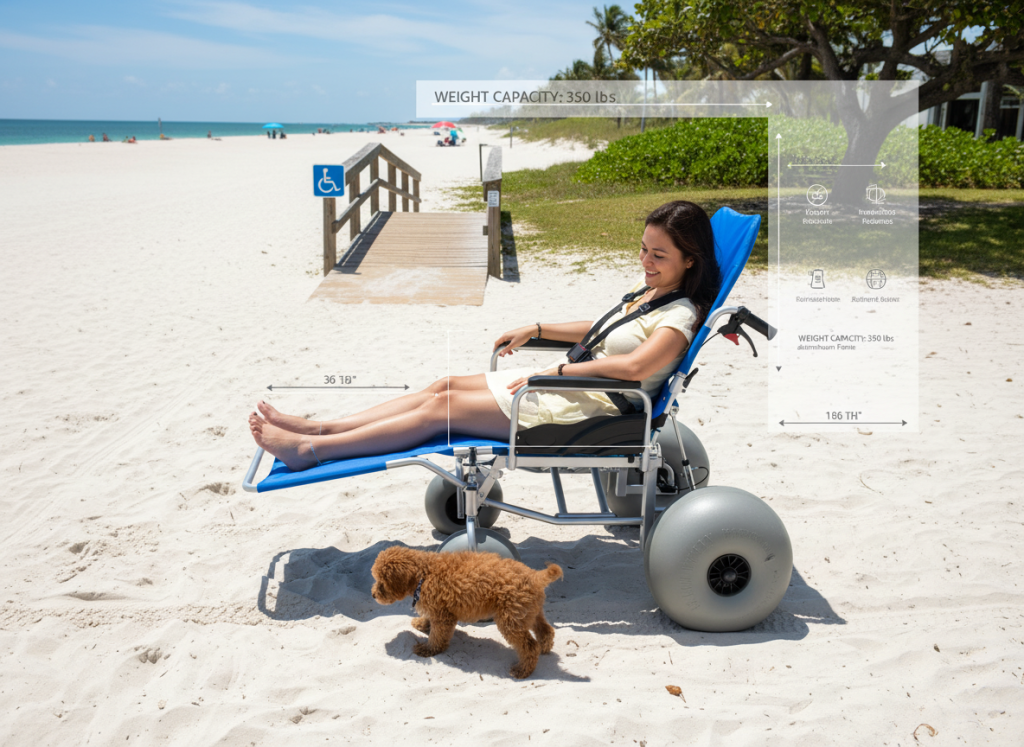
An all terrain beach wheelchair route works best when resort teams match each surface, slope, transfer point, and staff task to a written operating plan. Start with the actual path. Check every handoff. Record any limit before guests arrive. For U.S. facilities, review official mobility-device guidance alongside local rules and site-specific safety requirements.
A resort can buy a capable chair and still create a frustrating guest experience if nobody plans how that chair will move from reception to sand. Narrow gates, abrupt surface changes, crowded storage areas, and unclear staff roles can interrupt an otherwise thoughtful accessibility program. A route plan solves that problem by connecting the product, the site, and the service team in one practical operating view.
This article gives resort managers, accessibility leads, and procurement teams a field-based method for planning an all terrain beach wheelchair route. It focuses on observable site conditions, staff coordination, trial runs, and written records. It does not assume a particular speed, distance, load, or staffing ratio. Those details belong in each model manual and each property’s operating policy.
In practice, Here’s the practical point: route planning should happen before a guest reservation puts pressure on the team. A calm walk-through lets staff find friction, discuss alternatives, and record what works. Buyers can also use route findings when reviewing the wider AryMD beach series and choosing a product configuration for a specific property.
How should resorts map an all terrain beach wheelchair route?
A resort should map an all terrain beach wheelchair route as one connected operational path from storage or reception through every surface change and service handoff. A useful map starts with the actual guest flow rather than a marketing sketch. Staff should walk from the likely pickup point to the intended beach zone, look at each turn, and note where the chair must pause, reverse, or pass other people.
The route should include indoor and outdoor segments. A chair that moves well on sand may still face a narrow equipment door, a steep lip beside a boardwalk, or a crowded section near towel service. Record these details with plain language and photographs taken from the operator’s viewpoint. Mark alternate paths when a gate, event, tide line, or maintenance closure could change normal access.
What should a route brief record?
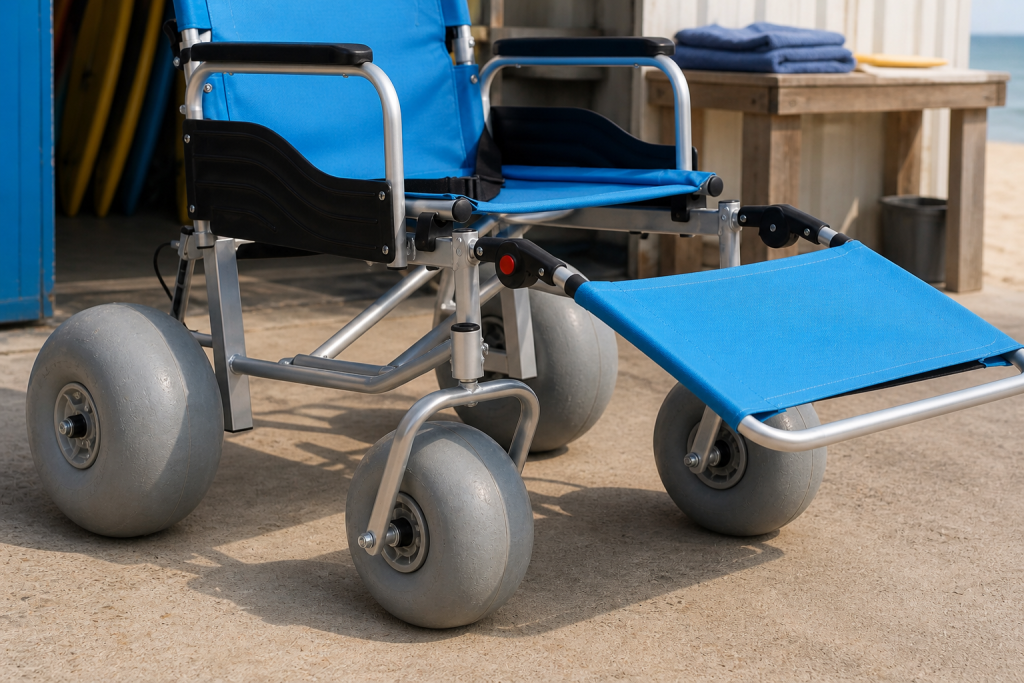
Next, The useful detail is this: a short route brief is more valuable than a long document nobody uses. It should give staff enough context to prepare the chair, guide a guest, and respond when conditions differ from the last trial. Keep each observation tied to a visible location so a new team member can follow it without guessing.
The brief can divide the route into zones, such as storage, reception, boardwalk, dry sand, firm sand, and the planned stopping area. Each zone should name the normal direction of travel and any place where a spotter or temporary pause may be helpful. If the property uses the Ary beach wheelchair product page during internal review, staff can compare visible product features with route needs without inventing performance figures.
- Route start and finish points
- Door, gate, ramp, and boardwalk locations
- Firm, loose, wet, or uneven surface zones
- Turning and waiting areas
- Storage, rinse, and return points
- Staff handoff locations
- Alternate route notes
Use a simple version number and review date. Conditions change after storms, repairs, events, or seasonal furniture moves. A current brief gives the next shift a reliable baseline and makes later changes easy to explain.
How should staff walk the route?
Meanwhile, Start with a slow field walk: one employee should view the route as the chair operator while another looks for clearance, traffic, and communication needs. The team can then repeat the path with an empty chair during a controlled trial, following the model manual and property policy. This separates route questions from guest service and gives staff time to stop when something feels unclear.
Walk the path in both directions. A turn that feels simple on the way to the beach may become awkward during the return trip. Watch where the operator must change hand position, where a spotter loses a clear view, and where other guests may cross the route. If a beach mat forms part of the path, check how its edge meets the boardwalk and sand on that day.
- Confirm that the planned gate is open and clear
- Look for sharp lips, deep ruts, loose objects, or pooled water
- Mark places where the team needs verbal coordination
- Note where guests can wait away from traffic
- Repeat any uncertain segment at a slower pace
- Record a fallback path before closing the trial
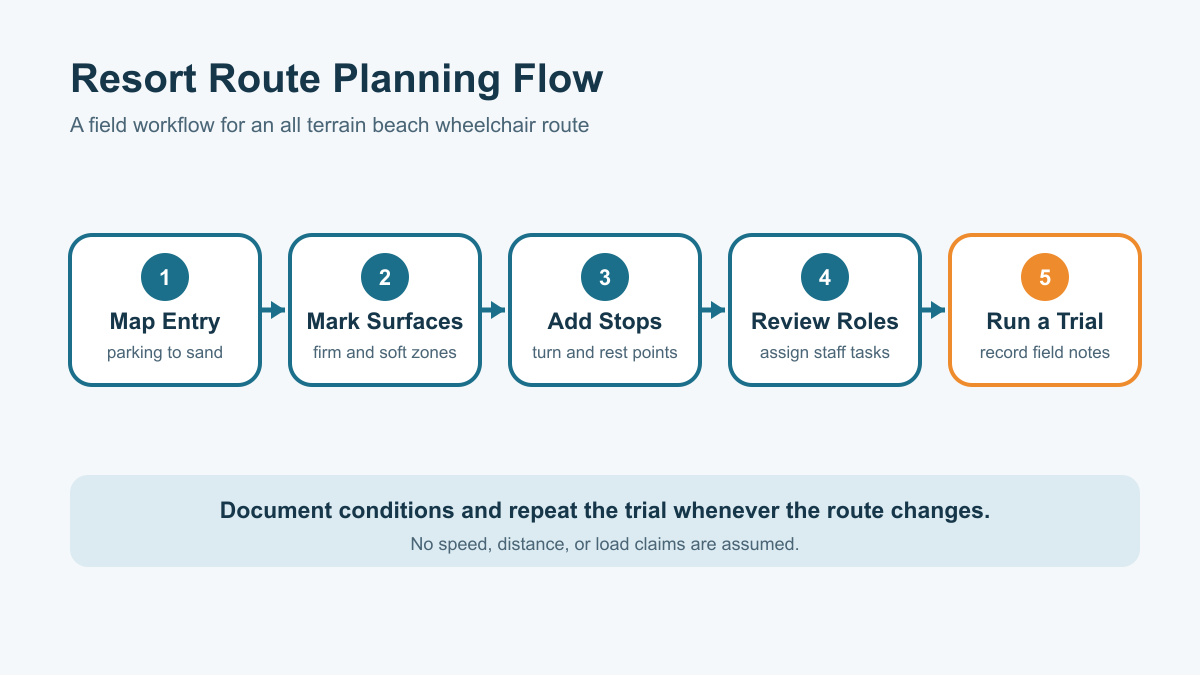
The workflow below turns that walk into a repeatable route-planning cycle. It uses no invented product data; each step asks the team to observe, record, and review its own site.
How can resorts plan for changing beach surfaces?
For example, An all terrain beach wheelchair route works better when staff treat beach surfaces as changing zones rather than one fixed condition. Dry sand, compacted sand, boardwalks, mats, grass, gravel, and paved areas can meet within a short distance. Weather, foot traffic, grooming equipment, and tidal movement may alter those boundaries between one shift and the next.
The team does not need to predict every condition. It needs a clear way to recognize change and decide whether the normal route still fits. A visual check before service can compare current conditions with the route brief. When the path looks materially different, staff can hold the normal route, review an alternate, and record why the change was made.
Which surface changes deserve a closer look?
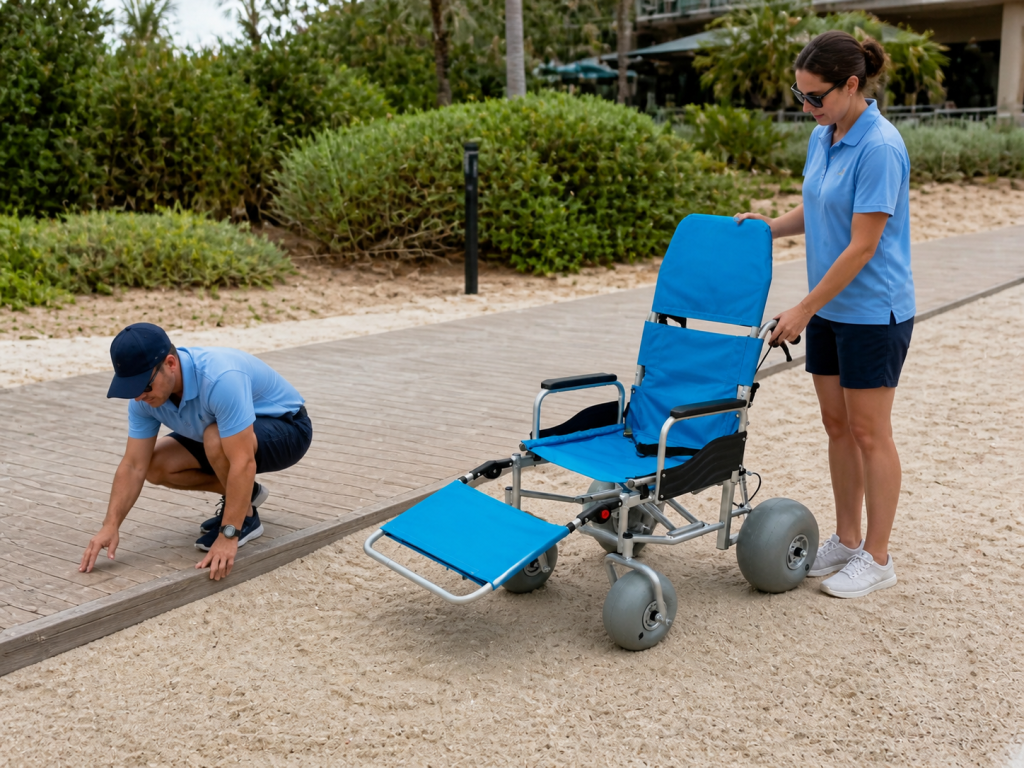
A small boundary can change the workflow: the meeting point between two surfaces often matters more than either surface alone. A boardwalk may end with a drop into loose sand. A mat may curl near its edge. Gravel may collect beside a paved path. Staff should look at these boundaries from the direction the chair will approach them.
Still, The article on all terrain beach wheelchair use across sand, grass, and gravel can support a broader site discussion, but the local trial remains the deciding operational record. Avoid turning a general product category into a promise about one property. Use the supplier manual, the actual unit, and present site conditions as the working sources.
- Boardwalk-to-sand edges
- Mat ends and side edges
- Changes between dry and compacted sand
- Grass-to-path borders
- Gravel patches near ramps
- Drain channels and wash-down areas
- Temporary cable covers or event flooring
Photographs help when they show scale without claiming a measurement. Place a familiar site feature in frame, label the location in the route brief, and add a short note about what the operator observed. If the condition changes, replace the photograph rather than forcing old guidance onto a new path.
How should a route handle turns and rest points?
Here’s where planning earns its place: a route is not only a line between two points. It also needs space for turning, waiting, communication, and a controlled return. Resorts should identify these locations during the field walk rather than relying on a guest-facing moment to reveal them.
Afterward, A turn point should stay away from heavy foot traffic when possible. A rest point should give the team room to pause without blocking the boardwalk or beach entrance. A handoff point should let both employees see the chair and speak clearly. None of these choices requires a universal dimension in this article; the chair manual, property rules, and local access guidance provide that detail.
- Mark turn points on both outbound and return routes
- Keep waiting areas clear of service carts and beach furniture
- Choose handoff points with stable footing for staff
- Keep rinse areas separate from guest waiting areas
- Note where shade may support a comfortable pause
- Record who may open gates or move temporary barriers
Route planners should also think about nearby services. The AryMD beach mobility solutions page can help teams frame a wider beach-access program that may include wheelchairs, walkers, mats, storage, and staff procedures. The route brief should still remain product-specific so employees do not mix instructions between devices.
How should staff roles support the planned route?
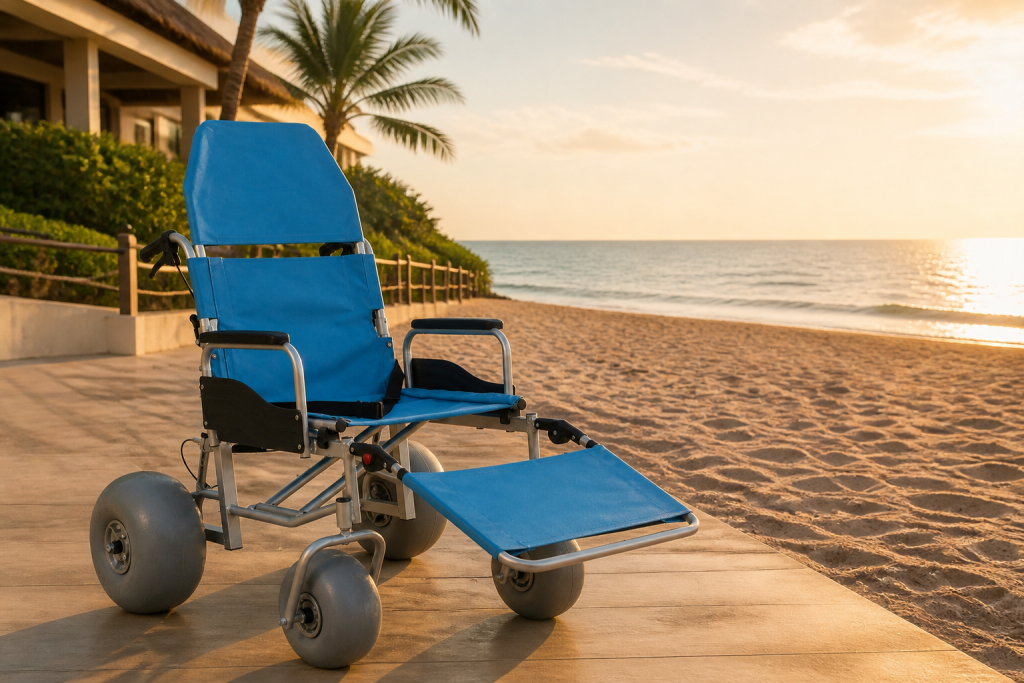
An all terrain beach wheelchair program needs named staff roles, a short handoff method, and a record of each route trial. Buying a chair does not assign responsibility. Managers should decide who prepares the unit, who confirms the route, who speaks with the guest, who supports the movement, and who receives the chair after use.
In practice, Roles can stay simple. One person may perform several tasks in a small property, while a larger resort may divide them across reception, recreation, security, and maintenance teams. What matters is that the current shift can identify the responsible person without searching through several departments.
What belongs in a staff handoff?
Keep the handoff brief and specific: the outgoing employee should state the chair’s readiness status, current route status, guest meeting point, and any open issue. The incoming employee should repeat back the route or ask for clarification. A blank assumption can create more risk than a short pause for a question.
Use a consistent handoff card or digital form. It can reference the route version, equipment identifier, preparation status, and return procedure without storing unnecessary guest details. If an employee notices a condition outside the normal route brief, that note should travel with the shift handoff rather than remain in a private message.
- Equipment identifier and preparation status
- Route version and current alternate path
- Guest meeting point and scheduled time
- Named operator and support person
- Open maintenance or site notes
- Return, rinse, dry, and storage steps
Next, Managers should define a clear “hold” status. If the route, chair, staffing, or weather falls outside local policy, the employee needs permission to pause service and ask a supervisor. That decision path should appear in training and on the handoff form.
How can managers review route records?
The record tells a useful story: repeated notes can show where the route causes delay, where staff need clearer training, or where a physical access change may help. Managers should review patterns at a sensible operating interval and after any incident, repair, closure, or major site change.
Do not use route records to create unsupported product claims. Use them to improve local process. A note such as “mat edge shifted after beach grooming” gives the property a specific action. A broad claim such as “works everywhere” removes the context that makes the record useful.
- Count route holds and record their stated causes
- Track which zones generate repeat questions
- Review handoff gaps with the relevant team
- Replace stale route photographs
- Confirm that model manuals remain available
- Archive old route versions without mixing them with the current one
Meanwhile, A quarterly calendar may suit one property, while a seasonal resort may review before each operating period. The timing should match local use and change. The review owner should sign the current version so staff can see which route brief is active.
What do resort buyers ask about route planning?
These all terrain beach wheelchair answers give procurement and operations teams a concise way to discuss route planning before a purchase or route launch.
Q1: Can one route plan cover every beach condition?
For example, No. A route plan should describe current site conditions and include a method for checking change. Weather, grooming, tides, events, and repairs can alter the path, so staff need an alternate route or a hold decision.
Q2: Should a resort publish the internal route brief for guests?
Not usually. The internal brief contains staff roles and operating notes. Guest communication should use clear service information, reservation steps, and contact details approved by the property.
Still, Q3: Does an all terrain model remove the need for a beach mat?
No universal answer applies. Product configuration, route design, local rules, and guest service goals differ. Buyers should review the actual site and the supplier manual before choosing how mats fit the program.
Q4: How often should staff repeat a route trial?
Afterward, Repeat it whenever a material route, equipment, staffing, or seasonal change occurs, plus the interval set by local policy. The route brief should carry a review date and owner.
Q5: What should happen when the normal route becomes unclear?
Pause the normal route. Staff should follow the property’s hold process, review the alternate path, and involve the named supervisor before service continues.
In practice, A better route plan connects purchasing with daily operations. Map the whole path, review surface boundaries, name staff roles, run a controlled trial, and keep one current record. For product and workflow questions tied to your property, contact us today with a site brief and the route conditions your team needs to discuss.
Related planning resources: Compare beach-access planning, commercial rental planning, wheelchair storage checks before approving a sample, staff plan, or service workflow.