
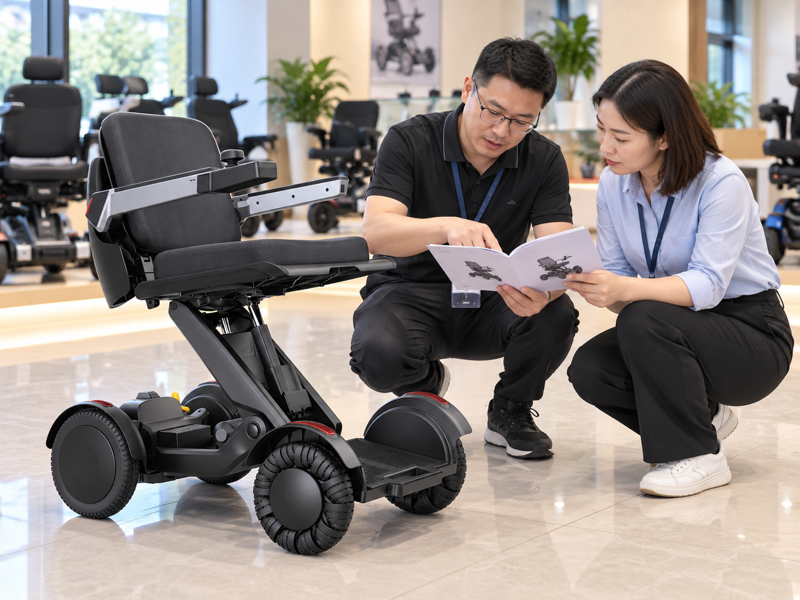
Choose an electric wheelchair freewheel mode arrangement by checking the exact chair instructions, a trained empty-chair demonstration and the return-to-drive check before handover. A warehouse team may need to move a chair after a battery fault, yet forcing a resistant chair can damage it. A product photo cannot reveal the approved release or reset sequence. Give handlers the current model guide, a trained contact and a clear stop rule before stock arrives.
What is electric wheelchair freewheel mode for?
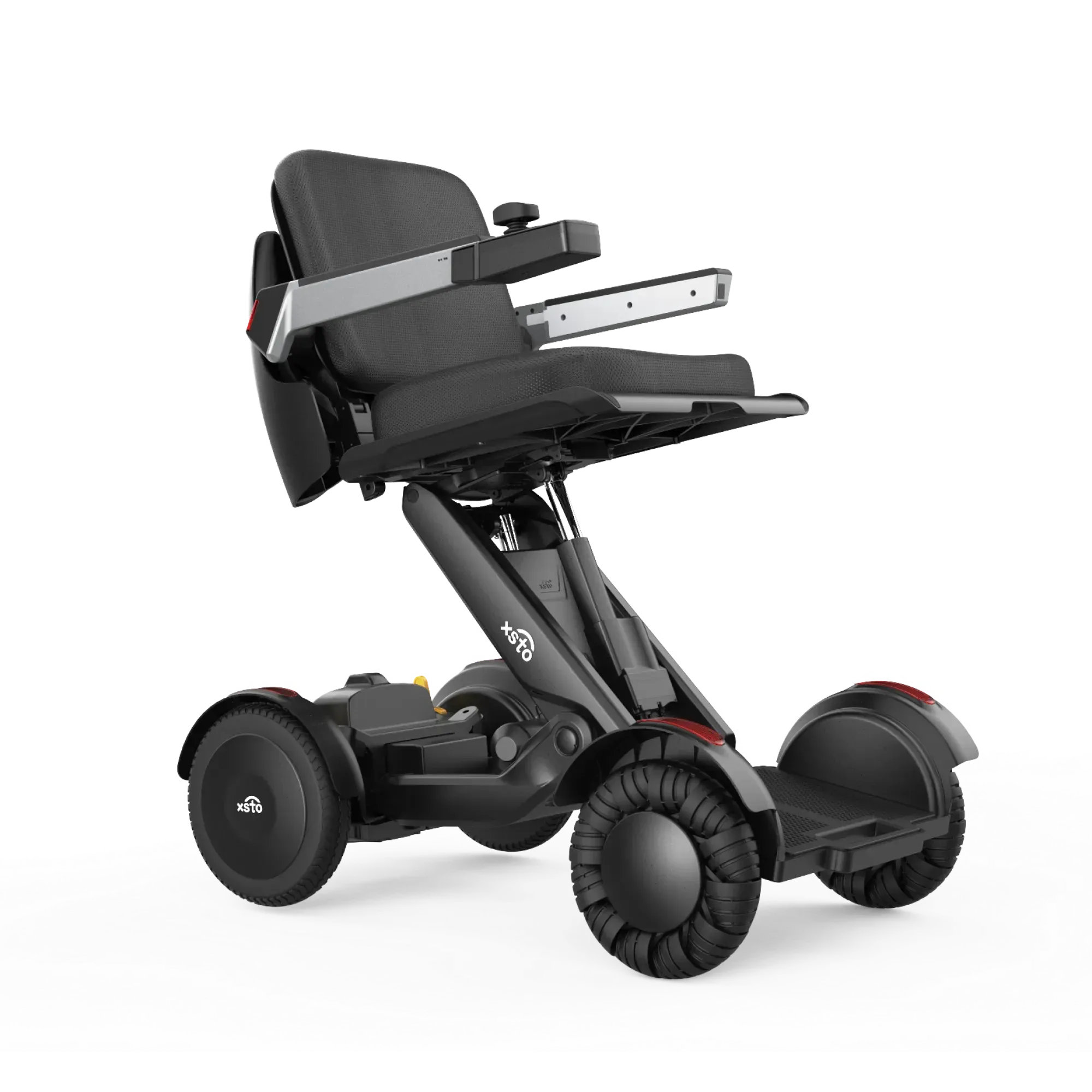
Electric wheelchair freewheel mode is a model-specific way to permit manual movement under the maker's stated conditions. It does not turn the chair into an ordinary push wheelchair for every setting. Confirm the intended purpose for the exact delivered model.
When might trained staff need it?
Begin with the handling task. The UK government ground-handling guidance discusses freewheel movement for powered chairs and warns against forcing a chair that resists. For dealer stock, ask which tasks the maker permits and who will be trained before any demonstration.
- Identify the exact chair and current model guide.
- State the permitted handling purpose and environment.
- Name a trained person for questions or faults.
| Question | Evidence |
|---|---|
| Why move manually? | Approved handling purpose |
| Which chair? | Model and revision instructions |
The permitted task matters as much as the presence of a release feature. Key Takeaway: Your team can plan manual movement without treating every chair alike.
How do you identify electric wheelchair freewheel mode on a model?
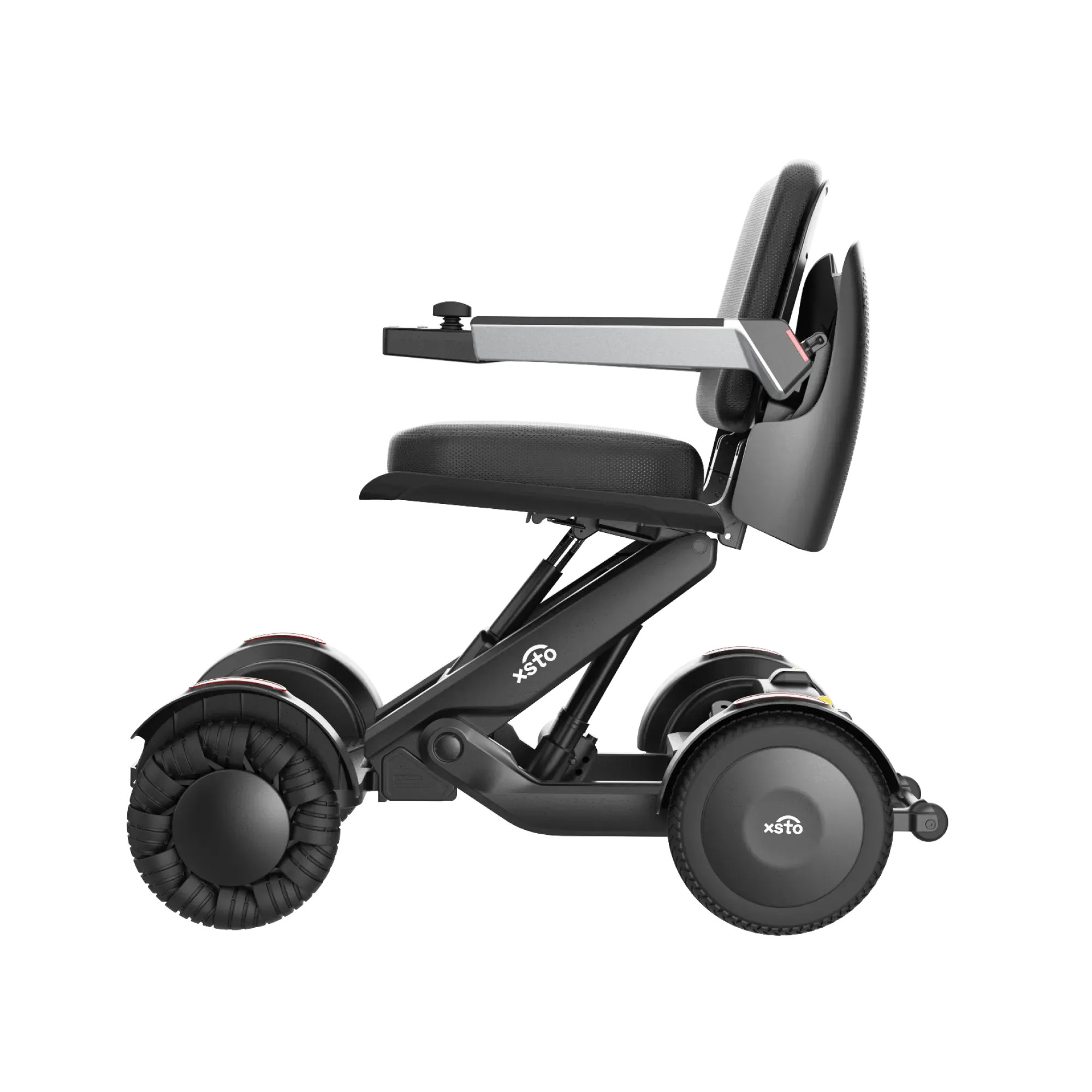
Identify electric wheelchair freewheel mode from the current instructions and the chair's exact model details. Similar-looking housings or coloured fittings do not prove the release location or function. Use the product range for orientation, then request model-specific documentation.
What should an identification record include?
Match paperwork before touching hardware. Record model, revision, component description and approved document version. Have the supplier point out any control during a trained demonstration; a catalog photo is not a safe substitute.
- Compare chair and document identifiers.
- Obtain the current operating and handling instructions.
- Keep uncertain controls out of a casual staff briefing.
| Item | Use |
|---|---|
| Model identity | Selects the right guide |
| Instruction revision | Avoids an outdated procedure |
A documented match keeps a guess from becoming routine. Key Takeaway: Handlers know which instructions belong to the chair on the floor.
Who may demonstrate electric wheelchair freewheel mode?
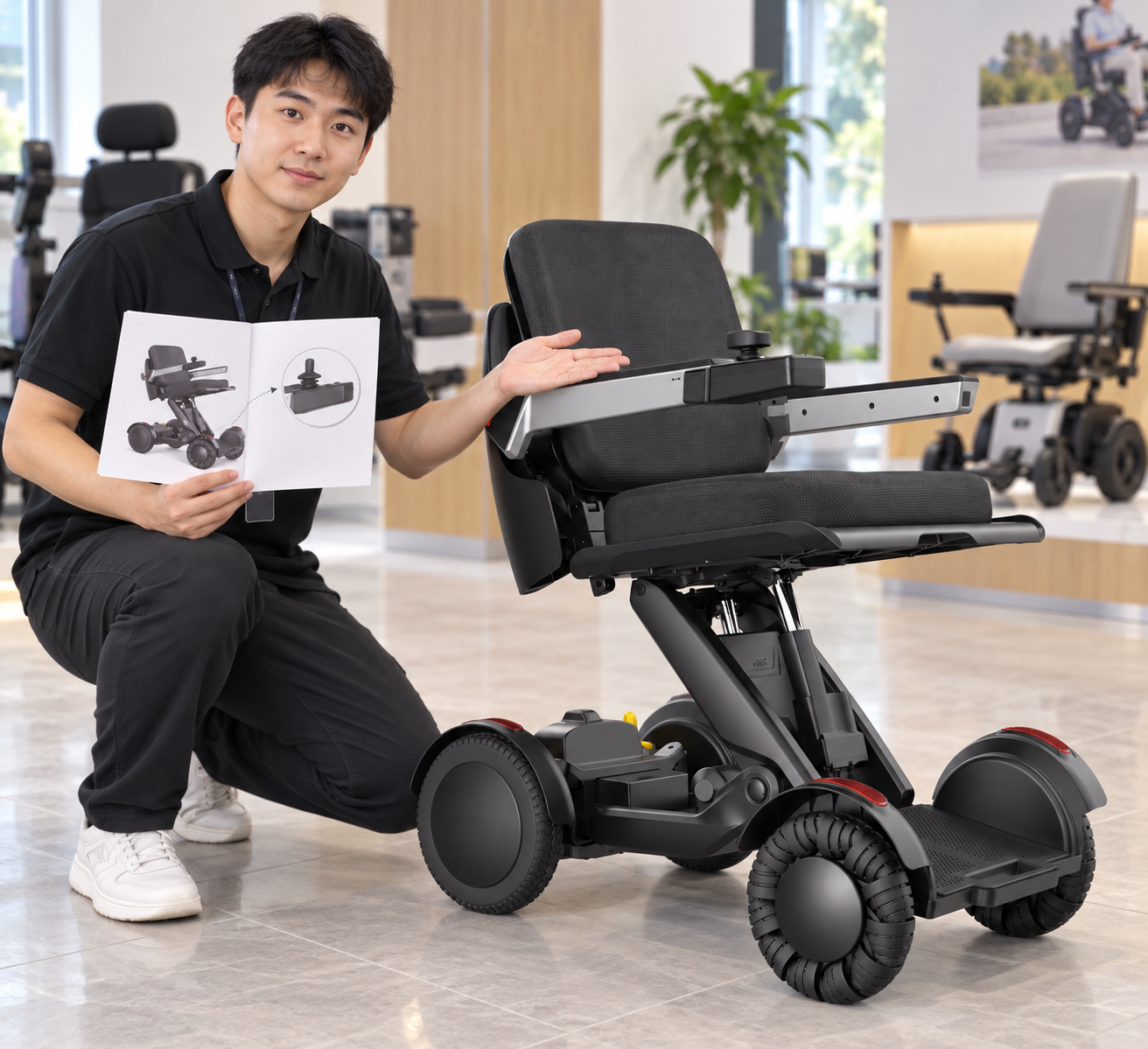
Trained personnel should demonstrate electric wheelchair freewheel mode under the exact maker instructions and the site's safety process. Start with an empty chair in an appropriate controlled area. Do not ask an untrained handler to copy a motion seen in a video.
What belongs in the training brief?
Show a complete cycle, not a single move. The UK ground-handling leaflet warns that forcing a powered chair outside freewheel mode can damage it. Use that principle with the actual model procedure and the maker's required restoration checks.
- Use the exact document and a competent trainer.
- Show permitted manual movement only in the approved setting.
- Record the return-to-normal check and escalation route.
| Training phase | Evidence |
|---|---|
| Before movement | Model and approved method |
| After movement | Required restored state |
A single release motion is an incomplete lesson. Key Takeaway: Staff can account for the state in which the chair is handed back.
Can electric wheelchair freewheel mode be used on a slope?
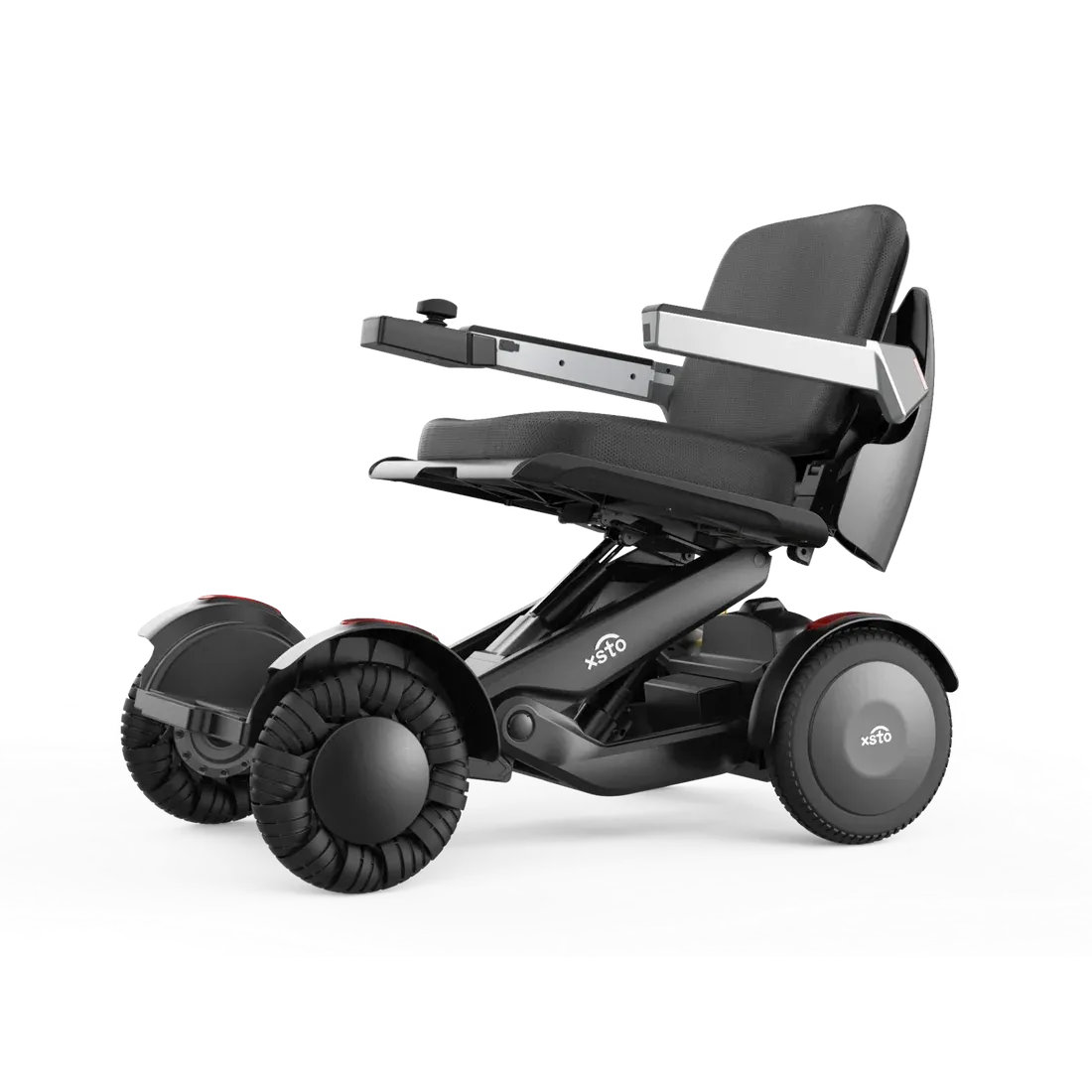
Use electric wheelchair freewheel mode on a slope only if the exact chair instructions and a safe handling plan expressly allow that task. Manual release can change how a powered chair resists motion. Do not treat a folding chair example as proof of another model's slope procedure.
What should a dealer ask before transport?
Write down the setting, not a guess. Identify the route, floor condition, handling team and product-specific limits. If guidance is missing, stop the planned movement and ask the maker or qualified service contact for the right method.
- Check the maker's permitted surface and handling limits.
- Plan how staff keep the empty chair controlled.
- Escalate any uncertain slope or ramp task.
| Condition | Decision basis |
|---|---|
| Level controlled floor | Exact model instructions |
| Ramp or slope | Specific permission and safe plan |
A manual-move feature does not cancel gravity. Key Takeaway: Your handlers can decline an unclear ramp task before a chair starts moving.
How does electric wheelchair freewheel mode affect powered driving?
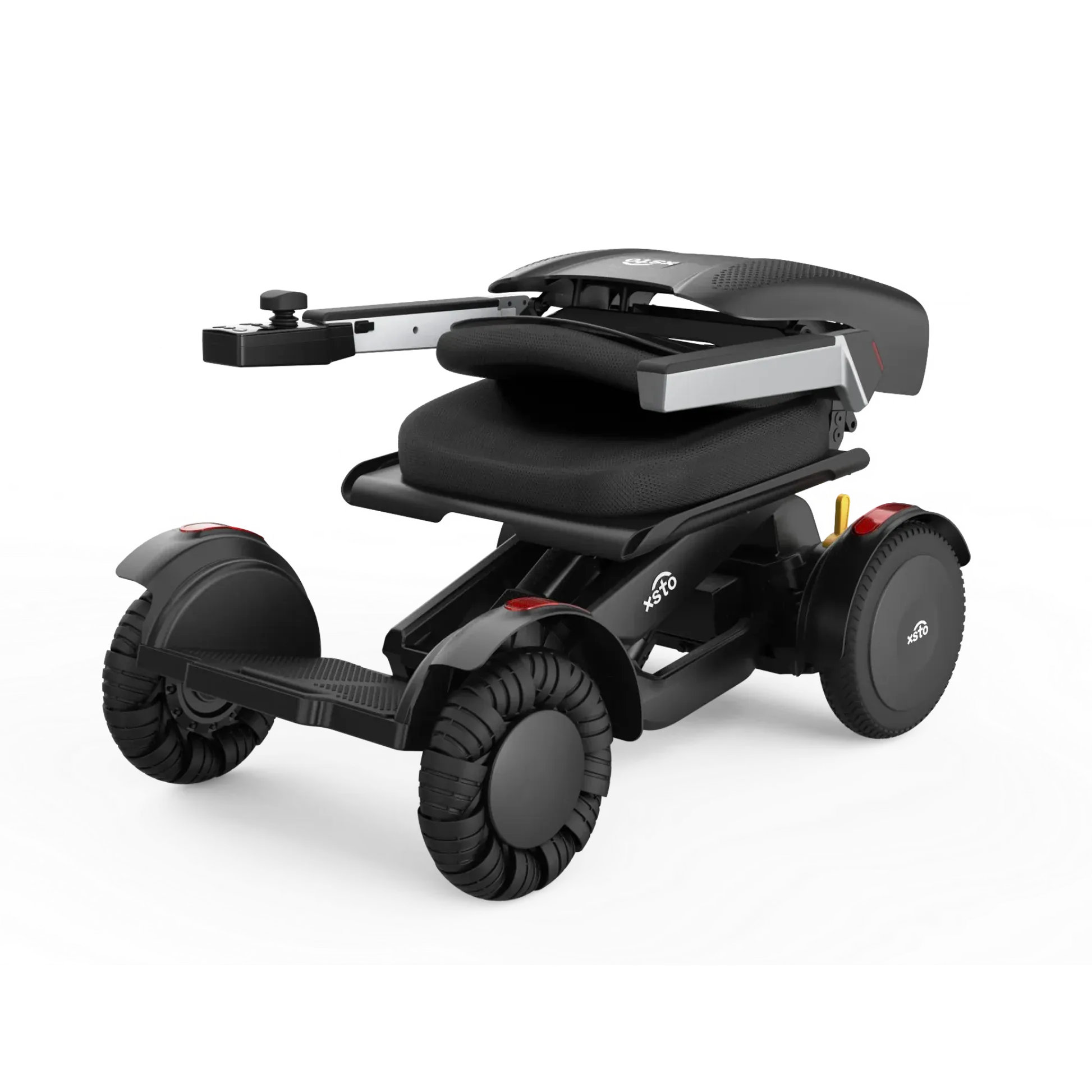
Electric wheelchair freewheel mode must be returned to the state required for normal powered driving under the exact model instructions. A chair that was moved manually should not be handed over until the prescribed return checks are complete. The indicator or feel may differ by model.
What should the return check establish?
Finish at the normal-use state. Follow the documented sequence and have trained staff verify the required result without inventing a universal test. Record any unexpected response and use the maker's service route rather than forcing the chair.
- Confirm the instructed return method.
- Check the documented normal-use state.
- Hold and report a chair that behaves unexpectedly.
| Result | Next action |
|---|---|
| Required state confirmed | Record handover status |
| Uncertain or abnormal | Stop and request technical review |
Restoration closes the loop after a manual move. Key Takeaway: The next person receives a chair whose handling state has been checked.
What if electric wheelchair freewheel mode fails a check?
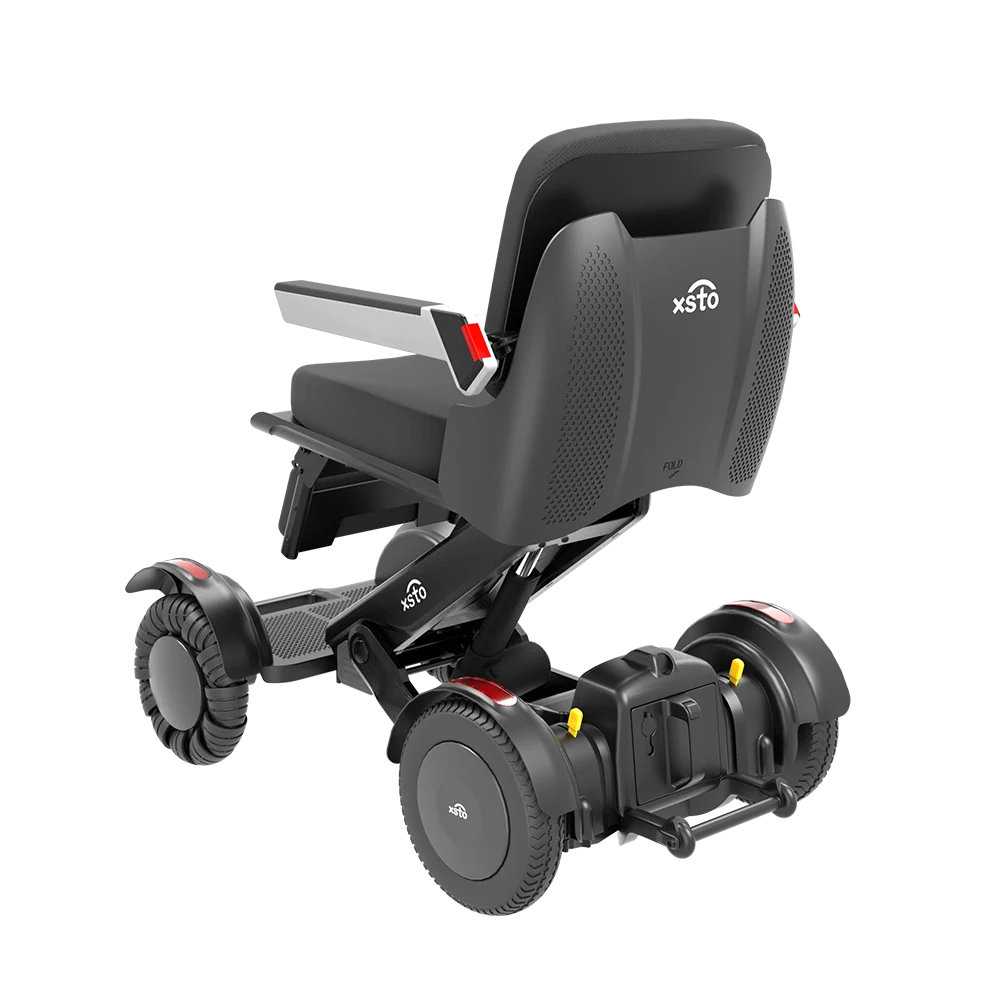
If electric wheelchair freewheel mode does not behave as the model guide describes, stop the attempt and refer the chair for technical review. Do not force a resisting chair or improvise a different release. Explain the observed condition to the supplier team with model details.
Which facts help a service enquiry?
Describe the symptom without diagnosing it. Record the chair identifier, current state, relevant handling event and any warning shown in the instructions. Keep the unit isolated under the site's process until an authorised reviewer decides the next step.
- Capture model and traceability details.
- Describe what happened and when the attempt stopped.
- Use the approved service and hold route.
| Report field | Purpose |
|---|---|
| Chair ID | Locates applicable instructions |
| Observed response | Supports focused troubleshooting |
A clear observation beats a guessed fault name. Key Takeaway: The service reviewer can act without repeating a risky experiment.
How should you explain electric wheelchair freewheel mode?
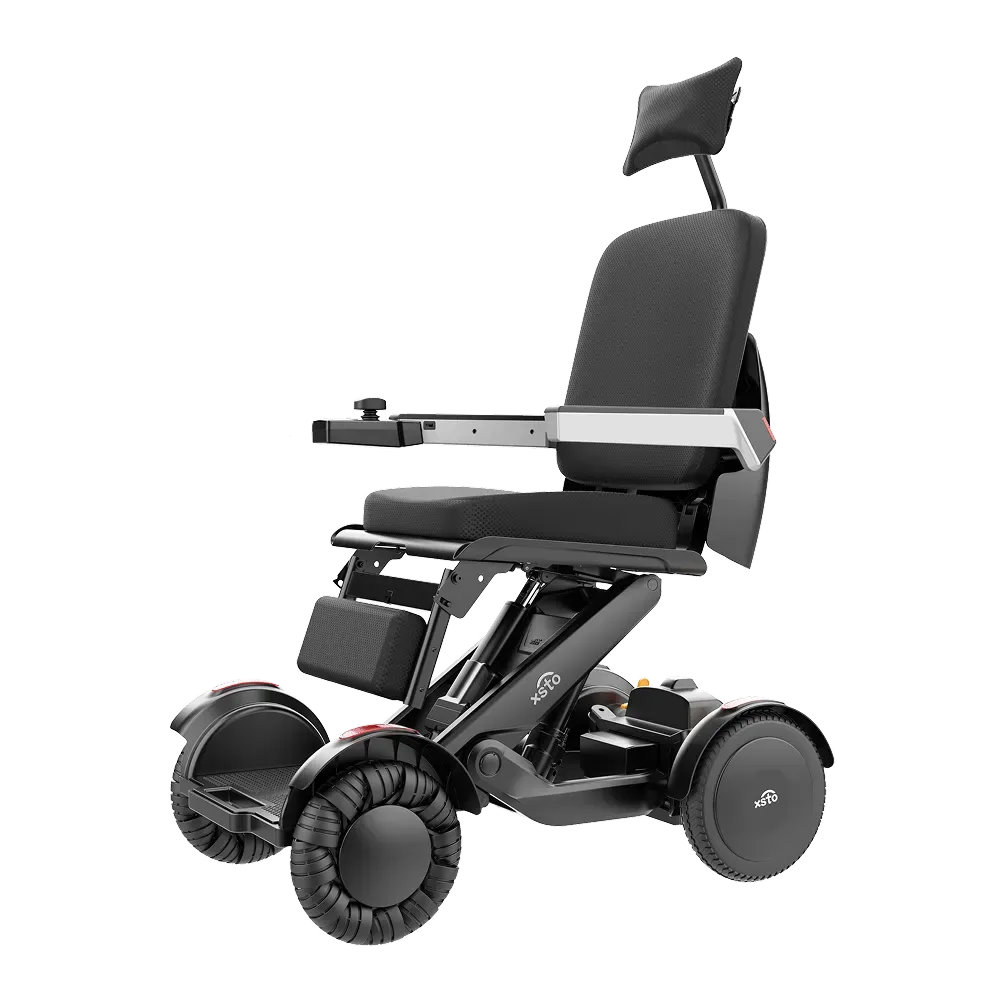
Explain electric wheelchair freewheel mode at handover through the user's model-specific instructions and the person's approved support plan. Name who may use it and when, then demonstrate the required return check with trained staff. A supported-seat variant in a product image does not establish the base chair's release layout.
What should the recipient take away?
Leave the method in writing. Provide current instructions, the trained contact and a record of what was shown. WHO's wheelchair provision guidance includes training and follow-up as parts of an individual service process.
- Identify the model and approved document version.
- State permitted users and situations.
- Record the demonstrated return-to-use check.
| Handover item | Why |
|---|---|
| Current guide | Prevents model mix-ups |
| Contact route | Supports questions or problems |
A written route survives staff changes. Key Takeaway: Users and carers need not rely on memory or a generic online video.
Can electric wheelchair freewheel mode be judged from a product photo?
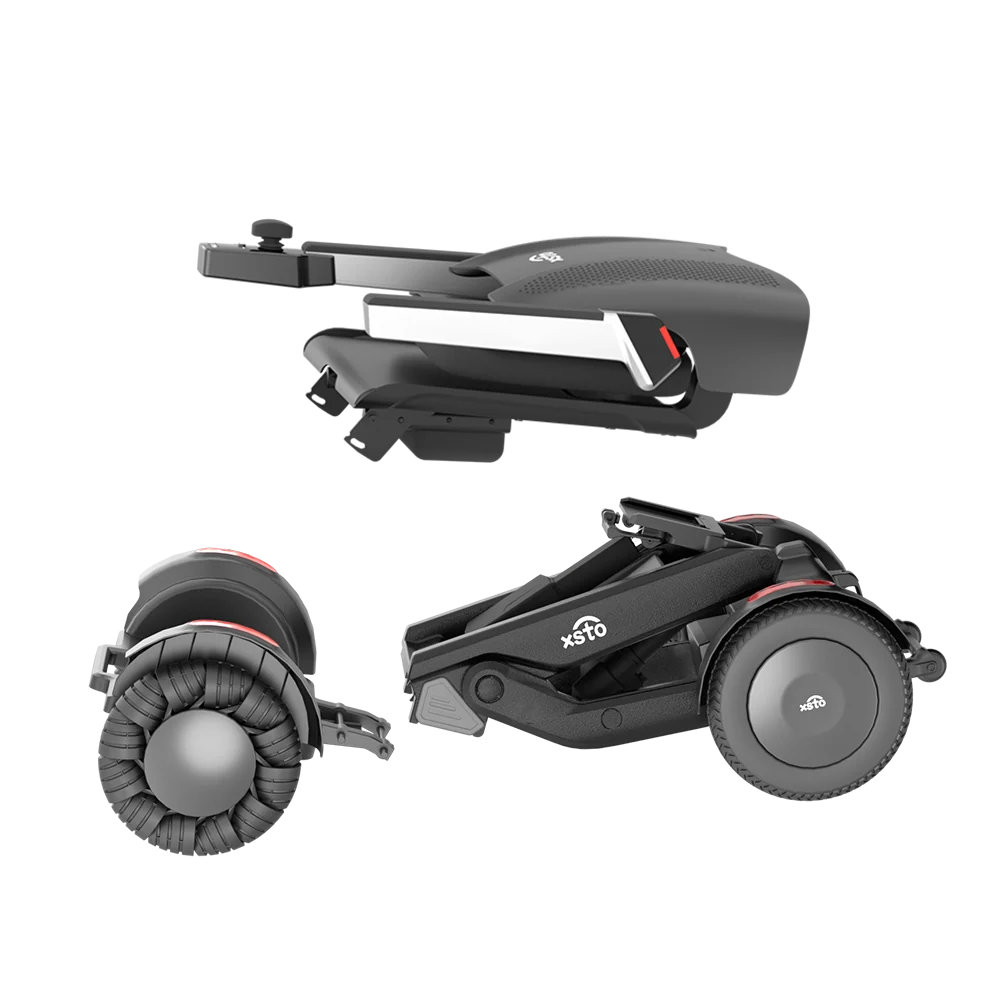
Electric wheelchair freewheel mode cannot be judged safely from a product photo alone. A visible handle, cable or yellow fitting may have another purpose. The component illustration here helps identify parts for a supplier enquiry, not a disengagement instruction.
What proof should replace visual guesswork?
Ask for a named control in the guide. Request the approved diagram or video for the exact model, then have trained staff demonstrate it with an empty chair. Keep any uncertainty out of published how-to copy and user handover sheets.
- Match control name to model documentation.
- Ask the maker to explain unclear markings.
- Avoid unlabeled or crowd-sourced release advice.
| Evidence | Value |
|---|---|
| Product photo | Shows appearance only |
| Current model guide | Defines intended operation |
Appearance is useful for identification but weak for procedure. Key Takeaway: Your content will not turn a photograph into a safety instruction.
How do you record electric wheelchair freewheel mode training?
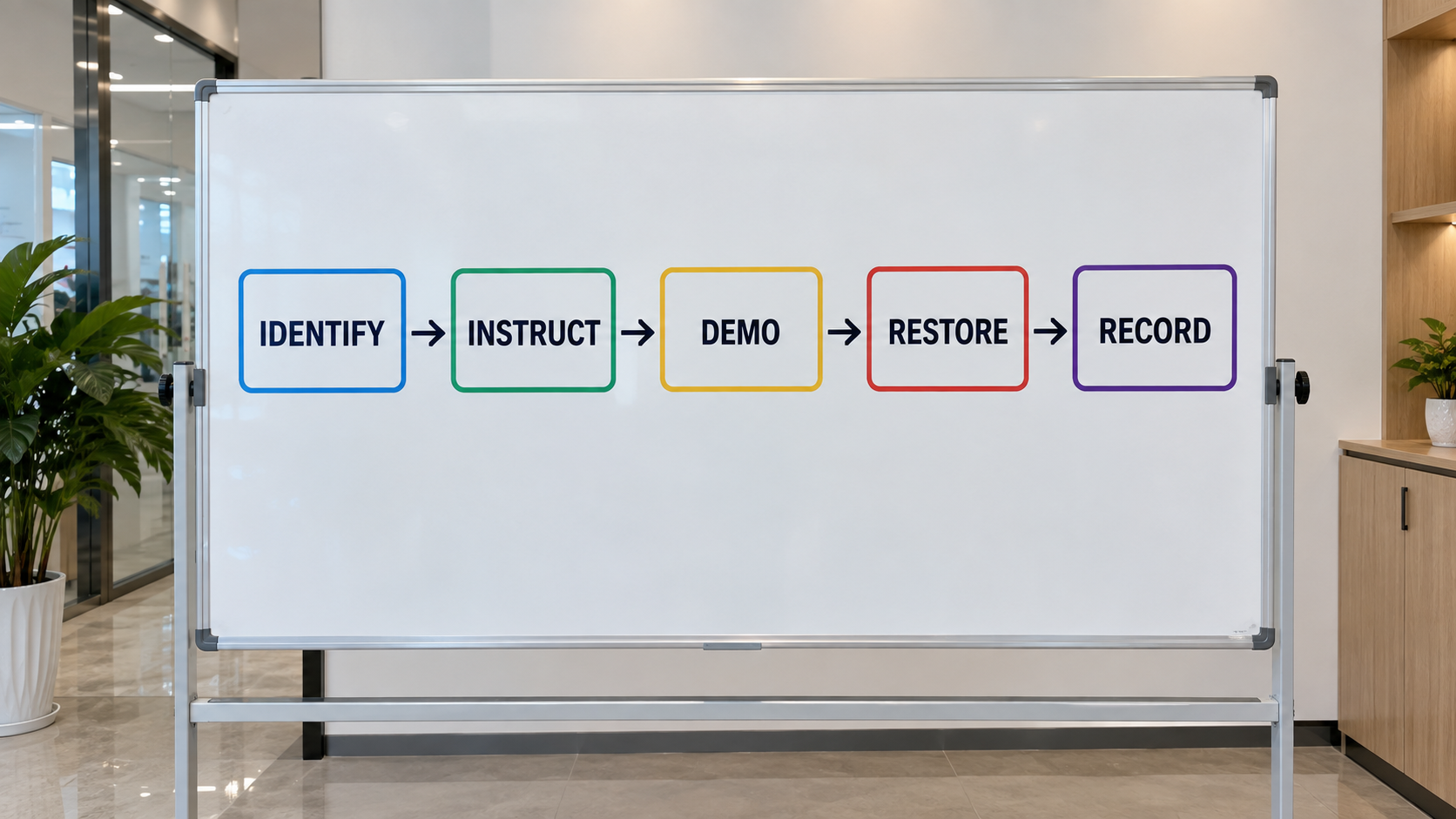
A electric wheelchair freewheel mode training record should connect the chair model, document version, trainer, learner and demonstrated return check. Include any limits and the service contact used for unusual behavior. Revisit the record when a model or instruction revision changes.
Can the next shift repeat the approved process?
Make the training chain visible. The workflow chart runs from identification through instructions, demonstration, restoration and record. Keep that sequence with the specific chair so staff can find the current method.
- Name the chair and exact manual revision.
- Record who demonstrated and received training.
- Keep the return check and escalation notes.
| Record | Use |
|---|---|
| Training identity | Shows who learned which method |
| Return result | Confirms the chair was restored |
A short, complete log limits the chance of informal procedure drift. Key Takeaway: The next handler can verify the same approved training rather than improvise.
Which electric wheelchair freewheel mode details help buyers?
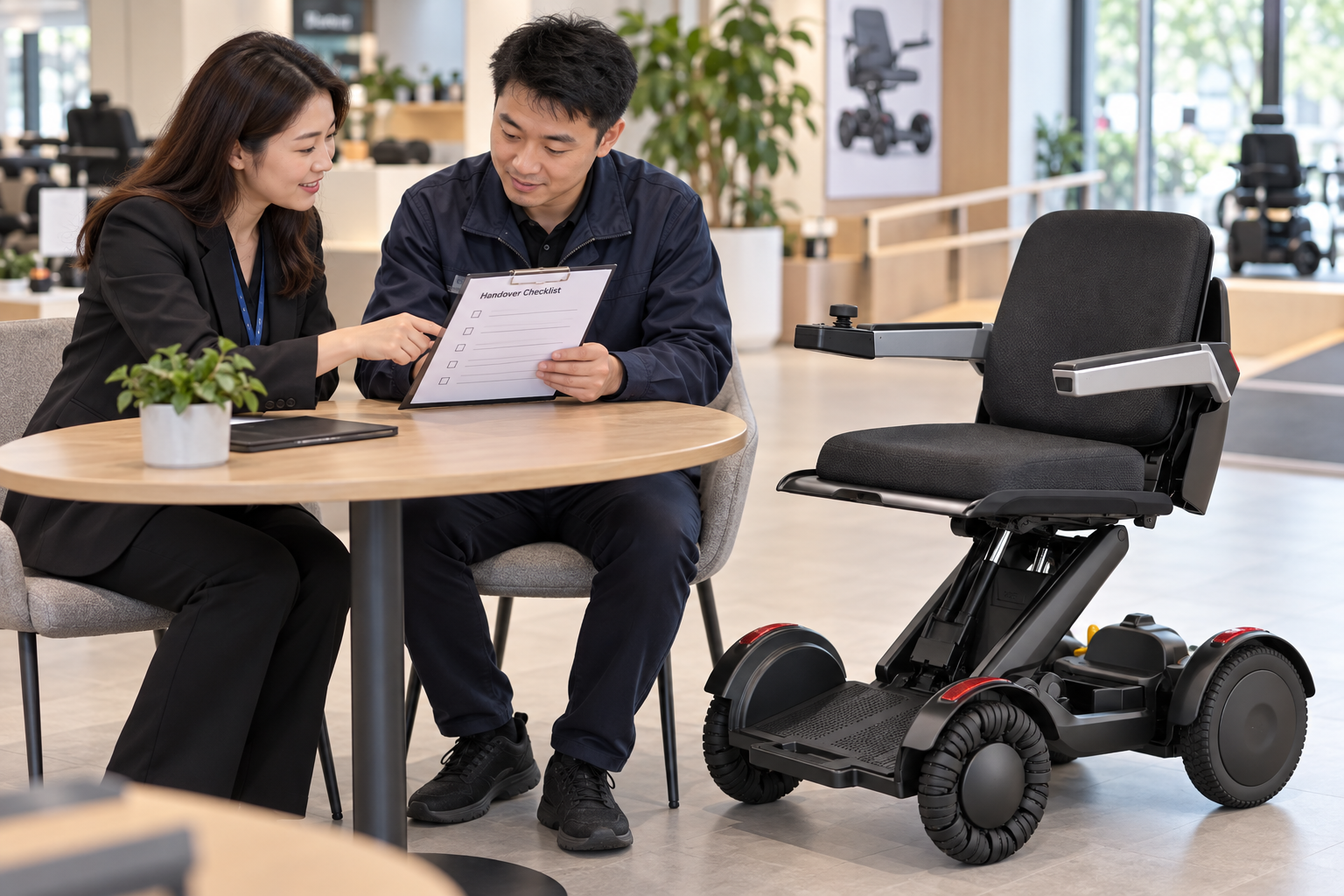
Choose electric wheelchair freewheel mode information that names the exact model, permitted purpose, training method and return-to-use check. Ask for the current instructions before quoting or shipping a chair. Clear handling information matters as much as an appealing product image.
Ready to request the right handling guide?
Send the model question with the order. Ary Medical can clarify which product information is available for a proposed electric wheelchair setup. Ask for current manuals and the appropriate training or service contact before your team demonstrates manual movement.
- Identify the chair model and planned handling task.
- Request the current freewheel and return instructions.
- Name the staff who need a trained demonstration.
| Buyer input | Information to request |
|---|---|
| Model and task | Applicable guide and permitted use |
| Handover team | Training and service route |
Resolve the procedure question before the chair enters circulation. Key Takeaway: For model-specific guidance, contact us. Ary Medical backs clear handovers built on the actual chair and its instructions.
Frequently asked questions
Q1: Can I push a powered chair that resists?
No. Stop and check the exact model instructions; forcing movement can damage the chair.
Q2: What's the best way to find the freewheel control?
Use the current maker guide for the exact model and a trained demonstration, not a photo guess.
Q3: How do I know if the chair is ready to drive again?
Complete the model's required return checks and hold the chair if the result is uncertain.
Q4: Can I use freewheel mode on a ramp?
Only where the exact instructions and a safe handling plan permit that task.
Q5: Can a warehouse worker teach this from memory?
No. Use trained staff and the current chair-specific instructions.