

Choose a folding manual wheelchair by verifying how the exact model folds, what remains attached and whether its folded package fits your route. A dealer may see a narrow product photo and assume it will slide into a car boot or storeroom. Then footplates, handling points or a difficult reopening sequence disrupt daily use. Compare the opened chair, the approved folding method and a real clearance check before placing a larger order.
What makes a folding manual wheelchair practical?
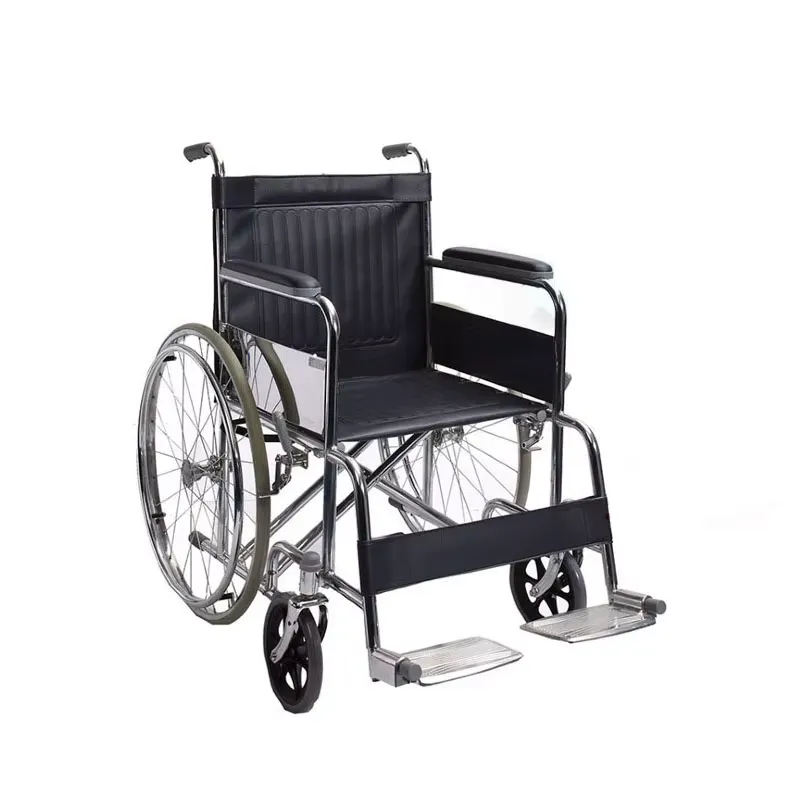
A folding manual wheelchair is practical when the approved fold, handling method and reopened seating setup suit the user and storage setting. Compact appearance alone does not settle that choice. The 809 chair photos show both open and folded states, which should be checked as one product.
Which two jobs must the chair perform?
Start with use, then storage. Confirm the individual seating and mobility plan before judging the fold. The WHO wheelchair provision guidance includes assessment and fitting in the service pathway. Ask for a demonstration on the current model with all supplied parts accounted for.
- Review the open chair for its intended user.
- Identify the approved folding sequence.
- Measure the resulting package on a sample.
| Chair job | Evidence to request |
|---|---|
| Daily use | Individual fit and setup review |
| Storage or travel | Fold method and actual package clearance |
A narrow shape has little value if the reopened setup is unsuitable. Key Takeaway: You can buy for both use and transport without letting one override the other.
How does a folding manual wheelchair close?
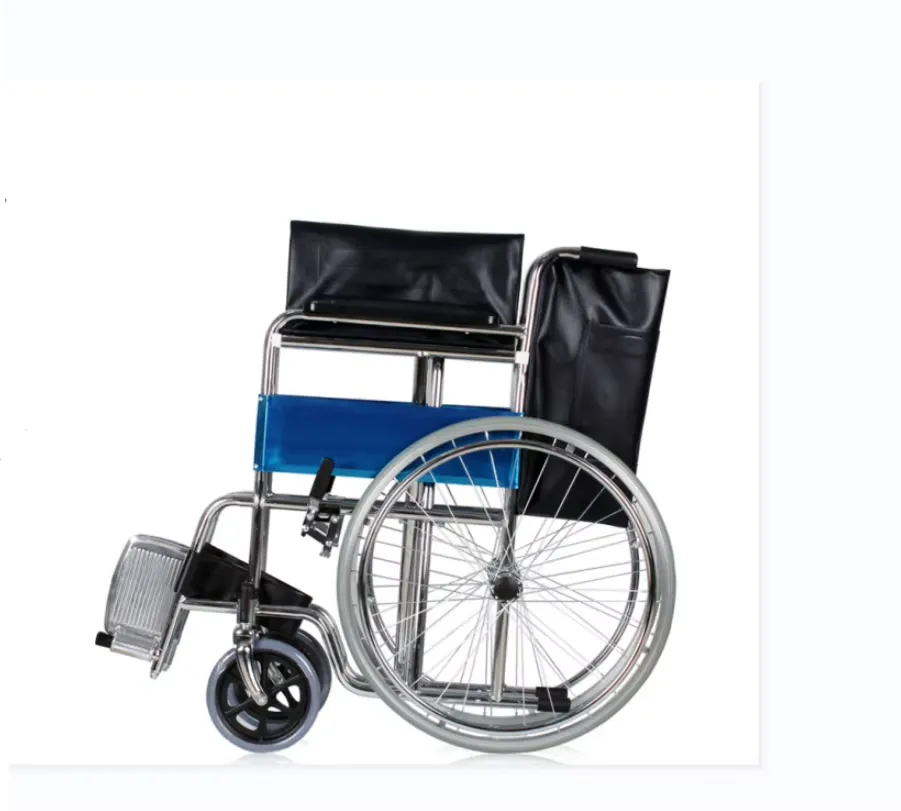
A folding manual wheelchair closes only through the steps approved for its exact frame and components. The folded 809 image shows a narrow side profile, but it cannot teach a safe sequence. Request the current instructions and an empty-chair demonstration.
Where should the handler pause?
Check each moving part before applying force. Staff should locate the approved grips and watch for pinch points using the maker’s directions. A fold that resists normal movement calls for service review rather than extra force.
- Identify the approved grips and frame movement.
- Follow the stated part-removal sequence, if any.
- Stop and report unusual resistance.
| Stage | What to confirm |
|---|---|
| Before fold | Chair empty and required parts prepared |
| During fold | Approved hand positions and movement |
The photograph shows a result, not the method that produced it. Key Takeaway: Your staff can demonstrate the correct model rather than improvising from a picture.
What happens to footrests on a folding manual wheelchair?
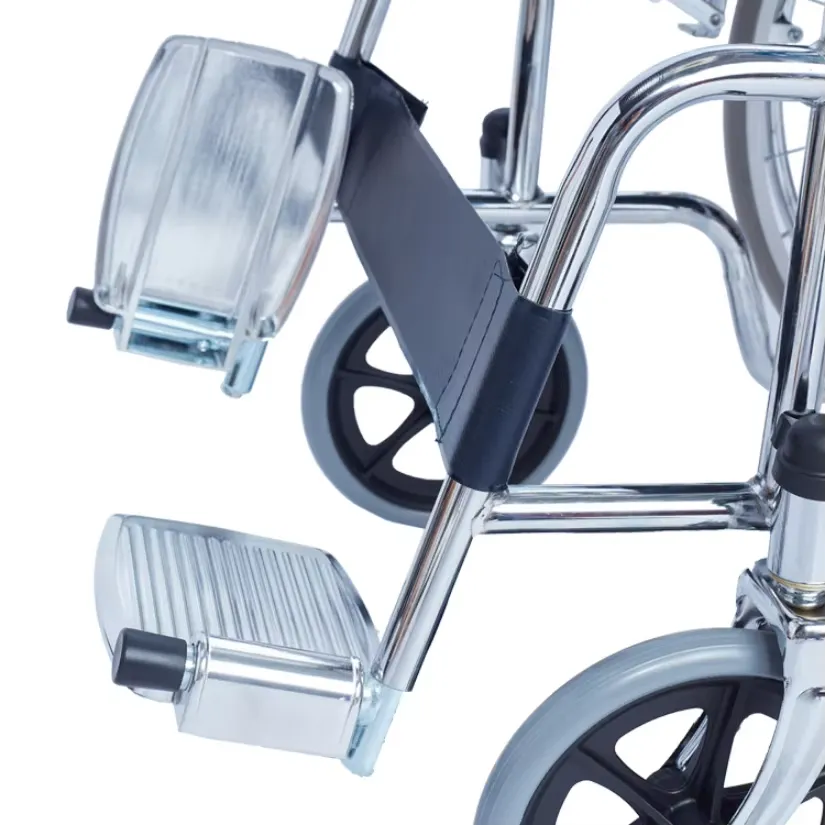
Footrests on a folding manual wheelchair must follow the model’s approved fold or removal instructions. They may affect the stored package even when the seat frame is narrow. The pictured 809 footplates show why projecting parts deserve their own clearance check.
What should stay with the chair?
Inventory the pieces before transport. Record any permitted removal and reattachment procedure. Related transfer equipment can have different handling rules, so keep the wheelchair’s own parts list at hand.
- Identify each supplied footrest component.
- Document the approved position for storage.
- Check correct refitting before use.
| Part | Record to keep |
|---|---|
| Footplate or hanger | Approved storage position |
| Refitted assembly | Required pre-use check |
A folded frame can still leave loose or projecting pieces. Key Takeaway: You can prevent missing parts and poor reopening after a trip.
Should wheel locks be checked before folding?
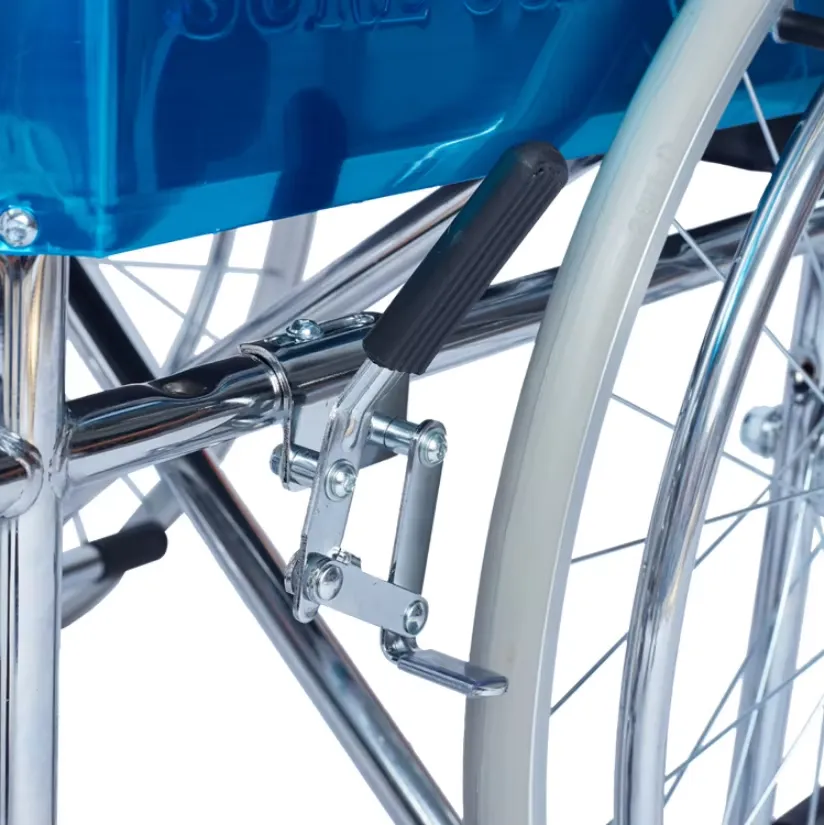
Yes, check the folding manual wheelchair wheel-lock procedure against the maker’s instructions before moving or storing the chair. Lock status can affect handling and the return-to-use check. Do not infer a universal folding rule from the lever photo.
What should a dealer explain?
Demonstrate one model-specific routine. Identify the installed lock design and any direction the manual gives for folding, parking and reopening. The 809 detail photo confirms a lever is present; it does not show how much force a user needs.
- Review model instructions for lock position.
- Check the lock after any approved reopening step.
- Refer damage or doubtful operation for service.
| Moment | Question |
|---|---|
| Preparing to fold | What does the maker require? |
| Returning to use | How is correct lock operation checked? |
A visible lever is only one part of a complete operating routine. Key Takeaway: Your handover can describe what to do at both ends of storage.
How do you check folded size?
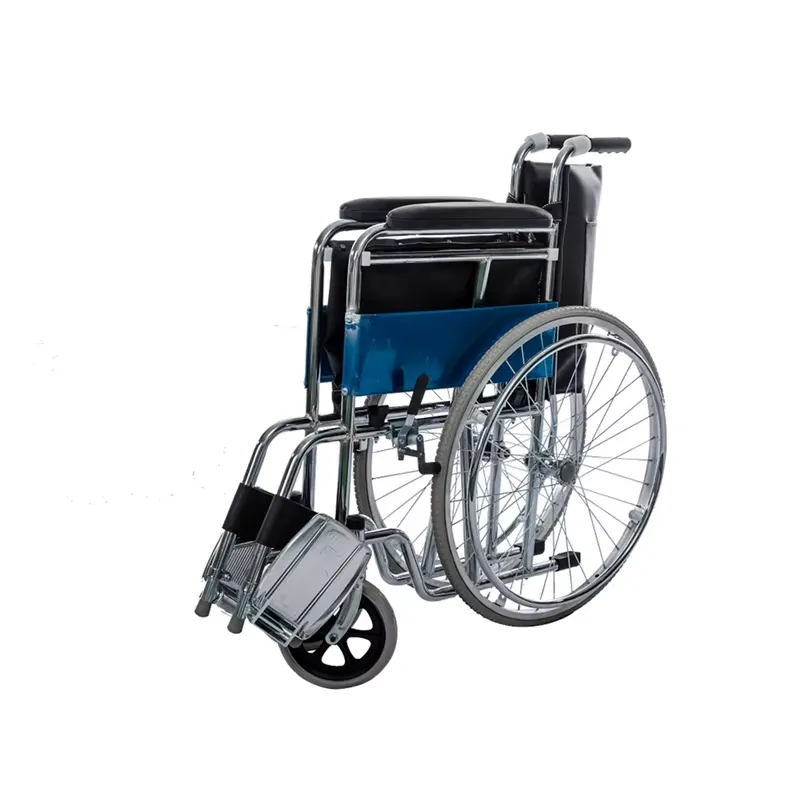
Check a folding manual wheelchair folded size by measuring the exact sample in its approved stored state. Record height, width and depth using the maker’s stated method. Then compare the entire package, including permitted loose parts, with the real route.
Which route details are easy to miss?
Measure the narrowest stop along the path. Check door openings, vehicle loading height and the space needed to turn or lift the package. Do not use a catalog claim alone as proof that one person can safely handle the chair.
- Measure the folded sample at its widest points.
- Check vehicle and room clearances.
- Record where removed parts travel.
| Item | Why it matters |
|---|---|
| Folded envelope | Storage and door clearance |
| Handling method | Who can load it under the approved plan |
The package must work through every step, not only fit on a shelf. Key Takeaway: You can reject a chair that looks compact but fails the actual journey.
Can anyone lift a folding manual wheelchair?
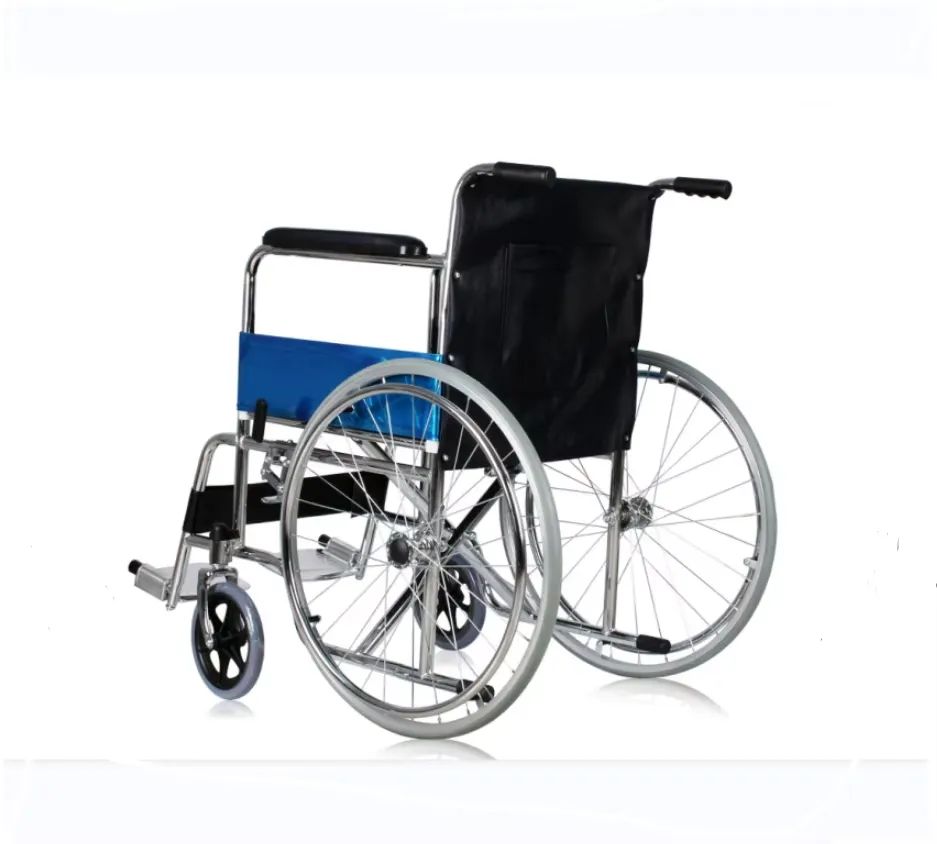
No, a folding manual wheelchair does not become safe for anyone to lift simply because it folds. Handling depends on its verified weight, approved lift points, the environment and the handler’s capability. Ask for the current product data and local safe-handling assessment.
What belongs in a lifting brief?
Separate product facts from a person’s capacity. The rear product view can help identify the frame but does not certify any grip as a lifting point. Staff should follow the maker’s handling guidance and any workplace procedure that applies.
- Request the exact configured chair weight.
- Identify permitted handling points.
- Plan for ramps, steps and awkward vehicle edges.
| Question | Evidence |
|---|---|
| How much is handled? | Configured product data |
| Who can handle it? | Relevant local handling assessment |
A folding joint does not reduce the load a person must manage. Key Takeaway: The transport plan can protect staff as well as the chair.
What should happen after reopening?
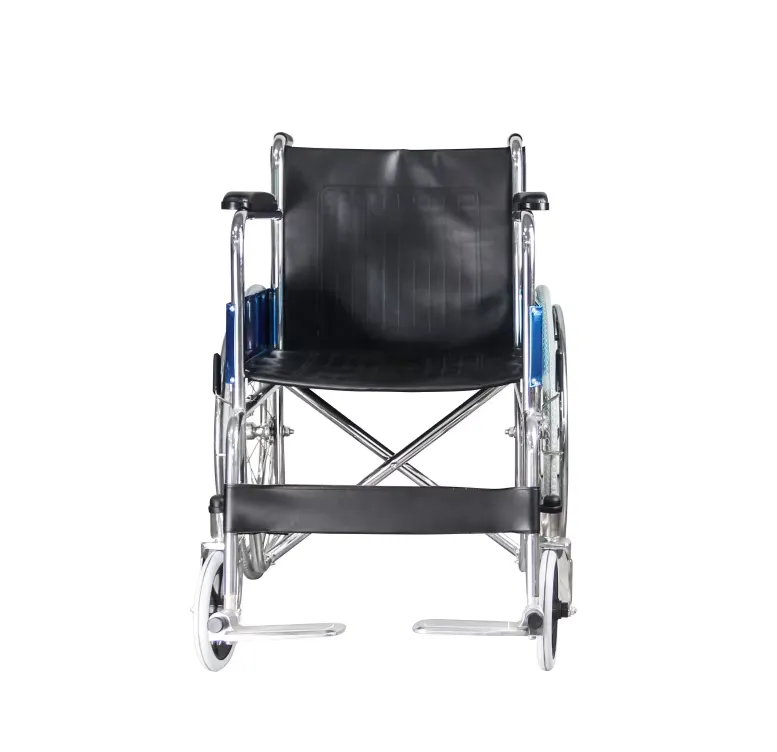
After reopening a folding manual wheelchair, restore every required part and complete the model’s pre-use checks. A chair that stands upright may still be missing a correctly seated component. Keep the approved setup record with the user.
Which checks close the loop?
Bring the chair back to its use configuration. Review the seat, frame, foot support and wheel locks according to current instructions. If anything sits differently from the approved setup, stop and seek the right service or fit review.
- Confirm full opening and required frame position.
- Refit approved components and supports.
- Check controls and parts named in the manual.
| Reopening field | Purpose |
|---|---|
| Frame and seating | Returns to the reviewed arrangement |
| Locks and supports | Confirms required operation before use |
The fold is complete only when the chair is ready for its intended use. Key Takeaway: Your service team can spot a missing step before handover.
Where should a folding manual wheelchair be stored?
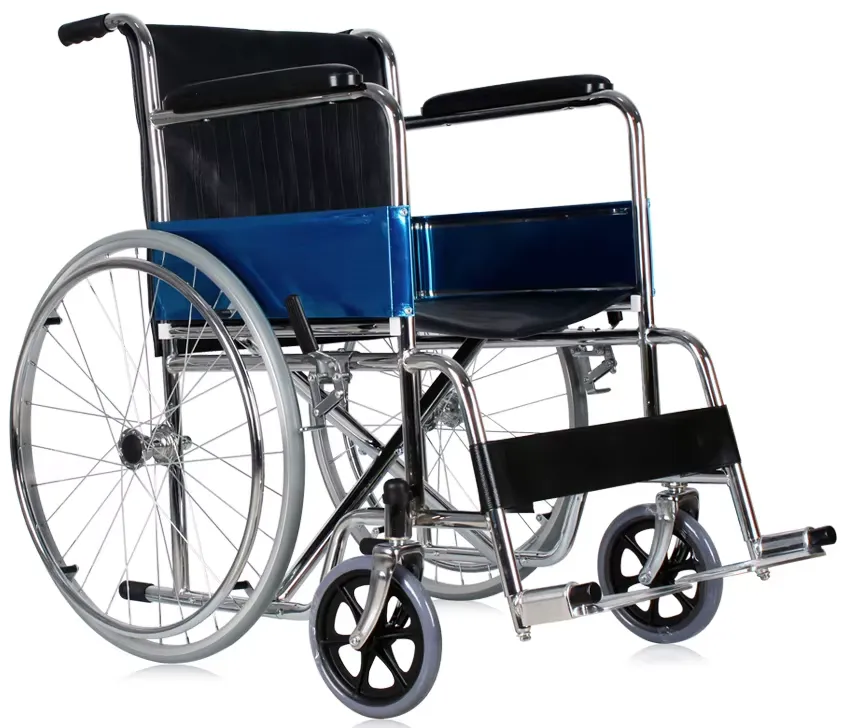
Store a folding manual wheelchair in a place that protects the chair and allows its approved reopening. Keep loose approved components together and use the model’s care guidance for conditions. A tight closet is not useful if it blocks safe handling.
How do you avoid storage surprises?
Try the complete move with a sample. Compare the AryMD wheelchair range for suitable chair layouts, then check the chosen model’s actual folded dimensions. Allow enough room for the handler and required parts.
- Map the route from use area to storage.
- Check conditions and protection guidance.
- Keep removable parts labelled with the chair.
| Storage issue | Review point |
|---|---|
| Limited space | Folded package and approach room |
| Longer storage | Product care and reopening checks |
A usable storage plan includes access, not just floor area. Key Takeaway: You can specify a chair that staff can put away and bring back reliably.
How should you compare folding routines?
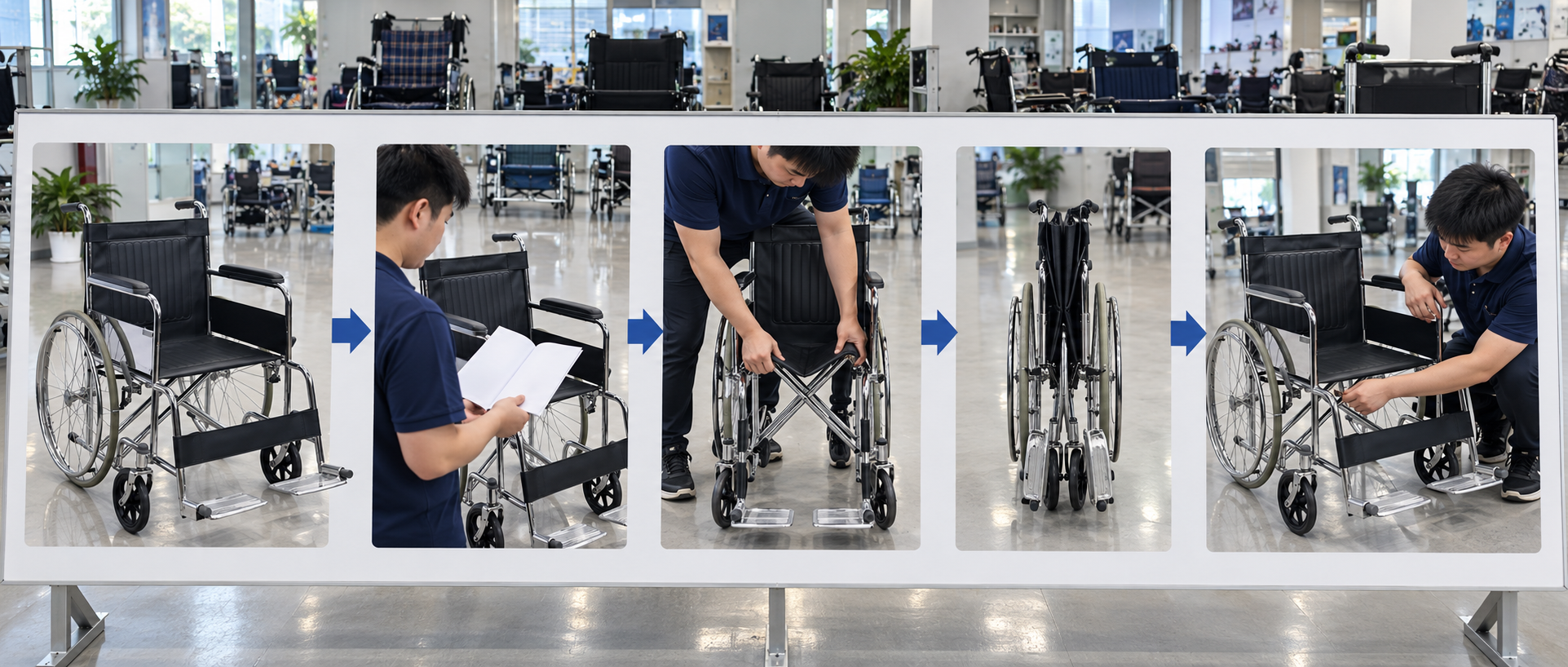
Compare a folding manual wheelchair by reviewing open use, approved fold, package clearance, return-to-use checks and responsible staff. A five-stage visual workflow helps keep each decision visible. It is a planning aid, not proof of a particular model’s performance.
Which evidence makes a comparison fair?
Use the same route and the same handling brief. Request current manuals and sample demonstrations for each shortlisted chair. The supplier team can clarify product options; individual fit and local handling decisions remain with the appropriate people.
- Use one route and storage brief for every option.
- List supplied and removable parts.
- Record the steps staff will actually perform.
| Comparison line | Evidence to keep |
|---|---|
| Fold and package | Current model instructions and sample |
| Return to use | Handover checks and responsible person |
An orderly comparison exposes friction that catalog photos hide. Key Takeaway: Your buyer can choose a fold routine staff will follow every day.
How can you order a folding manual wheelchair with confidence?
Order a folding manual wheelchair with confidence by sending the intended user, handling route and storage brief for the exact model. Ask for the approved fold method, configured dimensions and current part list. Confirm a sample or drawing before the final order.
Ready to review the folding layout?
Give the supplier the real journey. Ary Medical can respond to a defined product brief with available manual-chair options. Keep the individual fitting result and any site-specific handling review alongside that response.
- Describe use, route and storage conditions.
- Request sample, dimensions and model instructions.
- Record the accepted reopened configuration.
| Your brief | Response to request |
|---|---|
| User and route | Suitable model options for review |
| Handling and storage | Fold, package and part information |
A detailed brief reduces guessing on both sides of the order. Key Takeaway: For a chair review tied to your route, contact us. Ary Medical believes easy storage should never come at the cost of a clear use plan.
Frequently asked questions
Q1: Can I assume every folding chair fits a car boot?
No. Measure the exact folded model with its supplied parts and compare it with the real loading opening.
Q2: What’s the best way to compare two folding routines?
Use one handling route and request current instructions for both models. A live empty-chair demonstration helps reveal the required steps.
Q3: How do I know if footrests must come off?
Check the exact product manual. Record any approved removal and refitting steps before staff transport the chair.
Q4: Can one person always lift a folded manual chair?
No. Check configured weight, approved lift points and the relevant local handling assessment.
Q5: Do I need to check the chair after opening it again?
Yes. Follow the maker’s pre-use checks and restore the reviewed seating arrangement.