

Choose manual wheelchair wheels by matching the complete chair, intended route and service plan, then confirming exact wheel and tyre parts for the model. A distributor may compare rear-wheel size while overlooking caster behavior, push-rim access or replacement availability. That leaves users and service staff with surprises after delivery. Review all four wheel positions and their approved maintenance information before an order is fixed.
Which manual wheelchair wheels matter most?
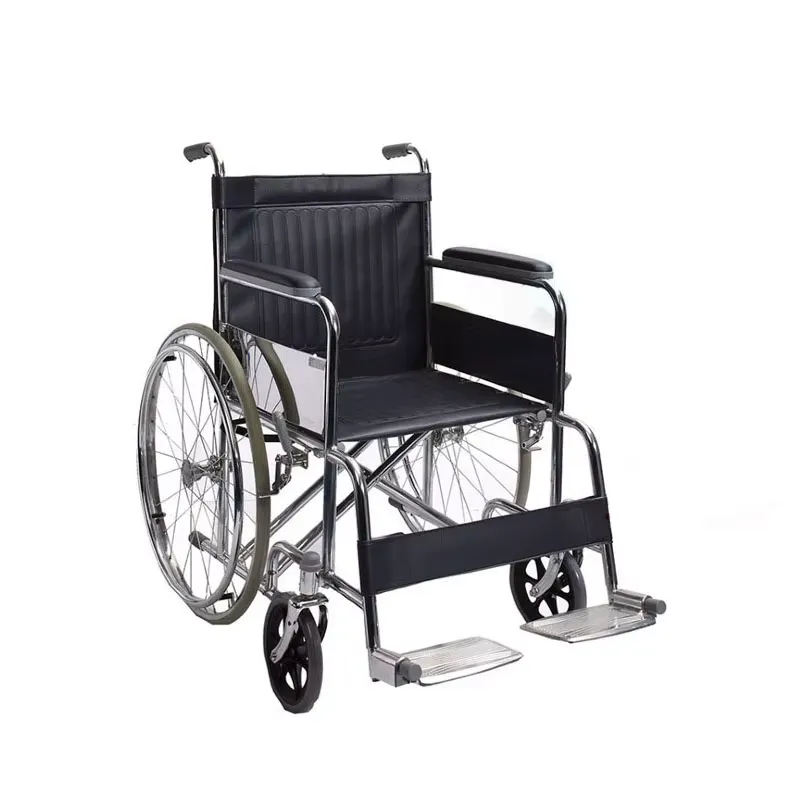
Manual wheelchair wheels work as a set of rear wheels and front casters on the exact chair configuration. Rear wheels carry push rims on the pictured 809 model, while small casters steer at the front. Judge the complete layout rather than choosing from one close-up.
How should a buyer frame the comparison?
Start with the whole chair. Record intended user, route and propulsion method alongside the model’s current wheel list. The visible 809 geometry identifies components but does not establish their suitability for every user or floor.
- Identify both rear wheels and both casters.
- Record tyres, push rims and lock hardware.
- Keep the route and individual fit review together.
| Wheel position | Review point |
|---|---|
| Rear | Propulsion access and fitted tyre |
| Front | Caster movement and route conditions |
The chair moves on four contact points, not the most visible pair. Key Takeaway: Your comparison can cover the setup users will actually receive.
How do rear manual wheelchair wheels affect hand access?
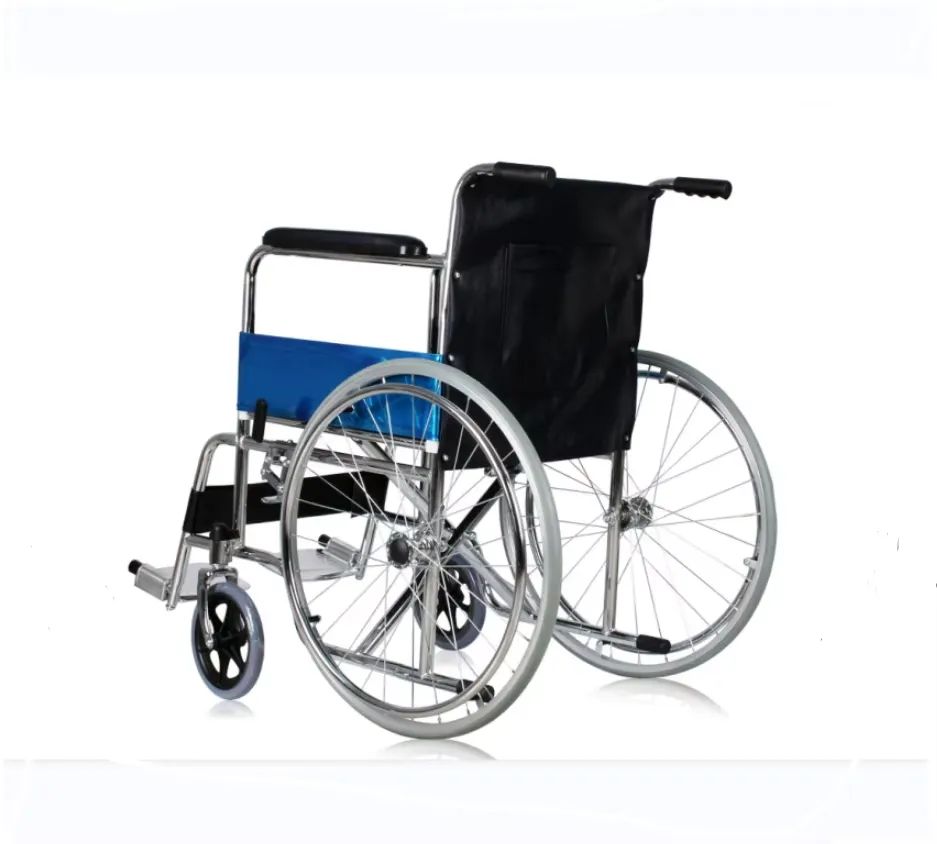
Rear manual wheelchair wheels affect hand access through their push-rim position, seat setup and user reach. The rear three-quarter 809 view shows the rings beside its large spoked wheels. A photograph cannot confirm whether that position works for a particular person.
What belongs in the fit review?
Put the user beside the wheel geometry. Have the responsible assessor review reach, posture and intended propulsion method. The WHO wheelchair provision guidance includes individual assessment and fitting. Ask for the exact wheel and seat configuration before using a sample as the approved reference.
- Identify the installed push-rim assembly.
- Record relevant seated reach needs.
- Confirm the sample matches the quoted configuration.
| Input | Responsible evidence |
|---|---|
| User access | Individual fit assessment |
| Wheel layout | Current model part information |
A wheel may be mechanically correct yet poorly matched to the user. Key Takeaway: You can separate chair specifications from the personal fit decision.
What tyre details should a manual wheelchair wheels quote include?

A manual wheelchair wheels quote should state the fitted tyre type and exact replacement reference for each wheel position. Appearance alone cannot establish construction, pressure range or compatibility. Request current model information before promising maintenance steps.
Which questions prevent a mismatched tyre order?
Match parts by identity, not silhouette. Record the chair model, wheel assembly and permitted tyre variant. A sports chair may use another setup, so its tyre details should not be copied into this chair’s service sheet.
- Ask for tyre and wheel part identifiers.
- Keep maker care and inflation directions where relevant.
- Verify compatibility before ordering spares.
| Quote field | Use |
|---|---|
| Tyre construction | Sets the correct care method |
| Part identifier | Supports later replacement matching |
A generic tyre description often leaves the service team guessing. Key Takeaway: You can stock spares against the actual approved assembly.
How should front manual wheelchair wheels be assessed?
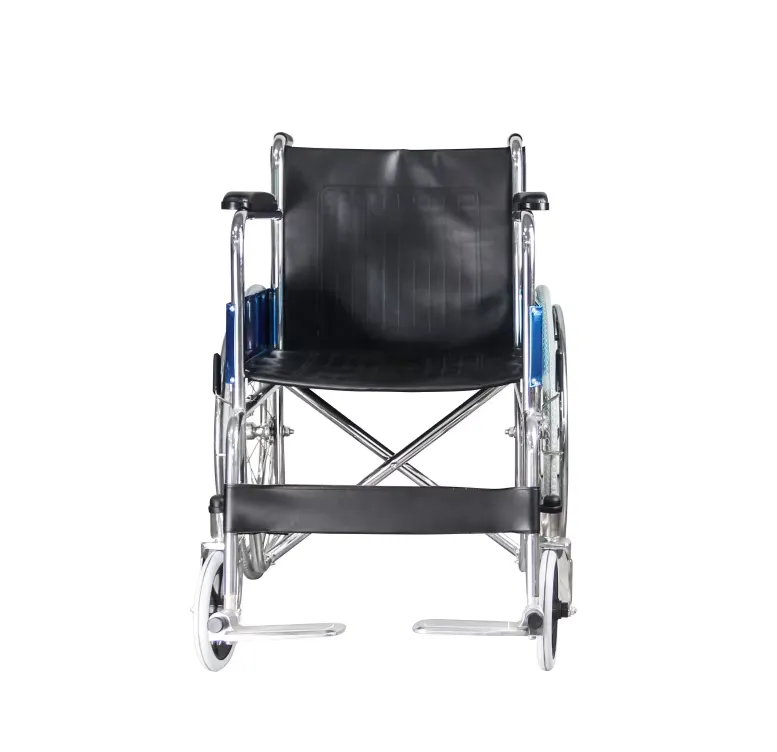
Front manual wheelchair wheels should be assessed as casters within the complete chair and intended route. Caster movement and clearance depend on the exact model and floor setting. Do not assume a front-wheel diameter alone predicts performance.
What should a route trial cover?
Watch the approach, turn and exit. Use the agreed user and handling plan for a suitable supervised trial. Note floor transitions and steering behavior without making a universal claim from one clean showroom demonstration.
- Confirm installed caster type and condition.
- Review actual floor transitions and tight turns.
- Record observations with the chair setup used.
| Trial item | Observation |
|---|---|
| Caster movement | Any binding or unusual behavior |
| Route fit | Space and surface conditions |
A route result belongs to the tested setup and setting. Key Takeaway: Your team can identify practical caster questions before purchasing stock.
How do wheel locks relate to manual wheelchair wheels?
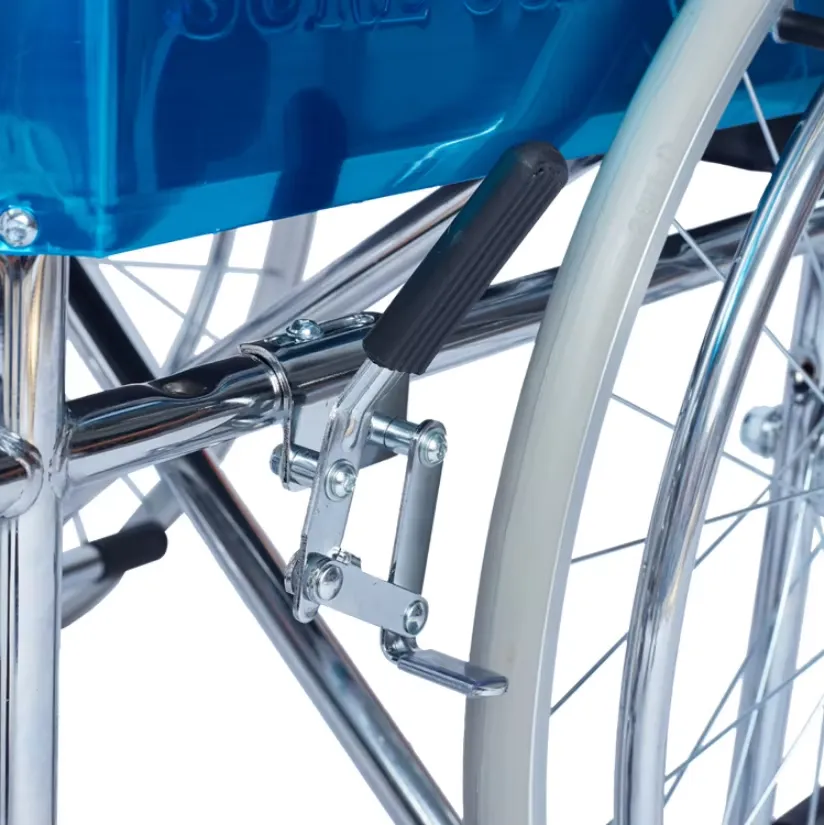
Wheel locks relate to manual wheelchair wheels through their position and contact with the installed rear-wheel assembly. Any approved wheel or tyre change can call for a model-specific lock check. The pictured 809 lever does not prove the condition of every delivered chair.
What should be checked at handover?
Inspect the parts as one system. Follow the maker’s instructions for the current wheel, tyre and lock configuration. If a lock is damaged or behaves unexpectedly, refer it to the appropriate service route.
- Identify the installed rear-wheel and tyre version.
- Review the maker’s lock procedure.
- Record the required response to doubtful operation.
| Component | Relationship |
|---|---|
| Rear wheel and tyre | Contact surface and fitted position |
| Wheel lock | Approved engagement and service check |
A sound wheel cannot compensate for a lock that needs review. Key Takeaway: The handover can link wheel identity with lock function.
Can manual wheelchair wheels suit every surface?
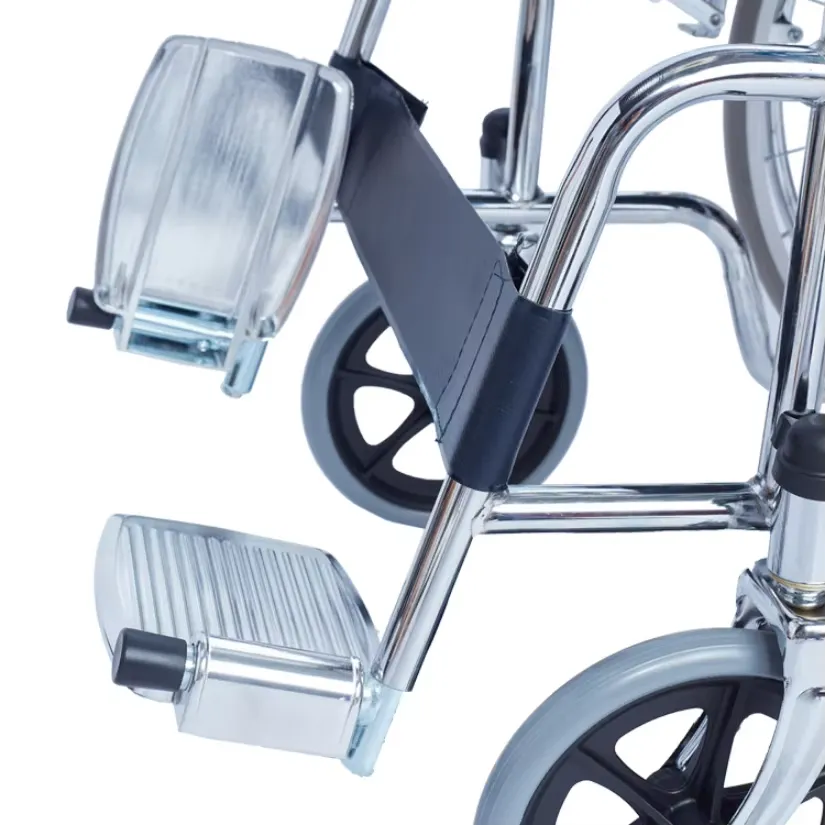
No, manual wheelchair wheels cannot be assumed suitable for every surface from a product photo or one route trial. Check the maker’s intended use, the chair setup and the real environment. A different route may expose a new clearance or handling issue.
Which route facts should a dealer collect?
Describe the ground rather than calling it “outdoor ready.” Ask about flooring, thresholds and who propels the chair. Nearby transfer devices solve different tasks and do not turn an unsuitable wheelchair route into an approved one.
- Identify the actual indoor and outdoor surfaces.
- Note thresholds and turning space.
- Keep propulsion and assistance arrangements in the brief.
| Route detail | Why record it |
|---|---|
| Surface and transition | Defines the route question |
| Propulsion method | Frames the appropriate chair review |
A surface claim without context can mislead the buyer. Key Takeaway: You can ask for evidence relevant to where the chair will be used.
How do you specify spare manual wheelchair wheels?

Specify spare manual wheelchair wheels by exact model, revision and approved part number where available. Folded product photos help identify a chair but cannot confirm interchangeability. Keep the original order and service records beside the request.
What should a parts request show?
Send identifiers before photographs. Include both the failed assembly and the complete chair details. The AryMD team can review available parts against the supplied model information; visual similarity alone is not a fit test.
- Record model, revision and serial details if applicable.
- Identify wheel position and installed assembly.
- Ask for the current compatible replacement reference.
| Request field | Purpose |
|---|---|
| Model and revision | Narrows the product match |
| Wheel position and part | Narrows the assembly match |
A clear request saves rework when similar chairs use different hardware. Key Takeaway: Your service team can order against a controlled part identity.
What upkeep do manual wheelchair wheels need?
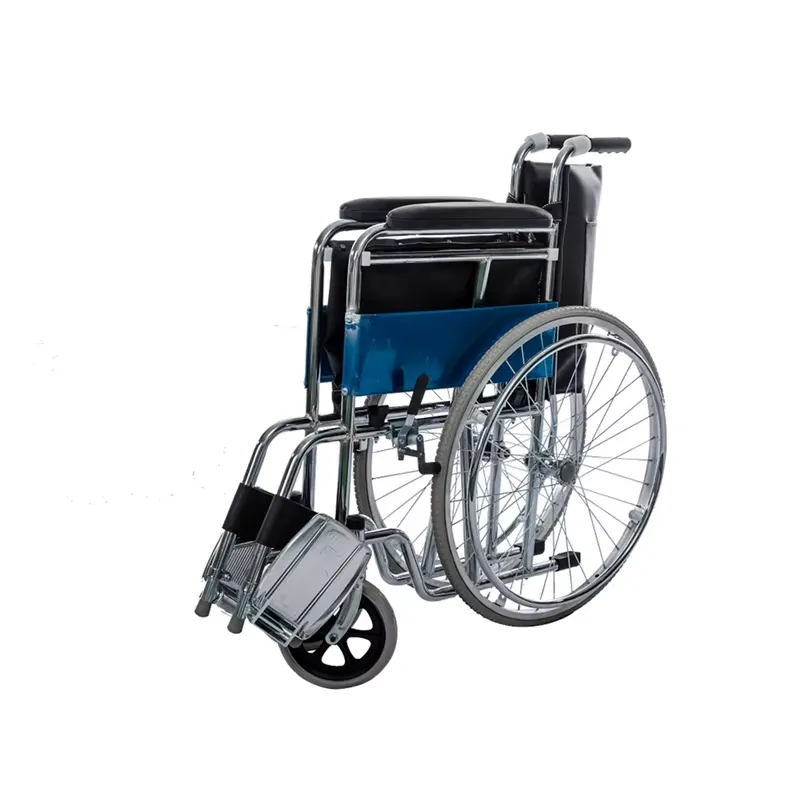
Manual wheelchair wheels need the checks and care specified for their exact tyres, bearings, rims and casters. Visual inspection can flag damage or unusual movement but does not replace current instructions. Set a service route for concerns staff cannot resolve.
How should records be kept?
Log the observation before guessing the cause. Use the AryMD product range to identify the correct chair page, then ask for its current care guidance. Record the affected wheel, date and observed behavior without inventing a diagnosis.
- Follow model-specific care directions.
- Record damage or unusual wheel movement.
- Refer uncertain repairs to qualified service staff.
| Record | Value |
|---|---|
| Observed symptom | Targets the review |
| Confirmed service action | Keeps follow-up clear |
A concise service trail helps prevent repeated guesswork. Key Takeaway: You can keep wheel upkeep tied to the actual model.
What should a manual wheelchair wheels comparison chart show?
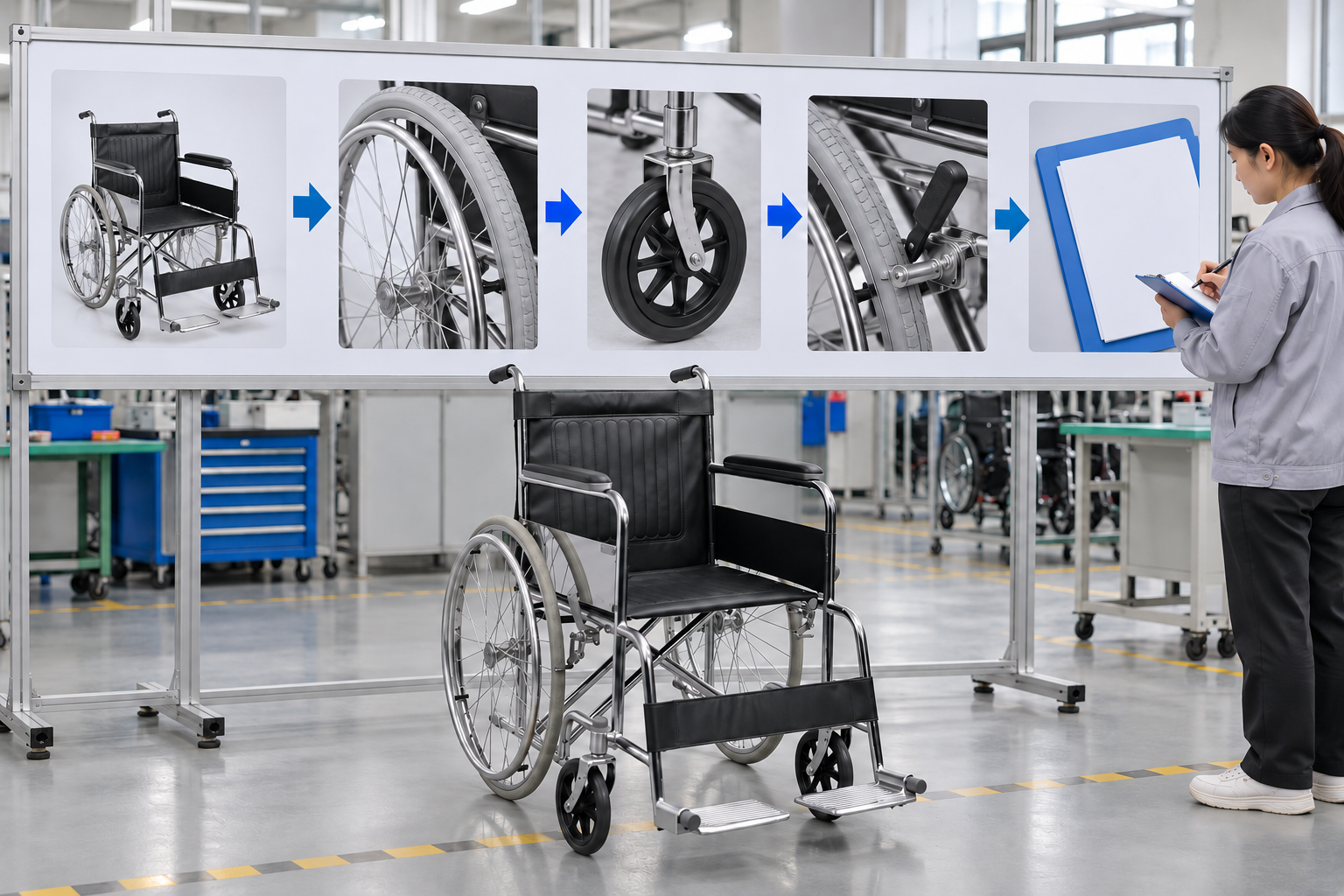
A manual wheelchair wheels comparison chart should show the complete chair, rear wheels, front casters, tyre and lock review, then the service record. Each stage needs a product reference and decision owner. A visual chart organizes questions; it is not test data.
Which checks belong on the purchase file?
Make the wheel specification traceable. Attach current part information, the intended route and any individual fit decision. The board image depicts those review steps without claiming measurements or performance results for the pictured chair.
- List fitted rear and front assemblies.
- Keep tyre, lock and route questions together.
- Record who approved the final configuration.
| Chart line | Evidence |
|---|---|
| Installed hardware | Current parts list and sample |
| Use and service | Fit, route and care record |
A chart helps only when its entries point to real product and user evidence. Key Takeaway: Your buyer can audit why a wheel package was accepted.
How can you order the right manual wheelchair wheels?
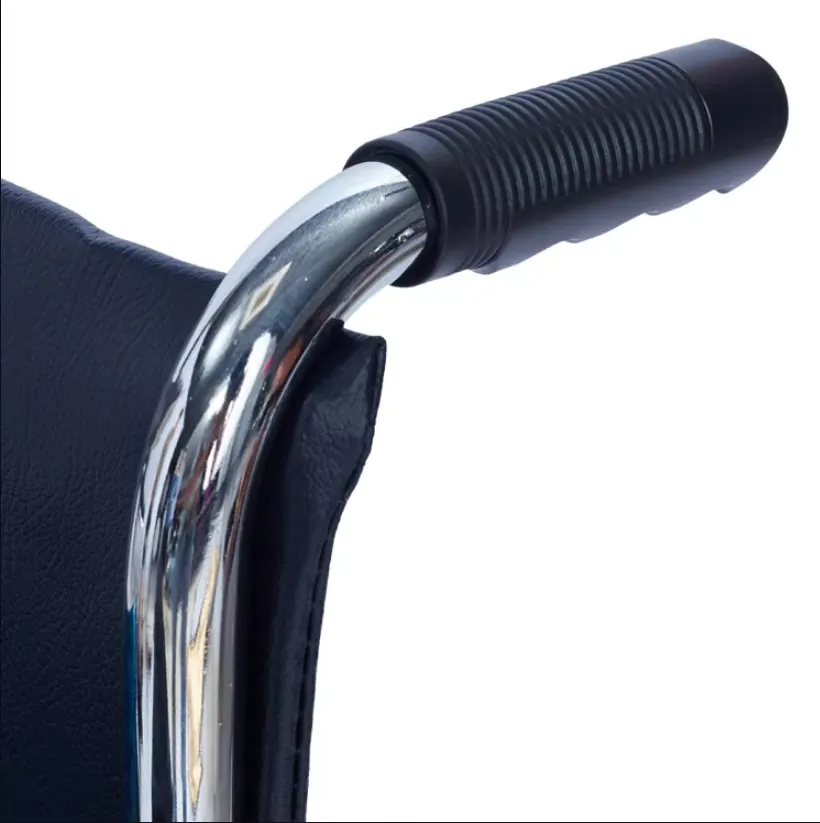
Order the right manual wheelchair wheels by specifying the complete manual chair, intended route, fitted wheel assemblies and required service support. Ask for current part references and the maker’s care instructions. Confirm the accepted configuration before purchase.
Ready to review a wheel package?
Send the chair and route brief together. Ary Medical can review available manual-chair options when you identify the intended user and product setup. Keep individual fit decisions and local route checks with the final quote.
- Send exact chair and wheel identifiers.
- Describe route and propulsion needs.
- Request current parts and service information.
| Your brief | Supplier response to request |
|---|---|
| Chair and wheel setup | Matching available configuration |
| Care and replacement needs | Current instructions and part scope |
The right answer requires more than a wheel diameter. Key Takeaway: For model-specific options, contact us. Ary Medical stands for wheel choices grounded in a complete, serviceable chair.
Frequently asked questions
Q1: Can I replace a rear wheel with one that looks similar?
No. Confirm the exact approved assembly and part reference for your model and revision.
Q2: What’s the best wheel choice for rough ground?
It depends on the maker’s intended use, the actual route and the user’s propulsion plan. Request a model-specific review rather than a blanket answer.
Q3: How do I know if a tyre needs air?
Check the exact fitted tyre and current instructions. A photo does not prove whether a tyre is pneumatic or state its care method.
Q4: Can a wheel change affect the lock?
Yes. Any approved change to the rear-wheel or tyre assembly may require a prescribed lock check.
Q5: Do front casters need separate attention?
Yes. Record their type, condition and behavior alongside the rear wheels during route and service reviews.