
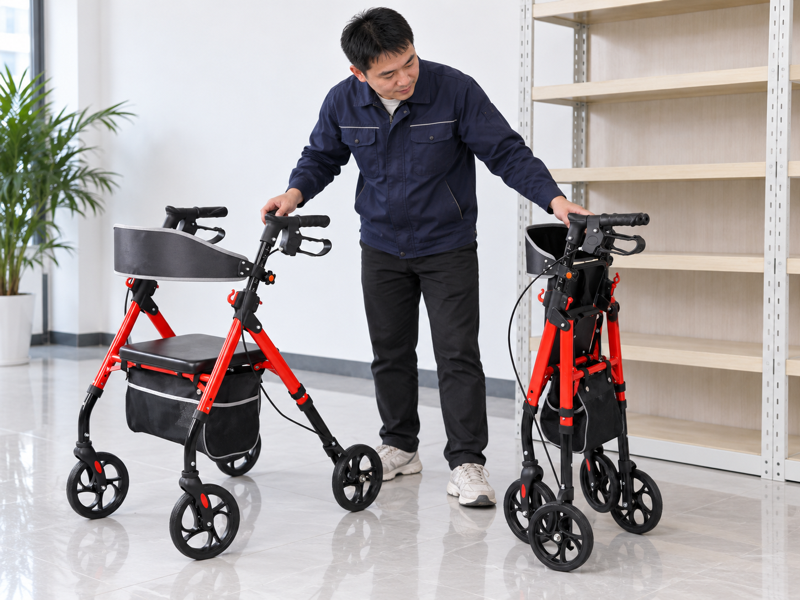
Choose a folding rollator by comparing verified open and compact dimensions with the space, handling method and user needs at the destination. A buyer can see a tidy folded photo yet discover that cables snag or the aid no longer fits the cupboard once a bag is loaded. Ask for exact model measurements, permitted folding instructions and a full reopening check before ordering.
What changes when a folding rollator closes?
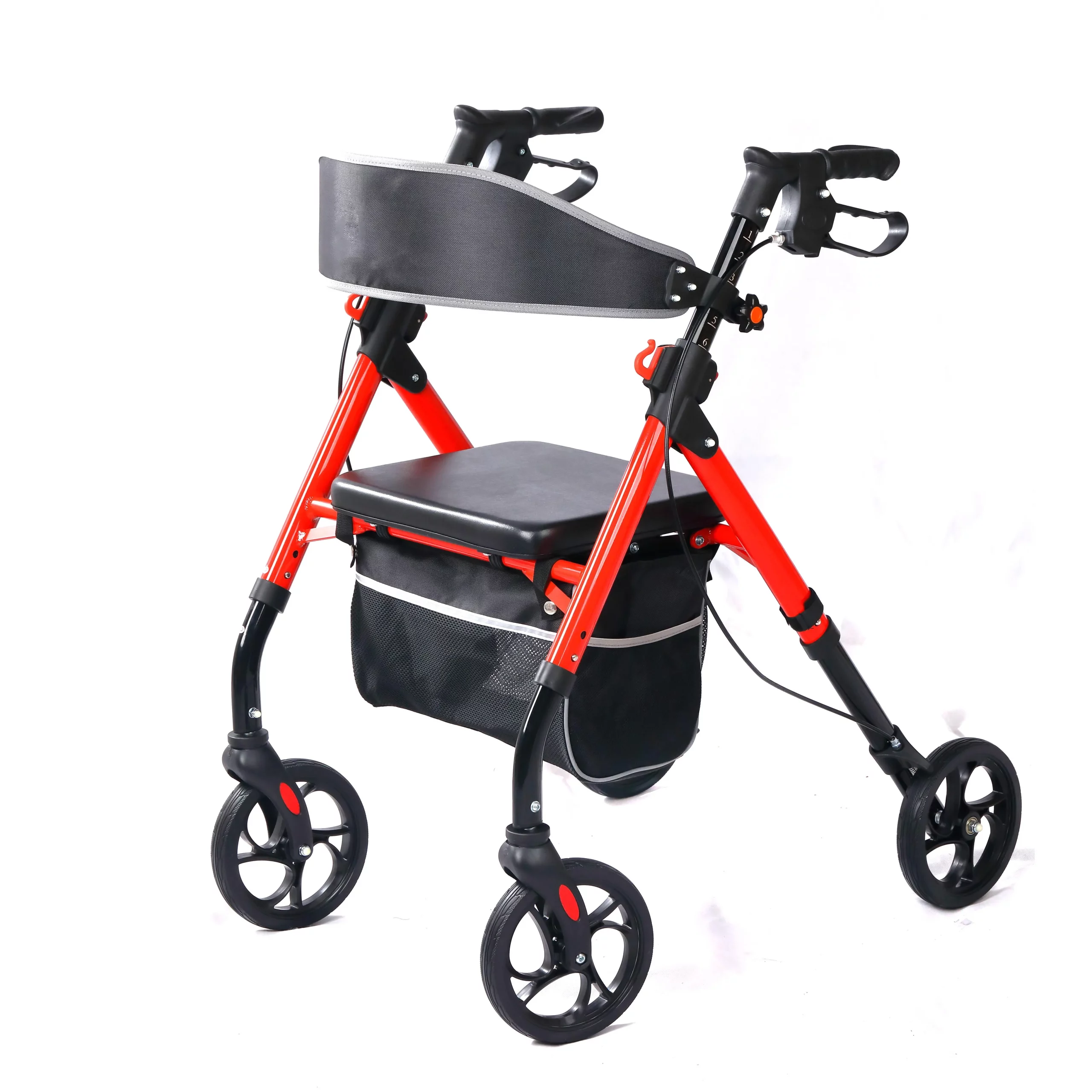
A folding rollator should reduce its stored footprint only as the exact frame design permits. The Shopping Walker gallery shows an open red four-wheel seated aid and a compact, partly collapsed view. One photograph does not establish the full folding sequence or final packed size.
Which parts should stay in the buyer's view?
Track the whole device, not just the frame width. Identify seat, back strap, hand grips, brake cables, bag and all four wheels in both configurations. Ask whether any approved loose parts need separate protection.
- Confirm the model and intended fold mode.
- List projecting or removable components.
- Request final stored dimensions from the maker.
| State | Buyer question |
|---|---|
| Open | Is the aid ready for use? |
| Compact | What is the verified storage footprint? |
A smaller silhouette can still have a vulnerable cable or handle. Key Takeaway: You can judge the package as a complete aid rather than a frame sketch.
Which folding rollator dimensions matter?
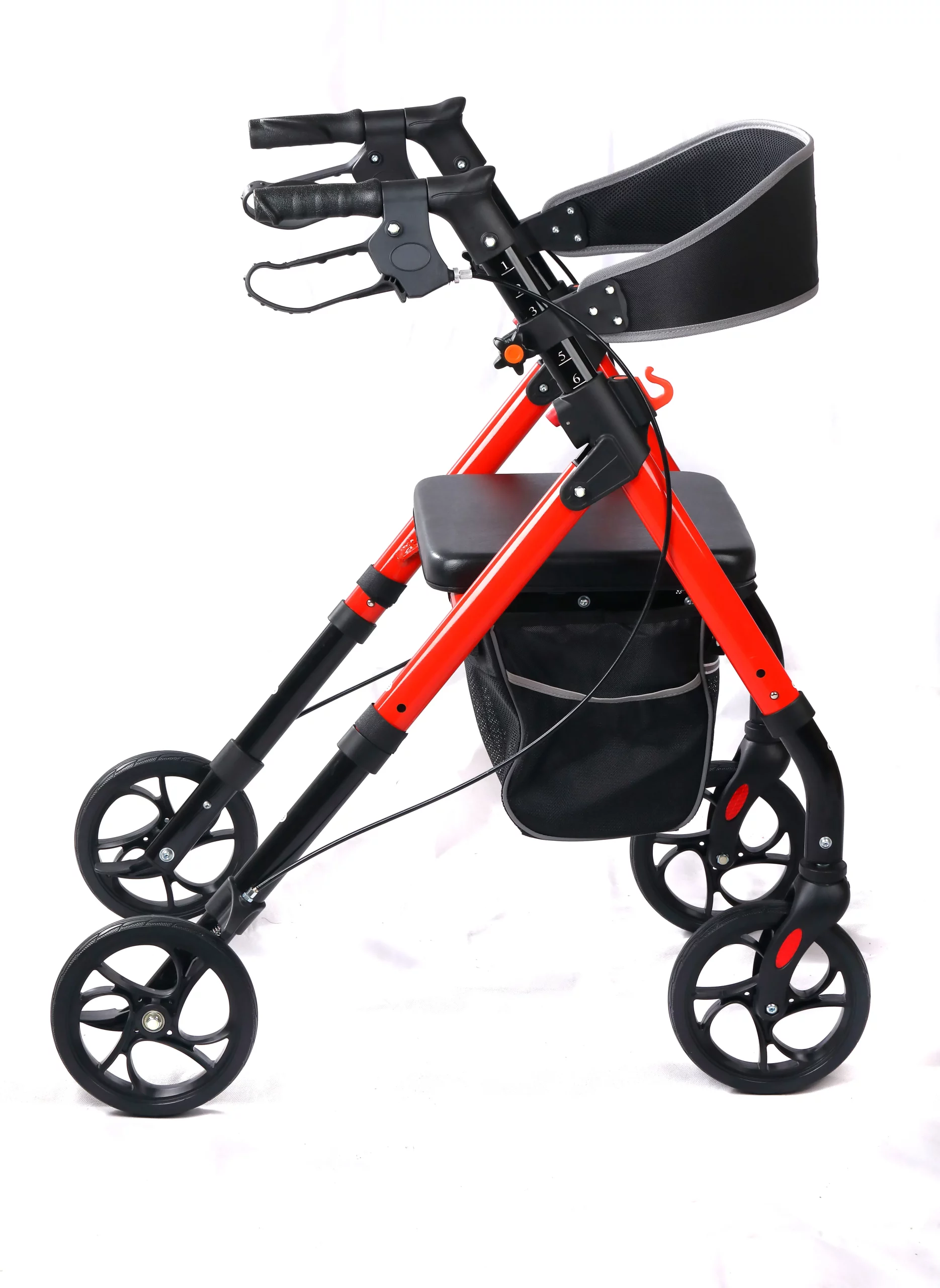
A folding rollator comparison needs both fully opened and stored dimensions measured by a stated method. Length, width and height may change differently when the frame closes. The photo alone does not supply any trustworthy figure.
What belongs on a specification request?
Ask where the tape starts and ends. WHO's assistive-product specification guide treats operating and folding dimensions as procurement information for rollators. Ask the product team for figures specific to this model and variant.
- Request open length, width and height.
- Request compact length, width and height.
- Identify whether bag or accessories remain attached.
| Dimension set | Use |
|---|---|
| Operating | Doorway and walking-layout review |
| Stored | Cupboard, vehicle and carton review |
Comparable measurements help avoid a surprise at delivery. Key Takeaway: Your team can test the storage plan against real dimensions.
How much space does a folding rollator need?
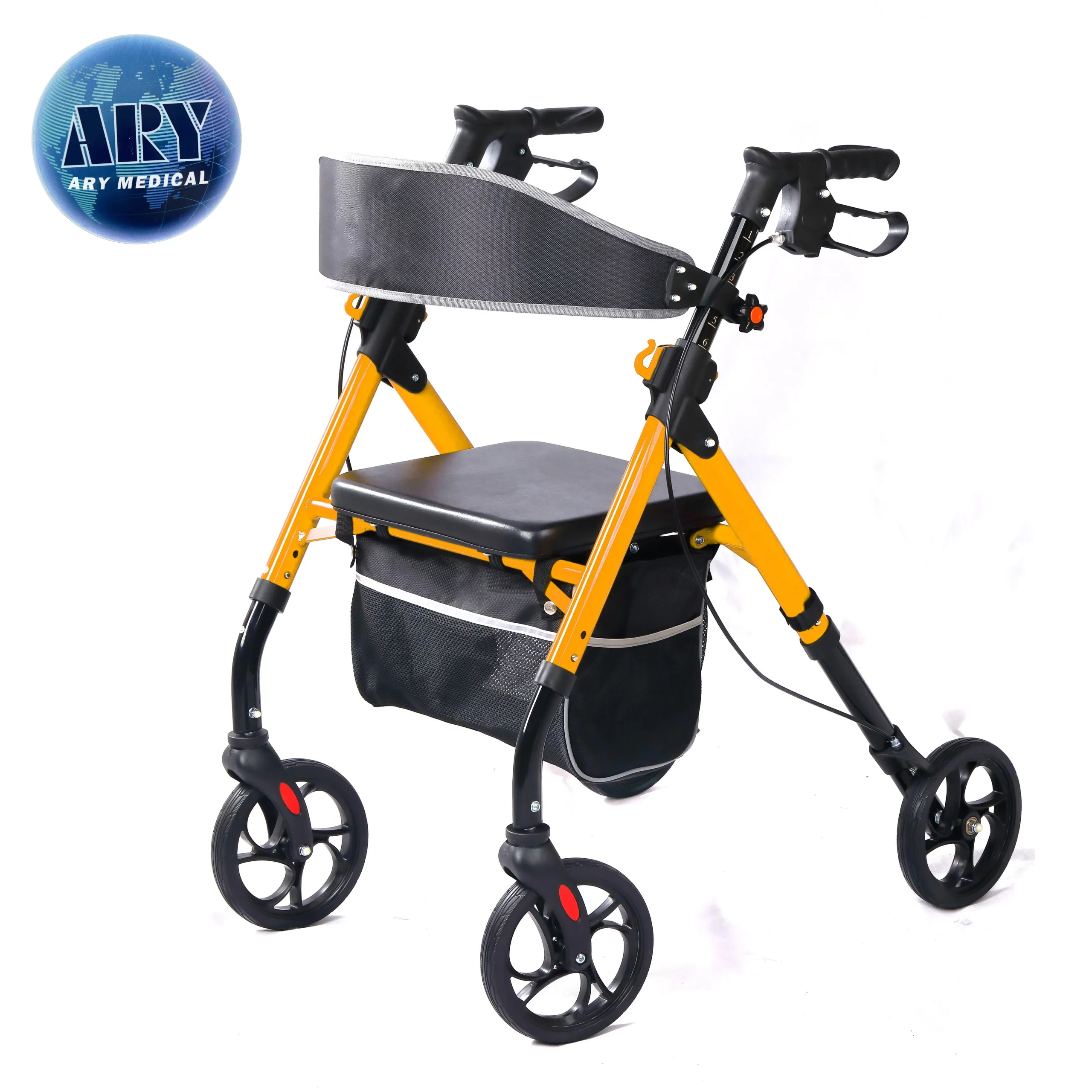
A folding rollator needs enough space for its verified stored shape and the handler's approved opening process. A closet that fits the folded frame may still block retrieval or cable clearance. Measure the actual storage spot and route to it.
What should a site check record?
Include the path into storage. List shelf opening, door swing, floor space and where the aid can be opened. Keep both use and storage layouts in the user's plan instead of assuming a single small footprint solves access.
- Measure the storage opening and approach.
- Check whether the aid can be handled without strain.
- Keep a place for any approved loose items.
| Place | Question |
|---|---|
| Cupboard or vehicle | Does the full compact package fit? |
| Open area | Can the aid be restored as instructed? |
A clearance problem often appears at the door, not on the shelf. Key Takeaway: Buyers can test the full handling route before purchase.
Can a folding rollator photo teach the fold?
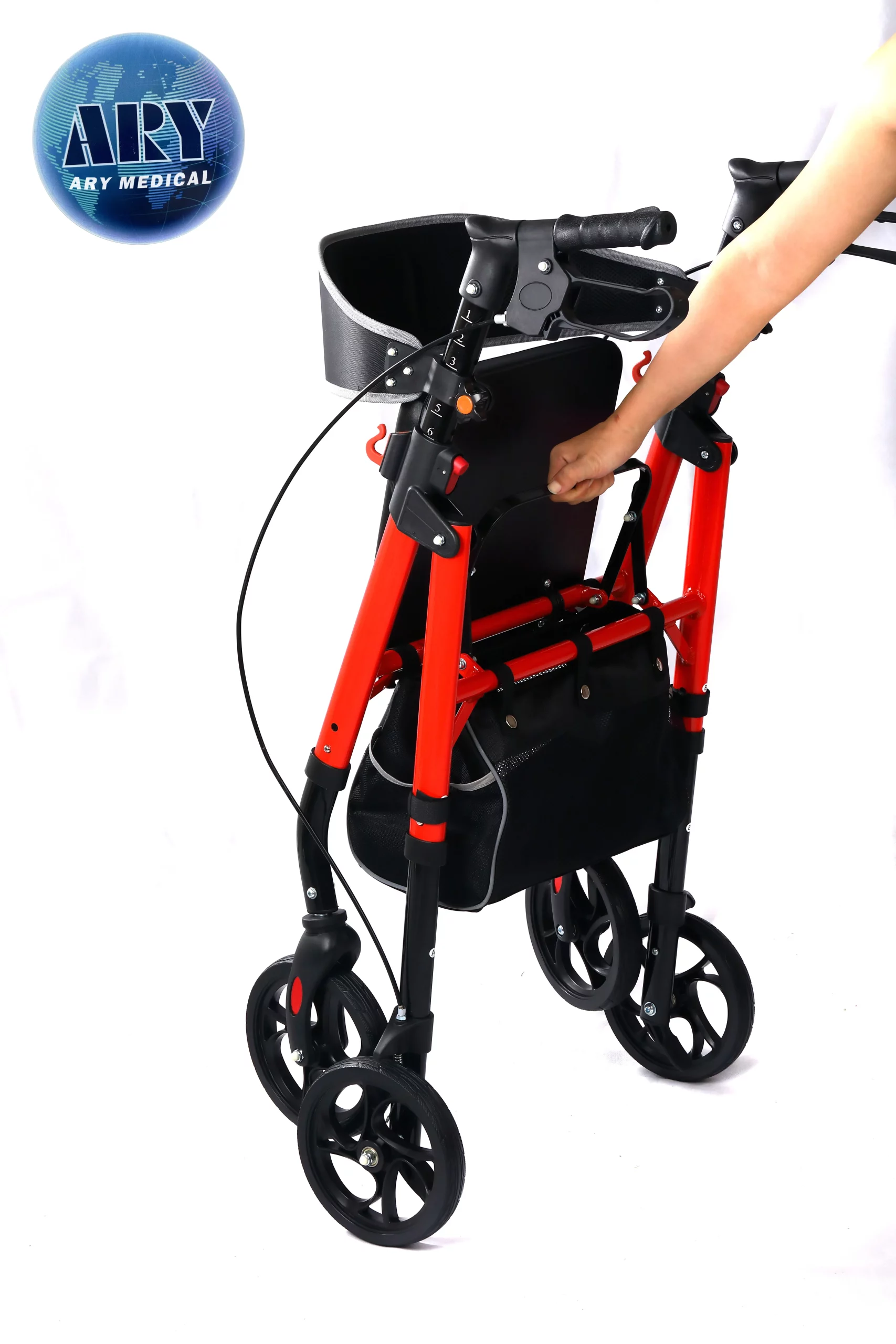
A folding rollator photo cannot teach the complete folding procedure. The source image shows a hand near an inner strap while the red frame is partly collapsed. Follow the current instructions for the exact model and train handlers on a sample.
What should a demonstration cover?
Use the maker's sequence in person. Ask where hands may safely go, what moves and how the compact state is secured. Oxford Health's four-wheel rollator leaflet says the aid should be fully open for use.
- Obtain the model's written fold and reopen steps.
- Identify pinch points and protected cables.
- Record the required ready-for-use checks.
| Photo evidence | Missing instruction |
|---|---|
| Partly collapsed frame | Complete fold sequence |
| Visible inner strap | Permitted hand placement and checks |
A single still image is a product view, not a user manual. Key Takeaway: Your training avoids an improvised folding routine.
How do folding rollator cables travel?
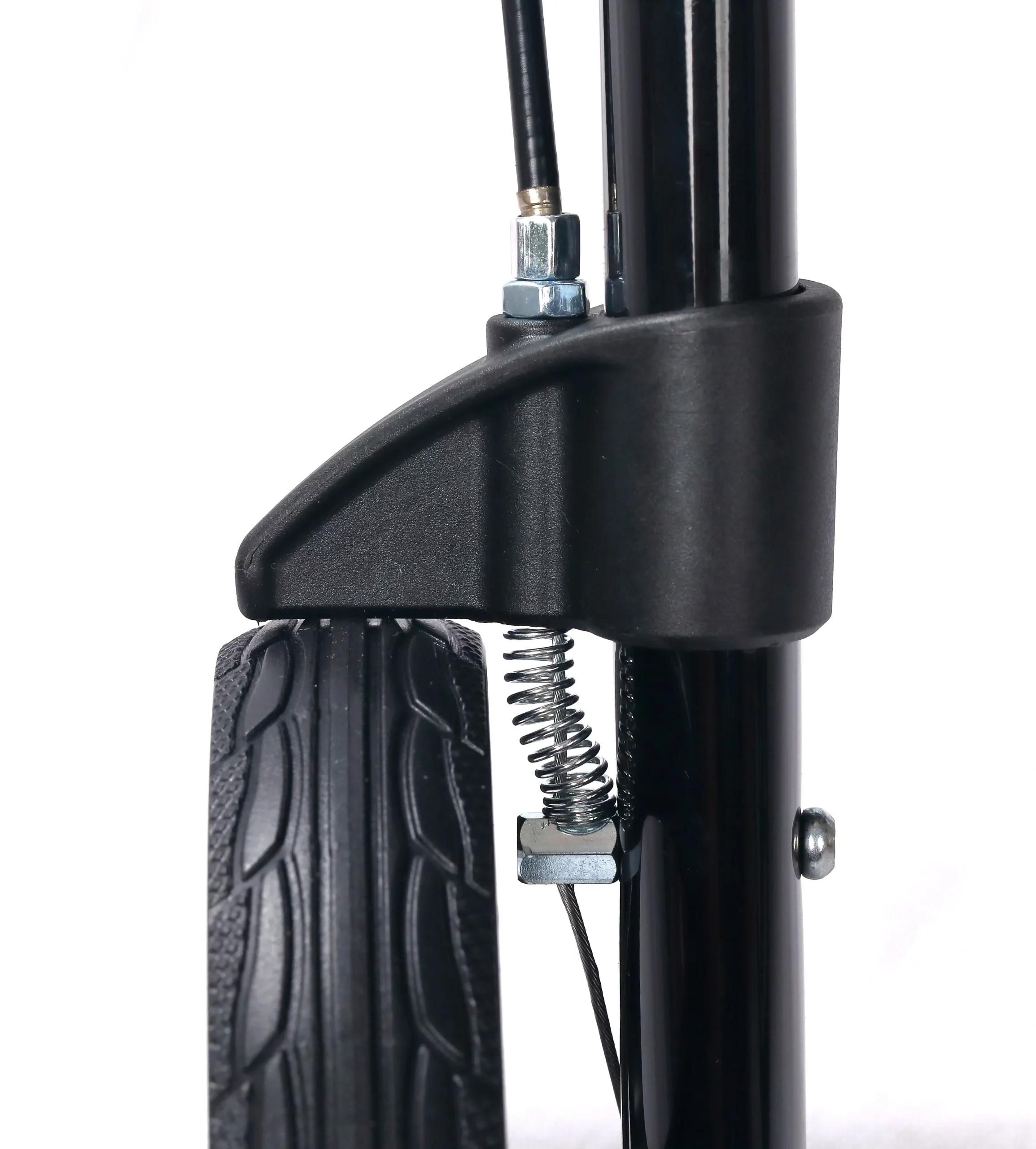
A folding rollator should retain its brake-cable routing within the arrangement approved for folding. The open product image shows cable lines near the rear wheel, but not their safe path through every move. Inspect the exact guide and sample after each handling change.
What should a receiving team notice?
Follow each line without pulling it. Look for obvious trapping, kinks or damage and refer concerns to trained service staff. Do not modify cable tension or routing based on an attractive folded photograph.
- Identify both brake-cable routes.
- Check for visible damage after transport.
- Perform the model's brake checks before use.
| Observation | Next step |
|---|---|
| Cable appears trapped | Stop and seek model-specific review |
| Cable looks clear | Still perform prescribed brake checks |
A visually neat cable is not proof of working brakes. Key Takeaway: Handling staff have a practical reason to inspect both sides.
Do folding rollator handles need rechecking?
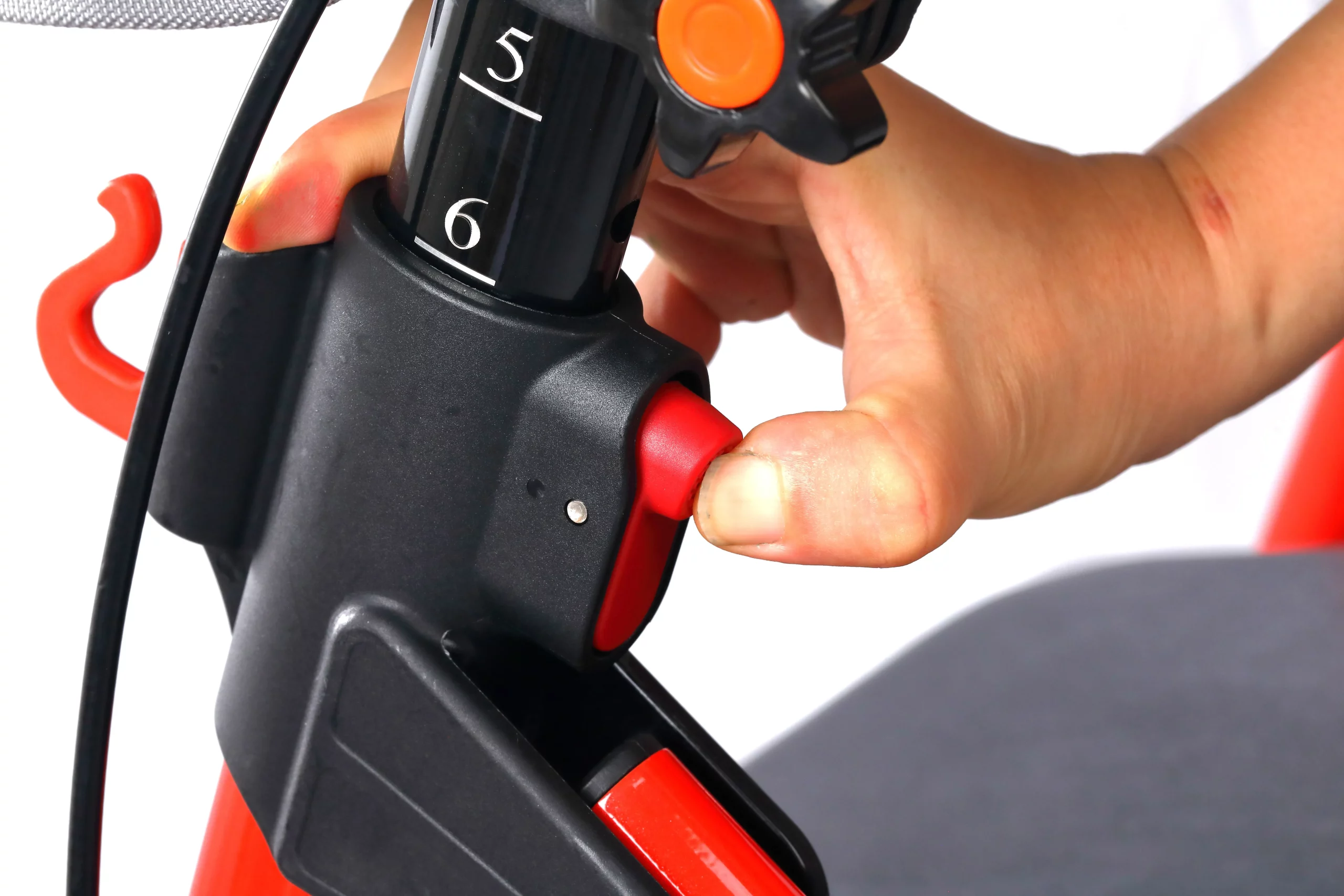
Folding rollator handles need the checks required after storage or transport, especially if a grip position or locking part changed. The Shopping Walker photos show adjustable posts, but no verified adjustment sequence. Restore the individual's approved setup.
Which settings should travel with the aid?
Keep fit details attached to the handover. Record left and right grip positions and who approved them. A different walking aid may use another retention method, so do not transfer instructions between models.
- Check the current model's handle locks.
- Compare both posts with the fit record.
- Review grip and brake reach after reopening.
| After storage | Review |
|---|---|
| Handle post | Approved position and secure retention |
| Control access | Reach to each brake lever |
A correct folded package is not automatically a fitted walking aid. Key Takeaway: The user's grip settings can survive a storage cycle.
How should a folding rollator seat be protected?
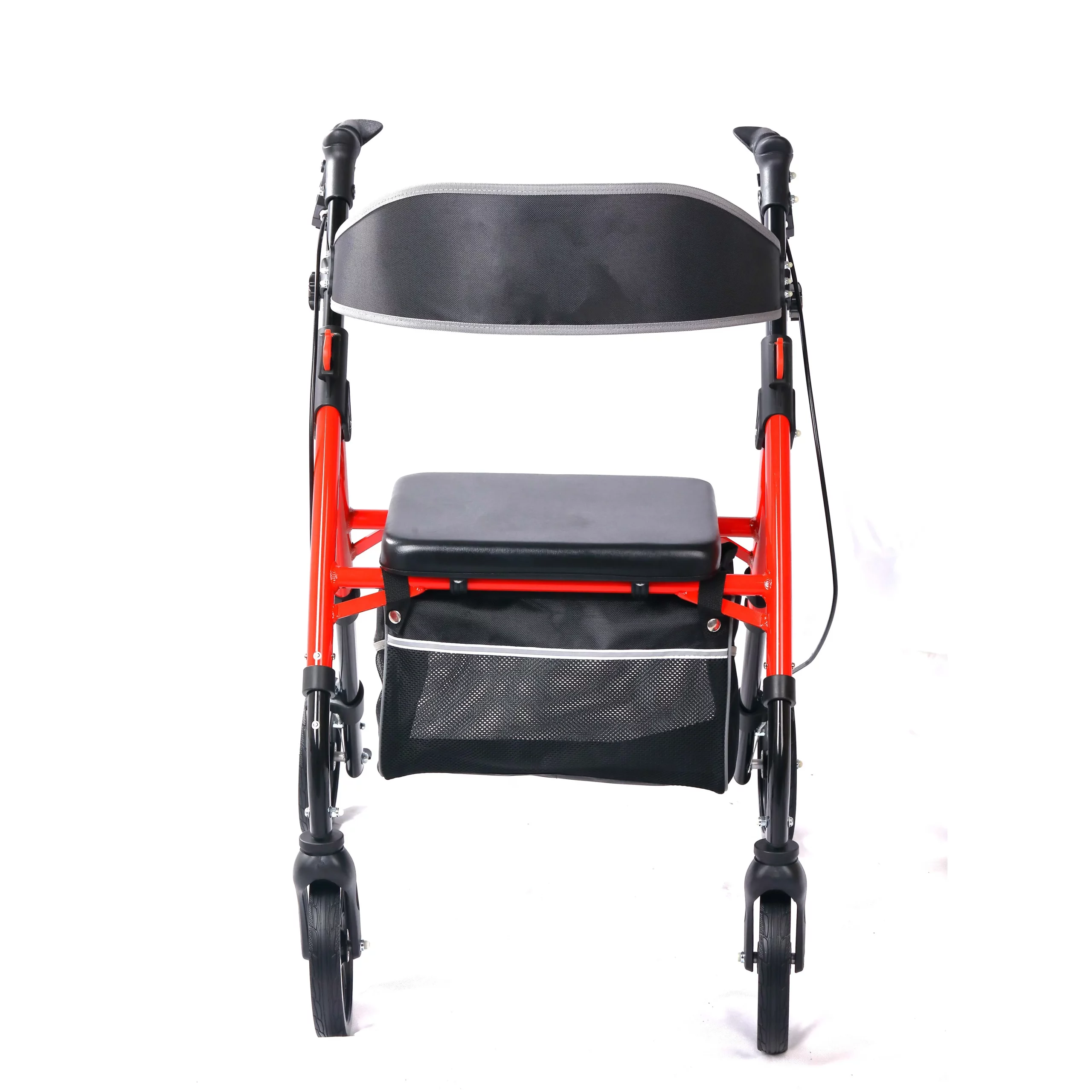
A folding rollator seat and back strap should be protected according to the model's handling instructions. The front photo shows a padded seat, fabric strap and bag, not a claim that any of these can carry a storage load. Keep attached items within approved limits.
What should you record for transport?
Protect parts that are not metal tubes. Ask whether the bag should be emptied or removed and how the seat is placed in the compact state. Do not let cartons, straps or loose accessories press against brake hardware.
- Identify fabric, padding and bag positions.
- Follow approved packing and handling steps.
- Recheck seat and strap before the next rest use.
| Component | Handling question |
|---|---|
| Seat and back strap | How should they be protected? |
| Under-seat bag | What may remain inside or attached? |
Soft goods can hide a cable or frame problem during packing. Key Takeaway: The stored aid can return with its rest features intact.
Where should a folding rollator be stored?

A folding rollator should be stored in a place permitted by the maker and practical for the user or handler to reach. Product-page route photos show grass, paving and a speed bump but say nothing about suitable storage surfaces. Base the plan on the real room and route.
Which environmental facts matter?
Walk the path between use and storage. Record weather exposure, threshold crossings, floor condition and the space needed to open the aid. A cane chair has different handling demands and should be assessed separately, not chosen from footprint alone.
- Identify a dry, accessible storage location if required by instructions.
- Check the approach and reopening area.
- Confirm the maker's environmental limits.
| Location issue | Buyer action |
|---|---|
| Tight access | Measure route and package |
| Weather exposure | Check model storage guidance |
The route collage is context, not proof of a suitable location. Key Takeaway: Storage planning can include the trip back into use.
What folding rollator records help handover?
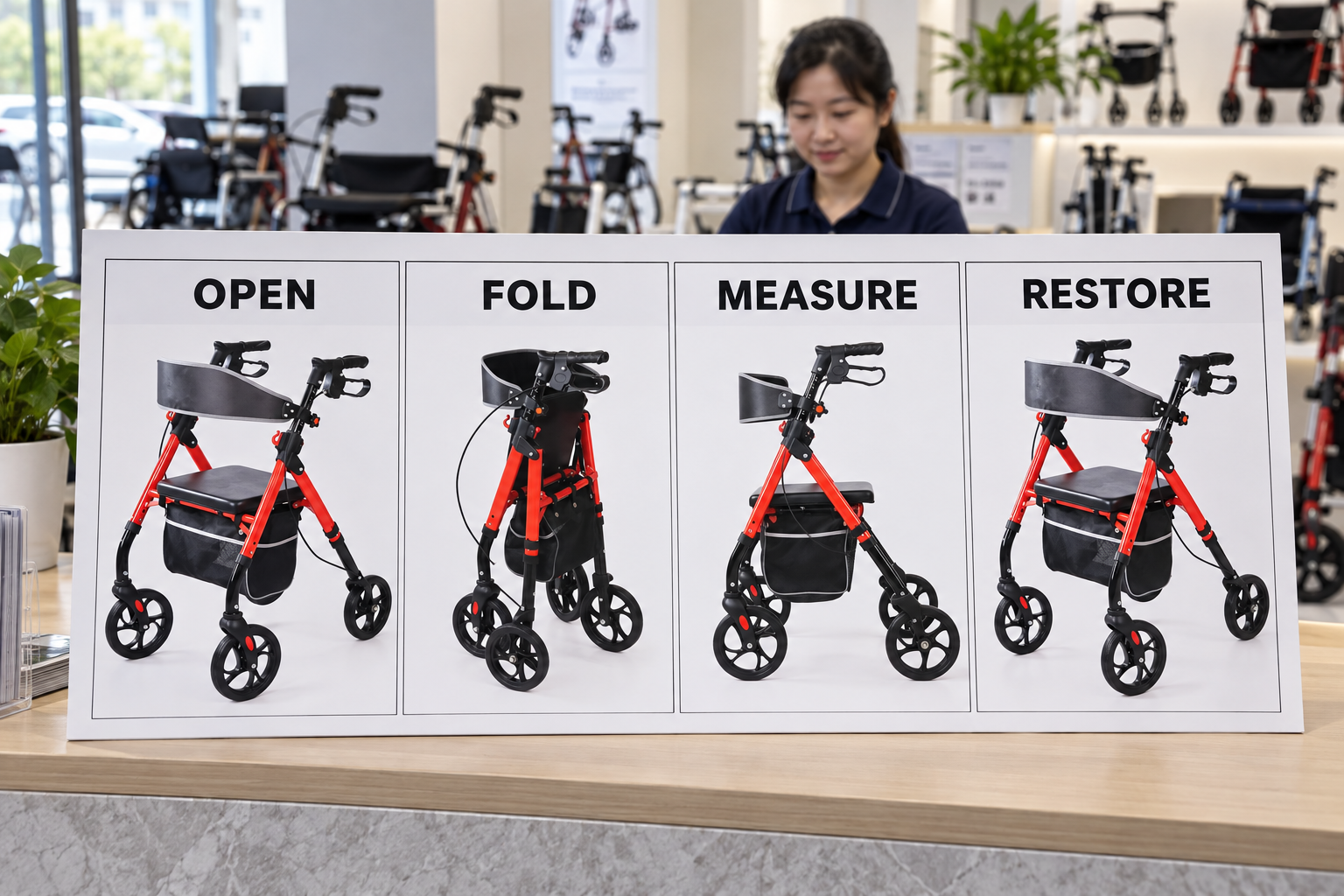
A folding rollator handover should include open and compact measurements, approved fold instructions, fit settings and post-storage checks. Keep the exact model and instruction version on the record. The chart above organizes questions rather than certifying a package.
Could another handler restore the aid?
Leave a record they can actually follow. Ask the supplier team for current product documents and parts support. Note unresolved handling concerns before the aid is marked ready for use.
- Store model-specific fold and reopen instructions.
- Record dimensions and loose-part scope.
- Add fit, brake and service contacts.
| Record | Purpose |
|---|---|
| Stored layout | Checks space and packing |
| Restoration guide | Returns aid to approved use state |
A brief handover pack keeps storage from becoming guesswork. Key Takeaway: The next colleague can restore the same setup.
How do you choose a folding rollator layout?
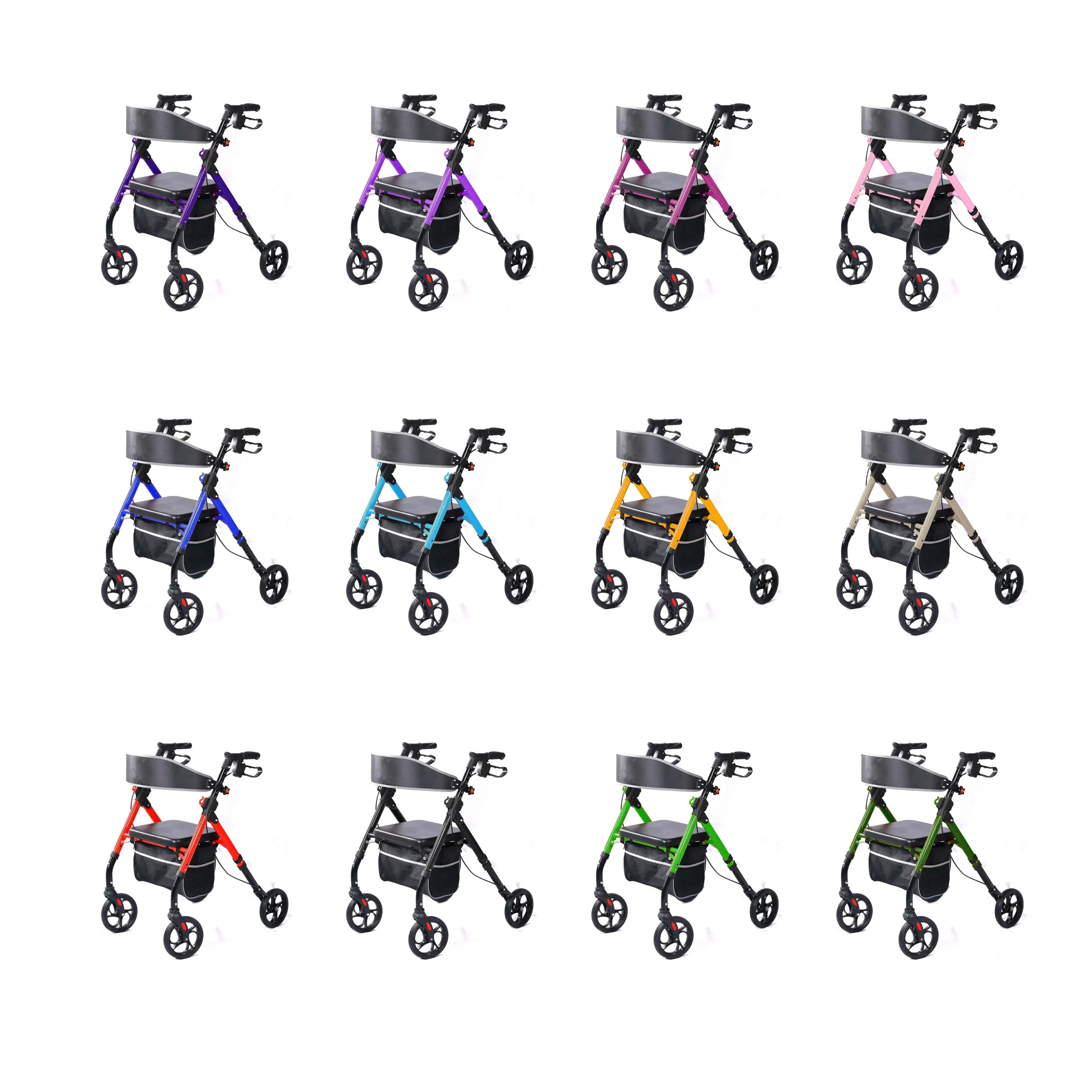
Choose a folding rollator layout by testing verified dimensions, approved handling and the user's route from storage to use. Recheck frame opening, handle fit and brakes on the actual sample. Avoid buying on a compact photo alone.
What belongs in the buying brief?
Send the physical constraints with the model question. Include measured storage opening, planned transport method and who will handle the aid. Ask for the model guide and a sample review if clearance is close.
- Request open and compact measurements.
- Identify handling and route conditions.
- Arrange a trained restoration check.
| Buyer input | Response to request |
|---|---|
| Storage space | Verified compact package |
| User and handler | Approved sample and instructions |
A measured layout can be checked again after delivery. Key Takeaway: For model details and samples, contact us. Ary Medical favors mobility equipment that stores clearly and can be restored as instructed.
Frequently asked questions
Q1: Can I follow a folding photo instead of the manual?
No. One image cannot show the full safe sequence; use the exact model instructions and training.
Q2: What's the best dimension to check before buying?
Check all three stored dimensions and the route into storage. Keep the maker's measurement method with the figures.
Q3: How do I know if a compact rollator is ready to use?
Confirm full opening, handle retention and required brake checks under its guide. A compact frame is for storage or transport.
Q4: Can I leave items in the bag while folding?
Only if the exact instructions permit it. Ask about bag removal, load and protection before handling.
Q5: Can I use the same fold steps on another model?
No. Folding mechanisms and cable routes differ; use each model's current guide.