

Choose electric walker brakes by verifying the exact control and wheel assemblies, then reviewing the maker’s prescribed checks for the supplied model. A buyer can see red hand levers in a photo yet still lack proof of their function, service condition or user training needs. That gap matters at handover and after repair. Ask for current instructions and a model-specific review record before treating any brake claim as settled.
What identifies electric walker brakes on this model?

Electric walker brakes on this model must be identified from the current maker instructions and supplied assembly list. The product photo shows red levers near the handles and wheel-side components, but does not establish their operating roles. Match the exact configuration first.
Which information starts the review?
Name the part before the function. Record the model and any revision, then map both handle assemblies and the related wheel-side hardware. Keep the current guide beside the sample.
- Identify the supplied model and revision.
- Record the visible levers and cable paths.
- Request the maker’s approved brake description.
| Record | Purpose |
|---|---|
| Model and assembly | Defines the equipment reviewed |
| Current instructions | Defines allowed operation |
A red lever is a visual clue, not a function label. Key Takeaway: You can ask the supplier about the right assembly.
How do electric walker brakes differ from other controls?
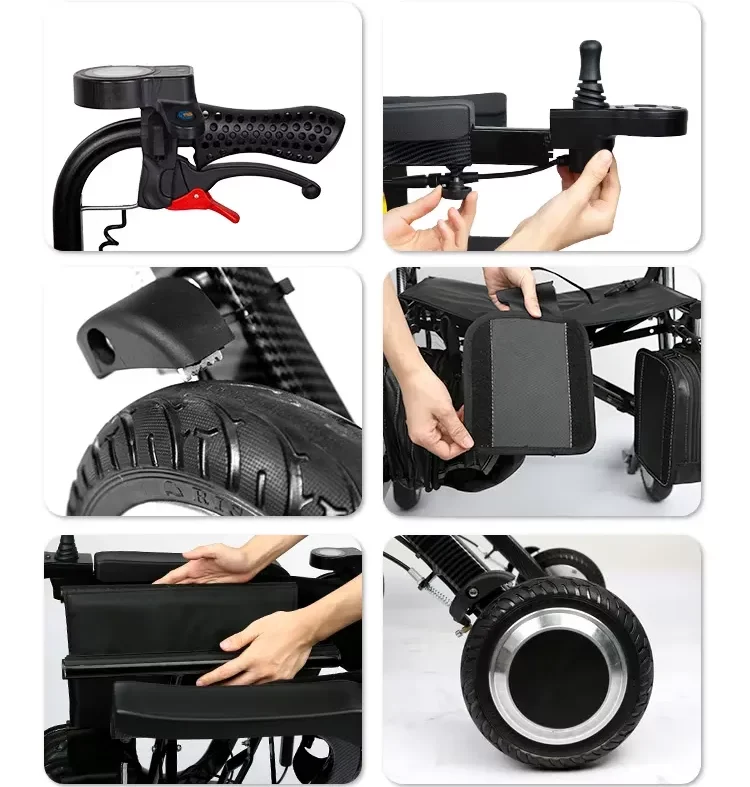
Electric walker brakes should be separated from the side-mounted joystick and any other control before a dealer explains the device. Different parts may have different roles in the approved setup. Do not infer a shared mode or sequence from their proximity.
What should a control map show?
Keep each operator task in its own row. The close-up collage can locate handle and side control parts. A manual Shopping Walker has another control arrangement, so its instructions cannot be copied here.
- Identify lever, joystick and any attendant parts.
- Ask which approved action belongs to each.
- Mark unknown roles for maker confirmation.
| Control area | Question |
|---|---|
| Hand levers | What does the maker assign? |
| Side control | How is its role documented? |
A control map reduces ambiguity without inventing an operating mode. Key Takeaway: Your handover can describe the confirmed product, not a guessed hybrid.
What cable details matter for electric walker brakes?

Cable details matter for electric walker brakes because the visible routing and wheel-side fittings belong to a specific assembly. A close-up cannot prove adjustment, braking force or stopping distance. Request the exact part references and prescribed checks.
Which observations help a technician?
Follow the route without adjusting it. Record the affected side, visible cable condition and current wheel assembly. Leave interpretation and repair to trained service staff.
- Identify left and right cable paths.
- Photograph the wheel-side connection.
- Report damage or unusual behavior precisely.
| Detail | Value |
|---|---|
| Cable route | Locates the affected assembly |
| Wheel-side fitting | Supports part matching |
A cable that looks intact may still require a model-specific review. Key Takeaway: Service staff receive useful evidence without a DIY test.
How should electric walker brakes be checked?

Check electric walker brakes only by the method prescribed for the exact model and configuration. The walking photo does not show a valid brake test. Ask the maker for the current check, service and stop-use procedure.
What should a buyer request before a demo?
Let the manual set the method. The UK assistive technology guidance flags poor training, missing documents and inadequate repairs as safety concerns. The AryMD team can provide available product information for a proper review.
- Request the current model instructions.
- Identify trained staff for the check.
- Record findings and unresolved questions.
| Check element | Source |
|---|---|
| Procedure | Exact maker instructions |
| Finding | Observed result and reviewer |
A showroom demonstration is not a substitute for a documented method. Key Takeaway: Your team can evaluate brake evidence without claiming an unperformed test.
Who should learn electric walker brakes use?

People using or assisting with electric walker brakes need instruction suited to their approved role and this device. Reach, understanding and setting can affect how controls are used. A product handover should document who has been trained.
What should training notes include?
Name the operator and the situation. Use a full-device review with current instructions. Do not teach a lever action inferred from the photo or reuse directions from another model.
- Identify user and attendant roles.
- Use the maker’s approved control sequence.
- Record questions that need follow-up.
| Training field | Reason |
|---|---|
| Operator role | Prevents mixed responsibilities |
| Model guide | Keeps steps current |
Visible hardware does not tell a new user what to do. Key Takeaway: Your handover can support the person and the product together.
How do electric walker brakes relate to seated access?

Electric walker brakes relate to seated access through control reach, seat arrangement and the approved user plan. The seated photo does not establish whether the red levers or side control suit that person. Review the whole configuration with trained personnel.
Which setup details belong together?
Keep seating and controls on one record. Identify the fitted seat, side support and reachable controls. Request permitted adjustments rather than moving a control by eye.
- Record the current seating layout.
- Review control reach in the intended use.
- Keep authorised changes with the model file.
| Setup field | Review point |
|---|---|
| Seat and support | Matches individual plan |
| Brake control access | Matches approved operating role |
A reachable part in a photo may not be reachable in practice. Key Takeaway: You can ask for the right product options before final fitting.
How are electric walker brakes protected when folded?

Protect electric walker brakes during folding and storage according to the maker’s exact directions. The folded product photo does not show cable clearances or the correct hand sequence. Verify those points before transporting a device.
What should the handler watch?
Trace the lever and cable through storage. Check permitted positions for handles, cable loops and side-mounted parts. After reopening, use the prescribed pre-use checks before handing it back.
- Follow model-specific folding guidance.
- Protect visible control and cable assemblies.
- Record reopening and service concerns.
| State | Review point |
|---|---|
| Folded | No forced or trapped component |
| Reopened | Required maker checks complete |
Compact storage can expose delicate controls to contact. Key Takeaway: Your transport plan can include brake hardware as well as the frame.
What if electric walker brakes feel doubtful?

If electric walker brakes feel doubtful, stop use and follow the model’s service escalation process. Do not infer that a lever is sound because it remains attached. Send a clear description of the concern with product identifiers.
How should a service report read?
Describe the symptom, not a diagnosis. Include the exact model, affected side and recent relevant handling. The AryMD contact page can route a product question while qualified staff decide the technical response.
- Record the observed behavior and context.
- Photograph the lever, cable and wheel area.
- Keep the device out of use if the guide requires it.
| Report field | Why it helps |
|---|---|
| Product and side | Targets the assembly |
| Observation | Guides a focused review |
A vague “brakes bad” report often delays repair. Key Takeaway: The service team can act on evidence from the actual device.
What should an electric walker brakes evidence chart show?
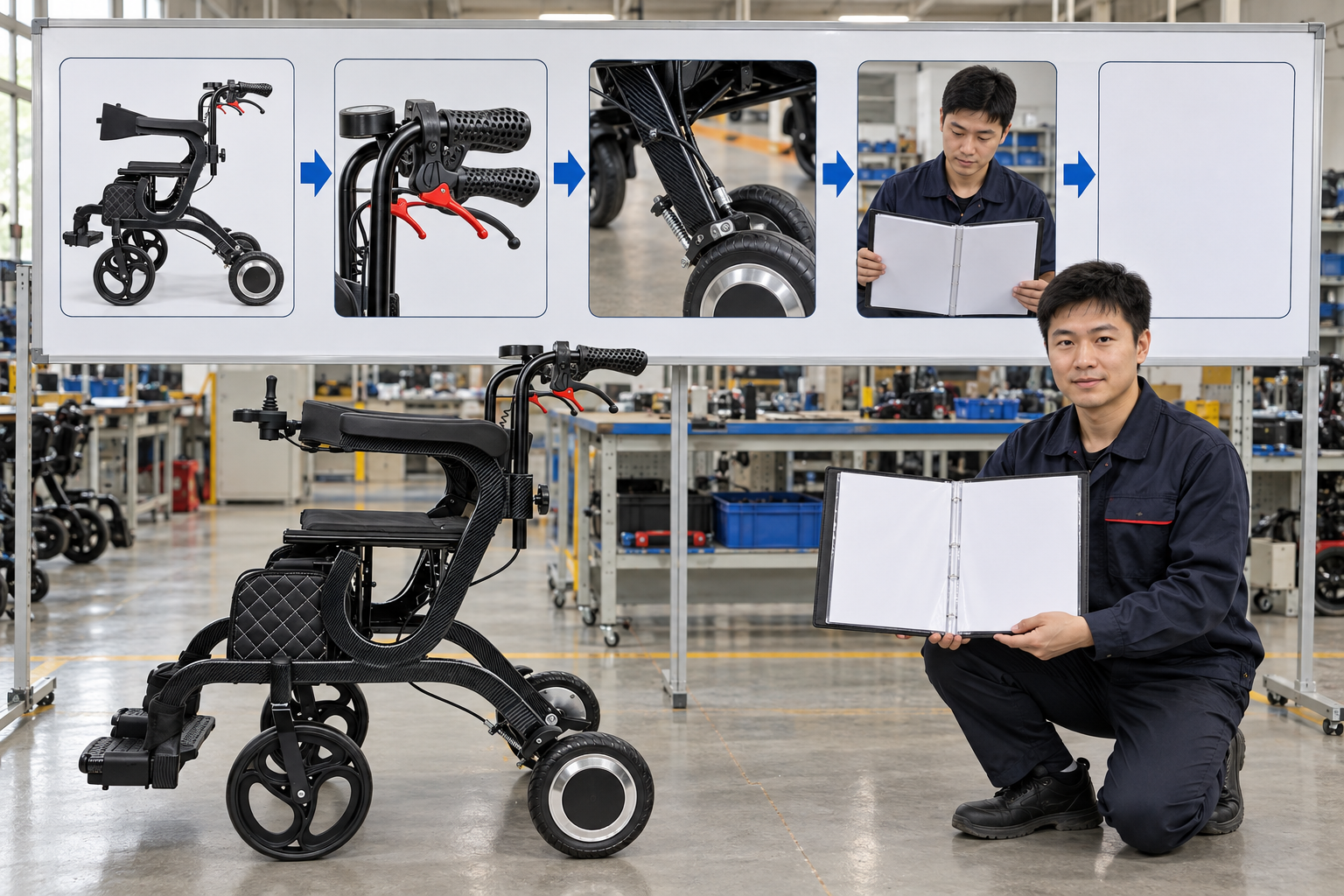
An electric walker brakes evidence chart should show model identity, lever assembly, cable and wheel relationship, maker check method and a blank pending record. It must not imply a passed brake test. Attach actual results only after qualified review.
How does a chart support buyers?
Leave the outcome box empty until checked. Use the visual stages to request missing data and plan the right service handoff. The chart itself is an illustration, not performance data.
- Identify the product and parts.
- Attach current check instructions.
- Name the reviewer for open findings.
| Stage | Evidence |
|---|---|
| Hardware | Parts and model record |
| Outcome | Qualified review result |
A blank final sheet prevents a picture from becoming a false approval. Key Takeaway: You can see exactly what brake evidence is still missing.
How do you request electric walker brakes information?

Request electric walker brakes information by sending the exact model, visible assembly photos and the use or service question to the supplier. Ask for current directions, compatible parts and any relevant review record. Confirm who will train the user.
Ready to close the brake brief?
Send one device-specific request. Ary Medical can review available model information and parts. A local trained team should complete the individual use and service decisions.
- Share model and assembly references.
- Ask for current check and service guidance.
- Record the training and escalation owner.
| Your brief | Supplier response to request |
|---|---|
| Control and wheel details | Matching current documents |
| Use or service concern | Relevant support information |
A targeted question brings back a targeted answer. Key Takeaway: For a model-specific review, contact us. Ary Medical believes brake claims should follow the actual device and a documented check.
Frequently asked questions
Q1: Can I judge braking from a red lever in a photo?
No. Identify the exact model and use its prescribed check method.
Q2: What’s the best evidence for a brake claim?
Use current maker instructions plus a documented check by qualified staff.
Q3: How do I know if a cable needs repair?
Report observed damage or unusual behavior and follow the approved service process.
Q4: Can I use a manual rollator brake guide here?
No. This powered device needs its own control and service instructions.
Q5: Should a doubtful device stay in use?
No. Follow the maker’s stop-use and service directions when braking is uncertain.