

Make an electric walker battery charging plan easier by confirming the exact device, battery and approved charger before anyone connects a cable. The product photos show a powered walker, but not a readable battery label or verified charging specification. A dealer who guesses from a similar-looking pack risks ordering an incompatible accessory. Request the current maker instructions and keep the battery, charger and handover records together.
What identifies an electric walker battery?

An electric walker battery is identified by the exact model and battery assembly records, not by the outer frame photo. Ask for the current product reference, pack identifier and included charger details. The black device image does not reveal battery chemistry or capacity.
Which facts belong on the order sheet?
Start with the matched set. Keep walker model, battery assembly and charger reference on one controlled line. If any item is unknown, leave it open until the manufacturer confirms it.
- Record exact powered walker model and revision.
- Request battery and charger identifiers.
- Keep current instructions with the set.
| Record | Why it belongs |
|---|---|
| Device and pack | Defines the matched assembly |
| Charger and guide | Defines approved charging method |
A familiar case shape is not a compatibility check. Key Takeaway: You can identify the actual set before buying a spare or planning charging.
How do you match an electric walker battery charger?

Match a charger for an electric walker battery to the manufacturer-approved pack and device combination. A connector that fits does not prove electrical compatibility. Use the current maker record and supplied charging accessory.
What should a dealer ask the supplier?
Verify charger and pack together. The FDA charging guidance advises using manufacturer-provided accessories for medical devices. That general safety advice does not supply this walker’s charger specification, so ask the maker for its exact approved part.
- Request the current charger reference.
- Confirm the associated battery and model.
- Reject unverified third-party substitutes.
| Match item | Evidence |
|---|---|
| Connector and charger | Maker-approved accessory record |
| Battery assembly | Exact model and pack information |
Physical fit is only one part of a safe charger match. Key Takeaway: Your procurement team can avoid a lookalike accessory.
When should an electric walker battery be charged?

Charge an electric walker battery on the schedule and sequence stated for its exact assembly. A photo cannot establish charging time, frequency or battery level thresholds. Keep the current instructions available at handover.
How do you turn instructions into a plan?
Write down the maker’s steps, not a universal rule. Ask the AryMD product team for the current guide and any model-specific cautions. Record who trains the user and who answers a charging question later.
- Locate the exact charging directions.
- Identify the approved accessory and connection point.
- Keep a support contact with the handover file.
| Planning field | Responsible source |
|---|---|
| Charge sequence | Current manufacturer directions |
| User handover | Trained local support |
A schedule belongs to a specific pack and device. Key Takeaway: You can hand over a usable plan without inventing a charging interval.
Where should an electric walker battery be charged?

Charge an electric walker battery only in a setting consistent with its maker instructions and general electrical safety. Keep the area dry, visible and clear of obvious hazards. A staged showroom photo is not proof that a particular socket or room is approved.
What should a site check include?
Review the place before connecting anything. The FDA advises charging devices with supplied accessories and inspecting them for damage. For this product, confirm all location and connection details in the manufacturer’s own guide.
- Review the permitted charging environment.
- Keep connectors and accessories dry.
- Know the response to damage or overheating concerns.
| Site question | Evidence |
|---|---|
| Location | Current maker instructions |
| Accessory condition | Visual check and service route |
Good placement supports the instructions but cannot replace them. Key Takeaway: Your team can prepare a charging area without claiming an unverified setup.
What damage needs an electric walker battery review?

Damage to an electric walker battery, its charger or connection point needs review under the relevant maker guidance. Do not charge or continue use when there are concerning signs. Report what is visible rather than guessing which internal part failed.
What should the report capture?
Record the symptom before any repair. Use photos of the affected area and the exact model reference. The walking-use photo shows the full device but cannot reveal the pack’s internal condition.
- Note heat, deformation or visible connector damage if observed.
- Identify the charger and pack involved.
- Follow the manufacturer’s stop-use and service process.
| Report item | Purpose |
|---|---|
| Observed concern | Targets the review |
| Device and accessory IDs | Locates the correct parts |
A clear report is safer than a guessed diagnosis. Key Takeaway: Your service team can investigate the right assembly.
How should an electric walker battery be stored?

Store an electric walker battery according to the exact battery and device instructions, including any transport or long-storage steps. The folded product view says nothing about pack chemistry or storage state. Ask the maker what remains fitted and what must be checked before use.
What belongs in the storage record?
Track both frame and battery. Use the walking-aids range for product context, then rely on this model’s own battery guide. Keep the approved accessory and care records with the device.
- Record permitted storage conditions.
- Identify any model-specific battery handling.
- Plan the required return-to-use check.
| Storage field | Review point |
|---|---|
| Device and pack | Approved stored configuration |
| Return to use | Current maker checks |
A compact frame does not explain its battery-care requirements. Key Takeaway: You can plan storage around verified instructions instead of assumptions.
How does an electric walker battery reach the user?

An electric walker battery reaches the user with the correct charger, current directions and a clear support contact. The seated product photo shows a person near the control, not evidence that charging was explained. Keep handover separate from product photography.
What should the user receive?
Make the matched set easy to identify. List the supplied pack and charger references alongside the model. Have trained staff review the exact instructions and record any unresolved question.
- Identify the device, pack and accessory.
- Provide current charging directions.
- Record the support and service route.
| Handover item | Use |
|---|---|
| Matched parts | Prevents charger confusion |
| Instructions and contact | Supports later questions |
A complete box is not a complete handover. Key Takeaway: The user can find the right directions when charging is needed.
What if an electric walker battery needs replacement?

Replace an electric walker battery only with a manufacturer-approved match for the exact model and revision. Do not borrow a pack from another powered aid because the connector appears similar. Service staff should follow the approved procedure.
Which information should travel with the request?
Send the old identity before the new order. The AryMD contact page can route model-specific part questions. Include photos of labels where permitted, plus the charger and device references.
- Identify installed pack and device.
- Describe the service concern.
- Request the approved replacement and instructions.
| Request field | Value |
|---|---|
| Pack and revision | Narrows compatible options |
| Service history | Helps explain the concern |
Replacement is a compatibility decision, not a visual match. Key Takeaway: Your dealer can order the right pack with fewer return cycles.
What should an electric walker battery chart show?
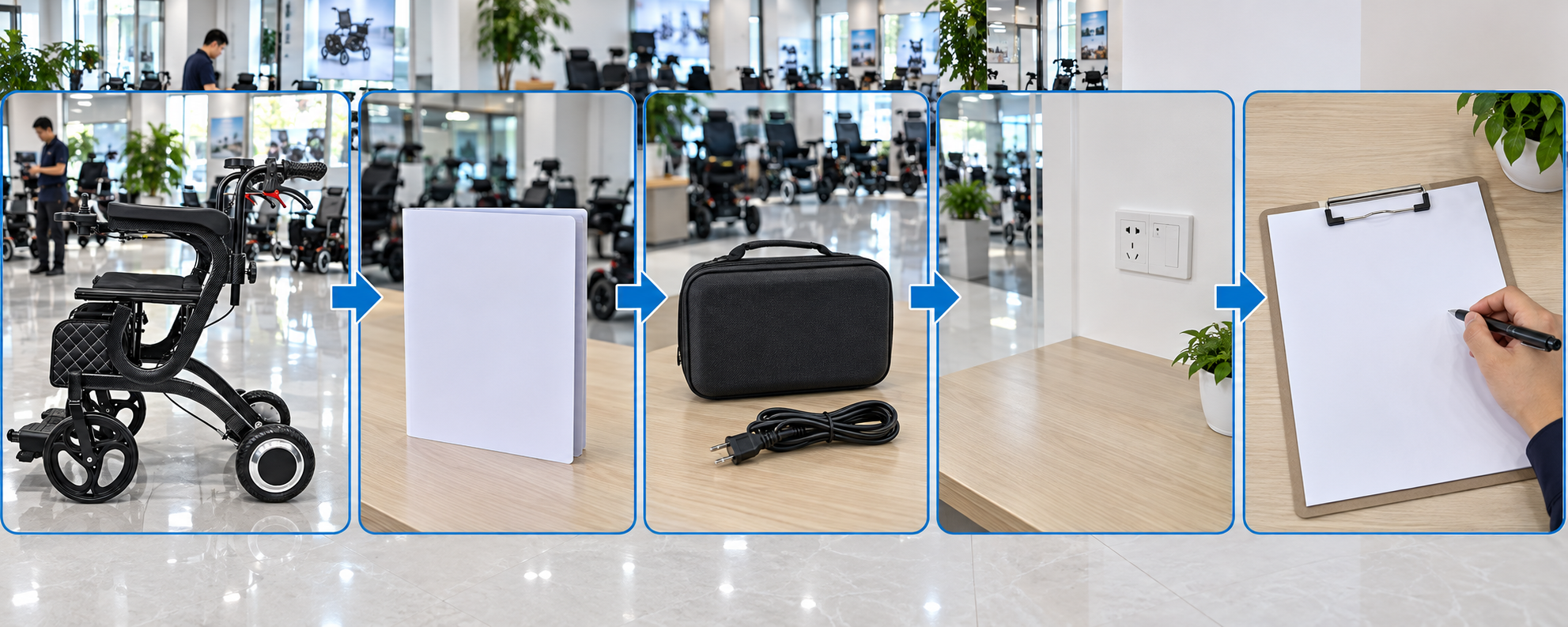
An electric walker battery chart should show device identity, pack reference, charger match, charging setting and a blank pending handover record. It should not display capacity, chemistry or a passed safety test without evidence. Each real field needs a source.
How can a buyer use it?
Keep unknown values blank. The visual stages point to documents and questions, not instructions to plug in a device. Attach current maker answers before release.
- Identify the matched model set.
- Attach charger and care directions.
- Assign unresolved fields for review.
| Chart line | Evidence |
|---|---|
| Product set | Current maker references |
| Handover | Named owner and open points |
A blank final card stops a guess from becoming a product fact. Key Takeaway: You can see what still needs confirmation.
How do you request an electric walker battery plan?

Request an electric walker battery plan by sending the exact model and charging questions to the supplier. Ask for approved pack and charger identifiers, current care guidance and replacement scope. Keep user training with the responsible local team.
Ready to close the charging brief?
Send one matched-set question. Ary Medical can review available product information for the confirmed device. Your team can then compare the response with the intended setting and handover needs.
- Share model and revision.
- Ask for pack, charger and care records.
- Record who provides user support.
| Your brief | Supplier response to request |
|---|---|
| Model and accessory IDs | Matching available information |
| Use and service needs | Current care and parts scope |
An exact brief reduces incompatible accessory orders. Key Takeaway: For a model-specific battery review, contact us. Ary Medical supports charging plans grounded in the actual device and its instructions.
Frequently asked questions
Q1: Can I charge this walker with a similar plug?
No. Use the charger approved for the exact device and battery assembly.
Q2: What’s the best charging schedule?
Follow the current manufacturer instructions for that model and pack; the photo cannot set a schedule.
Q3: How do I know if the battery chemistry is lithium?
Check the exact maker documentation or pack label. Do not infer chemistry from the product image.
Q4: Can I leave an accessory question for the user to solve?
No. Resolve pack and charger matching before handover, then provide current directions.
Q5: What should I do about a damaged connector?
Stop charging and follow the manufacturer’s service process. Do not improvise a repair.