

Choose a folding commode chair by verifying that the exact model really has an approved fold, then checking its measured stored size and the person's fit. A small bathroom can make a compact chair attractive, yet a photo of an open wheeled commode cannot show how it closes or where the bucket travels. A rushed order can leave no room for safe access or cleaning. Ask for current instructions, a sample and a room plan before purchase.
What makes a folding commode chair claim credible?
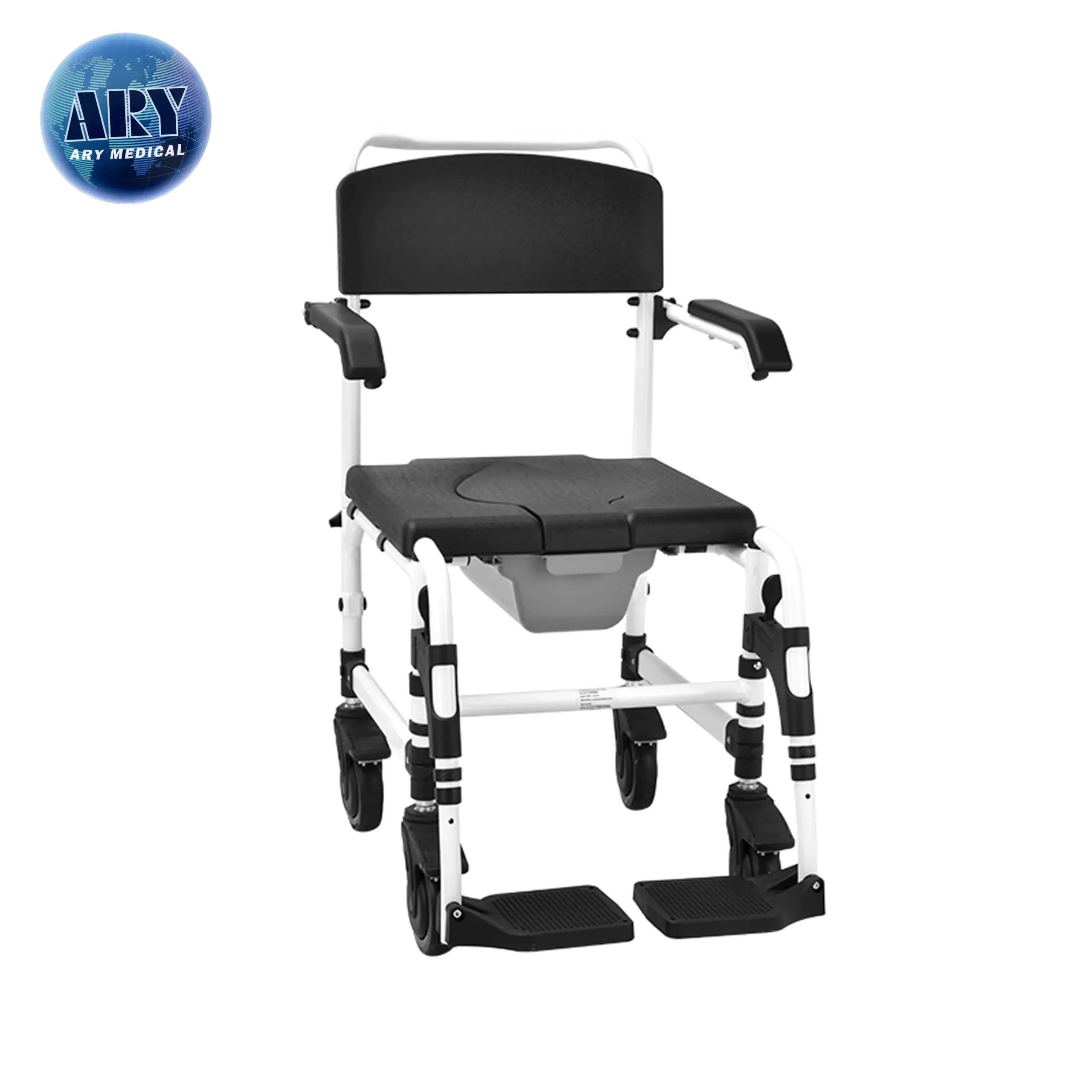
A folding commode chair claim needs the exact model's current instructions and a documented compact state. The pictured white-frame small-wheel chair shows a black seat, back, gray bucket and four casters in its open form. It does not prove that this variant folds.
Which record should start the enquiry?
Name the chair before discussing storage. Ask for the model code, revision, approved fold method and photos of the same unit in both states. Keep excluded variants separate from the product being quoted.
- Identify exact model and wheel layout.
- Request its current folding instructions.
- Confirm what remains attached when stored.
| Claim | Evidence |
|---|---|
| Foldable frame | Exact model guide |
| Compact size | Measured closed unit |
A generic folding category cannot verify this particular chair. Key Takeaway: Your buyer can distinguish a documented feature from a photo impression.
How much room does a folding commode chair need?
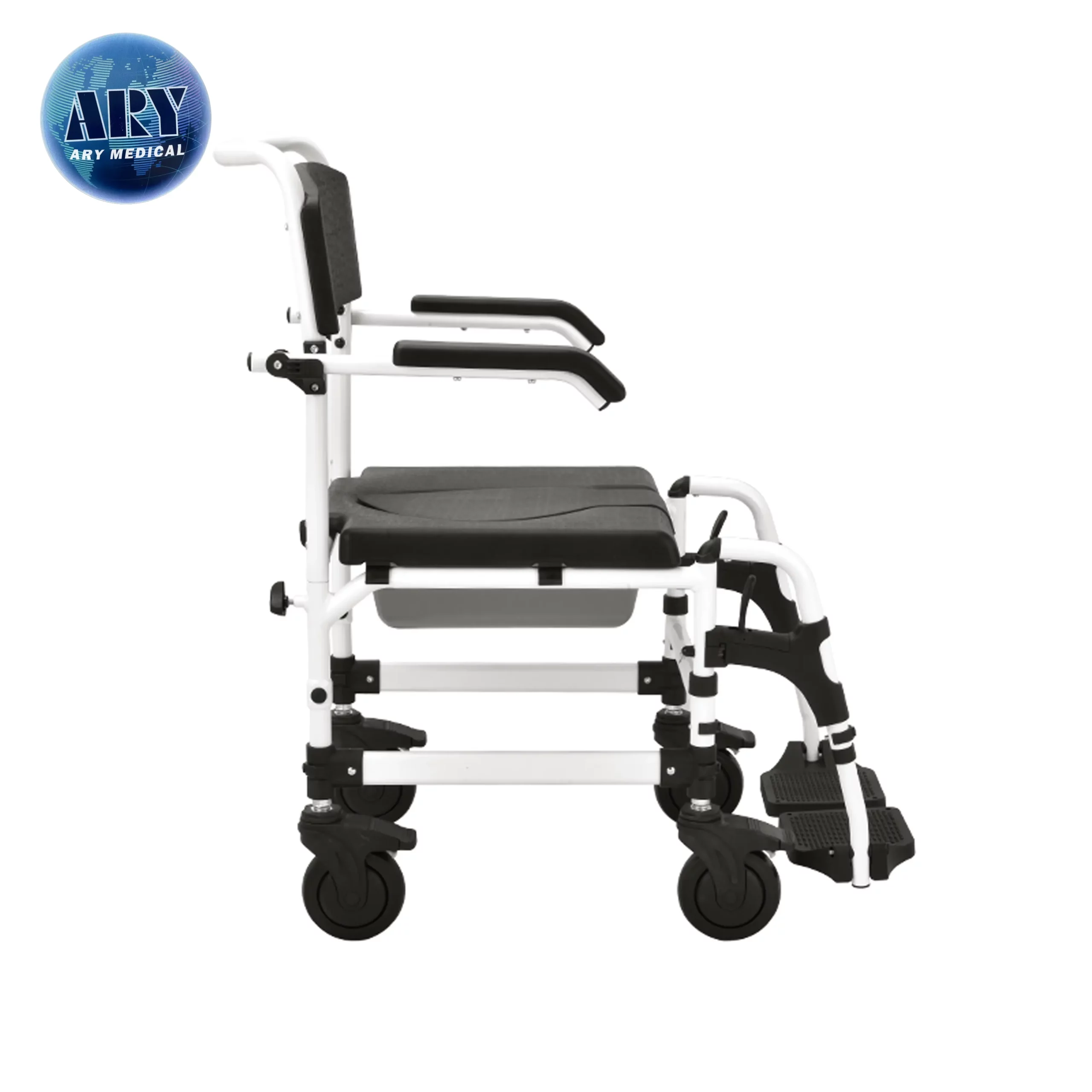
A folding commode chair needs measured access, transfer and storage space for its actual open and closed configurations. The side view shows arm supports and front footplates that may affect a narrow route. Compare the product range for options, then ask for model drawings.
What should a room survey record?
Measure the route the person will use. Record doorway, turning, transfer and bucket-service space with the responsible assessor. Do not infer clearance from a clean studio background.
- Measure relevant doors and approach paths.
- Keep open and stored dimensions separate.
- Account for care and bucket-handling access.
| Room point | Review |
|---|---|
| Door and approach | Measured route versus chair |
| Storage place | Verified closed state |
A chair that stores well may still be awkward in use. Key Takeaway: Your room plan can test both movement and daily care.
Can the pictured folding commode chair actually fold?
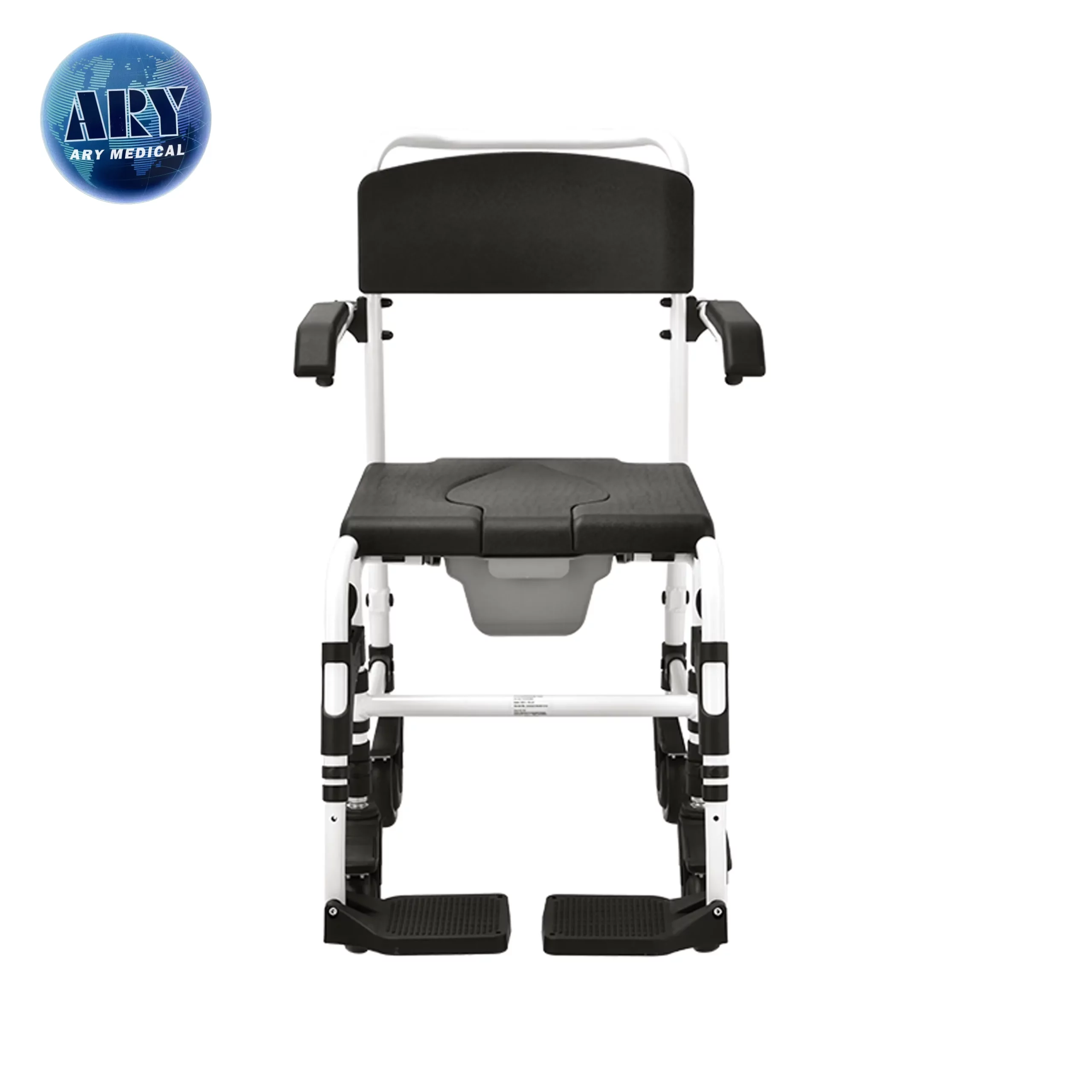
The pictured folding commode chair candidate should be called foldable only after its own maker instructions confirm that feature. A front view with small casters does not show a hinge sequence or stored state. Ask for the exact unit's controlled product record.
What should the supplier demonstrate?
Use an empty sample and the live guide. Trained staff should show only the permitted fold and reopening steps for the confirmed model. Record the result without turning a photograph into instructions for every wheeled commode.
- Match sample label to the guide.
- Observe the approved empty-chair demonstration.
- Record checks required after reopening.
| Demo question | Basis |
|---|---|
| Does it fold? | Maker guide for this model |
| Is it ready again? | Prescribed return checks |
A real demonstration can close a question the open photo cannot. Key Takeaway: Your listing will not promise a fold until the model proves it.
Who should assess folding commode chair fit?
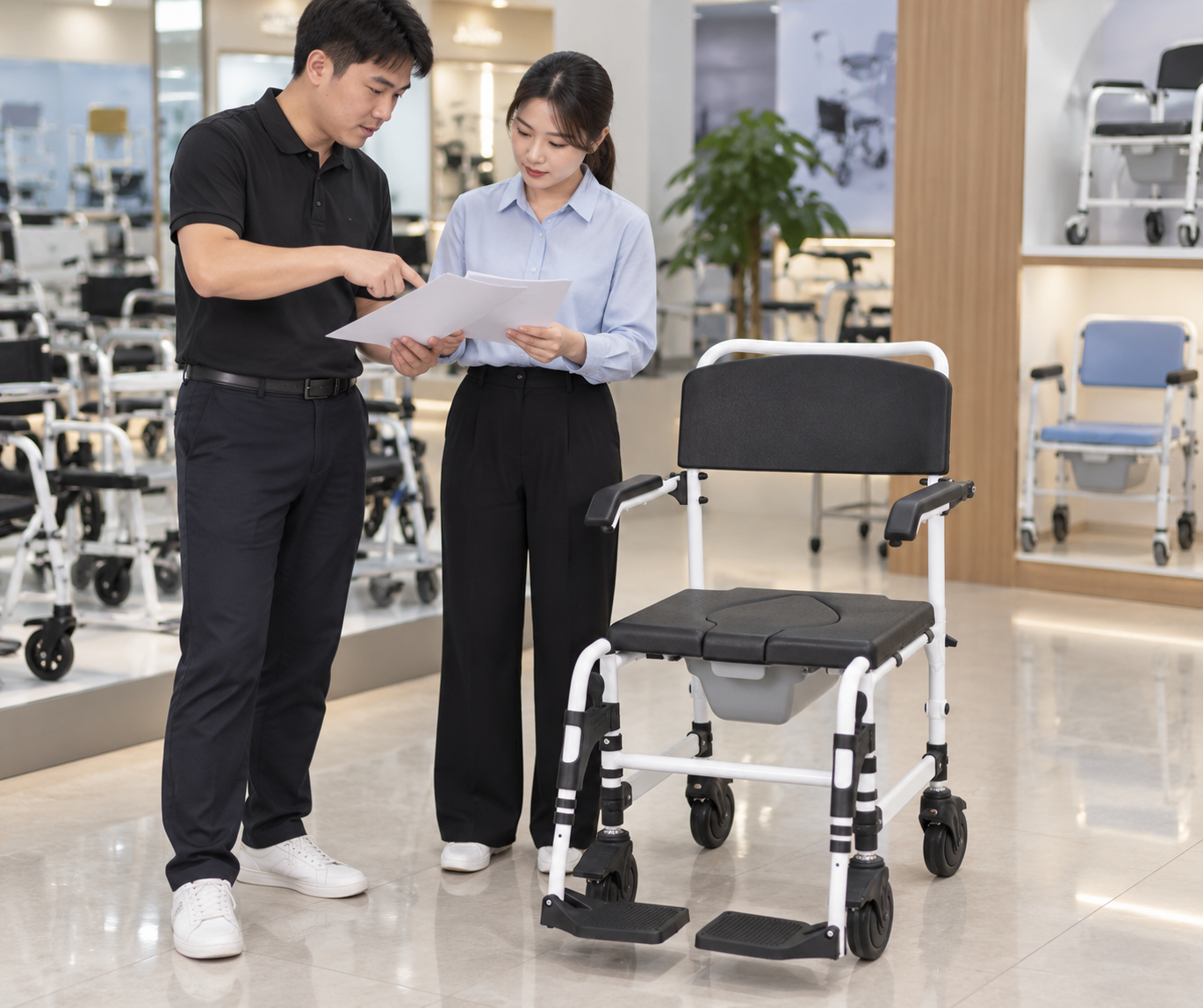
A folding commode chair fit review should consider the person's seated support, transfer plan, foot support and room access together. A supplier scene beside an empty chair is not an individual assessment. Related transfer aids also need their own intended-use review.
What belongs in a user brief?
Keep the person in the product decision. Record assessed support needs and the exact chair configuration proposed. WHO's assistive-product specifications describe procurement categories, not a universal fit prescription for this user.
- Identify the qualified fit reviewer.
- Review access and transfer conditions.
- Record the chair and user setup together.
| Input | Owner |
|---|---|
| Personal needs | Appropriate assessor |
| Product options | Exact supplier documents |
A compact carton cannot settle personal suitability. Key Takeaway: Your order can follow the assessed person and room.
Which wheels belong on a folding commode chair?
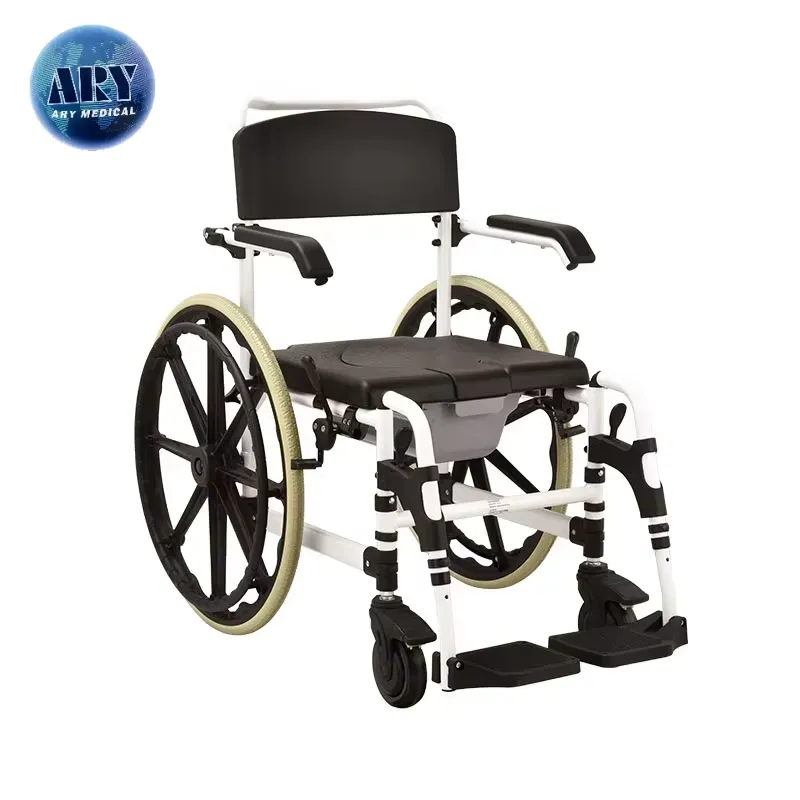
The wheels on a folding commode chair must match the exact variant being ordered and its maker instructions. The source media include a different chair with large rear wheels as well as the small-wheel version. No photograph proves that wheels or brakes interchange between them.
What should the quote separate?
Keep two wheel layouts on two lines. Request a named model for each wheel configuration, with relevant handling and service information. A seated-use or shower claim must not be copied from another variant.
- Identify front and rear wheel layout.
- Ask for variant-specific parts and brake data.
- Keep unsupported interchange claims out of the order.
| Variant | Ask for |
|---|---|
| Small-wheel chair | Its own current parts record |
| Large-rear-wheel chair | Separate setup and service guide |
Similar white frames can hide different assemblies. Key Takeaway: Your team can buy the intended wheel layout without assuming shared parts.
How should a folding commode chair handle foot supports?
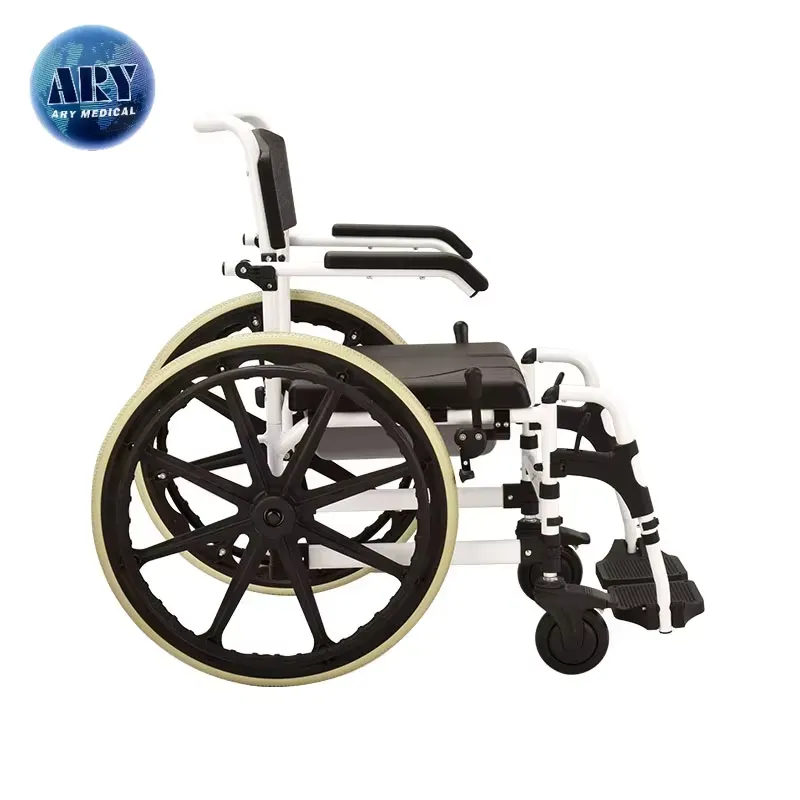
A folding commode chair should keep foot supports within the exact model's approved use and transfer plan. The large-rear-wheel side view shows black footplates but not their permitted movement or adjustment range. Ask the supplier for current instructions.
What should a demonstration avoid?
Show only what the maker permits. Use an empty chair to identify approved positions and the checks needed before use. The person's transfer method stays with the responsible assessor.
- Identify the actual foot-support assembly.
- Request permitted movement and check details.
- Record the final reviewed setup.
| Question | Source |
|---|---|
| Part movement | Exact model guide |
| Personal transfer | Individual care plan |
A visible footplate is not a transfer instruction. Key Takeaway: Your dealer can separate product features from personal technique.
Can a folding commode chair be used in a shower?
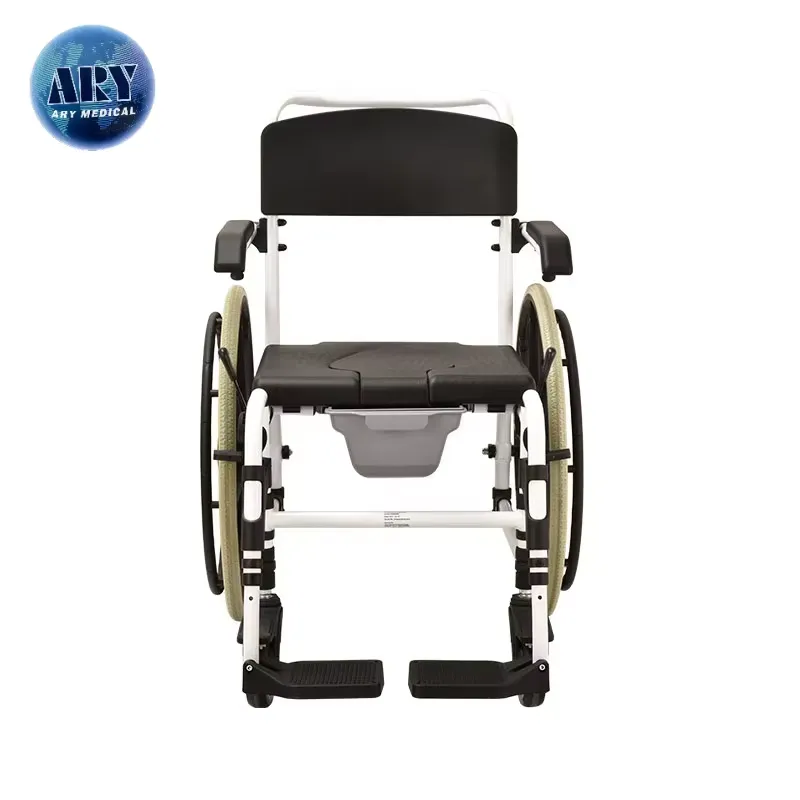
A folding commode chair should be described as shower-suitable only if the exact model's current instructions expressly permit that setting. The large-rear-wheel front photo shows a bucket and seat but cannot prove wet-use approval. Check wheel, frame and care limits with the maker.
What question should buyers ask?
Treat a multi-use name as a question. Ask for the permitted toilet, transfer and bathing contexts separately. Do not infer water resistance or floor suitability from the chair's white finish.
- Request approved settings for the exact model.
- Identify any conditions or excluded environments.
- Keep marketing claims tied to written evidence.
| Setting | Proof needed |
|---|---|
| Toilet use | Maker's intended-use record |
| Shower use | Explicit model permission |
A bucket is not a wet-room certificate. Key Takeaway: Your product page can avoid promising a use the supplier has not verified.
How does care affect a folding commode chair?
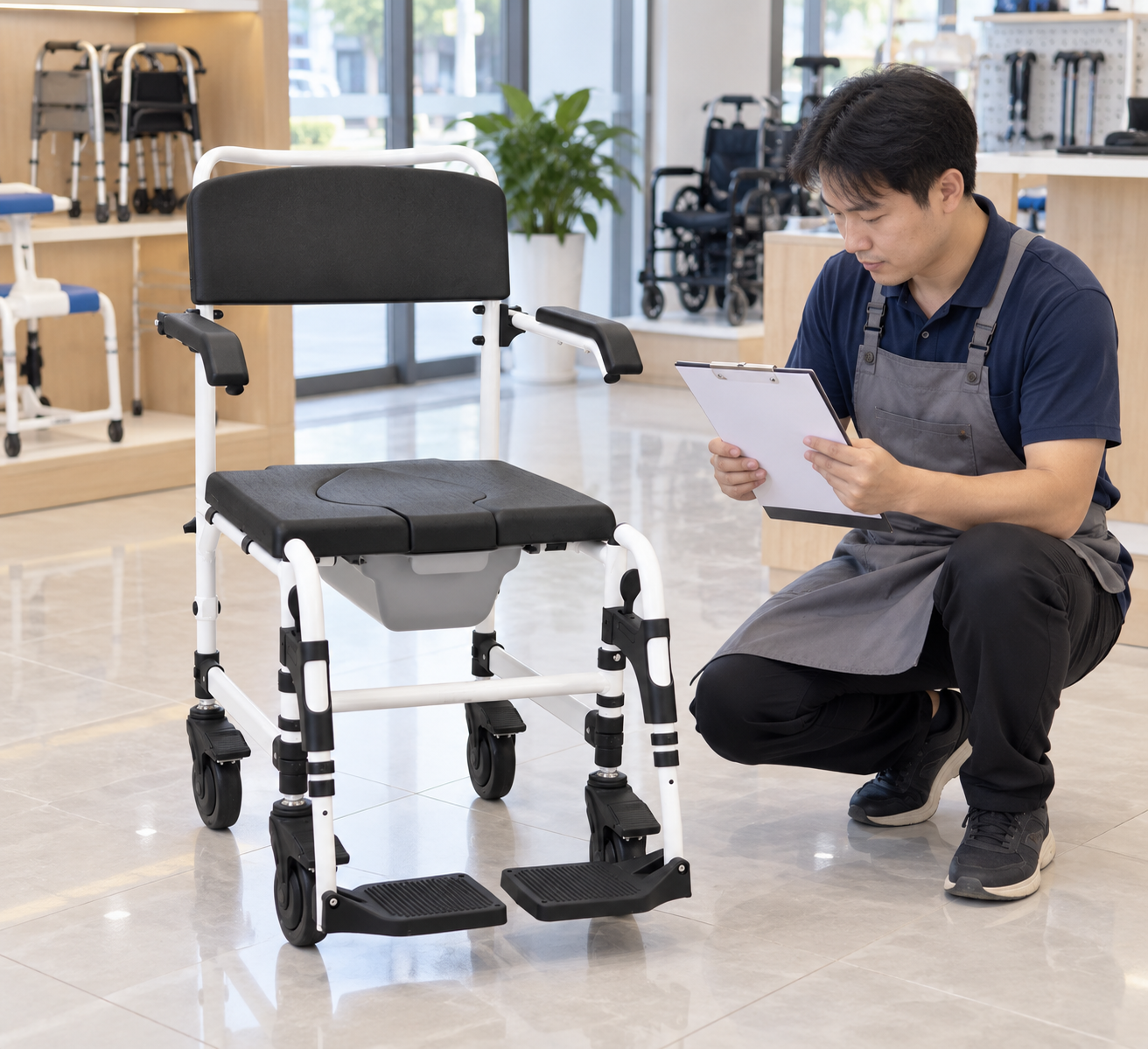
A folding commode chair care plan should cover seat, bucket, wheels and storage under the maker's cleaning and handling instructions. The illustrative care-review scene shows a worker with a blank record, not a hygienic outcome. Keep duties clear if the chair is shared.
Who should own each care step?
Make the handover between use and storage visible. UK adult social-care guidance gives an example of assigning decontamination roles and following maker methods; adapt any care protocol to the local setting. Ask the supplier team for product-specific materials and cleaning limits.
- Identify who handles bucket and chair care.
- Use approved products and drying steps.
- Hold damage or unresolved contamination for review.
| Care area | Record |
|---|---|
| Seat and bucket | Method and responsible person |
| Storage | Condition before reuse |
A folding decision must leave room for daily cleaning. Key Takeaway: Your team can plan use, care and storage together.
What should a folding commode chair order record show?
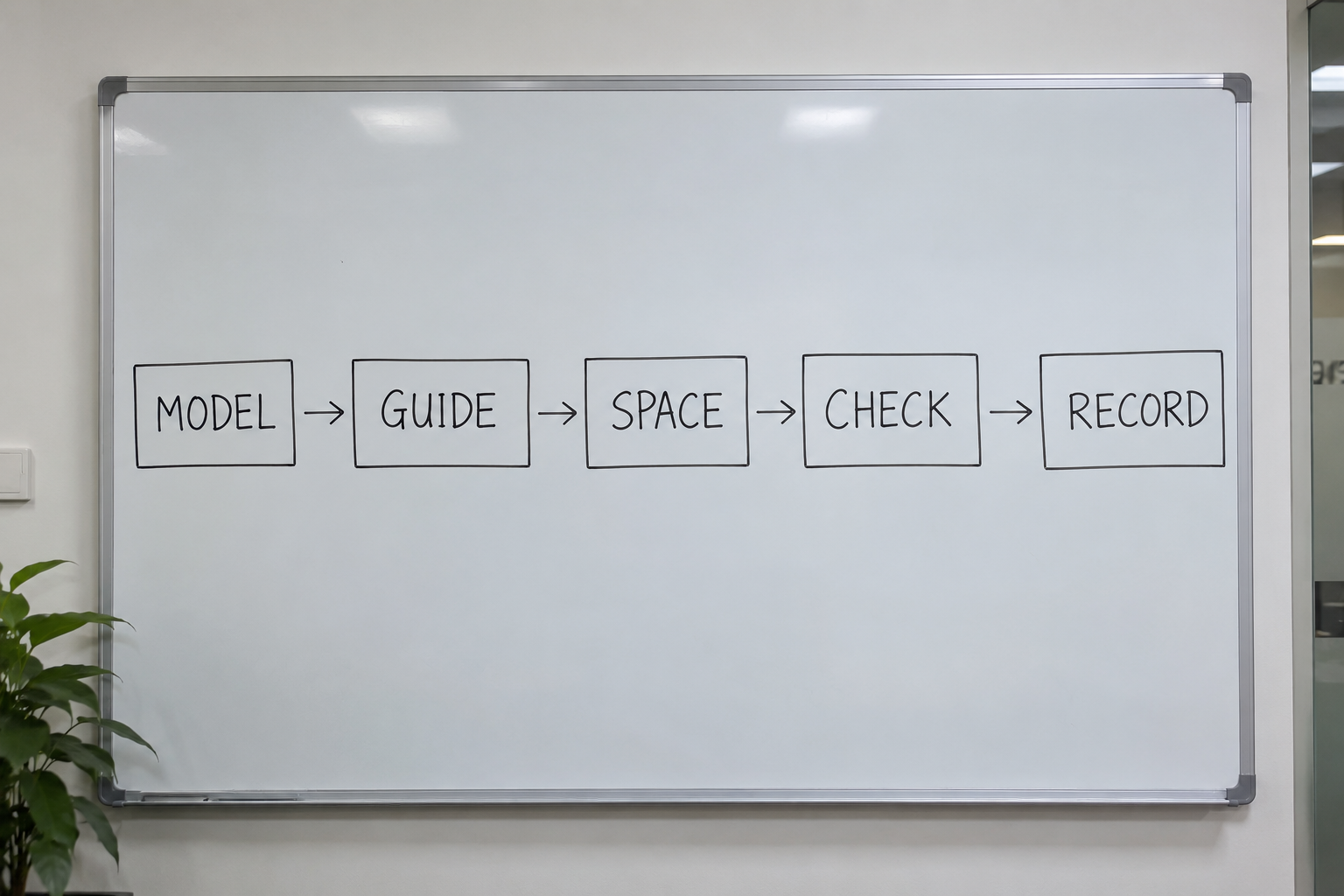
A folding commode chair order record should identify model, fold claim, measured states, wheel variant, bucket and user review. The workflow chart follows model, guide, space, check and record. Keep missing evidence as an open item rather than marking it approved.
Could another buyer repeat the decision?
Tie each answer to a source. Attach current drawings, sample notes and the responsible reviewer's findings. Record any part or use claim that the supplier has not confirmed.
- Name the exact model and variant.
- Store measured open and closed data when verified.
- Log unanswered fit and care questions.
| Order field | Purpose |
|---|---|
| Fold and dimensions | Confirms storage plan |
| Fit and care | Confirms use plan |
A complete record can prevent a photo-based specification from entering stock. Key Takeaway: Your procurement team can explain what was checked.
How should a folding commode chair brief end?

A folding commode chair brief should end with the exact model, room plan, individual fit route and written fold and care instructions. Ask for a sample if the stored size or handling remains uncertain. Leave unsupported numbers and multi-use claims out of the offer.
Ready to request a compact-chair option?
Send the constraints with the model question. Ary Medical can clarify available wheeled commode configurations and the documents it holds for a named chair. Request fold evidence, measurements, bucket details and current service terms before a dealer order.
- Describe the room and intended use.
- Identify the exact wheel variant.
- Request model-specific evidence and support.
| Buyer input | Supplier response |
|---|---|
| Room and user need | Relevant options for review |
| Compact claim | Current guide and measured state |
A concise brief makes the remaining gaps clear. Key Takeaway: For a model-specific enquiry, contact us. Ary Medical backs product choices that can be checked in the real room.
Frequently asked questions
Q1: Can I assume the pictured chair folds?
No. Ask for the exact model's current folding instructions and a controlled sample demonstration.
Q2: What's the best commode chair for a small bathroom?
Choose after measuring the route, service space and the person's assessed needs.
Q3: How do I know the folded size?
Request measured dimensions for the actual model and configuration, not a photo estimate.
Q4: Can I use a wheeled commode in a shower?
Only if the exact model's instructions permit that setting; do not infer it from appearance.
Q5: Are small-wheel and large-wheel parts interchangeable?
Not by default. Ask for separate approved parts records for each variant.