
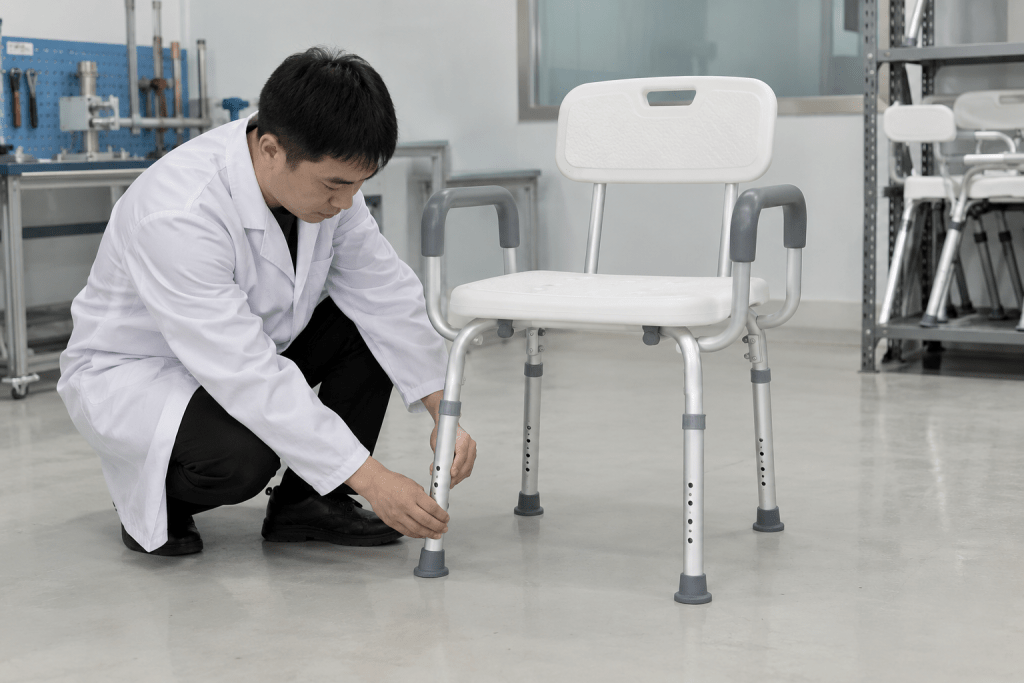
An adjustable height shower chair improves fit when its usable range aligns with lower-leg length, foot contact, transfers, and stable placement. Buyers sometimes count pin holes and assume more settings mean broader suitability. Yet partial engagement, uneven legs, excessive extension, or poor floor contact can turn adjustment into a risk. This guide explains how distributors and institutions should review mechanisms, ranges, locks, leveling, transfers, cleaning, supplier instructions, and sample approval. The accepted setup should remain easy for receiving staff to recognize.
1. What Is an Adjustable Height Shower Chair?
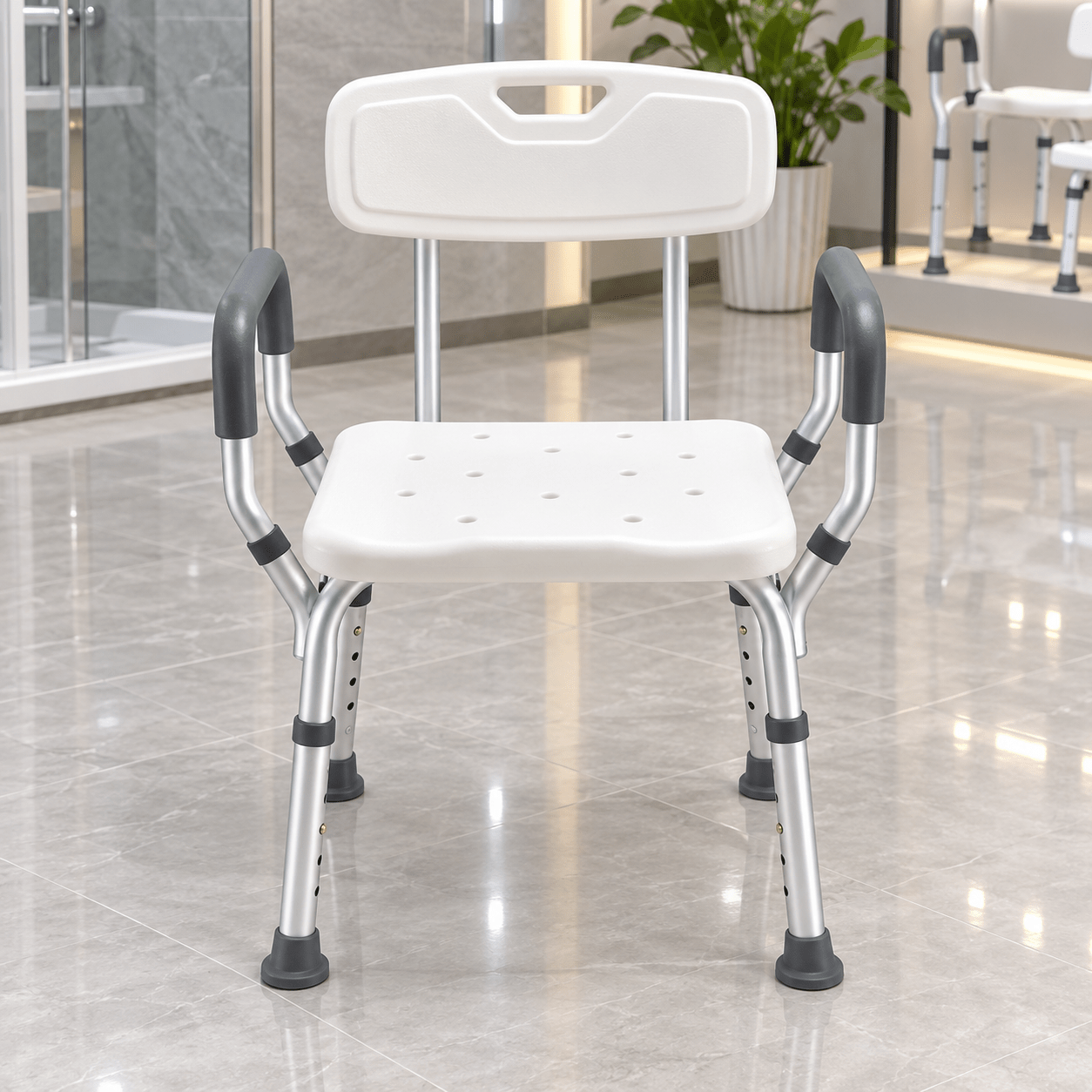
An adjustable height shower chair uses controlled leg or frame positions to change floor-to-seat height within a defined range. The offered configuration should state the mechanism, positions, reference point, locks, feet, and prohibited settings. Replacement legs must preserve those same interfaces and limits.
Which Components Create Height Adjustment?
Most simple designs use telescoping legs with spring buttons, pins, holes, or collars. The frame, seat, feet, and locks must stay compatible at every approved position.
- Telescoping inner and outer leg tubes.
- Buttons, pins, holes, collars, and retainers.
- Feet, labels, and adjustment instructions.
Which Adjustments Need Separate Definitions?
Seat height, floor leveling, arm height, back position, and folding position solve different problems. Name the moving component: a generic adjustable claim cannot describe them all.
- State what moves and who adjusts it.
- Define permitted and prohibited combinations.
- Record the correct return-to-use check.
| Adjustment | Moving part | Purpose | Boundary |
|---|---|---|---|
| Seat height | Legs or seat frame | User fit and transfer setup | Approved range only |
| Leg leveling | Individual leg where permitted | Full floor contact | Not a universal slope correction |
| Support adjustment | Arm or back | Contact and access | Separate lock and evidence |
Clear definitions reduce setup errors. Key Takeaway: specify each adjustment, lock, purpose, and operating limit independently.
2. Who Needs an Adjustable Height Shower Chair?
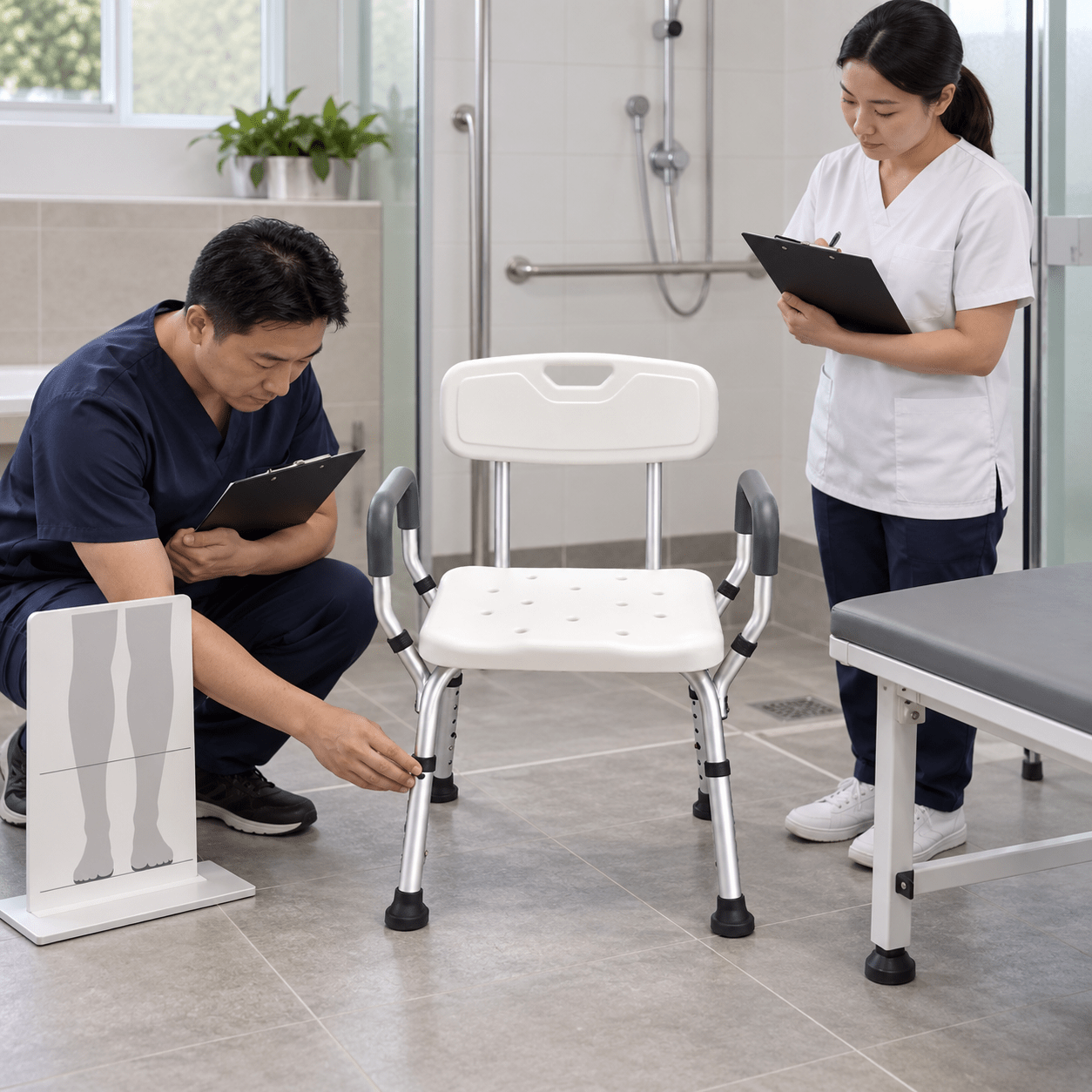
An adjustable height shower chair may suit user ranges whose lower-leg dimensions, sit-to-stand tasks, or transfer surfaces require different seat positions. Individual settings still need assessment and training. Staff also need a simple method for restoring approved positions.
Which User Dimensions Affect Seat Height?
Lower-leg length, foot placement, hip and knee position, arm use, and reach shape the target height. Padding and footwear conditions should match the assessment.
- Lower-leg length and foot contact.
- Hip, knee, and seated position.
- Arm support and control reach.
Which Tasks Depend on Height?
Sitting, standing, side transfers, caregiver assistance, washing, and storage can favor different positions. Height serves the task: it should not be adjusted without a defined outcome.
- Observe approach and exit.
- Compare transfer surfaces where relevant.
- Record the approved everyday setting.
| Task | Height objective | User factor | Evidence |
|---|---|---|---|
| Seated bathing | Stable foot and body position | Lower-leg dimensions | Fit review |
| Sit-to-stand | Workable movement path | Strength and support use | Task observation |
| Side transfer | Surface relationship | Approved route | Qualified assessment |
One range can contain several task-specific positions. Key Takeaway: connect every approved setting with a measured user and task requirement.
3. Which Range Fits an Adjustable Height Shower Chair?
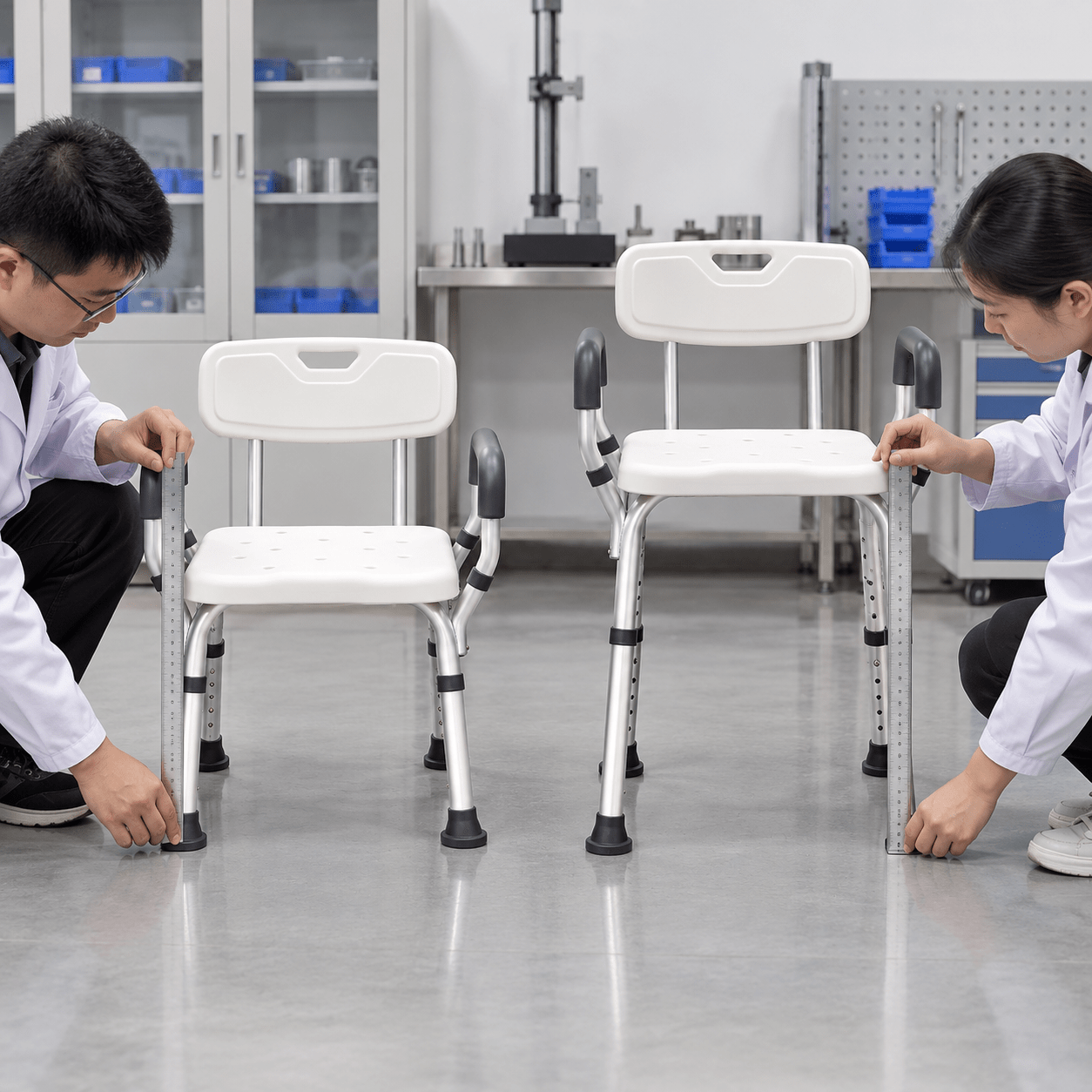
An adjustable height shower chair range fits only when minimum, maximum, and selected positions use the same measurement reference and remain structurally approved. Counted holes are not a substitute for verified floor-to-seat values. Manufacturing tolerance can also affect close fit decisions.
How Should Minimum and Maximum Height Be Measured?
Define the floor, seat surface, cushion state, leg position, feet, and product configuration. Measure at the same named point for every sample.
- Lowest fully engaged position.
- Highest fully engaged approved position.
- Normal task position and reference.
Which Positions Need Direct Verification?
Check low, high, common use, transfer setup, folded state, and any permitted leveling condition. The endpoint deserves extra attention: maximum extension should not mean partial engagement.
- Inspect remaining tube overlap where documented.
- Confirm button or pin engagement.
- Compare sample with drawings and instructions.
| Position | Measurement condition | Main check | Status |
|---|---|---|---|
| Lowest | All locks engaged | Frame and foot contact | Pass/hold |
| Selected | Assessed setup | User task relationship | Pass/hold |
| Highest | Approved full engagement | Stability and lock state | Pass/hold |
The usable range may be narrower than a headline range. Key Takeaway: approve only measured positions with complete lock engagement and task fit.
4. How Do Locks Secure an Adjustable Height Shower Chair?
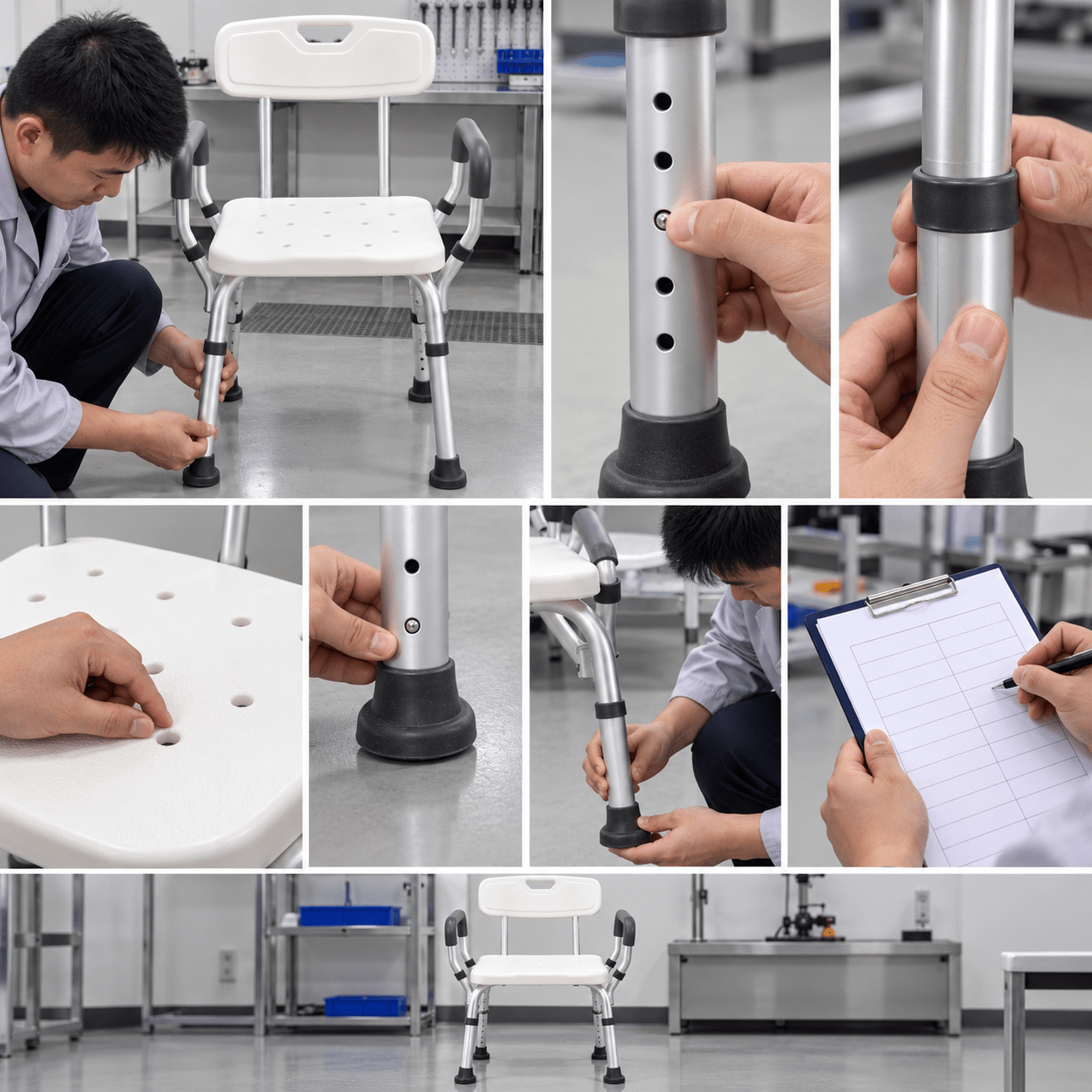
An adjustable height shower chair relies on buttons, pins, collars, holes, and retainers to hold each leg or frame position. Locks need clear visual, tactile, and functional confirmation. Dirt or damage can prevent a normal-looking button from seating fully.
Which Locking Features Need Inspection?
Inspect button return, pin depth, hole shape, collar seating, spring action, retainers, and visible alignment. Check every leg rather than one representative corner.
- Fully projected buttons or seated pins.
- Undamaged holes and tube surfaces.
- Matching lock parts across all legs.
Which Assembly Errors Need Prevention?
Partial engagement, mismatched holes, reversed legs, stuck buttons, missing springs, or hidden corrosion can leave the chair uneven. Pause before loading: setup ends with a four-leg lock check.
- Compare all positions side by side.
- Stop if a lock does not move freely.
- Quarantine damaged adjustment parts.
| Lock condition | Warning sign | Inspection | Action |
|---|---|---|---|
| Fully engaged | Button or pin clearly seated | Visual and tactile | Release for next check |
| Partial | Button not projected | No-user function check | Reset or hold |
| Damaged | Cracked hole or weak spring | Component inspection | Replace approved part |
Lock verification belongs in setup and maintenance. Key Takeaway: require complete engagement on every adjustable leg before use.
5. How Do You Level an Adjustable Height Shower Chair?
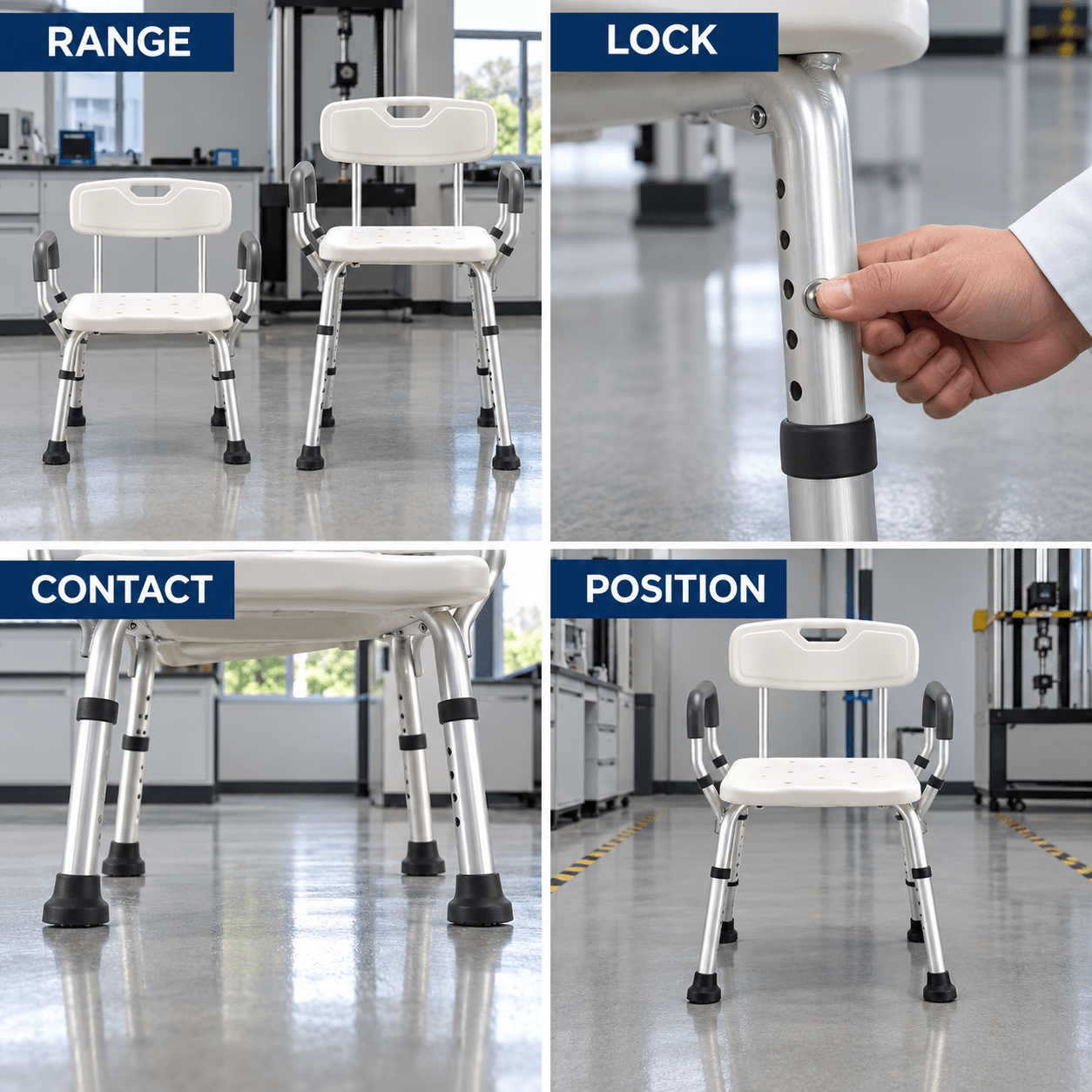
An adjustable height shower chair can be level only through settings permitted by its design and instructions. Individual leg changes should not be improvised to correct every slope or curved tub. The seat and frame should remain free from twist.
Which Floors Need Leveling Review?
Flat tile, grout, drain slopes, textured surfaces, curved tubs, and thresholds affect foot contact. Record the intended placement and floor condition.
- Check all foot surfaces and edges.
- Observe seat attitude and frame twist.
- Keep feet clear of drains and gaps.
Which Leg Settings Need Consistency?
Equal positions often provide the expected geometry, while permitted compensation needs explicit guidance. Do not hide a bad floor: excessive adjustment can create a new instability.
- Compare hole or pin positions.
- Confirm full lock engagement.
- Exclude placements outside instructions.
| Floor condition | Leg state | Observation | Decision |
|---|---|---|---|
| Flat approved floor | Equal setting | Full contact and no rocking | Normal use |
| Minor permitted slope | Documented setting | Seat and frame remain correct | Conditional approval |
| Curved or irregular surface | Partial contact | Foot lift or twist | Exclude placement |
Leveling should preserve the designed frame. Key Takeaway: use only documented settings on tested floor conditions.
6. How Do Transfers Use an Adjustable Height Shower Chair?
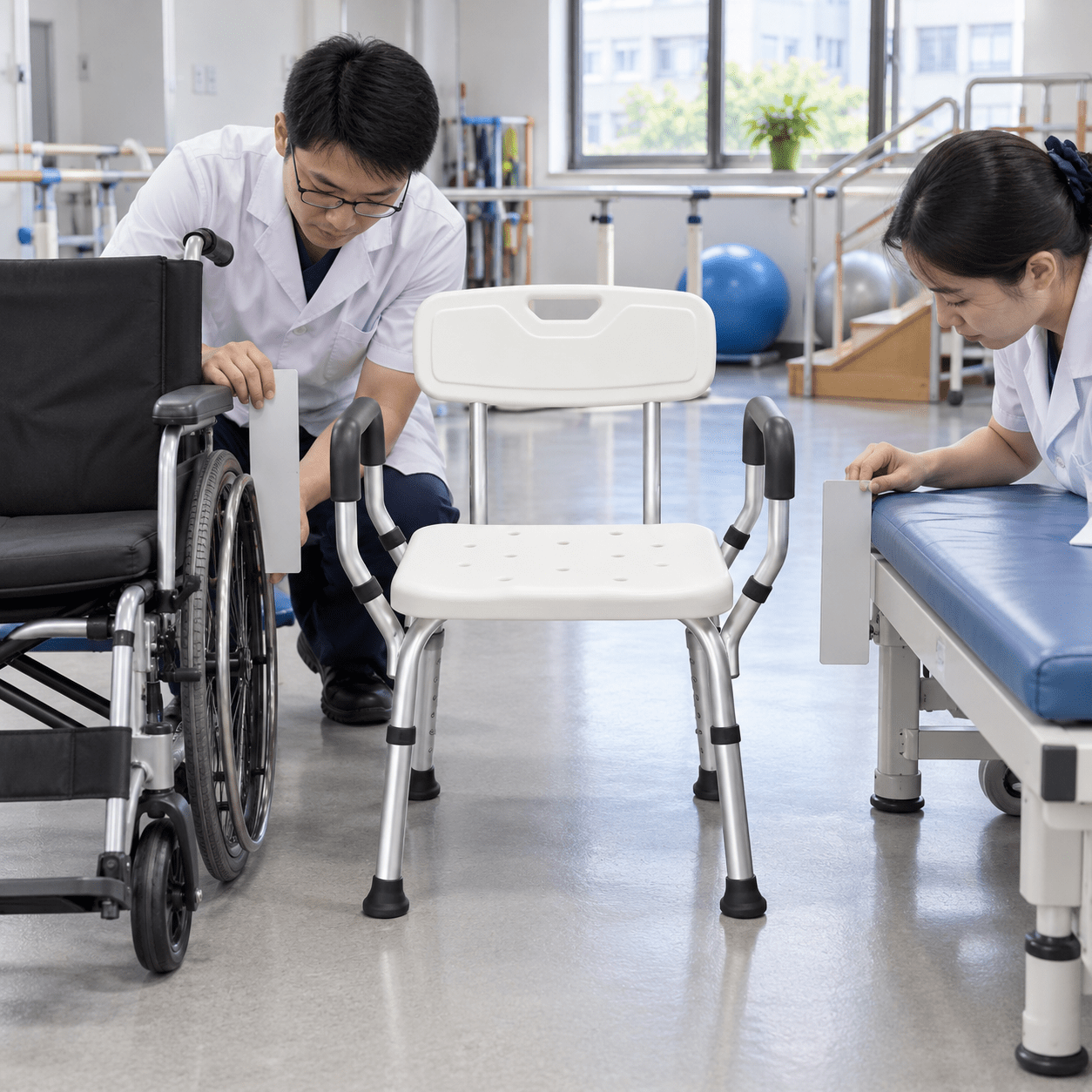
An adjustable height shower chair supports transfers only when the selected height, approach, supports, floor contact, and approved method align. Height adjustment cannot replace assessment or stable placement. Recheck the chosen position after any support option changes.
Which Transfer Surfaces Need Alignment?
Compare chair seat with wheelchair, bench, tub rim, floor, or standing setup where relevant. Use consistent references and the complete support configuration.
- Measure source and destination surfaces.
- Record selected leg positions.
- Include user feet and caregiver space.
Which Height Changes Can Create Conflict?
A higher chair may change arm position, foot contact, base spread, doorway clearance, or washing reach. Recheck the whole setup: one improved relationship may worsen another.
- Test supports and lateral clearance.
- Review commode and bathing-chair boundaries.
- Keep final approval with qualified staff.
| Transfer task | Height relationship | Possible conflict | Control |
|---|---|---|---|
| Sit-to-stand | Seat and user leg geometry | Feet lose stable position | Assessed setting |
| Side transfer | Source and destination | Arms or height mismatch | Route trial |
| Assisted transfer | Staff working level | Caregiver posture or space | Workflow review |
Transfer height is one part of the route. Key Takeaway: approve adjustment settings through the complete transfer and room setup.
7. How Stable Is an Adjustable Height Shower Chair?
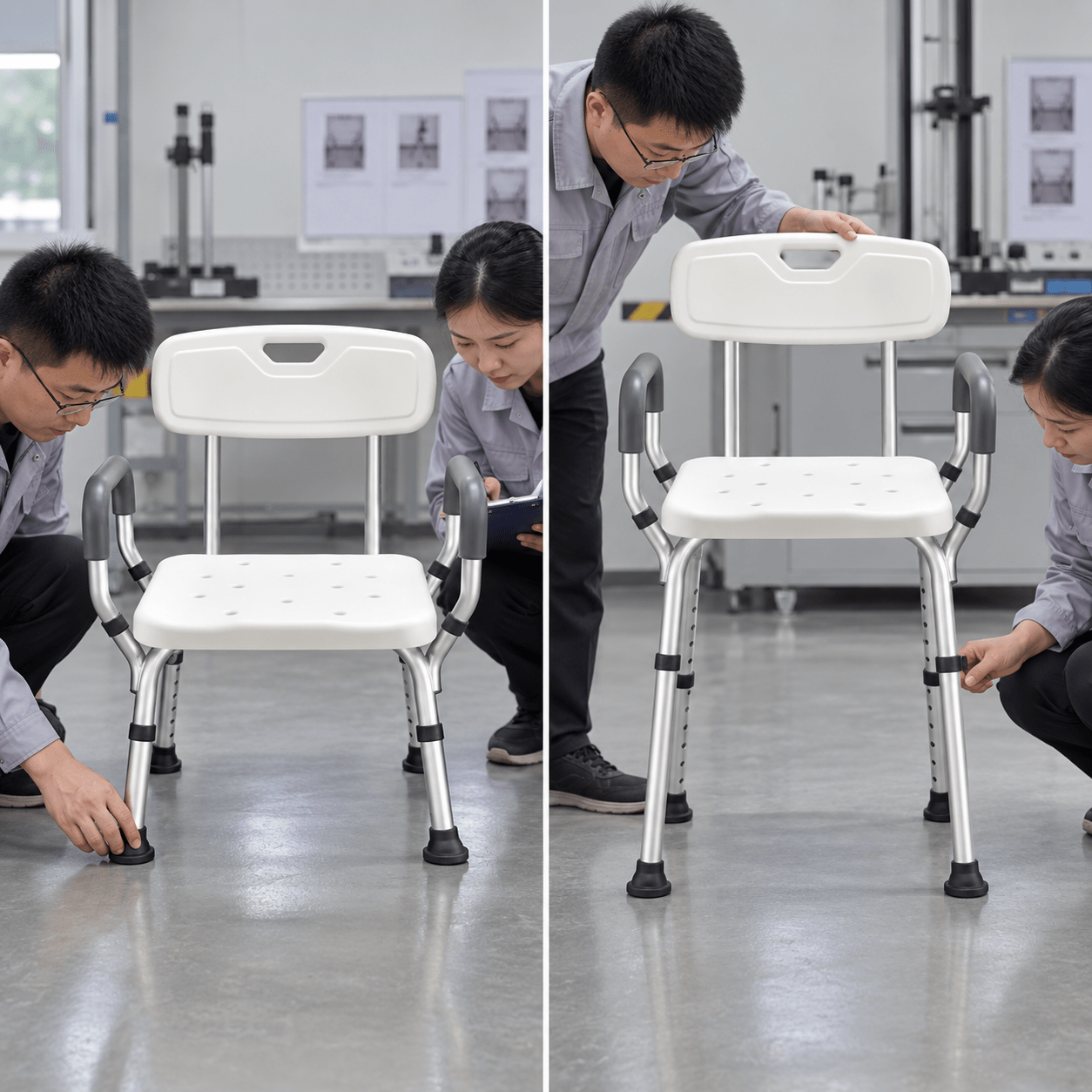
An adjustable height shower chair remains stable only when legs, locks, feet, frame, height, floor, and task work within approved conditions. Extension can change base geometry or frame response. Repeated adjustment may also reveal wear at locks and holes.
Which Settings Change Structural Behavior?
Highest extension, unequal legs, worn holes, loose buttons, folding joints, and side loading deserve direct review. Use the exact offered configuration.
- Inspect frame play and lock movement.
- Compare low and high settings.
- Verify full foot contact at each state.
Which Checks Should Repeat at Every Height?
Rocking, frame twist, lock engagement, support movement, foot grip, and visible damage should be checked throughout the usable range. Repeat the baseline: a pass at one height does not approve another.
- Use controlled no-user checks first.
- Record surface and adjustment positions.
- Stop when behavior becomes unpredictable.
| Height state | Check | Failure sign | Result |
|---|---|---|---|
| Low | Locks, contact, frame | Rocking or partial lock | Pass/hold |
| Normal | Task and support relationship | Movement or obstruction | Pass/hold |
| High | Extension and stability | Twist, foot lift, or play | Pass/hold |
Stability needs range-wide evidence. Key Takeaway: test every intended height on the intended surface and task.
8. How Do You Clean an Adjustable Height Shower Chair?
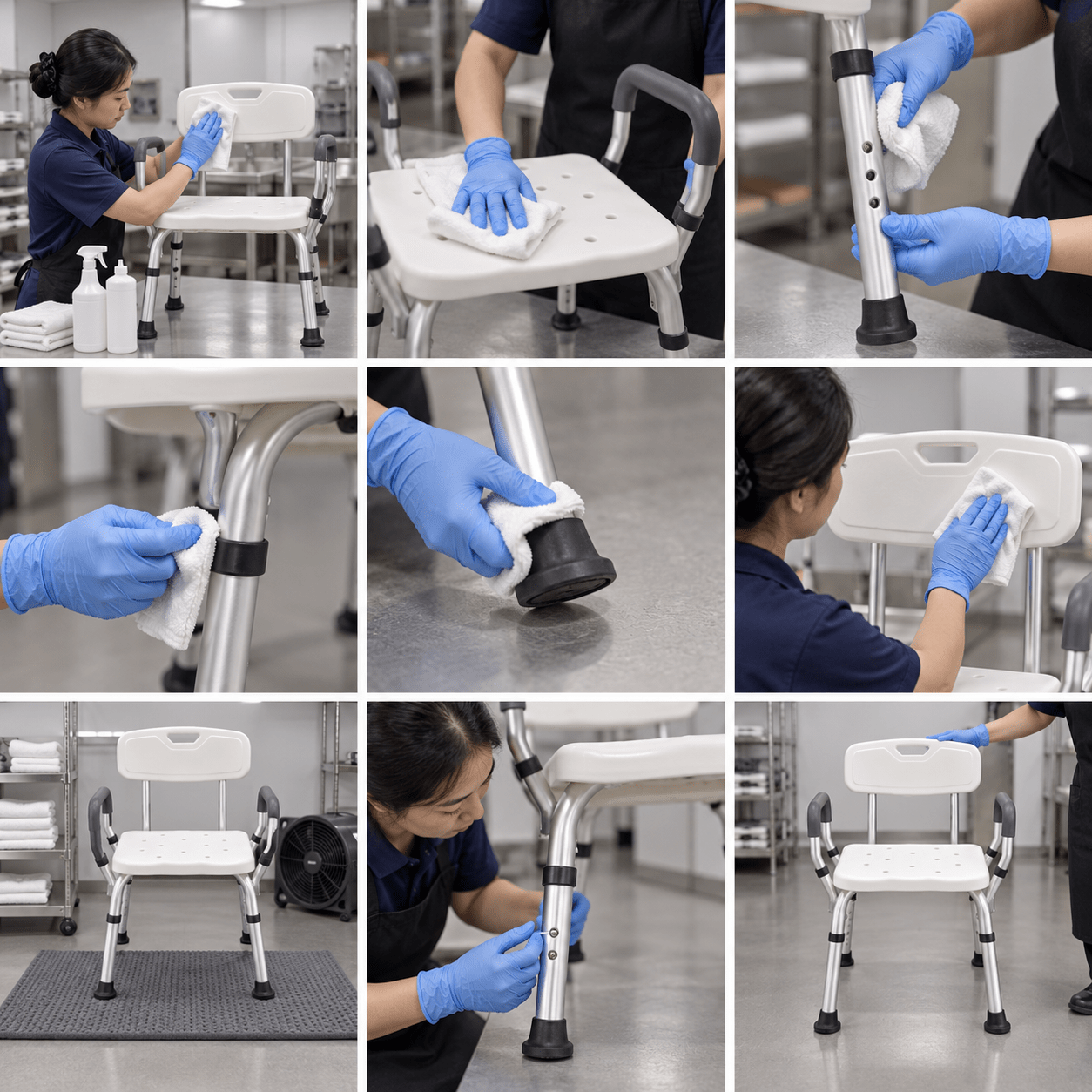
An adjustable height shower chair adds holes, overlaps, buttons, collars, and tubes that may retain water or residue. Cleaning must follow current product instructions and facility policy. Drying should not leave hidden moisture inside adjustment interfaces.
Which Adjustment Areas Trap Water or Residue?
Inspect telescoping tubes, holes, buttons, collars, feet, fasteners, and hidden overlaps. Do not force liquid into hollow sections.
- Remove only approved components.
- Clean accessible surfaces with approved methods.
- Check drainage and retained moisture.
Which Post-Cleaning Checks Matter?
Drying, free movement, button return, corrosion signs, foot seating, and reassembly affect return to service. Cleaning can reveal a defect: do not ignore a sticky or damaged lock.
- Cycle adjustments after drying.
- Hold cracked, swollen, or corroded parts.
- Link with the existing bathing-chair care context.
| Area | Cleaning concern | Post-check | Release rule |
|---|---|---|---|
| Leg tube | Trapped water | Dry and inspect | No residue or corrosion sign |
| Button/pin | Soil or sticking | Free return | Full engagement |
| Foot | Residue and wear | Seating and contact | Secure and matched |
Cleaning should leave adjustment functions ready for use. Key Takeaway: include lock and foot checks in every post-cleaning release.
9. How Do Suppliers Document an Adjustable Height Shower Chair?
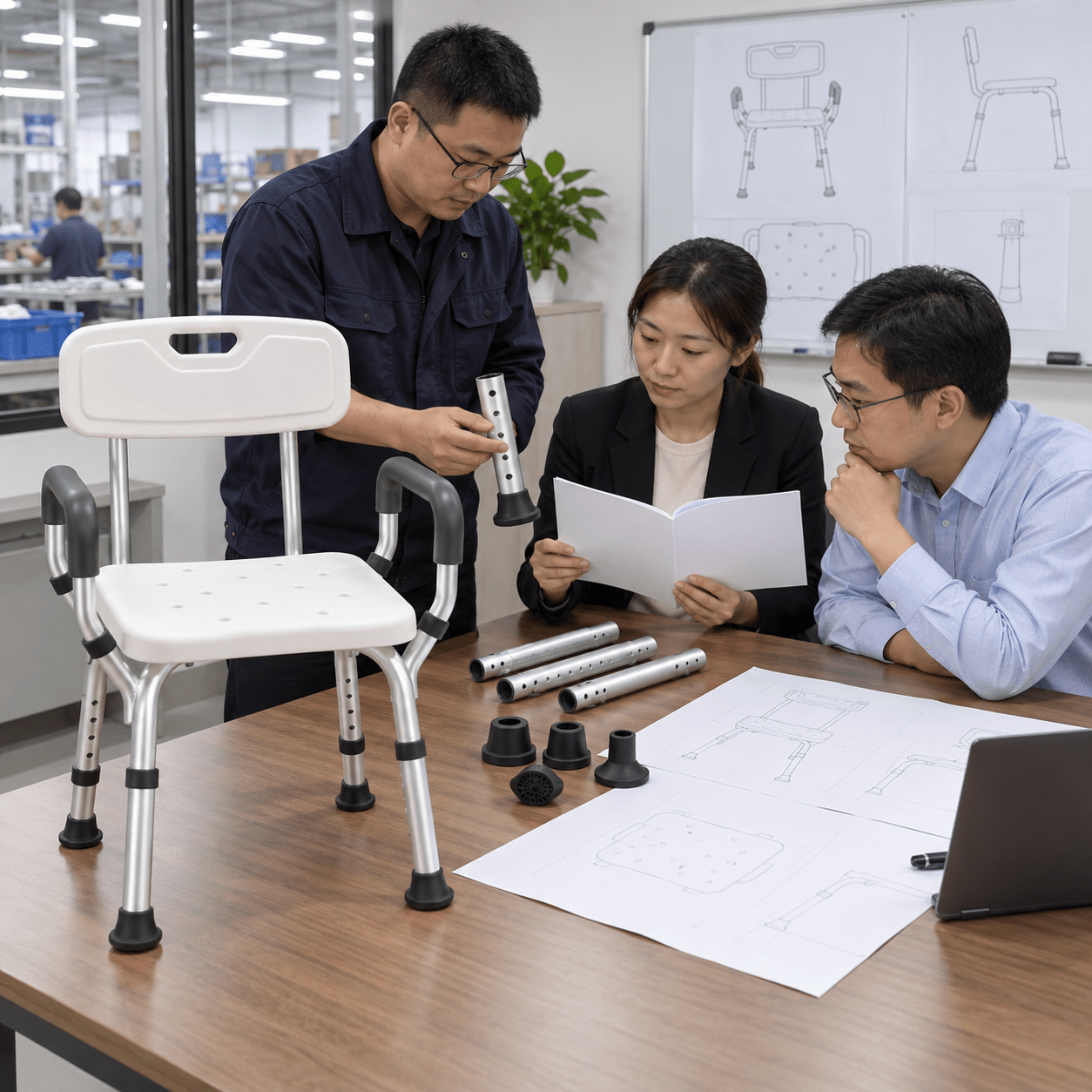
An adjustable height shower chair supplier should identify range, increments, reference point, lock method, materials, feet, safe working load evidence, instructions, and parts for the offered configuration. Production drawings should preserve every critical adjustment interface.
Which Specifications Need Configuration Matching?
Quotation, drawing, sample, reports, manual, labels, parts, and packaging should describe the same chair and revision.
- State minimum, maximum, and increments.
- Name seat-height measurement references.
- Record optional supports and feet.
Which Instructions Need Clear Sequences?
Adjustment, engagement, leveling, prohibited states, cleaning, inspection, and replacement require complete steps. Test the instructions: representative staff should reach the correct state without hidden coaching.
- Use pictures that match the sample.
- Define stop and hold conditions.
- Require notice before design changes.
| Document | Required detail | Common gap | Gate |
|---|---|---|---|
| Drawing | Range and reference | Nominal height only | Correct before sample |
| Manual | Lock and check sequence | No final engagement check | Revise before release |
| Parts map | Compatible legs and feet | Visual-only identity | Close before scale |
Documentation makes adjustment repeatable after sale. Key Takeaway: approve instructions and parts alongside the physical range.
10. How Should Buyers Test an Adjustable Height Shower Chair?
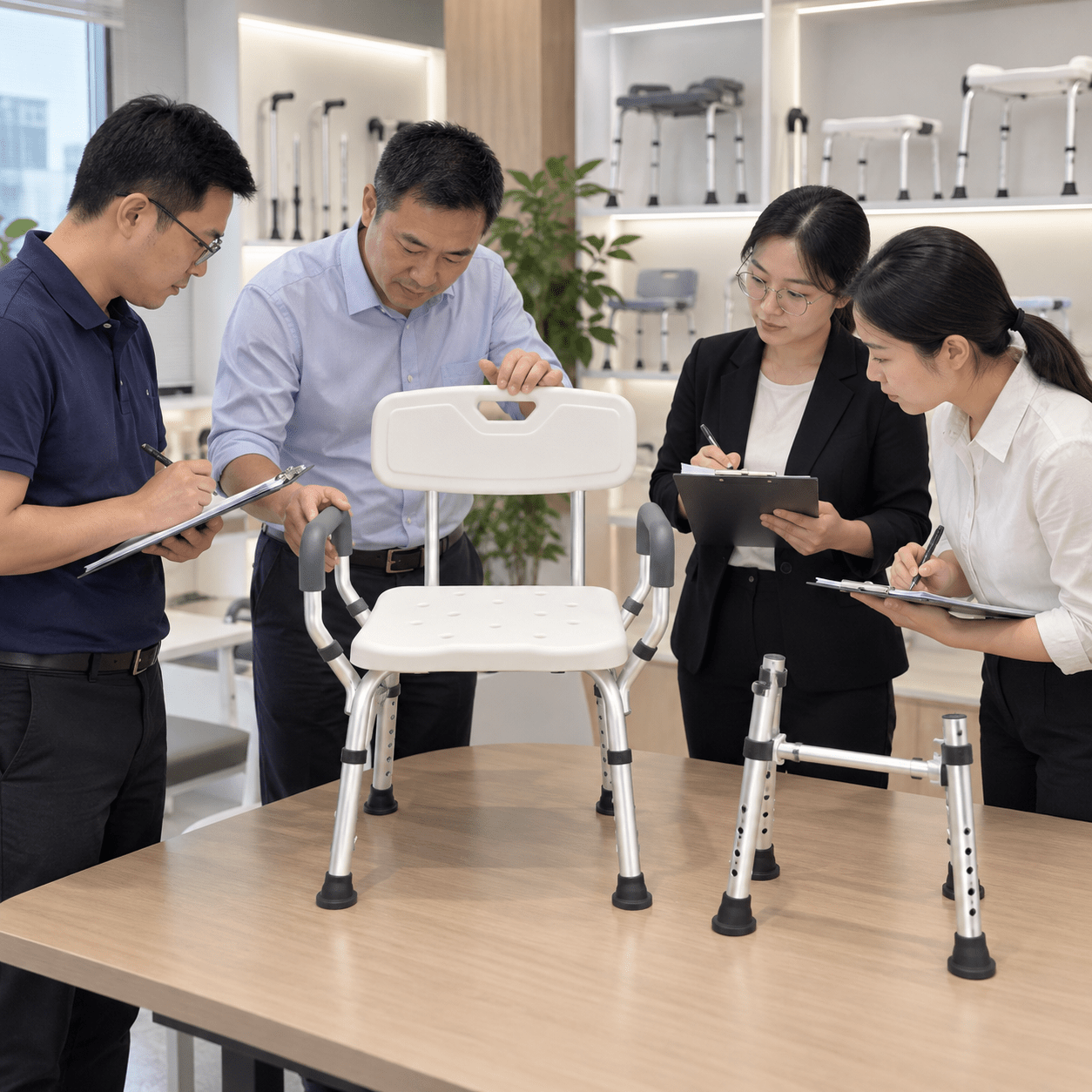
An adjustable height shower chair should complete an unpack, assemble, adjust, lock, level, fit, task, clean, dry, and readjust cycle before approval. The test record should connect the sample with production acceptance. Representative staff should complete the cycle without undocumented coaching.
Which Sample Cycle Needs Witnessing?
Use representative staff, current instructions, proposed supports, target floors, and agreed stop rules. Record every height and adjustment condition tested.
- Check identity and completeness.
- Repeat lock checks at all intended settings.
- Document fit, workflow, and exceptions.
How Should Production Units Be Accepted?
Inspect identity, range, buttons, pins, feet, dimensions, instructions, parts, and approved changes. Preserve the sample state: link later checks with the bathroom equipment range where shared receiving processes apply.
- Freeze configuration and revision.
- Define critical defects and sampling.
- Escalate unapproved substitutions.
| Stage | Output | Owner | Release rule |
|---|---|---|---|
| Brief | Fit, range, floor, and task needs | Buyer | Scope approved |
| Sample | Cycle and exception record | Evaluation team | Critical issues closed |
| Production | Receiving and change controls | Procurement | Approved state preserved |
The final file should make setup repeatable. Key Takeaway: release volume only after range, locks, fit, cleaning, and production controls agree.
Conclusion
Height adjustment improves fit when ranges, locks, floor contact, transfers, cleaning, and instructions work as one system. Pin count alone does not establish usability. If you are specifying adjustable bathing equipment for a distributor range or facility, contact us today. Well-designed adjustment gives buyers repeatable settings they can measure, train, inspect, and support.
FAQ
Can every leg position be used safely?
No. Use only positions allowed by current instructions with complete engagement, suitable floor contact, and the approved task setup. Record the chosen setting.
What’s the best seat height for a distributor range?
No single height fits every user. Compare target user dimensions, tasks, bathrooms, and the usable range while preserving full lock engagement. Verify fit on a sample.
How do I know whether all four legs are locked?
Inspect every button, pin, hole, and collar visually and by touch, then confirm equal or approved settings before any task trial. Recheck after moving the chair.
Can adjustable legs correct every sloped floor?
No. Individual settings may be limited, and some slopes or curved surfaces prevent correct contact. Follow product instructions and tested placement limits. Exclude unsupported floors.
How should buyers inspect replacement leg parts?
Match model, revision, dimensions, lock type, material, foot, orientation, and instructions. Finish with height, engagement, contact, and stability checks. Record the installed part.
