
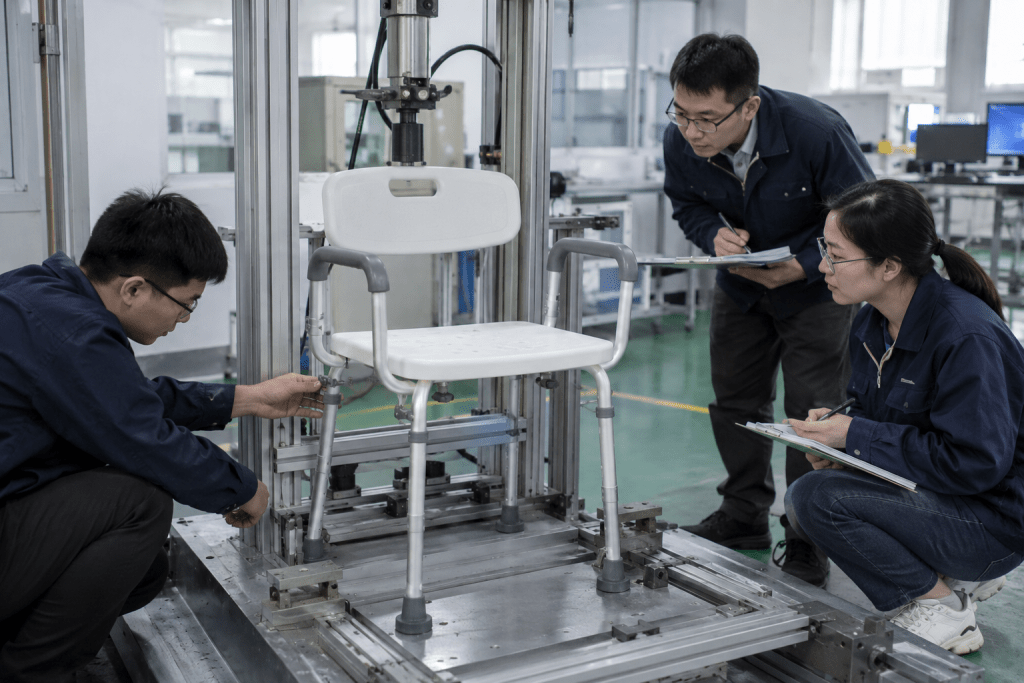
Shower chair weight capacity testing should identify the exact configuration, load definition, setup, method, acceptance criteria, result, and revision. Two suppliers may print the same rating while testing different seats, supports, height settings, or load directions. A number without traceability creates false equivalence. This guide helps B2B buyers review terminology, test scope, seats, supports, adjustments, reports, production controls, and sample-to-order links. The record should identify functions checked after loading and parts replaced during evaluation. Buyers can then separate a technical finding from a summary that omits product condition. Keep approved definitions available to sales and receiving teams.
1. What Is Shower Chair Weight Capacity Testing?

Shower chair weight capacity testing evaluates defined product responses under stated loads and conditions. It does not turn every tested load into a user rating or approve configurations outside the report scope. Buyers also need to know which normal functions were checked afterward.
Which Terms Need Precise Definitions?
Separate safe working load, maximum user mass, proof load, test load, static load, and dynamic task conditions. Use the definitions supplied by the applicable method and product file.
- Safe working load or rated capacity.
- Applied test or proof load.
- User mass and task-related forces.
Which Product Identity Must the Test Include?
Model, frame, seat, back, arms, legs, feet, fasteners, height, accessories, and revision can affect results. Trace the sample first: an unnamed family report cannot approve a saleable unit.
- Match drawing, sample, and report.
- Record installed standard and optional parts.
- Identify excluded configurations.
| Term or field | Required definition | Evidence | Buyer risk |
|---|---|---|---|
| User rating | Approved user-related limit | Product specification | Confused with test load |
| Test load | Applied condition under method | Full report | Quoted without context |
| Configuration | Tested parts and settings | Sample identity | Options assumed covered |
Testing begins with shared definitions and identity. Key Takeaway: never compare load numbers until terms and configurations match.
2. Why Does Shower Chair Weight Capacity Testing Need Scope?

Shower chair weight capacity testing needs a scope because seated bathing, push-off, side access, caregiver contact, folding, and transport create different loads. A vertical seat test cannot answer every use question. Scope should also identify floors, fixtures, and support positions used during evaluation.
Which Intended Uses Affect the Scope?
Define normal sitting, transfers, arm use, back contact, adjustments, shared use, and cleaning or handling states. Keep individual suitability separate.
- Seated bathing and position changes.
- Intended arm and back contact.
- Approved transfers and caregiver tasks.
Which Excluded Uses Need Documentation?
Standing on the seat, lifting a person, unapproved side loading, transport, or added accessories may fall outside design intent. Write exclusions plainly: they guide manuals, training, and incident review.
- Separate misuse from intended tasks.
- Record product and environment limits.
- Align warnings with the physical sample.
| Use condition | Load question | Scope decision | Output |
|---|---|---|---|
| Seated bathing | Seat and frame response | Included where applicable | Test evidence |
| Arm push-off | Arm and mount direction | Separate case | Support evidence |
| Product transport | Handling, not seated use | Separate workflow | Handling guidance |
Scope keeps a test from promising more than it examined. Key Takeaway: define intended and excluded load cases before judging evidence.
3. Which Loads Belong in Shower Chair Weight Capacity Testing?
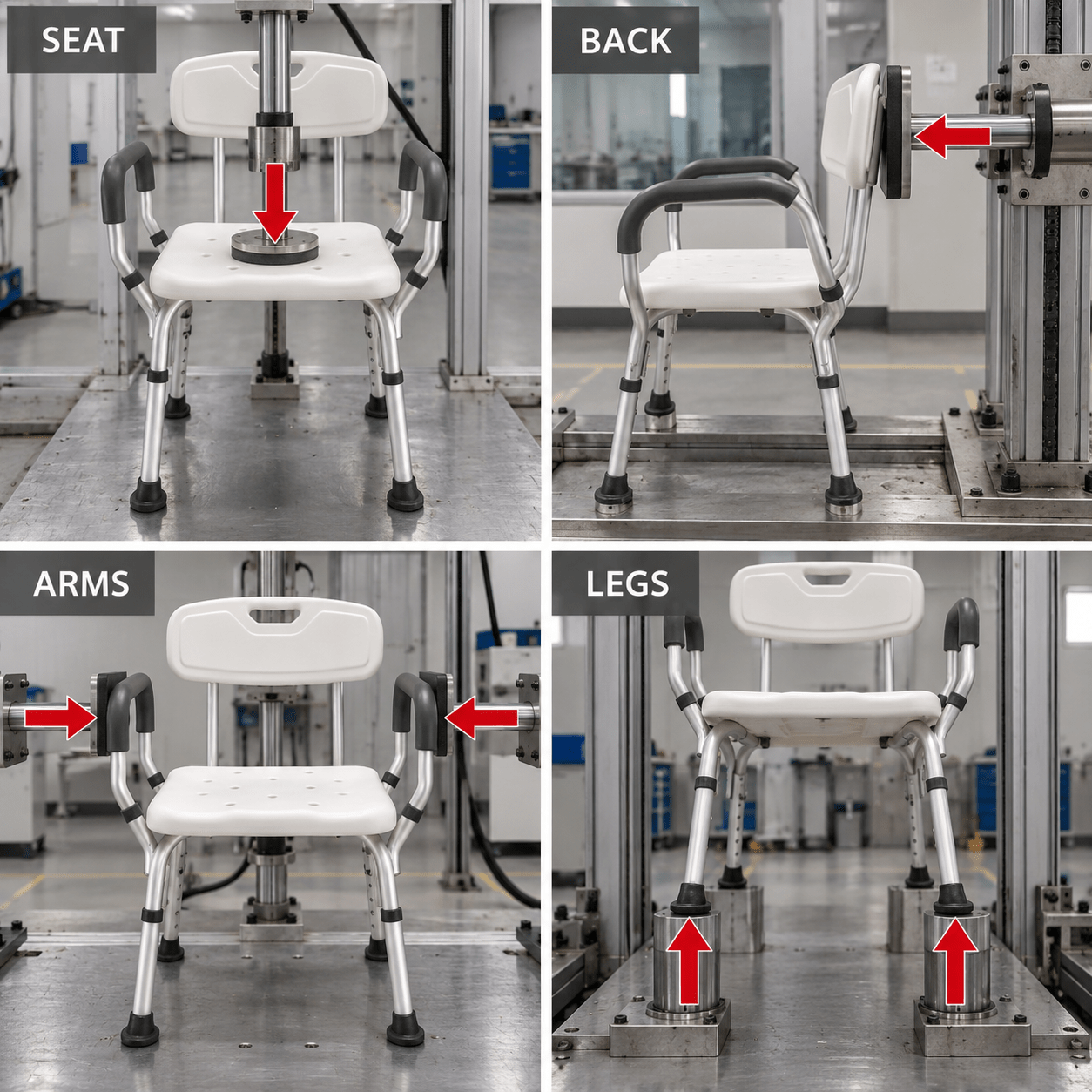
Shower chair weight capacity testing may include vertical seat loads and separate forces on backs, arms, feet, or adjustable components where applicable. Each case needs its own setup and acceptance basis. Combined task loads should not be inferred from isolated component results.
Which Vertical Loads Need Review?
Seat loading should state distribution, application point, duration, repetitions, product height, supports, floor fixture, and post-test checks.
- Central and distributed loading as specified.
- Front or side regions when required.
- Recovery and permanent-deformation inspection.
Which Non-Vertical Loads Need Separate Review?
Back contact, arm push-off, side transfer, foot impact, and handling act in different directions. Do not bundle the arrows: separate load paths reveal separate weaknesses.
- Identify component and force direction.
- Match fixtures with normal constraints.
- Inspect the whole frame after each case.
| Load direction | Component | Setup need | Result field |
|---|---|---|---|
| Vertical | Seat and frame | Defined distribution | Damage and function |
| Rearward | Back and mounts | Defined contact point | Movement and integrity |
| Down/lateral | Arm and frame | Intended direction | Lock and mount condition |
Load direction determines what the test can support. Key Takeaway: review each component and force as a named evidence case.
4. How Is Shower Chair Weight Capacity Testing Set Up?
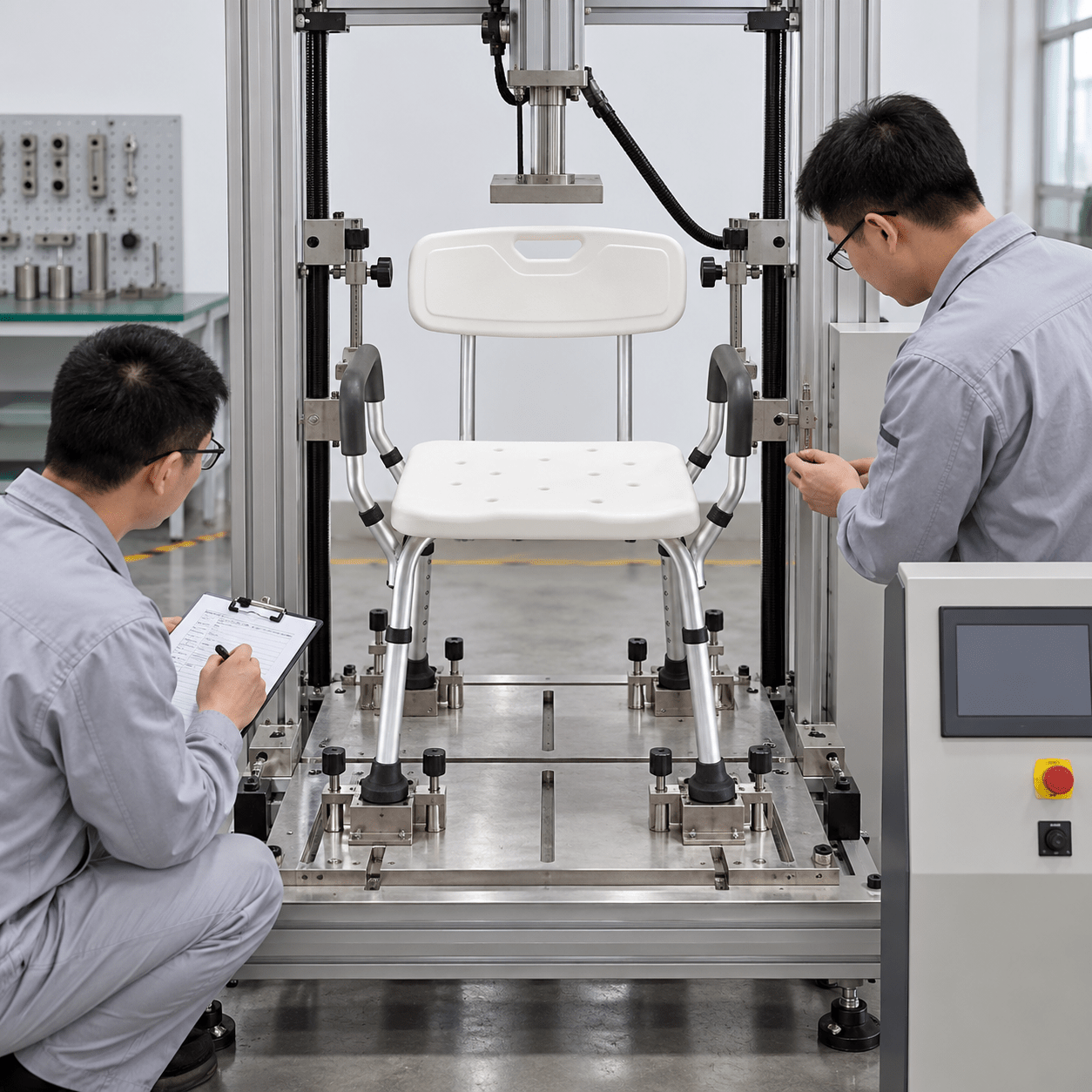
Shower chair weight capacity testing is set up by controlling surface, height, feet, supports, fixtures, environment, instrumentation, and sample identity. The fixture should represent the method without introducing hidden reinforcement. Pre-test inspection should record existing damage, play, and adjustment condition.
Which Test Conditions Must Be Controlled?
Document floor or fixture, chair height, foot restraint, arms, back, fasteners, temperature, moisture condition, and preconditioning where required.
- Use the offered product state.
- Record every fixture contact.
- Calibrate or identify measurement equipment.
Which Measurements Need Recording?
Applied load, time, displacement, deformation, damage, lock movement, and post-test function may be relevant. A photograph is not a result: retain the method and acceptance record.
- Capture initial and final condition.
- Record deviations and interruptions.
- Link with institutional equipment evidence where facility procurement applies.
| Setup field | Required record | Warning sign | Action |
|---|---|---|---|
| Product state | Height, options, feet | Unnamed configuration | Stop review |
| Fixture | Contact and restraint | Hidden reinforcement | Clarify method |
| Instrumentation | Identity and status | Missing traceability | Request evidence |
Controlled setup makes results repeatable. Key Takeaway: approve the test environment and fixture as carefully as the final number.
5. How Does the Seat Affect Shower Chair Weight Capacity Testing?
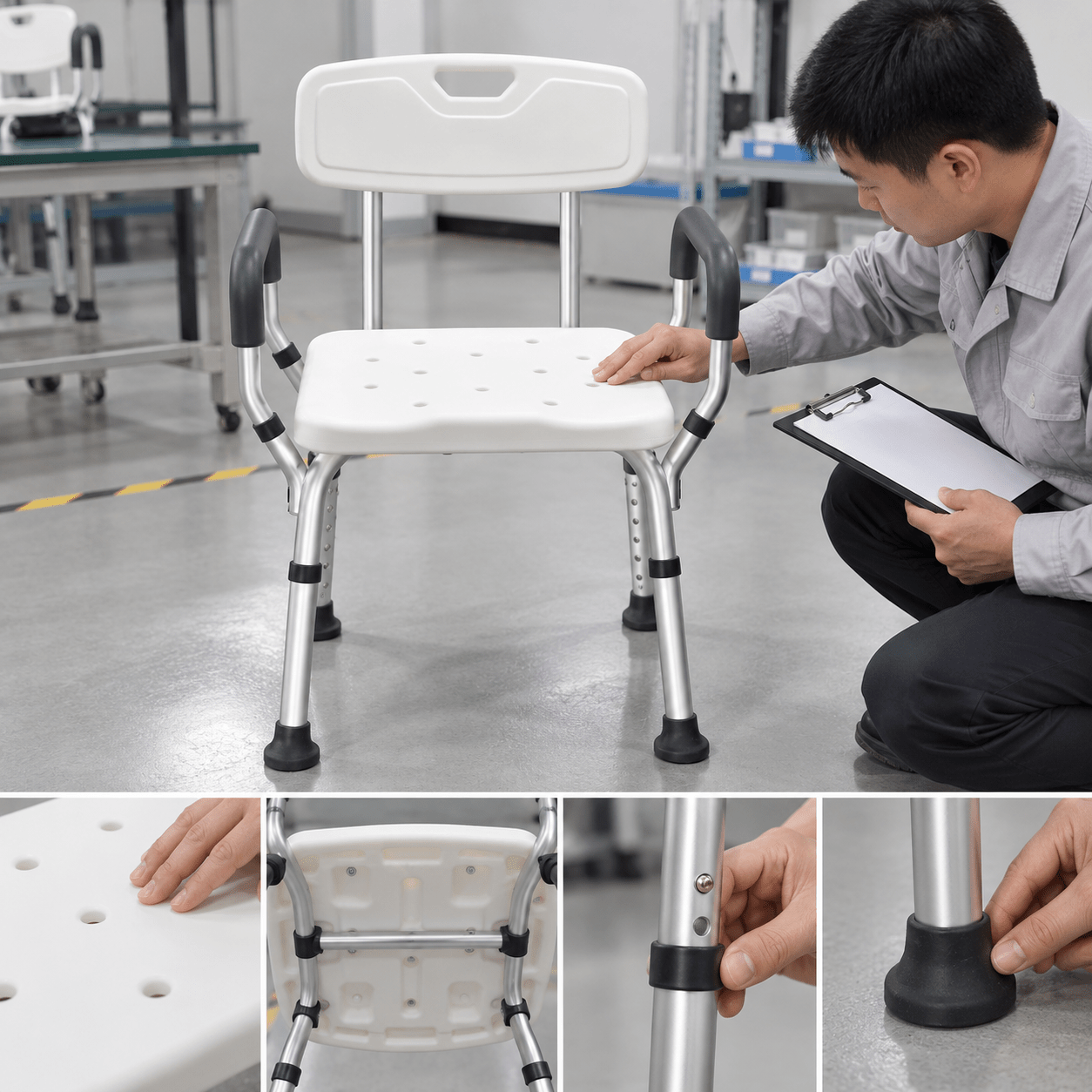
Shower chair weight capacity testing must examine the seat surface, drainage openings, edges, mounts, padding, support rails, and frame connections included in the sample. Seat materials and geometry affect load distribution. Removable inserts should remain identified throughout testing and inspection.
Which Seat Areas Carry Load?
Review center, front, side, openings, mounts, rails, and any removable or padded insert. The relevant method determines application points.
- Seat shell or slat structure.
- Drainage and hygiene openings.
- Mounts, fasteners, and frame rails.
Which Failure Signs Need Inspection?
Cracking, permanent deformation, looseness, sharp edges, mount movement, retained water, or functional loss may require a hold. Inspect beyond the contact point: loads travel into the frame.
- Compare before and after condition.
- Check every support interface.
- Repeat permitted adjustments and functions.
| Seat area | Observation | Failure sign | Disposition |
|---|---|---|---|
| Surface | Shape and integrity | Crack or deformation | Hold |
| Drainage opening | Edge and stress area | Split or sharp edge | Hold |
| Mount | Movement and fasteners | Looseness | Investigate |
Post-test inspection should cover the entire seating load path. Key Takeaway: accept the seat only when structure and normal functions remain within defined criteria.
6. How Do Supports Affect Shower Chair Weight Capacity Testing?
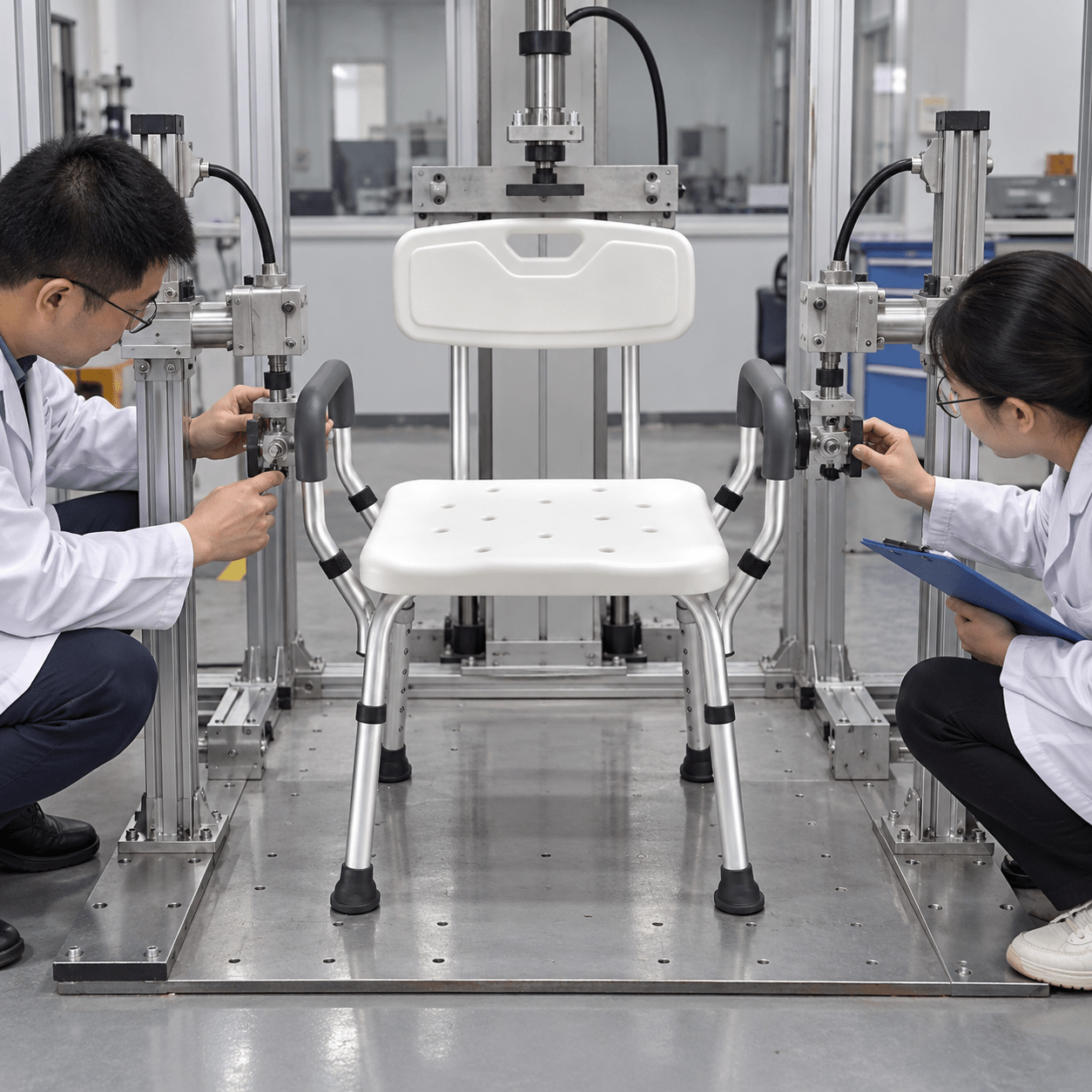
Shower chair weight capacity testing should treat backs and arms as separate structures when they carry intended task loads. Optional supports need evidence that matches their mounts and locks. Left and right assemblies may also require separate condition checks.
Which Backrest Loads Need Separate Evidence?
Rearward force, contact point, back angle, mount stress, frame twist, fasteners, and repeated use may need review under the applicable method.
- Identify back height and attachment.
- Record load direction and fixture.
- Inspect mounts and frame afterward.
Which Armrest Loads Need Separate Evidence?
Downward push-off, lateral contact, removable locks, asymmetric use, grip, and mount geometry can produce different responses. Test the offered arm: a shared-looking part may use a different interface.
- Verify part and revision identity.
- Check both sides and locks.
- State intended load directions.
| Support | Load case | Configuration field | Post-check |
|---|---|---|---|
| Back | Rearward contact | Height, angle, mounts | Movement and frame integrity |
| Fixed arm | Down and lateral | Tube and fasteners | Deformation and looseness |
| Removable arm | Load plus lock | Lock and interface | Secure refitting |
Support evidence should follow the installed option. Key Takeaway: do not extend seat-load results to backs or arms without applicable evidence.
7. How Do Adjustments Affect Shower Chair Weight Capacity Testing?
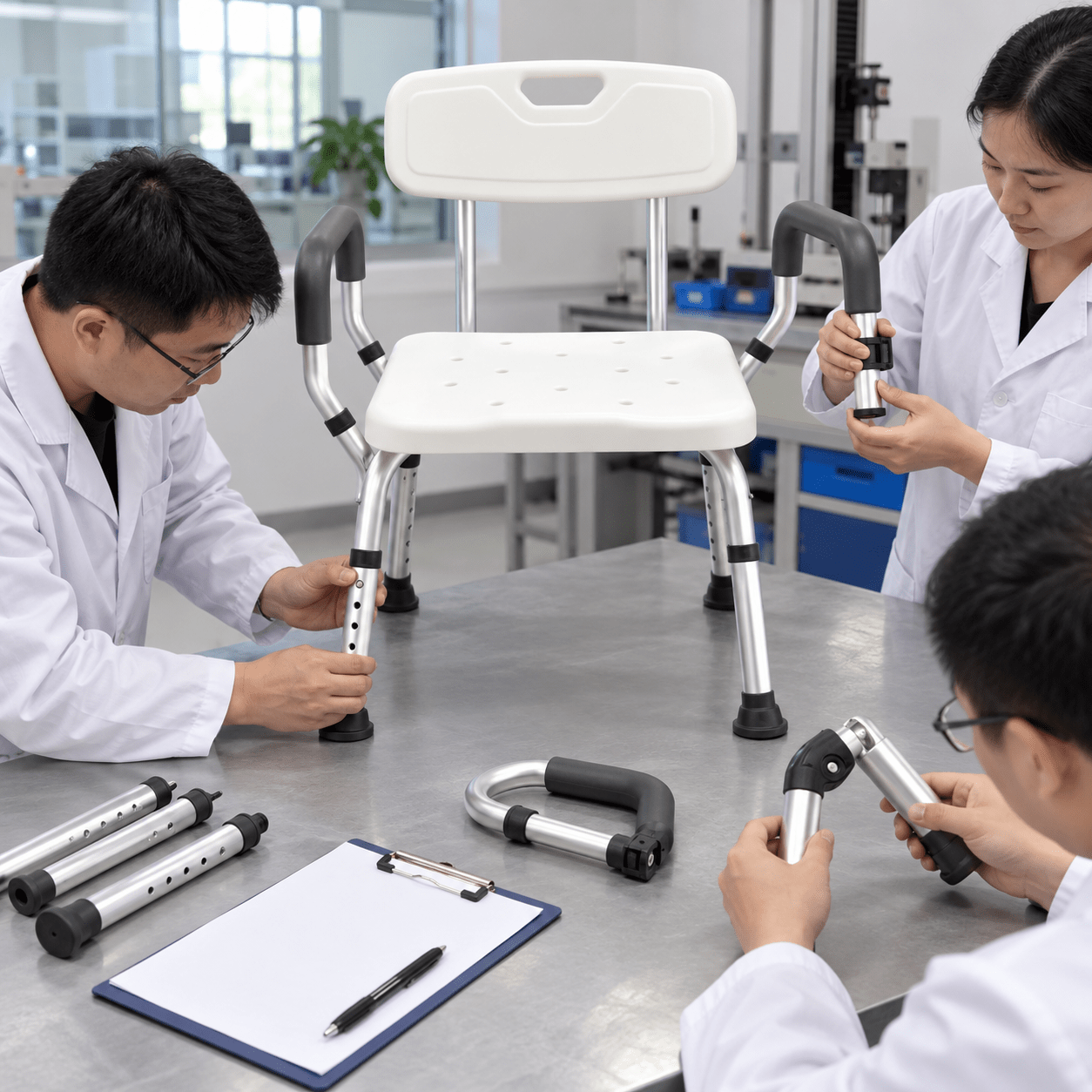
Shower chair weight capacity testing should cover the height, fold, arm, back, and removable interfaces included in the offered configuration. Position can change geometry and load paths. The report should state whether the chosen state represents worst-case use.
Which Height Settings Need Coverage?
Lowest, highest, selected, and any documented critical setting may require consideration. Full button or pin engagement must be verified before testing.
- Record every leg position.
- Confirm equal or approved settings.
- Inspect holes, buttons, and overlap.
Which Folding or Removable Parts Need Coverage?
Hinges, latches, pins, arm mounts, back mounts, and assembly interfaces need the correct use state. Lock the product before loading: partial engagement invalidates both safety and evidence.
- Match locks with the sample drawing.
- Record post-test opening and folding.
- Hold damaged interfaces.
| Adjustable feature | Test state | Main risk | Buyer check |
|---|---|---|---|
| Telescoping leg | Named height | Partial engagement | Position record |
| Folding joint | Fully open and locked | Latch movement | Function check |
| Removable support | Installed and locked | Interface mismatch | Identity and refit |
Adjustable products need state-specific evidence. Key Takeaway: record and verify every lock and position included in testing.
8. Which Reports Support Shower Chair Weight Capacity Testing?
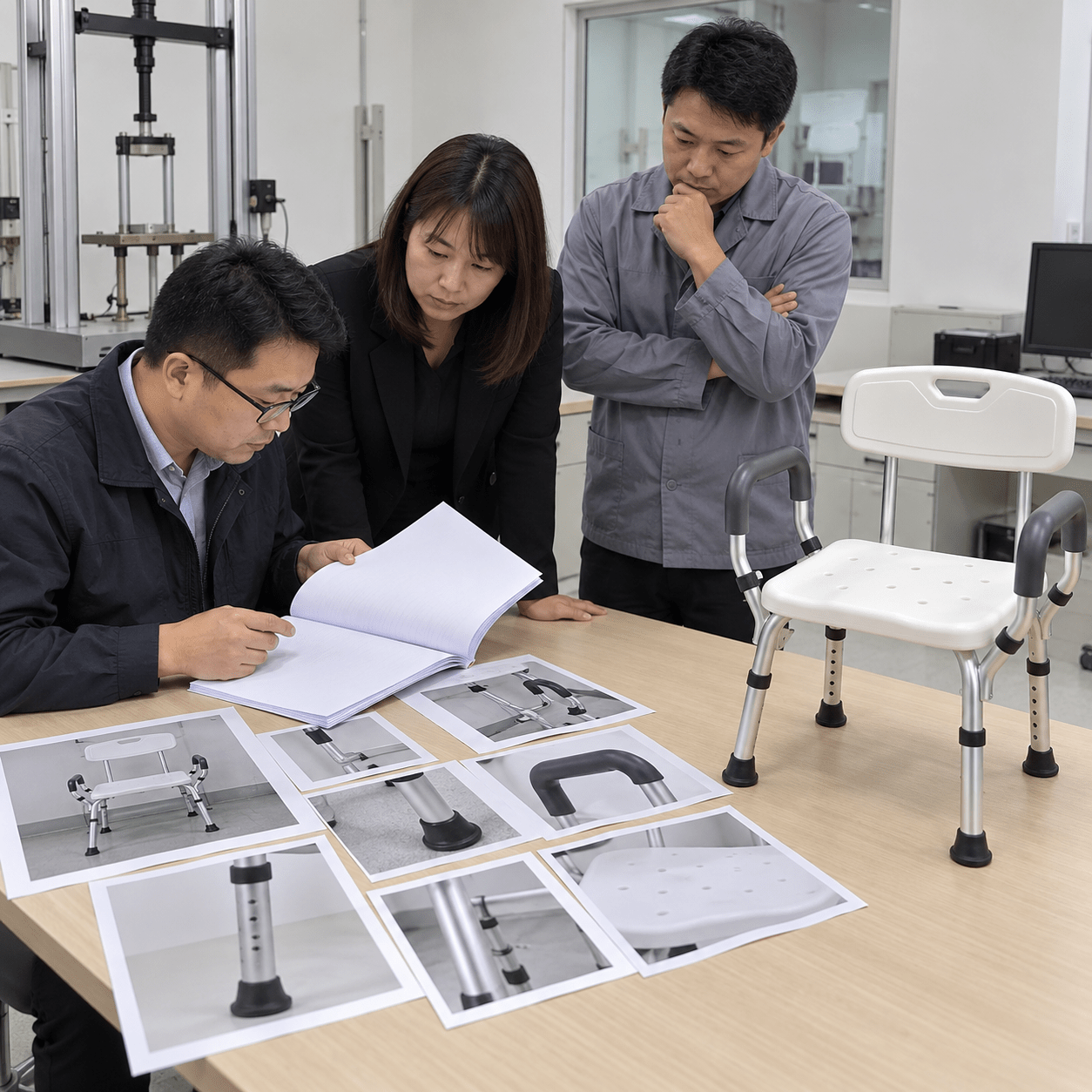
Shower chair weight capacity testing reports should state laboratory, date, method, sample identity, setup, loads, results, deviations, acceptance criteria, and authorization. Summaries cannot replace the underlying record. Page completeness and referenced attachments should be checked during review.
Which Report Fields Need Traceability?
Cross-reference photographs, model codes, drawings, parts, settings, and report pages with the offered sample. Check completeness and revision.
- Laboratory and report identity.
- Method, setup, sample, and results.
- Deviations, signatures, and attachments.
Which Report Gaps Require Clarification?
Generic family names, missing options, obsolete revisions, cropped pages, or unclear criteria leave scope unresolved. Treat gaps as open findings: sales assurance cannot close technical evidence.
- Ask for the controlled full report.
- Match with the supplier evaluation framework.
- Record acceptance or rejection reasons.
| Report field | Acceptable evidence | Warning sign | Status |
|---|---|---|---|
| Sample identity | Exact model and options | Family label only | Open/closed |
| Method/setup | Complete controlled description | Missing fixture detail | Open/closed |
| Result/criteria | Traceable outcome | Marketing summary | Open/closed |
Report quality determines what the claim means. Key Takeaway: close scope gaps before treating a capacity statement as verified.
9. How Do Suppliers Control Shower Chair Weight Capacity Testing?
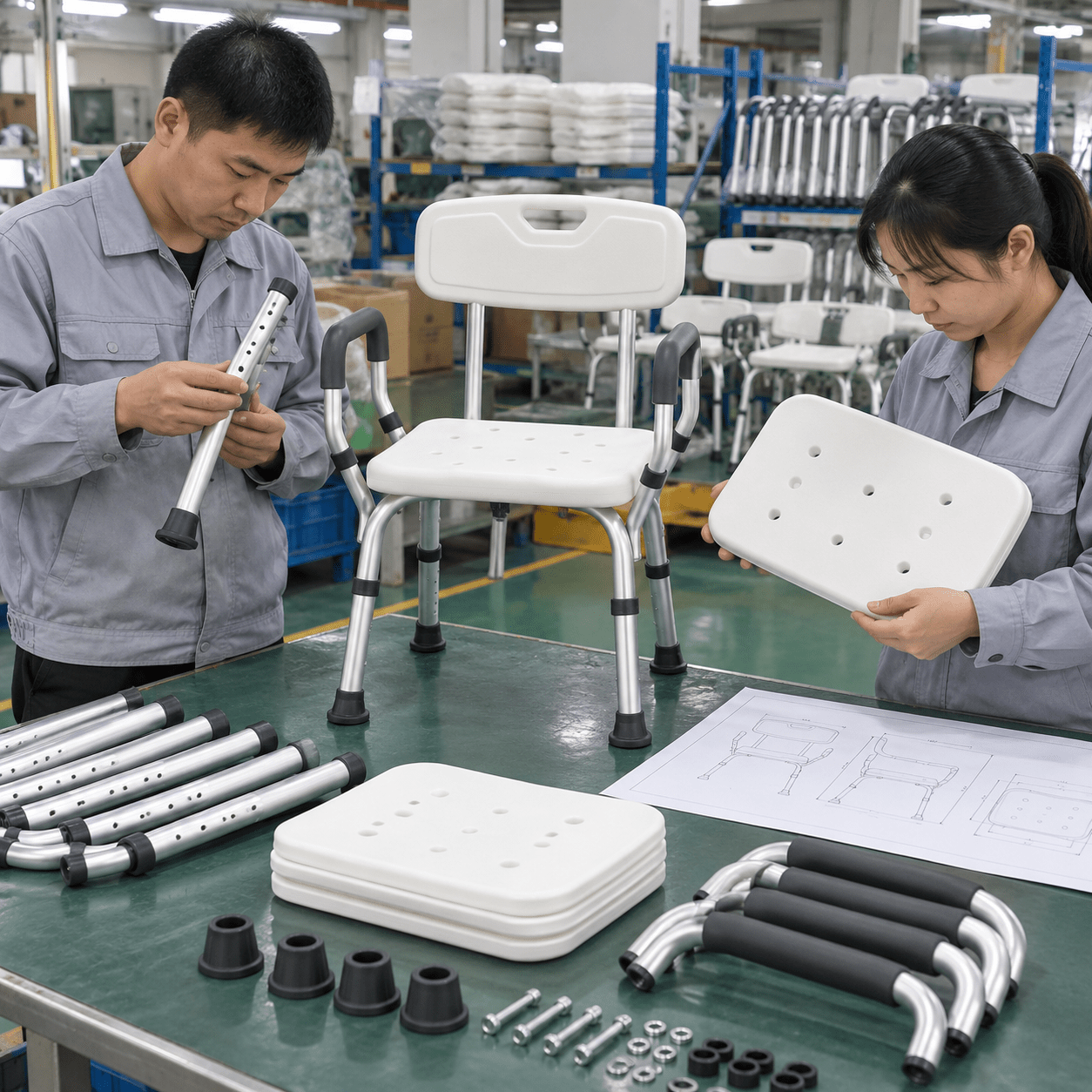
Shower chair weight capacity testing remains relevant only when production preserves tested materials, geometry, joints, molds, fasteners, feet, supports, and processes. Changes need technical review. Supplier audits should connect control records with physical production samples.
Which Production Controls Preserve the Tested Design?
Incoming materials, tube dimensions, molding, welds, coatings, fasteners, assembly, feet, and locks need controlled requirements and inspections.
- Link critical features with drawings.
- Define sampling and disposition.
- Retain batch or lot traceability.
Which Quality Records Need Buyer Review?
Incoming, in-process, final, nonconformance, rework, and change records show whether production matches evidence. Follow the changed part: even a small substitute may alter the load path.
- Review approved supplier and part identity.
- Require change notice before shipment.
- Audit critical characteristics where justified.
| Production control | Tested feature | Record | Approval gate |
|---|---|---|---|
| Material receipt | Frame and seat inputs | Incoming inspection | Identity matches |
| Process control | Welds, molding, assembly | In-process record | Limits met |
| Change control | Parts and methods | Notice and evidence review | Buyer approval |
Production control carries evidence into delivered units. Key Takeaway: require traceability from tested design to each approved production configuration.
10. How Should Buyers Approve Shower Chair Weight Capacity Testing?

Shower chair weight capacity testing should be approved through a configuration schedule, applicable method, complete report, matched sample, closed exceptions, production controls, and receiving plan. No single certificate image can replace that chain. Approval should expire or reopen when critical design changes occur.
Which Evidence Belongs in the Decision File?
Include product identity, drawings, parts, intended use, load definitions, report, sample, deviations, limitations, and technical review.
- Separate verified fields from unresolved claims.
- Record the exact approved revision.
- Retain review ownership and date.
How Should the Sample Link to Production?
Use critical dimensions, materials, supports, labels, parts, and shared bathroom-equipment receiving checks in later deliveries. Preserve the evidence chain: unapproved substitutions reopen the decision.
- Fix change-notice requirements.
- Define receiving and audit checks.
- Escalate mismatches before release.
| Approval stage | Output | Owner | Release rule |
|---|---|---|---|
| Evidence review | Matched report and configuration | Technical buyer | Scope accepted |
| Sample review | Identity and function record | Evaluation team | Exceptions closed |
| Production | Controls and receiving plan | Procurement | Tested state preserved |
The final approval should be reproducible. Key Takeaway: release orders only when test evidence, sample identity, and production controls agree.
Conclusion
Capacity testing becomes useful when terminology, configuration, loads, setup, reports, production, and receiving controls form one evidence chain. A headline number without that chain cannot support a responsible comparison. For help structuring shower-chair product evidence and sourcing requirements, contact us today.
Reliable procurement treats load claims as traceable technical records rather than sales labels. That discipline also gives service teams a clear baseline after delivery.
FAQ
Can one capacity number describe every configuration?
No. Seats, arms, backs, legs, feet, height settings, fasteners, and revisions can alter test scope and product behavior. Match every option with the tested sample before comparing ratings.
What’s the difference between user mass and test load?
User mass describes an approved user-related limit, while test load describes a condition applied under a method. They are not automatically interchangeable. The report should define both terms and their relationship.
How do I know whether an armrest was included in testing?
Check sample identity, drawings, photographs, setup, load direction, results, and option lists in the controlled report. Confirm that the arm mount and lock match production.
Can a supplier test report replace sample inspection?
No. The report addresses defined tests; sample inspection confirms identity, configuration, condition, dimensions, function, and buyer-specific workflow. Both records should point to the same revision.
How should production changes affect approval?
Require notification, technical impact review, updated evidence where necessary, sample confirmation, and written approval before changed units ship. Receiving teams should know which changes require escalation.
