
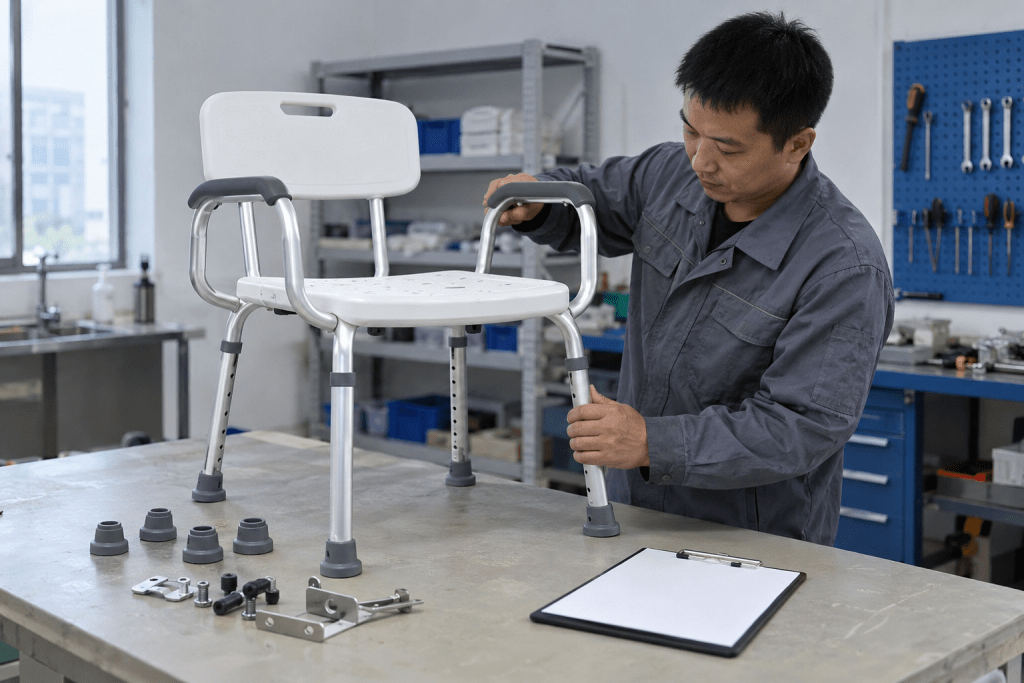
A shower chair maintenance checklist should cover product identity, frame, seat, supports, adjustments, feet, fasteners, cleaning damage, spare parts, records, and release status. A chair may look clean while one height pin is only partly engaged or a foot is beginning to split. Visual appearance cannot replace hands-on function checks. This guide helps facilities, distributors, and rental fleets build a repeatable inspection and escalation system for the exact configuration they own.
1. What Is a Shower Chair Maintenance Checklist?
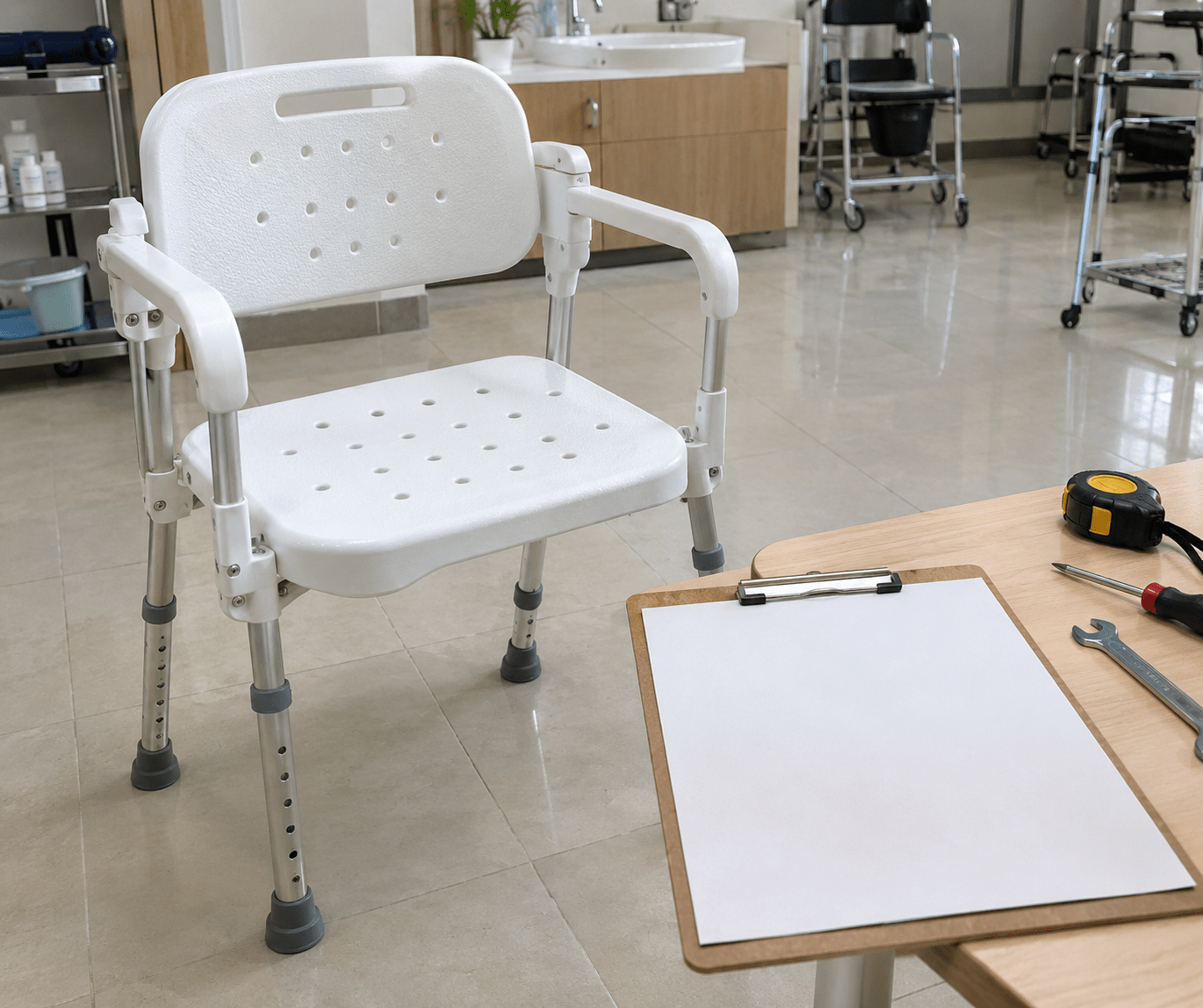
A shower chair maintenance checklist is a controlled record that tells a defined person what to inspect, how to classify findings, when to stop use, and who may release the unit. It is not one universal form for every product state. Pre-use, scheduled, incident, and return-to-service checks answer different questions.
Which Checklist Types Need Separation?
Pre-use checks find obvious readiness problems, while scheduled maintenance examines structure, adjustments, wear, parts, and recurring defects in more depth. Post-cleaning, post-transport, and incident checks respond to specific exposure.
- Name the trigger and inspection depth.
- Assign a qualified owner.
- Define pass, hold, repair, and release outputs.
Which Product States Need Different Gates?
In-service, stored, shared, damaged, repaired, and quarantined chairs need visible status. Classify before checking: an incident review should not be reduced to a routine tick box.
- Keep failed units outside usable stock.
- Record configuration and location.
- Link repaired units to closeout evidence.
| Checklist type | Trigger | Owner | Output |
|---|---|---|---|
| Pre-use | Before task | Trained user/caregiver | Ready or hold |
| Scheduled | Approved interval | Equipment team | Service decision |
| Return-to-service | Repair or incident closure | Authorized reviewer | Documented release |
Different gates prevent a light inspection from standing in for technical maintenance. Key Takeaway: match the checklist type to the chair’s current state and risk.
2. Who Owns a Shower Chair Maintenance Checklist?

A shower chair maintenance checklist needs clear limits for users, caregivers, cleaning staff, equipment teams, technicians, supervisors, and suppliers. Routine observers can identify movement or damage, but they should not authorize structural repairs outside their competence. The program should make escalation easier than continued use.
Which Roles Perform Which Checks?
Users and caregivers can confirm obvious condition and setup; housekeeping can report cleaning-related damage; technicians can inspect structures, locks, parts, and repairs. Supervisors own records and release authority.
- Define permitted visual and functional checks.
- Provide simple stop-use criteria.
- Restrict technical work to qualified roles.
Which Findings Need Escalation?
Instability, structural damage, lock failure, missing parts, corrosion, sharp edges, unreadable critical labels, or repeat defects need a named escalation path. Do not normalize the defect: repeated adjustment is not a repair.
- Tag and segregate the unit.
- Preserve photos and product identity.
- Escalate recurring issues by model or batch.
| Role | Permitted check | Escalation | Limit |
|---|---|---|---|
| Care staff | Visible readiness and setup | Hold unsafe unit | No structural repair |
| Cleaning staff | Surface and post-cleaning condition | Report damage/residue | Follow approved method |
| Technician | Detailed inspection and service | Supplier/engineering review | Approved parts and procedures |
Role boundaries make findings actionable. Key Takeaway: give every observer a clear stop rule and every repair a qualified owner.
3. How Often Should a Shower Chair Maintenance Checklist Run?
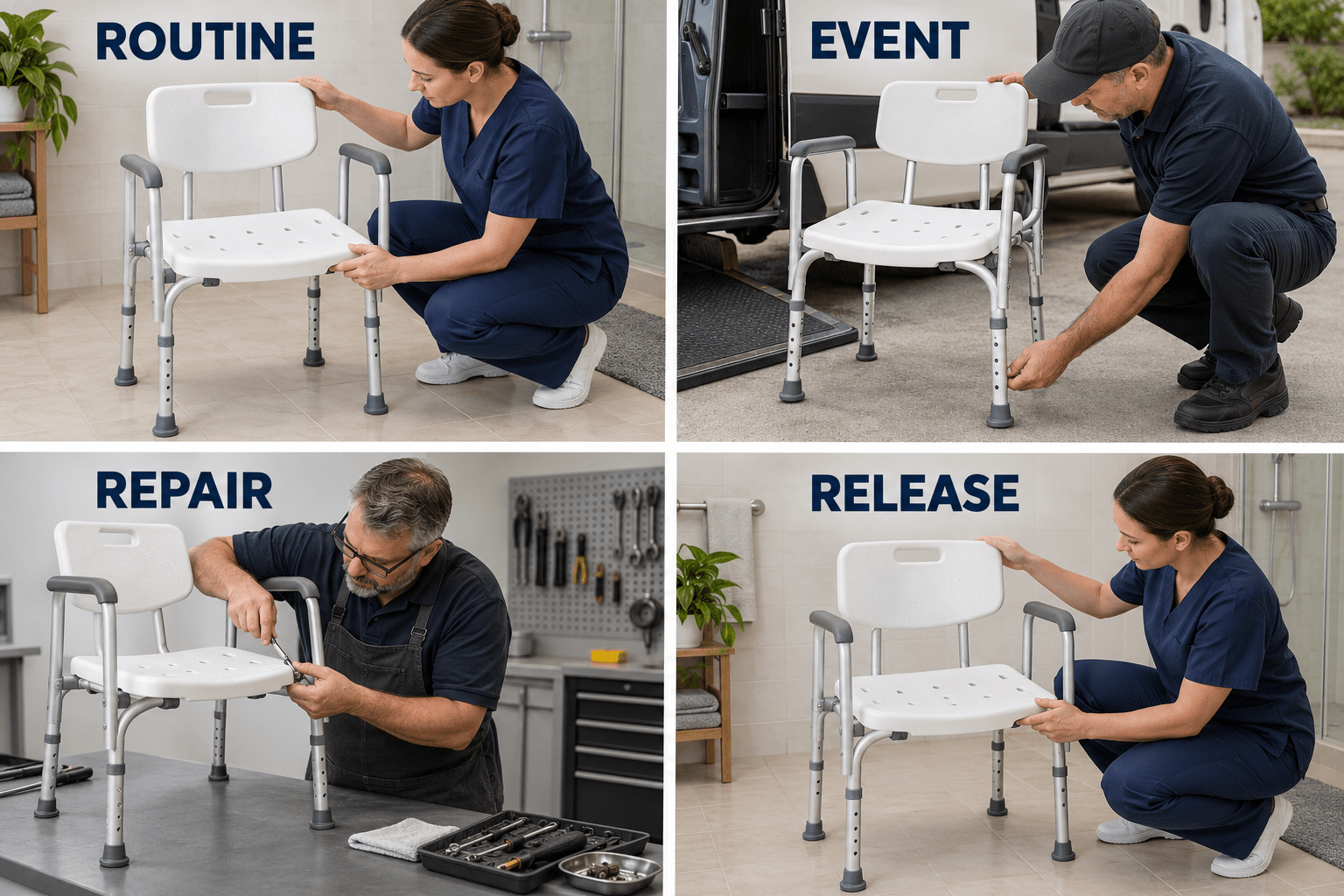
A shower chair maintenance checklist should run at product-appropriate intervals and whenever a defined event can change condition. Calendar frequency alone misses drops, transport, adjustment errors, complaints, unusual loading, and cleaning damage. The source of each interval should be recorded.
Which Triggers Need Immediate Checks?
Delivery, assembly, height change, folding, drop, overload concern, complaint, repair, transport damage, and chemical exposure may require inspection before further use.
- State which events trigger a hold.
- Match the check depth to the event.
- Record who cleared the finding.
Which Factors Affect Scheduled Frequency?
Usage rate, shared versus assigned use, wet exposure, storage, transport, user task, cleaning cycle, and supplier guidance can change inspection needs. Use evidence, not habit: review frequency when defect trends change.
- Track repeat failures and parts use.
- Increase review after uncontrolled events.
- Keep the rationale with the maintenance plan.
| Trigger | Check scope | Timing source | Status |
|---|---|---|---|
| Routine use | Defined readiness check | Facility plan/instructions | Scheduled |
| Incident or complaint | Targeted plus full safety check | Event procedure | Immediate hold |
| Repair or part change | Assembly and function closeout | Service procedure | Before release |
Frequency should respond to actual service conditions. Key Takeaway: combine scheduled checks with event-triggered inspections and trend review.
4. How Does a Shower Chair Maintenance Checklist Track Identity?
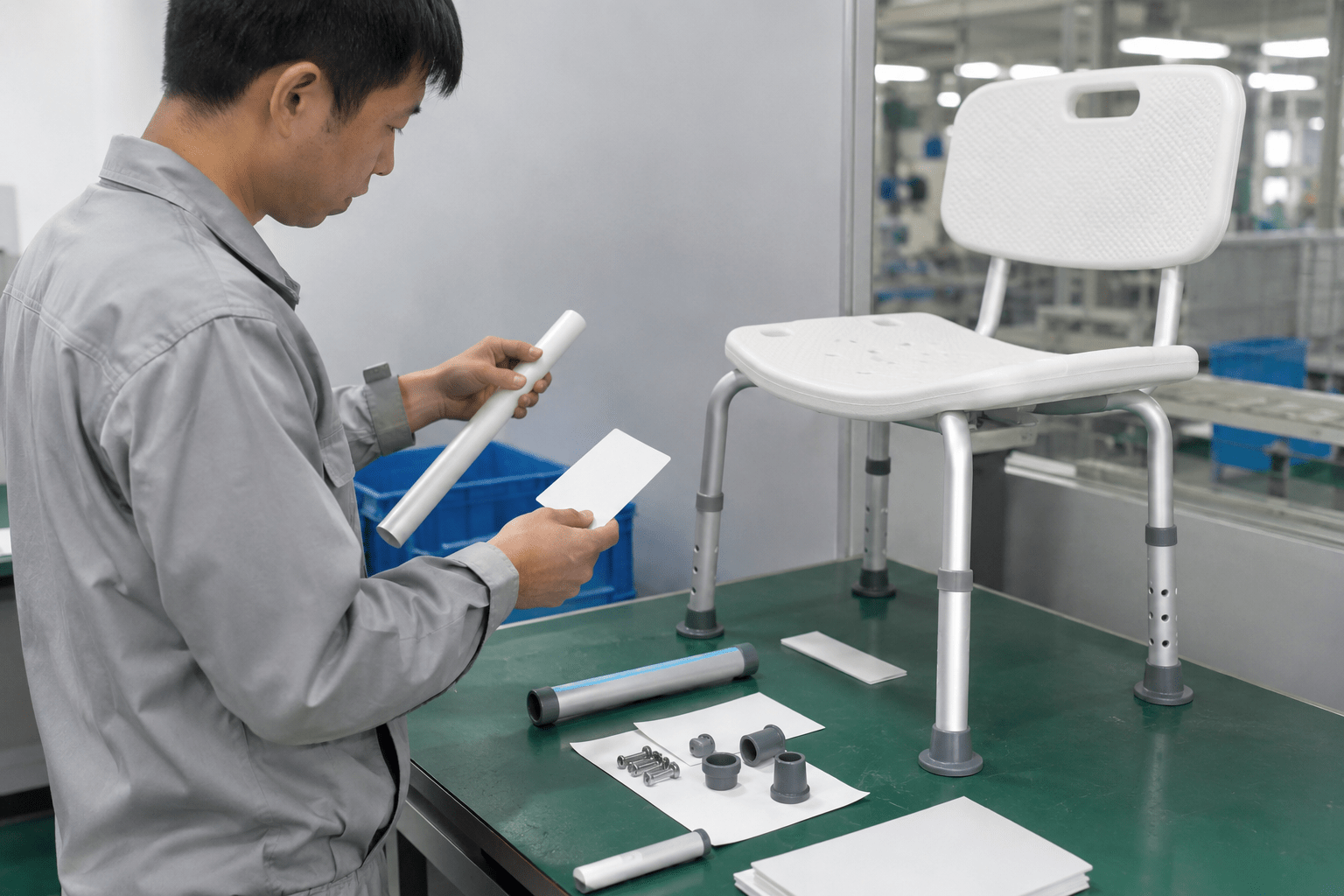
A shower chair maintenance checklist tracks product code, batch or serial reference, revision, configuration, supports, feet, accessories, location, and responsible owner. Without identity, a passed check can be attached to the wrong chair. Visually similar units may use different parts or instructions.
Which Identity Fields Matter?
Record the fields that connect the physical unit with drawings, manuals, approved samples, purchase records, and spare parts. Use only information actually present and controlled.
- Capture model and revision where available.
- Describe fitted supports and adjustment state.
- Confirm unit and record identifiers match.
Which Document Links Need Control?
Manuals, parts lists, inspection forms, repair records, change notices, and approved-sample references should use the same configuration identity. Follow the record chain: a current form with an old parts list is still uncontrolled.
- Remove obsolete documents from work areas.
- Record accepted substitutions.
- Preserve supplier clarification with the unit family.
| Identity field | Approved source | Mismatch risk | Action |
|---|---|---|---|
| Model/revision | Label and purchase file | Wrong procedure | Hold and reconcile |
| Configuration | Physical chair and schedule | Missing or substituted support | Correct or assess |
| Parts reference | Controlled list | Incompatible replacement | Do not install |
Identity control keeps maintenance specific. Key Takeaway: no inspection or repair is complete until the record matches the physical chair.
5. How Does a Shower Chair Maintenance Checklist Inspect Frames?
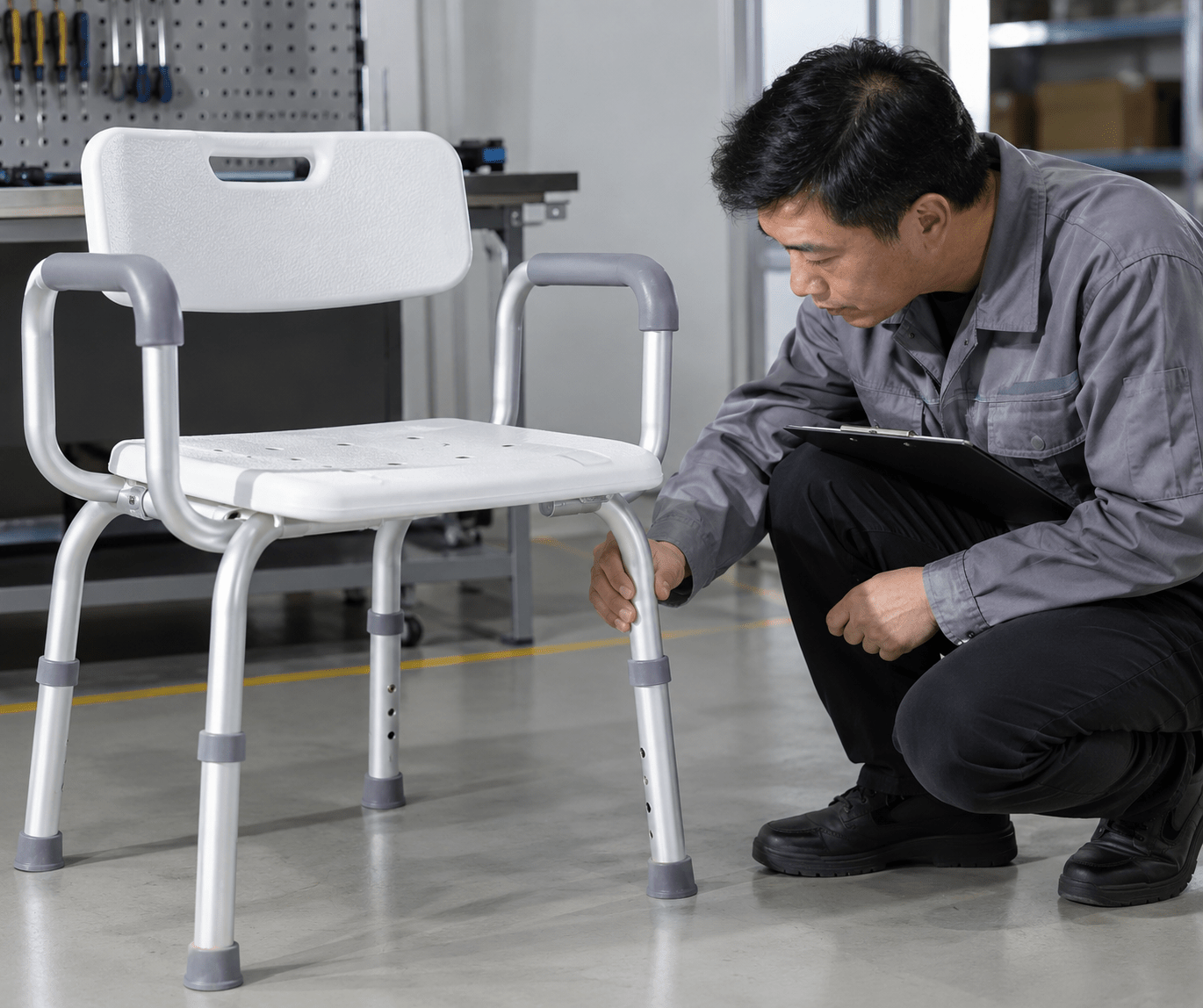
A shower chair maintenance checklist should inspect frame tubes, bends, welds, braces, joints, coatings, holes, drainage points, and end caps under good lighting. It should also test for rocking, twist, looseness, unusual movement, sharp edges, and permanent deformation. Finish changes can point to deeper exposure.
Which Structural Areas Need Visual Checks?
Inspect high-load and water-entry areas from more than one angle. Compare left and right structures where symmetry should exist.
- Look at weld toes, holes, bends, and tube ends.
- Check coating continuity and corrosion signs.
- Inspect hidden undersides and braces.
Which Functional Signs Need Hands-On Checks?
Use an approved no-user setup to detect rocking, movement, noise, joint play, or misalignment. Let the frame answer: appearance alone cannot show whether connected parts move correctly.
- Place the chair on the defined test surface.
- Apply only the approved check method.
- Stop for structural movement or sharp damage.
| Frame area | Check | Failure sign | Release rule |
|---|---|---|---|
| Tube/bend | Visual alignment | Dent or permanent deformation | Technical hold |
| Weld/joint | Light and movement check | Crack, separation, looseness | Remove from use |
| Finish/opening | Surface and drainage review | Corrosion, coating lift, trapped water | Assess before release |
Frame checks combine visual and functional evidence. Key Takeaway: quarantine structural damage instead of compensating through repeated adjustment.
6. How Does a Shower Chair Maintenance Checklist Inspect Seating?
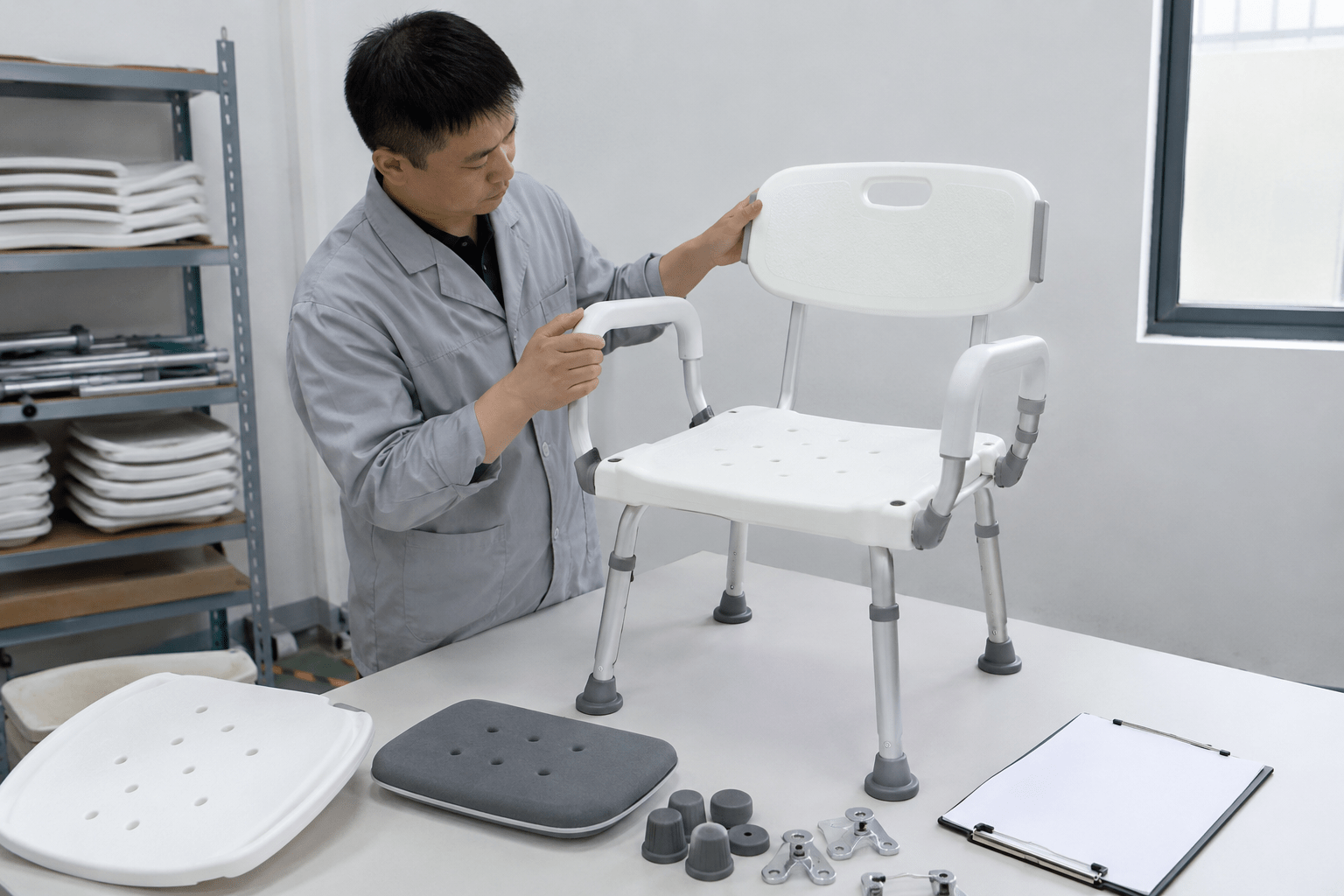
A shower chair maintenance checklist should inspect the seat, back, arms, padding, seams, mounts, contour, drainage, surface integrity, and retained water. Every user-contact part needs both condition and attachment checks. Removable components should return in the correct orientation.
Which Seat and Back Areas Need Review?
Check top and underside surfaces for cracks, flex change, rough edges, blocked drainage, loose mounts, torn padding, swelling, residue, or water retention.
- Inspect around holes and fasteners.
- Press only as the procedure allows.
- Compare padding and covers with approved condition.
Which Arms and Supports Need Review?
Grip surfaces, locks, mount points, alignment, movement, padding, and removable interfaces need deliberate checks. Test the connection: an intact grip can still sit on a loose mount.
- Confirm full seating and locking.
- Check left-right alignment.
- Hold cracked, torn, or unstable supports.
| Seating component | Pass condition | Hold condition | Service action |
|---|---|---|---|
| Seat/back | Intact, secure, draining | Crack, looseness, retained water | Assess or replace |
| Arm/support | Stable, aligned, locked | Play, damaged grip, failed lock | Hold for service |
| Padding | Sealed and correctly fitted | Tear, swelling, trapped moisture | Approved replacement |
Contact parts must remain secure as well as clean. Key Takeaway: inspect surfaces, mounts, drainage, and supports as one seating system.
7. How Does a Shower Chair Maintenance Checklist Inspect Adjustments?
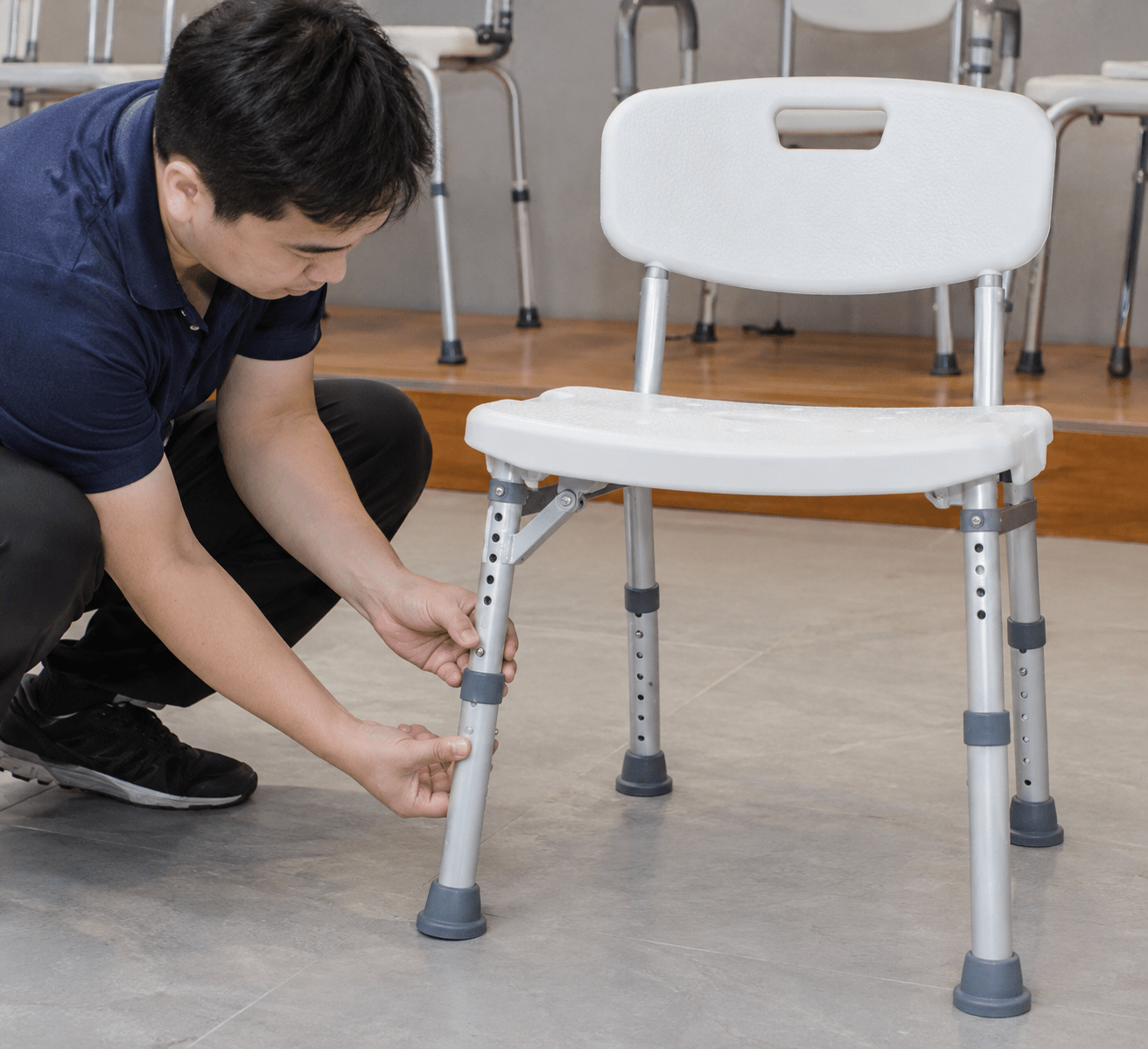
A shower chair maintenance checklist inspects height buttons, pins, collars, folding latches, braces, arm locks, back mounts, accessory clips, and retainers through their approved movement. Partial engagement is a failure even when the chair stands. Equal settings should be confirmed across related legs.
Which Locks Need Functional Checks?
Move each interface through the defined range without a user, then confirm positive engagement, alignment, and retention. Avoid forcing a stuck mechanism.
- Check each pin visually and physically.
- Confirm folding braces reach the intended state.
- Inspect holes and collars for wear.
Which Adjustment Errors Need Correction?
Unequal legs, reversed parts, stuck buttons, worn holes, missing retainers, and partly closed latches require a hold. Check twice after change: the setting and its lock are separate facts.
- Restore only approved configurations.
- Record parts changed during correction.
- Repeat stability and support checks.
| Adjustment | Test | Warning sign | Corrective action |
|---|---|---|---|
| Height pin | Cycle and confirm engagement | Partial projection or sticking | Hold and service |
| Folding latch | Open, close, and verify | Play or incomplete lock | Technical review |
| Support mount | Fit, lock, and pull check | Movement or wrong orientation | Reassemble/replace |
Adjustment checks protect configuration integrity. Key Takeaway: verify full engagement after every movement, cleaning, transport, or repair.
8. How Does a Shower Chair Maintenance Checklist Inspect Feet?
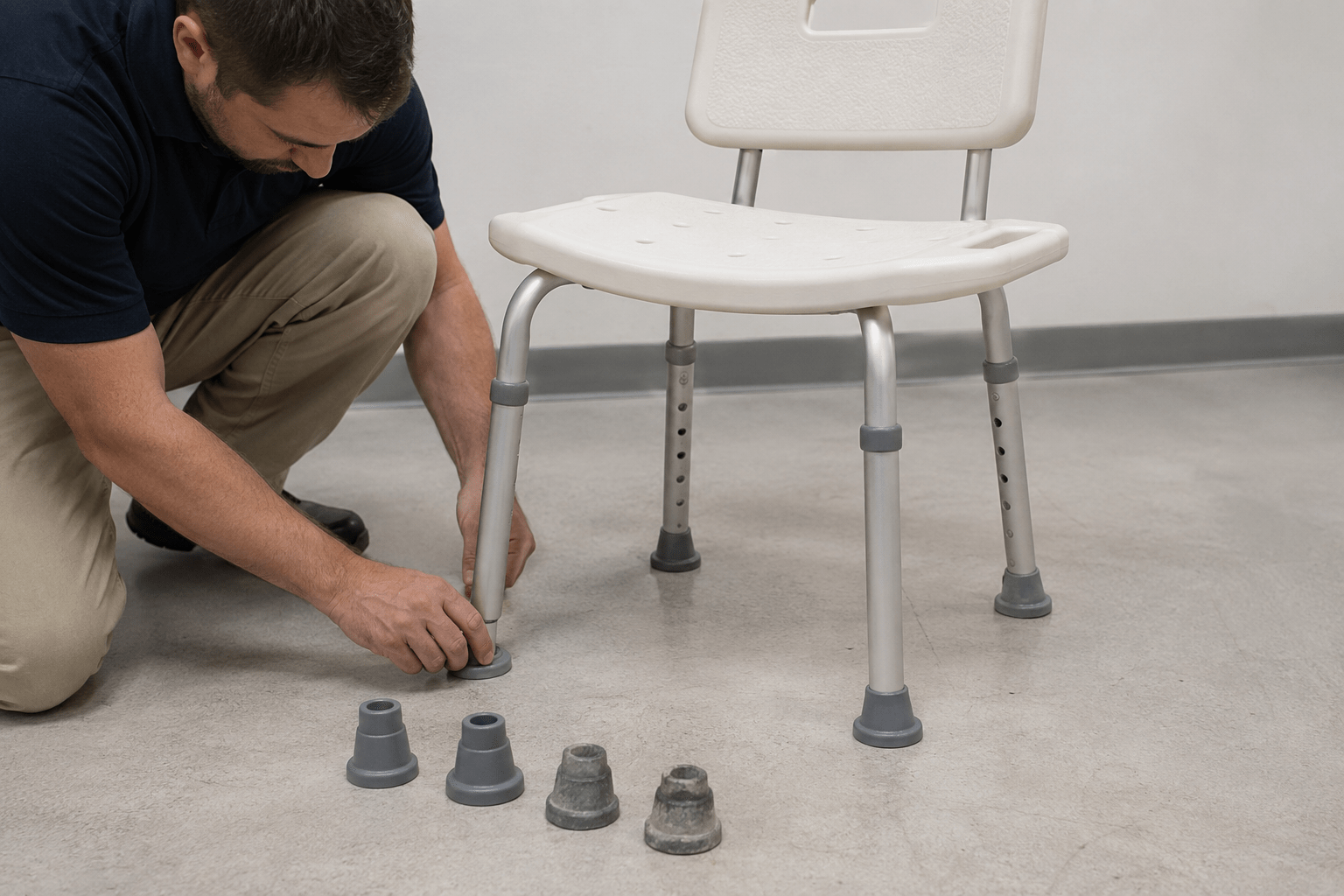
A shower chair maintenance checklist should inspect foot tread, hardness change, cracks, deformation, attachment, cleanliness, matching height, and full floor contact. Feet connect the frame to the wet surface; generic appearance does not prove fit. The check should include the specified floor condition.
Which Foot Conditions Need Review?
Look for splitting, glazing, wear, flattening, loose fit, rotation, contamination, missing tread, and unequal replacement parts. Compare all legs together.
- Remove debris within the approved method.
- Check retention and leg insertion depth.
- Replace only with controlled parts.
Which Floor Checks Belong in the Process?
Assess rocking, grout position, slope, curved tub surfaces, wet contact, and controlled movement on relevant floors. Test the interface: a foot condition cannot be judged in the air.
- Use an empty chair first.
- Keep unsafe surfaces out of the trial.
- Apply related commode-chair inspection controls when configurations overlap.
| Foot condition | Floor effect | Replacement rule | Release |
|---|---|---|---|
| Even tread and secure fit | Full intended contact | Continue inspection | Possible pass |
| Crack or loose mount | Reduced/uncertain contact | Approved replacement | Hold |
| Mixed height or geometry | Rocking or load shift | Correct complete set | Retest required |
Feet require product and floor review together. Key Takeaway: release only when every approved foot is secure and fully contacts the test surface.
9. How Does a Shower Chair Maintenance Checklist Control Parts?
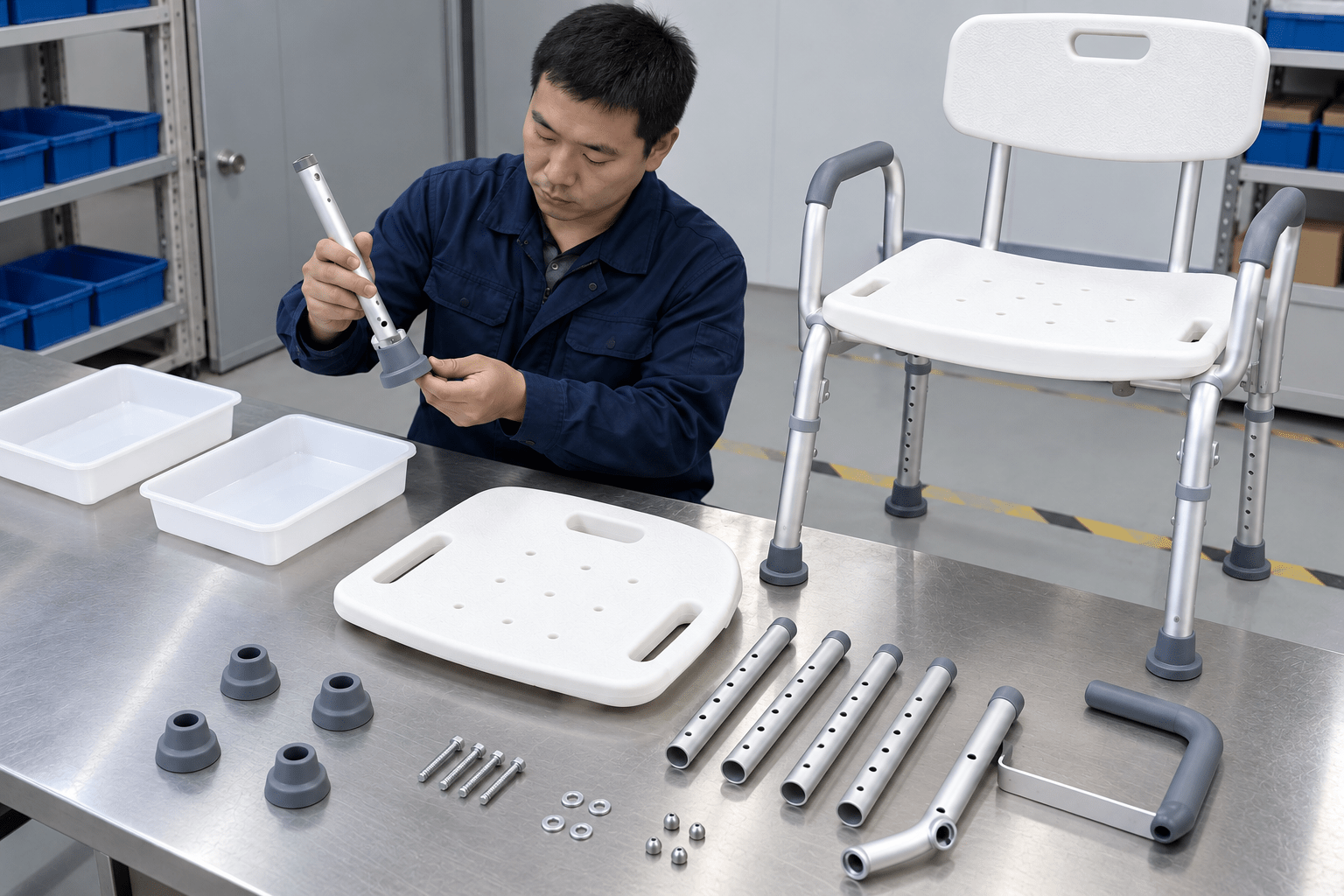
A shower chair maintenance checklist should match every replacement to model, revision, material, dimensions, mount, orientation, and approved supplier reference. Generic substitutions can change height, grip, support, drainage, or corrosion behavior. Parts control continues through repair closeout.
Which Replacement Fields Need Matching?
Confirm identity before removing packaging or altering the chair. Record approved equivalents and the authority that accepted them.
- Match part number or controlled description.
- Compare geometry, interface, and material.
- Keep lot or source details where required.
Which Repair Closeout Checks Matter?
Verify assembly, fasteners, settings, function, stability, cleaning, labels, and the returned configuration. Close the whole job: installing a part is not the same as releasing the chair.
- Inspect adjacent components for related damage.
- Repeat affected functional checks.
- Update the service and parts record.
| Part field | Identity check | Closeout test | Record |
|---|---|---|---|
| Foot/support | Model, size, mount, orientation | Contact or lock function | Part and unit identity |
| Fastener | Material, thread, head, locking | Joint security | Method and reviewer |
| Seat/back | Revision, mounts, finish | Alignment, drainage, stability | Change and release |
Parts need traceability through final function. Key Takeaway: approve replacements by exact interface and close the repair with a complete release check.
10. How Should a Shower Chair Maintenance Checklist Be Approved?
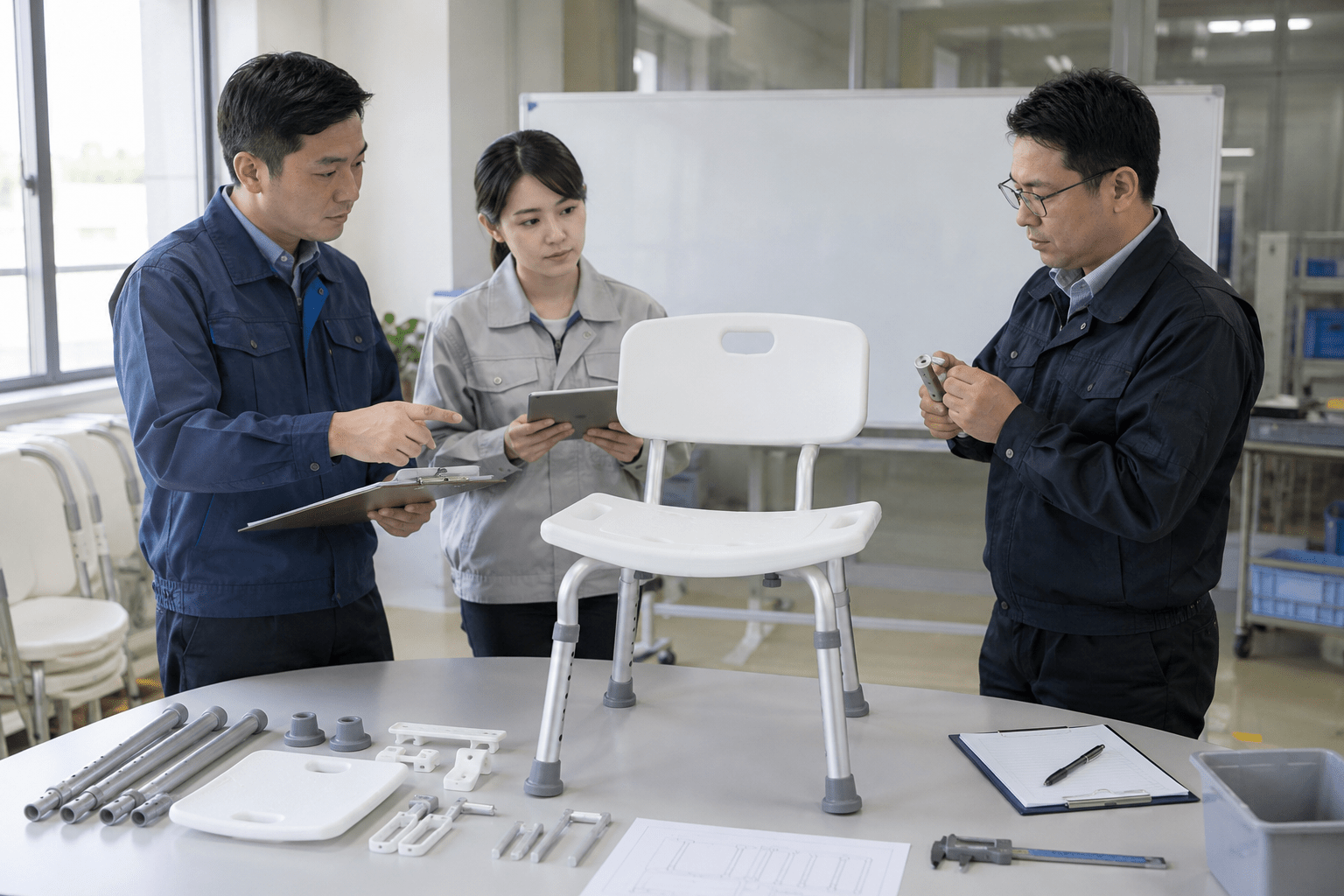
A shower chair maintenance checklist should be approved only when its fields, roles, intervals, stop rules, repair boundaries, records, and release authority match the chair and service environment. The form must be usable during real work, not only complete on paper. Management review should connect defects with procurement and training decisions.
Which Record Fields Make the Checklist Usable?
Include date, unit identity, location, product state, condition, result, action, responsible person, due date, and release status. Use structured fields plus a concise observation area.
- Make failed status unmistakable.
- Require closure evidence for open actions.
- Retain the current checklist revision.
Which Metrics Help Buyers Review Service?
Repeat defects, part use, holds, turnaround, missing records, training gaps, and configuration-specific trends can reveal program weaknesses. Turn records into action: a growing defect count should change checks, parts, or sourcing.
- Review patterns by model, batch, and location.
- Compare with supplier support expectations.
- Feed approved changes back into receiving and training.
| Record field | Management use | Owner | Gate |
|---|---|---|---|
| Finding/status | Identify immediate risk | Inspection lead | Hold or pass |
| Action/closure | Confirm correction | Service lead | Release approval |
| Trend data | Improve program and sourcing | Procurement/quality | Review decision |
Approval makes the checklist part of an operating system. Key Takeaway: use records to control release today and improve purchasing tomorrow.
Conclusion
A useful checklist follows the chair from identity and inspection through adjustment, feet, parts, repair, records, and authorized release. It combines visual review with functional checks and makes quarantine easier than informal workarounds. For help translating product requirements into supplier questions and maintenance evidence, contact us today.
We help buyers connect configuration control, spare parts, and service decisions before volume orders. Reliable bathroom equipment depends on disciplined inspection long after the first delivery.
FAQ
Can a visual check replace a functional check?
No. Visual inspection can find cracks, wear, corrosion, or missing parts, but it may not reveal partial lock engagement, movement, rocking, or a failed adjustment. Use both within the approved procedure.
What’s the best maintenance interval for shared chairs?
The best interval follows current product guidance, facility policy, usage rate, wet exposure, transport, defect history, and event triggers. Review it when service data changes.
How do I know when a chair should be quarantined?
Quarantine it when a defined stop rule is met or when identity, structural condition, locking, completeness, or safe function is uncertain. Keep it separated until an authorized disposition.
Can generic spare feet be used?
Not without verified compatibility and approval. Foot geometry, attachment, material, height, and contact behavior can change chair stability and floor interaction.
How should a repaired chair return to service?
Confirm part identity, correct assembly, affected functions, complete configuration, cleaning status, labels, records, and authorized release. Repeat broader stability checks when the repair can affect geometry.
