
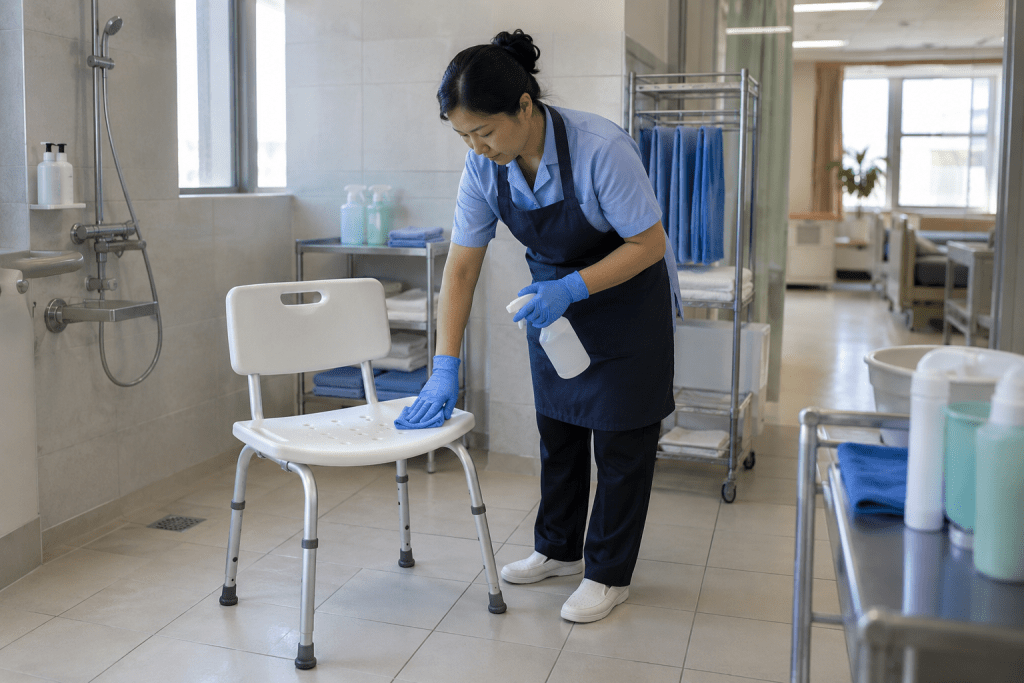
Shower chair cleaning and disinfection should follow the product instructions, facility policy, surface compatibility limits, and a documented release check. A seat may look clean while water, residue, or damage remains beneath it, inside a leg tube, or around a support mount. Improvised chemical use can also damage surfaces without controlling the intended hygiene risk. This guide gives care facilities, rental fleets, and distributors a configuration-specific workflow from collection to release. It does not prescribe one chemical or contact time for every chair; those details must come from controlled sources.
1. What Is Shower Chair Cleaning and Disinfection?
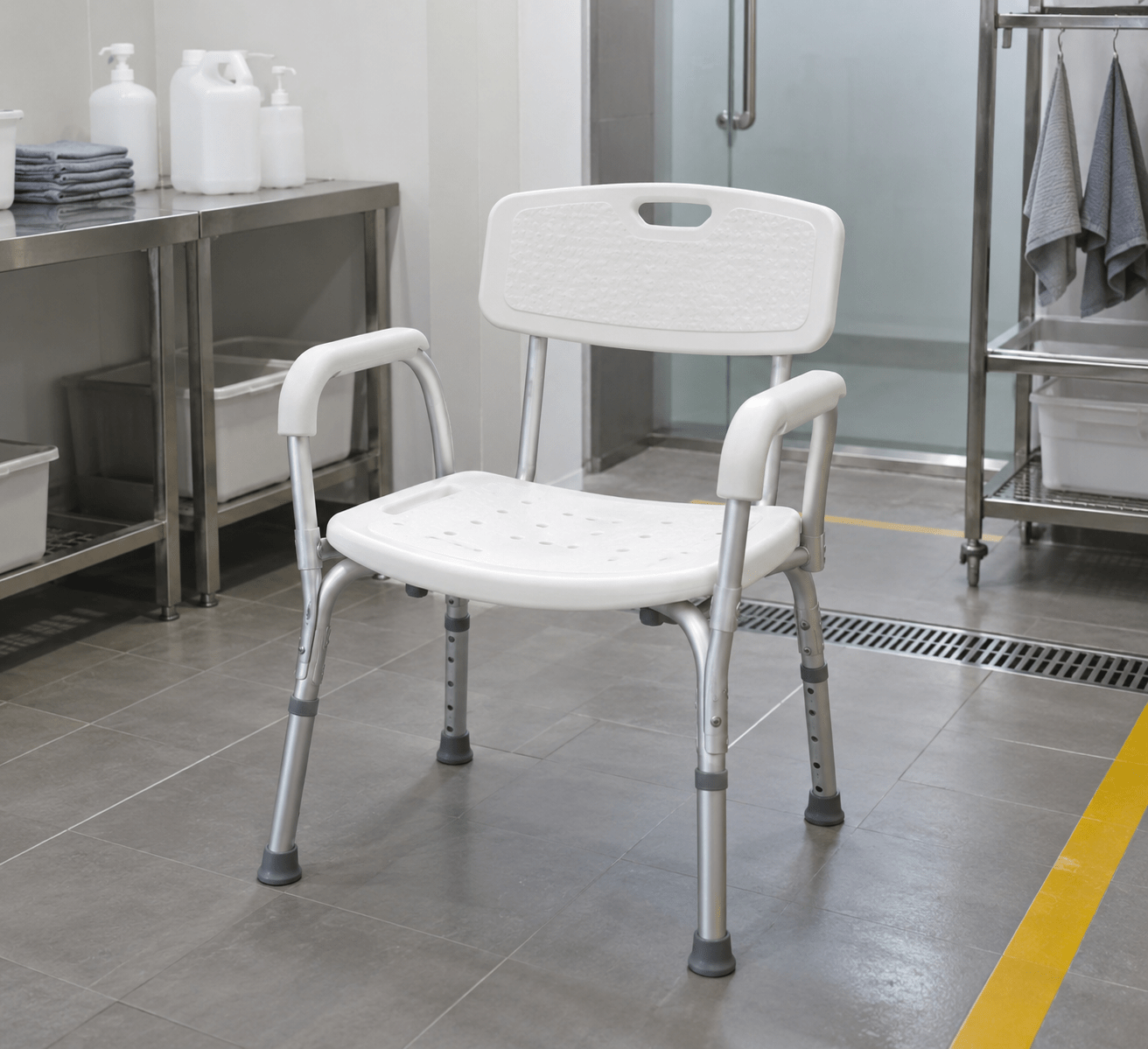
Shower chair cleaning and disinfection is a controlled sequence that removes soil, applies an approved hygiene process, manages rinsing and drying, checks function, and records release. Cleaning and disinfection are separate tasks, even when a facility combines steps under one procedure. The required sequence depends on the chair, its use state, and current instructions.
Which Terms Need Separate Definitions?
Cleaning removes visible and transferable soil so later steps can work as intended. Disinfection applies a defined method after the required preparation; rinsing, drying, inspection, and release then address residues, retained water, damage, and function.
- Define each step and its owner.
- Name the approved input and evidence source.
- State the output that permits the next step.
Which Product States Need Different Workflows?
Assigned-use, shared-use, rental-return, visibly soiled, damaged, and storage-ready chairs do not automatically follow the same route. Start with status: staff must know why the chair entered the process before selecting the workflow.
- Separate routine turnover from damage review.
- Isolate unknown or visibly contaminated returns.
- Keep held products out of clean storage.
| Process term | Purpose | Trigger | Required output |
|---|---|---|---|
| Cleaning | Remove soil | Use or visible residue | Accessible clean surfaces |
| Disinfection | Apply approved control | Defined facility condition | Completed controlled method |
| Release | Confirm readiness | Process complete | Dry, functional, recorded chair |
Clear definitions stop staff from treating a quick wipe as a complete process. Key Takeaway: define the product state and every required output before work begins.
2. Who Owns Shower Chair Cleaning and Disinfection?
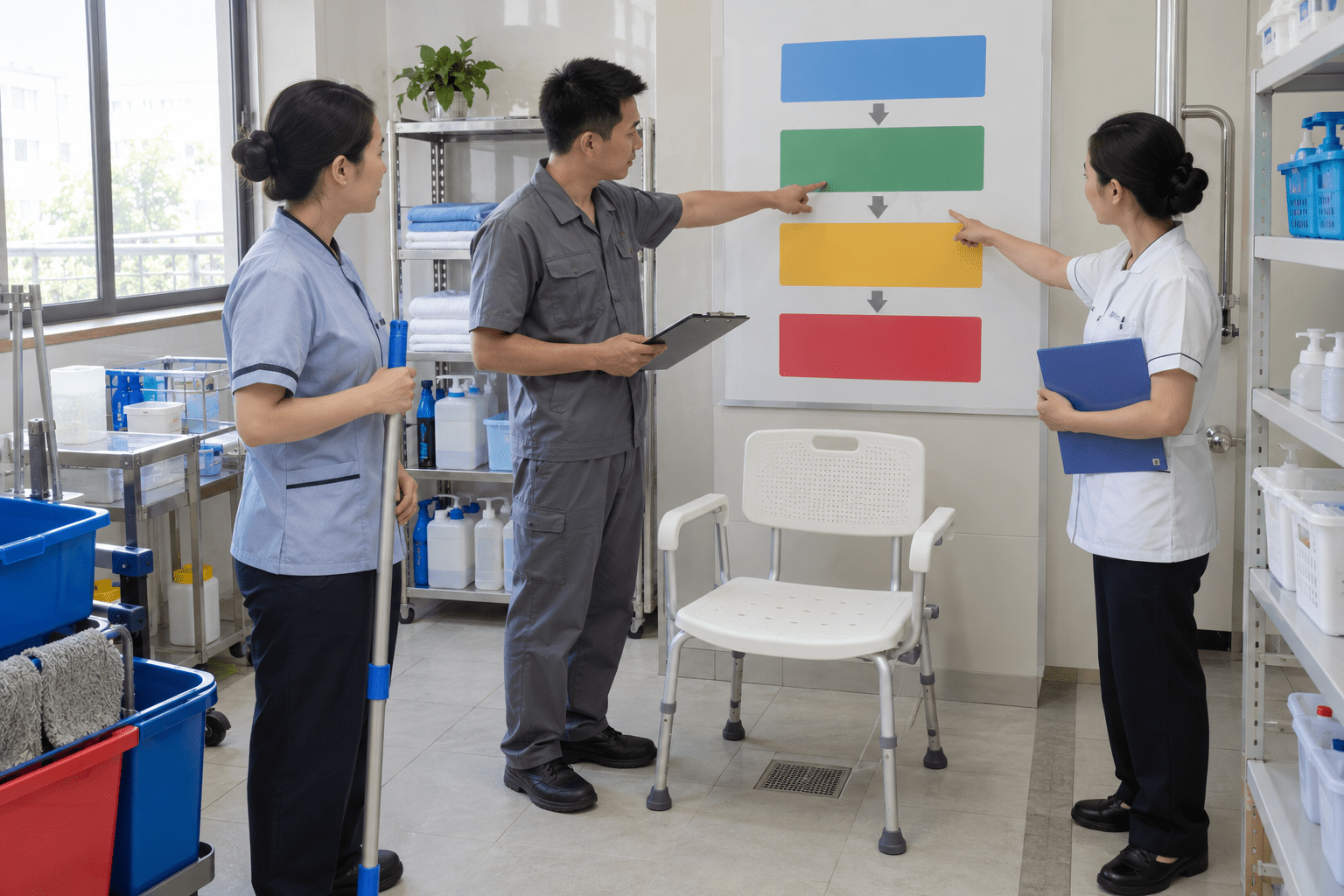
Shower chair cleaning and disinfection needs named responsibility for collection, isolation, cleaning, inspection, repair, release, storage, and reassignment. Ownership may be divided among caregivers, housekeeping, nursing, equipment teams, infection-control staff, and suppliers. A shared chair should never depend on an assumed handoff.
Which Roles Need Clear Responsibilities?
Each role should perform only the checks and treatments covered by its training. Equipment technicians may control repairs, while cleaning staff control the approved surface process and supervisors control release.
- Assign routine, technical, and approval tasks.
- Define training and protective equipment needs.
- Give each role a stop-work route.
Which Handoffs Need Documentation?
Collection, dirty-area entry, component removal, cleaning, technical hold, final inspection, and clean storage need visible status. Make the state obvious: another shift should understand the chair without relying on memory.
- Use unit identity and time at each handoff.
- Record missing parts or visible damage immediately.
- Prevent clean and unprocessed chairs from mixing.
| Role | Core task | Record | Escalation |
|---|---|---|---|
| Care staff | Collect and identify | Use-state record | Visible damage or unknown soil |
| Cleaning team | Run approved process | Completed workflow | Incompatible surface or residue |
| Equipment team | Inspect and repair | Hold/repair record | Structural or lock failure |
The workflow needs one accountable release point. Key Takeaway: assign every handoff so no chair becomes clean by assumption.
3. Which Instructions Guide Shower Chair Cleaning and Disinfection?
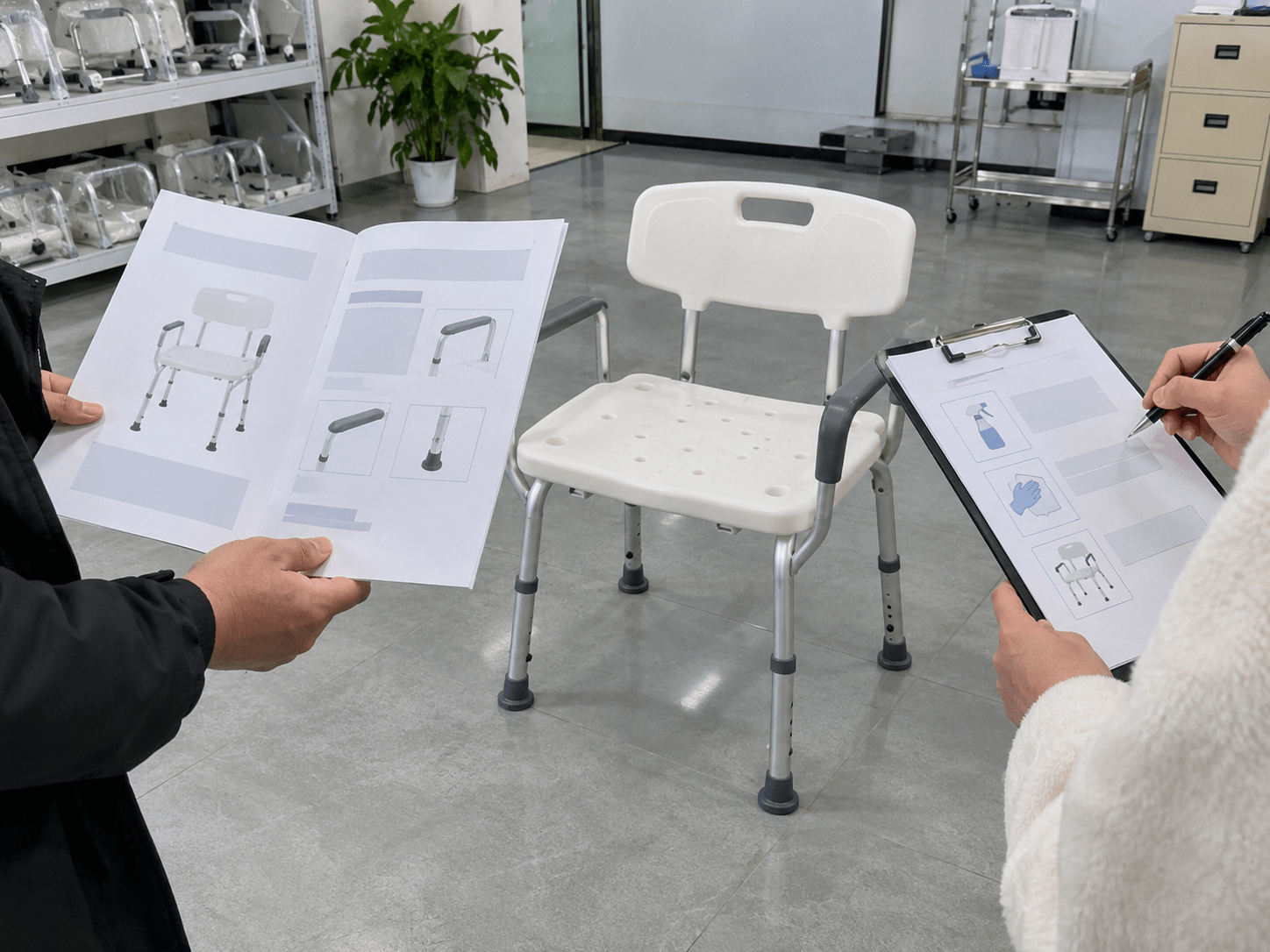
Shower chair cleaning and disinfection should be built from the current product instructions, facility hygiene policy, chemical controls, and the exact chair configuration. A generic procedure can conflict with padding, coatings, labels, fasteners, hollow tubes, or removable parts. Resolve conflicts before routine use.
Which Manufacturer Details Need Review?
Look for approved or prohibited agents, concentration source, application method, exposure limit, temperature, rinsing, drying, disassembly, and inspection instructions. Where a claim is missing, treat it as an open question rather than permission.
- Match instructions to model and revision.
- Confirm whether removable parts are included.
- Retain the supplier response with the procedure.
Which Facility Policies Need Alignment?
Facility controls may address personal protective equipment, chemical preparation, area separation, spills, ventilation, records, and damaged devices. Reconcile both sources: product compatibility and facility hygiene requirements must work together.
- Name the decision owner for conflicts.
- Test the full workflow on an approved sample.
- Update training when either source changes.
| Instruction source | Required detail | Possible conflict | Decision owner |
|---|---|---|---|
| Product instructions | Surface and method limits | Chemical or heat exposure | Equipment lead |
| Facility policy | Hygiene and staff controls | Product compatibility | Infection-control lead |
| Supplier clarification | Configuration-specific answer | Unsupported general claim | Procurement/product lead |
No instruction set should be extended to an unlisted configuration. Key Takeaway: approve one reconciled procedure for the exact chair in service.
4. How Should Shower Chair Cleaning and Disinfection Start?
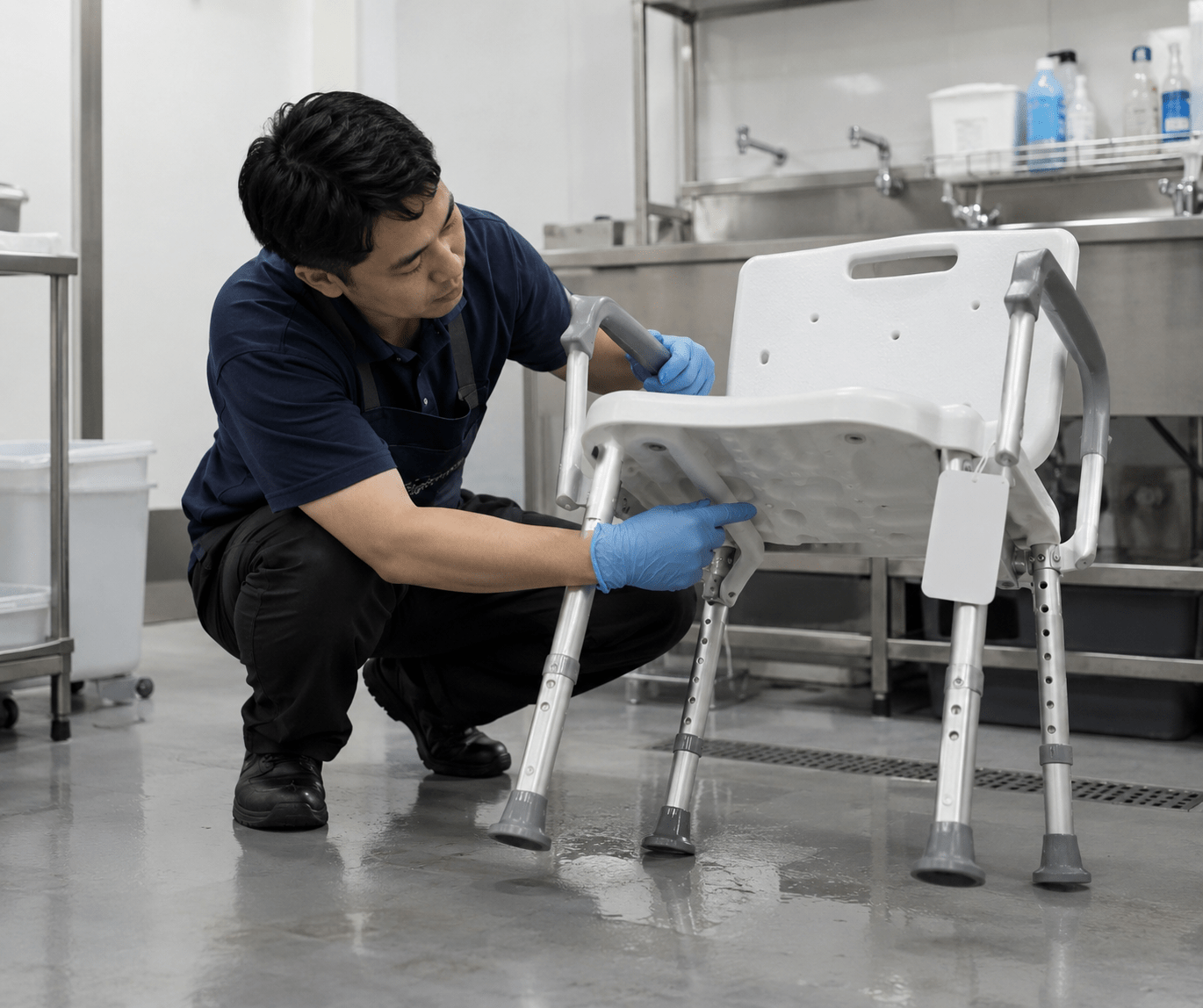
Shower chair cleaning and disinfection should start with identity, product state, visible-soil, damage, and configuration checks before chemicals or water are applied. This first gate protects staff and prevents a damaged chair from being returned through a routine process. It also preserves evidence needed for a supplier or service decision.
Which Pre-Cleaning Checks Matter?
Confirm the unit, seat, back, arms, feet, locks, padding, bucket or accessory, labels, sharp edges, residue, and retained water. Photograph abnormal findings before they are altered.
- Match the chair to the correct procedure.
- Check removable parts and hidden surfaces.
- Stop for cracks, looseness, or sharp damage.
Which Preparation Steps Control Risk?
Move the unit into the approved zone, isolate it from clean stock, prepare protective equipment, remove only approved components, and secure associated records. Do not rush the first gate: preparation determines whether later work is traceable.
- Keep small parts with the unit identity.
- Use tools that cannot damage surfaces.
- Protect paper or electronic records from splash.
| Preparation step | Pass condition | Stop rule | Record |
|---|---|---|---|
| Identity check | Procedure matches unit | Model/revision unknown | Hold tag |
| Condition check | No unsafe damage | Crack, loose part, sharp edge | Damage record |
| Area setup | Correct zone and supplies | Uncontrolled chemical or traffic | Supervisor review |
Preparation separates routine work from technical exceptions. Key Takeaway: inspect and classify the chair before beginning the cleaning sequence.
5. Which Zones Need Shower Chair Cleaning and Disinfection?
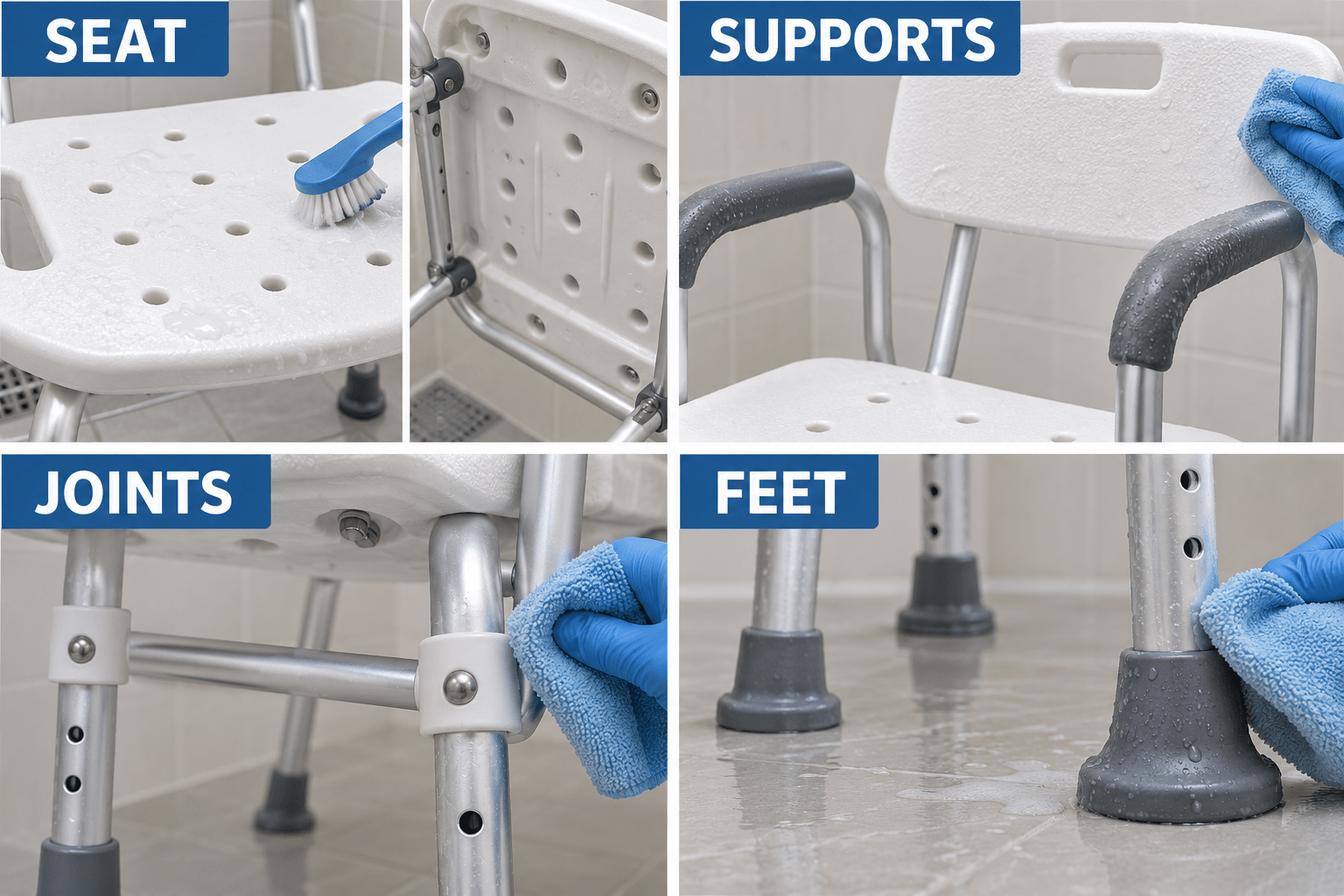
Shower chair cleaning and disinfection must cover high-contact surfaces and less visible zones that collect water or residue. The seat top alone is not the product. Zone mapping should reflect the offered supports, adjustments, accessories, and frame openings.
Which High-Contact Areas Need Attention?
Seat, back, arms, handles, caregiver grips, adjustment buttons, locks, footrests, and transfer-touch points require deliberate coverage. Contact patterns can differ between independent and assisted use.
- Mark every user and caregiver contact zone.
- Include removable supports in the same record.
- Check texture, seams, and damaged edges.
Which Hidden Areas Need Access?
Undersides, drain holes, mounts, leg tubes, feet, fasteners, padding edges, and overlapping components may retain soil or liquid. Look below the visible surface: access limits should drive configuration and tool choices.
- Use approved brushes or wipes where specified.
- Avoid forcing liquid into hollow structures.
- Inspect drainage after the process.
| Zone | Main concern | Access method | Hold sign |
|---|---|---|---|
| User contact | Transferable soil | Approved surface method | Crack or residue |
| Joint/underside | Trapped material | Controlled access | Retained water or looseness |
| Tube/foot | Water entry and buildup | External clean and inspection | Drainage or attachment failure |
A zone list makes the procedure teachable and auditable. Key Takeaway: map the whole configuration, including hidden and removable surfaces.
6. How Does Shower Chair Cleaning and Disinfection Proceed?
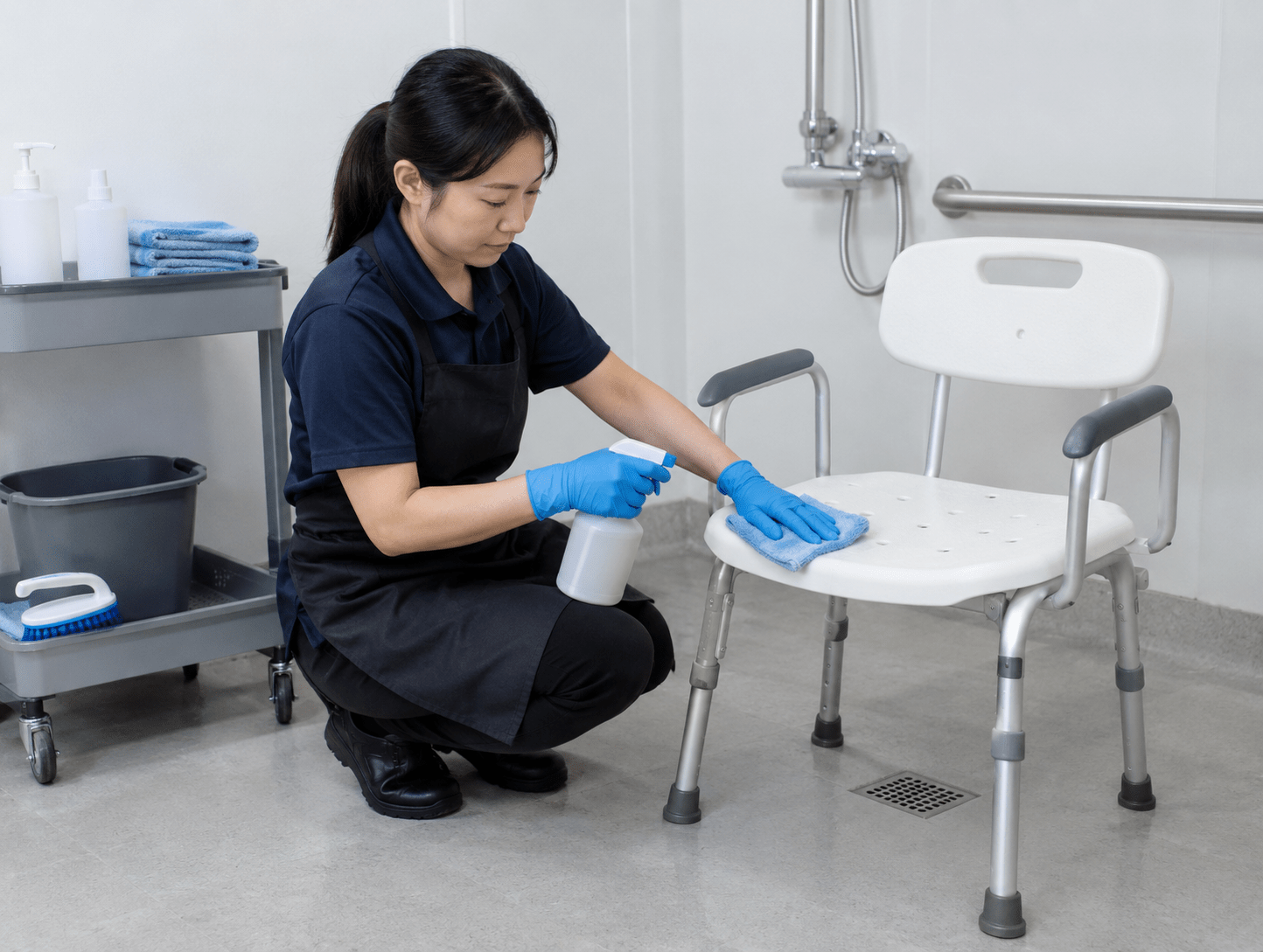
Shower chair cleaning and disinfection proceeds in the approved order: remove soil, clean accessible surfaces, apply the defined disinfecting method, manage required rinsing, and protect the chair from recontamination. Product-specific directions determine agents and conditions. Staff should never improvise stronger mixtures or longer exposure.
Which Cleaning Sequence Protects Surfaces?
Work from cleaner areas toward dirtier areas, change materials when they become soiled, and avoid abrasive tools or uncontrolled soaking. Keep removed components identifiable and prevent forced water entry.
- Use the documented dilution or preparation source.
- Cover all mapped zones in a repeatable order.
- Stop if finish, padding, labels, or joints change.
Which Disinfection Variables Need Control?
Compatibility, solution preparation, full coverage, time, temperature, ventilation, and any rinse requirement should be explicit. Control the variables: a named product alone does not prove the process was completed.
- Record the method and responsible operator.
- Use current facility chemical controls.
- Separate treated items until the next gate.
| Stage | Controlled input | Verification | Output |
|---|---|---|---|
| Soil removal | Approved tools and cleaner | No visible residue | Ready for next method |
| Disinfection | Compatible prepared method | Coverage and required conditions | Treatment complete |
| Transition | Rinse rule and clean handling | Surface and status check | Ready to dry |
Sequence discipline protects both hygiene control and materials. Key Takeaway: verify method, coverage, conditions, and output at every stage.
7. How Does Rinsing Affect Shower Chair Cleaning and Disinfection?
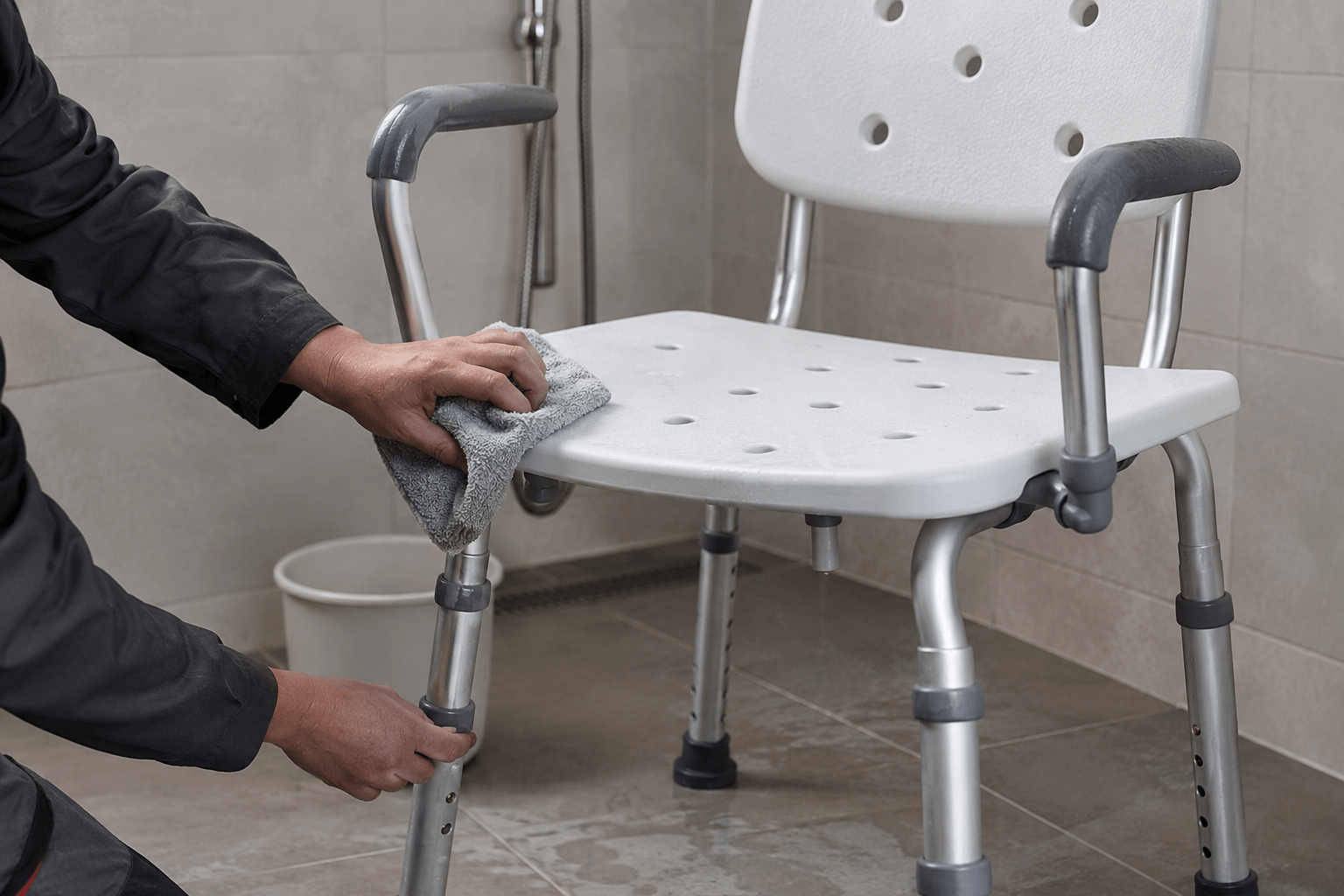
Shower chair cleaning and disinfection uses rinsing only as required by the approved product and facility method. Rinsing can remove loosened soil, foam, or chemical residue, but uncontrolled spraying can drive water into tubes, padding, bearings, locks, labels, or powered components. The procedure should distinguish surface removal from immersion.
Which Residues Need Removal?
Cleaning agent, disinfectant where required, loosened soil, and foam should not remain beyond approved limits. Confirm the method for surfaces that touch users or staff.
- Inspect texture, seams, and underside edges.
- Use clean controlled tools or water where allowed.
- Repeat only within the documented procedure.
Which Components Need Water-Entry Control?
Telescoping legs, hollow tubes, hinges, padded seams, labels, locks, and any electronic option require special attention. Follow the water path: entry that is easy during rinsing may be difficult to detect during release.
- Keep openings out of direct spray where required.
- Drain only through intended paths.
- Hold units with unexplained internal water.
| Component | Rinse need | Water-entry risk | Inspection |
|---|---|---|---|
| Molded seat | Method dependent | Drain holes retain residue | Check top and underside |
| Telescoping leg | Usually external control | Tube retention | Move and inspect as approved |
| Padding/lock | Limited by construction | Seam or mechanism entry | Check cover and function |
Rinsing is a controlled step, not a default flood. Key Takeaway: remove required residue without creating hidden water-retention problems.
8. How Does Drying Complete Shower Chair Cleaning and Disinfection?
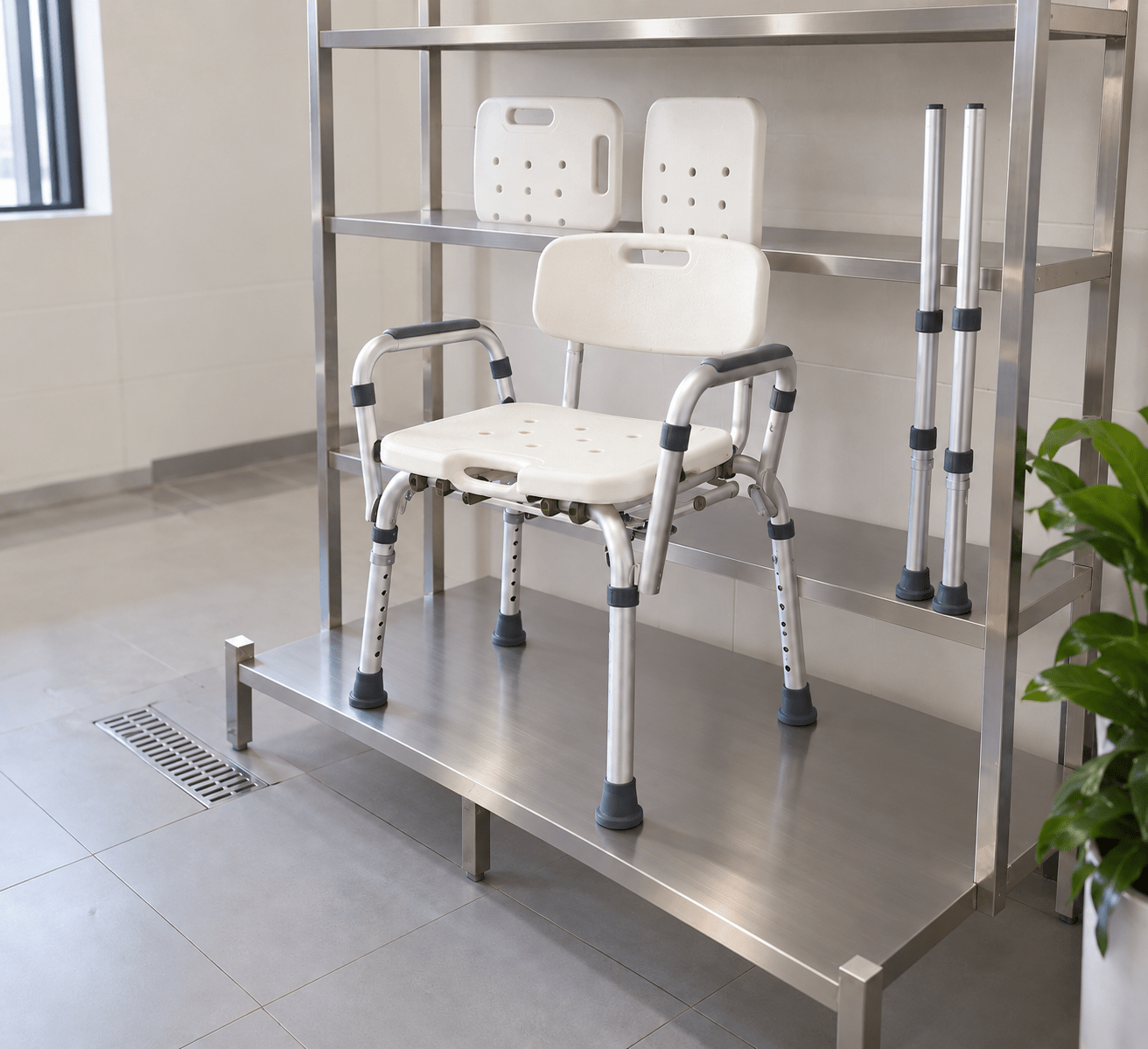
Shower chair cleaning and disinfection is incomplete until required surfaces, joints, removable parts, and storage-contact areas are dry enough for inspection and release. A folded or stacked chair can conceal retained water. Drying also creates the best point for finding drainage, corrosion, swelling, and residue problems.
Which Drying Areas Need Verification?
Inspect the seat, openings, tubes, joints, feet, padding, hardware, underside, and every removed component. Move adjustable or folding parts only as instructions permit.
- Use ventilation and positioning approved for the chair.
- Keep parts separated until both sides are checked.
- Record retained water as a process failure.
Which Storage Conditions Prevent Recontamination?
Clean storage needs separation from dirty traffic, floor clearance, ventilation, secure orientation, identity control, and access for retrieval. Protect the finished work: poor storage can undo a correct process.
- Do not compress damp padding or folded layers.
- Keep released and held chairs visibly separate.
- Review folding bath-chair storage needs when applicable.
| Drying point | Pass condition | Failure sign | Action |
|---|---|---|---|
| Surfaces | Dry and residue-free | Film or droplets | Rework per procedure |
| Tubes/joints | No unexplained water | Drip or trapped sound | Hold and inspect |
| Storage area | Clean, ventilated, separated | Floor contact or mixed status | Correct before release |
Drying makes hidden process failures visible. Key Takeaway: verify dryness and storage conditions before the chair enters clean stock.
9. Which Checks Follow Shower Chair Cleaning and Disinfection?
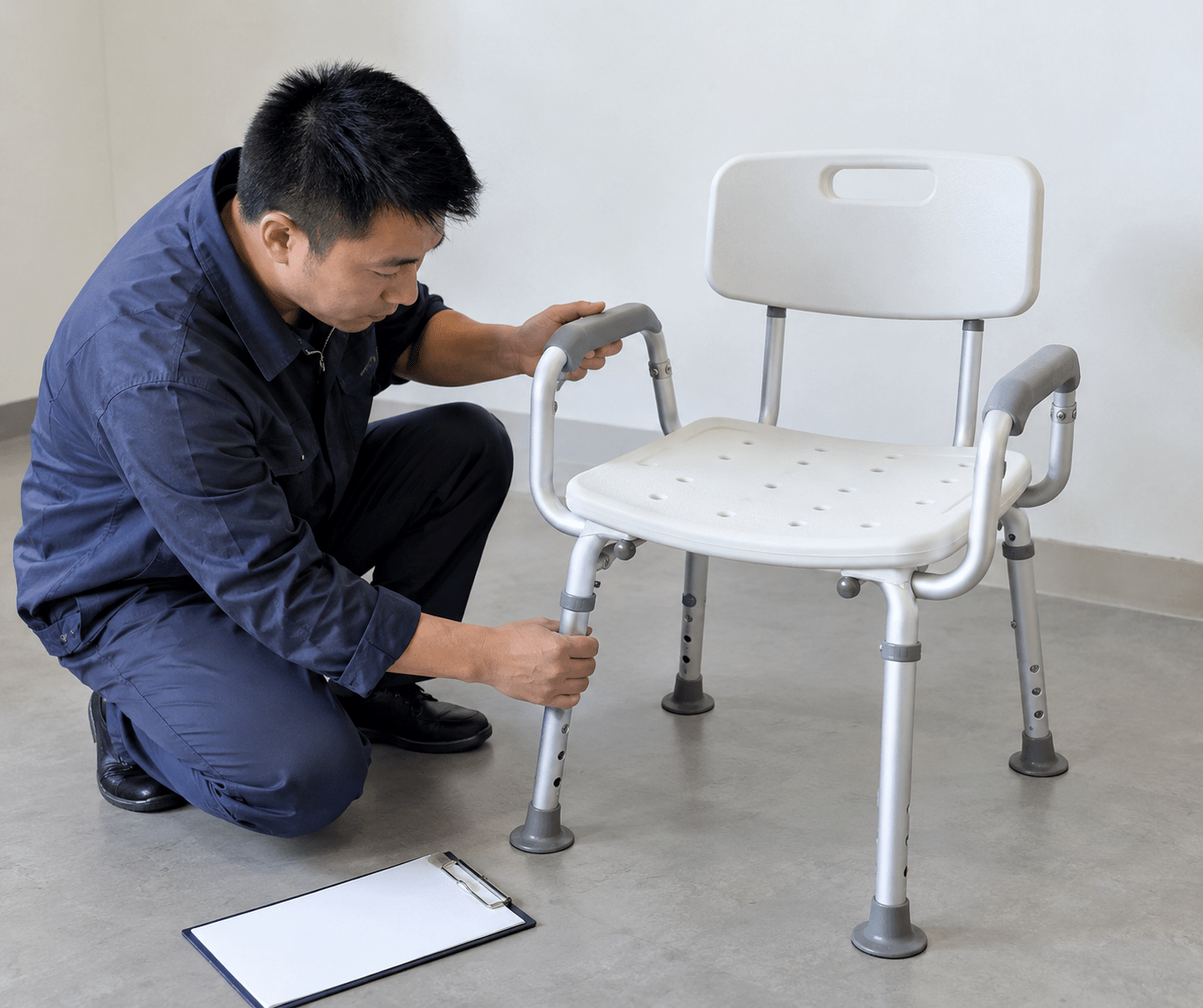
Shower chair cleaning and disinfection must end with visual and functional checks because chemicals, water, disassembly, and handling can affect the chair. A clean-looking product can still have a partly engaged pin, loose foot, swollen pad, or damaged label. Release requires a defined pass condition.
Which Functional Checks Need Repetition?
Check height locks, folding latches, arm and back mounts, feet, fasteners, wheels and brakes where fitted, drainage, and overall contact on the approved surface.
- Use no-user checks before any service return.
- Compare against the correct configuration.
- Confirm removed components were restored.
Which Damage Requires a Hold?
Cracks, corrosion, coating change, swelling, torn padding, loose parts, unreadable critical labels, retained water, and chemical damage require assessment. Release is a decision: finishing the cleaning steps does not override a failed inspection.
- Tag and segregate failed units.
- Record the exact zone and condition.
- Send structural or mechanism issues to qualified staff.
| Inspection item | Pass condition | Hold condition | Owner |
|---|---|---|---|
| Locks/adjustments | Full, repeatable engagement | Sticking or partial lock | Equipment team |
| Surfaces/supports | Intact and dry | Crack, tear, swelling, residue | Cleaning supervisor |
| Feet/frame | Secure and stable | Loose foot, corrosion, deformation | Technical review |
Post-cleaning checks connect hygiene work with safe equipment status. Key Takeaway: release only a dry, complete, correctly configured, functional chair.
10. How Should Buyers Specify Shower Chair Cleaning and Disinfection?
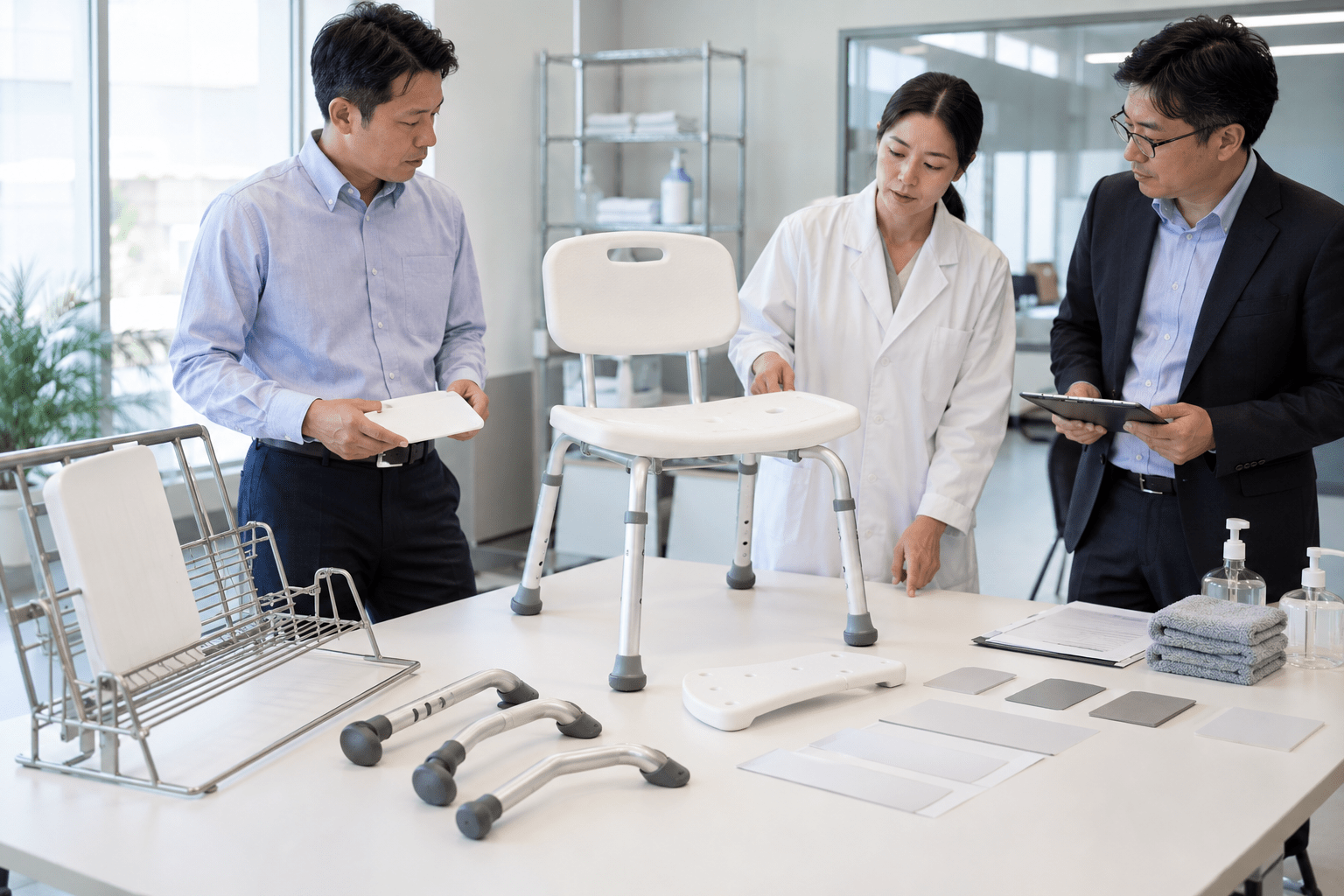
Shower chair cleaning and disinfection should appear in the buying brief as materials, construction, approved methods, limits, removable parts, drying needs, inspection points, spares, and document requirements. Procurement should also price facility labor, space, training, chemicals, records, and replacement stock. A low unit price cannot correct an unworkable turnover process.
Which Supplier Evidence Belongs in the RFQ?
Request configuration-specific material information, cleaning instructions, compatibility limits, component removal steps, prohibited methods, spare parts, and change-control terms.
- Match evidence to the quoted configuration.
- Ask how revisions affect instructions.
- Include a supplier-evidence review before approval.
Which Facility Outputs Need Procurement Review?
The facility should own its workflow, staff roles, chemical control, room layout, training, records, holds, and replacement plan. Test before rollout: sample evaluation should include a complete dirty-to-clean cycle.
- Time the full workflow without shortcuts.
- Observe access, drying, and restoration.
- Close gaps before the purchase order.
| Procurement field | Supplier input | Facility input | Gate |
|---|---|---|---|
| Compatibility | Materials and method limits | Approved agents/process | Reconciled workflow |
| Service | Parts and repair guidance | Hold and escalation plan | Support accepted |
| Acceptance | Sample and documents | Cycle trial and records | Release decision |
Cleaning readiness belongs in product approval, not after delivery. Key Takeaway: buy the chair and the workable hygiene process as one controlled system.
Conclusion
Facilities should connect instructions, roles, preparation, mapped zones, cleaning, disinfection, rinsing, drying, functional inspection, and procurement evidence in one repeatable workflow. This approach prevents a visible wipe from becoming the only acceptance test. For help reviewing bath-chair configurations and supplier documentation, contact us today.
We help B2B buyers turn cleaning requirements into product questions, sample gates, and receiving controls. Better wet-area equipment is designed for the full care workflow, not only the showroom.
FAQ
Can one disinfectant be used on every shower chair?
No. Materials, finishes, padding, labels, joints, and instructions differ by configuration. Confirm both facility requirements and documented product compatibility before approval.
What’s the best cleaning method for shared chairs?
The best method is the validated facility procedure for the exact chair and use state. It should define preparation, compatible agents, coverage, rinsing, drying, inspection, records, and release.
How do I know whether water entered a leg tube?
Check approved drainage points, telescoping movement, unexpected dripping, retained-water sounds, corrosion signs, and product instructions. Hold the chair when internal water cannot be assessed or removed through the defined method.
Can a chair return to use before it is dry?
Usually not when dryness is a stated release condition. Retained water can conceal residue, affect storage, enter mechanisms, or prevent a reliable post-cleaning inspection.
How should facilities document a cleaning-related hold?
Record unit identity, date, product state, affected zone, observed condition, immediate control, responsible owner, and required disposition. Keep the held chair physically and visually separate until an authorized release.
