
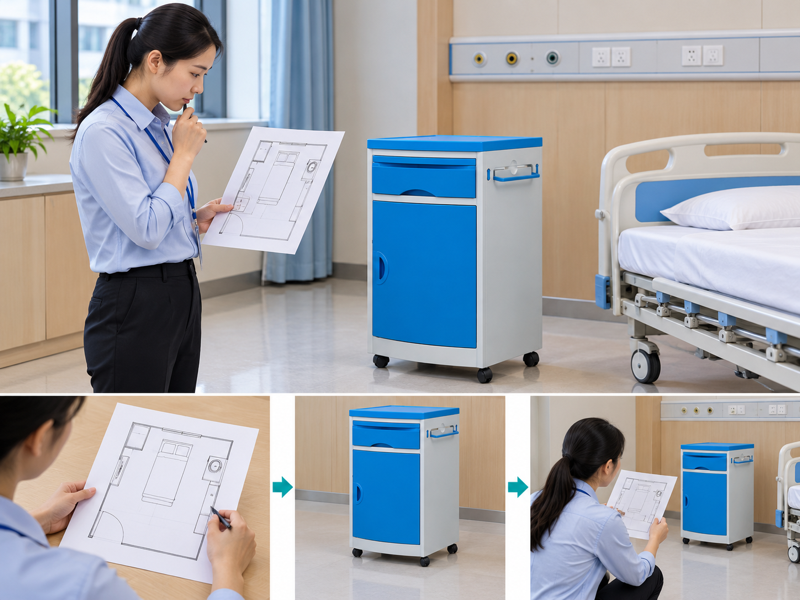
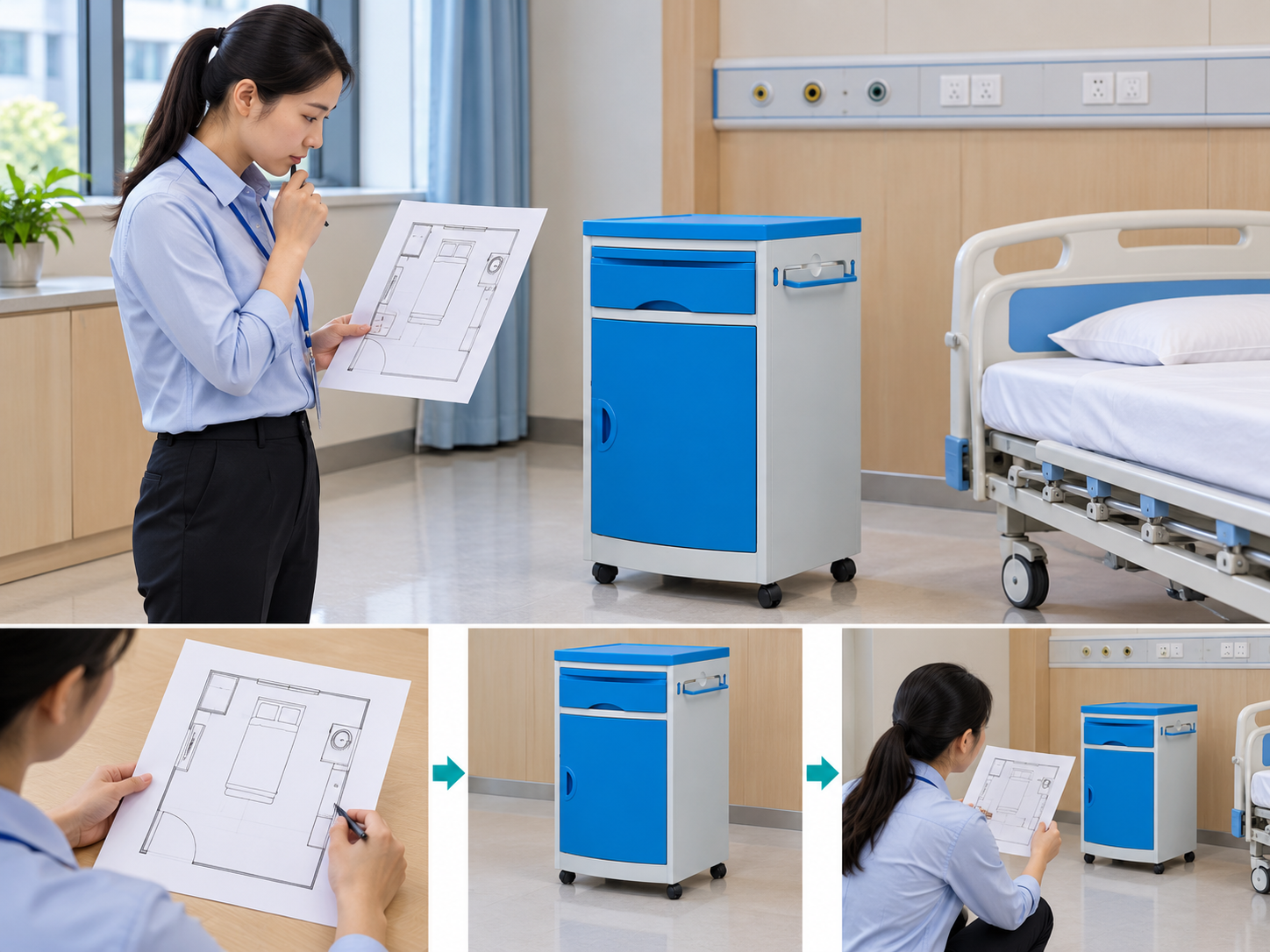
Plan bedside cabinet room layout with the cabinet's opening features and the bed's working space visible on the same drawing. A UK facility may fit the closed cabinet beside a bed but find that its drawer blocks an equipment route. A measured layout makes that conflict easier to identify before placement.
What should bedside cabinet room layout address?
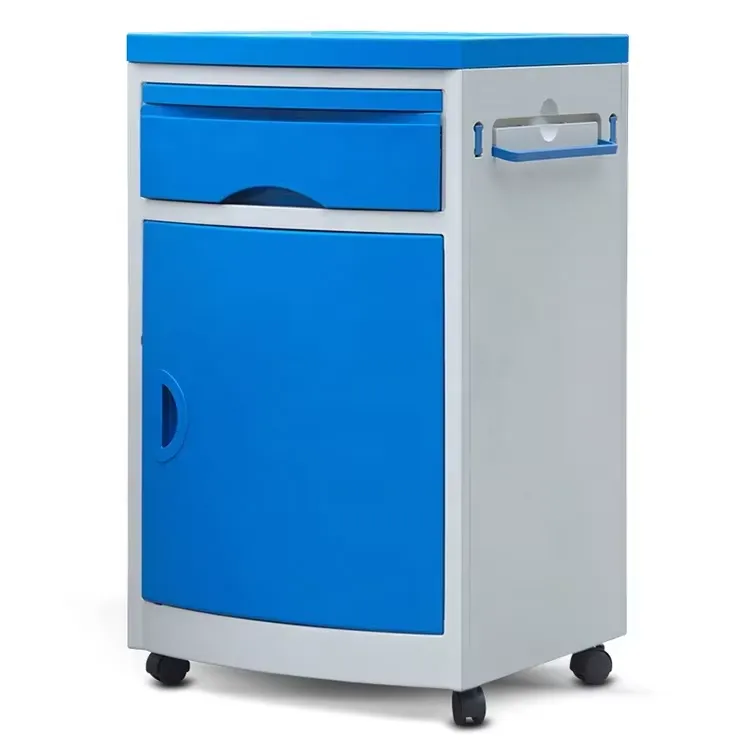
Bedside cabinet room layout should address the cabinet's closed footprint, opening features and position beside the bed. A cabinet that fits in a corner can still obstruct a route or care task.
Define storage and care access
Map storage access and the surrounding care space. Use the exact cabinet and bed dimensions. Ask the responsible care and site teams to review the proposed placement.
- Cabinet outline
- Bed position
- Care task
| Check | Record or reference |
|---|---|
| Cabinet outline | Drawing |
| Bed position | Plan |
| Care task | Brief |
Key Takeaway: The layout review includes the way the room is used.
Which room details should be measured?
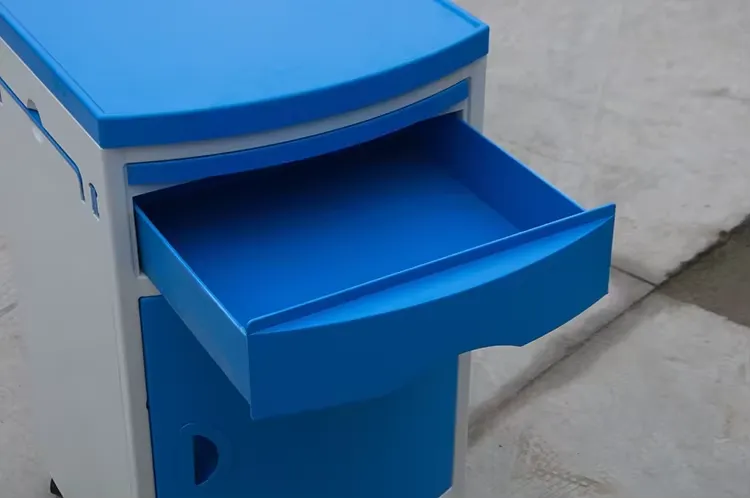
For bedside cabinet room layout, measure the bed, doors, walls and furniture that constrain placement. Total room area cannot show the space available beside the bed.
Measure the actual room constraints
Record the usable space and fixed obstacles. Keep door swings and fixed services visible on a sketch. Use the actual arrangement intended for the room.
- Fixed features
- Usable gap
- Door movement
| Check | Record or reference |
|---|---|
| Fixed features | Plan |
| Usable gap | Measurement |
| Door movement | Photo |
Key Takeaway: The placement can be compared with the real room.
How should drawers and cupboard doors be included?
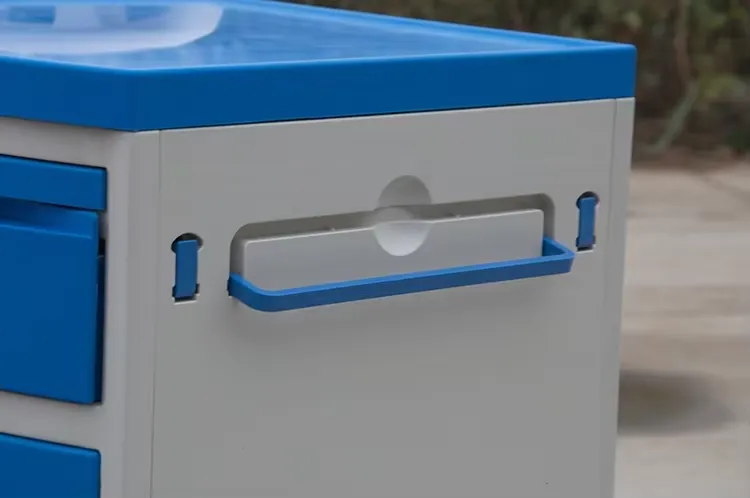
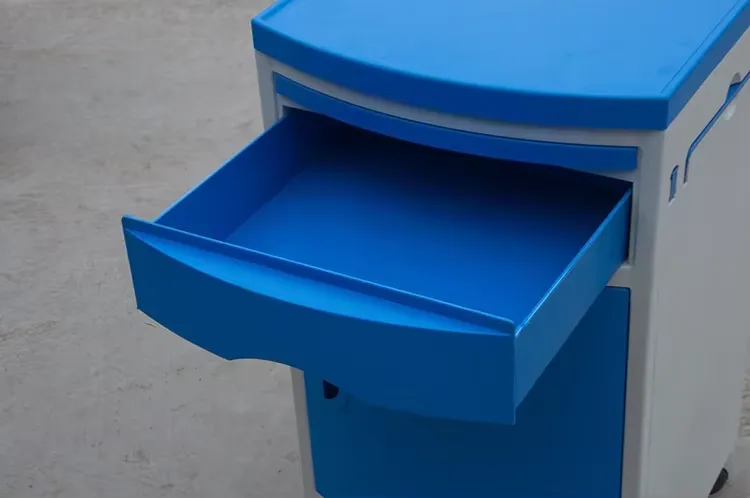
Bedside cabinet room layout should include the travel of drawers, doors and any supplied pull-out tray. A closed product outline understates space when staff access the contents.
Show the open storage features
Show their open positions. Ask for the model's relevant dimensions or review a sample under the permitted method. Record conflicts with the bed or nearby equipment.
- Drawer travel
- Door swing
- Nearby conflict
| Check | Record or reference |
|---|---|
| Drawer travel | Drawing |
| Door swing | Measurement |
| Nearby conflict | Review note |
Key Takeaway: The cabinet can be assessed while its storage is accessed.
What should the top surface's position consider?
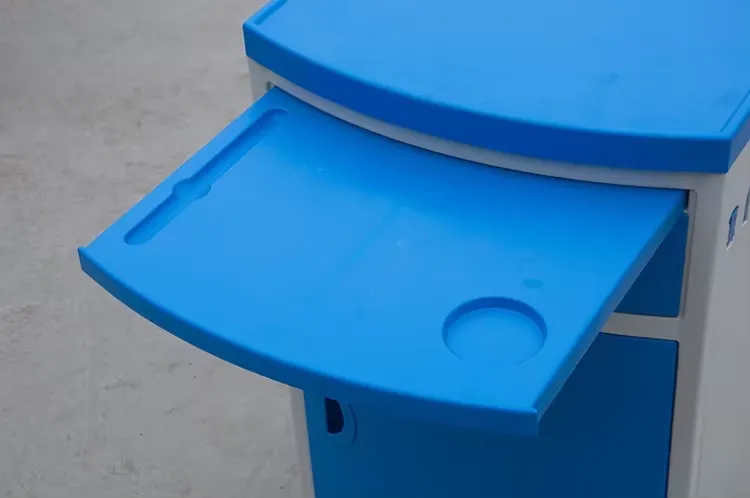
For bedside cabinet room layout, top-surface position should be reviewed against its intended task and the person's needs where relevant. A convenient location for staff may not suit every occupant.
Review the top-surface task
Review the intended task and reach. Provide product dimensions to the appropriate assessor. Do not infer a universal reach distance or adjustability that the cabinet lacks.
- Top height
- Task
- Personal reach
| Check | Record or reference |
|---|---|
| Top height | Specification |
| Task | Care brief |
| Personal reach | Assessment |
Key Takeaway: The layout can support a defined use rather than an assumed one.
How should bed movement affect placement?
Bedside cabinet room layout should account for the bed positions and accessories involved in the approved arrangement. The gap beside a stationary bed may change during permitted movement.
Include bed movement
Use the bed's relevant operating envelope. Have the responsible team review the actual products and required positions. Keep the cabinet out of an unresolved movement conflict. Record any air-mattress equipment whose pump or hoses affect the layout.
- Bed positions
- Accessories
- Movement conflict
| Check | Record or reference |
|---|---|
| Bed positions | Guide |
| Accessories | List |
| Movement conflict | Review |
Key Takeaway: The furniture plan does not rely on one static view.
What about transfer equipment and helpers?
For bedside cabinet room layout, consider any transfer-device approach and helper space required by the care plan. The cabinet's storage value does not resolve a blocked equipment route.
Preserve transfer-equipment access
Keep the assessed working route visible. Provide the room and device drawings to the qualified reviewers. Let them decide the care arrangement and any revised placement. Use the exact transfer-device outline in the route review.
- Transfer route
- Helper space
- Placement decision
| Check | Record or reference |
|---|---|
| Transfer route | Plan |
| Helper space | Assessment |
| Placement decision | Record |
Key Takeaway: The layout can include the equipment used around the bed.
How should caster functions be reflected?

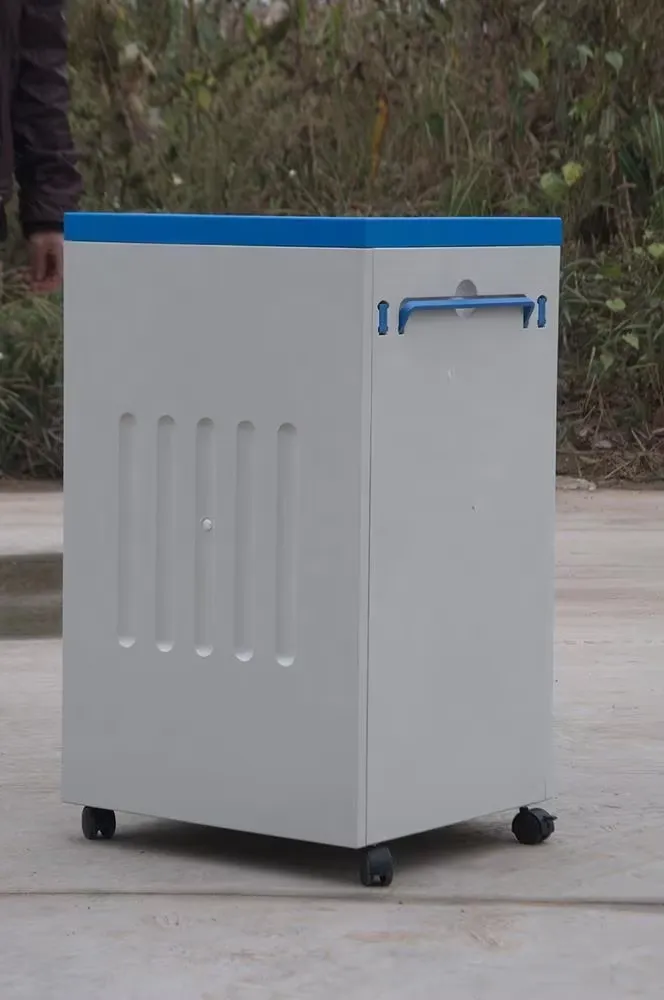
Bedside cabinet room layout should use the handling and any locking functions documented for the model. Do not assume every caster has a brake or that the cabinet can serve as a support rail.
Use actual caster functions
Follow the cabinet's actual movement guidance. Ask for the current guide and site handling procedure. Record where the cabinet is meant to be parked or moved.
- Caster feature
- Handling method
- Parking position
| Check | Record or reference |
|---|---|
| Caster feature | Guide |
| Handling method | Procedure |
| Parking position | Plan |
Key Takeaway: The room plan uses the functions actually supplied.
What should a room walkthrough establish?

A walkthrough can help assess bedside cabinet room layout by identifying access and opening conflicts. It does not establish personal suitability on its own.
Limit the walkthrough scope
Use a controlled unoccupied review. Agree the scope with the site team and follow product guidance. Record the exact furniture and unresolved issues. Keep the walkthrough findings with the complete room-furniture schedule.
- Walkthrough scope
- Actual products
- Observed issue
| Check | Record or reference |
|---|---|
| Walkthrough scope | Plan |
| Actual products | IDs |
| Observed issue | Record |
Key Takeaway: A preliminary review can refine the placement brief.
When should the layout be reviewed again?
Revisit bedside cabinet room layout when the bed, cabinet, other equipment or care routine changes. A new drawer layout or wider accessory can affect an earlier result.
Revisit changed layouts
Respond to changed equipment or needs. Keep the previous plan for comparison. Refer any new access or personal-use difficulty to the responsible team. The CDC environmental-cleaning guidance provides facility-process context.
- Equipment change
- Care change
- Updated plan
| Check | Record or reference |
|---|---|
| Equipment change | Record |
| Care change | Review |
| Updated plan | File |
Key Takeaway: The room arrangement can remain useful over time.
What should a placement enquiry include?

For bedside cabinet room layout, give the supplier the cabinet reference and the dimensions needed for the room review. State whether the question concerns product geometry, handling or a care decision.
What should you do next?
Send measured constraints and the exact model. Ask for current drawings and instructions. Use those facts with the appropriate site and care assessment.
- Product identity
- Required dimensions
- Review question
| Check | Record or reference |
|---|---|
| Product identity | Enquiry |
| Required dimensions | List |
| Review question | Brief |
Key Takeaway: The supplier can provide information that helps the actual layout decision. To discuss the model and documents for your order, contact us with your requirements. At AryMD, useful product facts should support every care-equipment purchase.
Frequently asked questions
Q1: Can the closed cabinet footprint prove that it fits a room?
No. Include drawer, door and tray travel as well as surrounding care and equipment access.
Q2: What’s the best side of the bed for a cabinet?
Use the actual room, intended tasks and appropriate care assessment. There is no universal side for every arrangement.
Q3: How do I know whether the cabinet has locking casters?
Check the exact model specification and instructions. Small wheels do not establish a locking function.
Q4: Can the cabinet remain in place through every bed movement?
Review the relevant positions and product envelopes with the responsible site and care teams.
Q5: Should a new drawer configuration trigger another layout check?
Review changes that affect opening space, access or care tasks instead of copying an earlier conclusion.