
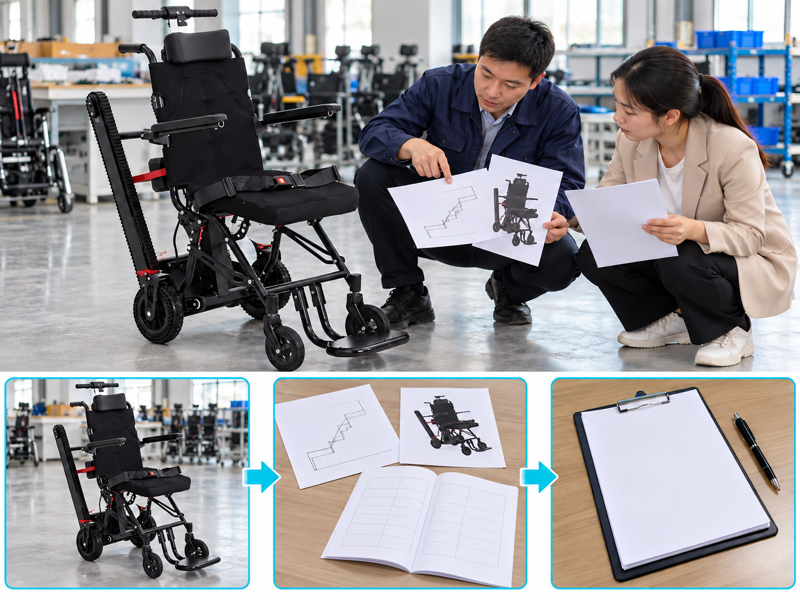
Plan stair chair trial orders around a defined electric passenger chair, assessment setting and buying question before ordering a small batch. A sample may arrive quickly while the distributor still lacks trained operators, route evidence or a service contact. The trial then stalls without answering whether the product can be supported. A bounded plan connects product review with the people, files and decisions needed before wider purchasing.
How should a distributor plan stair chair trial orders?
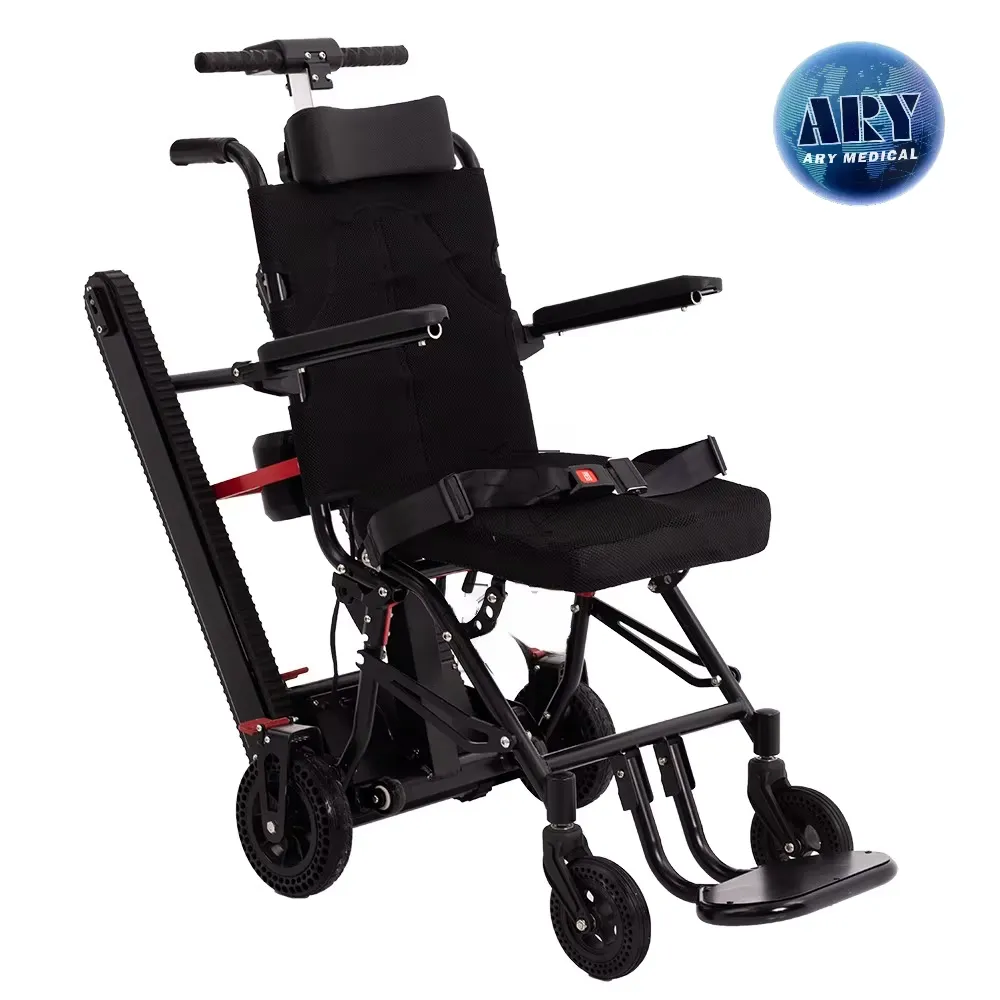
Plan stair chair trial orders around a defined model, customer setting and review decision. A small purchase still needs a review of the route, operator and passenger.
What must the trial answer?
Make the trial answer a buying question. State what evidence the trial should produce before ordering. Keep the buying review separate from any assessed trial with people on stairs.
- Name the proposed system
- Define the trial decision
- Assign qualified review
| Check | What to keep |
|---|---|
| Name the proposed system | Chair and track reference |
| Define the trial decision | Written buying objective |
| Assign qualified review | Assessment responsibility |
Key Takeaway: You can use a trial to resolve a real purchase question without treating limited quantity as proof of low risk.
Which model should the trial order name?
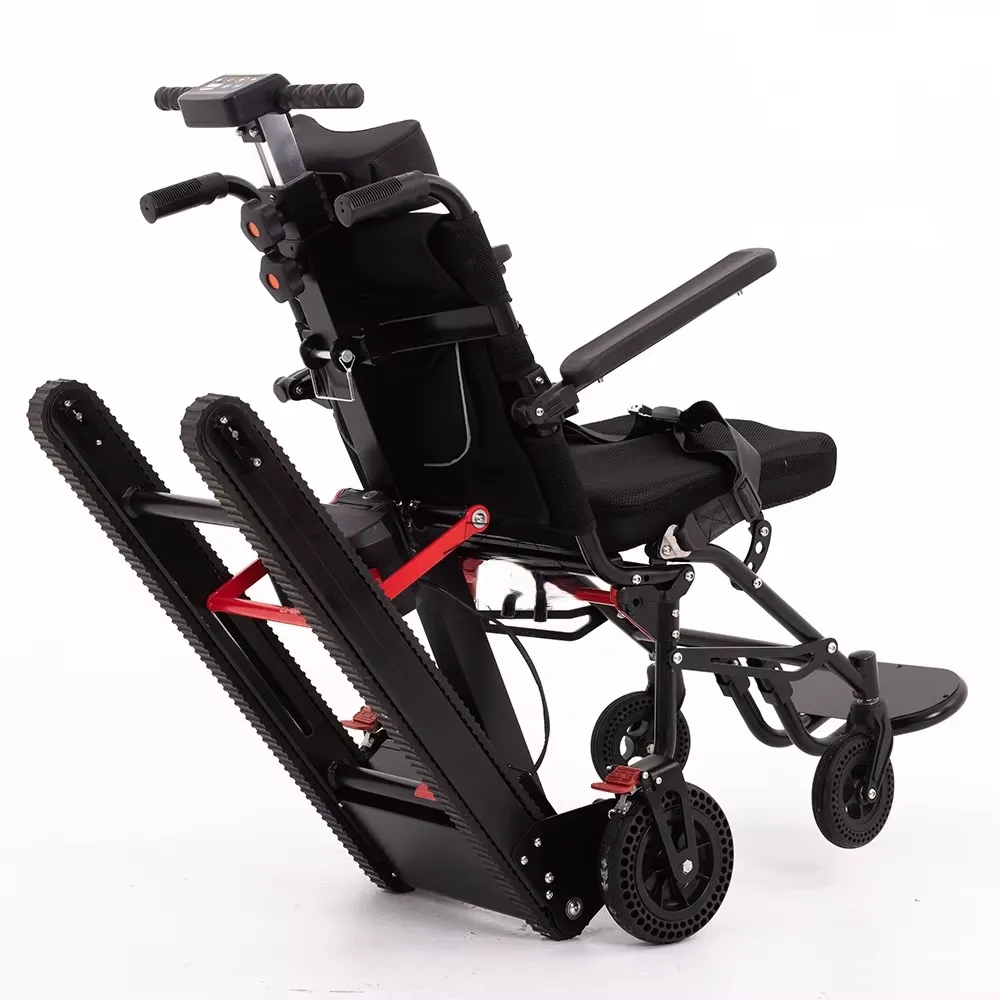
Name the exact chair-track version in stair chair trial orders, including agreed accessories and documents. A substituted sample may answer a different question from the model your team plans to sell.
Order the reviewed model version
Order the version you intend to review. Ask the supplier to identify changes before dispatch. Keep the trial order and received-unit record together so reviewers can confirm what they actually examined. Define the sample inspection that supports your trial decision.
- Specify the complete setup
- Confirm permitted substitutions
- Record the received unit
| Check | What to keep |
|---|---|
| Specify the complete setup | Trial-order scope |
| Confirm permitted substitutions | Change agreement |
| Record the received unit | Model identity check |
Key Takeaway: The trial evidence stays linked to the product behind a later purchasing decision.
How should stair chair trial orders select a review site?
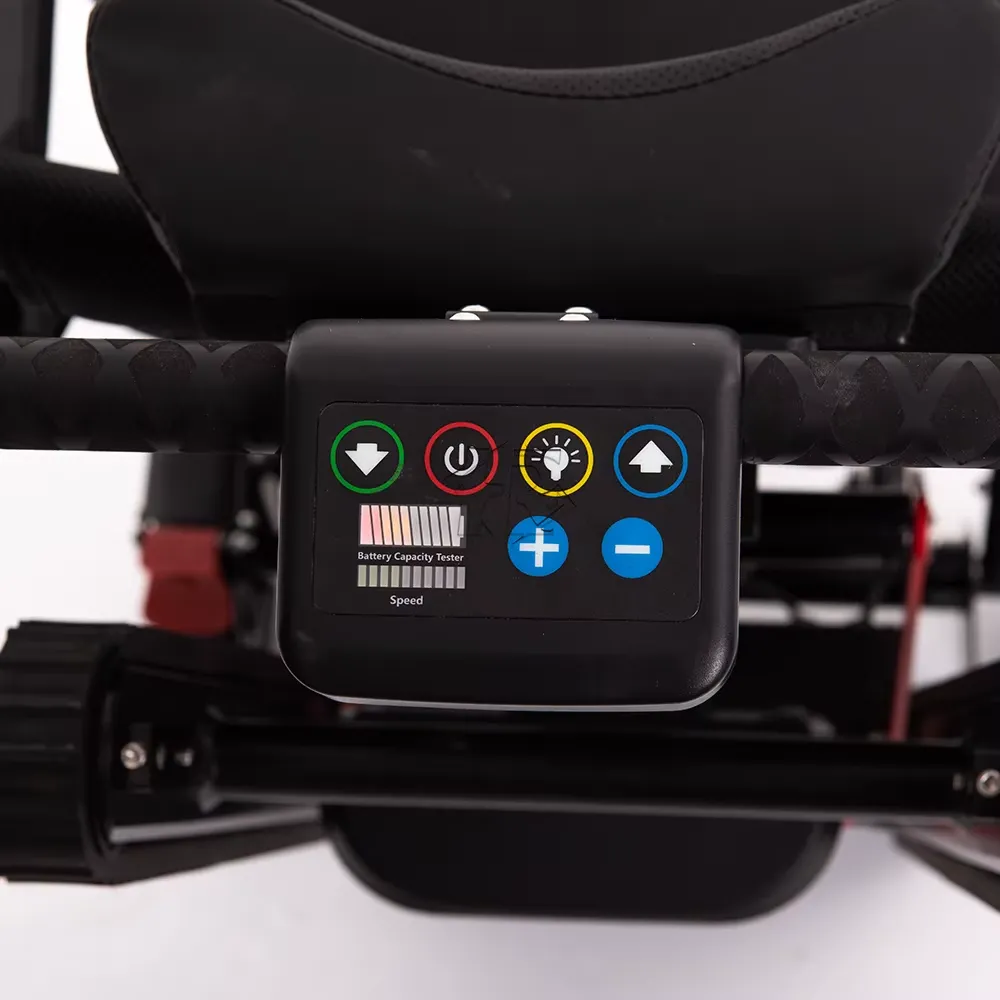
Select a review site for stair chair trial orders through the responsible assessment process, using the intended tasks and exact model limits. A convenient staircase is not automatically a suitable place to demonstrate passenger use.
Choose an assessed review setting
Choose a site for a defined assessment. Collect route information before arranging any activity. Keep access permission, trained supervision and individual needs within the review brief rather than leaving them to the day of arrival.
- Describe the proposed route
- Confirm responsible assessment
- Record site arrangements
| Check | What to keep |
|---|---|
| Describe the proposed route | Site-survey brief |
| Confirm responsible assessment | Qualified reviewer |
| Record site arrangements | Approved review scope |
Key Takeaway: You can prepare a relevant assessment setting without inviting an improvised stair trial.
What should the acceptance criteria cover?
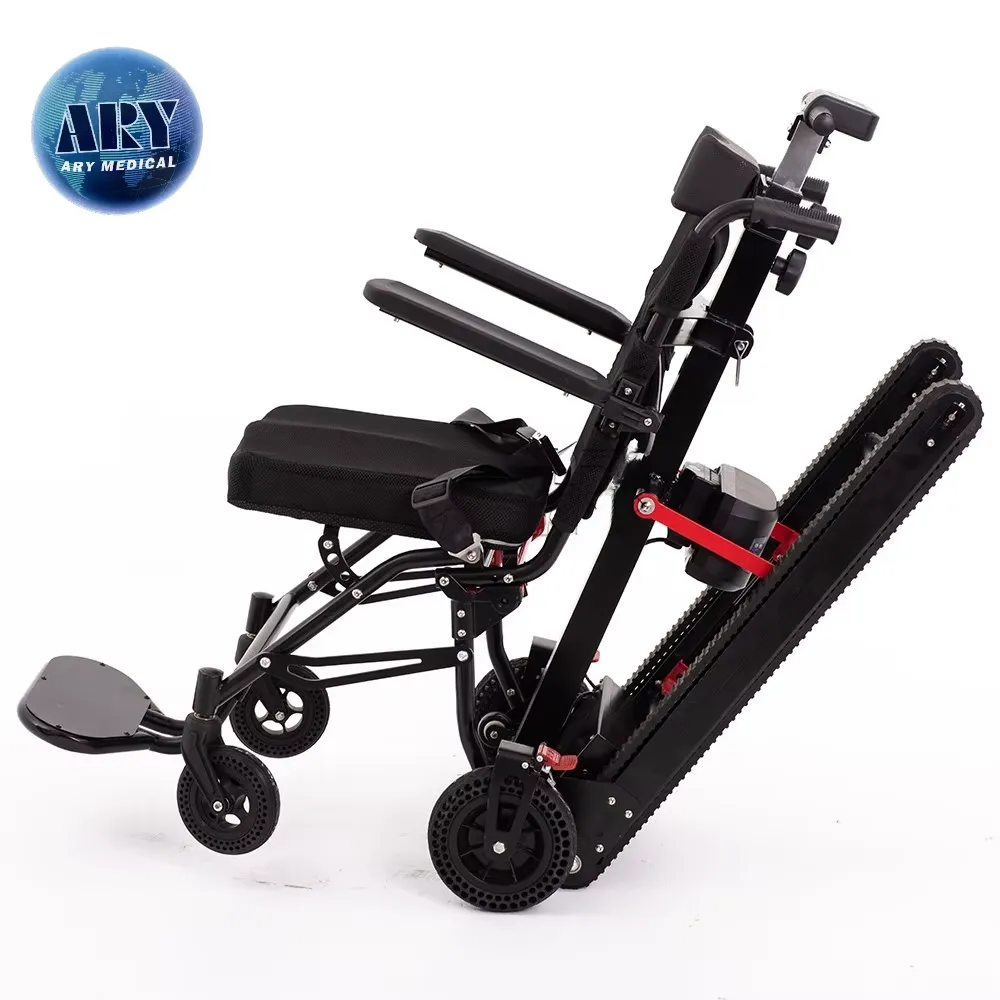
Acceptance criteria for stair chair trial orders should cover product identity, documents, support and the evidence needed for the buying decision. Define technical or user-assessment criteria through qualified reviewers within their scope.
Write the acceptance questions
Write the questions before seeing the sample. Keep each criterion tied to a record or outcome. If a question cannot be answered during the trial, leave it open instead of converting silence into approval.
- List review criteria
- Name required evidence
- Keep unanswered items open
| Check | What to keep |
|---|---|
| List review criteria | Trial checklist |
| Name required evidence | Record schedule |
| Keep unanswered items open | Follow-up list |
Key Takeaway: Your team can make a bounded decision instead of approving a sample based on a favorable impression.
How should stair chair trial orders include training support?
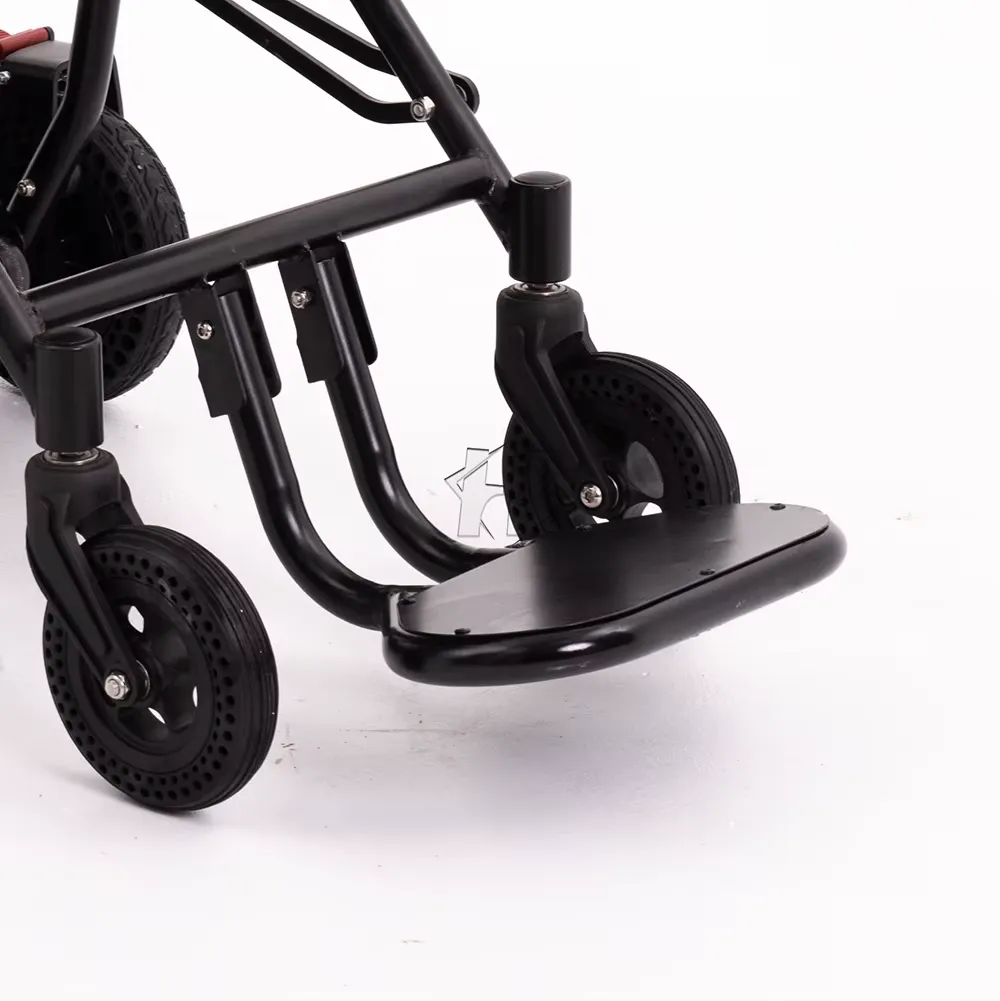
Include defined training support in stair chair trial orders before any use that requires it. Receiving the chair or watching a supplier video does not establish that local operators can carry out the intended task.
Who provides operator training?
Arrange competence before use. Ask who trains, what is assessed and which model or route the training covers. Keep later staff needs visible when discussing whether the product can be supported commercially. Request the approved parts mapping before planning service stock.
- Define operator training
- Record assessed competence
- Plan later staff support
| Check | What to keep |
|---|---|
| Define operator training | Provider scope |
| Record assessed competence | Training evidence |
| Plan later staff support | Service questions |
Key Takeaway: The trial can expose the real training commitment behind a future product offer.
How should service readiness be checked?
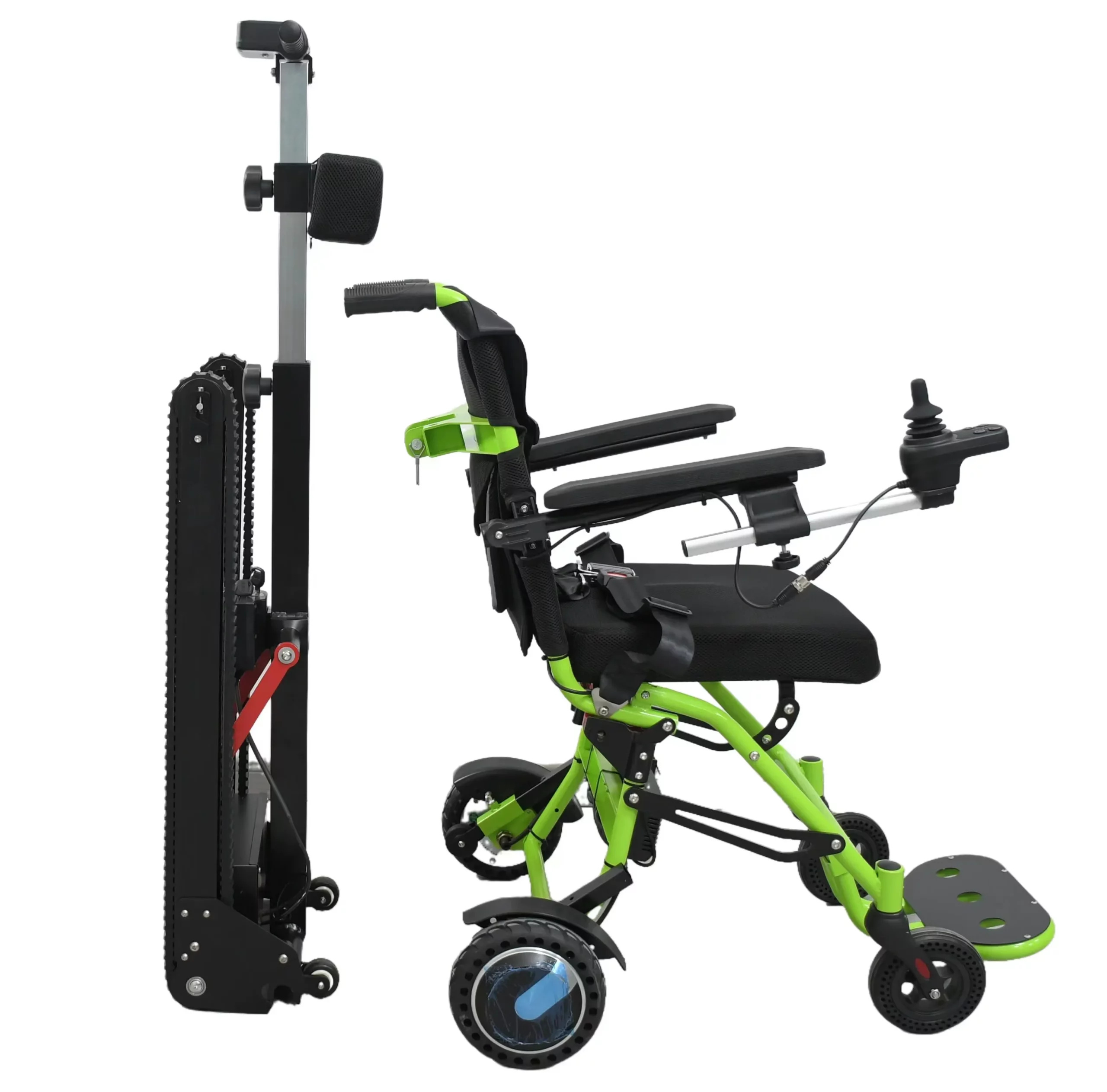
Review service readiness during stair chair trial orders through approved parts mapping, qualified support and an agreed escalation route. A successful sample visit does not show that a later fault can be resolved locally.
Check service readiness
Ask how the product will be supported. Ask for the files and contacts your service staff need. Keep unanswered parts and repair questions open before promising support.
- Request approved part mapping
- Confirm technical support roles
- Record escalation contacts
| Check | What to keep |
|---|---|
| Request approved part mapping | Model-specific list |
| Confirm technical support roles | Service scope |
| Record escalation contacts | Support directory |
Key Takeaway: You can evaluate support capacity before expanding from a sample to regular customer supply.
What costs belong in a stair chair trial orders review?
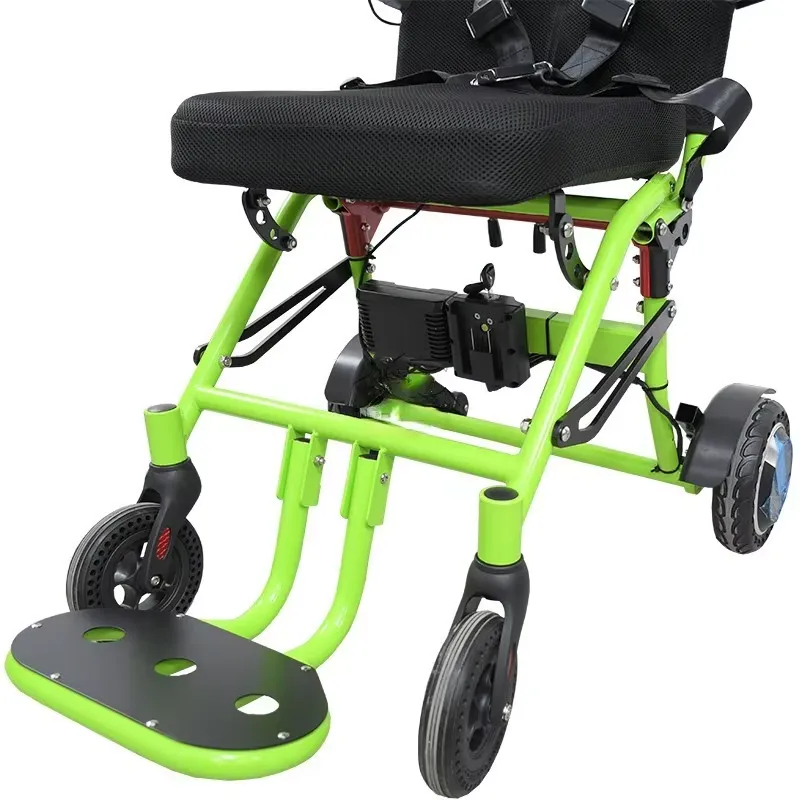
Review stair chair trial orders costs across the chair, transport, assessment, training and agreed support work. A sample price alone may not describe the resources required to introduce the product responsibly.
Budget the complete trial scope
Separate product and service costs. Ask for current terms and any conditions on later orders. Keep estimates separate from accepted commitments rather than treating a trial allowance as a standard commercial offer.
- Record the sample scope
- List related service costs
- Identify future-order conditions
| Check | What to keep |
|---|---|
| Record the sample scope | Current quotation |
| List related service costs | Trial budget |
| Identify future-order conditions | Supplier terms |
Key Takeaway: Your business decision can include the work around the product without inventing a universal margin or payback claim.
How should buyers record stair chair trial orders feedback?
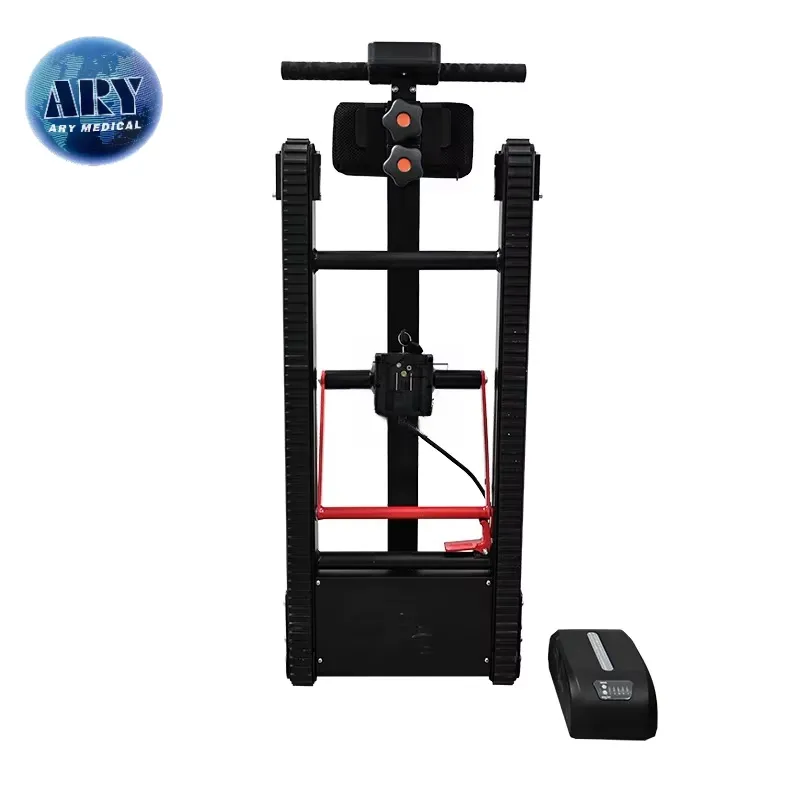
Collect stair chair trial orders feedback as specific observations linked to the model, task and review setting. A comment about comfort, handling or confidence may need a different reviewer from a suspected technical fault.
How should feedback be recorded?
Record observations without guessing causes. Use appropriate permission for personal information. Do not ask people to repeat a concerning event for a video; route the issue through the responsible assessment or support process. Retain each accepted condition in the trial-order quotation.
- Record the actual observation
- Link task and setup
- Assign suitable follow-up
| Check | What to keep |
|---|---|
| Record the actual observation | Trial feedback note |
| Link task and setup | Review context |
| Assign suitable follow-up | Named reviewer |
Key Takeaway: Feedback can inform the decision without becoming an unsupported diagnosis or performance claim.
When can the trial support a larger order?
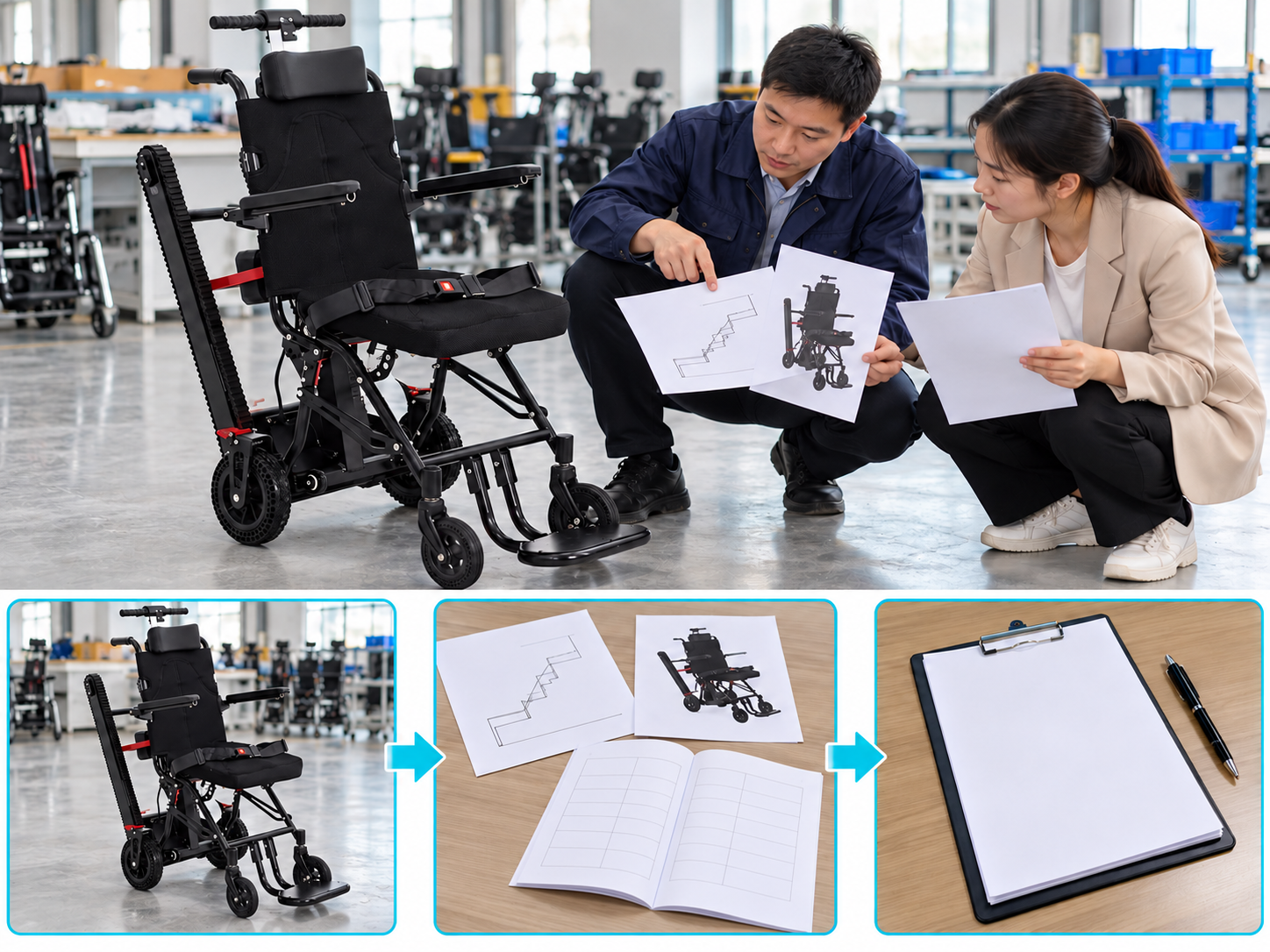
Use stair chair trial orders to support a larger order only when the agreed review questions and release conditions are resolved. A trial may justify further investigation, a revised setup or rejection rather than an automatic scale-up.
Make a bounded scale-up decision
Decide after the open questions are reviewed. Write down the evidence and the scope of that decision. If the new version differs, review that change before using the sample findings. WHO wheelchair guidance provides broader service context.
- Close required review items
- Record unresolved limits
- Check production differences
| Check | What to keep |
|---|---|
| Close required review items | Decision record |
| Record unresolved limits | Accepted conditions |
| Check production differences | Version comparison |
Key Takeaway: You can expand purchasing on a defined evidence base rather than assuming every sample should become a repeat order.
What should a stair chair trial orders inquiry contain?

Send a stair chair trial orders inquiry with the exact model, intended setting and decision you need to make. Ask for the sample scope, current files and training or service support needed for a meaningful review.
Prepare the trial-order inquiry
Send the trial purpose with the request. State that any passenger stair assessment requires its own suitable arrangements. Agree the evidence and next decision before committing to the trial schedule.
- Name the reviewed system
- Define the review objective
- Request the supporting scope
| Check | What to keep |
|---|---|
| Name the reviewed system | Product brief |
| Define the review objective | Trial decision question |
| Request the supporting scope | Supplier proposal |
Key Takeaway: You can turn a small order into a useful, bounded purchasing review with clear product and service questions. Contact us with your model, route and order brief so we can discuss the product files you need. At AryMD, a clear stair-access decision starts with the right product facts.
Frequently asked questions
Q1: Can a small trial order bypass route assessment?
No. Quantity does not remove the need for suitable review of the exact passenger task, operator, equipment and route before use.
Q2: What's the best objective for a distributor trial?
Choose a specific buying decision, such as whether the named system and support package meet a defined assessed setting, then request the evidence needed.
Q3: How do I know whether the sample matches future supply?
Keep the model, track assembly and version record. Review any production changes before applying sample findings to a later offer.
Q4: Can a successful sample visit prove local service readiness?
No. Check approved parts mapping, qualified technical support and escalation contacts separately before promising ongoing support.
Q5: Can every trial automatically lead to a larger order?
No. The outcome may be further review, a revised setup or rejection; expand only after required questions and conditions have been resolved.