
Read carbon wheelchair specifications as a description of one configured chair, including its frame, drive type and removable parts. A distributor may receive a light frame claim beside a complete-chair photo and assume both describe the same load. That mistake can carry into a quote, a vehicle plan or a retail listing. Examples use the 5903, a manual carbon-frame chair with one fixed 38 cm seat width.
How should you read carbon wheelchair specifications?
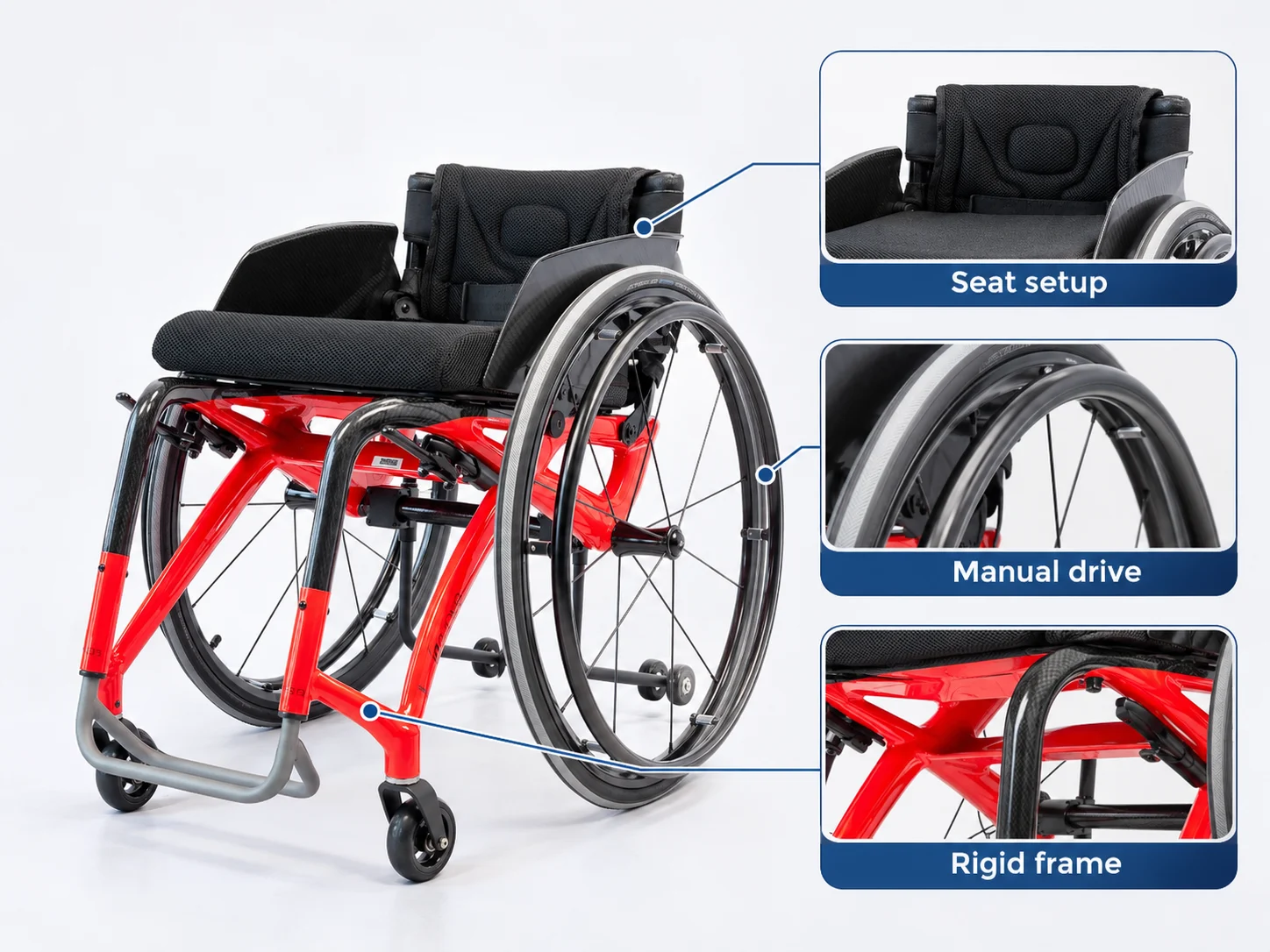
Read carbon wheelchair specifications as a description of one configured chair, including its frame, drive type and removable parts. The 5903 carbon wheelchair combines a rigid carbon frame with handrim propulsion, a low backrest and removable rear wheels. Its compact transport arrangement comes from folding or removing named parts, while the main frame stays rigid.
Start with the drive type
The base setup sets the comparison. You move this chair through its handrims; the supplied setup has no motor, drive battery or joystick. Your review should connect that manual layout with the intended user's abilities, seating needs and support arrangements. WHO guidance supports assessment, fitting and follow-up.
- Propulsion
- Frame
- Powered system
| Review point | What to confirm |
|---|---|
| Propulsion | Manual handrim operation |
| Frame | Rigid carbon construction |
| Powered system | None shown in the base model |
Key Takeaway: You can place this model in a manual-wheelchair shortlist without importing electric-wheelchair features.
Which dimensions matter before choosing a chair?
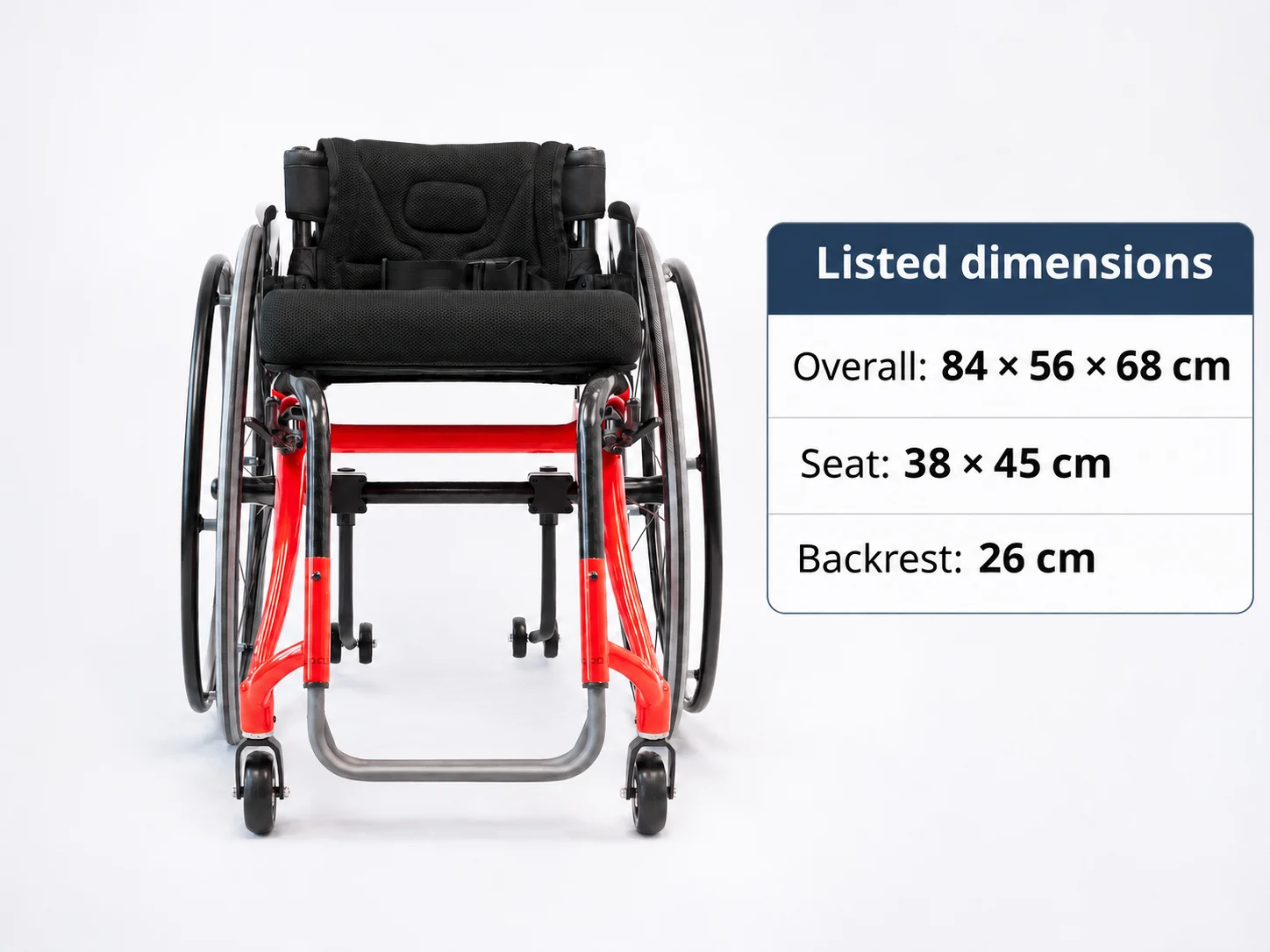
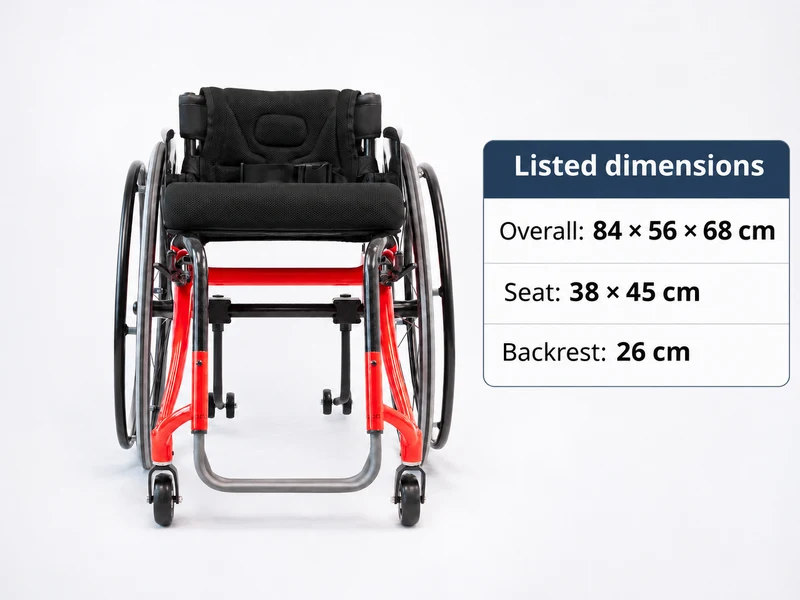
Separate seating measurements from outside dimensions when reviewing carbon wheelchair specifications. The 5903 carbon wheelchair product sheet lists an 84 cm length, 56 cm width and 68 cm height. Those outside dimensions describe the product envelope; they do not tell you whether its seat fits an individual.
Which size belongs to which decision?
Keep the inside and outside measurements separate. The only seat width is 38 cm; listed seat depth is 45 cm and backrest height is 26 cm. Compare seating needs with those dimensions, then check access using the complete offered chair and any fitted accessories. Keep that distinction within the seat-width review.
- Outside envelope
- Seat dimensions
- Backrest height
| Review point | What to confirm |
|---|---|
| Outside envelope | 84 × 56 × 68 cm listed |
| Seat dimensions | 38 × 45 cm listed |
| Backrest height | 26 cm listed |
Key Takeaway: A size review needs both a seating assessment and a separate check of the space around the chair.
How should you compare carbon wheelchair weights?
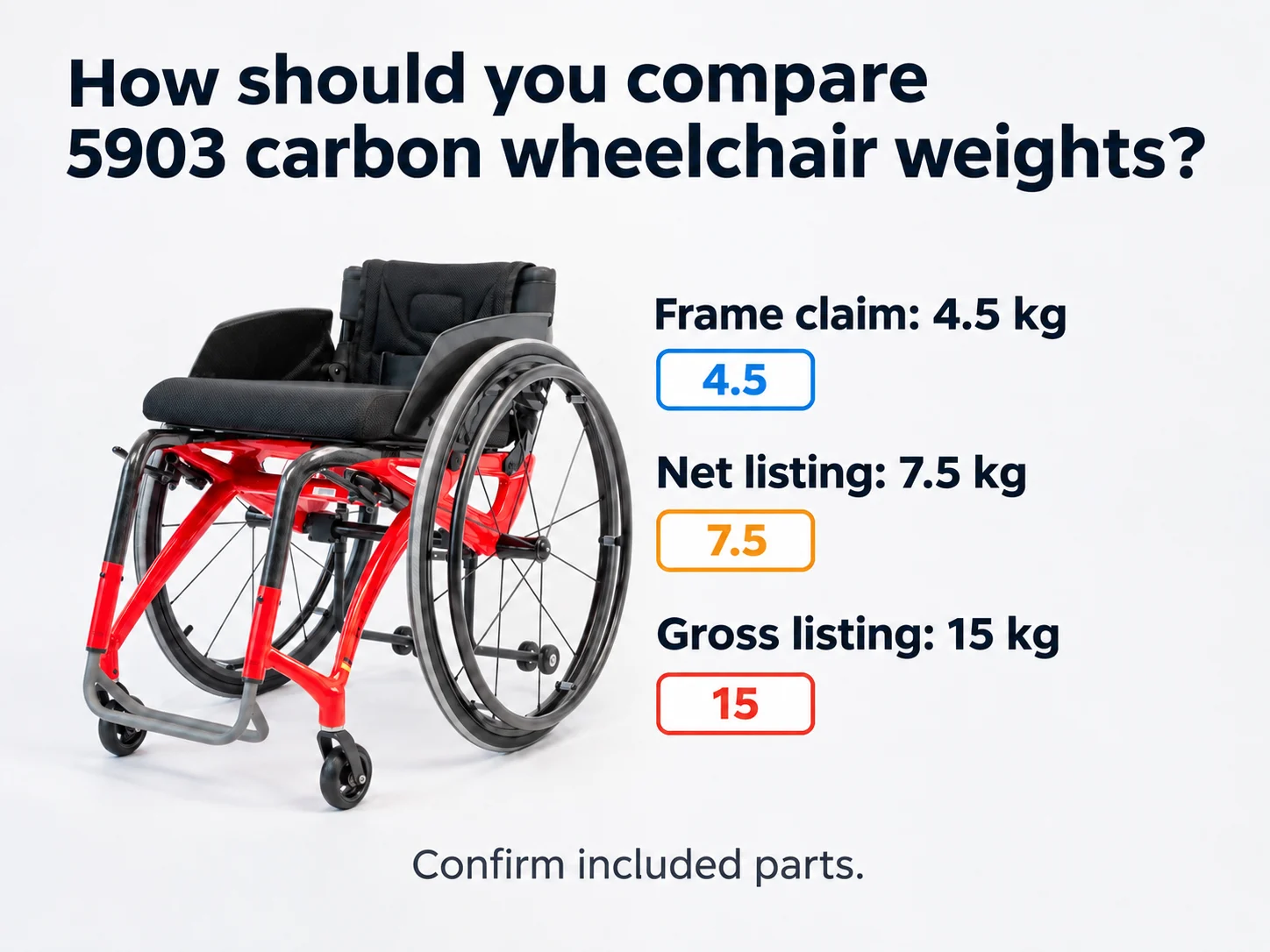
Compare weight categories separately within carbon wheelchair specifications, with the included parts named for each figure. Compare 5903 carbon wheelchair weights only after naming the parts included in each figure. The material lists a 4.5 kg frame claim, 7.5 kg net weight and 15 kg gross weight; these describe different item sets.
Read the label beside the number
The lightest figure is not the complete order. Ask for a scale record of the setup that your team will handle. A frame without wheels and cushioning is a different load from an assembled chair or a packed carton.
- Frame claim
- Net listing
- Gross listing
| Review point | What to confirm |
|---|---|
| Frame claim | 4.5 kg with scope to confirm |
| Net listing | 7.5 kg with included parts defined |
| Gross listing | 15 kg including the packing scope |
Key Takeaway: You can compare handling and freight needs without advertising the frame figure as whole-chair weight.
What changes when the backrest folds?
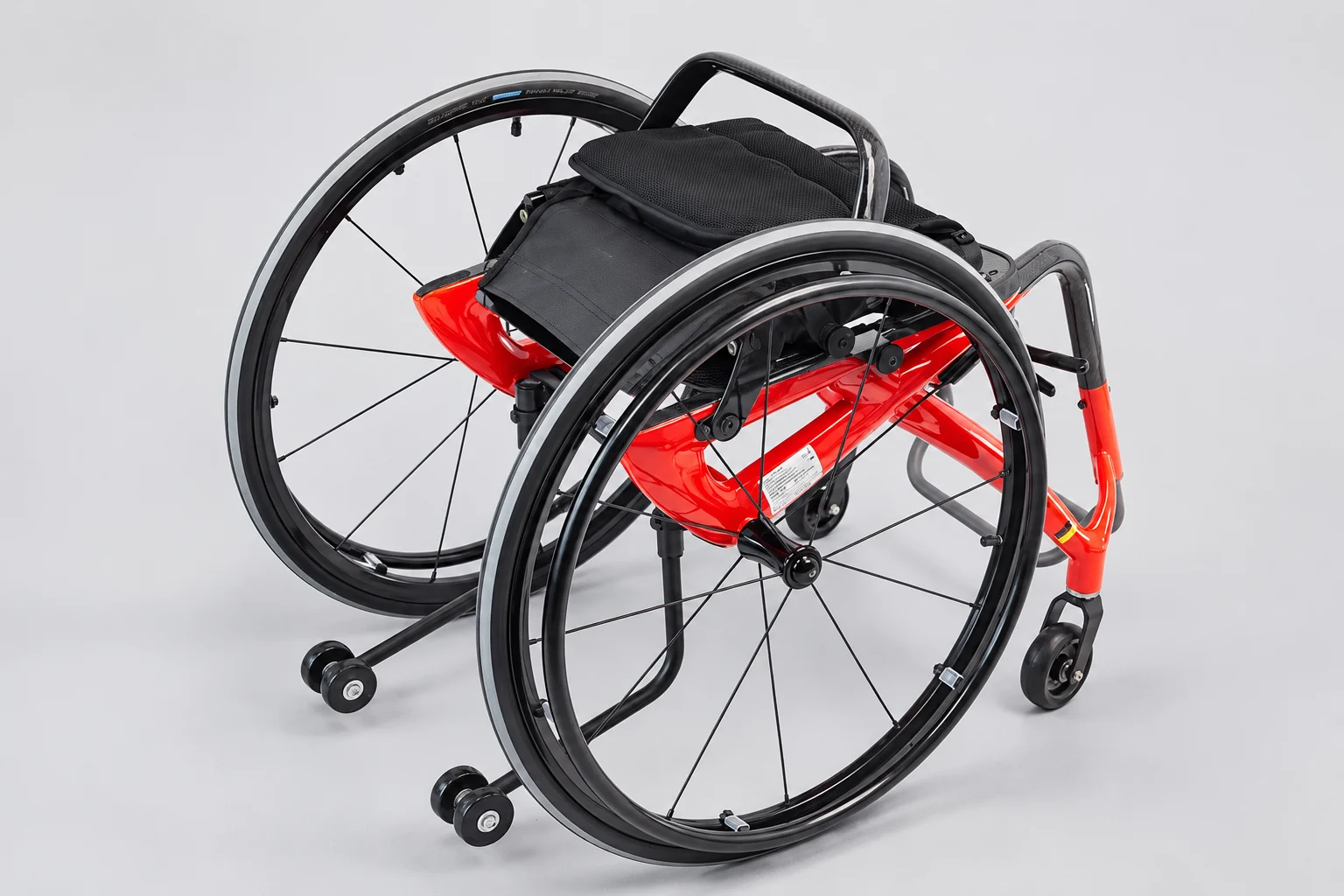
A folding backrest changes the upper profile; carbon wheelchair specifications should still describe whether the main frame stays rigid. On the 5903 carbon wheelchair, folding the backrest reduces the upper profile while the rigid frame remains in place. The supplied pictures also show detachable side guards and cushioning, so each compact state needs its own contents list.
Name the state you intend to use
A folded photo is not a complete dimension sheet. Request length, width and height for that exact state, including any parts that stay attached. Record separately carried wheels and accessories alongside the remaining frame.
- Backrest
- Main frame
- Transport state
| Review point | What to confirm |
|---|---|
| Backrest | Fold-down feature shown |
| Main frame | Rigid structure retained |
| Transport state | Measured with named parts included |
Key Takeaway: A defined compact state makes storage and loading comparisons more useful than a broad folding claim.
How do wheels affect carbon wheelchair specifications?
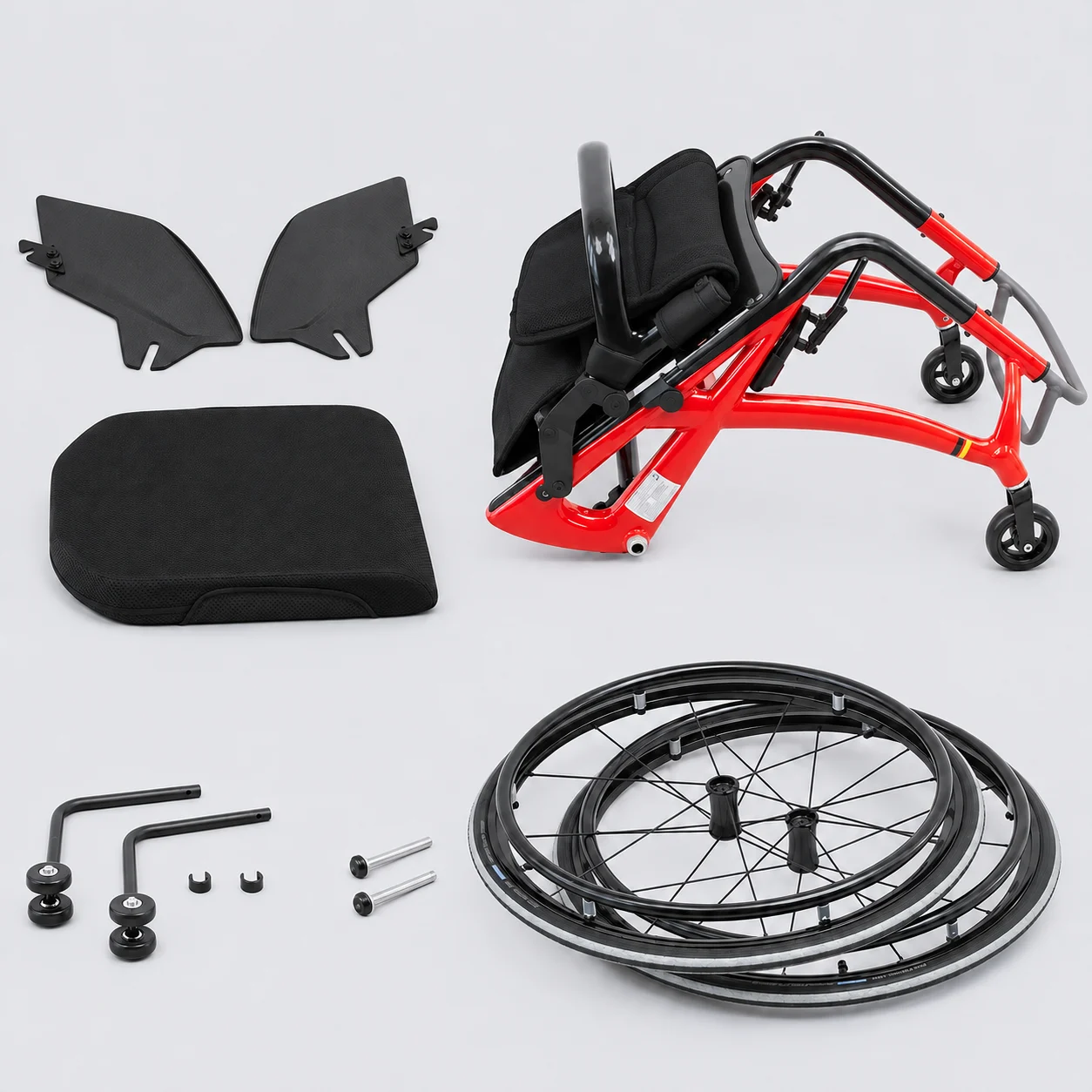
Quick-release wheels create separate transport items, which should be identified in carbon wheelchair specifications. The 5903 carbon wheelchair rear-wheel design allows the large wheels to be separated from the frame as shown in the supplied material. That changes the shape of the load and creates separate parts to protect and account for.
Keep the wheel and axle records together
Removal also creates a reassembly task. Identify the actual hub and axle assembly, then use its matching instructions for handling. If retention or fit is uncertain, refer the issue through the service provider before the chair returns to use. Use the corresponding rear-axle record to identify the interface.
- Wheel assembly
- Axle interface
- Handover
| Review point | What to confirm |
|---|---|
| Wheel assembly | Exact rear wheel and handrim |
| Axle interface | Matching release and retention parts |
| Handover | Removal and return instructions |
Key Takeaway: You can plan a smaller load while keeping wheel identity and the next service step clear.
How do the seating parts support a purchasing review?
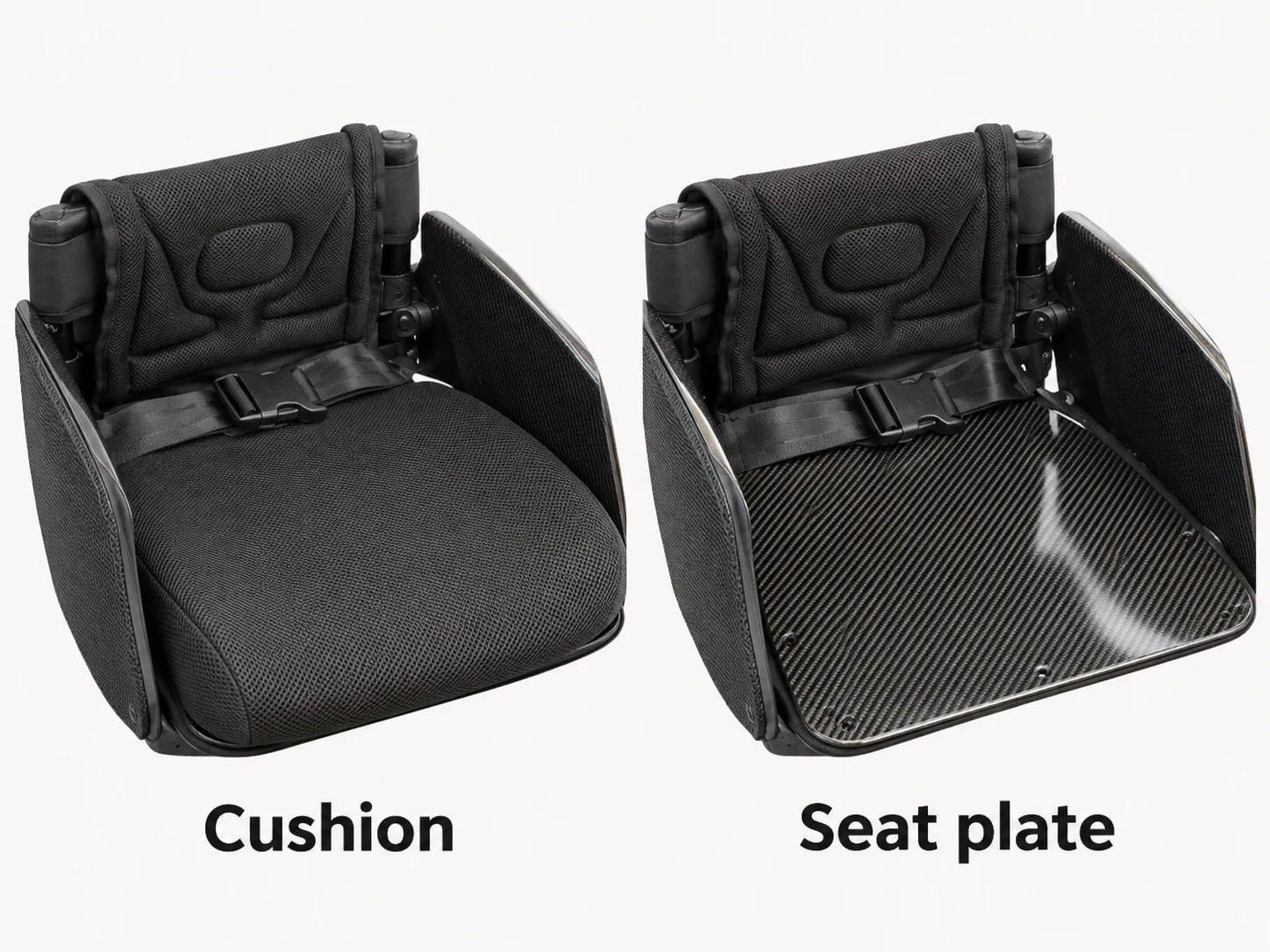
Seating parts belong in carbon wheelchair specifications because a cushion, seat plate and side guards form one fitted arrangement. The 5903 carbon wheelchair uses a cushion over a carbon seat plate, with side guards and a low soft backrest in the reference images. Those parts need to be reviewed as one seating arrangement because their dimensions and position interact.
Look at the actual seating set
The fabric description cannot establish clinical fit. Ask which cushion, cover and supports the offer includes. A breathable or non-slip description does not prove pressure-injury prevention or make a fitting review unnecessary.
- Seat base
- Cushion
- Support review
| Review point | What to confirm |
|---|---|
| Seat base | Carbon plate shown |
| Cushion | Exact supplied type and size |
| Support review | Individual assessment and matching setup |
Key Takeaway: A clear seating specification helps your buyer avoid assuming that every pictured cushion or support is included.
Are anti-tip components part of every carbon wheelchair?
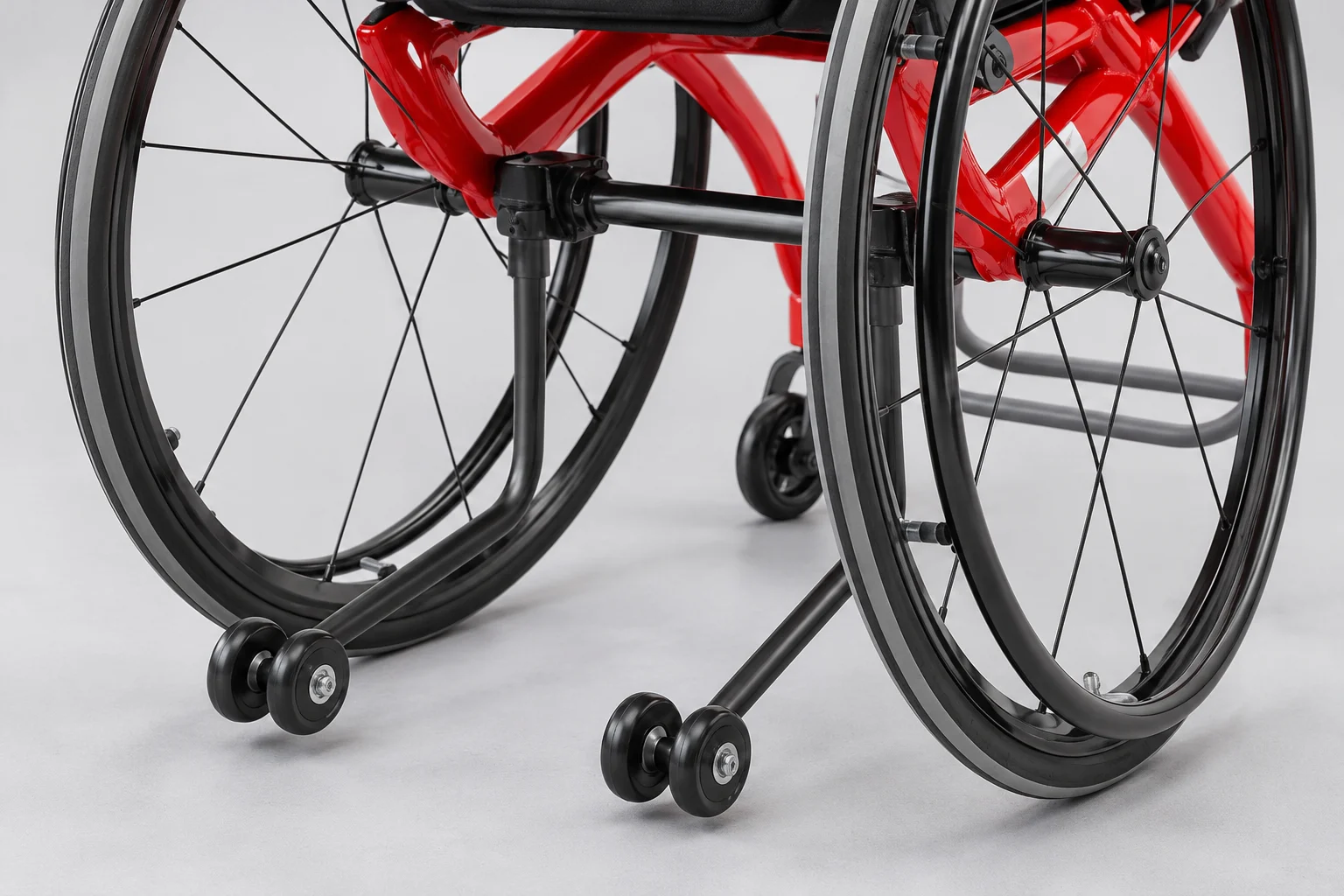
Confirm anti-tip assemblies in the actual offer rather than assuming that all carbon wheelchair specifications include them. The 5903 carbon wheelchair red-frame photos show left and right rear anti-tip assemblies, but the offer must state whether that setup is supplied. A nearby manual describes a different arrangement, so its applicability needs confirmation.
Resolve the configuration difference in writing
A picture and a guide should describe the same chair. Ask for a current part list and instructions matched to the offered unit. Anti-tip equipment also needs the appropriate setup and use guidance; its presence does not eliminate every tipping risk.
- Photo evidence
- Order contents
- Guide match
| Review point | What to confirm |
|---|---|
| Photo evidence | Rear assemblies shown on the red version |
| Order contents | Explicit included parts |
| Guide match | Instructions for the actual setup |
Key Takeaway: You can resolve a practical supply question before a conflicting document reaches the end user.
What should the description say about sports use?
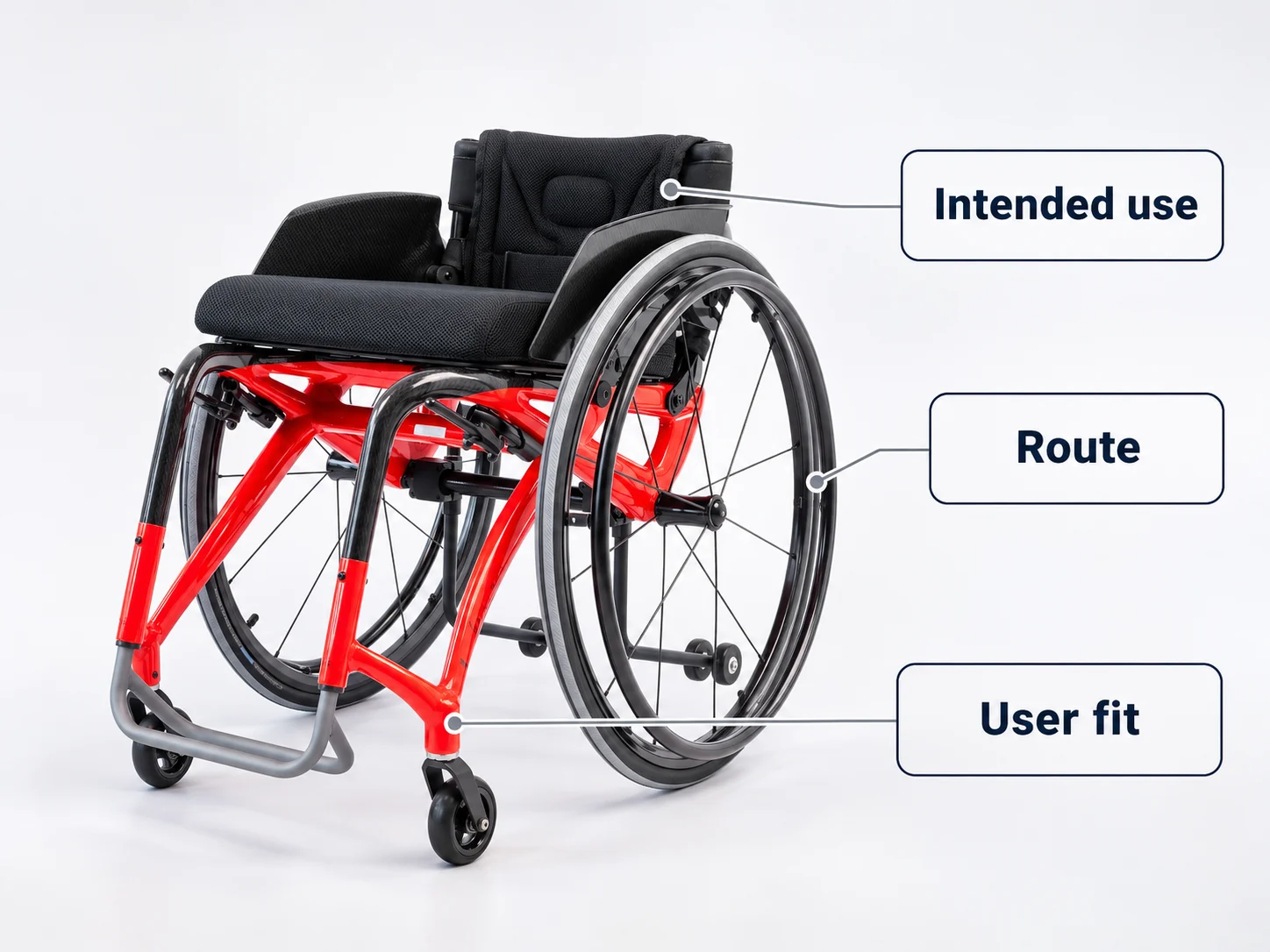
Treat sports-style wording in carbon wheelchair specifications as a description unless the supplier provides evidence for a specific approved use. Describe the 5903 carbon wheelchair as an active-style manual chair within its documented intended use. A sports-style shape does not establish suitability for racing, court sports, impacts or every outdoor surface.
Separate appearance from an approved task
The intended activity needs its own evidence. Ask the supplier to define the use conditions supported by the product documents. Keep a proposed activity within the user's assessment and the provider's confirmed scope. Record the intended use with the broader product inspection brief.
- Product description
- Activity evidence
- Unsupported claim
| Review point | What to confirm |
|---|---|
| Product description | Manual active-style setup |
| Activity evidence | Specific documented intended use |
| Unsupported claim | No assumed competition approval |
Key Takeaway: Your sales copy can describe the design without promising performance or activities that have not been established.
Which records support carbon wheelchair specifications?
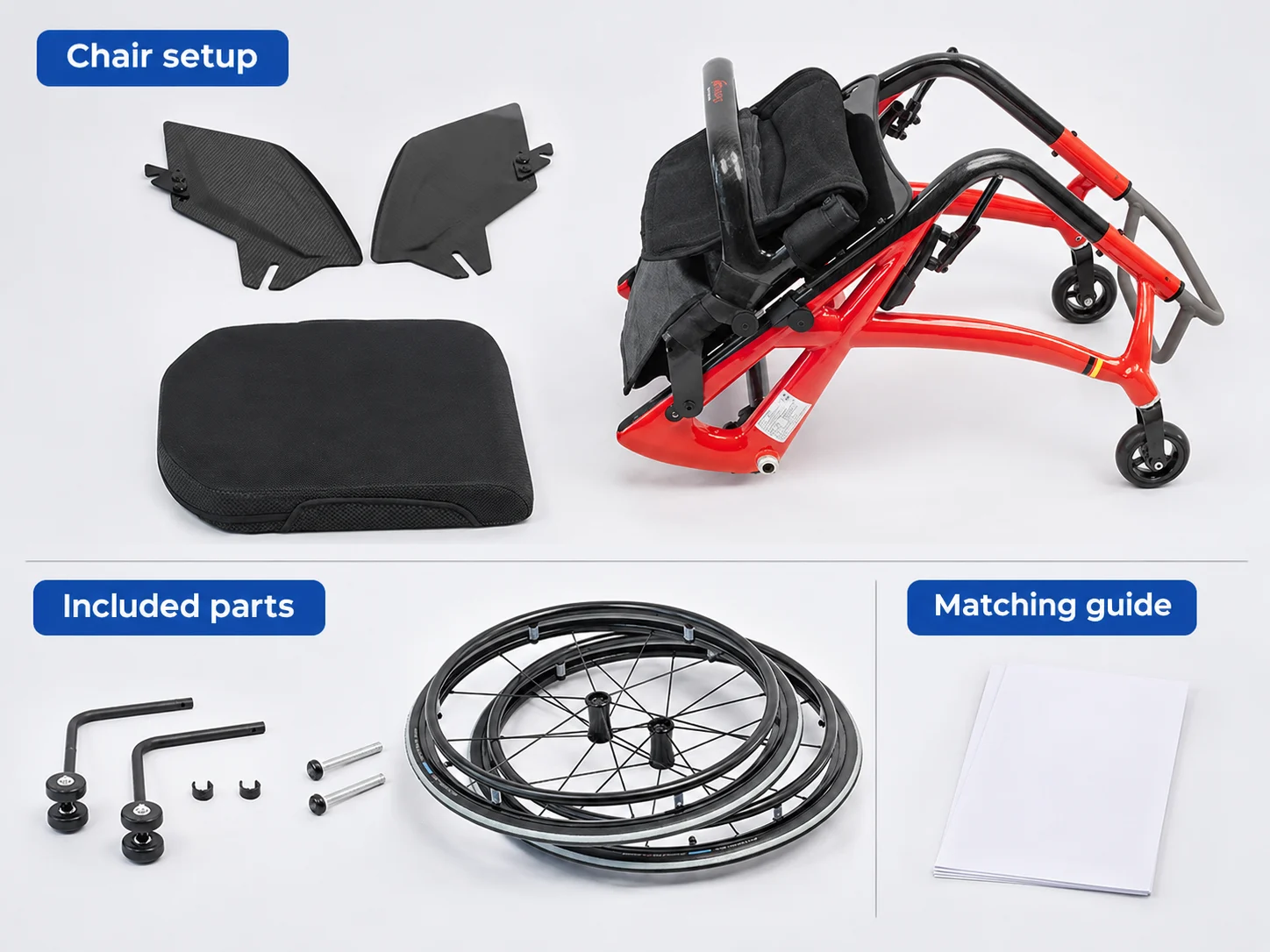
Keep the applicable manual, setup record and written offer together when approving carbon wheelchair specifications. A 5903 carbon wheelchair order should identify the model, seating set, wheels, anti-tip setup and packing scope. The matching guide, service contact and commercial terms should travel with that product record.
Make the order reproducible
The receiving team needs more than a model name. Keep the accepted quotation and dated setup together. If a supplier proposes a change, have the buyer review that change before treating it as the original order.
- Configuration
- Documents
- Commercial scope
| Review point | What to confirm |
|---|---|
| Configuration | Named frame seating and wheel set |
| Documents | Matching guide and product record |
| Commercial scope | Written goods services and terms |
Key Takeaway: A stable order reference helps you compare the sample, delivery and later spare-parts requests.
How can you choose the right carbon wheelchair setup?
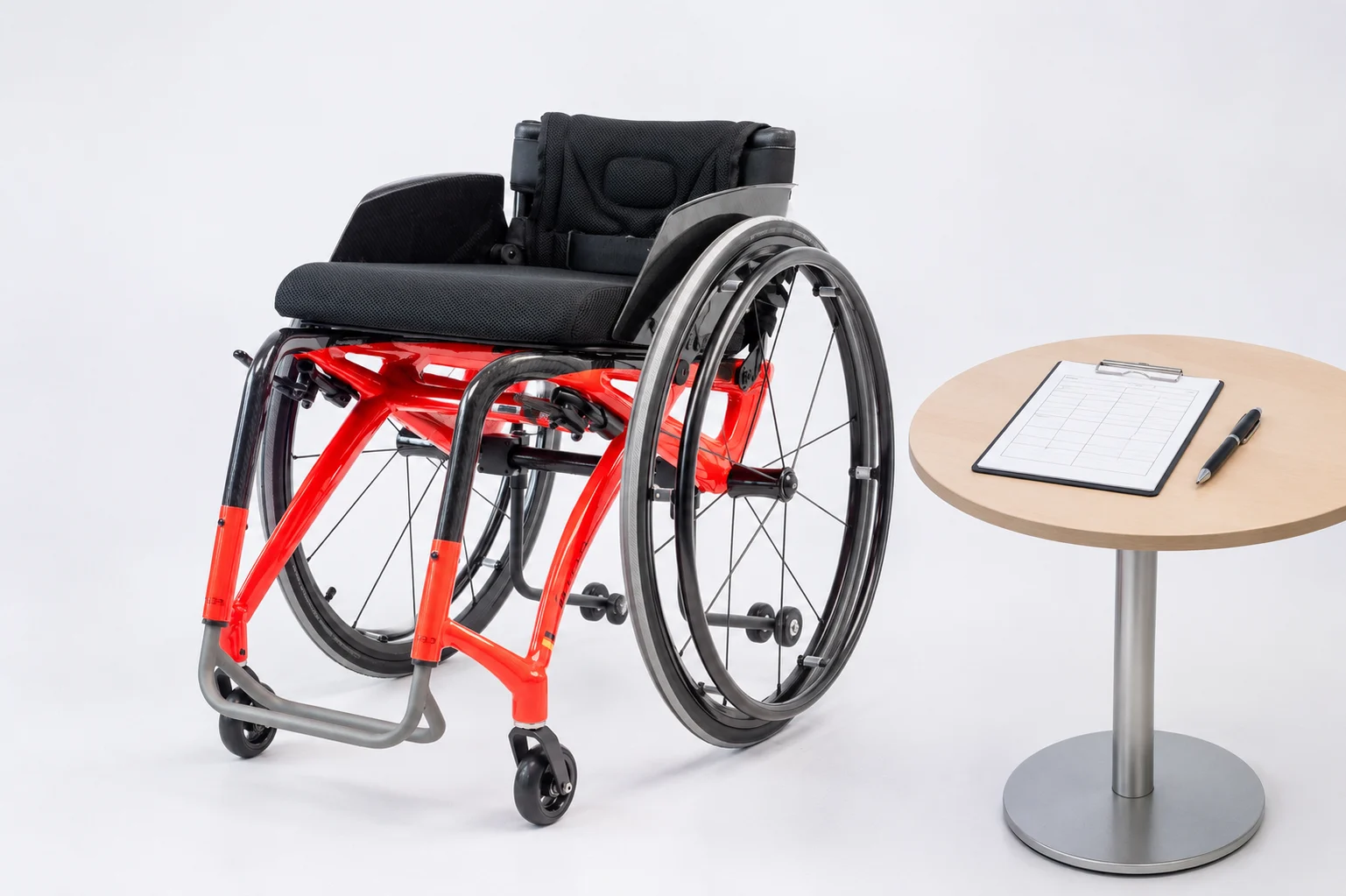
Choose from carbon wheelchair specifications by matching the documented build to the user's assessment and your intended handling task. Choose a 5903 carbon wheelchair setup by combining the user's fit review with clear product, transport and service requirements. That gives you a way to check the frame, dimensions, weights and supplied parts without merging incompatible claims.
Send a configuration brief
Ask for answers that match your use case. Tell AryMD the intended market, quantity and features you need confirmed. Request the current setup and written offer so your team can review the fit, packing and support arrangements.
- User needs
- Product scope
- Purchase request
| Review point | What to confirm |
|---|---|
| User needs | Seating and functional review |
| Product scope | Exact setup and documents |
| Purchase request | Quantity destination and open questions |
Key Takeaway: You now have a defined path from a product photograph to a reviewable purchasing request. Contact us with your 5903 setup, quantity and destination so we can discuss the product information and written supply scope. AryMD puts clear specifications before purchasing promises.
Frequently asked questions
Q1: Can I use the 5903 as a powered wheelchair?
No. The base setup shown is manually propelled and has no drive motor or battery; a proposed powered attachment needs its own compatibility review.
Q2: What's the best starting point for choosing this model?
Start with the individual's seating and functional needs, then compare the actual offered setup. A product photograph cannot complete that assessment.
Q3: How do I know whether the 4.5 kg figure describes the whole chair?
It does not in the supplied material. That figure is a frame claim, while the product sheet separately lists net and gross weights.
Q4: Can I assume every pictured accessory comes with the chair?
No. Ask for an itemized quotation that identifies the cushion, guards, wheel set and any anti-tip parts.
Q5: Does the sports-style shape approve competitive use?
No. Request evidence for the intended activity and keep the proposed use within the product guidance and individual review.