
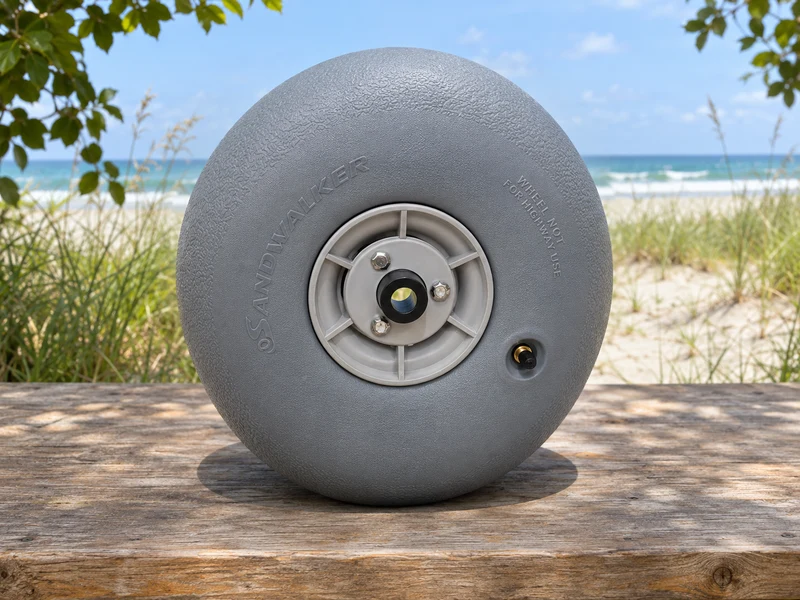
Match beach wheel bore size to the part of the axle that actually runs inside the wheel. A catalogue photograph of two grey wheels can hide different inserts behind similar hub faces. Identify the surfaces in contact before comparing the numbers on the quote.
Which beach wheel bore size do you need?
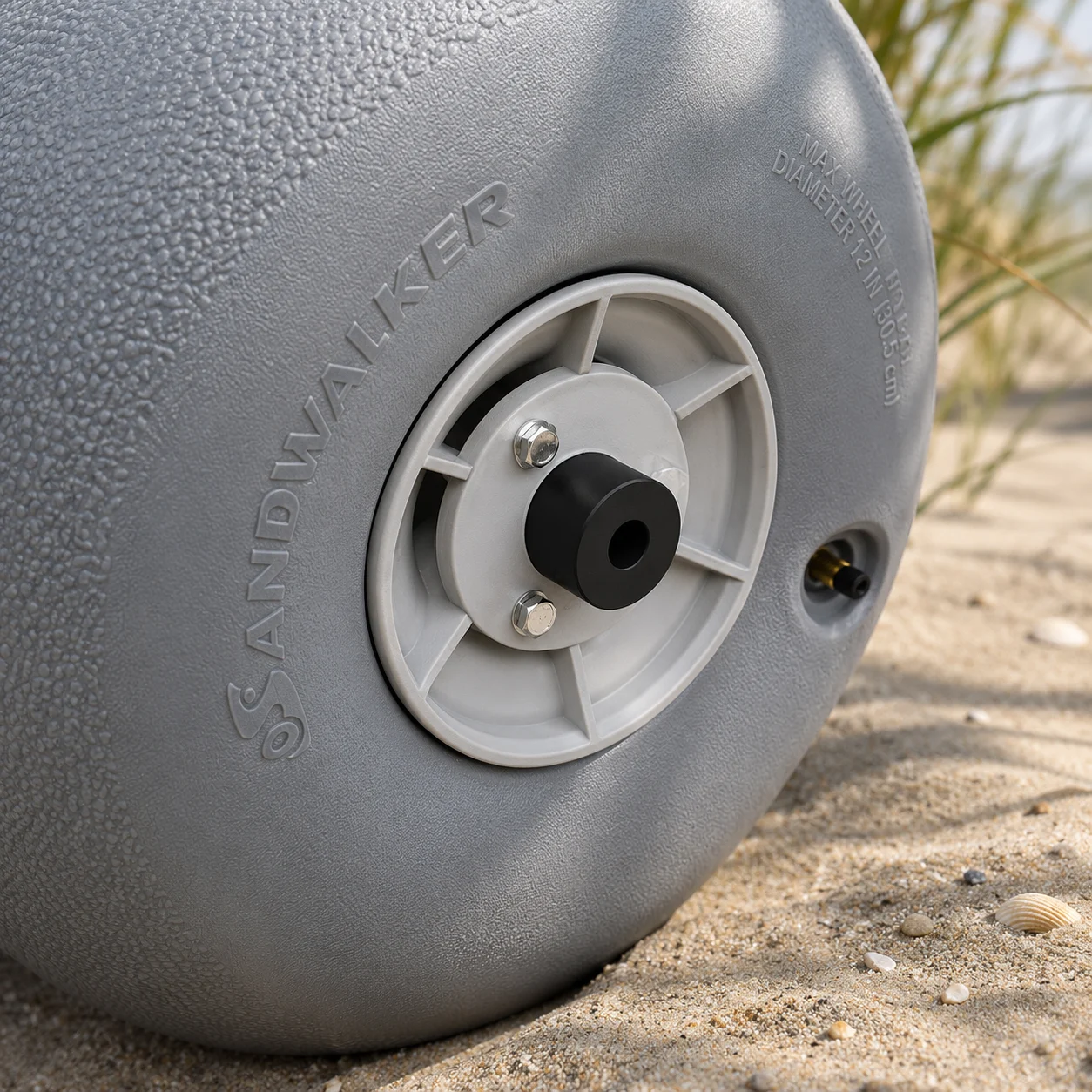
Use the beach wheel bore size that describes the opening the working axle passes through.
Where does the axle run?
Look inside the hub. A visible outer ring can surround a separate sleeve, so its outside diameter may be much larger than the axle opening.
- Photograph the opening square on.
- Name the surfaces between which the measurement was taken.
| Check | What to look for |
|---|---|
| Bore | Inside opening |
| Axle | Matching external surface |
Key Takeaway: Matching the two working surfaces gives the supplier a meaningful starting point.
How is the bore different from the tire diameter?
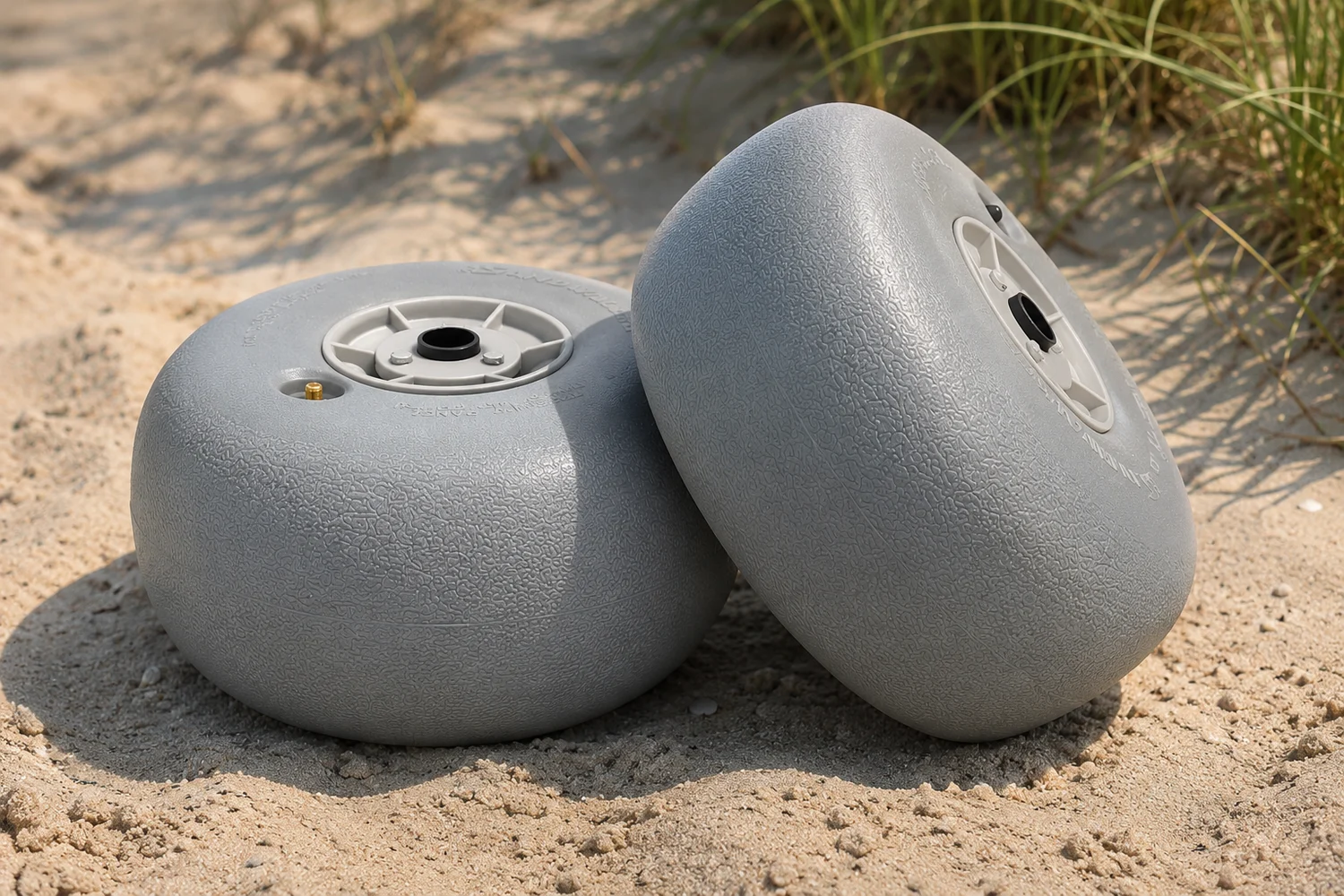
The beach wheel bore size describes an opening at the center, while tire diameter spans the outside of the wheel.
Could two tires look identical?
Yes, at a distance. Two similar tires can be sold with different hub arrangements for different equipment. The wheel assembly guide also distinguishes the wheel from adjacent fittings.
- Record the outside diameter separately.
- Label the center opening on its own image.
| Check | What to look for |
|---|---|
| Tire diameter | Outside edge to opposite edge |
| Bore | Internal hub opening |
Key Takeaway: Keep the large and small diameters on separate quote lines.
How can an insert change the reading?
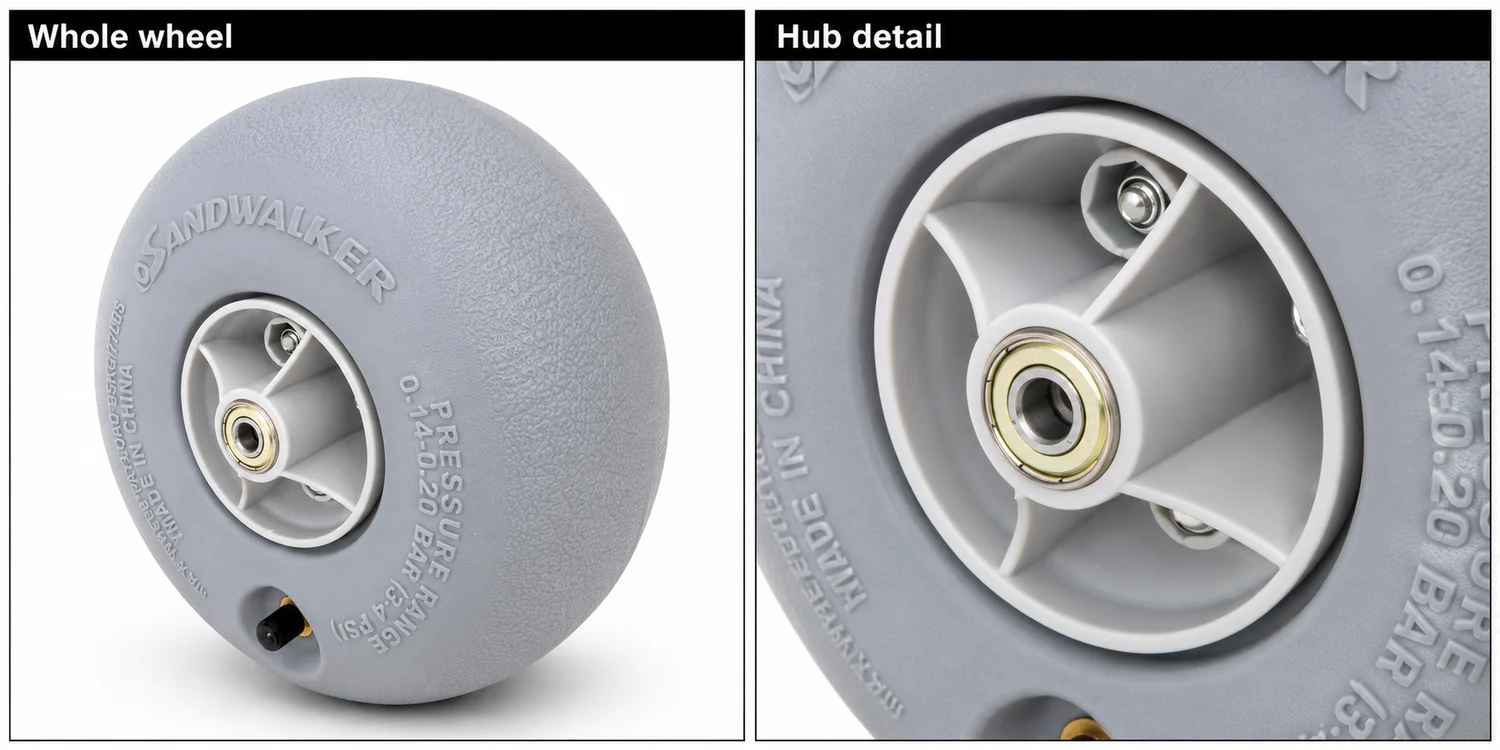
An installed sleeve can determine the effective beach wheel bore size for the axle.
What should you photograph first?
Show the hub as received. Removing an insert before documenting it can make the loose wheel look like another version.
- Show both faces.
- Ask whether the insert is included with the replacement.
| Check | What to look for |
|---|---|
| Assembled bore | Opening with supplied insert |
| Bare hub | Opening without an insert |
Key Takeaway: A dimension tied to the assembled condition is easier to reproduce.
Which axle measurement belongs on the drawing?
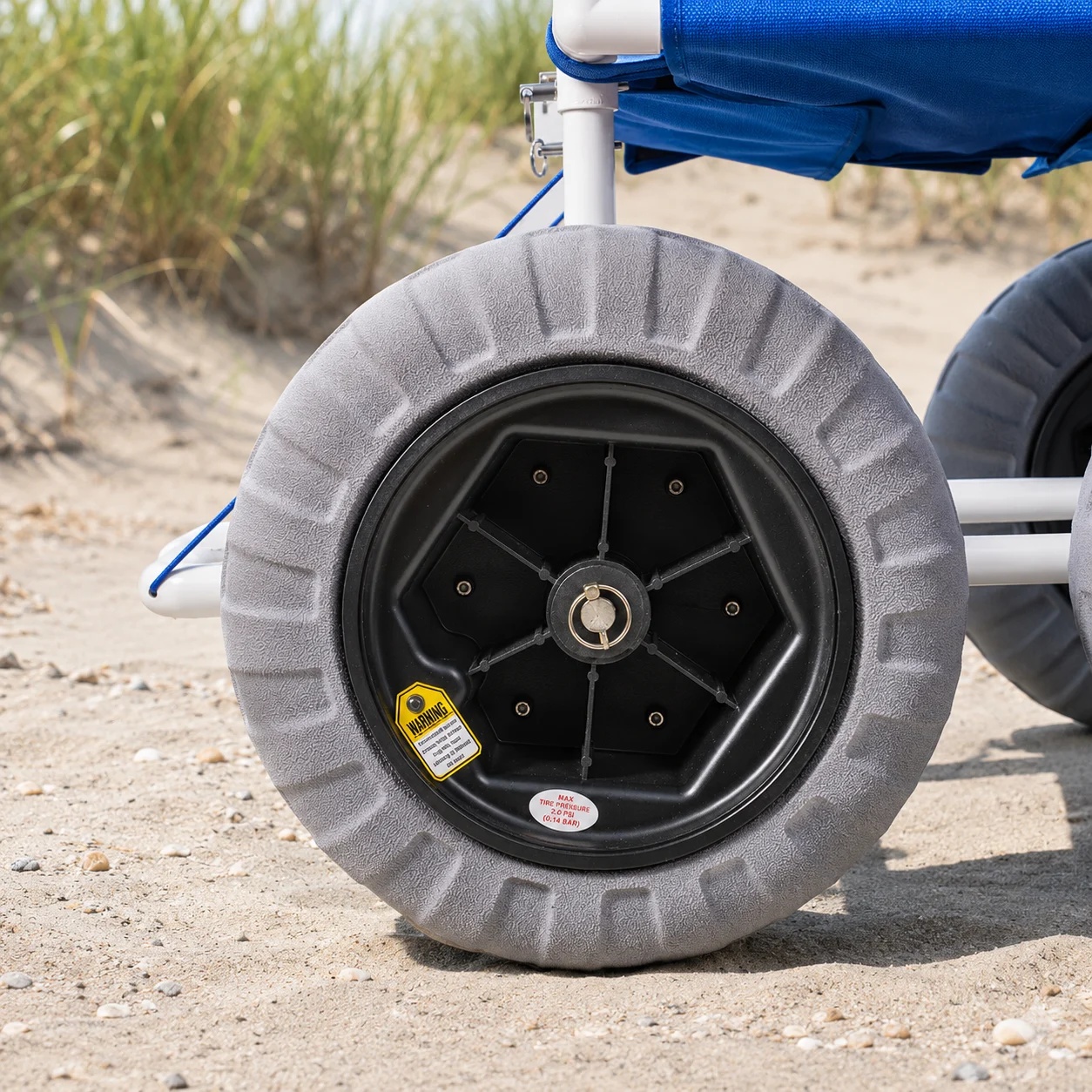
Compare beach wheel bore size with the axle diameter at the working surface named by the equipment supplier.
Is the threaded tip the right place?
Identify the working span first. A narrower tip, shoulder or threaded section can give a different reading from the surface supporting the hub.
- Sketch the axle profile.
- Label the supplier's specified measurement location.
| Check | What to look for |
|---|---|
| Working surface | Location for fit comparison |
| Axle tip | Separate retention detail |
Key Takeaway: A drawing keeps a tip measurement from being mistaken for the bearing surface.
How should you record the unit of measure?
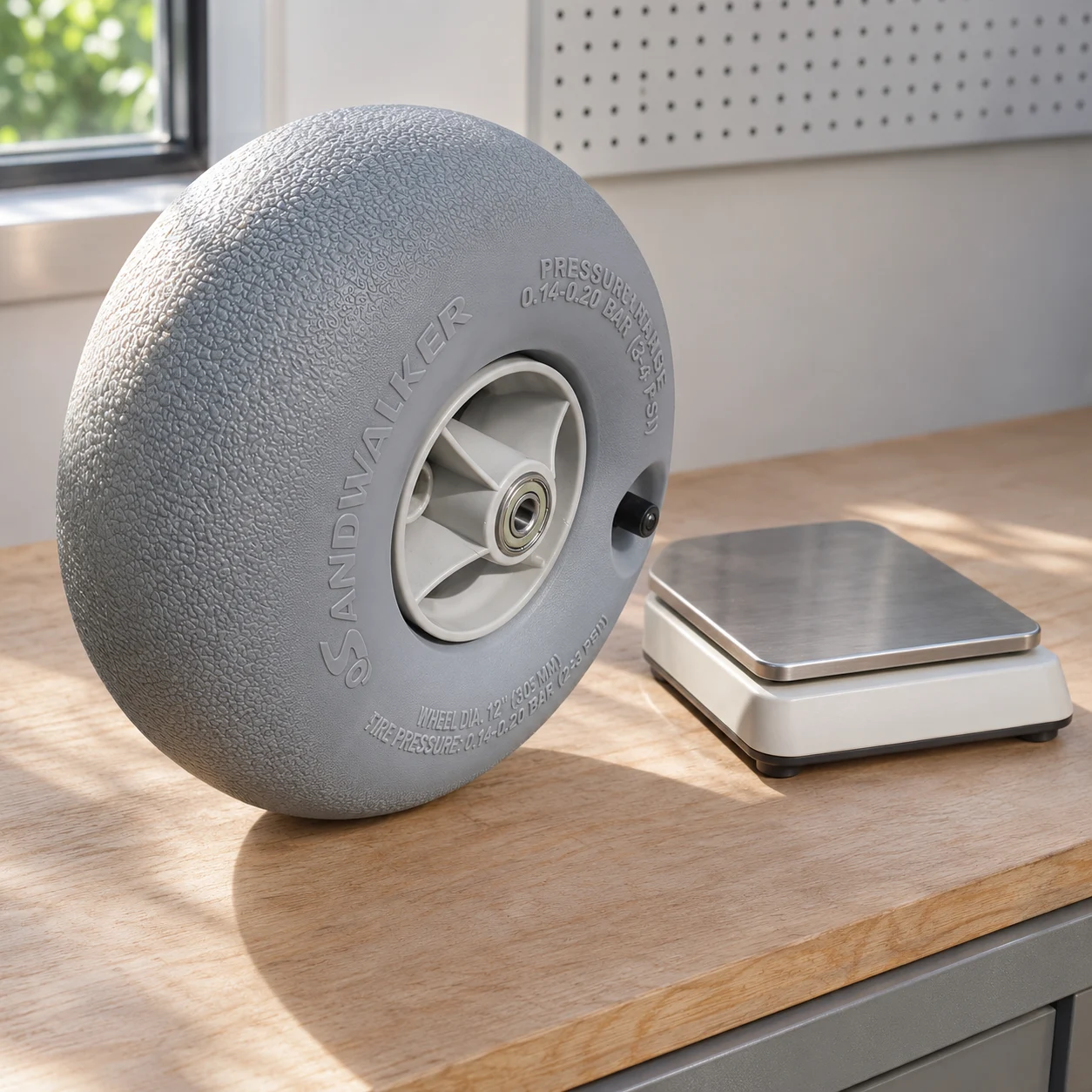
Write the unit beside every beach wheel bore size reading and keep the original value.
Should you round an inch value?
Preserve the reading. A rounded conversion can disguise a mismatch if the supplier works from a metric drawing.
- State millimetres or inches.
- Keep converted values in a separate field.
| Check | What to look for |
|---|---|
| Original | Unit on the source drawing |
| Conversion | Clearly identified calculation |
Key Takeaway: The supplier can see which value came from a drawing or instrument.
Which tools make a useful measurement photo?
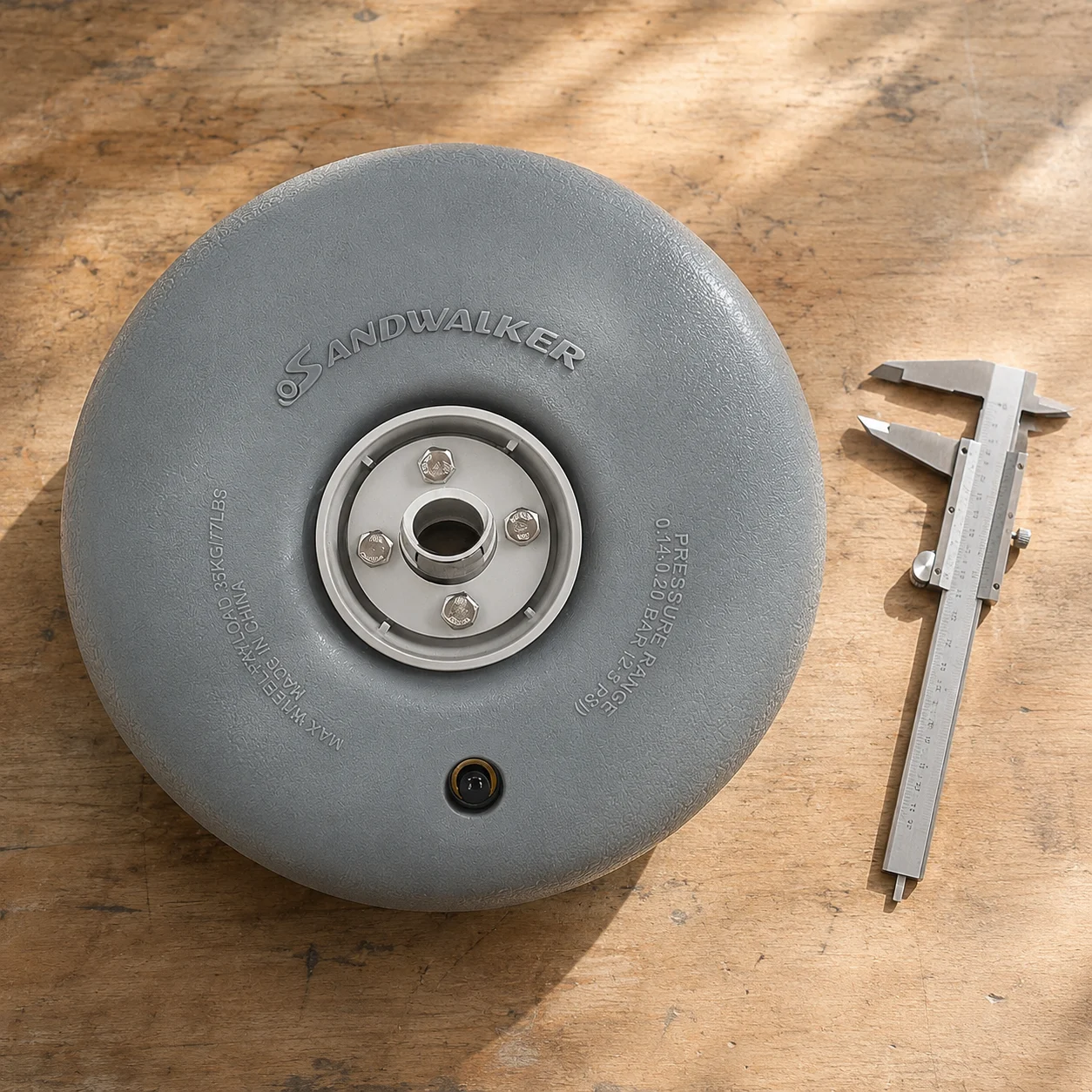
Suitable measuring tools and visible endpoints make a beach wheel bore size photo useful to the person verifying fit.
Can a ruler photo settle a close fit?
Use it for orientation. For a precise match, ask the supplier which instrument and measurement method it accepts. Identify the parent equipment in the product catalogue.
- Keep the opening in focus.
- Send the written reading separately.
| Check | What to look for |
|---|---|
| Overview | Where the reading was taken |
| Value | Reading and unit |
Key Takeaway: A clear location photo helps the technician interpret the measurement.
What else matters besides the bore?
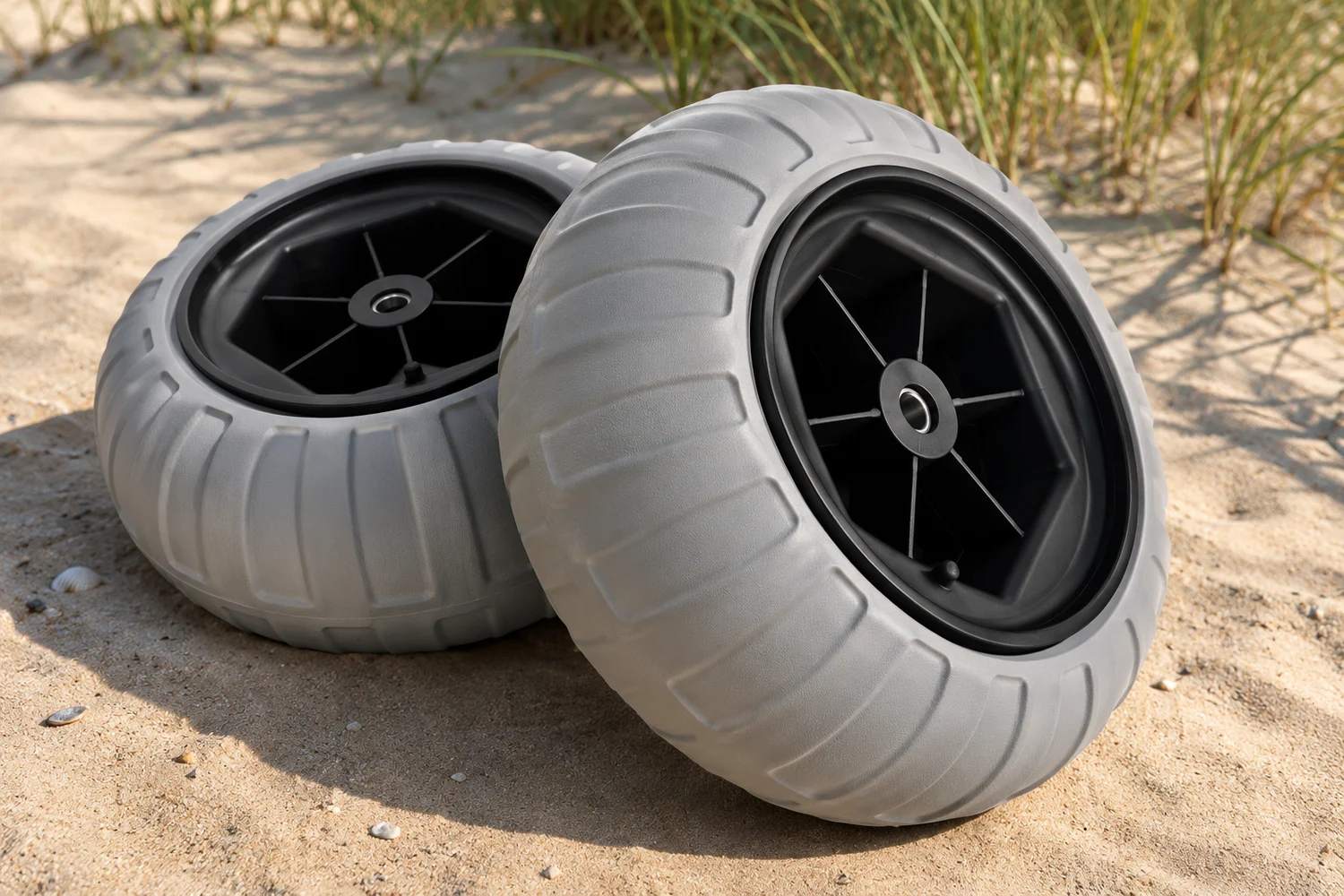
Confirm hub length, clearance and the retaining arrangement alongside beach wheel bore size.
Will a correctly sized hole settle the order?
Check the axial direction too. The wheel can have the right opening and still leave too little room for the approved retainer. Use a single length unit throughout the drawing, following the NIST guide to metric length.
- Compare the complete hub length.
- Show the original retention arrangement.
| Check | What to look for |
|---|---|
| Radial match | Axle and bore |
| Axial match | Hub length and retention |
Key Takeaway: A wheel needs a confirmed assembly match in both directions.
What if the opening appears irregular?
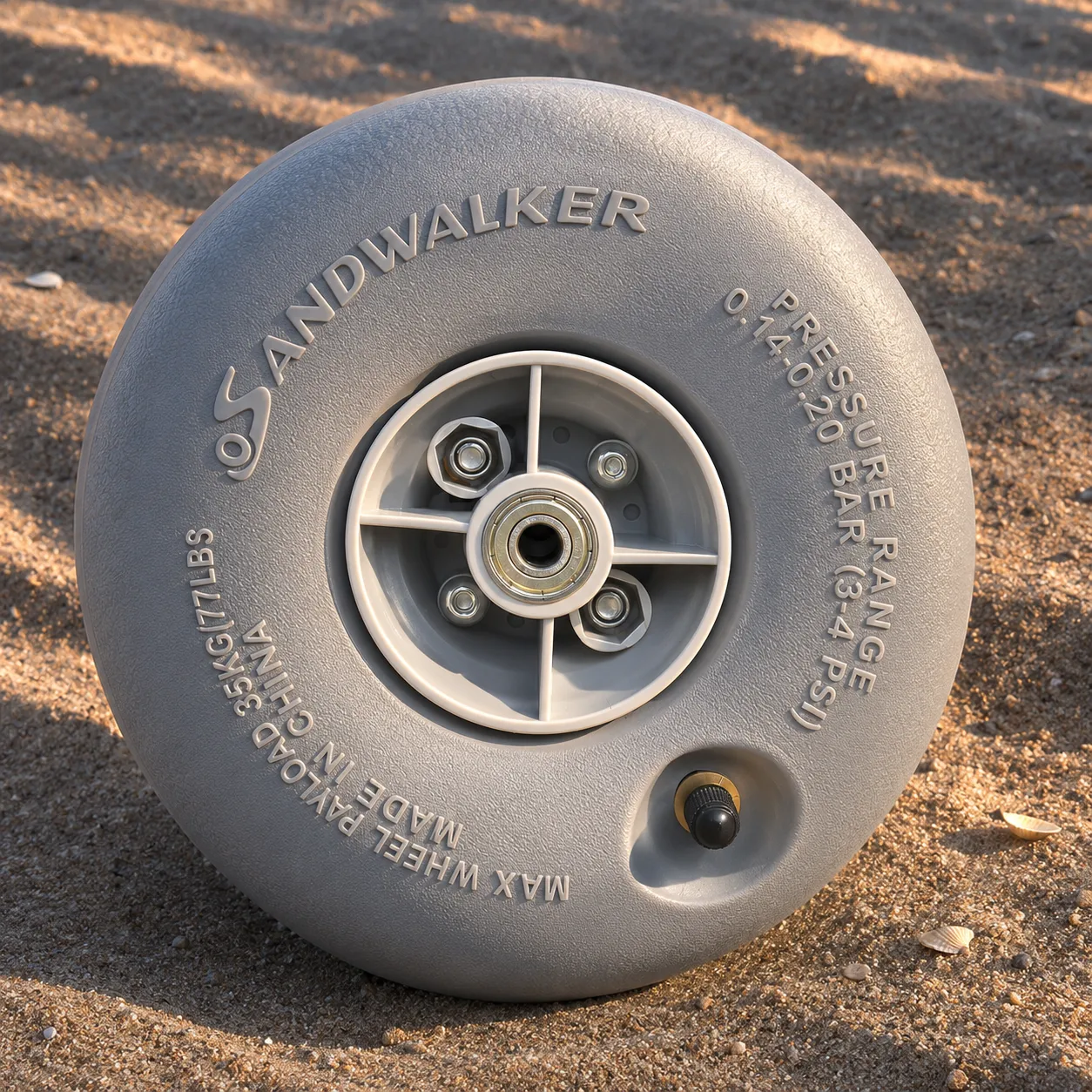
Ask for a service assessment when wear or distortion makes beach wheel bore size uncertain.
Which value should you avoid copying?
A worn opening is a poor design reference. Source the nominal part drawing or an approved original part number for the unit. Include the as-found reading in your parts enquiry.
- Flag visible wear.
- Keep the as-found value separate.
| Check | What to look for |
|---|---|
| Observed opening | Current condition |
| Nominal size | Approved specification |
Key Takeaway: Your purchase order should refer to a design value the supplier recognizes.
What should a replacement quote confirm?
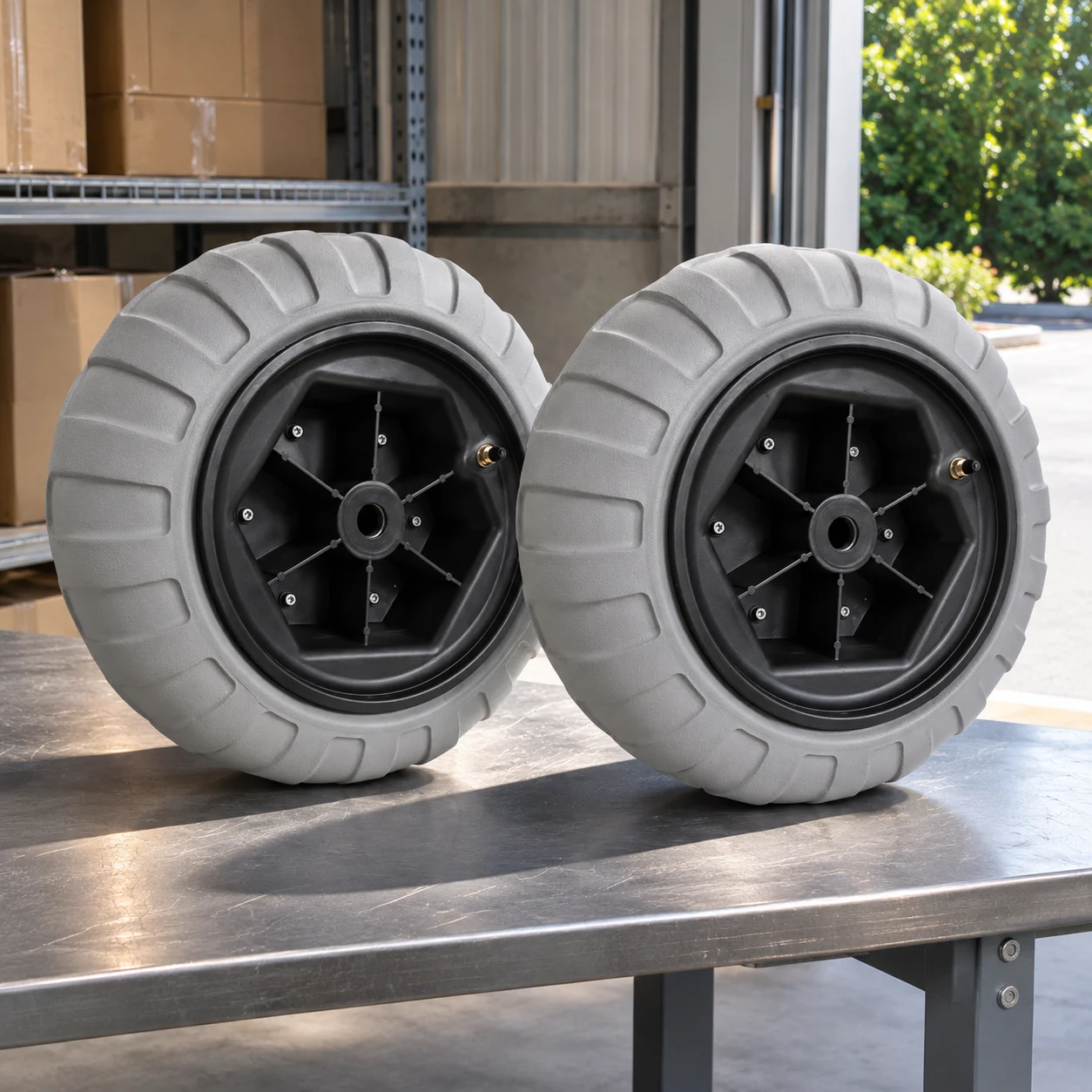
Ask the seller to confirm beach wheel bore size, insert state, hub length and applicability to your axle.
Can you share one quote across a fleet?
Group identical revisions only. A common tyre size on a fleet does not establish a shared hub or approved axle.
- List the affected unit references.
- Ask whether loose inserts ship separately.
| Check | What to look for |
|---|---|
| Wheel line | Part and configuration |
| Insert line | Included or separately supplied |
Key Takeaway: The receiving team knows whether a complete assembly should arrive.
How do you confirm the delivered wheel?
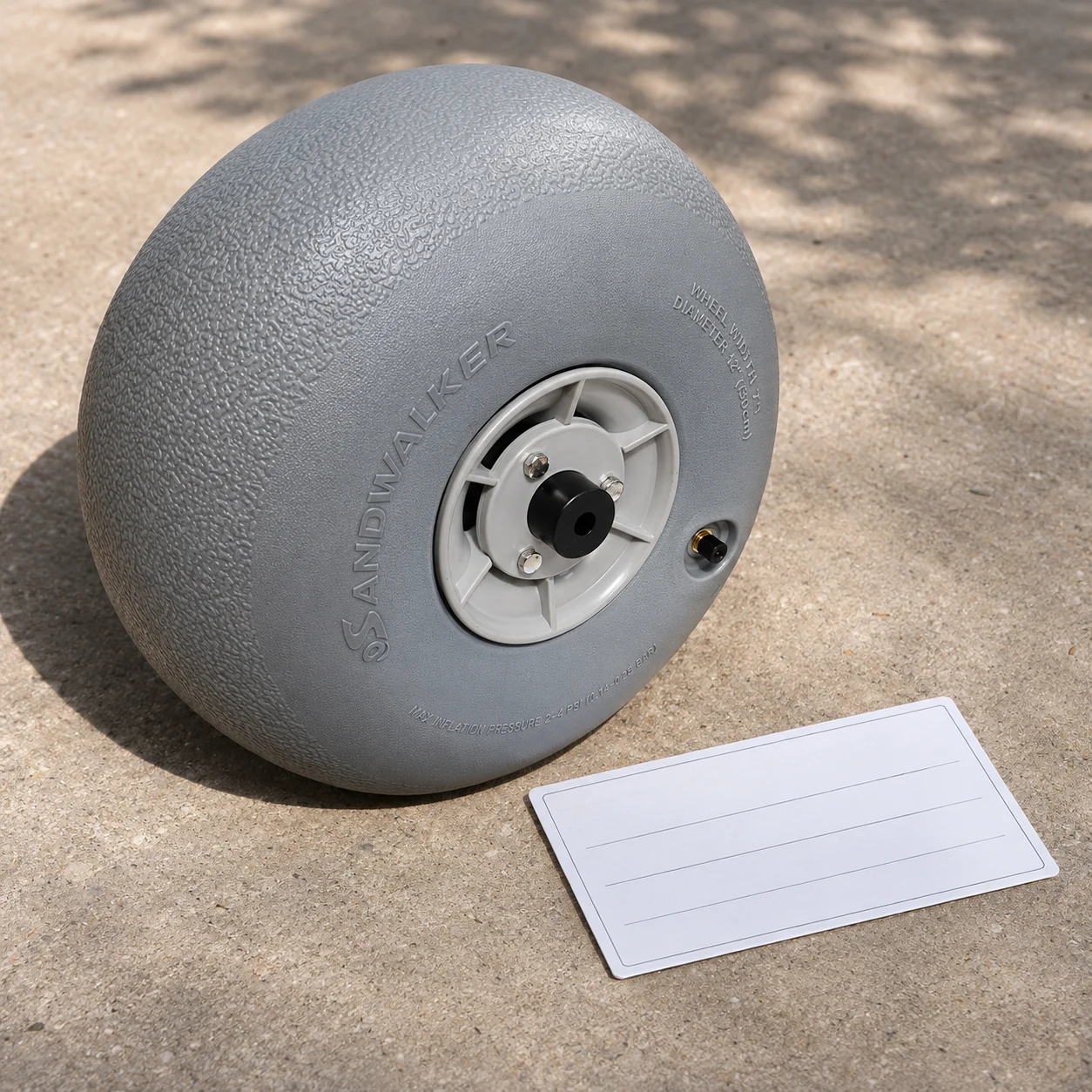
Check the delivered beach wheel bore size and configuration against the approved quotation before fitting.
Who should resolve a mismatch?
Keep the exception open. A buyer can verify part identity, while the designated service person decides fitness for the intended assembly.
- Retain the packing label.
- Send discrepancies with both hub-face photos.
| Check | What to look for |
|---|---|
| Receipt | Delivered identity |
| Release | Service authorization |
Key Takeaway: A recorded match protects the next order as well as the current repair. Contact us with both hub faces and the assembly that needs the wheel. At AryMD, a useful fit decision starts with named measurement surfaces.
Frequently asked questions
Q1: Can I order from tire diameter alone?
No. Hub geometry, axle fit and retention also need confirmation.
Q2: Does the large ring show the bore size?
Not necessarily. It may be the outer edge of an insert or another hub feature.
Q3: How do I know which end of the axle to measure?
Use the working surface shown in the applicable drawing. Ask for a marked diagram if the location is unclear.
Q4: Can I convert inches to millimetres?
Yes. Keep the original value and identify any conversion separately.
Q5: Can I enlarge a bore that is too small?
Seek an approved replacement or written manufacturer instructions. A mismatch does not authorize modification.