
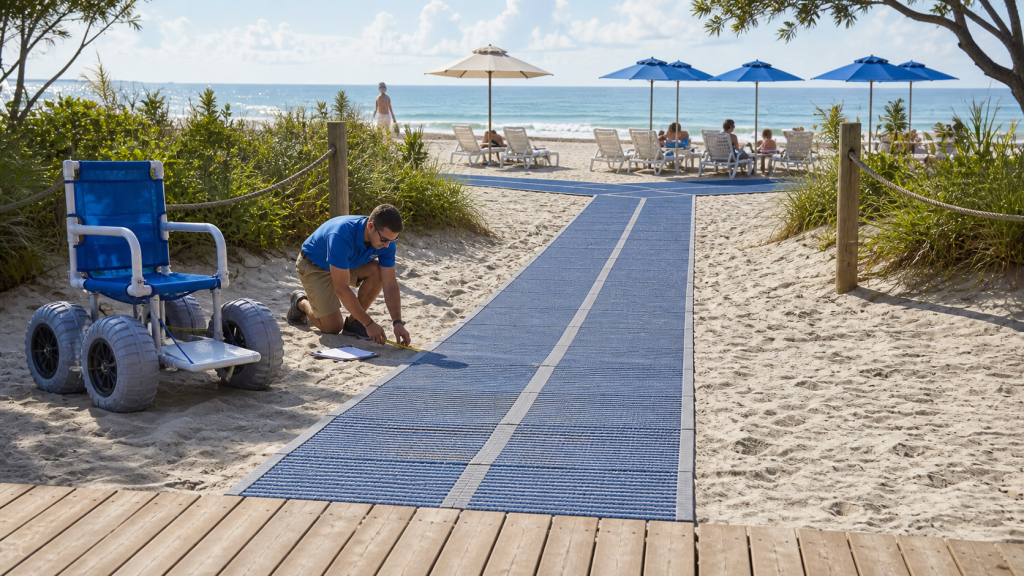
What Is The Best Accessible Beach Mat For Sand Access depends on sand depth, route distance, staff handling, storage space, and guest comfort expectations. Resort teams often face the same operational problem: a beautiful shoreline exists, yet standard mobility gear stops at the edge of soft sand. A clear beach-mat plan starts with route layout, installation responsibilities, status checks, and model-specific care.
For a broader product view, review AryMD accessible beach mat options while comparing the local site conditions your team manages every day. Before a purchase meeting, gather photos of the route, peak-hour guest flow, storage space, and staff handover point. Those notes help an accessible beach mat supplier answer with practical options instead of broad catalog claims.
They also help finance, operations, and guest service review one shared plan with fewer late surprises during seasonal planning.
The California Coastal Commission’s coastal-access page includes beach mats and beach wheelchairs among its public-access work; a resort still needs a product-specific site plan.
What makes an accessible beach mat fit a resort route?
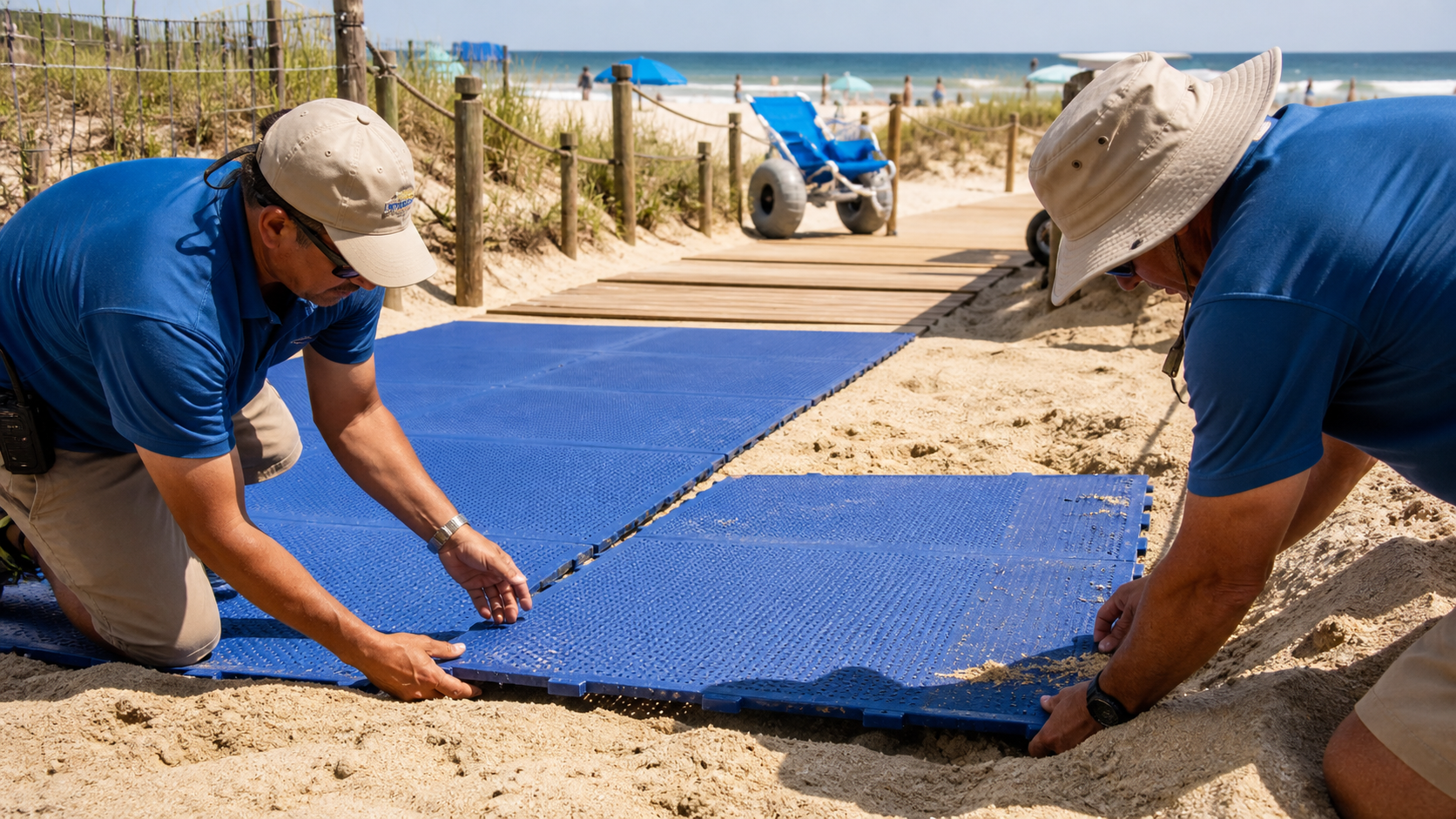
Accessible beach mat selection starts with the planned route, site layout, surface transitions, and local operating plan. Buyers should record the path endpoints, width, turns, connections, exposure, and storage method before requesting quotes. These details give suppliers a clear site brief. A related AryMD page can help your team compare options: accessible beach mat planning resource.
For B2B buyers, a beach-mat decision affects route continuity, installation responsibility, cleaning, storage, and guest communication. A path that looked clear before opening can become blocked by temporary equipment or crowding. Staff should record its endpoints, assign someone to check current status, and follow supplier instructions for placement and removal. This gives procurement a site plan to review with operations and guest-service teams.
Which buying checks should come before model choice?
- Map entry points from pavement to sand
- Note distance from storage area to guest zone
- Check whether staff can guide without crowding guests
The best review sessions stay practical. Ask each department what would slow them down during a busy day, then convert those answers into supplier questions. A housekeeping lead may care about rinsing and drying space. A recreation manager may care about route width and handover wording. A procurement manager may care about repeat ordering and clear media records. Those views belong in the same checklist because beach access programs rarely succeed through equipment alone. They work when equipment, people, route planning, and upkeep move together.
How should teams judge route and surface fit?
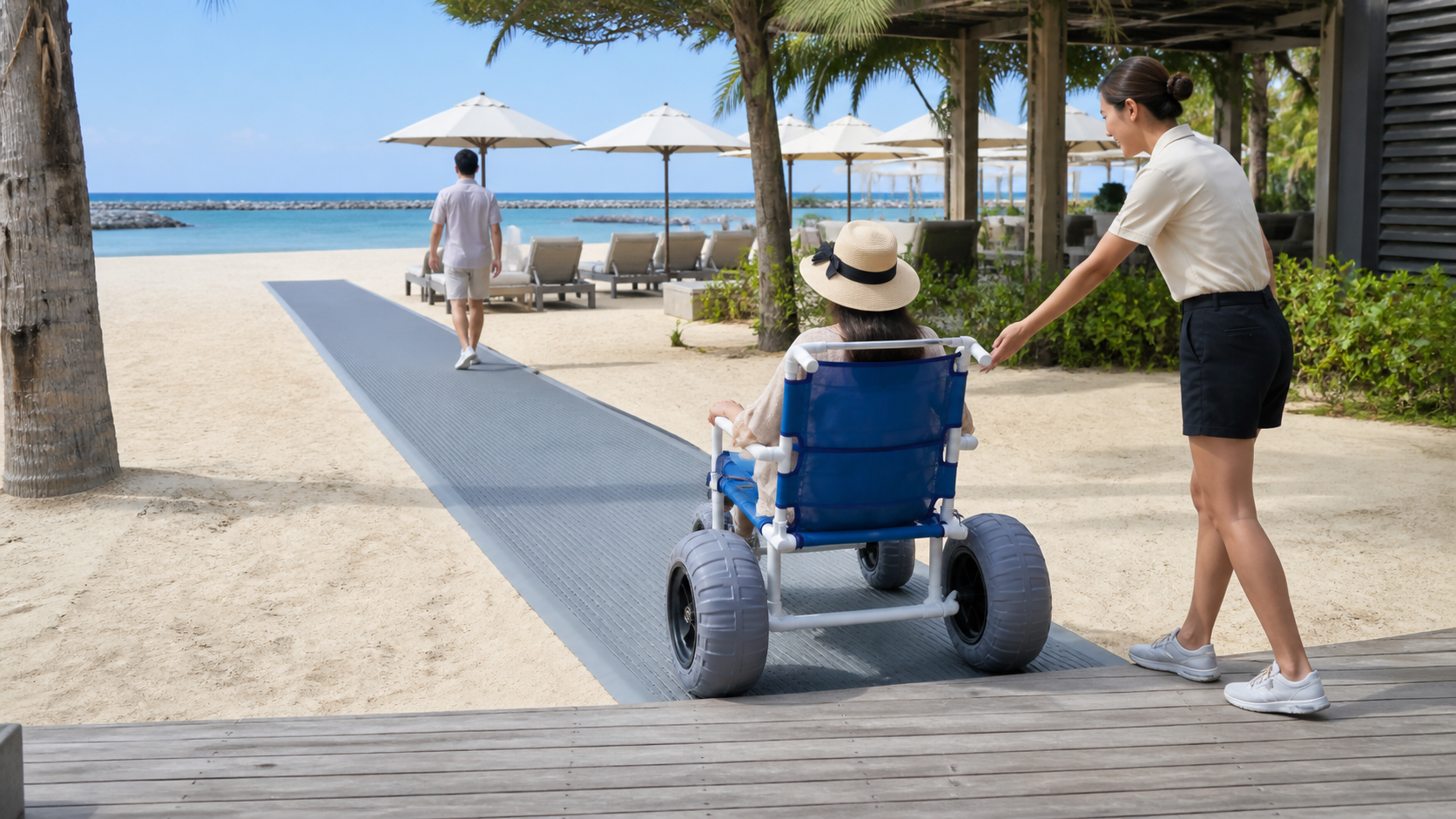
A beach-mat route review should check where path segments begin and end, how they connect with existing access points, and whether turns or surface changes interrupt travel. Teams should document the intended route and site conditions at the time of review. A related AryMD page can help your team compare options: accessible beach mat planning resource.
What route details change the equipment decision?
- Check firm sand and soft sand separately
- Record turns near cabanas and umbrellas
- Keep a clear return path for staff
Which product details matter during procurement?
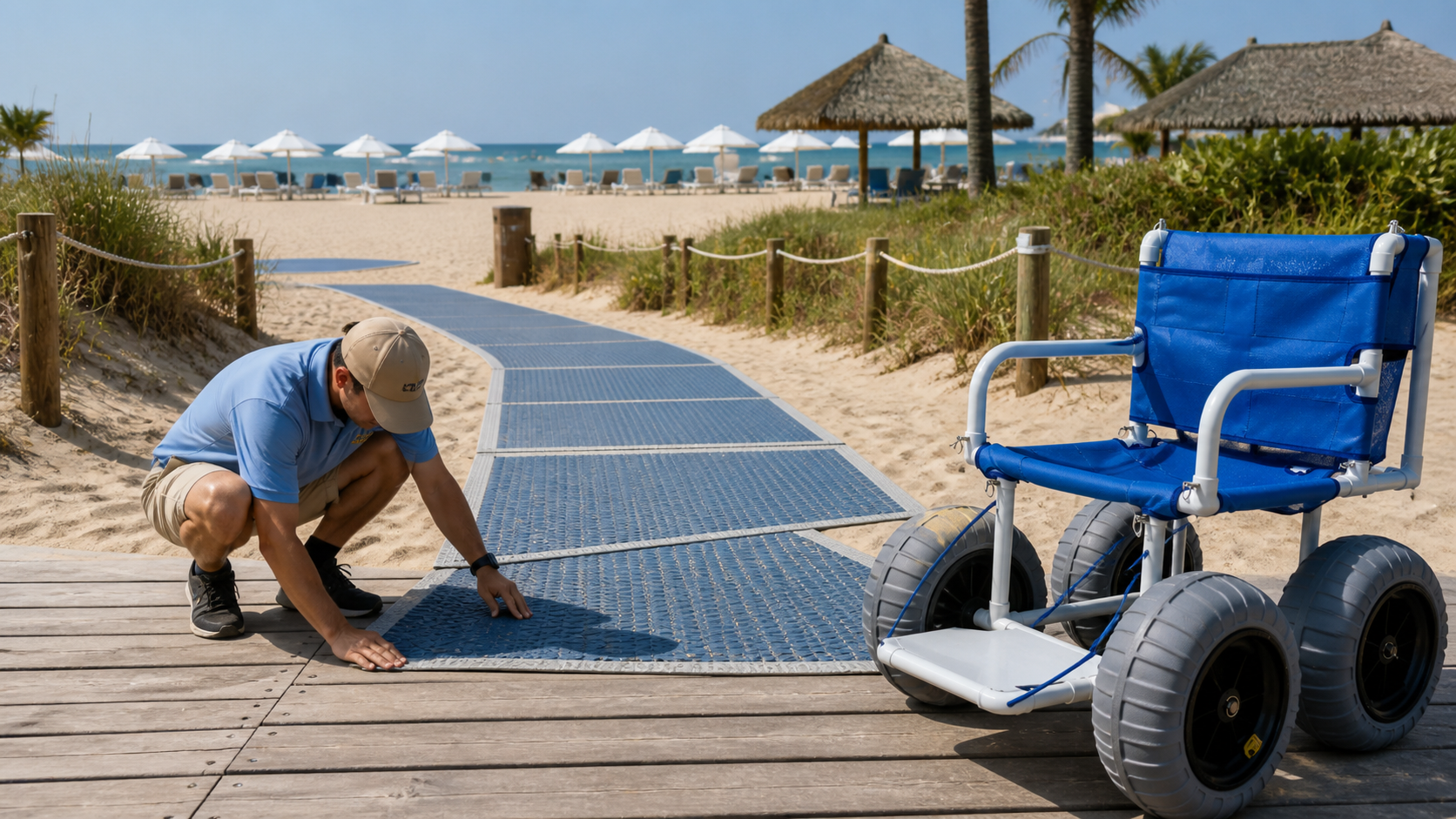
Accessible beach mat procurement should focus on the site plan, route dimensions, product configuration, installation instructions, upkeep, and storage before price talks begin. Panel dimensions, connection details, transition points, installation steps, cleaning method, and storage requirements affect daily operation. Procurement teams should request drawings, product instructions, and current photos for the quoted configuration before ordering. A related AryMD page can help your team compare options: accessible beach mat planning resource.
What should buyers inspect before asking for a quote?
- Map route width, endpoints, and transition points
- Check connections and transitions against the site plan
- Assign inspection, placement, and storage responsibilities
How can staff run a smoother access workflow?
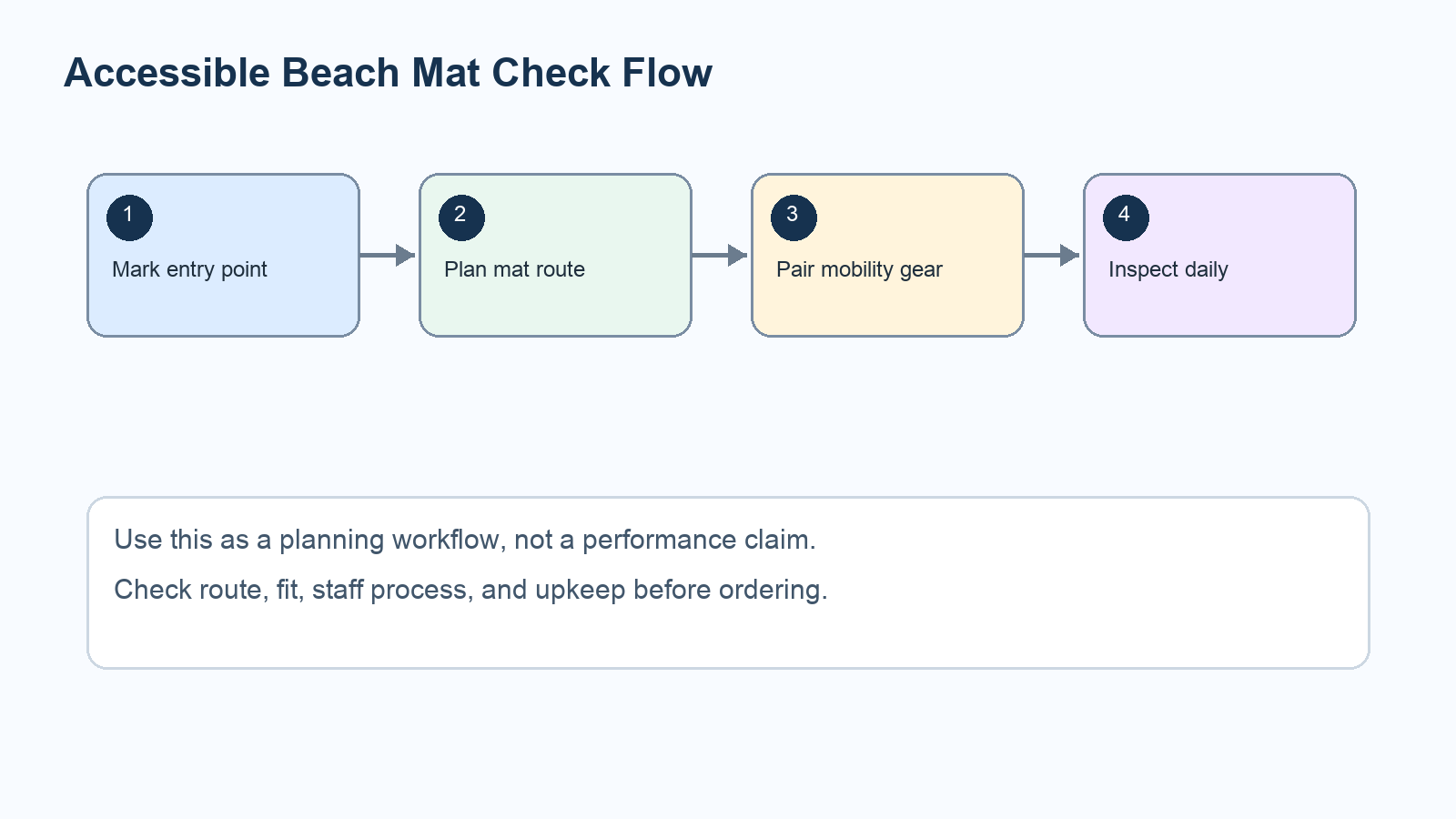
Beach-mat operations improve when staff share a checklist for site opening, path condition, service boundaries, closures, and any removal or storage steps. A clear handoff lets facilities, guest services, and accessibility staff report changes against one route plan. Product handling should follow the supplier’s instructions. A related AryMD page can help your team compare options: accessible beach mat planning resource.
What should a handover checklist include?
- Confirm path condition before service begins
- Tell guest-facing staff which route sections remain open
- Report blocked, displaced, or damaged sections under site procedure
How should resorts plan care and storage?
Accessible beach mat planning works best when teams document the route, placement method, site-opening checks, care needs, and storage responsibilities before purchase. Coastal exposure and site conditions vary, so teams should follow instructions for the selected product and local policy. For removable mats, name where units are stored between use periods.
What upkeep routine keeps the program steady?
- Keep a dry shaded storage point
- Remove sand from moving parts after use
- Log visible wear without making repair claims
FAQ
Can one accessible beach mat route work at every site?
No. Site layout, transitions, operating conditions, installation method, storage, and local requirements can differ. Review each location against the selected product instructions and route plan.
What’s the best way to compare options?
Start with daily service tasks. Compare route fit, user support, cleaning steps, storage, and supplier communication before comparing extras.
How do I know if staff can manage the program?
Use a short trial workflow. If staff can set up, explain, return, clean, and store equipment without confusion, the program has a stronger base.
Does a beach mat guarantee complete access to the beach?
No. A mat provides one section of an access route; the full site, transitions, service boundaries, and individual support needs still require review.
What should buyers do next?
Accessible beach mat buying should end with a site-specific checklist, not a rushed order. Review the route, match the equipment type, prepare staff steps, and keep records from each season. For a direct supplier discussion, contact us today with your route photos and planned use case.