
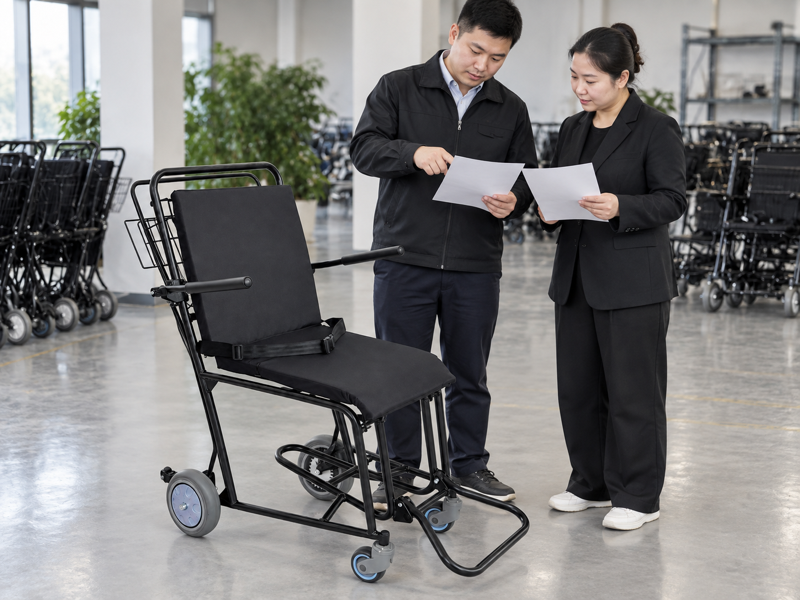
The best airport wheelchair cleaning plan starts with the exact attendant chair, maker-compatible care methods and a written Singapore operator handover record. The supplied black chair has a belt, rear basket, push handles, seat and several wheel assemblies, yet a photo cannot tell staff which product to use on each material. A rushed turnaround can also leave damage or an unresolved care step unnoticed. Build the checklist around this model and the airport service team’s approved procedure before the next handover.
What does airport wheelchair cleaning cover here?
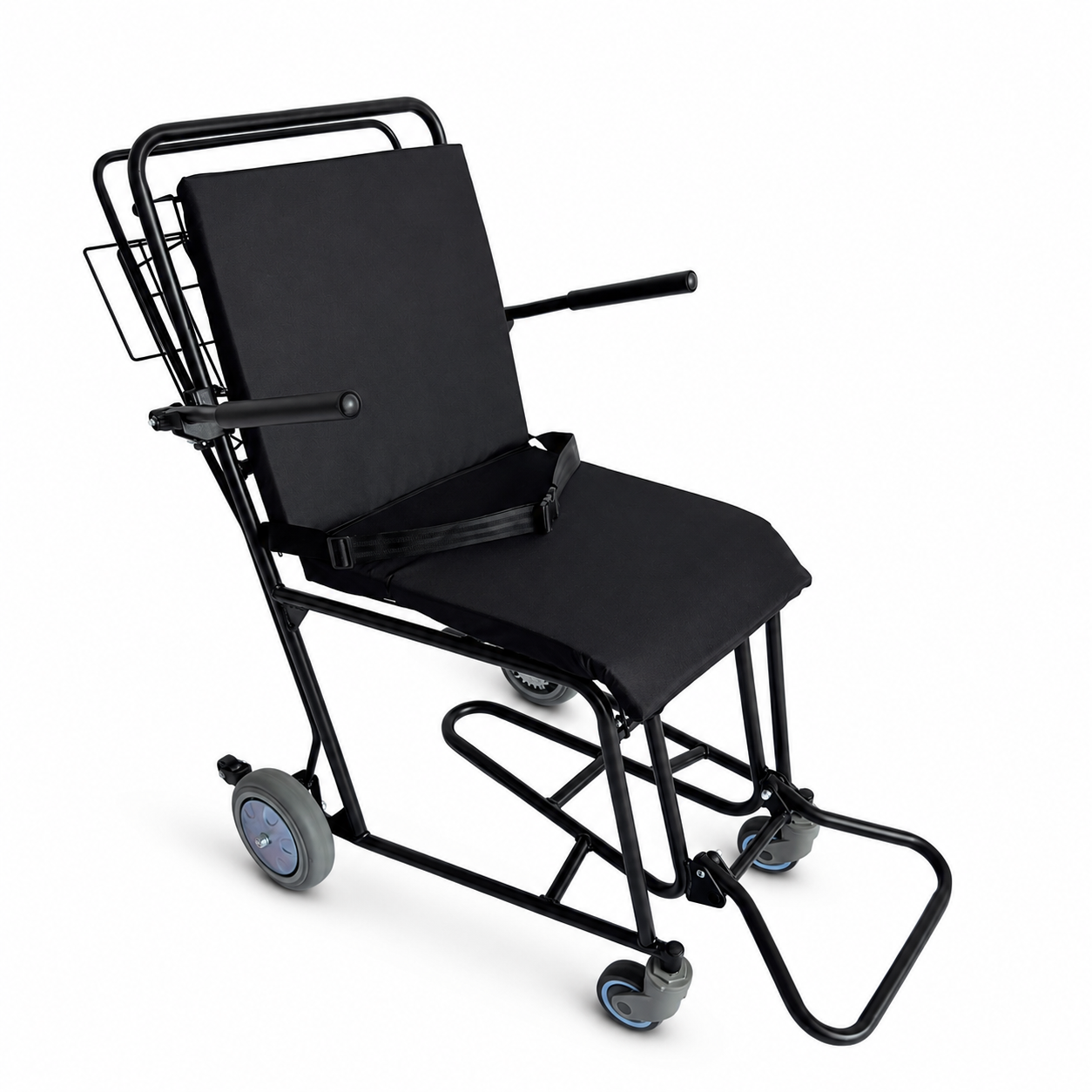
Airport wheelchair cleaning here covers an attendant-propelled airport service chair with a black seat and back, lap belt, push handles, basket, foot bar and wheels. It is not a self-propelled wheelchair in the supplied photos. Define the exact chair and care scope before setting a routine.
Which record identifies the product?
Start with the whole chair. Ask for current model, material and care instructions. Keep the operator’s service location with the chair identity, because site procedures may differ.
- Record model and configured parts.
- Request maker-compatible care methods.
- Name the operator’s cleaning owner.
| Record | Purpose |
|---|---|
| Chair identity | Defines the material set |
| Local procedure | Defines the work and owner |
A generic wheelchair label can hide the actual service-chair design. Key Takeaway: Your team can clean the equipment it truly operates.
Which materials shape airport wheelchair cleaning?
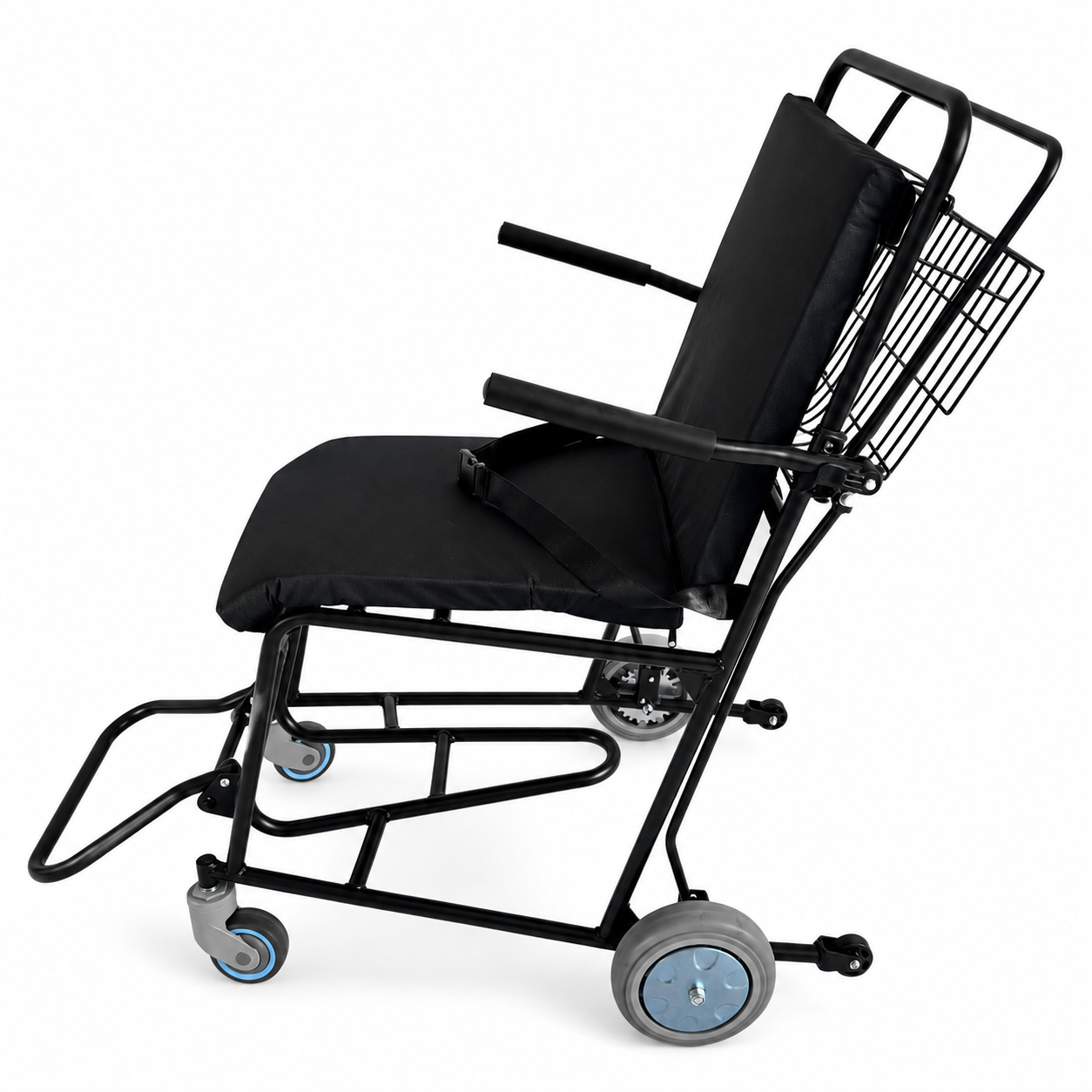
Airport wheelchair cleaning depends on the specific seat, back, belt, metal frame and basket materials stated by the maker. Black colour does not prove a coating or disinfectant tolerance. Request the product care sheet before selecting agents.
What should be mapped separately?
Put each contact surface on the list. The side product image shows frame and seat geometry but not material chemistry. Ask whether straps, padding and metal components need different approved methods.
- Identify seat and back coverings.
- Identify belt, basket and painted frame.
- Check each against maker care guidance.
| Material area | Question |
|---|---|
| Soft parts | Which care method is allowed? |
| Frame and basket | Which method preserves the finish? |
One agent may be suitable for a frame but not a belt. Key Takeaway: Your buyer can request material facts instead of guessing from a photo.
Which touch points need airport wheelchair cleaning?
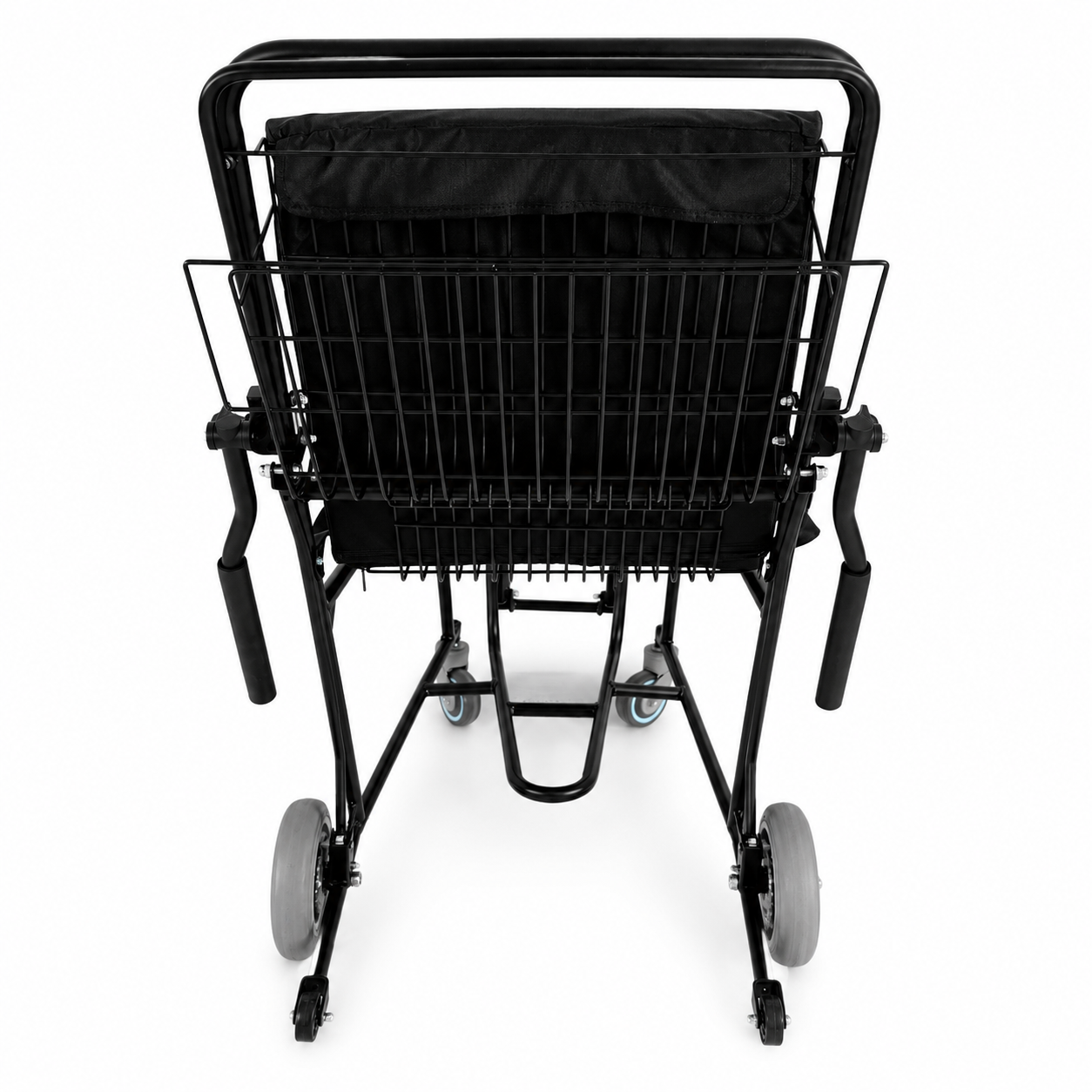
Airport wheelchair cleaning should include the attendant handles, arm areas, belt hardware and other touch points named in the operator’s procedure. A rear-handle detail can locate them without proving they were cleaned. Check the full sample and document the route.
How should staff work from the product map?
Follow the hands that use the chair. A manual wheelchair is a related but different product, so its cleaning sheet cannot replace this model’s. Keep the actual handle and belt parts on the checklist.
- Identify handles and arm supports.
- Map belt buckle and contact surfaces.
- Record any worn or damaged area.
| Touch area | Source for method |
|---|---|
| Handles and arms | Maker and operator guide |
| Belt hardware | Exact material-care directions |
A high-touch map gives staff a repeatable path. Key Takeaway: The handover can cover the places people actually contact.
How do wheels enter airport wheelchair cleaning?
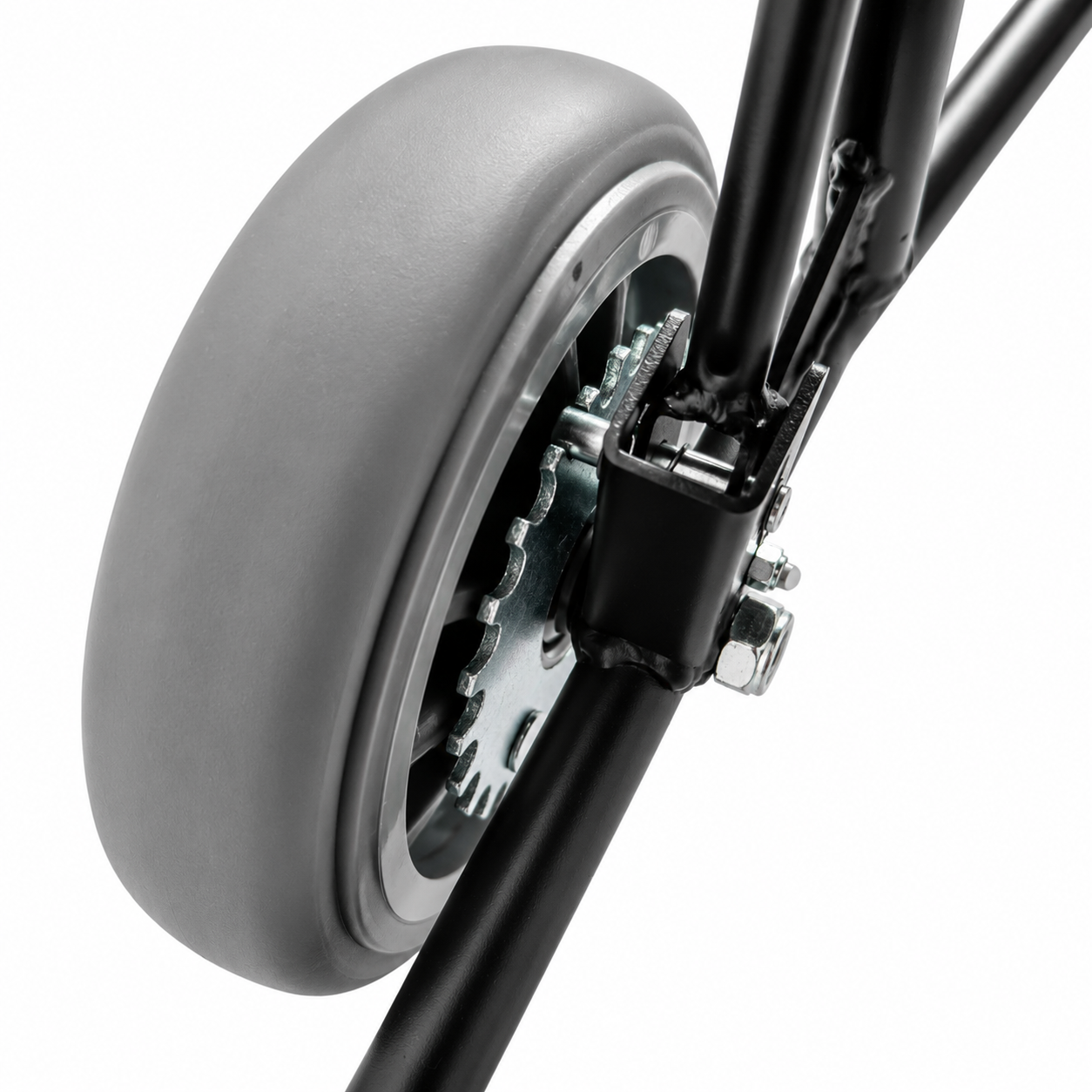
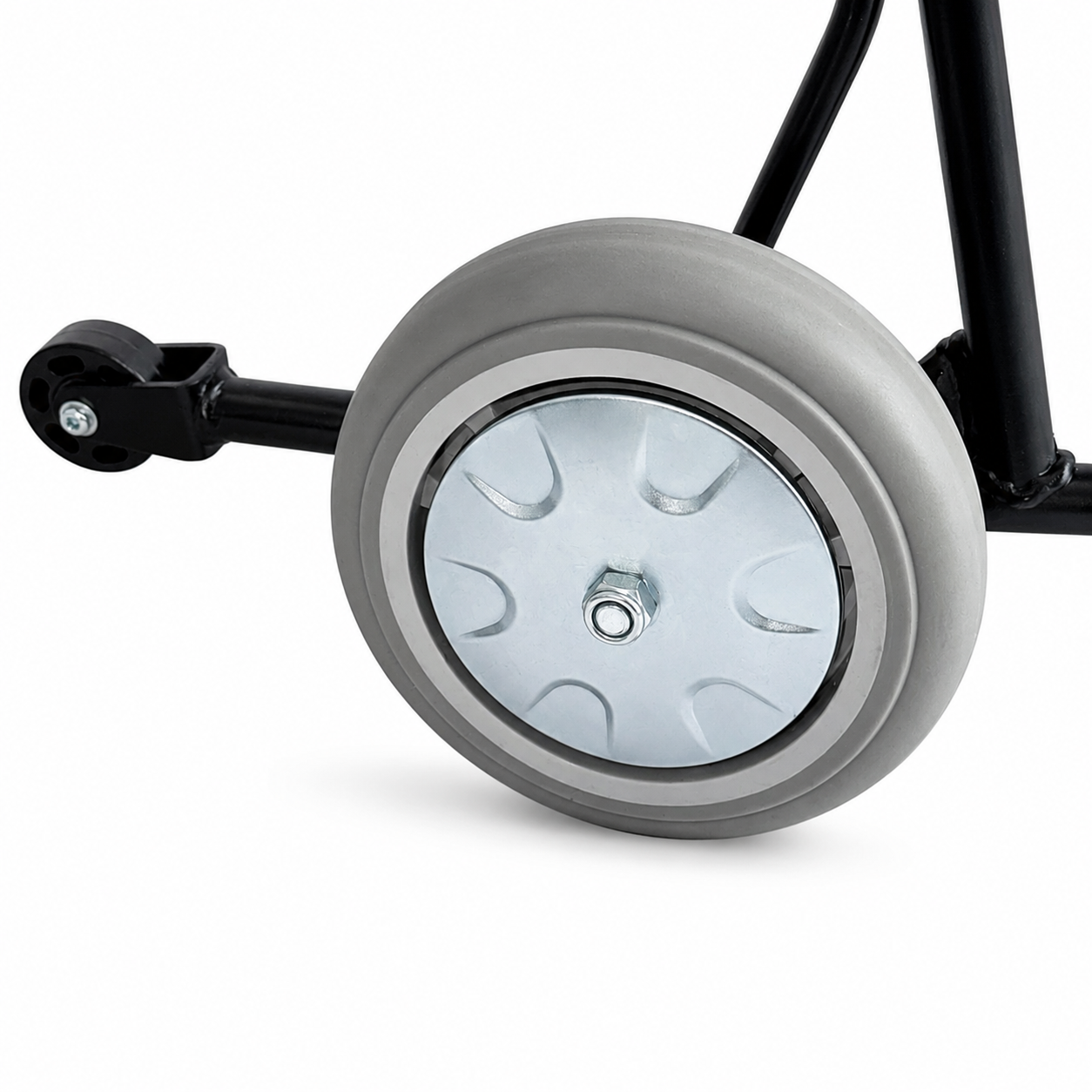
Wheels enter airport wheelchair cleaning through their surfaces, hubs and nearby frame parts, according to the maker and site procedure. The rear-wheel close-up is a detail view, not evidence of brake function or chemical resistance. Do not improvise a dismantling step.
What should a wheel note contain?
Treat the wheel as an assembly. Identify the larger rear wheels and smaller front casters separately. Record visible damage for service rather than hiding it in a cleaning tick.
- Map front and rear wheel areas.
- Use approved access and care methods.
- Report wear or doubtful movement.
| Wheel area | Decision |
|---|---|
| Rear wheel | Compatible care and condition |
| Front caster | Compatible care and condition |
Cleaning and maintenance are different tasks. Key Takeaway: Your team can keep a service concern visible.
How should belts enter airport wheelchair cleaning?
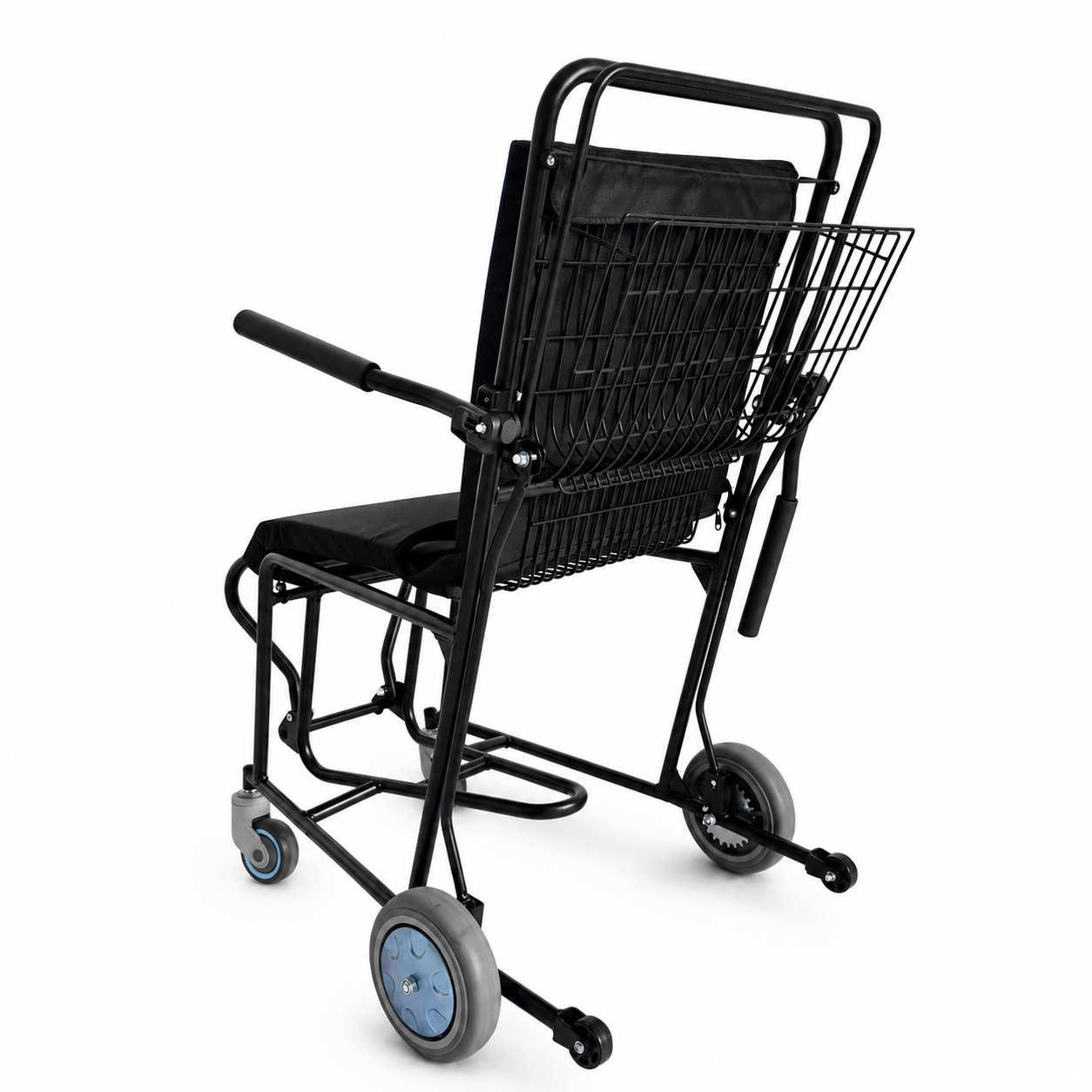
Belts enter airport wheelchair cleaning because the supplied chair visibly carries a lap belt with hardware near the seat. The photo does not prove a particular restraint role or cleaning chemistry. Follow exact maker and operator instructions.
What should the belt record separate?
Care for fabric and hardware as stated. The rear image shows belt-related parts in context. Do not assume the belt may be removed or soaked unless the current guide permits it.
- Identify belt fabric and buckle.
- Request compatible care directions.
- Record damage or missing parts for service.
| Belt field | Purpose |
|---|---|
| Material and buckle | Sets the care question |
| Condition | Triggers repair when needed |
A belt can look clean yet need a separate condition check. Key Takeaway: Staff can hand over the chair without overlooking a user-contact part.
Does the rear basket change airport wheelchair cleaning?
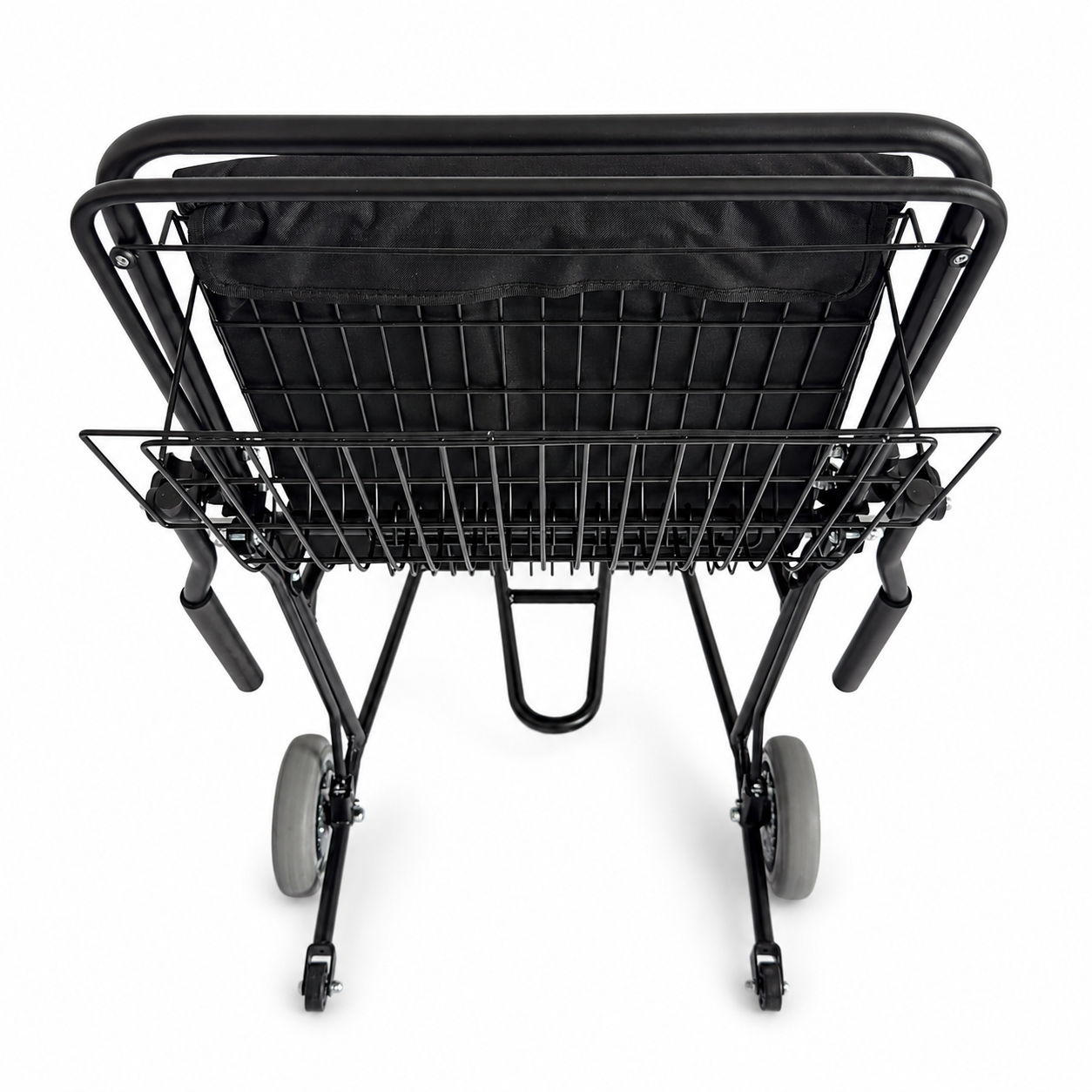
The rear basket changes airport wheelchair cleaning because its wires, edges and mounting sit behind the seat where attendants work. The supplied rear view shows the basket but no approved storage load or removal method. Include it in the material map.
Which basket questions matter?
Look behind the backrest. Ask how the maker wants the basket reached and cared for. Related transfer devices have separate handling roles, so do not copy their equipment routine.
- Identify basket and mounting points.
- Check approved cleaning access.
- Report loose or bent parts.
| Basket part | Review point |
|---|---|
| Wire surface | Compatible cleaning method |
| Mounting | Condition and service route |
A rear surface can be missed during a fast turnaround. Key Takeaway: Your routine can cover the whole chair, including its back.
Can nested chairs share a airport wheelchair cleaning log?
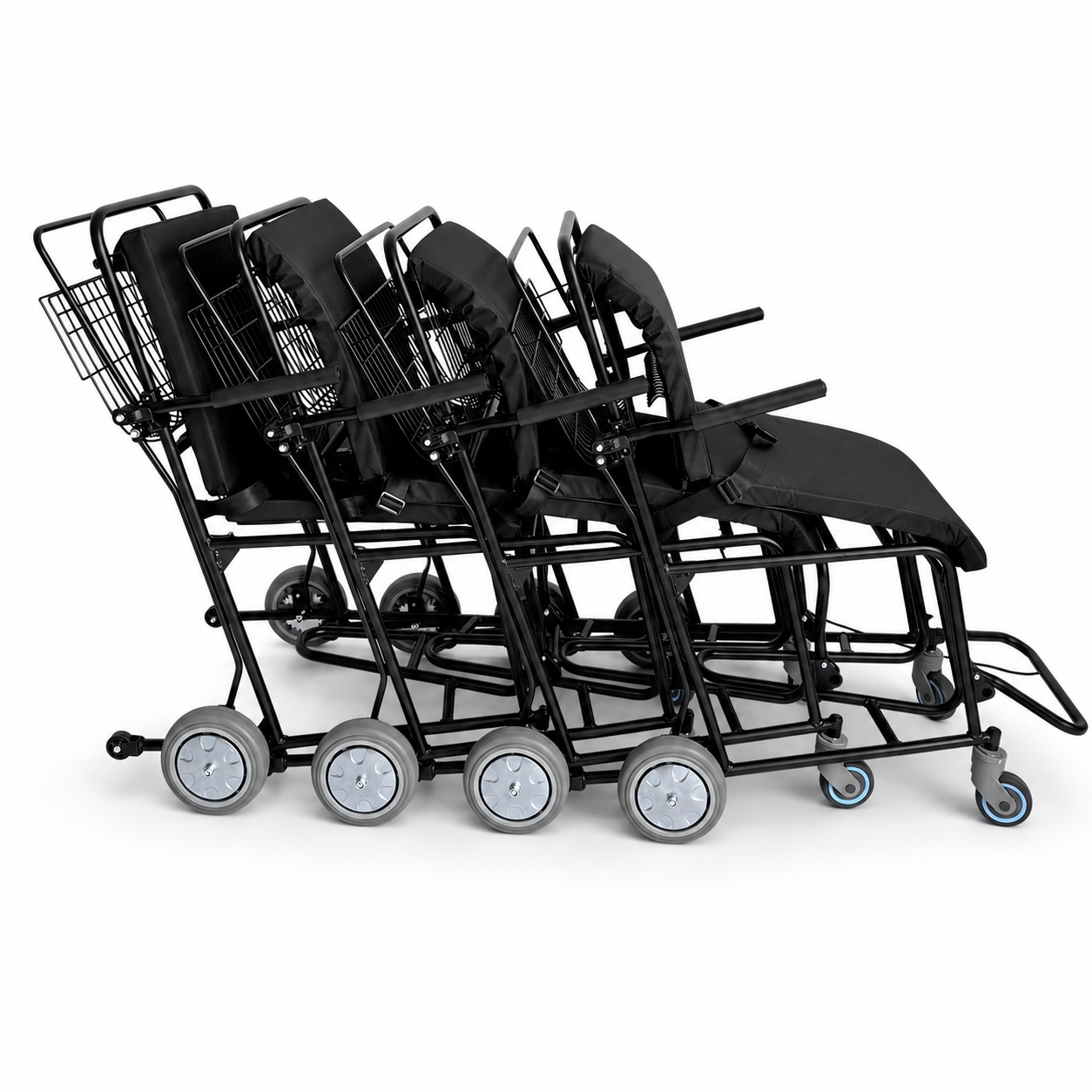
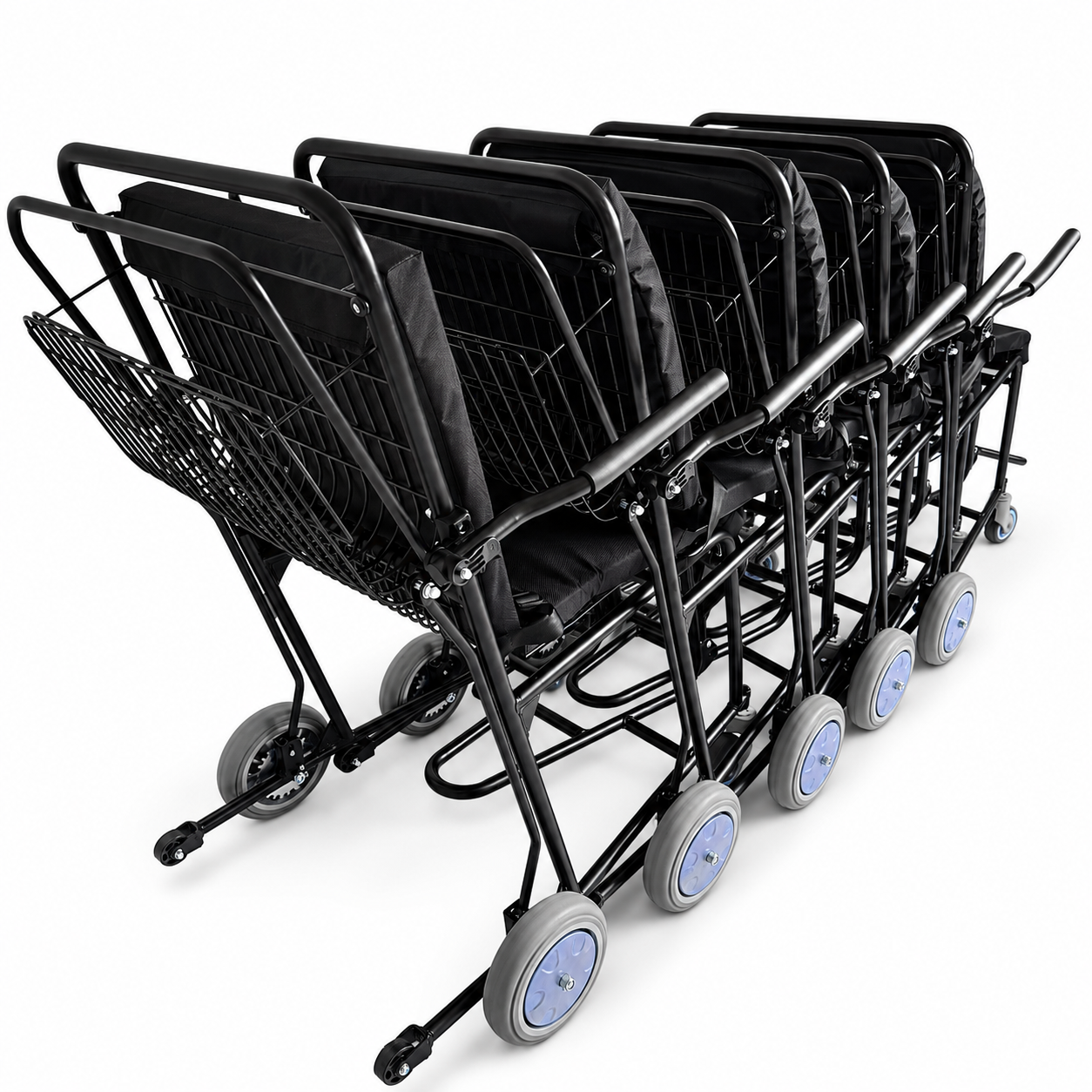
Nested chairs can share a fleet template, but each chair’s airport wheelchair cleaning and release status still need traceable records. A group photo shows storage, not that every seat was cleaned. Keep the individual chair identity in the turnaround process.
What should happen before nesting?
Close each chair’s own care question. If the maker allows nesting, inspect the chair as directed before returning it to the fleet bay. Do not let one clean-looking front chair stand in for those behind it.
- Identify each chair before handover.
- Record care and open service issues.
- Follow the approved nesting sequence.
| Fleet record | Why it matters |
|---|---|
| Per-chair status | Prevents hidden gaps |
| Bay status | Shows where equipment waits |
Stacking makes unrecorded chairs harder to see. Key Takeaway: Your operator can trace a single chair after a busy shift.
Who signs off airport wheelchair cleaning in Singapore?
A Singapore operator should assign airport wheelchair cleaning methods, timing and release duties within its own current service procedure. Manufacturer compatibility still controls what may touch the chair. Do not treat this article as an airport regulation or a disinfection certificate.
Which handover fields help?
Name the person and the condition. IATA mobility-aid guidance calls for airport equipment to be kept usable, clean and dignified. The AryMD team can provide available product-care information for a local operator plan.
- Assign care and release owners.
- Record method and time actually used.
- Keep unresolved damage out of ready stock.
| Handover field | Use |
|---|---|
| Care event and owner | Shows work performed |
| Condition and exception | Shows what still needs action |
A blank check box cannot prove a real clean. Key Takeaway: Your service team can hand over a chair with a clear record.
What should a airport wheelchair cleaning chart show?
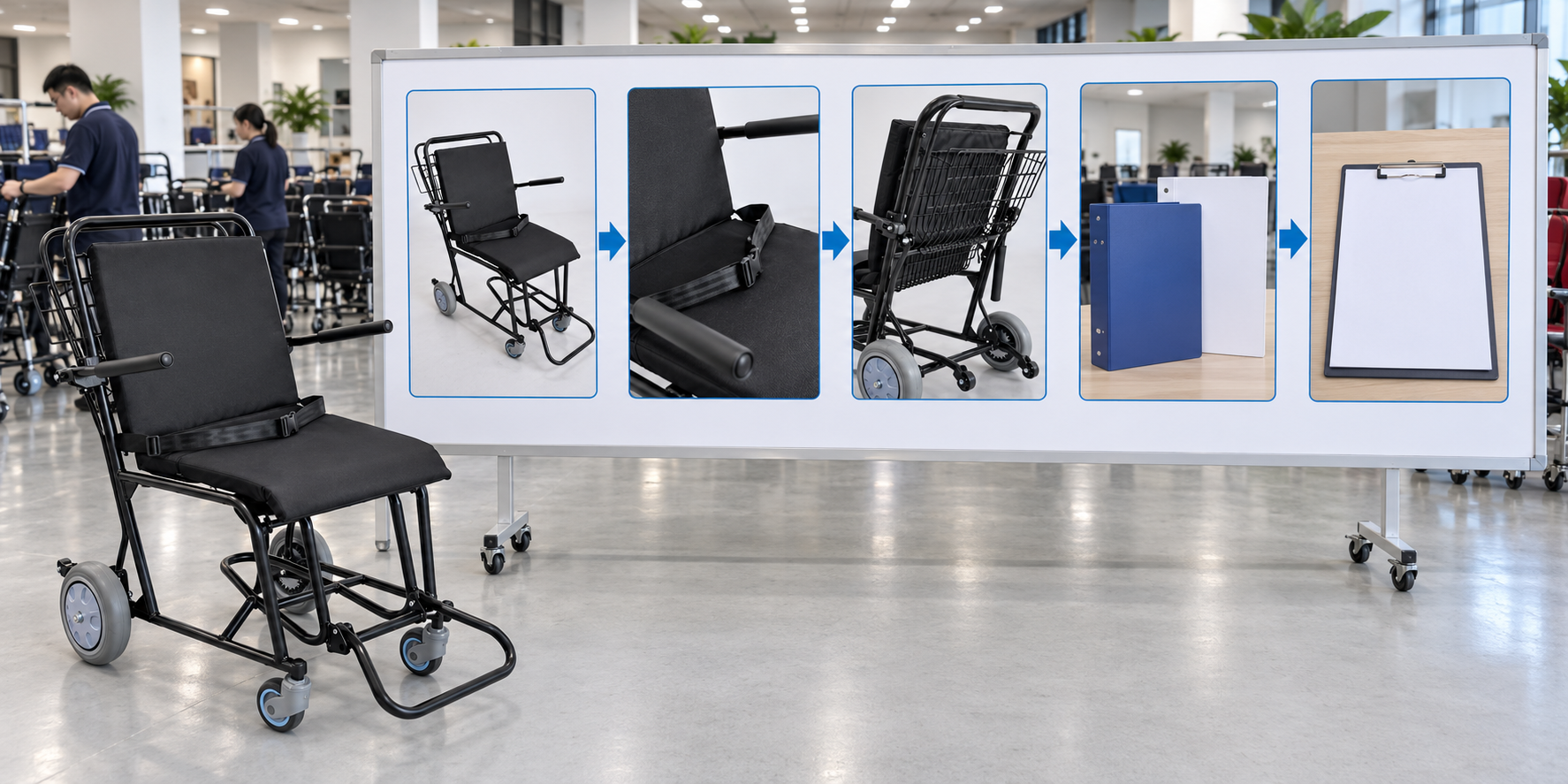
A airport wheelchair cleaning chart should show the complete chair, touch surfaces, wheel and basket areas, maker and operator files, and a blank pending handover log. It should not mark a cleaning event complete. Attach actual records after the work.
How can buyers use the five stages?
Keep the last panel unmarked. The visual sequence helps an operator draft a checklist and ask the supplier material questions. It cannot certify this chair for airline or airport use.
- Identify all material groups.
- Collect exact care instructions.
- Assign per-chair release records.
| Chart stage | Evidence |
|---|---|
| Product | Maker care and part list |
| Operator | Completed local log |
An illustrated workflow is useful only with real supporting records. Key Takeaway: Your buyer can separate a plan from proof it happened.
How do you request a airport wheelchair cleaning guide?
Request a airport wheelchair cleaning guide by sending the exact attendant-chair model and Singapore operator care questions to the supplier. Ask for material, belt, basket and wheel guidance. Keep fleet release criteria with the operator.
Ready to close the turnaround brief?
Send the chair and workflow together. Ary Medical can review available product-care files for the supplied service chair. Confirm the current sample and parts before using the guide across a fleet.
- Share chair and material references.
- Request compatible care information.
- Define local logging and service owners.
| Your brief | Supplier response to request |
|---|---|
| Chair and parts | Current maker information |
| Turnaround process | Relevant care details |
A model-specific response reduces copied instructions from another chair. Key Takeaway: For a clear care-file request, contact us. Ary Medical supports airport service equipment kept ready through documented care.
Frequently asked questions
Q1: Can I use a generic wheelchair wipe on every part?
No. Check the exact material and maker guidance before selecting an agent.
Q2: What’s the best way to record a quick turnaround?
Record the chair identity, actual method, staff owner and unresolved condition.
Q3: How do I know if the belt can be removed for cleaning?
Use the exact maker instructions; a photo cannot show permitted removal.
Q4: Can nested chairs all be signed off together?
Use a common template if helpful, but keep each chair’s status traceable.
Q5: Does a clean chair mean it is airline-approved?
No. Cleaning records do not establish any airline or aircraft approval.