
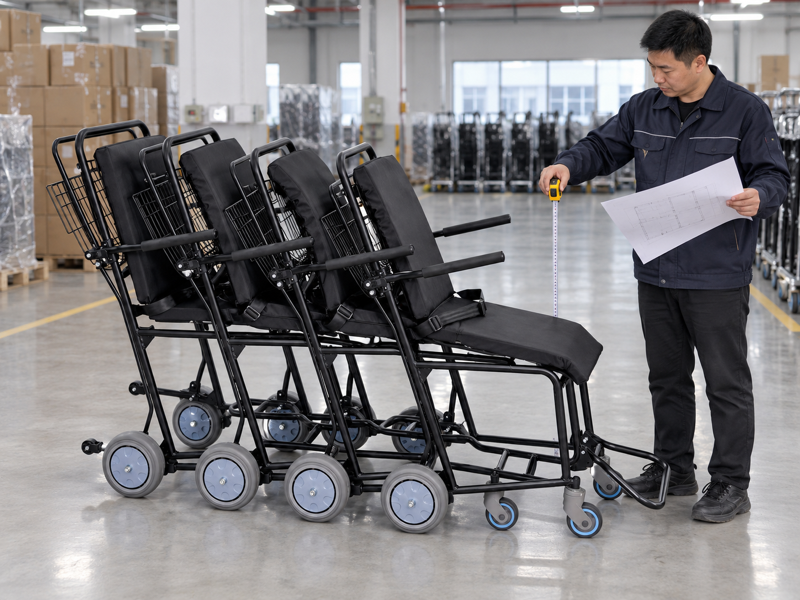
Airport wheelchair storage becomes easier when you measure the exact nested chair group and the real Saudi airport bay, then keep every chair ready for service. The supplied product images show an attendant-propelled black chair and several chairs nested together, but no verified footprint or parking rule. Basket, handles, belts and wheels can affect clearance and retrieval. Check the maker’s approved nesting method, count the actual fleet and record the route before choosing a bay.
What does airport wheelchair storage mean for this chair?
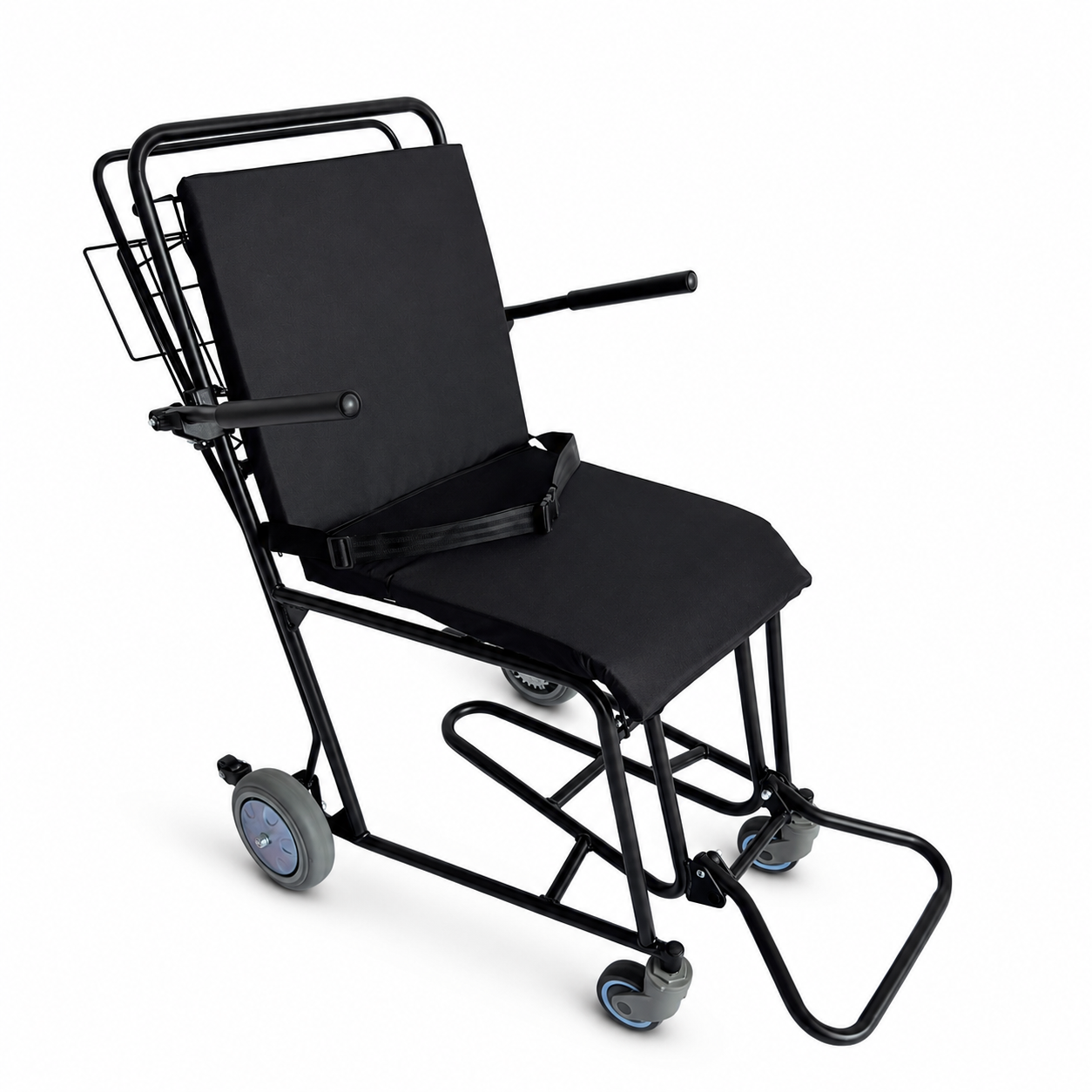
Airport wheelchair storage here means parking an attendant-propelled service chair or an approved nested group in a defined operator bay. The single product photo shows a belt, rear basket, push handles, front foot bar and wheels. It is not a self-propelled wheelchair.
Which identity belongs on the fleet map?
Start with the actual service chair. Request the current model, parts list and nesting directions. Keep the supplied black chair separate from other manual wheelchair types.
- Identify the exact attendant model.
- List belt, basket, handles and wheel layout.
- Record the approved storage state.
| Fleet field | Use |
|---|---|
| Chair identity | Keeps variants separate |
| Stored state | Defines the nesting question |
A generic wheelchair label can hide a different frame. Key Takeaway: Your team can plan space for the chair it owns.
How should nested airport wheelchair storage be measured?
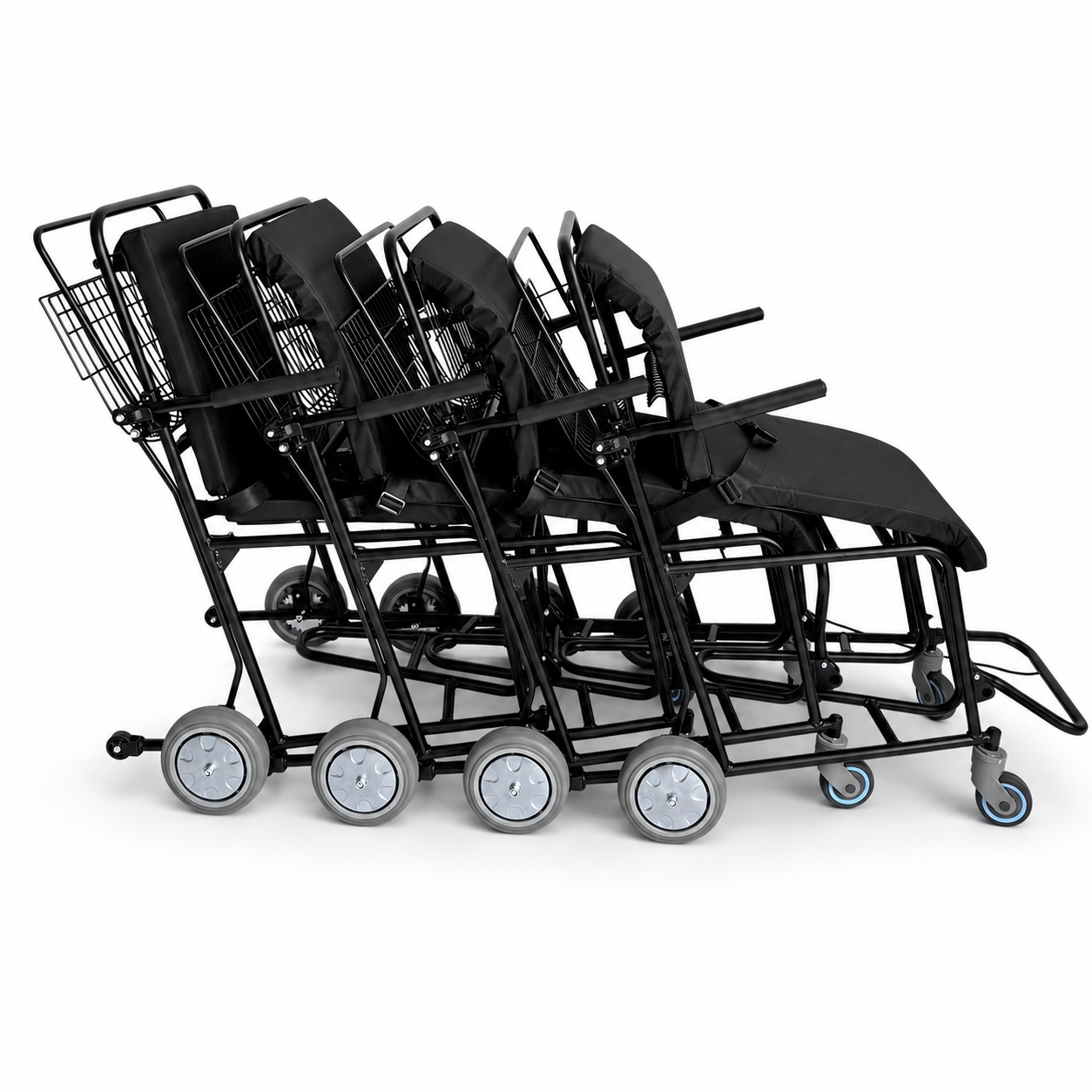
Measure nested airport wheelchair storage on the actual approved group at the airport or sample bay. The five-chair side photo shows that nesting is possible for the pictured frames, but it provides no verified length or floor area. Record the group count and outer envelope.
What belongs on the bay drawing?
Include every part that projects. Measure the full set, including handles, baskets, wheels and foot bars, under the maker’s arrangement. Leave walking room around the parked group for staff.
- Confirm permitted group configuration.
- Measure outermost length and width on a sample.
- Mark staff approach and removal space.
| Measurement | Decision |
|---|---|
| Nested envelope | Parking footprint |
| Access clearance | Chair retrieval path |
A compact side photo cannot give a reliable site footprint. Key Takeaway: Your buyer can compare real storage bays without invented dimensions.
Which airport wheelchair storage steps need maker guidance?
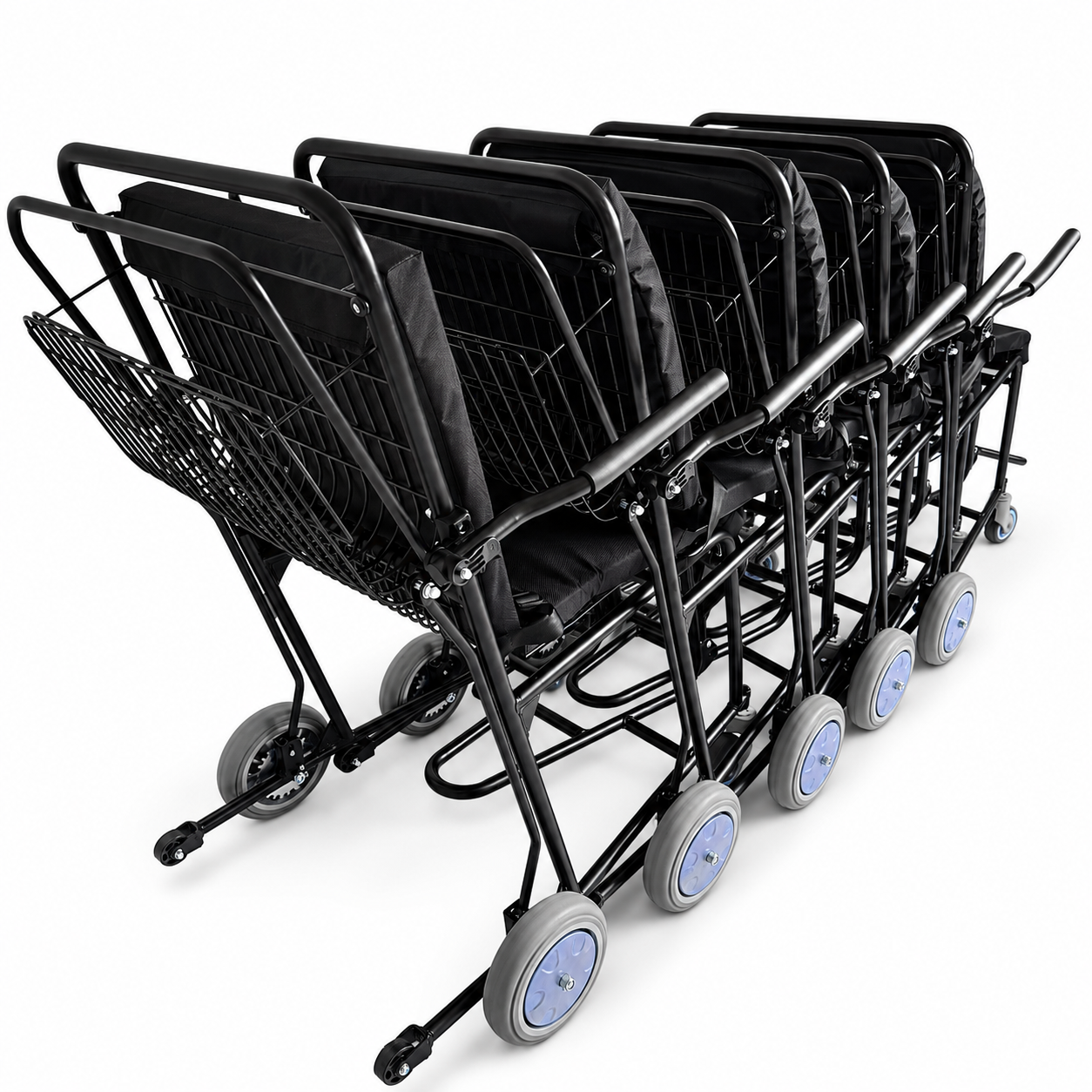
Airport wheelchair storage steps need maker guidance whenever chairs are nested, separated or moved through the bay. A rear group photo does not explain safe grip points or a limit on nested count. Ask for the current handling method.
What should staff confirm before stacking?
Show the permitted sequence on empty chairs. Unlike a self-propelled manual wheelchair, this chair has an attendant frame and basket. Do not borrow a folding or parking method from that different product.
- Request approved nesting direction.
- Identify handles and protected parts.
- Stop if one chair resists normal movement.
| Handling field | Evidence |
|---|---|
| Nest sequence | Exact maker instructions |
| Part protection | Current handling notes |
An image of a finished group is not an instruction manual. Key Takeaway: Staff can repeat a defined method rather than improvise.
How do belts and foot bars affect airport wheelchair storage?
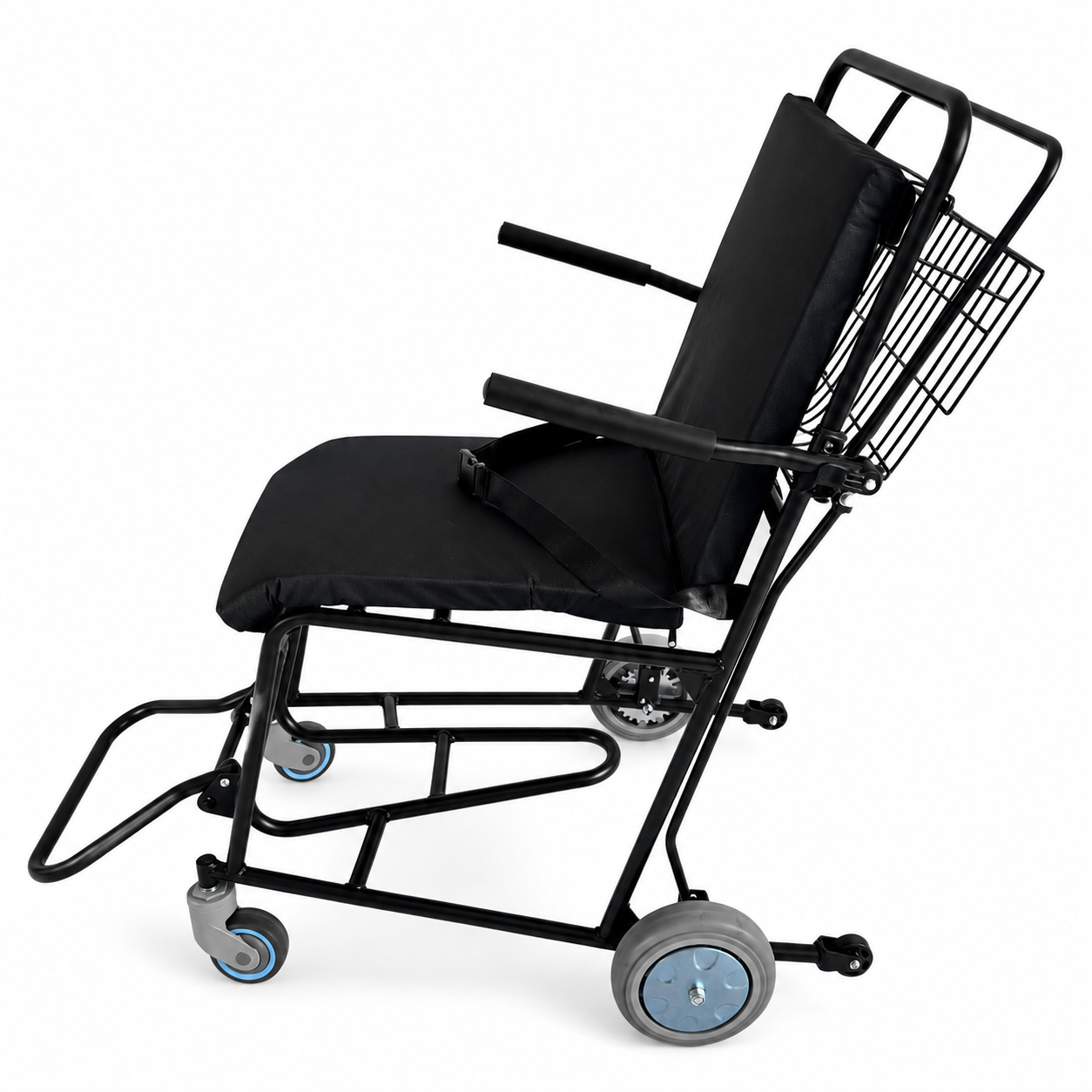
Belts and foot bars affect airport wheelchair storage because they extend from the frame and may contact another chair during nesting. The single side view shows their position without proving a safe overlap. Protect them under the maker’s storage directions.
What should a bay inspection see?
Look above and below the seat. Record belt condition and front support position on every chair before adding it to the group. A damaged part should be routed to service instead of hidden inside a nested row.
- Check visible belt and buckle.
- Account for front foot-bar projection.
- Keep damaged chairs out of ready stock.
| Part | Review point |
|---|---|
| Belt | Condition and protected position |
| Front bar | Clearance in the approved group |
A small projecting part can decide whether the group nests cleanly. Key Takeaway: Your storage routine can protect the chair passengers will receive.
Does the rear basket change airport wheelchair storage?
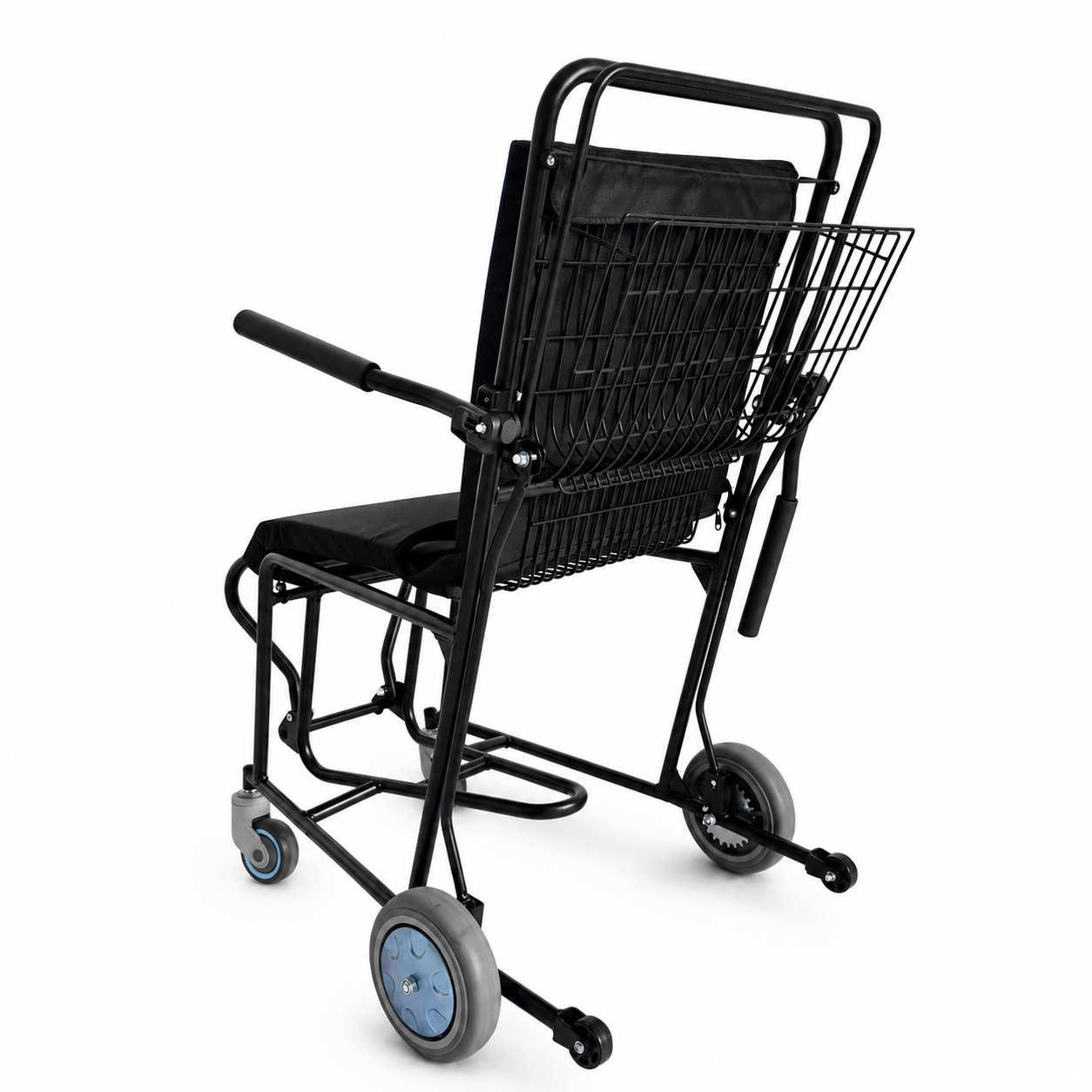
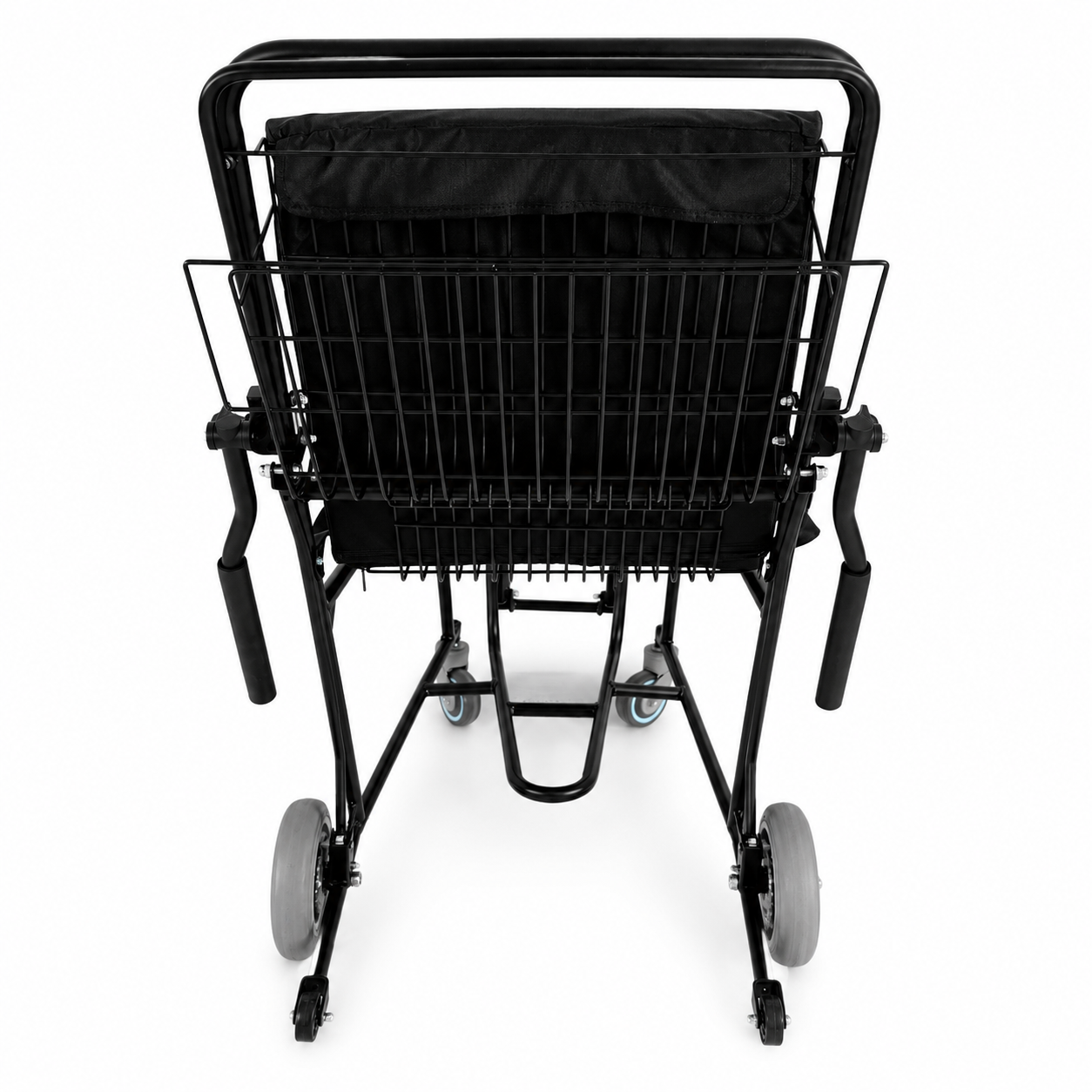
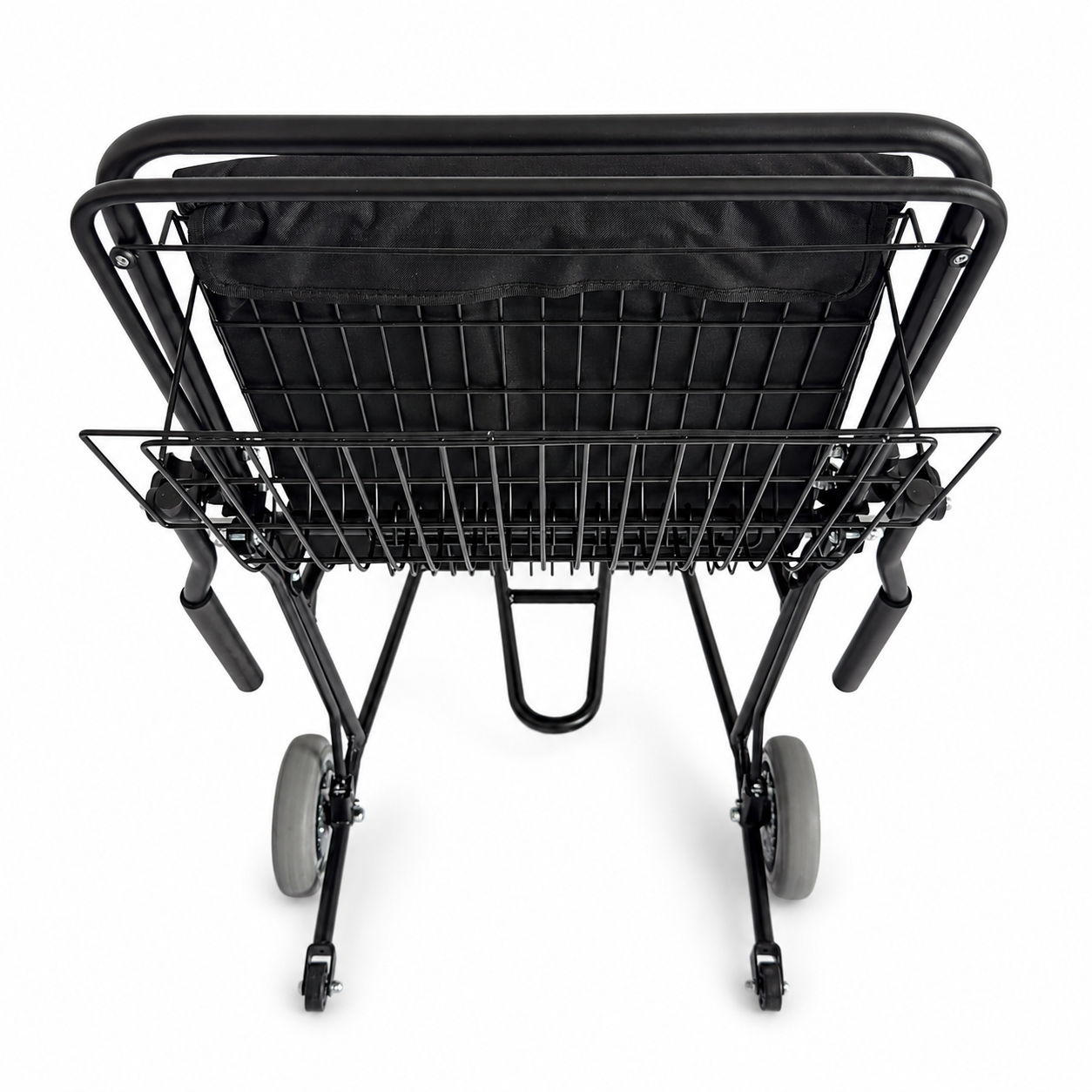
The rear basket changes airport wheelchair storage because it projects behind the backrest and may touch the next chair. The rear view shows its wire frame but no rated load or approved nesting pressure. Check clearance on the exact group.
What should staff avoid leaving inside?
Treat the basket as part of the envelope. Follow maker directions for any contents before storage. Do not assume a full basket may be compressed between chairs.
- Inspect the basket and mounting.
- Confirm it is clear for approved nesting.
- Record bent or loose wires for service.
| Basket field | Use |
|---|---|
| Projection | Defines rear clearance |
| Condition | Flags repair needs |
A basket hidden behind a seat still shapes the bay. Key Takeaway: Your team can measure and protect the complete frame.
What wheel checks follow airport wheelchair storage?
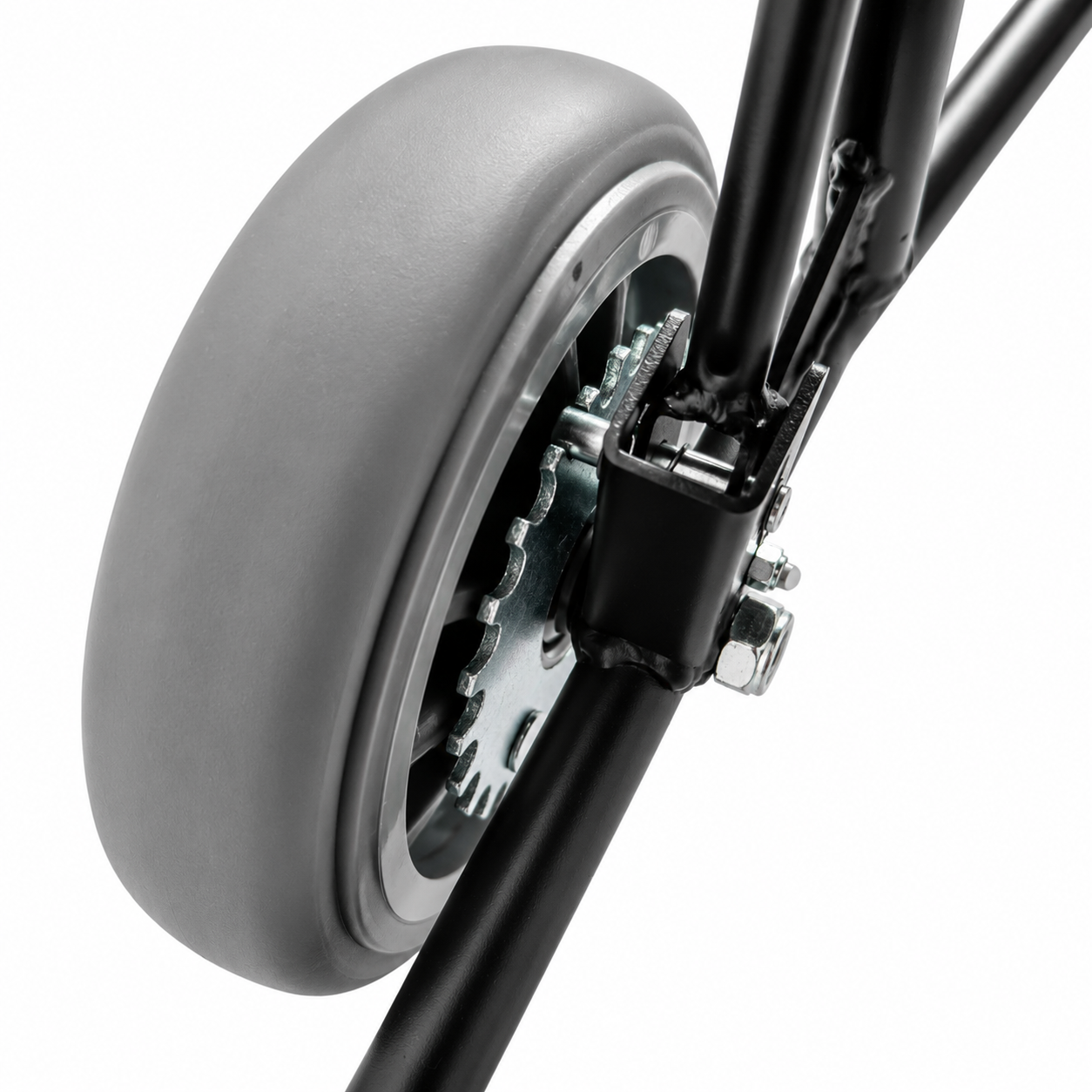
Wheel checks follow airport wheelchair storage because moving and separating a nested group can reveal wear or damage. The mechanism close-up cannot prove brake performance or a safe parking action. Use the maker’s current wheel and handling checks.
Which wheels should be named?
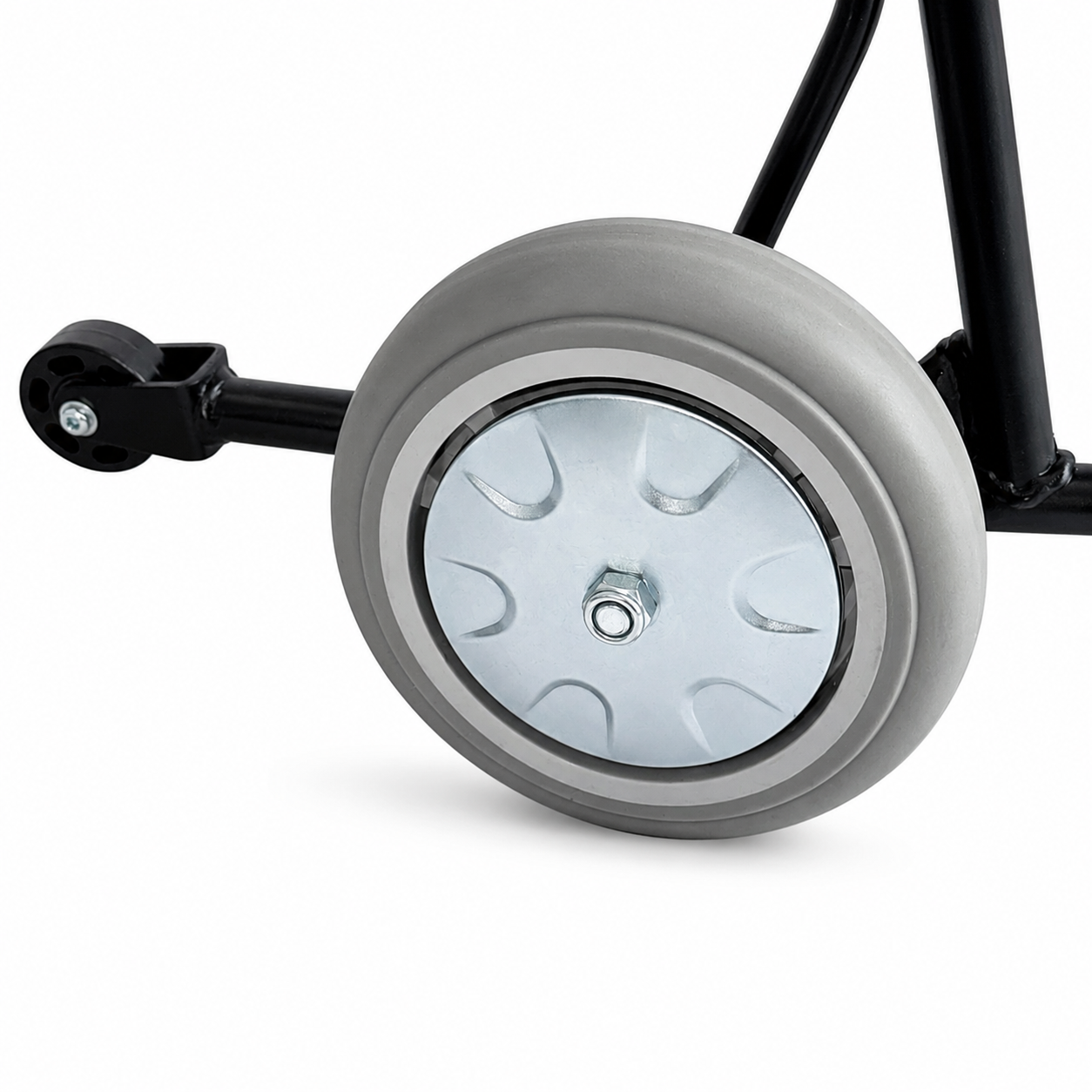
Follow every rolling point. Record the larger rear wheels and smaller front casters separately. If a chair rolls or binds unexpectedly, stop and use the service route.
- Identify rear wheel and front caster assemblies.
- Check visible condition as directed.
- Report doubtful movement before release.
| Wheel area | Review question |
|---|---|
| Rear | Condition and current guidance |
| Front caster | Condition and current guidance |
Storage is not a brake test. Key Takeaway: A chair can leave the bay only after its required checks.
Where should airport wheelchair storage sit in a Saudi airport?
Airport wheelchair storage should sit in a bay that the local Saudi airport operator has measured and assigned for the service fleet. Do not infer a national bay size from a product photo. Keep the planned route to the passenger assistance point clear.
What should the operator map?
Draw the full retrieval path. Mark the bay, doors, turning points and staff access. Related transfer devices have different roles and need separate storage planning.
- Measure actual bay and exits.
- Allow staff access to each chair.
- Keep local operating rules with the map.
| Site item | Question |
|---|---|
| Parking bay | Does the measured group fit? |
| Retrieval route | Can staff reach service points? |
A group can fit a bay but block its own exit. Key Takeaway: Your operator can place stock where it is usable, not merely hidden.
How is airport wheelchair storage linked to service readiness?
Airport wheelchair storage is linked to service readiness when each chair is clean, inspected and traceable before it returns to passenger use. Nesting should not erase individual status. Keep open service issues visible.
What should a shift handover include?
Name the chair and its state. IATA mobility-aid guidance calls for airport equipment to remain usable, clean and dignified. The AryMD team can supply product information for the operator’s own release process.
- Record chair identity and condition.
- Keep clean and pending stock distinct.
- Assign retrieval and service owners.
| Handover field | Purpose |
|---|---|
| Per-chair status | Prevents hidden exceptions |
| Bay and owner | Supports timely retrieval |
A neat row does not prove the chairs behind it are ready. Key Takeaway: Your staff can select a checked chair during a busy shift.
What should a airport wheelchair storage chart show?
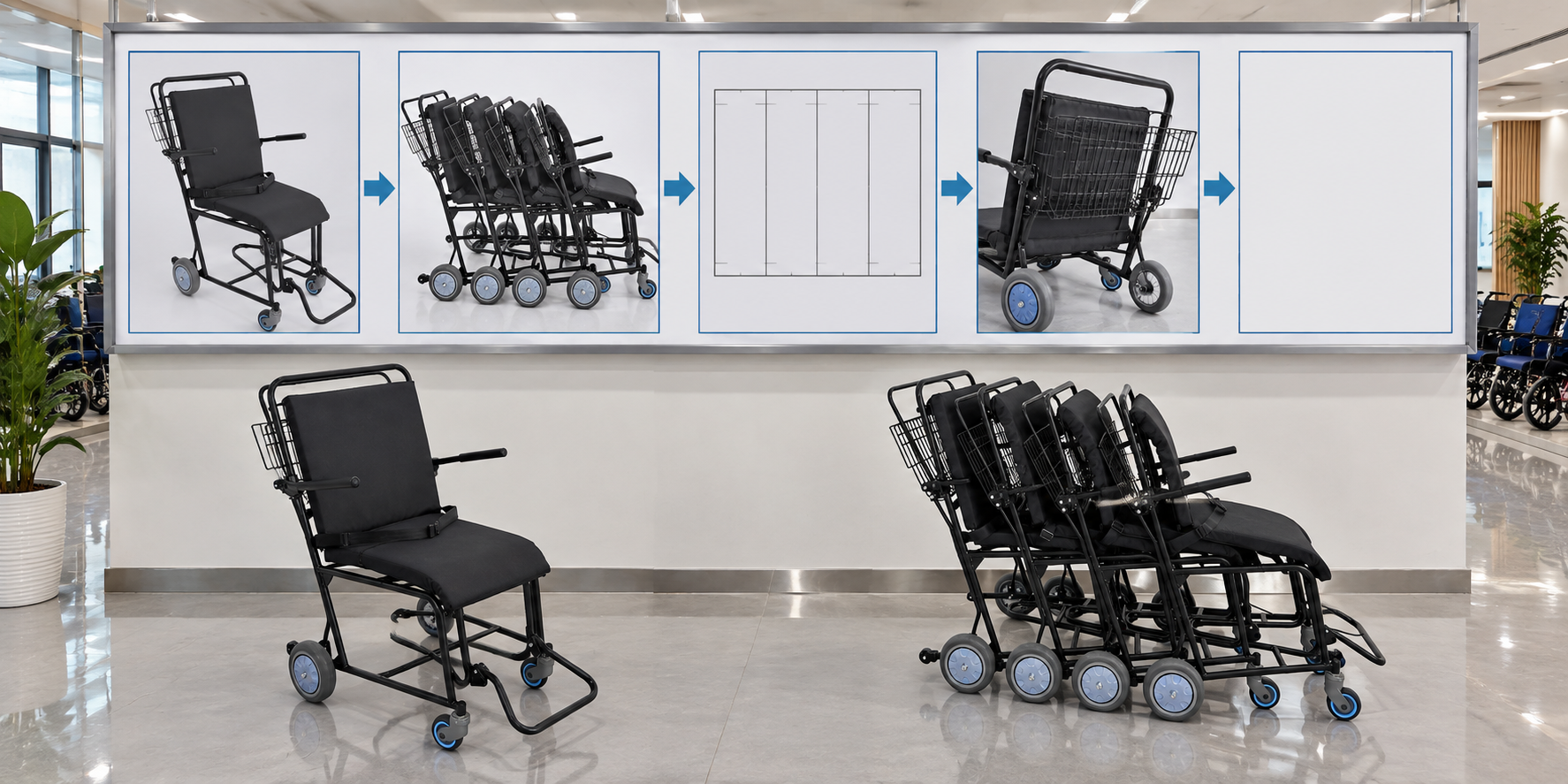
A airport wheelchair storage chart should show one chair, the approved nested group, measured bay plan, condition review and a blank pending release record. It cannot state a storage capacity from an image. Attach actual maker and site measurements.
How can the chart support procurement?
Keep the last box unfilled. Use the visual stages to ask for product and site evidence. The chart is a planning aid, not a Saudi airport approval.
- Confirm model and nesting method.
- Measure the real group and bay.
- Record release checks per chair.
| Chart stage | Evidence |
|---|---|
| Equipment | Maker method and sample |
| Site and release | Bay measurements and real logs |
A visual group needs a measured plan behind it. Key Takeaway: Your buyer can see which storage claim is still unverified.
How do you request a airport wheelchair storage plan?
Request a airport wheelchair storage plan by sending the exact attendant-chair model, target fleet count and bay sketch to the supplier. Ask for approved nesting and handling information. Keep local passenger-service and release rules with the airport operator.
Ready to compare fleet layouts?
Send the group and the site together. Ary Medical can review available product data for the supplied black chair. Check a physical nested sample before committing the storage layout.
- Share model and intended group size.
- Request maker nesting and care directions.
- Assign site measurement and handover owners.
| Your brief | Supplier response to request |
|---|---|
| Chair and group | Current nesting information |
| Bay and workflow | Relevant product handling details |
A model-specific sample makes a bay decision more reliable. Key Takeaway: For a fleet-storage review, contact us. Ary Medical supports airport equipment kept accessible and ready through measured, documented layouts.
Frequently asked questions
Q1: Can I calculate the bay from a nesting photo?
No. Measure the exact approved group and the actual storage site.
Q2: What’s the best way to keep chairs ready in a nested row?
Track condition and release status for each chair before nesting.
Q3: How do I know how many chairs may nest?
Ask for the maker’s current method and test the intended group on a sample.
Q4: Can a service chair be stored like a manual wheelchair?
Not by assumption. Use this attendant chair’s own handling directions.
Q5: Does a neat bay prove Saudi airport compliance?
No. The local operator must review applicable rules and the actual service plan.