
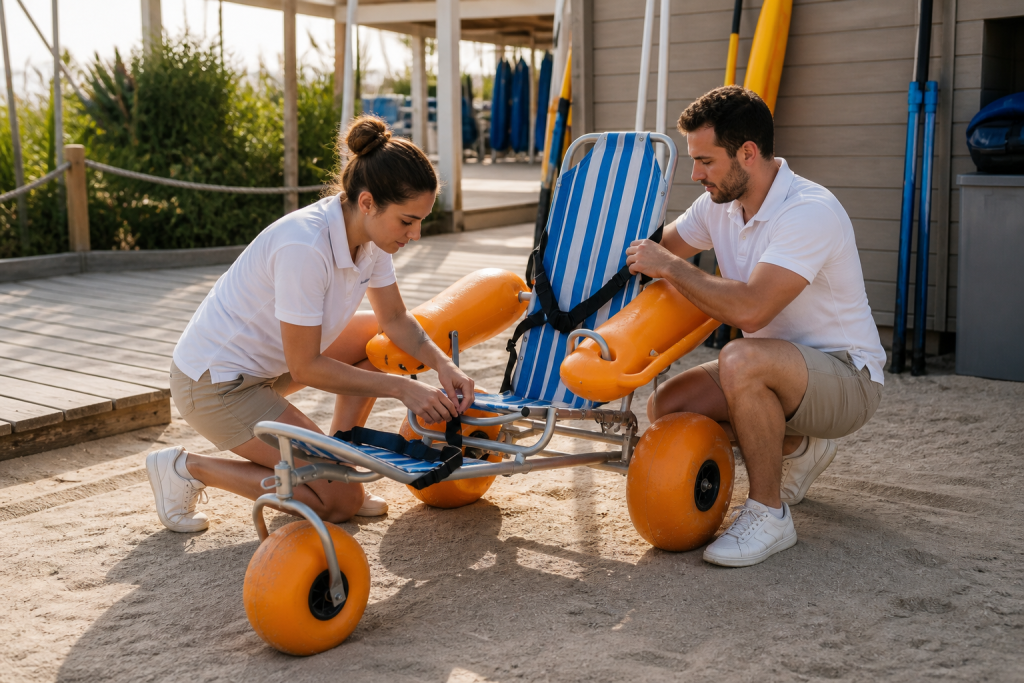
Guests can feel uncertain when staff members give different instructions beside sand or water. A floating beach wheelchair training plan solves that problem by giving every shift one shared sequence for checks, guest briefing, shoreline movement, rinsing, and storage. Resort managers do not need invented promises or a thick manual. They need clear roles, repeatable language, and documented stop points that match manufacturer guidance plus local beach rules. This guide offers a practical framework for operations teams, rental desks, and beachfront supervisors. It also helps managers connect guest service with equipment care without making medical judgments. Use each section as a discussion prompt, then adapt each action around your chair model, site layout, staffing plan, and local water conditions.
Training should also show how a team reports doubt. Staff need permission to pause equipment use, route access, or shoreline service without debating a booking schedule. A named supervisor can review the concern and decide the next approved step. That reporting path turns observation into action while keeping decisions inside authorized roles. It also gives guests one calm message when plans change.
How Should Resorts Frame Floating Chair Training?
Floating beach wheelchair training should begin with named roles, defined service boundaries, and one shared operating sequence. Managers can place this program within a broader Beach Series service plan, so staff understand how water-capable chairs differ from dry-sand mobility equipment. Training should describe what resort staff can do, when a guest or companion leads a decision, and when service must pause. Manufacturer instructions remain the equipment authority. Local beach management rules, weather notices, and lifeguard direction shape daily operations. A short written process helps every shift follow the same path while leaving room for respectful guest choices.
Define Roles Before Guest Arrival
Here is the practical point: each person should know a role before anyone moves toward sand or water. One staff member can lead communication, another can guide equipment movement, and a supervisor can decide whether service opens. A guest may have personal preferences about support, pace, or seating. Staff should ask rather than assume. Role clarity also limits rushed decisions near a shoreline. Managers can rehearse each position with an empty chair, then run a calm verbal walk-through. That method gives new employees a safe place for questions while supervisors watch body position, callouts, and handoff timing. It also separates hospitality support from clinical advice, which resort teams should not provide.
- Name a communication lead for each booking.
- Assign equipment positions before leaving storage.
- Confirm who can pause or close water access.
- Ask guests about preferences without making medical claims.
- Keep a supervisor reachable during active service.
Use One Shared Service Sequence
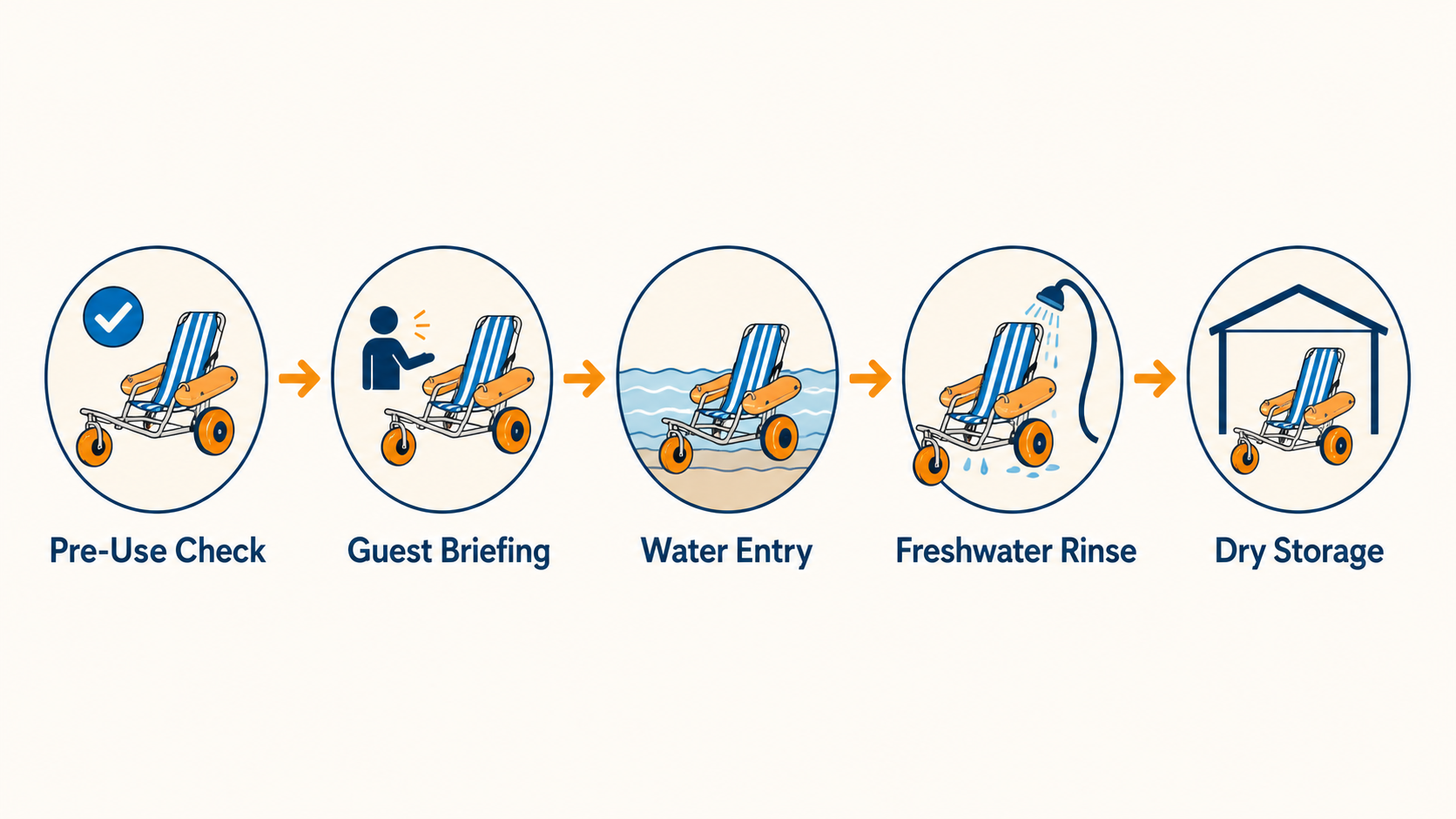
What keeps a shift aligned: a short service sequence gives staff the same mental map from reservation through dry storage. The sequence should start with equipment status, continue through guest briefing and route review, then close with cleaning plus a written record. Staff can practice this order until nobody skips a handoff during a busy period. The sequence should stay simple enough for seasonal employees, yet specific enough for supervisors who audit work. Pair written steps with a live demonstration and a return demonstration. A trainee should show each action while a coach observes. If your resort offers more than one chair type, connect each sequence with the relevant floating beach wheelchair page or manufacturer reference used by your purchasing team.
- Check equipment status before confirming availability.
- Brief guests before leaving a firm surface.
- Review route status before entering sand.
- Use agreed callouts during each handoff.
- Close service with rinse, drying, storage, and a log.
What Should Staff Check Before Each Use?
Floating beach wheelchair staff should complete a dry pre-use check plus a guest-centered briefing before every trip. A visual inspection cannot prove hidden condition, yet it can reveal loose-looking parts, damaged fabric, trapped debris, or missing items that call for a pause. Staff should compare findings with manufacturer instructions and resort policy. A chair with an unresolved concern should remain out of service until an authorized person reviews it. The guest briefing should cover route, expected staff positions, stop words, water boundaries, and the return plan. That conversation gives everyone a shared picture before movement begins.
Complete a Dry Equipment Check
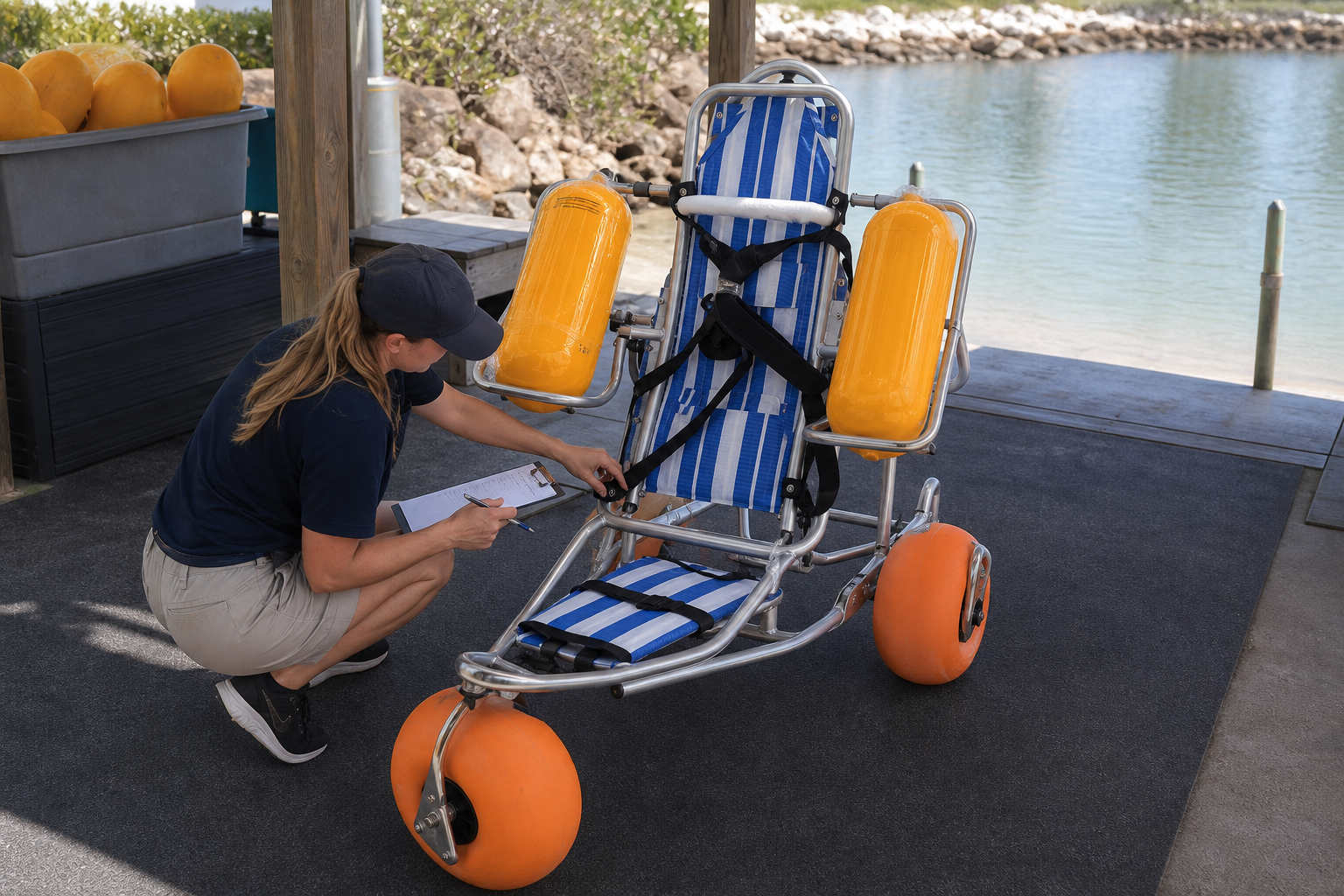
Start with what staff can see: place the empty chair on a firm, level area and follow a written checklist. Review frame connections, visible fasteners, seating fabric, straps, foot support, flotation components, and rolling parts. Staff should look for sand, salt residue, cuts, unusual movement, or anything that differs from a known ready condition. They should not improvise repairs or tighten parts unless resort policy names them as authorized. A dated status tag or digital record can show whether cleaning and prior checks were closed. If a component looks questionable, move that chair out of guest circulation. A comparable dry-sand beach wheelchair may use a different check, so avoid copying one model’s routine onto another.
- Place the chair on firm ground with no guest seated.
- Compare visible parts with a ready-condition reference.
- Check straps, fabric, frame, wheels, and foot support.
- Record any concern before equipment leaves storage.
- Hold equipment when status remains unclear.
Brief the Guest and Confirm Stop Words
This part shapes trust: a guest briefing should sound like a conversation, not a lecture. Introduce each staff role, describe the planned route, and ask how the guest prefers communication. Agree on plain stop words that anyone can use. Explain where staff expect pauses, how sand movement may feel different, and which shoreline boundary applies that day. Avoid promises about comfort, flotation, health, or suitability. Those matters depend on individual needs, equipment guidance, and site conditions. Staff can also state what happens if weather changes or a guest wants to return. A concise brief lowers confusion because each person knows who speaks, who moves the chair, and how a pause begins.
- Introduce every staff member involved in service.
- Ask about preferred pace and communication style.
- Agree on one clear stop word.
- State route boundaries and planned pause points.
- Confirm the return path before departure.
How Should Teams Manage Sand and Water Handoffs?
Floating beach wheelchair handoffs should use planned meeting points, steady communication, and authority for anyone to pause movement. A chair may travel from boardwalk through sand and toward water, yet each surface change brings a new operating context. Staff should review current conditions rather than relying on yesterday’s route. Use visible meeting points where space permits people to reposition without blocking a public path. A supervisor can close a segment when waves, debris, congestion, or equipment status creates doubt. Training should reward early pauses, since a calm stop gives teams room for a better decision.
Set Clear Meeting Points on the Route
Here is where planning pays off: route meeting points reduce hurried changes in staff position. Choose firm, open locations near boardwalk exits, access mats, shaded waiting areas, and shoreline boundaries. Each point should have enough room for staff, chair, guest, and companion without crowding another beach visitor. A route map can use plain names instead of measurements that may become stale. Staff should walk the route before bookings start, then report debris, soft patches, standing water, or blocked access. Route planning also helps teams decide whether a different product from a resort’s beach range suits a dry segment better. Keep that choice tied to product guidance and guest preferences.
- Name each meeting point in staff instructions.
- Keep public paths and emergency access clear.
- Recheck sand, debris, and crowding before service.
- Pause at every surface change.
- Record route closures for the next shift.
Use Controlled Communication at Water Entry
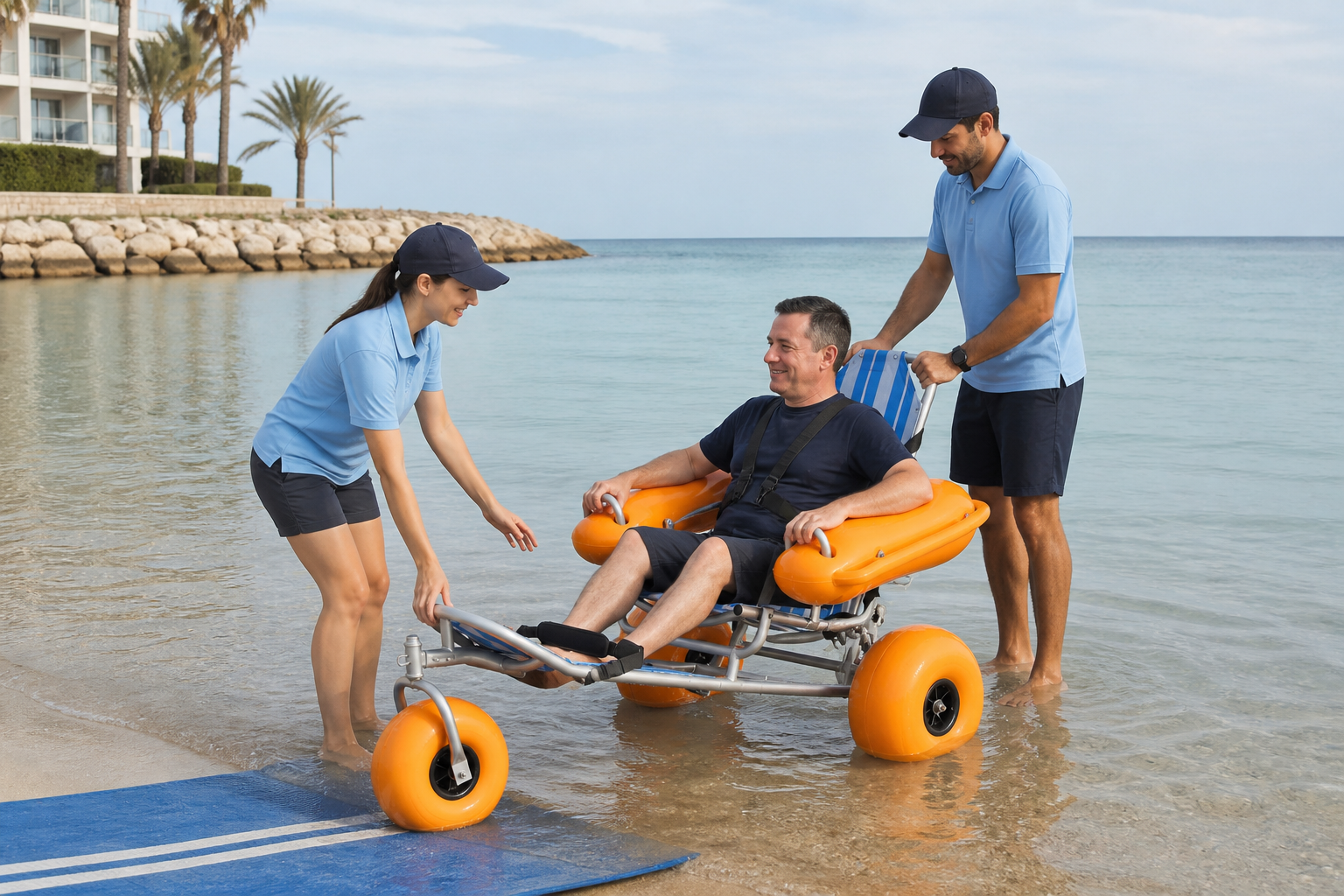
The key is shared timing: one communication lead should call each movement while other staff repeat or acknowledge the instruction. Water entry should follow manufacturer directions, local rules, current lifeguard guidance, and resort policy. Staff must stay within trained roles and agreed boundaries. They should never treat flotation as a promise that removes shoreline risk. Keep pace slow, watch incoming water, and stop when any person asks. At exit, return through the same planned handoff points unless conditions call for closure. A short debrief after service can capture route changes, guest feedback, or equipment observations without recording sensitive health details.
- Name one person who calls movement.
- Keep staff positions visible to one another.
- Follow current shoreline direction and resort limits.
- Stop immediately after any pause request.
- Debrief route and equipment status after return.
How Should Cleaning and Records Close Each Use?
Floating beach wheelchair service should close with model-appropriate rinsing, complete drying, protected storage, and a concise usage record. Salt, sand, moisture, and loose debris can remain on visible surfaces after a trip. Staff should follow manufacturer care instructions rather than inventing chemicals, pressure settings, or service intervals. Cleaning is not a substitute for inspection or authorized maintenance. A clear closeout sequence gives the next shift reliable status and keeps a questionable chair from returning to circulation unnoticed.
Rinse, Dry, and Store the Chair
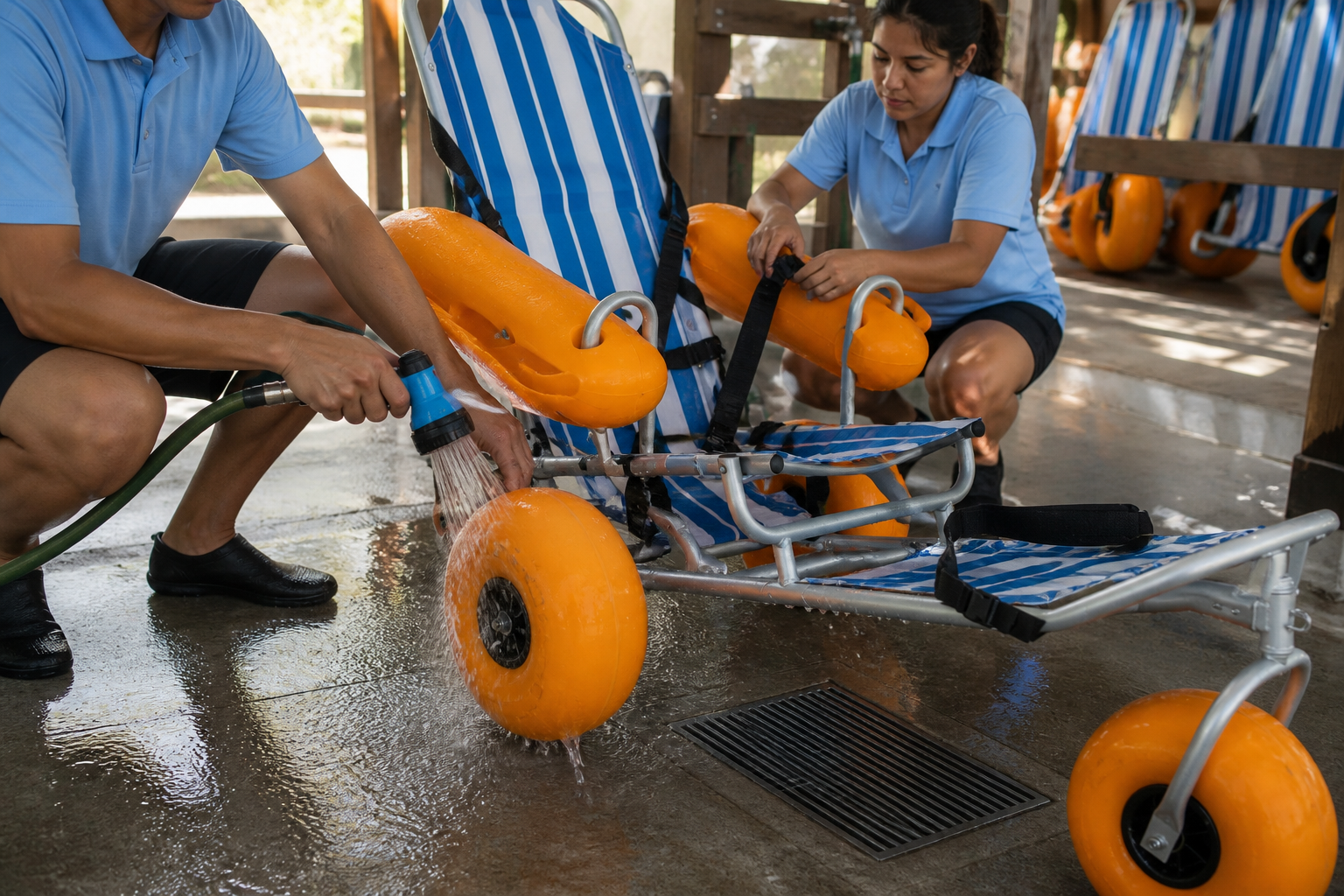
A clean finish needs a fixed order: move the empty chair into an approved wash area, remove loose debris, and use fresh water only when product instructions allow it. Direct gentle flow around exposed surfaces without forcing water into parts. Staff can check fabric, straps, flotation elements, wheel surfaces, and frame joints during cleaning. Let parts dry fully in ventilated shade before storage. Do not cover damp fabric or place a wet chair where guests can request it. The related floating chair maintenance guide can support a broader care plan, while manufacturer instructions decide model-specific work.
- Move an empty chair into the approved wash area.
- Remove loose sand before a gentle rinse.
- Review visible surfaces during cleaning.
- Dry fabric and components before storage.
- Mark status clearly for the next shift.
Keep a Useful Shift Record
Keep records short and actionable: staff need status, not a long narrative. A service log can note booking time, chair identifier, route used, opening and closing status, rinse completion, and any hold placed on equipment. Avoid collecting medical details that operations teams do not need. Use a consistent status vocabulary, such as ready, cleaning, drying, review, or closed. Supervisors can scan logs during shift handover and address recurring route or process gaps. Records also support coaching because managers can compare written steps with observed practice. If one field never changes a decision, remove it. A focused log is easier to complete and easier for a later shift to trust.
- Record chair identity and service window.
- Note route status plus any closure.
- Mark rinse, drying, and storage completion.
- Use a clear hold status for unresolved concerns.
- Keep private guest details out of operations notes.
What Do Resort Teams Ask About Staff Training?
Floating beach wheelchair teams usually ask about responsibility, training frequency, guest briefing, closures, and maintenance boundaries. Short answers below offer operational direction while keeping manufacturer instructions, local rules, and resort policy in control.
Can one staff member run every trip? No fixed answer fits every chair or site. Staffing should match manufacturer guidance, resort policy, route conditions, and trained roles.
Should training include a guest in the chair? Start with an empty-chair demonstration. Any later practice should follow resort policy, consent, product instructions, and an approved training plan.
Can staff open water access when waves look calm? Only within current site rules and authorized operating boundaries. Visual calm alone does not replace local direction or a formal status check.
What happens when a strap or frame part looks different? Pause service and place equipment on hold. An authorized person should review the concern before guest use.
How often should managers review the workflow? Review it after equipment changes, route changes, incidents, policy updates, or repeated staff questions. Routine observation can also reveal unclear steps.
A floating beach wheelchair training program works best when every shift uses one sequence, speaks plainly, and records status before handover. Managers can adapt this framework around product instructions and local beach operations. For model questions, workflow planning, or B2B sourcing support, contact us today.